
DRIFT AUDIO
Listen to this story
Choose a voice, then press play.
The EGOT winner joins Cynthia Erivo, Johnny Flynn and Thabo Rametsi in a Studiocanal drama tracing the real fight over Paul Simon’s Graceland album.
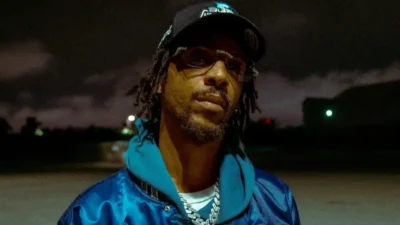
John Legend has been cast to play Harry Belafonte in The Road Home, director Bill Condon‘s upcoming drama about the making of Paul Simon‘s Graceland album and the fallout that followed its recording in apartheid-era South Africa. The casting was confirmed on July 30, 2026, with Legend, 47, joining a cast that already included Cynthia Erivo, Johnny Flynn and Thabo Rametsi.
For Legend, the part carries more than professional stakes. He knew Belafonte personally, and in a statement released alongside the casting news, he called Belafonte his friend, mentor and convincer in the struggle for justice. Legend went on to describe Belafonte as the epitome of an artist and activist who set the standard for the performers who came after him, and said he considered it a privilege to be trusted with the role. The two had shared a stage before, appearing together at the Many Rivers to Cross social justice festival years before the casting was ever announced.
Legend is no stranger to films built around the civil rights era. He won his Oscar for co-writing “Glory,” the song he performed with Common for Ava DuVernay’s 2014 Martin Luther King Jr. biopic Selma. The Road Home marks a return to that terrain, this time from in front of the camera rather than behind a piano.
stir
The Road Home began as a much older idea. According to Zakes Mda, the South African novelist who worked on the project’s story, Hugh Masekela himself approached him nearly a decade ago and asked him to write the story of his life. That early script circulated among studios before it was shelved. It resurfaced only recently, when screenwriter Michael Bronner was brought in to adapt a new version alongside Mda, according to an exclusive set visit published by TimesLIVE. Bronner already knew the region, having reported from South Africa on a 60 Minutes documentary about the HIV crisis years earlier, and he immersed himself in the country’s music while developing the script.
The film is a Studiocanal production shooting on location in Cape Town and Stellenbosch. Music producer Hilton Rosenthal, who worked on the original Graceland sessions, is on board as a co-producer and is overseeing new recordings of Masekela and Makeba’s catalogue for the film’s soundtrack, according to the Irish News. Rametsi, who spoke to TimesLIVE from the set, described filming as wrapping in Stellenbosch after weeks of production. No premiere date has been announced.

A panoramic view of Cape Town and Table Mountain, South Africa.
Condon has circled music and biography for most of his career, from his Oscar-winning screenplay for Gods and Monsters through Chicago, Kinsey and Dreamgirls, films built around real lives and, in Dreamgirls’ case, thinly veiled ones. The Road Home is his first film built around a true story from South Africa.
people
Thabo Rametsi leads the film as Hugh Masekela, the South African jazz trumpeter whose perspective anchors the story. It is the biggest role yet for an actor already known in South Africa for playing Solomon Mahlangu in Kalushi, and he holds an executive producer credit on The Road Home as well. Rametsi told TimesLIVE he prepared by studying archival footage and recordings of Masekela, with help from Masekela’s son, the American sports broadcaster Selema Masekela, who coached him on his father’s distinctive voice so closely that Selema said Rametsi had picked up on details he had never noticed himself.
Rametsi also described a personal ritual he follows before playing any real person: visiting their gravesite first, a practice rooted in the Xhosa tradition of communicating with one’s ancestors. He said the ritual “creates a spiritual connection to the character that you can’t find anywhere else.”
Cynthia Erivo plays Miriam “Mama Africa” Makeba, the exiled South African singer who was married to Masekela for two years in the 1960s and became one of the era’s most recognizable voices against apartheid. Her casting has drawn some debate in South Africa, which Rametsi addressed directly, saying he is grateful one of the biggest Black musical stars in the world wanted to help tell the story out of love and passion.
Johnny Flynn plays Paul Simon, casting with its own layer of history: Flynn was born in Johannesburg before his family moved to the UK when he was young. Guy Pearce, known for roles spanning Memento to The King’s Speech, rounds out the principal cast as Archbishop Trevor Huddleston, the anti-apartheid campaigner who mentored Masekela and later led the boycott campaign against Simon’s album.
Erivo’s own résumé gives the cast some symmetry with Legend’s. She has won a Tony, a Grammy and a Daytime Emmy, and picked up Oscar nominations for both acting and songwriting on Harriet, putting her one Academy Award away from her own EGOT. She most recently starred as Elphaba opposite Ariana Grande in Wicked.
idea
The controversy at the center of The Road Home is not fictionalized. Simon recorded Graceland in Johannesburg in 1985 and 1986, working with South African musicians including Ladysmith Black Mambazo, General M.D. Shirinda and the Gaza Sisters, and the Boyoyo Boys Band, after producer Hilton Rosenthal introduced him to mbaqanga music. At the time, the United Nations maintained a cultural boycott of South Africa, and Simon traveled and recorded there without seeking permission from the African National Congress or other anti-apartheid organizations. When Graceland was rel in the fall of 1986, it became a critical and commercial success and eventually won the Grammy for Album of the Year, but it also drew condemnation from Artists United Against Apartheid and from the Ghanaian ambassador to the UN, who accused Simon of violating the boycott. The backlash intensified around Simon’s 1987 Graceland tour, when he performed alongside Masekela, Makeba and Ladysmith Black Mambazo while protesters, including several prominent British musicians, demanded a public apology. The debate never fully settled. A 25th-anniversary reissue of the album in 2012 came packaged with the documentary Under African Skies, which revisited the controversy directly and reunited many of the musicians who played on it, underscoring how unresolved the argument over cultural boycotts and cross-border collaboration remained decades later.
The Road Home tells that story from Masekela’s side. Exiled from South Africa after the 1960 Sharpeville Massacre, Masekela studied at London’s Guildhall School of Music and became known as the father of South African jazz, writing anti-apartheid songs including “Soweto Blues” and “Bring Him Back Home.” He spent time perform in both New York and Los Angeles, show at the 1967 Monterey Pop Festival alongside Janis Joplin and Jimi Hendrix, before return home in 1990 after Nelson Mandela’s rel from prison. He died in 2018 at age 78. In the film, he is caught between two loyalties: his mentor Huddleston, who launches the boycott campaign against Simon, and his friendship with Simon himself. That split from Huddleston, and his subsequent partnership with Makeba to build the touring band that carried South African music to the world, forms the emotional core of the story.
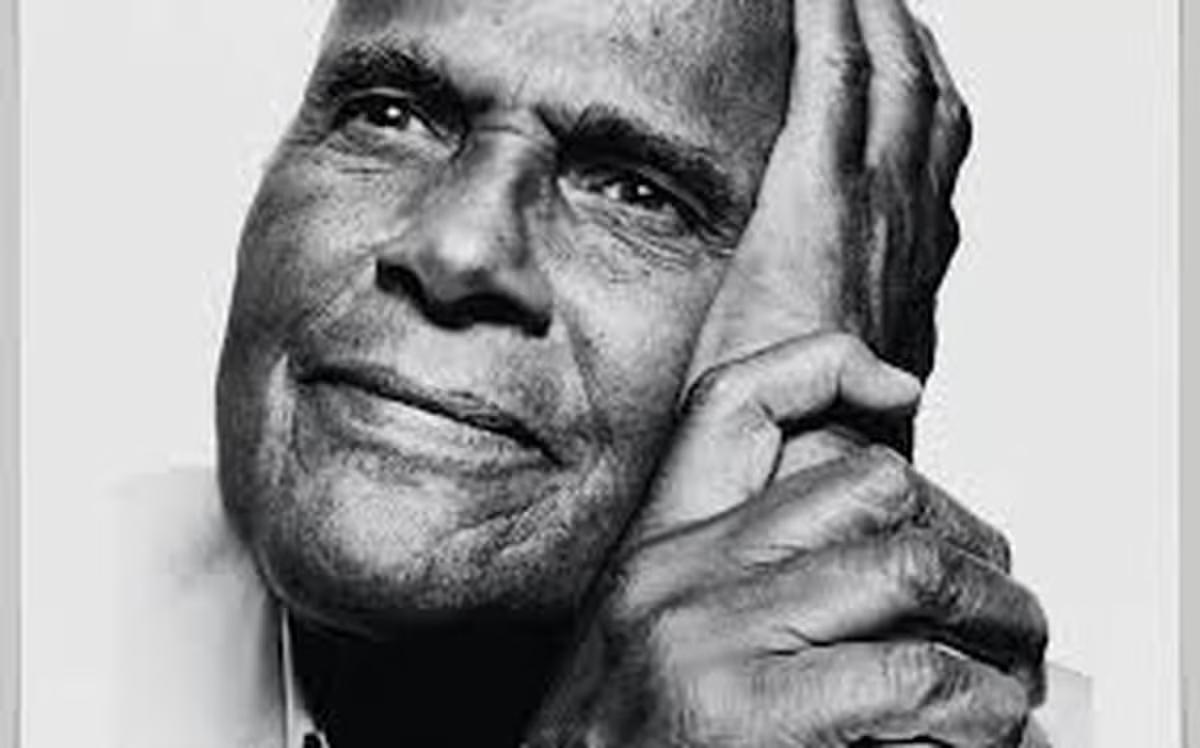
Harry Belafonte, American singer, actor, and activist, photographed in 1983.
nar
Rametsi has said he understands why some audiences are wary of another “apartheid story,” including South Africans who would rather see contemporary Black stories take center stage. He believes there is room for both, and has argued that if these histories stop being told by the people who lived them, the reasons they mattered risk being forgotten too. He has drawn a direct line to his earlier role in Kalushi, the story of Solomon Mahlangu, a teenager executed by the apartheid government after joining the armed wing of the African National Congress. That film had only modest success on its initial rel but has since found a follow on university campuses, particularly during South Africa’s Youth Month, with parents telling Rametsi they use it to help explain Mahlangu’s story to their own children.
He has also pushed back on the idea that The Road Home needed international names to justify itself, describe the production as overwhelmingly South African with a handful of convincers from abroad, brought in specifically so the story could travel further than it otherwise would.
why
Harry Belafonte does not perform on Graceland, but his presence in the story is not incidental. Belafonte first spotted Makeba’s talent after seeing her in the 1959 anti-apartheid documentary Come Back, Africa, and he helped bring her to the United States and build her career there. Three years later they won a Grammy together for An Evening with Belafonte/Makeba, making Makeba the first Black African woman to win the award. Belafonte remained a close supporter of Masekela and Makeba through their years in exile, and he was also a close friend of Simon’s: before Simon ever traveled to South Africa, he consulted with both Belafonte and Quincy Jones, and Belafonte later helped launch the humanitarian project that became “We Are the World,” which brought Simon and Jones together again on a much larger stage.
Belafonte’s own career began decades earlier. Born Harold George Bellanfanti Jr. in Harlem in 1927, he became known as the King of Calypso after his 1956 album Calypso became the first LP by a solo artist to sell a million copies, powered by “Day-O (The Banana Boat Song)” and later “Jump in the Line (Shake, Señora).” He crossed into film the same era, starring opposite Dorothy Dandridge in Carmen Jones in 1954 and going on to appear in Island in the Sun, Buck and the Preacher and, in his final screen role, Spike Lee’s BlacKkKlansman in 2018. Off camera, he became a close confidant of Martin Luther King Jr., helped organize the 1963 March on Washington, and used his own money to help fund the Freedom Rides and bail out jailed civil rights protesters. He died in April 2023 at age 96.
For Legend, playing Belafonte closes a loop of his own making. He became the first Black male EGOT winner in 2018, sharing an Emmy for producing NBC’s Jesus Christ Superstar Live in Concert, adding to the Oscar he won for “Glory,” a Tony for co-producing the 2017 revival of August Wilson’s Jitney, and 13 Grammy wins across his recording career. Those credentials sit inside a career Legend has repeatedly used the way Belafonte used his own, pairing chart success with organizing work, including Legend’s FreeAmerica campaign against mass incarceration. The Road Home is still filming, with Studiocanal yet to confirm when audiences will see the finished film.
Related Articles
Two Chicago Lifers, One Wave: Kaicrewsade and Luke Titus on ‘#SWAG SURF’
Kaicrewsade's new album RAINBOW_ arrived on October 14, and its second track pulls in Chicago drummer and singer Luke Titus.