DRIFT AUDIO
Listen to this story
Choose a voice, then press play.
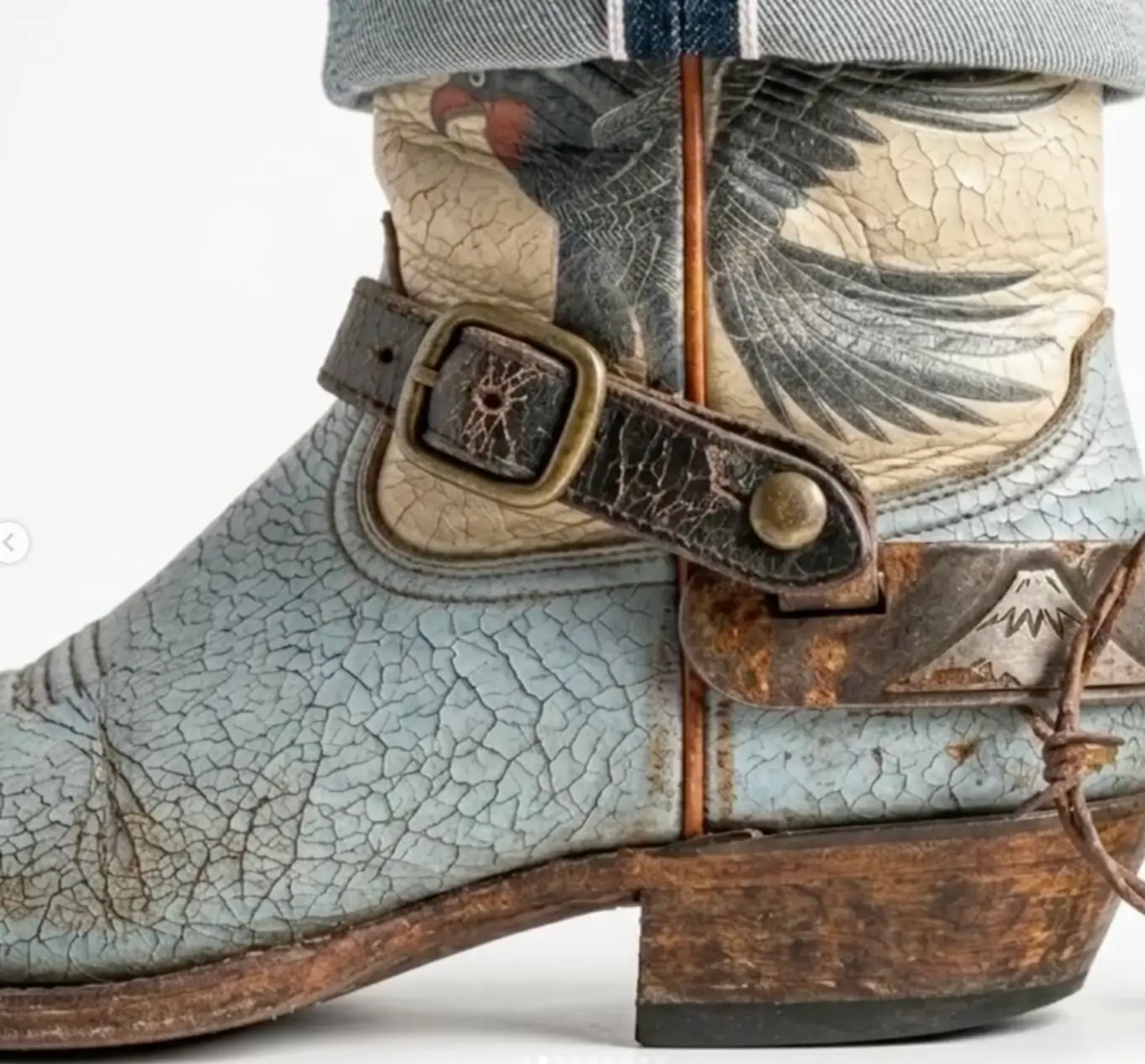
“From the Archives: Late 1950s Model ‘Royal Cowboy’ Cowboy Boots.” A forgotten and arrived pieces of Showa-era (1926–1989) Japanese style. Like the 1975 Shibuya Track Club series, these posts blend archival nostalgia with high-quality reproductions or carefully styled originals, creating a romanticized yet authentic window into mid-20th-century Japanese youth culture.
View this post on Instagram
stir
By the late 1950s, Japan was in the midst of rapid recovery and Westernization. The U.S. occupation (1945–1952) left a lasting imprint: American soldiers, movies, music, and consumer goods flooded the country. Hollywood Westerns starring John Wayne, Gene Autry, and Roy Rogers were hugely popular, as held a regard for cowboys as symbols of freedom, rugged individualism, and adventure—qualities that resonated with a gen emerging from wartime austerity.
This era birthed Japan’s rockabilly and “Western” subcultures. Young men (and some women) embraced greased pompadours, leather jackets, tight jeans, and—crucially—cowboy boots. Domestic manufacturers began producing their own versions, often with Japanese flair. “Royal Cowboy” was one such model: a stylish, pointed-toe Western boot with decorative stitching, Cuban heels, and tall shafts.
idea
Typical features highlighted in Studio Shibuya’s archival-style photos include:
Tall shafts with intricate embroidery—floral, star, or rodeo-inspired—executed with a precision that feels decorative yet controlled.
Scalloped tops and pull straps that echo American Western construction, but often with softer proportions.
Cuban or underslung heels, shaping posture as much as silhouette.
Pointed or gently rounded toes, rendered in black, brown, or occasionally two-tone leather.
Many posts note these as replicas or inspired recreations, but the attention to patina, stitching, and aging makes them feel like genuine 1950s artifacts. One caption describes a black leather pair with “tea-core” (brown underlayer showing through wear) that gives incredible character over time.
show
Cowboy boots were part of a larger “Yokohama Rodeo” and rockabilly movement. Yokohama, with its long history of foreign trade and a post-war American presence, became a hub for Western fashion. Rodeo events, country music bars, and motorcycle gangs (early bosozoku precursors) embraced the aesthetic.
The rockabilly subculture—known as roller-zoku (rock ‘n’ roller tribe)—exploded in the 1950s and has echoes today in Harajuku and gatherings at Yoyogi Park. Enthusiasts danced to Elvis, Gene Vincent, and Japanese acts, customizing bikes and cars while dressing the part. Cowboy boots completed the outlaw-cool silhouette alongside engineer boots and winklepickers.
Women participated too, blending pin-up skirts with Western accents. The boots symbolized rebellion against traditional Japanese conformity—a quiet “ganbaru” spirit mixed with American theme escapism.
why
Studio Shibuya’s posts tap into Showa Retro nostalgia. In the 2010s–2020s, Japanese fashion revived pre-bubble economy styles: functional, characterful pieces over mass-produced hype. Vintage Western gear fits extent—durable, stylish, and loaded with story.
Collectors hunt originals on Mercari, Yahoo Auctions, or flea markets in Shimokitazawa or Nakano. Well-preserved 1950s Japanese cowboy boots command premium prices due to rarity and condition. Reproductions from brands channeling this vibe offer accessible entry points, often with modern comfort upgrades while keeping the vintage silhouette.
The appeal lies in contrast: Japan, a country with no ranching heritage, created its own refined, almost poetic version of cowboy culture. “Royal Cowboy” sounds regal and aspirational—perfect marketing for a boot that let salarymen’s sons feel like outlaws on weekends.
scope
Modern fans pair Royal Cowboy-style boots with:
Slim selvedge denim or black chinos rolled to show the boots.
Embroidered rodeo jackets or leather trucker jackets.
Western shirts with pearl snaps.
Pompadour hair and sunglasses for full effect.
They work surprisingly well with contemporary Japanese streetwear—over wide chinos for a Harajuku twist or with chore coats for workwear fusion. Sustainability angle: these boots are built to last decades, encouraging repair and patina appreciation over fast fashion.
culture
Japan’s 1950s Western obsession influenced later global trends. Brands like Kapital, Undercover, and Studio D’Artisandraw from similar heritage. International collectors now seek Japanese-made Western gear for its unique craftsmanship.
The subculture persists: Sunday gatherings in Yoyogi Park feature dancers in full 1950s regalia, including boots that echo the Royal Cowboy spirit. It’s not cosplay—it’s a living lifestyle preserving rock ‘n’ roll energy.
fin
“From the Archives: Late 1950s Model ‘Royal Cowboy’ Cowboy Boots” is more than a product caption. It’s a love letter to post-war Japan’s creative adaptation of American myth. In an era of economic miracle and cultural hybridization, young Japanese took cowboy boots—symbols of distant frontiers—and made them their own: refined, detailed, and endlessly cool.
Either you’re lacing up a Studio Shibuya recreation, hunting vintage pairs, or simply admiring the photos, these boots remind us that style transcends borders. They carry the spirit of 1950s rebellion, freedom, and craftsmanship into today’s world.
In a fast-changing 2026, slipping on a pair of Royal Cowboys connects you to that timeless energy—walk tall, step loud, and let the stitches tell their story.
n
From the DRIFT archive: A Cult Classic in Orbit: The Tecnica Moon Boot Icon Nylon Boots Reimagined for Modern Winter