DRIFT AUDIO
Listen to this story
Choose a voice, then press play.
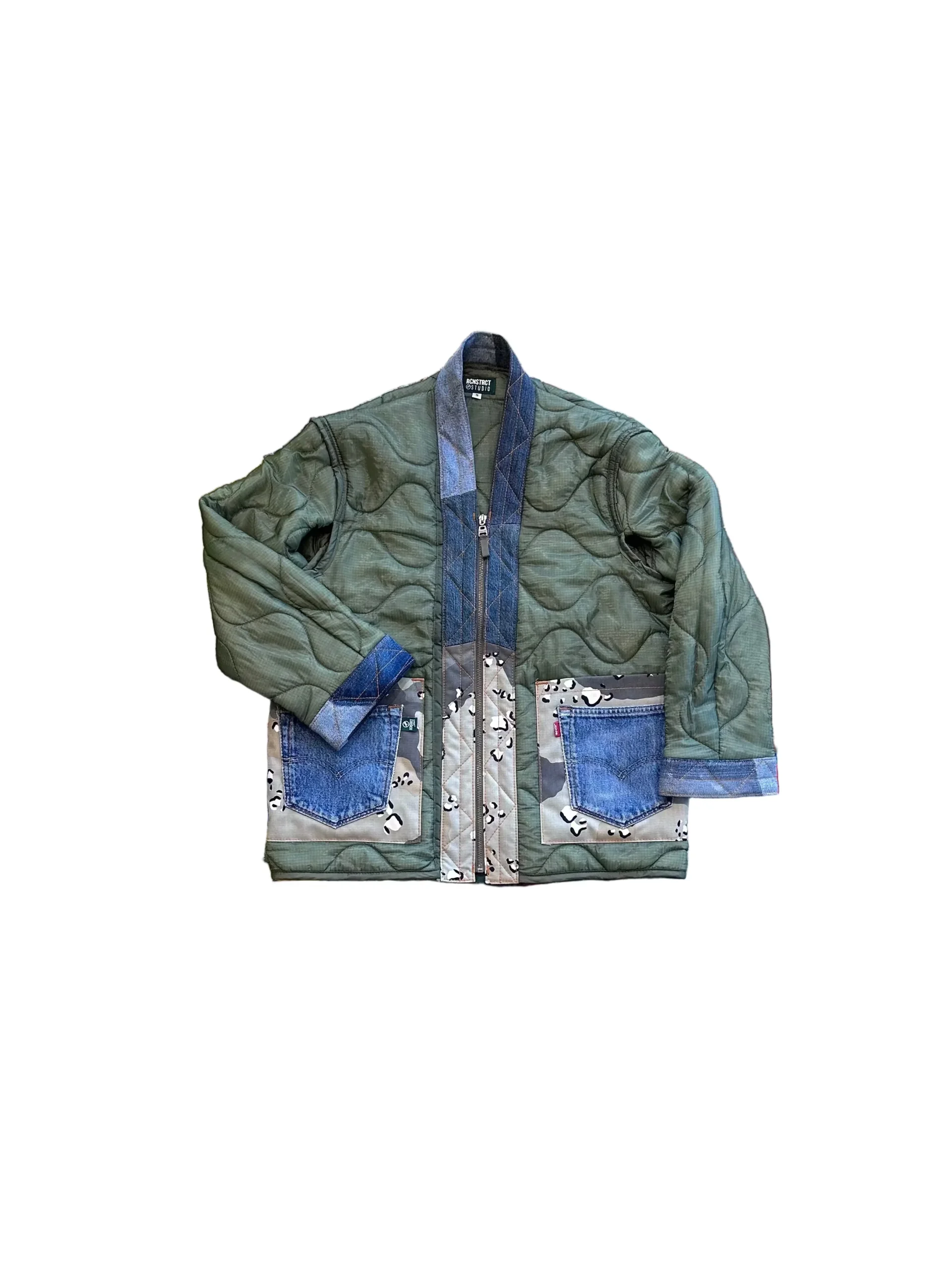
In the world of contemporary streetwear, few garments carry a narrative as layered as the Choco Chip Camo Shell Zip-Up Kimono from RCNSTRCT STUDIO. At first glance, it reads as bold and utilitarian—its earthy, speckled camouflage and oversized silhouette evoking something archival, almost militaristic in memory. But closer inspection reveals something more deliberate. Every seam holds a story: sustainability, cultural convergence, and a quiet resistance embedded in the logic of upcycled design.
Priced at $185 and released through Complex alongside the brand’s own platform, this is not another fleeting drop in an already saturated market. It positions itself as a statement—measured, intentional, and aware of its timing. In 2026, as consumers begin to interrogate not just what they wear but why they wear it, RCNSTRCT STUDIO responds with garments that extend beyond surface. They don’t simply exist. They signify.
idea
The kimono’s defining view is its chocolate chip camouflage—a pattern that, despite its colloquial name, carries the imprint of military history. Formally recognized as the Six-Color Desert Battle Dress Uniform (DBDU), it was developed by the U.S. Army in the 1970s and saw widespread deployment during Operation Desert Storm between 1990 and 1991. Its composition—two browns, sand, tan, black speckles, and off-white “rock” formations—was engineered to disrupt visibility within desert terrain.
By the mid-1990s, it was replaced by the more streamlined three-color Desert Camouflage Uniform, largely due to the high contrast of its darker elements against open sand. Yet disappearance never equated to erasure. The pattern endured—first as surplus, then as collectible, eventually transitioning into fashion as both reference and material.
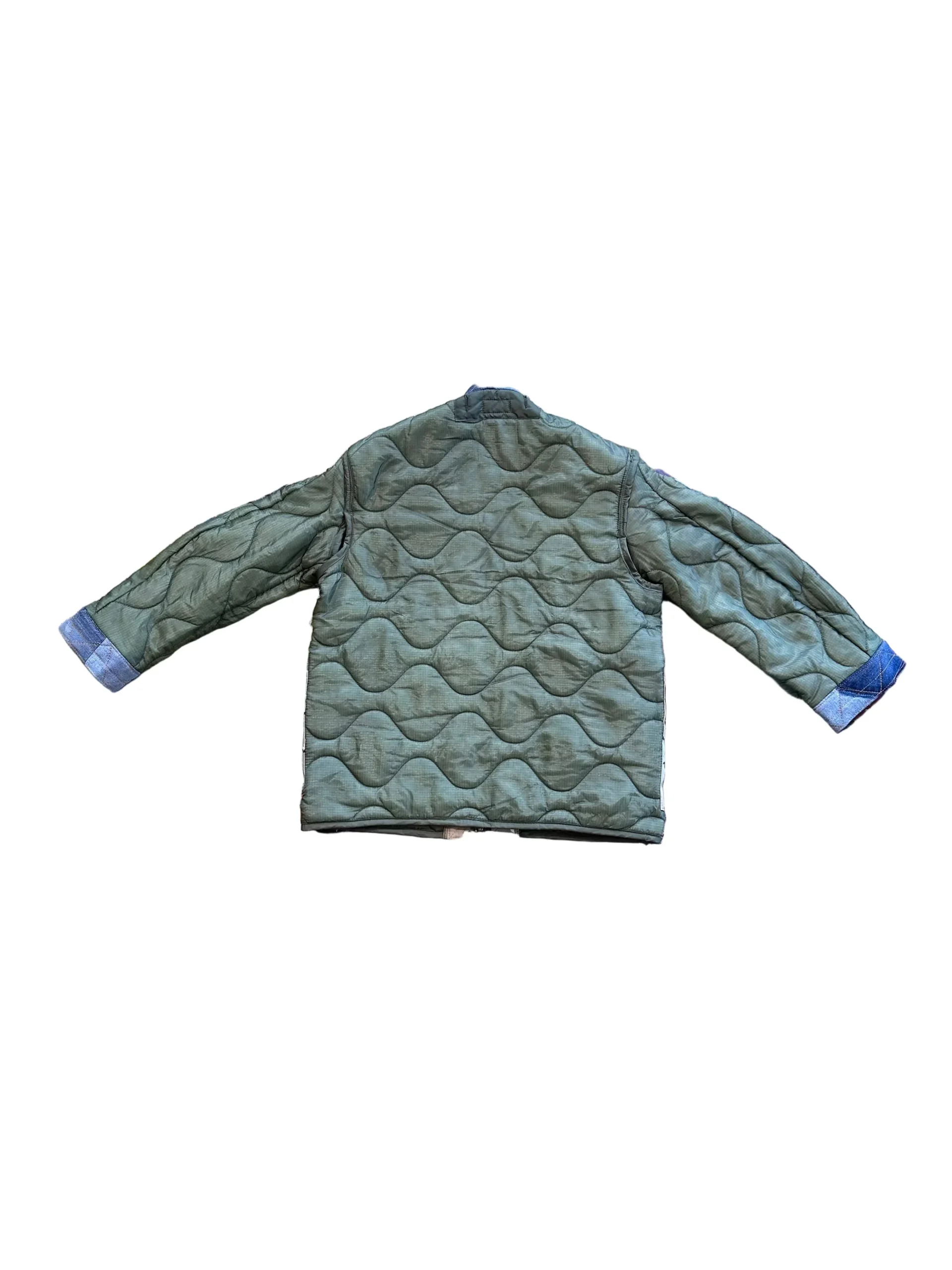
RCNSTRCT STUDIO does not reinterpret the pattern through reproduction. It sources original military shell liners—garments that once carried this camo in active use. Each piece is inherently singular, marked by subtle fading, wear, and lived texture. The result is not replication, but continuation.
stir
Based in Los Angeles, RCNSTRCT STUDIO operates through what it describes as a deconstruction-first philosophy. Positioned at the intersection of fashion, art, and street culture, the brand prioritizes material experimentation while maintaining a clear commitment to sustainability. Its guiding principle—“Reborn, Not Reused”—is less slogan than operating system.
The Choco Chip Camo Kimono embodies this approach. Beginning with a vintage, unisex military shell liner—originally constructed with underarm openings for ventilation—the garment is reconfigured through the addition of a full-length zipper. A utilitarian interior layer becomes an exterior-facing piece, repositioned within a contemporary streetwear framework.
Further transformation arrives through the integration of double denim pockets, constructed from vintage Levi’s, Lee, and Wrangler jeans. These additions operate beyond function. They stage a dialogue between two American archetypes: the soldier and the laborer. Raw edges, irregular stitching, and visible patchwork resist uniformity, emphasizing process over polish.
This is upcycling not as aesthetic trend, but as structural commitment. Within a fashion industry increasingly scrutinized for its environmental footprint, RCNSTRCT STUDIO offers an alternative: design that accumulates meaning rather than discarding it.
culture
The decision to frame the garment through a kimono silhouette is neither incidental nor superficial. Traditional Japanese forms have, in recent years, been recontextualized within global streetwear—from the draped constructions of Yohji Yamamoto to the conceptual adaptations of Virgil Abloh. Yet RCNSTRCT STUDIO’s interpretation resists direct quotation.
This is not homage in the conventional sense. It is synthesis.
A military liner becomes the base. American denim introduces texture and narrative. The kimono structure provides flow, proportion, and openness. The result is a garment that does not belong to a single origin point. Instead, it exists between references—fluid, unassigned, and contemporary in its hybridity.
Functionally, the silhouette lends itself to layering—an essential language within 2026 streetwear. The wide sleeves, relaxed drape, and open-front structure allow for adaptability across climates and contexts. The shell fabric remains lightweight and water-resistant, calibrated for urban unpredictability.
View this post on Instagram
show
RCNSTRCT STUDIO’s visual identity is restrained yet textured. Its typography—tight, slightly distressed, often rendered in monochrome—mirrors the reclaimed materials it employs. Color palettes remain grounded: sand, slate, olive, faded indigo. There is no reliance on overt branding or graphic excess. Attention is redirected toward construction.
Within this framework, the kimono operates as both object and statement. The muted camouflage stabilizes the composition, while denim inserts introduce contrast. Exposed hardware, raw seams, and visible repairs elevate imperfection into design language.
In contrast to algorithm-driven fashion cycles—polished, rapid, and disposable—this approach insists on friction. It values irregularity, history, and tactility.
story
By 2026, sustainability in fashion has shifted from marketing language to expectation. The rise of upcycled streetwear signals a broader recalibration—one that prioritizes circular systems, material accountability, and production transparency.
RCNSTRCT STUDIO positions itself within this shift. By utilizing deadstock textiles, vintage garments, and reclaimed denim, the brand reduces reliance on new resource extraction. Its made-to-order structure minimizes excess, aligning production with demand.
Yet the most compelling dimension is narrative. Sustainability here is not abstract—it is embedded. Each garment carries a prior life, extended through design.
To wear the Choco Chip Camo Kimono is to engage with that continuity. It is to hold multiple histories simultaneously: military function, workwear durability, and contemporary reinterpretation.
garment
The kimono’s versatility allows it to operate across stylistic registers without losing coherence.
Within a streetwear framework, it pairs naturally with cargo trousers, heavy footwear, and layered basics. In contrast, it can be positioned against tailored elements—introducing tension between structure and fluidity. Worn open, it extends silhouette; zipped, it consolidates form.
Its unisex construction reinforces adaptability. Oversized proportions and neutral tonality allow it to move across identities without constraint, aligning with broader shifts toward gender-fluid design.
sum
As fashion continues to intersect with art, activism, and environmental discourse, garments like this occupy a distinct space. They do not simply respond to trends—they question them.
The Choco Chip Camo Shell Zip-Up Kimono is not just clothing. It is a constructed narrative—one that reframes utility, reconsiders waste, and repositions heritage within a contemporary framework.
In a system often defined by disposability, RCNSTRCT STUDIO proposes something else entirely: continuity.
Not reused. Reborn.
n
From the DRIFT archive: Eastpak Courts Culture: Inside the Brand’s Global With the NBA · HAVEN × NANGA Skyline Vest — High-Function Warmth in a Refined, Technical Shell
Related Articles
ADWYSD and Corteiz Finally Catch the Same Wave
Two of London’s most guarded labels are trading Alcatraz for surfboards, dropping a joint capsule […]