

DRIFT AUDIO
Listen to this story
Choose a voice, then press play.
One of British fashion’s most recognizable streetwear names from the late ’90s and early 2000s officially returned to the spotlight. Bench — the label once synonymous with thumbhole hoodies, oversized logos, layered outerwear, and urban youth culture — relaunched through a major partnership with Superdry under its expanding Superdry & Co. ecosystem.
The comeback arrives at a moment when fashion’s obsession with Y2K nostalgia has reached full maturity. Yet Bench’s return does not feel like simple archive mining or empty retro cosplay. Instead, the relaunch positions itself as a contemporary rebuild — one rooted in the label’s Manchester heritage while recalibrating its proportions, fabrication, and identity for Gen Z consumers navigating modern streetwear culture.
View this post on Instagram
stir
Bench’s origins trace back to 1989 in Manchester, where the brand emerged from the city’s intertwined music, BMX, skateboarding, and youth scenes. At a time when British casualwear was shifting toward more rugged, urban-inflected silhouettes, Bench built its identity around practicality fused with attitude.
By the late ’90s and early 2000s, the brand had become a defining staple across UK high streets and university towns. Its funnel-neck hoodies, layered zip constructions, bold typography, and thumbhole sleeves became instantly recognizable markers of the era’s sporty-meets-grunge aesthetic. Bench occupied a unique middle ground: affordable enough for everyday youth wardrobes, but distinctive enough to create subcultural attachment.
The revival also carries personal significance for Superdry co-founder Julian Dunkerton, who played a major retail role in Bench’s original rise. During the relaunch preview, Dunkerton reflected on that history directly, emphasizing how closely tied the label was to British youth identity in the ’90s.
Bench’s decline mirrored the wider transformation of retail fashion during the 2010s, as fast fashion accelerated trend cycles and ownership structures shifted. After Apparel Brands Group acquired the intellectual property in 2020, the groundwork for revival quietly began. The eventual partnership with Superdry & Co. supplied the operational scale, retail infrastructure, and creative direction necessary for a legitimate relaunch rather than a one-season nostalgia stunt.
why
The collision reveals how legacy brands are increasingly being repositioned through ecosystem-style retail strategies. Superdry’s “& Co.” framework has evolved beyond a single-label operation into a broader platform that includes vintage influences, revived heritage aesthetics, and adjacent youth-focused brands. Bench fits naturally within that structure.
Inside the Oxford Street flagship in London, Bench now occupies a dedicated 2,500-square-foot shop-in-shop installation situated alongside curated vintage offerings. The layout intentionally transforms shopping into a layered cultural experience rather than a straightforward retail transaction.
Strategically, the partnership works because each side fills a gap for the other. Superdry contributes international logistics, retail presence, sourcing capability, and omnichannel infrastructure. Bench contributes emotional authenticity — particularly within the current wave of late-’90s and early-2000s nostalgia dominating TikTok, resale platforms, and contemporary streetwear styling.
The Spring/Summer 2026 launch includes more than 150 menswear and womenswear pieces, with future seasonal drops already planned. Remarkably, the relaunch reportedly moved from initial concept to full retail execution in only eight months.
Dunkerton also emphasized the importance of involving younger voices in the creative process, particularly his 19-year-old daughter Kitty, alongside senior designer Sarah Fisher. Their role functioned as a generational “sense check” to ensure the brand resonated with contemporary consumers rather than simply replaying archival references.
refine
One of the collection’s strongest achievements lies in its restraint. Many Y2K revivals collapse into caricature, exaggerating proportions and leaning too heavily into irony. Bench instead approaches nostalgia through refinement.
The collection retains the DNA that made the label memorable — thumbholes, funnel necks, layered constructions, double-zips, embroidered logos, contrasting stripes — but updates them with contemporary tailoring and fabrication.
Key garments include closer-fit ripstop funnel jackets, faux-fur hooded Windcheaters, relaxed shell zip jackets, boxy tees, and high-neck track tops. Meanwhile, the low-rise tiered skirt quickly emerged as an early sellout item after launch, highlighting the collection’s immediate traction among younger consumers.
Importantly, the relaunch avoids chasing exaggerated bagginess simply because oversized silhouettes dominate nostalgia discourse online. Instead, proportions feel more intentional: cleaner lines, sharper fits, and materials engineered for contemporary wearability. The aesthetic communicates urban confidence without becoming trapped inside retro parody.
flow
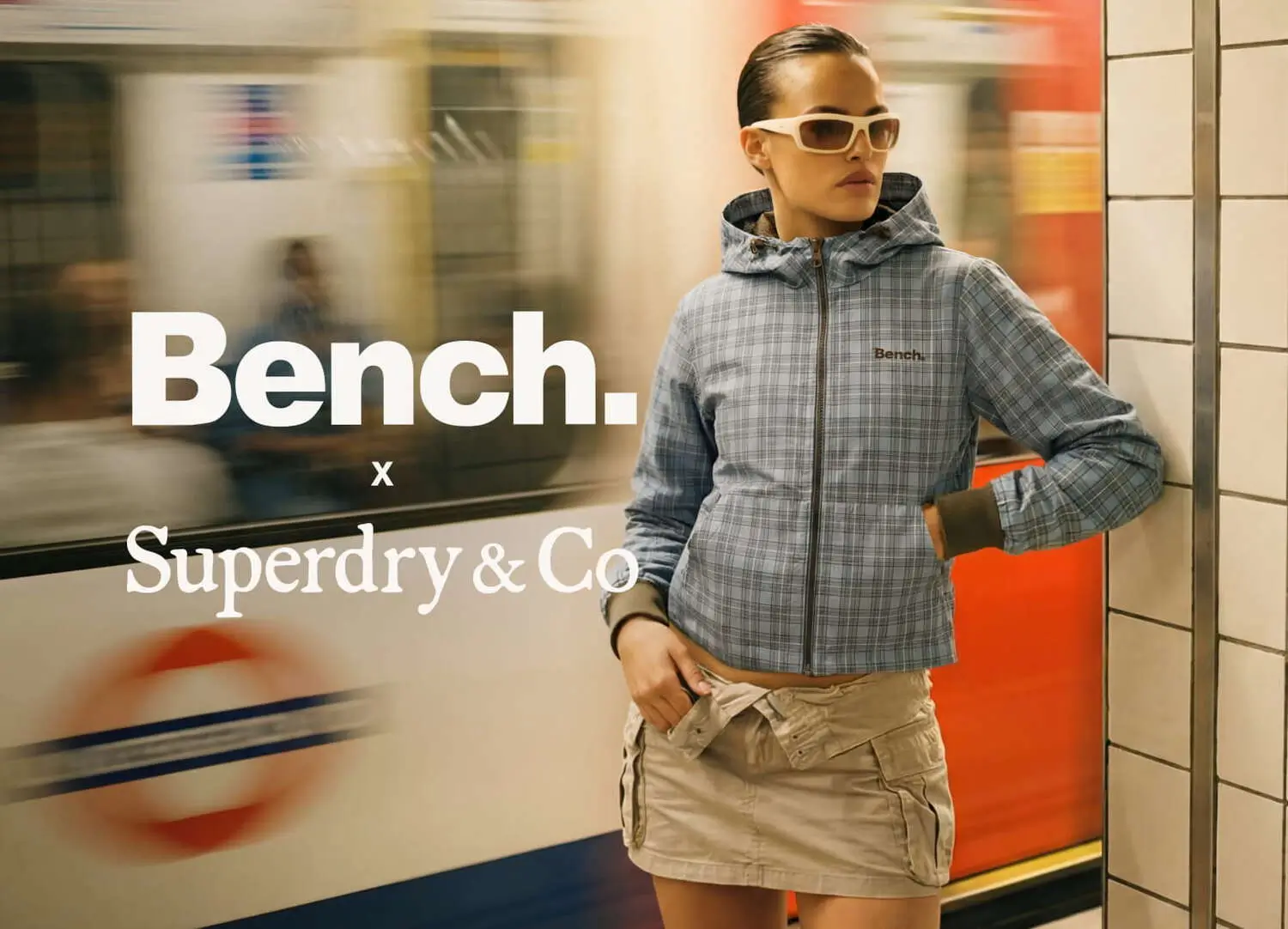
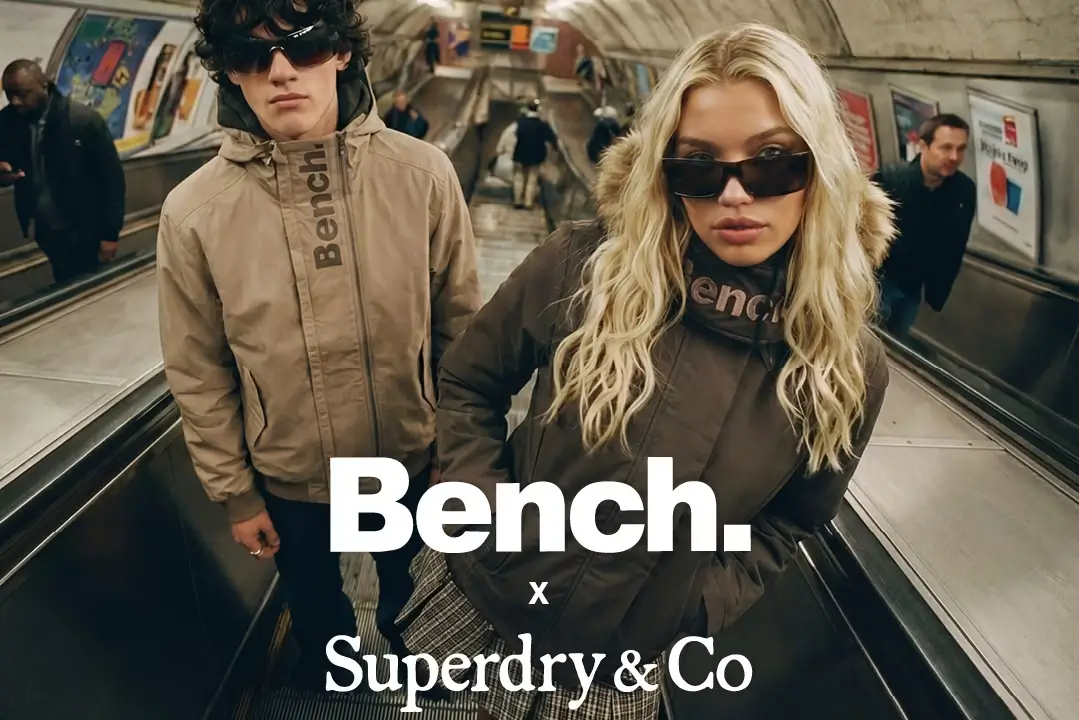
The accompanying visual campaign reinforces the idea that this revival is rooted in atmosphere rather than gimmick. Shot with analogue-inspired flash photography across London Underground environments, the imagery captures tiled corridors, escalators, station platforms, and raw city textures.
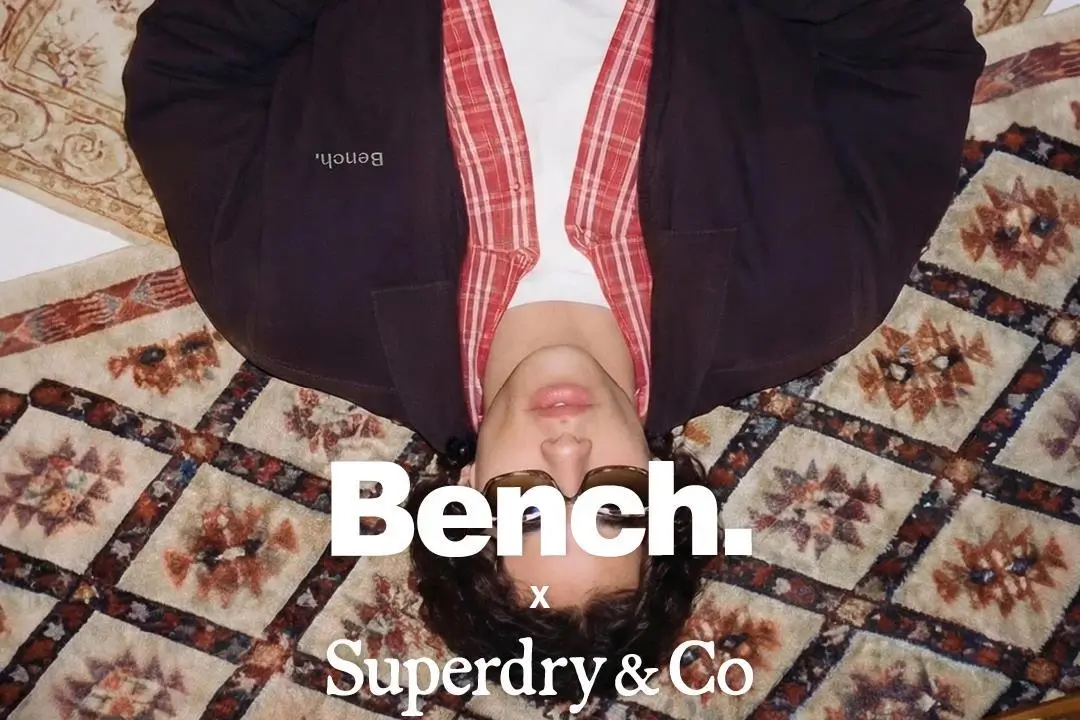
The campaign intentionally avoids hyper-polished luxury aesthetics. Instead, its mixed-gender casting, candid posing, and gritty urban framing recreate the feeling of early-2000s British youth photography while remaining visually aligned with current editorial trends.
That balance matters because modern Gen Z consumers often reject overtly manufactured nostalgia. They want cultural continuity that feels lived-in rather than corporate. Bench’s relaunch understands that distinction.
gen
The release strategy reflects how fashion consumption has fundamentally changed since Bench’s original peak. The collection launched simultaneously through physical retail, e-commerce, and social commerce channels, including a TikTok Shop pilot initiative.
That move signals an important shift: Gen Z streetwear engagement now unfolds across algorithmic discovery, livestream commerce, short-form styling content, and experiential retail simultaneously. Bench’s return is therefore structured less like a traditional seasonal launch and more like a multi-platform cultural reintroduction.
Expansion plans already include additional UK shop-in-shops in cities such as Manchester, Glasgow, and Lincoln, alongside renewed focus on Germany — historically one of Bench’s strongest international markets. Dunkerton reportedly envisions building the brand into a £30–50 million standalone business over time.
Pricing also positions Bench carefully within today’s market. It remains accessible enough for repeat purchasing while attempting to elevate quality standards beyond disposable fast fashion. That balance may ultimately determine whether the revival becomes sustainable or simply another temporary nostalgia cycle.
View this post on Instagram
a return
Fashion nostalgia is no longer just about recycling aesthetics. Increasingly, brands are mining emotional memory and cultural familiarity during periods of social and economic uncertainty. Bench’s return works because it taps into both collective nostalgia and contemporary practicality simultaneously.
For consumers now in their 30s and 40s, the brand recalls a specific era of British youth culture: university towns, layered hoodies, underground music scenes, and pre-social-media streetwear identity. For younger consumers, meanwhile, Bench arrives as something newly discovered rather than remembered — a heritage label with authenticity that feels fresher than overt haute hype.
The revival also highlights a broader retail shift away from sterile minimalism. After years dominated by quiet luxury and algorithmically safe basics, younger consumers increasingly gravitate toward brands with visible personality, functional details, and emotional texture. Bench’s funnel necks, layered constructions, and graphic logos satisfy that appetite without requiring couture-level pricing.
Apparel Brands CEO Peter Wood described the collection as an entry into a more “dynamic, youth-driven space,” emphasizing energy, attitude, and cultural connection. That framing reveals how the relaunch aims to position Bench not as heritage preservation, but as active youthwear evolution.
early
Initial reception suggests the strategy is resonating. The London launch generated queues, rapid online discussion, and immediate sellouts on key items. Many early reactions praised the balance between recognizable archival references and noticeable quality upgrades.
The revival also arrives during an important period for Superdry itself. Following years of operational and branding challenges, the Bench partnership signals renewed confidence and a clearer youth-oriented strategy. It simultaneously functions as a retail experiment in experiential shopping, nostalgia-driven storytelling, and social commerce integration.
Looking ahead, the relaunch appears positioned for broader seasonal expansion, additional collisions, and deeper international rollout. Rather than freezing the brand in archival repetition, the partnership seems focused on eliciting Bench to evolve alongside contemporary streetwear culture.
Related Articles
A Tiger On The Denim / Human Made
HUMAN MADE Shinsaibashi PARCO, full renewal 17 October 2026. Tiger jacket, hoodie, keyholder. Wasted Youth popup, two days. App lottery 10:00 to 17:00.