DRIFT

Reflection on Diaspora, Documentation, and the Redefinition of Citizenship Through Radical Art

In a world increasingly fractured by border walls, immigration quotas, and nationalist rhetoric, few objects carry as much psychological and geopolitical weight as a passport. It is more than an ID—it is a symbol of permission, inclusion, exclusion, and surveillance. A passport is not just a document; it is a contract with the nation-state, a performance of belonging. But what if that belonging were reimagined, detached from colonial cartographies and instead aligned with cultural memory, shared struggle, and pan-African solidarity?

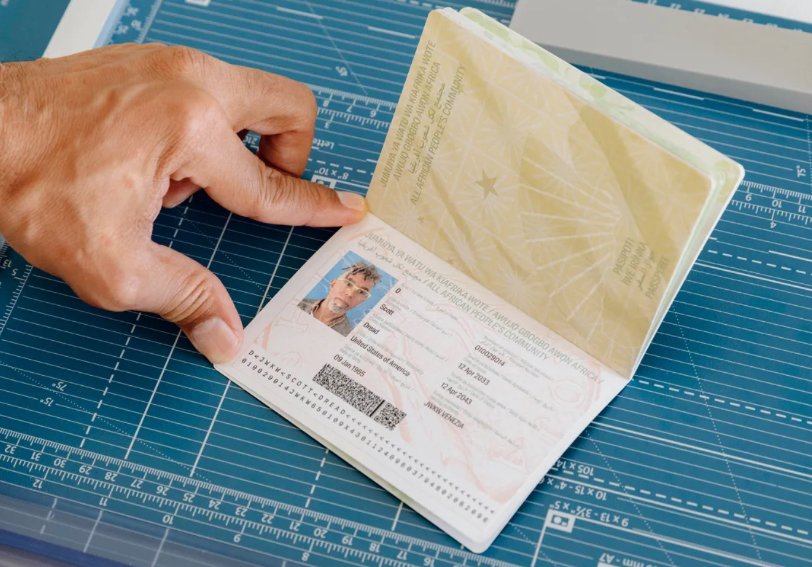
Dread Scott, a trailblazing artist known for his incendiary inquiries into history, race, and power, posed precisely this question with the creation of his All African People’s Community Passport (2024). On the surface, it resembles a traditional travel document: a booklet bound in bold colors, gridded with official-looking pages, embellished with stamps and emblems. But in the hands of Scott—who has spent decades agitating the frameworks of Americanism and state control—this object becomes something far more explosive. It is not about passage across borders. It is about passage beyond them.

Reclaiming the Imagination of Citizenship

To understand the weight of the All African People’s Community Passport, one must understand what Scott seeks to liberate: the imagination of citizenship itself. This is not just a passport for travel; it is a political poem, a speculative artifact forged in the heat of historical trauma and communal dreaming. Issued not by a government but by a people, it proposes a new order of belonging, one rooted in Black radical internationalism.

For Scott, the idea of a unified African passport harks back to the utopian ambitions of thinkers like Marcus Garvey, Kwame Nkrumah, and Frantz Fanon, who envisioned a Pan-African identity that could transcend the artificial borders imposed by colonialism. This passport builds on that lineage, functioning as a vessel for both memory and resistance. It asks: Who are we when we no longer define ourselves by the coordinates of our captivity?

The cover, emblazoned with rich colors reminiscent of Pan-African flags, carries a seal that reads “All African People’s Community”—a naming that explicitly centers not nations, but peoplehood. In this reframing, citizenship is not a privilege granted by the state, but a birthright claimed by a collective diasporic will.

The Visual Language of Liberation

Scott, whose oeuvre includes burning American flags and restaging slave rebellions, has always been attuned to the symbolic potency of official language and design. The passport’s visual cues—from typefaces to grids, stamps to emblems—mirror those of nation-issued documents, but each design choice subverts the original. The stampings are not tied to border crossings but to events, historical uprisings, collective actions. Instead of “Place of Birth,” you might encounter “Place of Awakening.” Instead of nationality, a line for “Liberatory Orientation.”

The pages are filled with poetry, slogans, declarations, and quotations from revolutionary leaders across the African continent and the diaspora. Passages from Angela Davis, Amílcar Cabral, and Audre Lorde interweave with designs that mimic official paperwork, creating a rhythmic tension between bureaucracy and insurgency. The passport becomes a tactile contradiction—both artifact and disruption, both document and dream.

This contradiction is precisely where the passport finds its power. It holds up a mirror to the absurdities of statehood, questioning the arbitrary mechanisms that allow some bodies to pass while caging others. In its design and intention, it reminds the viewer that identity is political theater, and that sovereignty—true sovereignty—cannot be stamped or revoked.

Community as Issuing Authority

A particularly radical aspect of the All African People’s Community Passport is the act of issuance. Unlike a national passport, distributed by a government to its citizens after bureaucratic clearance, Scott’s passport is issued through community events, art installations, and performances. The ritual of receiving it becomes a form of initiation—not into a country, but into a consciousness.

Recipients are not vetted by economic worth, biometric data, or criminal history, but by participation—by the willingness to imagine and align with a community that defies imperial lines. In this act, Scott reimagines the passport not as a tool of regulation but as a gesture of collective affirmation. One does not apply for entry; one is recognized as already belonging.

This gesture is not without risk. In an era where even art can be criminalized, the idea of creating a “passport” not sanctioned by a recognized nation raises questions about legality, surveillance, and dissent. But that tension is part of the work. Scott is not merely commenting on borders—he is creating an alternative infrastructure, one that exists parallel to the oppressive systems we’ve normalized.

Historic Echoes and Contemporary Urgency

The passport arrives at a moment when migration, both forced and voluntary, defines much of the global narrative. From Haitian asylum seekers whipped at the U.S. border to African refugees drowning in the Mediterranean, the question of Black movement—who gets to move, under what terms, and with what dignity—is both historical and current.

In this context, the All African People’s Community Passport is both an act of mourning and a blueprint for future flight. It mourns the millions stolen, displaced, and denied freedom of movement under colonialism and slavery. But it also imagines a future where such movement is self-determined, where one’s mobility is not tethered to the whims of empire.

The echoes of historic passports issued by revolutionary movements are present here too—think of the Republic of New Afrika or the Black Panther Party’s “Ten-Point Program,” which included demands for land and self-determination. Scott’s passport is heir to this tradition, offering an aesthetic of statehood divorced from the state.

Participation, Performance, and Power

Much of Scott’s art hinges on participatory performance, and the passport is no exception. Installations featuring the piece invite viewers to engage not as spectators but as co-conspirators. In one iteration, people line up not to buy art or watch a film, but to have their passport “stamped” by an artist-clerk who offers affirmations instead of interrogations.

These acts dramatize the power dynamics of immigration offices, airports, and embassies, but invert them. There is no suspicion here, no secondary screening. Only communion. The act of receiving this passport—of holding it, reading its entries, seeing your name beside quotes from ancestors and revolutionaries—becomes a quiet, radiant act of counter-citizenship.

It is in these interactions that the passport transcends its paper form and becomes ritual. It suggests that citizenship can be ceremonial rather than administrative, based on values rather than visas, rooted in shared liberation rather than geographical accident.

The Art of the Stateless

At its most potent, the All African People’s Community Passport argues for an aesthetic of the stateless—not as a mark of precarity, but as a badge of intentional liberation. In rejecting the constraints of nationhood, the passport aligns with a growing chorus of artists, poets, and thinkers who believe that belonging should not be dictated by colonial borders.

This ethos resonates in the work of contemporaries like Simone Leigh, whose sovereign Black women structures at the Venice Biennale reframe presence and monumentality, or John Akomfrah, whose filmic epics render migration as both trauma and myth. Scott stands alongside them, offering a quieter but equally insistent form of revolution—one made of paper, ink, and dreaming.

In doing so, he reminds us that the power of art is not merely to reflect the world but to redesign its terms.

A Future Without Barriers

The All African People’s Community Passport is not utopian in the escapist sense. It doesn’t pretend that borders do not exist. It simply refuses to accept them as final. It offers not an escape, but an alternate route—a new kind of map, one marked not by lines and checkpoints but by relationships, memories, and aspirations.

In Scott’s hands, the passport becomes a weapon against erasure, a balm for statelessness, and a blueprint for Black sovereignty. It is a work that burns gently, persistently—asking not only how we move through the world, but who grants us the right to belong.

If the 20th century was marked by the bureaucratization of identity, the 21st may be defined by its artistic reimagination. With this piece, Dread Scott positions himself not just as an artist, but as a cartographer of freedom, charting paths for all those who have ever been told they don’t belong.

Related Articles
Modern data center facility with a solar-panel-clad exterior, bright green administrative offices, and secure perimeter fencing, showcasing sustainable digital infrastructure and renewable energy integration

Lombardy’s Data Center Boom: Balancing Digital Ambition with Environmental Responsible

Lombardy has emerged as Italy’s primary hub for new digital infrastructures, particularly data centers—vast complexes […]

In a highly anticipated reunion after 24 years, Adidas Originals and Coca-Cola have joined forces once again to celebrate the FIFA World Cup 2026™. The collaboration revives their iconic 2002 partnership from the Japan-South Korea tournament, now reimagined for the biggest global sporting event of 2026, co-hosted by the United States, Canada, and Mexico. Set to launch on June 6, 2026, this collection masterfully blends Adidas' streetwear heritage with Coca-Cola's timeless branding, creating a vibrant fusion of football culture, nostalgia, and modern style. The drop arrives at a perfect moment. With the World Cup kicking off on June 11, 2026, fans worldwide are gearing up for a summer of football excitement. This collaboration isn't just merch—it's a cultural statement that merges two legendary brands under the banner of "Originals are the Real Thing," a clever twist on Coca-Cola's famous slogan. Historical Context: A Reunion 24 Years in the Making Adidas and Coca-Cola first collaborated during the 2002 FIFA World Cup, producing limited-edition pieces that captured the era's energy. That partnership helped define early 2000s football-streetwear crossover culture. Fast-forward to 2026, and the brands are back with fresh energy, leveraging Adidas' deep FIFA ties (as an official partner) and Coca-Cola's long-standing sponsorship of the tournament. The 2026 edition promises to be historic as the first 48-team World Cup, spanning three countries and generating unprecedented global hype. This collab taps into that momentum, offering fans wearable pieces that celebrate both brands' legacies while looking forward to the future of football fashion. Collection Overview and Design Philosophy The Adidas Originals x Coca-Cola collection fuses 2000s street style with classic sporting aesthetics. Expect bold reds, creams, whites, and silver accents inspired by Coca-Cola's iconic packaging—think classic script logos, droplet detailing, and can-inspired motifs. The lineup spans footwear, apparel, and accessories, divided into two visual directions: one logo-heavy and graphic-forward, the other drawing from vintage advertising aesthetics. Designs pay homage to Coca-Cola's visual language while staying true to Adidas Originals' archival roots. High-quality materials, attention to detail, and versatile silhouettes make these pieces suitable for both match-day wear and everyday street style. The campaign, featuring young football star Lamine Yamal and a diverse cast in everyday scenes building anticipation for the tournament, reinforces themes of originality and shared cultural moments. Footwear Highlights Footwear takes center stage in this collaboration, with reimagined takes on iconic 2000s Adidas silhouettes: Samba and Superstar Models: These classics get Coca-Cola treatment with white/cream/red colorways and prominent script branding. The Samba blends street heritage with football roots, while the Superstar II features weathered bases and bold side panels. Expected pricing around $110–$130. Adistar Control 5: A standout with droplet detailing mimicking condensation on a cold Coke can. This model brings performance-inspired design into lifestyle territory. Predator Sala: Indoor/hybrid style with silver-and-red accents, nodding to predatory precision on the pitch and Coca-Cola's bold energy. Climacool 1: Revived with breathable tech and Coke-inspired graphics, perfect for warm summer days. Megaride F50: A highlight paying tribute to the iconic Coca-Cola glass bottle, with unique contours and refreshing design cues. Each pair incorporates thoughtful details like embroidered logos, custom insoles, and packaging that mimics vintage Coke crates or cans. These shoes are built for durability and comfort, appealing to sneakerheads, football fans, and casual wearers alike. Apparel and Accessories Beyond kicks, the collection offers a full lifestyle range: Track Tops and Jerseys: Standout jerseys fuse retro Coca-Cola advertising from different eras into cohesive football designs. Track jackets feature signature three stripes alongside Coke branding, in vibrant reds and classic whites. Shorts and T-Shirts: Relaxed fits with graphic prints, ideal for casual wear or layering. Expect motivational football motifs blended with refreshing beverage references. Accessories: A bright red airliner bag stands out as a functional statement piece. Additional items may include caps, socks, and tote bags carrying the collaborative spirit. The apparel emphasizes comfort with premium cotton blends, mesh panels for breathability, and oversized silhouettes popular in contemporary streetwear. Unisex sizing and inclusive fits make the collection accessible to a broad audience. Cultural Impact and Fan Appeal This collaboration resonates on multiple levels. For football fans, it represents national pride and global unity ahead of the 2026 tournament. Sneaker enthusiasts will appreciate the nostalgic 2000s revival mixed with modern execution. Streetwear collectors see it as a prime example of how heritage brands can innovate through partnerships. In an era where sports and fashion increasingly intersect, Adidas and Coca-Cola deliver pieces that transcend the pitch. Wear them to watch matches at home, attend watch parties, or hit the streets in any host city—New York, Los Angeles, Toronto, or beyond. The designs are versatile enough for gym sessions, festivals, or daily commutes. The timing aligns perfectly with rising interest in football in North America, boosted by the co-hosting nations. Young talents like Lamine Yamal in the campaign help bridge generational gaps, attracting newer fans while satisfying longtime supporters. Where to Buy and Release Details The collection launches globally on June 6, 2026, via: Adidas CONFIRMED app (for early access and raffles) Adidas.com Select retailers and flagship stores worldwide Some regions may see staggered drops, with Japan and other markets getting early access. Prices are expected to range from $50–$150 depending on the item, making it relatively accessible compared to ultra-limited drops. Pro Tips for Copping: Enable notifications on the CONFIRMED app. Check local stock at Adidas stores in major cities. Monitor resale platforms post-drop for exclusive colorways, but be wary of markups. Size up slightly for oversized apparel fits. Given the World Cup hype, popular items like the Sambas and jerseys are likely to sell out quickly. International shipping is available, but factor in potential customs delays. Styling Suggestions Match Day Look: Pair a collaborative jersey with classic black shorts and Samba sneakers for effortless fan style. Streetwear Rotation: Layer a track top over a graphic tee with wide-leg pants and the Megaride F50 for a bold urban ensemble. Casual Summer: White Superstar with denim shorts and the airliner bag for a refreshing, vacation-ready vibe. These pieces mix seamlessly with existing Adidas or neutral wardrobes, maximizing versatility. Broader Context in 2026 Fashion and Sports The Adidas x Coca-Cola drop is part of a larger wave of high-profile collaborations tied to the World Cup. Adidas continues its dominance in football kit design, while Coca-Cola leverages its sponsorship with collectibles, bottles, and experiential activations like the Trophy Tour. In the sneaker industry, this collab exemplifies the ongoing trend of lifestyle reinterpretations of performance silhouettes. It also highlights how global brands use major events to drive cultural conversations around unity, originality, and joy—core values for both companies. Sustainability notes (based on Adidas' broader initiatives) suggest some pieces may incorporate recycled materials, aligning with modern consumer expectations. Looking Forward: Legacy and Excitement As the countdown to kickoff continues, this collection serves as the perfect prelude to an unforgettable summer of football. Whether you're a die-hard supporter, a fashion-forward collector, or someone seeking motivation through style, the Adidas Originals x Coca-Cola FIFA World Cup 2026 lineup delivers. Expect potential restocks, special event exclusives in host cities, and continued campaign content featuring more athletes. This isn't just clothing—it's a ticket to participate in the global celebration of the beautiful game. Mark your calendars for June 6, 2026. Refresh your wardrobe, lace up those Sambas, and get ready to cheer on your team in style. The "Real Thing" meets the Originals in what promises to be one of the most talked-about releases of the year. This collaboration captures the essence of football's universal appeal: bringing people together through shared passion, iconic brands, and unforgettable moments. As the world prepares for 2026's expanded tournament, Adidas and Coca-Cola remind us that some partnerships are truly timeless.

Adidas Originals x Coca-Cola Collection: FIFA World Cup 2026

In a highly anticipated reunion after 24 years, Adidas Originals and Coca-Cola have joined forces […]

Loewe shoulder bag crafted in brown and black leather with minimalist lion face detailing and a matching fur tail charm

180 Years Unfolded: The Full Story Behind Loewe’s New Campaign

The year was 1846. Queen Victoria was on the British throne and the telephone, the […]