DRIFT AUDIO
Listen to this story
Choose a voice, then press play.
As climate change and globalization reshape the world, the Arctic and Antarctic regions have become increasingly accessible—and appealing—to adventure-seeking travelers. Once the realm of daring explorers and scientists, both poles now host booming tourism industries offering unique experiences. However, these two extremes of the Earth reflect vastly different dynamics in terms of accessibility, visitor experience, and the environmental and economic pressure of human activity.
Arctic Tourism: A Growing Northern Star
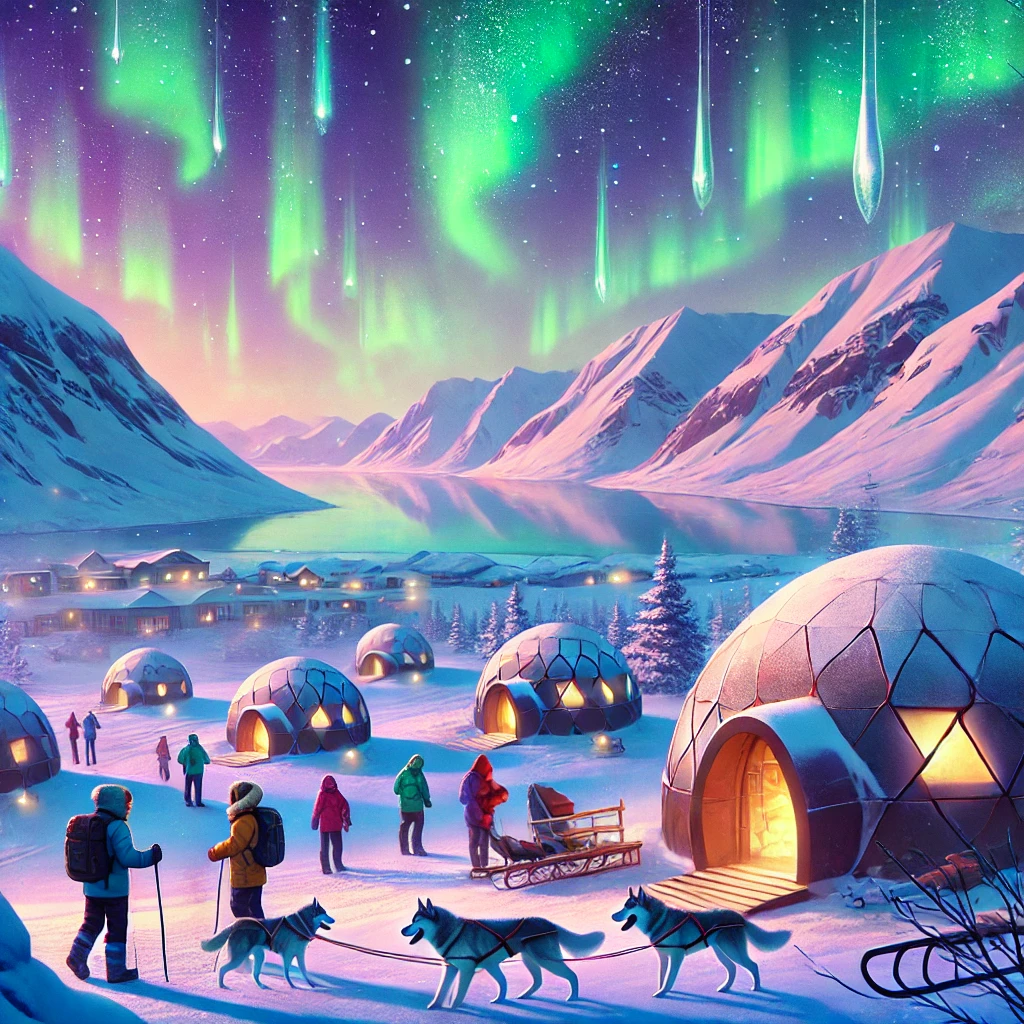
Leisure travel to the Arctic Circle has grown rapidly, driven by European tourists seeking wintry vacations and unique cultural experiences. Finnish Lapland, often marketed as the “home of Santa Claus,” has become a hotspot for holidaymakers. Finnair recently increased flights to the region by 20%, indicating a clear demand for Arctic adventures. With its aurora-lit skies, powdery ski slopes, and indigenous Sami culture, the Arctic offers an alluring blend of natural wonder and cultural enrichment.
On the other side of the Atlantic, Canada’s northernmost territory, Nunavut, is positioning itself as a rising tourism destination. Nunavut’s government aims to grow its tourism sector to $1 billion annually by 2030 by promoting its unspoiled landscapes, Inuit heritage, and wildlife viewing opportunities. This shift could bring economic benefits to local communities, though it also raises concerns about sustainability in such a fragile environment.
Antarctica Adventurism: The Final Frontier for Tourism
Meanwhile, at the bottom of the world, tourism to Antarctica has exploded over the last three decades. During the 1993–1994 winter season, only 8,000 visitors ventured south. By the 2022–2023 season, that number had grown to 105,000, with projections of 117,000 for the following year.
Most tourists to Antarctica arrive on expedition cruises, where climate scientists and naturalists lecture onboard about the unique ecosystem and the region’s role in regulating global climate. These cruises, generating $820 million annually, offer rare opportunities to witness penguins, seals, and towering glaciers while minimizing direct environmental impressions by limiting onshore activities.
Despite its growing popularity, Antarctica remains largely untouched by commercial activity. Protected by the Antarctic Treaty System, the continent is off-limits to resource extraction until at least 2048. Even then, the logistical challenges and high cost of operations in such an extreme environment make large-scale exploitation unlikely.
Key Differences in Tourism Experiences
Accessibility
The Arctic, bordered by eight nations including the United States, Canada, Russia, and several Scandinavian countries, is far easier to reach than Antarctica. Regular flights, road access, and established infrastructure make Arctic travel relatively convenient. By contrast, Antarctica is accessible only by ship or specialized flights, often involving days of travel and strict environmental regulations.
Wildlife
Both poles are celebrated for their incredible wildlife, but the experiences differ significantly. In the Arctic, travelers can encounter polar bears, caribou, and Arctic foxes, along with indigenous cultures that have thrived for millennia. In Antarctica, the focus is on marine life: penguins, seals, and whales dominate the scene, with no permanent human inhabitants.
Seasonality
Tourism at both poles is highly seasonal. The Arctic’s long, dark winters and short, sunny summers make June to August the peak season, while Antarctic tourism is confined to the Southern Hemisphere’s summer months of November to March.
Environmental Impression
The increasing popularity of both regions raises questions about environmental sustainability. In the Arctic, rising tourism and development risk disrupting ecosystems already under threat from climate change. In Antarctica, strict guidelines under the Antarctic Treaty help preserve its pristine state, but the growing number of cruise ships poses challenges.
The Future of Polar Tourism
As both the Arctic and Antarctica continue to captivate travelers, the challenge lies in balancing economic growth with conservation. In the Arctic, indigenous communities are key stakeholders, offering unique cultural experiences while advocating for sustainable practices. In Antarctica, the emphasis remains on preserving the continent’s scientific and ecological value, with tourism tightly controlled to minimize its footprint.
While tourism helps raise awareness about these fragile ecosystems, the industry must tread carefully. Both regions are bellwethers of global climate change, and their protection is not just a local concern but a global responsibility.
The Arctic and Antarctica, while geographically opposite, share a common role in inspiring awe and urging humanity to protect the planet’s most extreme and vulnerable environments. For tourists, these icy frontiers offer unparalleled experiences, from witnessing the Northern Lights in Lapland to observing emperor penguins in Antarctica. For the world, they serve as reminders of the delicate balance between human exploration and environmental stewardship.
Related Articles

Pocket-sized Xbox Ctrl
Xbox Nano Controller. Announced 14 October 2026 by James Hunter. $49.99. Rechargeable battery. Programmable Action Button. Xbox Wireless and Bluetooth.