DRIFT AUDIO
Listen to this story
Choose a voice, then press play.
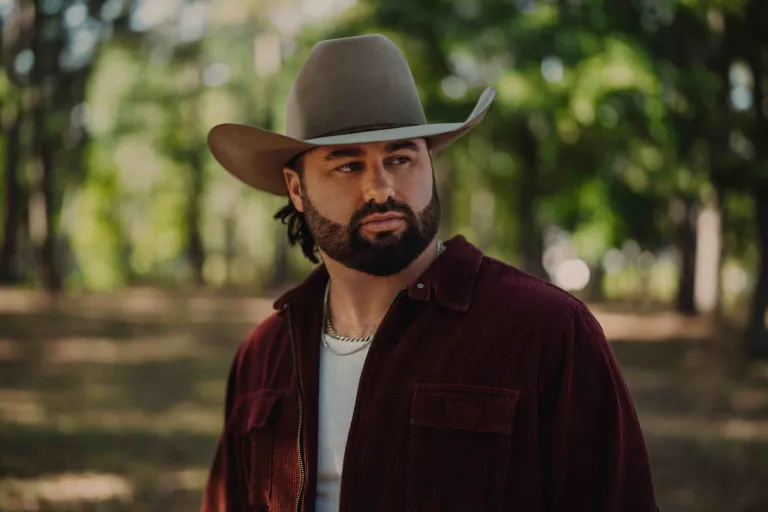
Koe Wetzel has always operated in the space where country storytelling collides with post-grunge abrasion, but “Hurts Like You” feels notably more disciplined than the chaos-first energy that defined much of his earlier catalog. Instead of leaning entirely into bar-room self-destruction, the track reframes that volatility through exhaustion, memory, and emotional repetition. The result is one of the cleaner examples of his crossover appeal: rock enough for arena catharsis, country enough to preserve narrative intimacy.
The song’s structure is deceptively straightforward. The guitars push hard without becoming overly metallic, the drums stay locked into a driving pulse built for festival crowds, and the chorus arrives with obvious live-show intentions. But underneath the anthemic scale is something more conflicted. Wetzel no longer sounds like someone glorifying recklessness for sport. He sounds like someone documenting the inability to escape it.
That distinction matters.
rugged
The hook is the centerpiece because it compresses the entire emotional logic of the song into one repeated contradiction:
“I can take the pain if it hurts like you.”
That line works because it turns suffering into identity attachment. The relationship is destructive, but the destruction itself becomes proof of emotional authenticity. The fire imagery, knife metaphors, and references to being dragged through the dirt all intensify that dynamic without becoming overly poetic or abstract.
What keeps it effective is Wetzel’s delivery. He doesn’t oversing the lines. There’s enough abrasion in his voice to make the desperation believable. A cleaner Nashville vocal would have flattened the emotional tension. Here, the rasp and strain help preserve the outlaw-country DNA even as the production becomes more radio-accessible.
frame
Musically, “Hurts Like You” sits comfortably in the increasingly blurred zone between country rock and heartland alternative. The guitar solo especially pushes the track toward classic arena-rock territory, with traces of late-’80s melodic hard rock embedded into the phrasing and tone. But the song never fully abandons country framing because the emotional center remains rooted in confession rather than swagger.
That balance is probably why the song is landing so strongly with early listeners. It satisfies multiple audiences simultaneously:
- country listeners get narrative heartbreak and rough-edged sincerity,
- rock listeners get momentum and volume,
- mainstream audiences get a massive chorus with immediate replay value.
The track understands accessibility without sounding manufactured.
stir
The most interesting part of “Hurts Like You” is that it never fully resolves whether the narrator wants escape or continuation. That ambiguity gives the song more depth than a standard toxic-love anthem.
Lines about whiskey, damage, and repeated emotional collapse position the relationship almost like an addiction cycle. The pain becomes habitual. Familiarity itself becomes seductive. Some listeners will read the song as romanticizing emotional dependency, while others will hear it as a brutally honest portrayal of how destructive attachment actually feels in real time.
The song works because it refuses to clean that contradiction up.
Wetzel isn’t presenting himself as morally victorious or emotionally healed. He sounds fully aware that the relationship is corrosive, yet still unable to detach from it. That tension gives the track its staying power.
edge
“Hurts Like You” succeeds because it understands scale without sacrificing emotional ugliness. It’s arena-sized but emotionally claustrophobic. The hooks are immediate, but the subject matter remains messy enough to avoid feeling disposable.
For longtime fans, it preserves the grit and volatility that built Wetzel’s audience. For newer listeners, it offers one of his most accessible and structurally polished singles to date. Either way, it feels positioned less as a throwaway preview track and more as a defining emotional anchor for the upcoming album cycle.
If the rest of The Night Champion maintains this balance between rawness and control, the project could mark one of the more complete evolutions of Wetzel’s career so far.
From the DRIFT archive: I Stay I Leave I Lose: Jessie Murph’s Most Brutal Confession Yet · Central Cee’s “Booga” Pushes His Sound into a Sharper, More Self-Assured Era