DRIFT

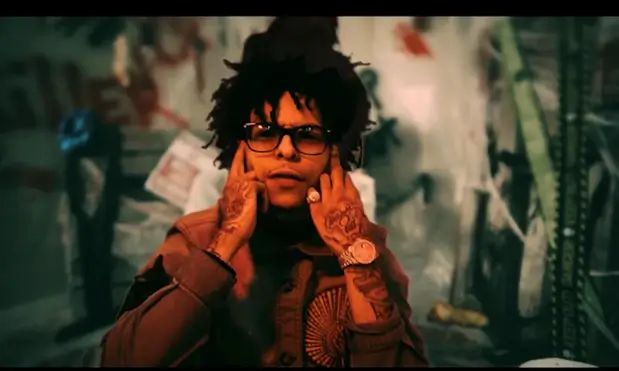
In “MELROSE,” Lil Tony doesn’t just reference a location—he constructs a view ecosystem. Melrose Avenue becomes less a street and more a coded environment where fashion, aspiration, and view intersect. The video operates with a looseness that feels observational, yet every frame carries intent: cars idling, storefronts flashing, bodies moving with a quiet sense of authorship.

The track’s rhythm is mirrored viewable through pacing that resists excess polish. Cuts are deliberate but unhurried, allowing the environment to breathe. This creates a tension between documentary realism and stylized performance—a balance that anchors the video in lived experience rather than abstraction.

Wardrobe in “MELROSE” functions as infrastructure rather than ornament. Each look extends the artist’s presence into the space around him—denim, layered tees, jewelry, and shoes forming a vocab that is instantly legible yet deeply personal. There is no overt branding overload; instead, the styling leans into texture, proportion, and attitude.

This aligns with a broader shift in West Coast visual culture, where authenticity is no longer framed through scarcity but through clarity of identity. Lil Tony’s styling doesn’t ask for attention—it assumes it.
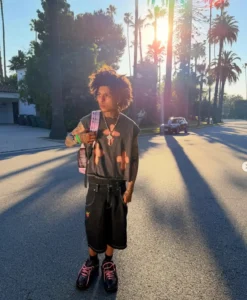
lil Tony stands in the middle of a sunlit Los Angeles street lined with palm trees, wearing casual streetwear and a backpack, capturing a laid-back West Coast aesthetic

The cinematography avoids spectacle in favor of proximity. The camera moves with Lil Tony, not ahead of him, creating a sense of companionship rather than observation. This technique collapses distance between artist and viewer, pulling the audience into the orbit of the performance.

Angles remain grounded—eye-level, street-level—reinforcing the idea that this world is accessible, even if its codes require fluency. The result is a visual language that feels intimate without being confessional.


Related Articles

A softly blurred portrait of The Kid LAROI leaning into a corner, dressed in a long dark coat against a pale, minimal room, conveying isolation and quiet emotional restraint aligned with the tone of “I Condemn.”

The Kid LAROI Steps Back with ‘I Condemn’

Mode: restrained confession Register: melodic rap stray toward pop minimalism Texture: sparse keys, negative space, vocal-forward mix Pacing: slowed emotional bleed rather than impact drop This is not engineered for climax. It hovers. The vocal sits exposed, almost unguarded, with production acting less like structure and more like atmosphere. idea Framework: loop-based repetition with slight […]

Cochise stands in a gallery space wearing a multicolored jacket, brown patchwork pants, and a patterned cap, posing beside a framed artwork of birds flying over orange-toned forms against a room background

Cochise’s “Skin Care”: Control, Not Velocity

Artist: CochiseTrack: Skin CareRegister: tightened cadence, reduced excess show Recognizable cadence remains intactLightness still central — no forced depthModular replay value preserved   View this post on Instagram   A post shared by cochise (@cochise) fin Not louder.Not bigger. Just consistent  —where movement slows,and the shapestarts to hold for a stay ready mentality.

Portrait of Billie Eilish behind a rain-speckled glass surface, her hands pressed toward the viewer. She wears a textured white jacket with metallic embellishments, and her dark hair features bright neon green roots. Soft, warm lighting highlights her calm, direct expression against a neutral background

Billie Eilish Rewrites the Concert Film with HIT ME HARD AND SOFT: THE TOUR (LIVE IN 3D)

What arrives with HIT ME HARD AND SOFT: THE TOUR (LIVE IN 3D) is not simply a concert film—it is a reframing of how live music can be experienced beyond the venue. Billie Eilish transforms the traditional format into something spatial, immersive, and deliberately intimate, using 3D cinema not as spectacle, but as a tool […]