
DRIFT AUDIO
Listen to this story
Choose a voice, then press play.
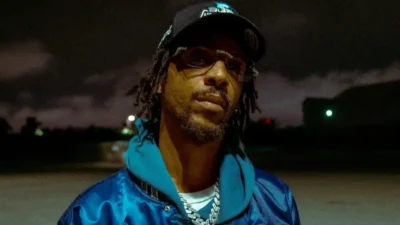
In a genre where repetition often reigns, Tee Grizzley has done something few rappers dare—crafted an episodic crime saga that grows darker, sharper, and more layered with each release. With “Robbery Part 9,” Grizzley doesn’t just continue the story—he raises the stakes, blurs moral lines, and reasserts his claim as one of rap’s most compelling street narrators.
Since the first Robbery dropped in 2020, listeners have followed a violent tale of betrayal, revenge, survival, and now, something closer to fatalism. These tracks aren’t just songs—they’re serialized street literature, delivered in grim staccato over minimal, ominous production. “Robbery 9” is not a reset or a rerun. It’s escalation.
In this chapter, Tee Grizzley leans harder into cinematic pacing. The scene opens post-shootout, with bodies on the ground and trust in shambles. Every line pushes the narrative forward. There’s no hook, no chorus—just pure plot. The protagonist is fraying, physically and psychologically, but still driven by vengeance and paranoia. It feels less like a rap and more like a script for a crime noir short film—if that film were set in Detroit and narrated by the lead trigger man himself.
Lyrically, Grizzley walks a tightrope between raw exposition and internal monologue. What makes “Robbery 9” hit harder than earlier installments is its psychological weight. The main character is exhausted, bloodied, and increasingly aware of the cost of his choices. It’s not just shoot-and-spin; it’s cause and effect. Grizzley doesn’t romanticize violence—he documents it. Brutally. Unflinchingly.
This kind of linear storytelling is rare in modern rap. Few artists have the patience—or the skill—to sustain an arc this long without losing intensity. Grizzley does it with detail, tension, and just enough restraint to keep fans guessing. He doesn’t give you everything, just enough to keep you hooked, rewinding bars to double-check if a character you thought was dead just spoke again.
Production remains sparse and intentional. The beat is skeletal, with cold piano keys and ambient dread setting the tone. There’s no sonic clutter to distract from the vocals. It’s as if the instrumental itself knows to get out of the way.
In literary terms, Robbery Part 9 plays like the penultimate chapter of a crime saga—where the hero is no longer a hero, just a man trying to finish something he started long ago. Whether he survives it remains unclear. But that’s the point.
Tee Grizzley isn’t just telling a story—he’s building a universe, one track at a time, with blood, betrayal, and bars. “Robbery Part 9” isn’t just another entry in a series. It’s proof that hip-hop still has room for long-form storytelling, and that sometimes, the most gripping epics are told in three minutes, one gunshot at a time.
Related Articles
Two Chicago Lifers, One Wave: Kaicrewsade and Luke Titus on ‘#SWAG SURF’
Kaicrewsade's new album RAINBOW_ arrived on October 14, and its second track pulls in Chicago drummer and singer Luke Titus.