DRIFT AUDIO
Listen to this story
Choose a voice, then press play.
In This Story
- A Racer in Lower Light
- Breaking Down the Build
- Reading the Tincture
- Why the Vaporfly Still Matters
- Rel
stir
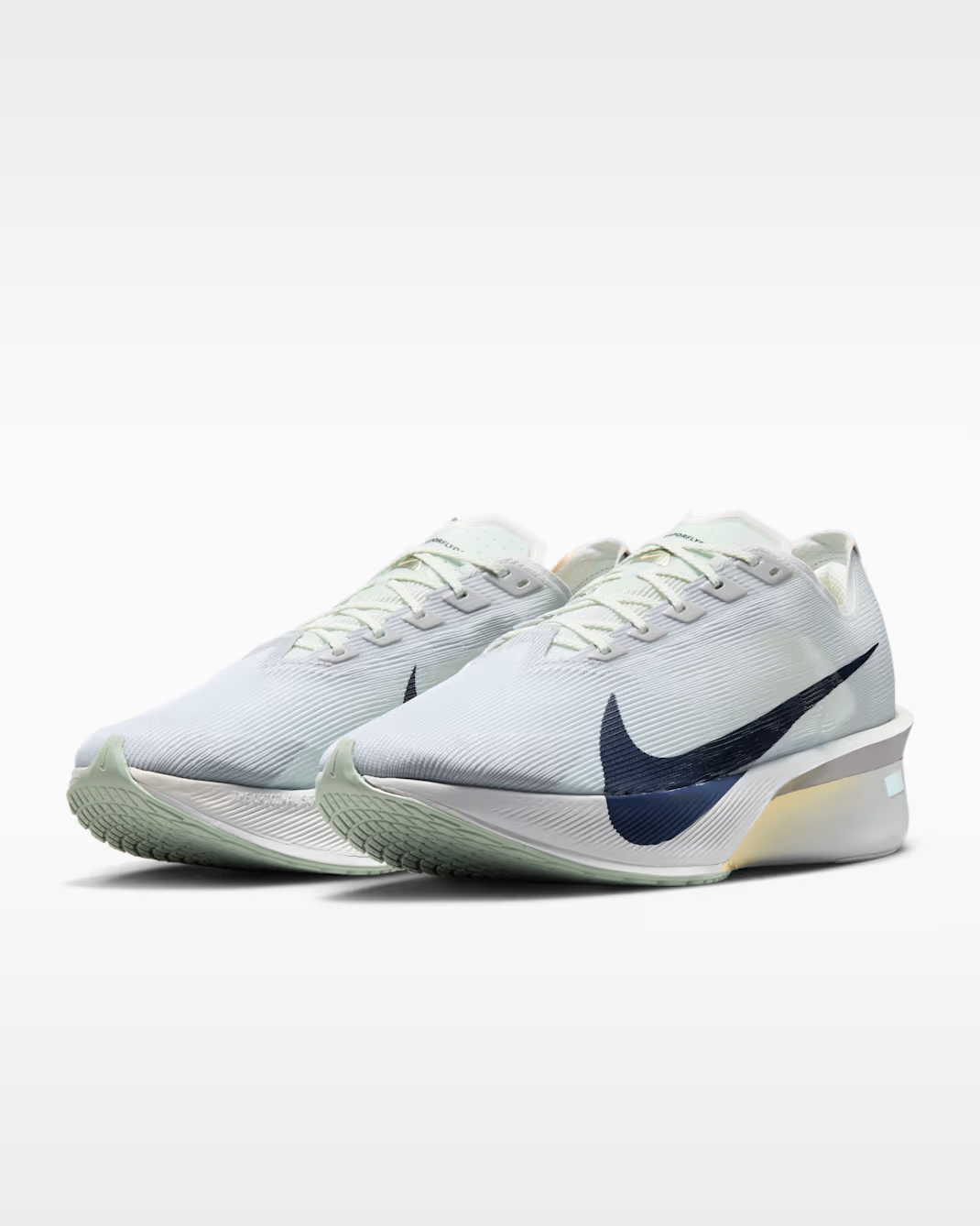
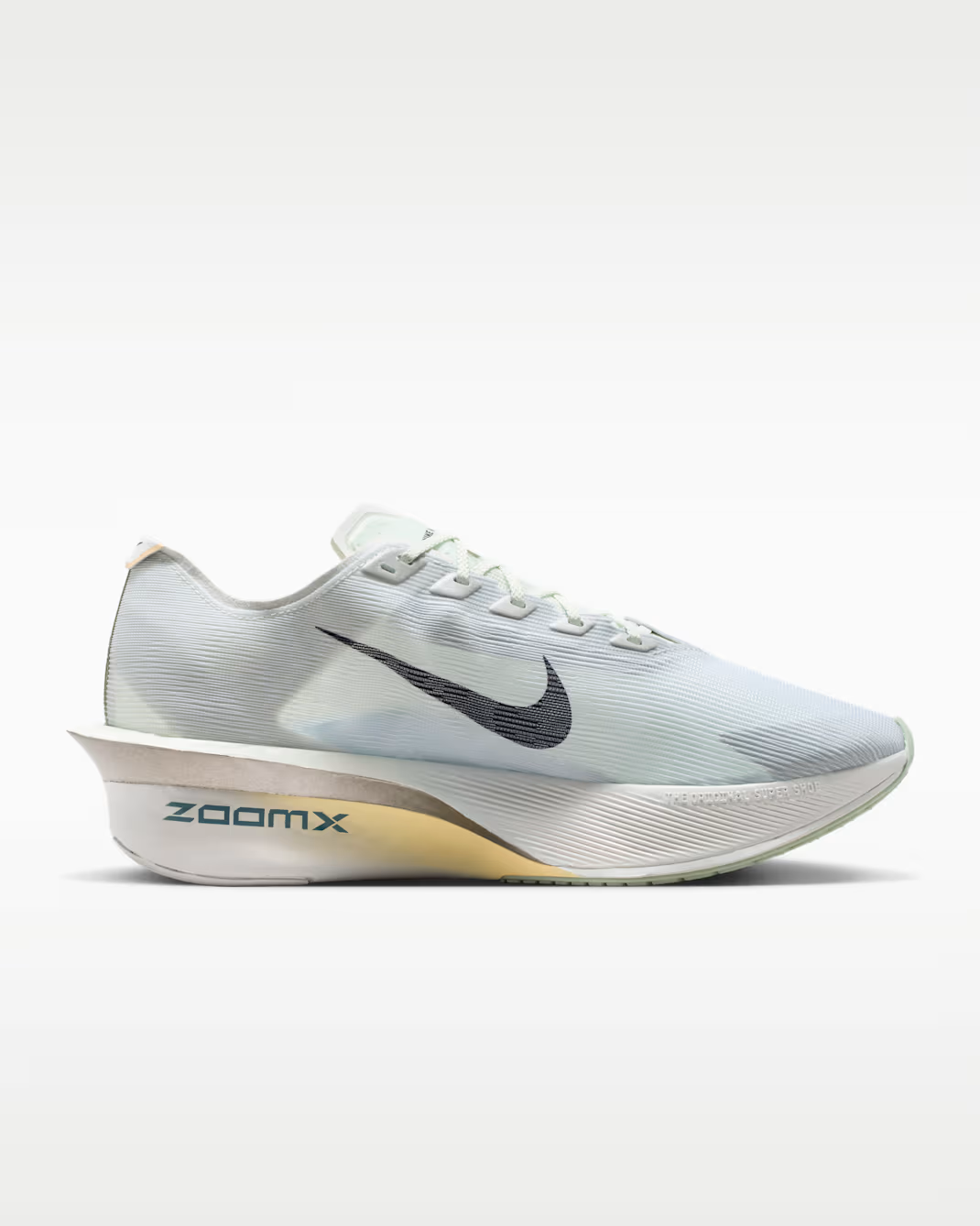
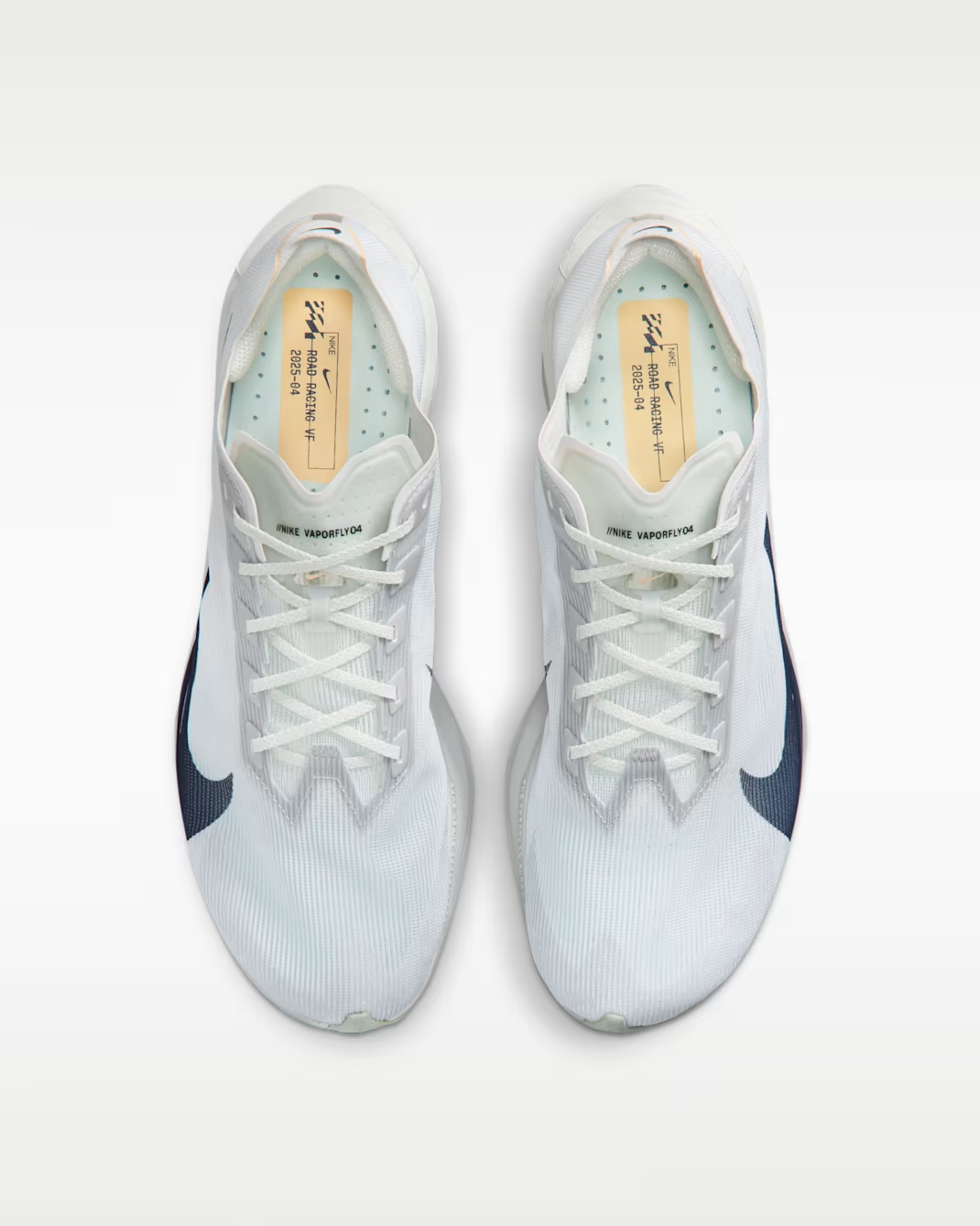
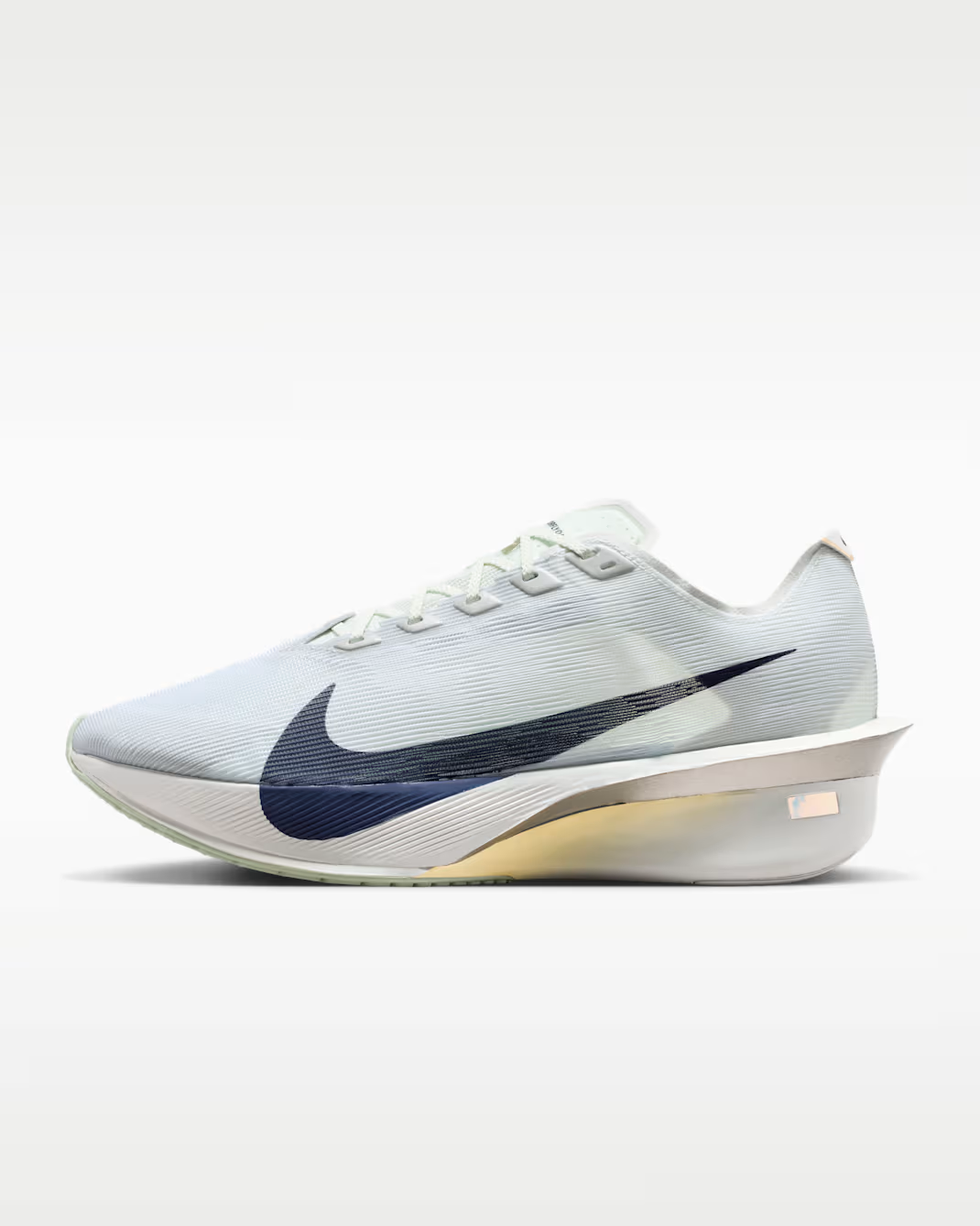
Nike’s Vaporfly line has spent eight years getting louder — hi-vis pinks, glow-in-the-dark midsoles, kaleidoscope “Light Trails” uppers built to streak across a finish-line photo. The Vaporfly 4 in Spruce Aura/Dark Obsidian-Grey Fog (style code IM8203-001) takes the opposite approach. It’s the same record-chasing chassis, dressed for a shh kind of intensity: a muted green-grey upper, an obsidian Swoosh and heel counter, and just enough tonal contrast in the sole unit to read as deliberate rather than dull.
That restraint matters more than it might seem. The Vaporfly 4 is, by Nike’s own numbers, the lightest shoe the franchise has ever produced — built to be noticed by a stopwatch, not a camera. A colorway this subdued puts the focus back where the engineering team clearly wants it: on the shoe’s shape, its proportions, and the carbon plate doing the real talking underfoot.
flow
The Vaporfly 4 carries forward the formula that turned the original 2017 Vaporfly into the most consequential running shoe of the modern era — a full-length carbon-fiber Flyplate sandwiched inside a stack of Nike’s ZoomX foam — but trims it down considerably. Nike cut roughly 10 percent of the weight found on the Vaporfly 3, landing at approximately 190 grams in a men’s size 10, by shaving material from the upper, midsole, and outsole simultaneously rather than targeting one area.
The Flyplate itself sits at a steeper angle than its predecessor’s, paired with a reduced 6mm heel-to-toe drop (down from the Vaporfly 3’s 10mm) for a stack that measures roughly 35mm at the heel and 29mm at the forefoot — comfortably inside the 40mm ceiling World Athletics imposes on competition footwear. Nike’s pitch is that the steeper plate angle and lower drop sharpen the propulsive sensation through toe-off without sacrificing the stable runners praised in the third-gen model.
View this post on Instagram
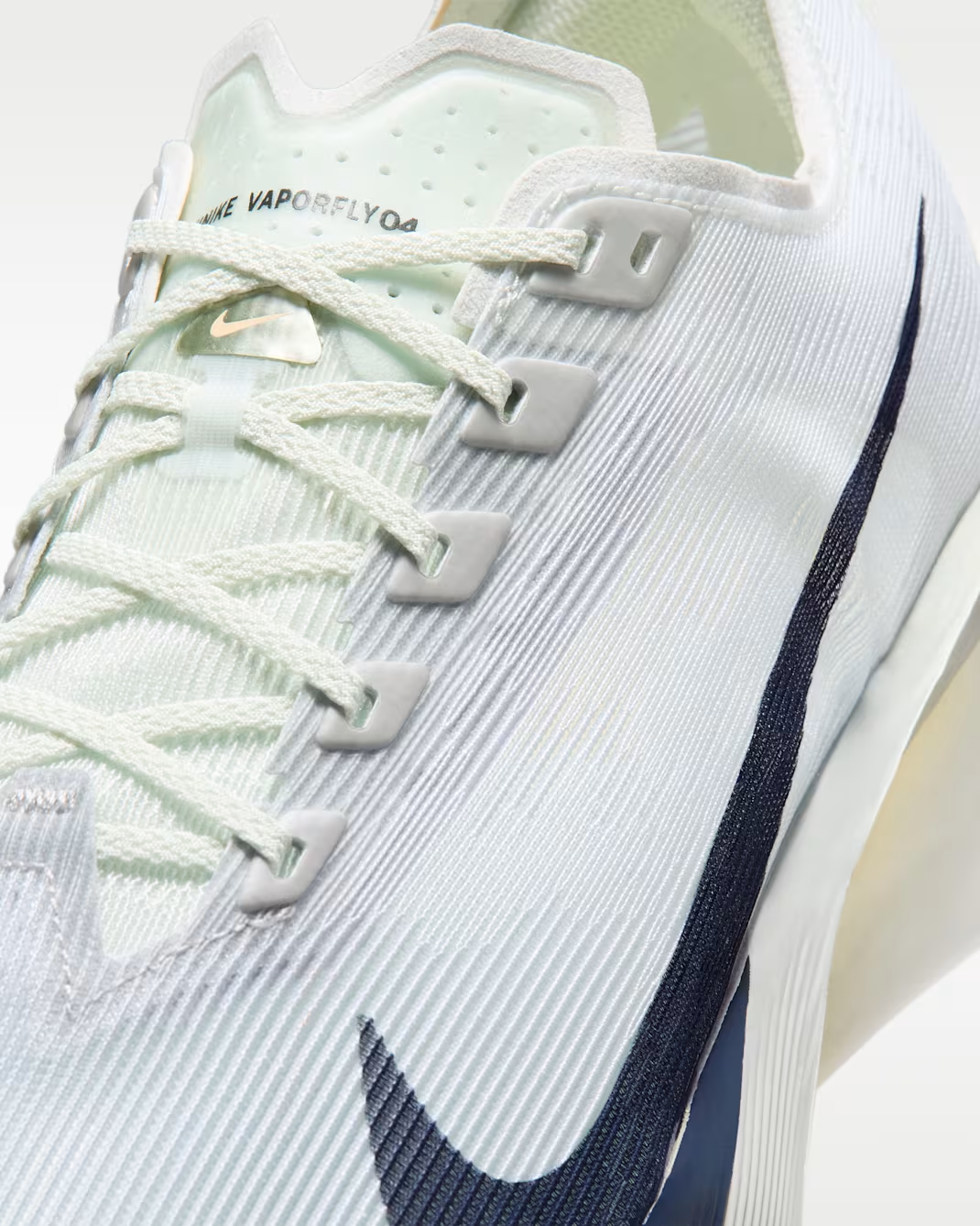
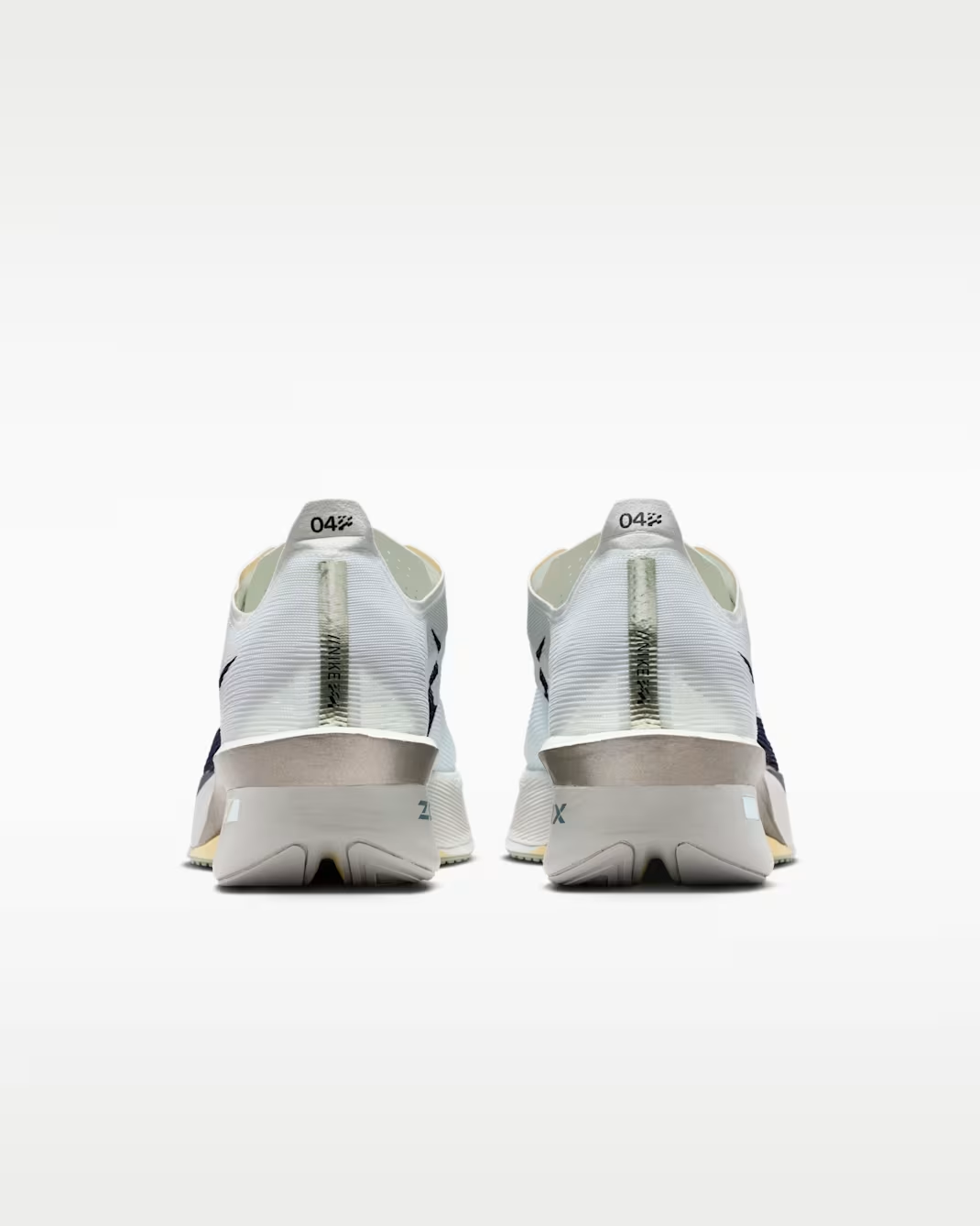
The engineered mesh upper is where most of the weight savings show up. It’s thinner and more “disappearing” against the foot than the Vaporfly 3’s, with a streamlined heel counter and slimmed-down tongue construction. Nike also reworked the outsole, applying a thinner rubber compound that still covers the high-wear zones but sheds unnecessary bulk. A small heel bulge — a detail borrowed from the Alphafly 3 — adds lateral stability for runners who land slightly outside the shoe’s centerline. Independent lab testing has measured the shoe’s energy return in the high 70-percent range, among the best results recorded for any current racing flat, while also noting an actual drop measurement closer to 8–9mm once tested under load — a gap between Nike’s marketing spec and bench results that’s become a recurring footnote in third-party reviews of the model.
scope
Spruce Aura functions here as the dominant note across the mesh upper — a desaturated, blue-leaning green that reads almost camouflage-adjacent under indoor light and shifts cooler outdoors. Dark Obsidian, Nike’s near-black, takes over the Swoosh, heel clip, and branding details, grounding the upper with a hard edge rather than letting the green soften everything. Grey Fog rounds out the palette on the midsole and outsole, a neutral that keeps the ZoomX foam from competing view with the upper above it.
It’s worth flagging that some third-party listings for this SKU reference a fourth color term that doesn’t correspond to any verify Nike tincture name — almost certainly a transcription or retailer-listing error rather than an official designation. Nike and its authorized retail partners consistently list this pair as a three-part colorway: Spruce Aura/Dark Obsidian-Grey Fog.
Where the Vaporfly 4’s splashier releases — the “Light Trails” multicolor, the Eliud Kipchoge “No Human Is Limited” pack — lean into spectacle, Spruce Aura sits closer to the lineup’s training-adjacent, day-racer colorways: low-contrast, versatile with a broader range of kit, and arguably better suited to a shoe most owners will log far more easy miles in than actual race-day efforts.
still
It’s easy to forget, eight years and a dozen competitor “super shoes” later, just how disruptive the original Vaporfly was. Born out of Nike’s Breaking2 marathon project, the shoe paired a carbon-fiber plate with the springy ZoomX foam Nike had been developing since the mid-2010s, and the combination measurably improved running economy — enough that record times across the marathon distance reset within a few years of its release. Every major running brand now makes some version of the same recipe.
Nike has since shifted its elite marketing weight toward the Alphafly line for marathon specialists, but the Vaporfly has settled into a different, arguably more useful role: a do-everything racer built for distances from the 5K to the full 26.2, worn by recreational racers chasing a personal best far more often than by athletes on a podium. The Vaporfly 4’s case for relevance isn’t a new world record — it’s that Nike kept refining a shoe that didn’t strictly need refining, and the result is more comfortable, more stable, and lighter than anything the franchise has released before.
fin
The Vaporfly 4 launched globally in March 2025 at a $260 USD retail price, with the Spruce Aura/Dark Obsidian-Grey Fog colorway following as part of the model’s broader in-line rollout. As of this writing, the pair is available through select international retailers, including European stockists, in both men’s and women’s sizing.
Related Articles
Nike A’Two “Potion No. 22” Gives A’ja Wilson a Mismatched Horror Double Bill
Two shoes, two monsters: A’ja Wilson’s Halloween A’Two splits blood splatter and honeycomb across a […]