
DRIFT AUDIO
Listen to this story
Choose a voice, then press play.
As Supreme’s Spring/Summer 2026 season continues accelerating, Week 12 arrives less like a conventional product release and more like an atmospheric interruption. The arrival of the Supreme x SALEM capsule on May 14, 2026 — followed by the Japan and Asia release on May 16 — immediately separated itself from the louder rhythm of contemporary streetwear flow. There are no oversized celebrity endorsements, no hyper-commercial campaign structures, and no forced nostalgia loops. Instead, the collision cooperates through tension, ambiguity, and mood.
What makes the project compelling is precisely how unlikely it initially appears. SALEM’s visual and sonic identity has always existed in murky emotional territory: grainy textures, distorted soundscapes, institutional imagery, and emotional heaviness that often feels intentionally unresolved. On paper, that aesthetic seems incompatible with the view-driven architecture of modern streetwear. Yet the collaboration works because it reconnects Supreme with a darker undercurrent that has quietly existed inside the brand’s DNA since its earlier eras.
flow
SALEM’s significance stretches far beyond niche internet mythology. Formed in 2006 by Jack Donoghue, John Holland, and Heather Marlatt, the group helped establish the foundations of witch house and influenced the atmospheric direction of cloud rap long before either aesthetic entered broader culture circulation. Their landmark 2010 mixtape King Night became foundational listening for a generation raised on Tumblr-era internet culture, distorted 808s, slowed vocals, and emotionally detached visuals.
Even after disappearing from public view for extended periods, SALEM’s influence never fully dissolved. Their 2020 return with Fires in Heaven arrived during lockdown isolation and resonated with listeners navigating exhaustion, uncertainty, and digital overstimulation. By 2026, the group’s influence exists almost invisibly across music, fashion, online editing culture, and fragmented visual aesthetics. Supreme’s decision to connect with them therefore feels less like random experimentation and more like an acknowledgment of a subcultural current that quietly shaped an entire generation.
sig
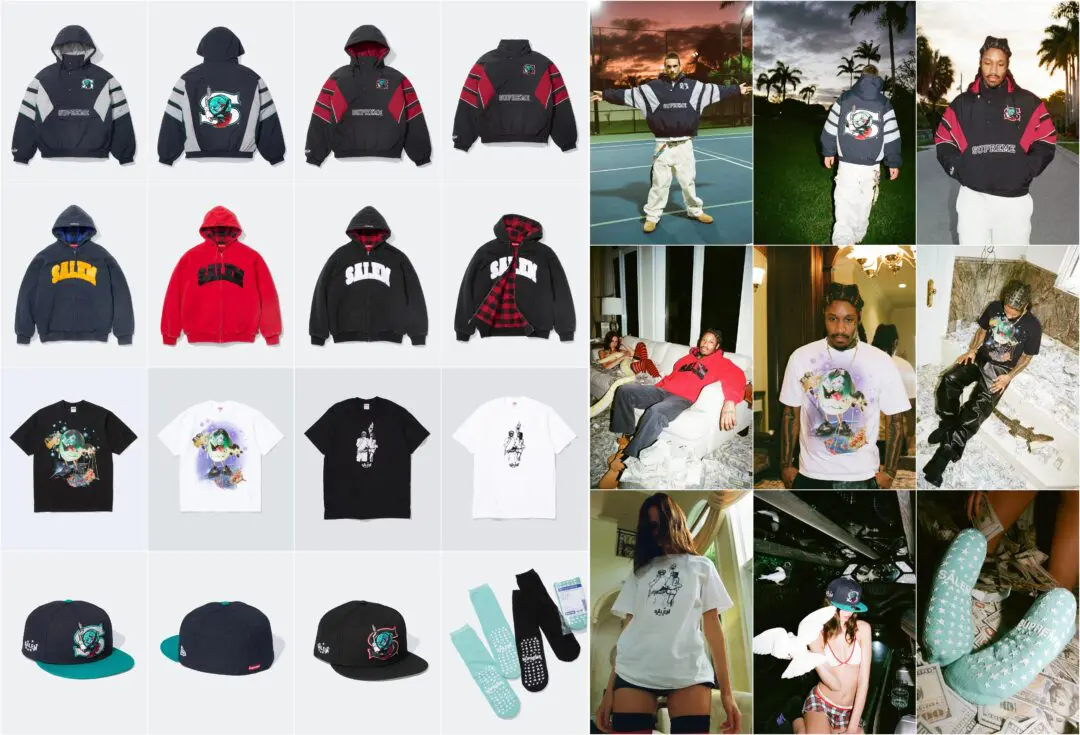
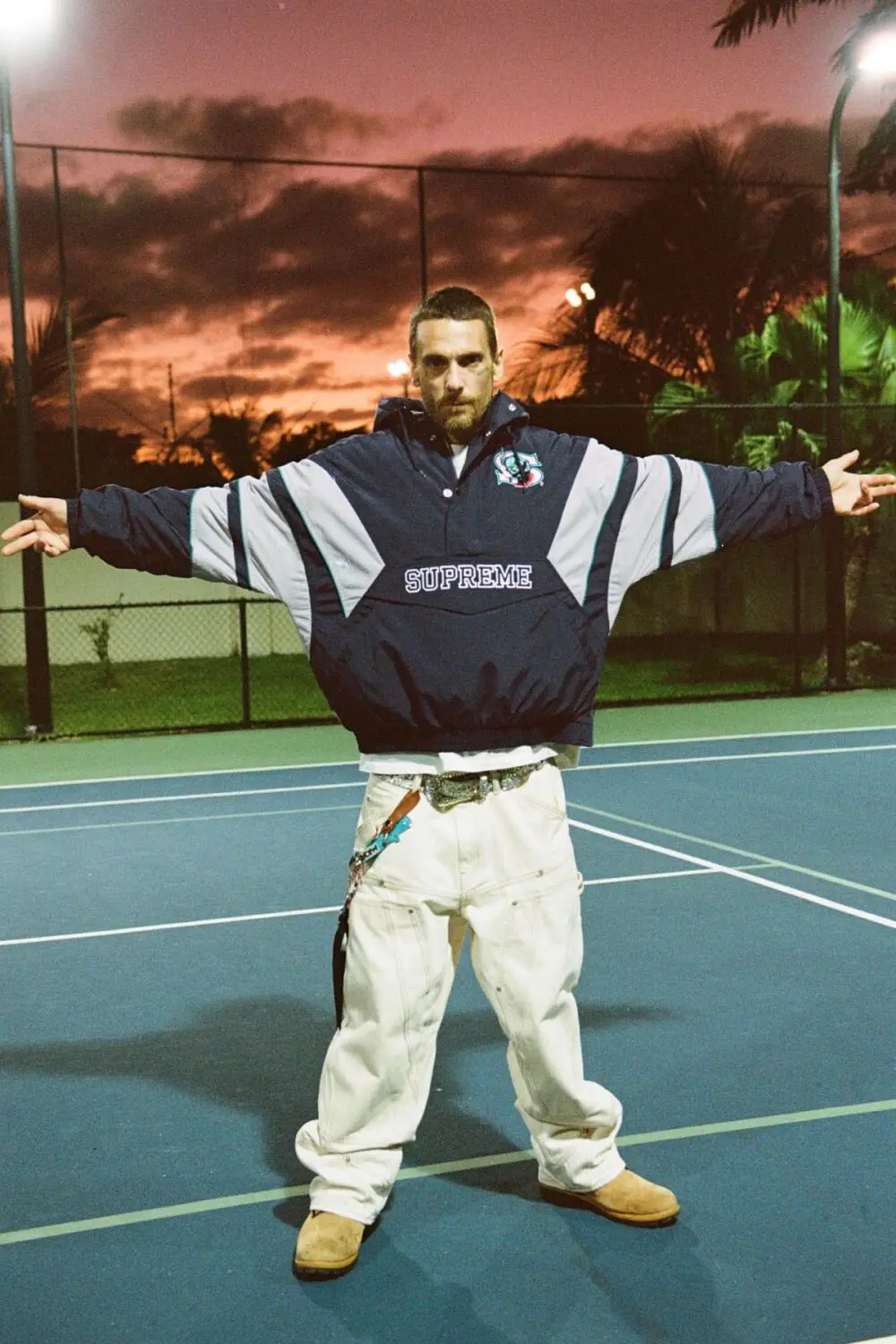
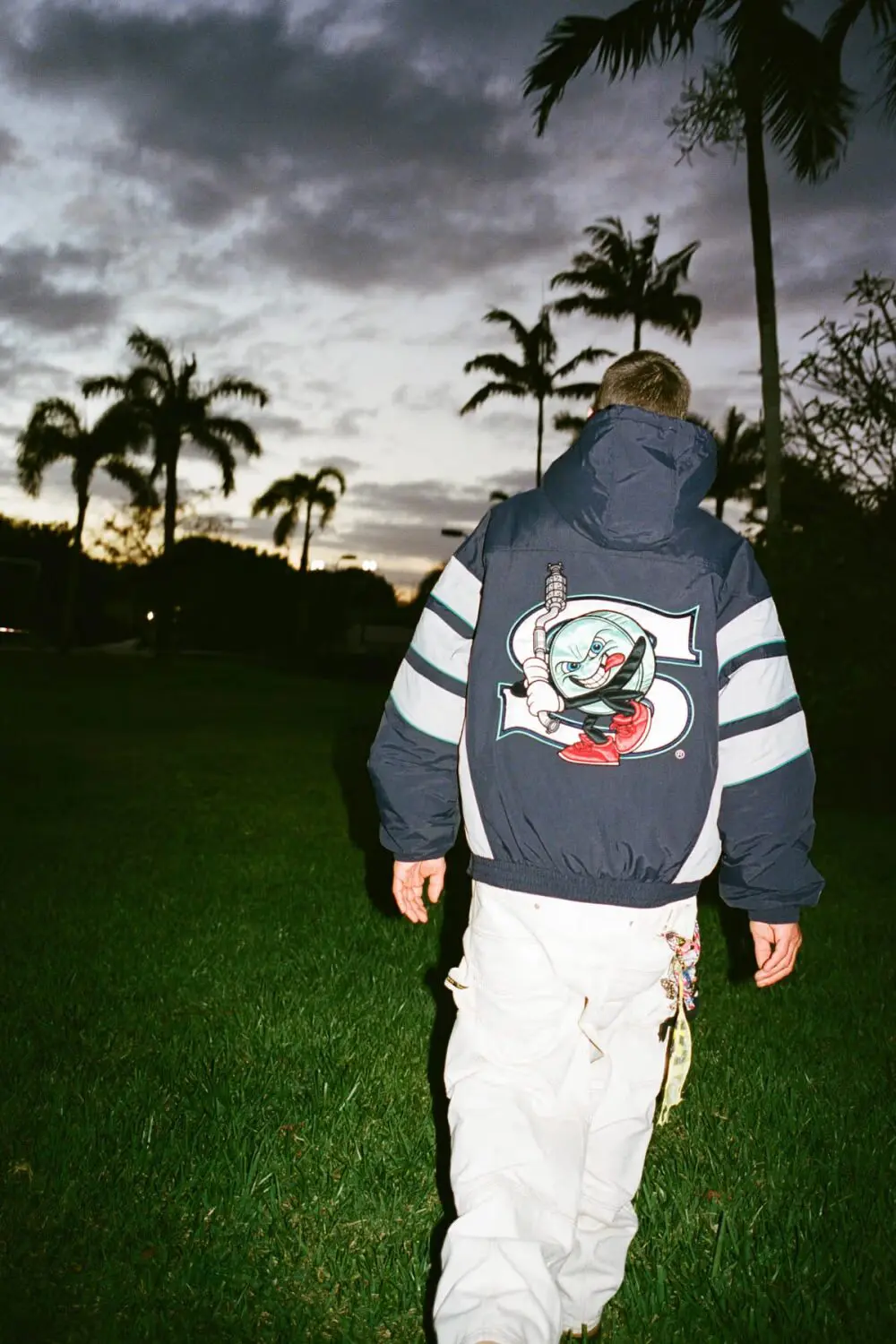
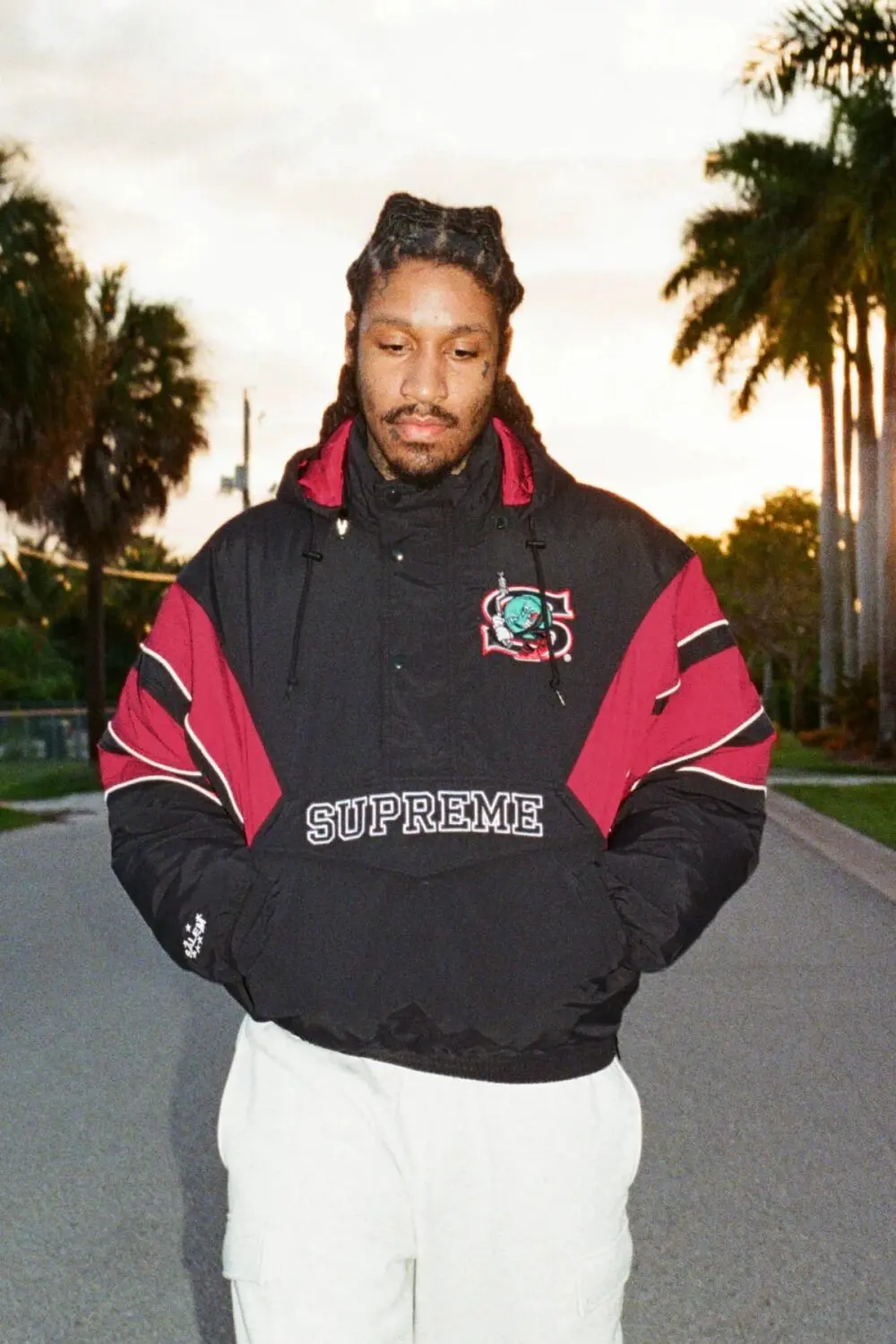
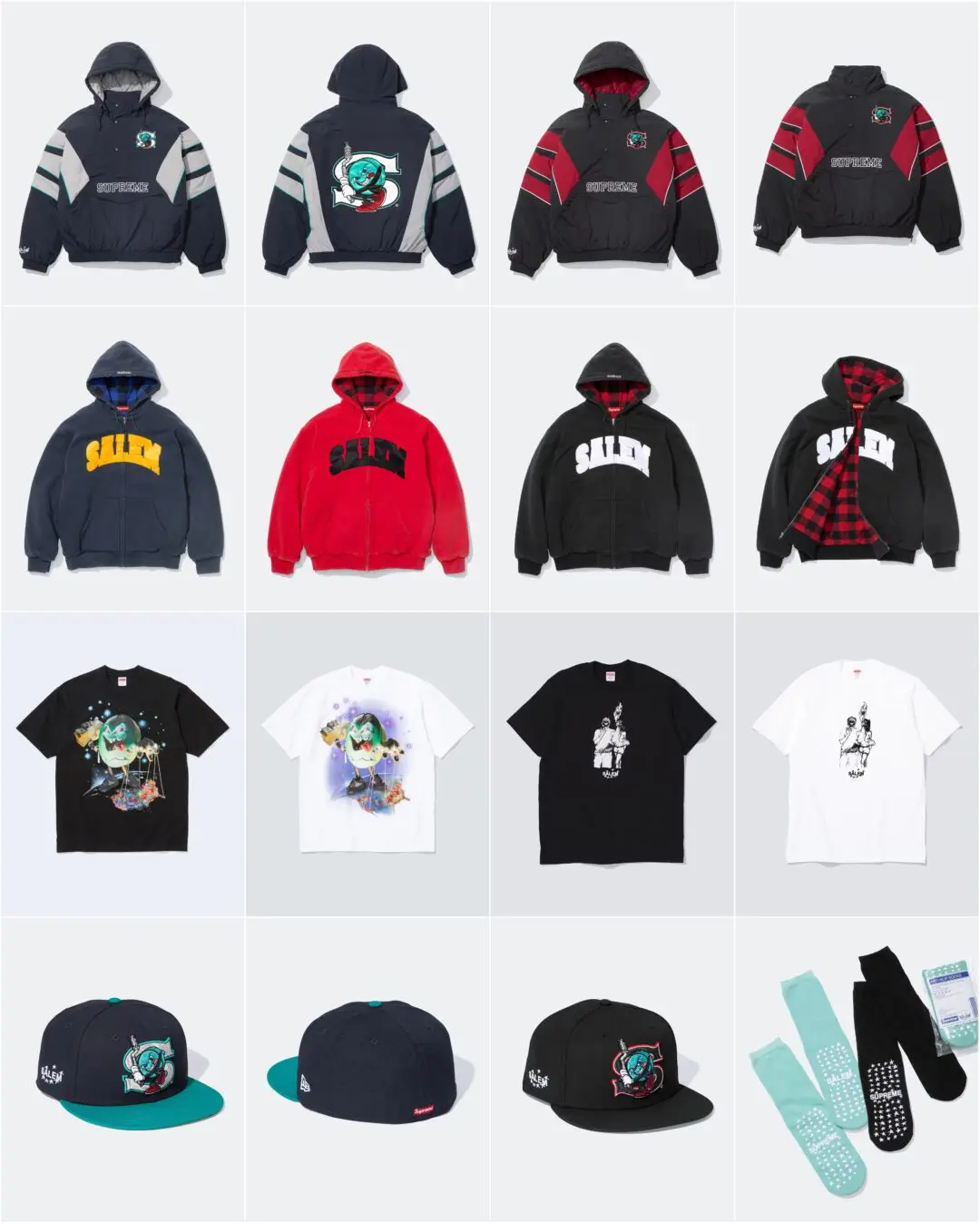
The capsule itself avoids filler entirely. Every piece contributes to the collision’s emotional tone rather than functioning as simple branded merchandise. The Half Zip Stadium Jacket immediately emerged as the centerpiece of the collection. Constructed in nylon with oversized proportions and color-blocked paneling across navy, black, and red variations, the piece merges athletic structure with unsettling graphic language. A surreal “S” mascot graphic placed across the chest feels simultaneously playful and vaguely threatening, perfectly encapsulating the uneasy duality SALEM has always communicated.
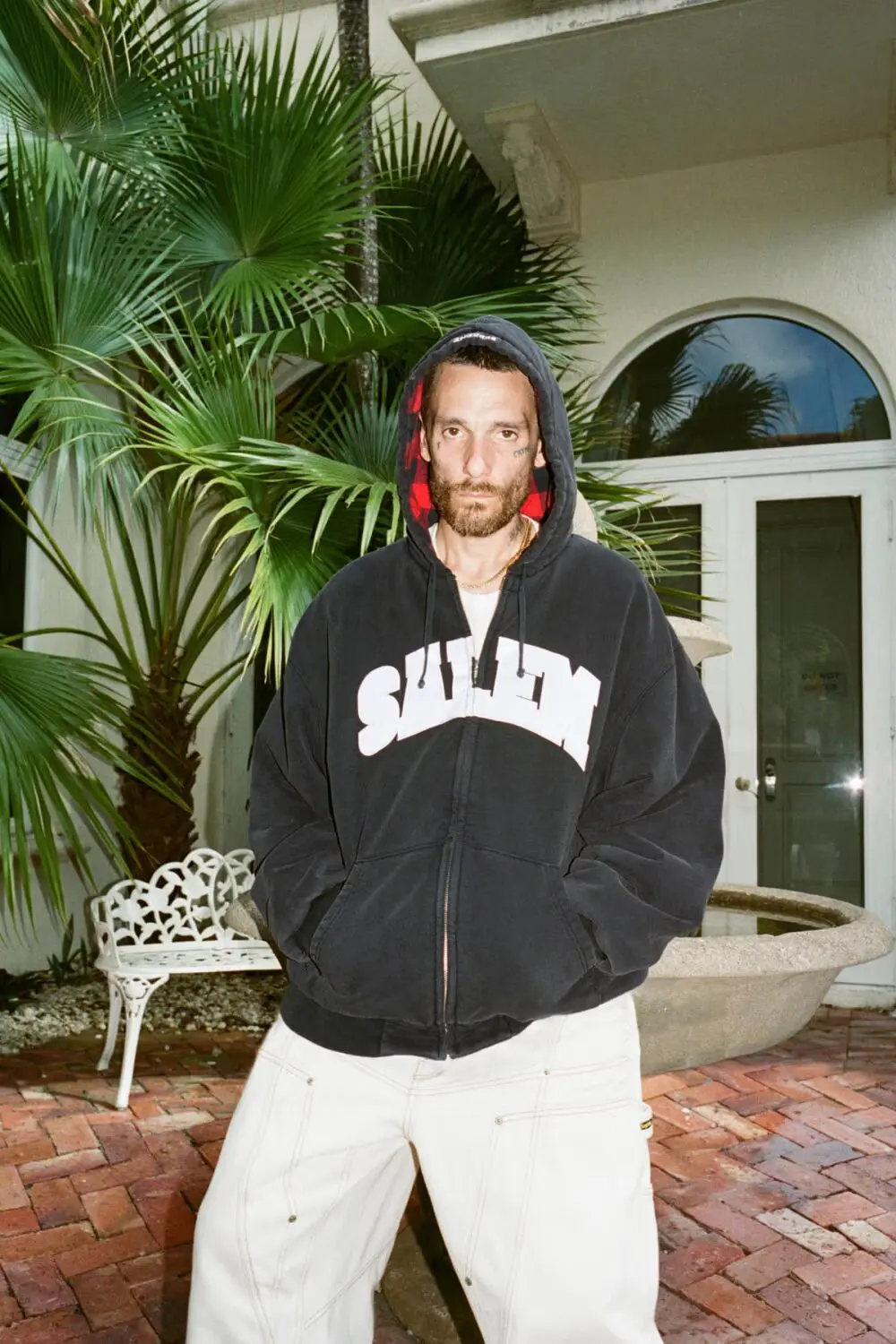
The Zip-Up Hooded Sweatshirt expands the capsule’s tonal heaviness through dense fleece construction, oversized SALEM lettering, and plaid interior linings that subtly elevate the garment beyond standard Supreme basics. The proportions matter here: oversized enough to feel protective, structured enough to avoid collapsing into generic loungewear. The hoodie feels intentionally transitional, built for unstable spring weather and equally unstable emotional climates.
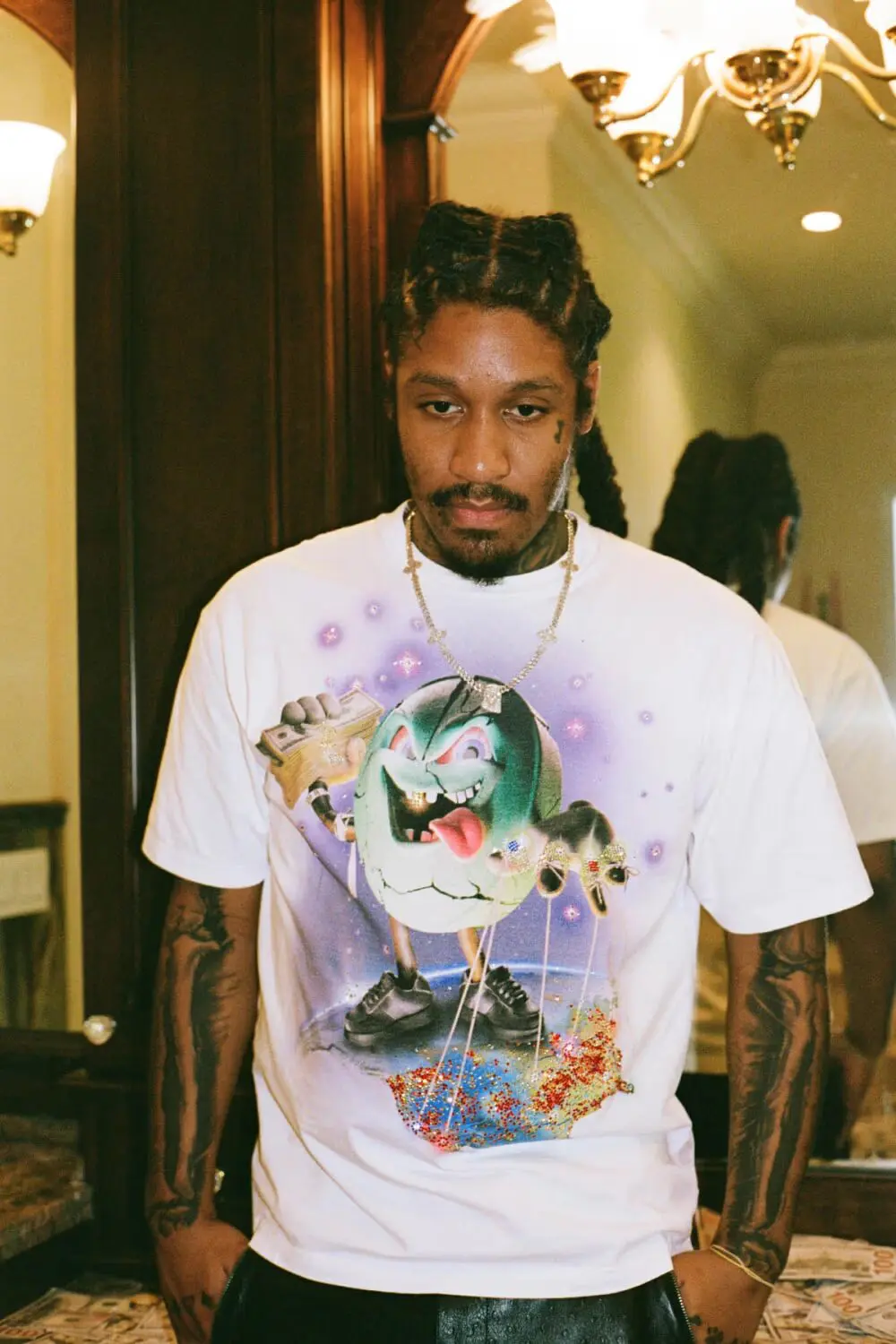
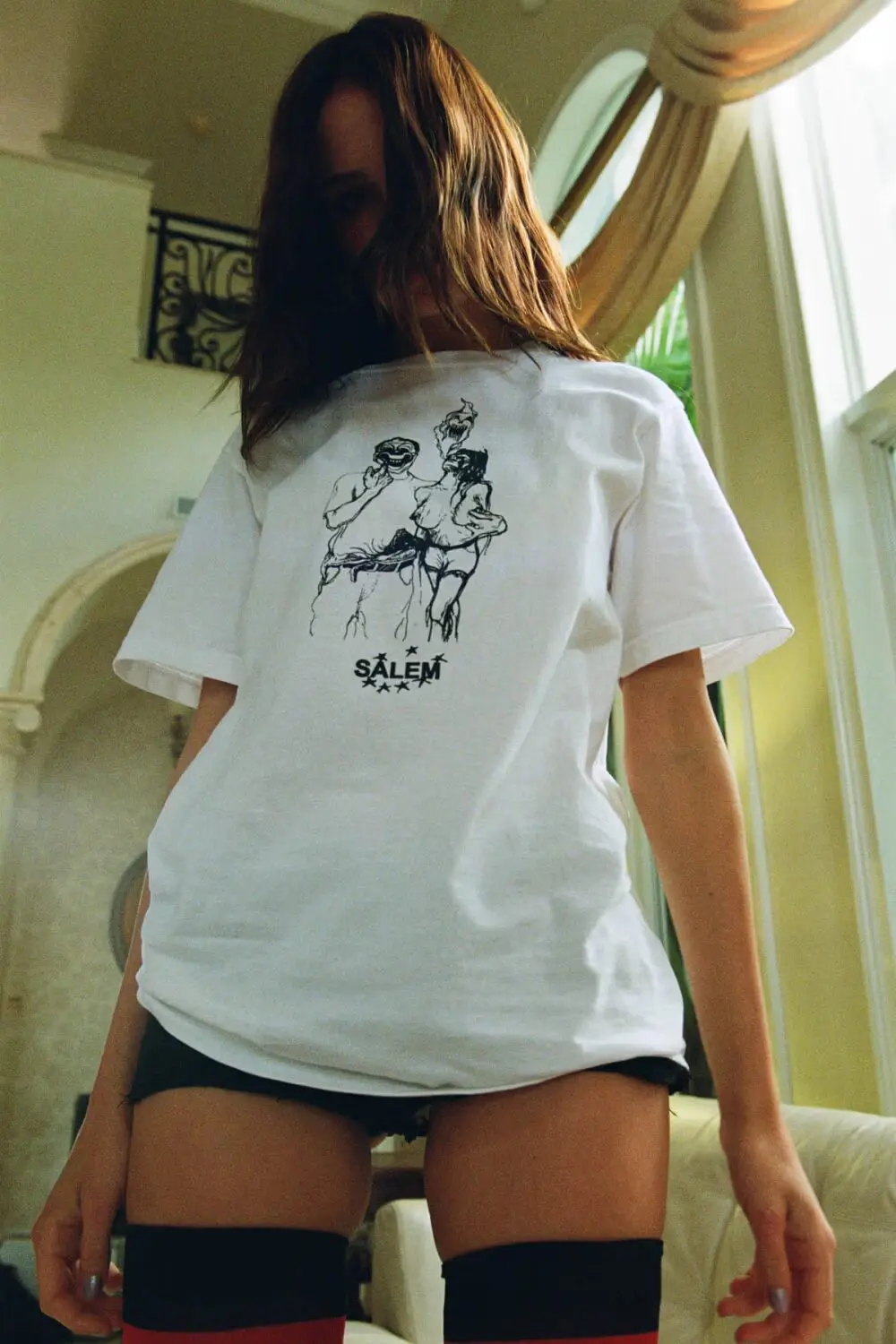
Elsewhere, the S/S Top and graphic tee rely on restraint. Institutional graphics and cryptic SALEM iconography reward close viewing rather than immediate attention. Nothing about the collection feels designed for instant algorithmic visibility. Instead, the garments function through accumulation and atmosphere — details that become stronger the longer they exist within a wardrobe.
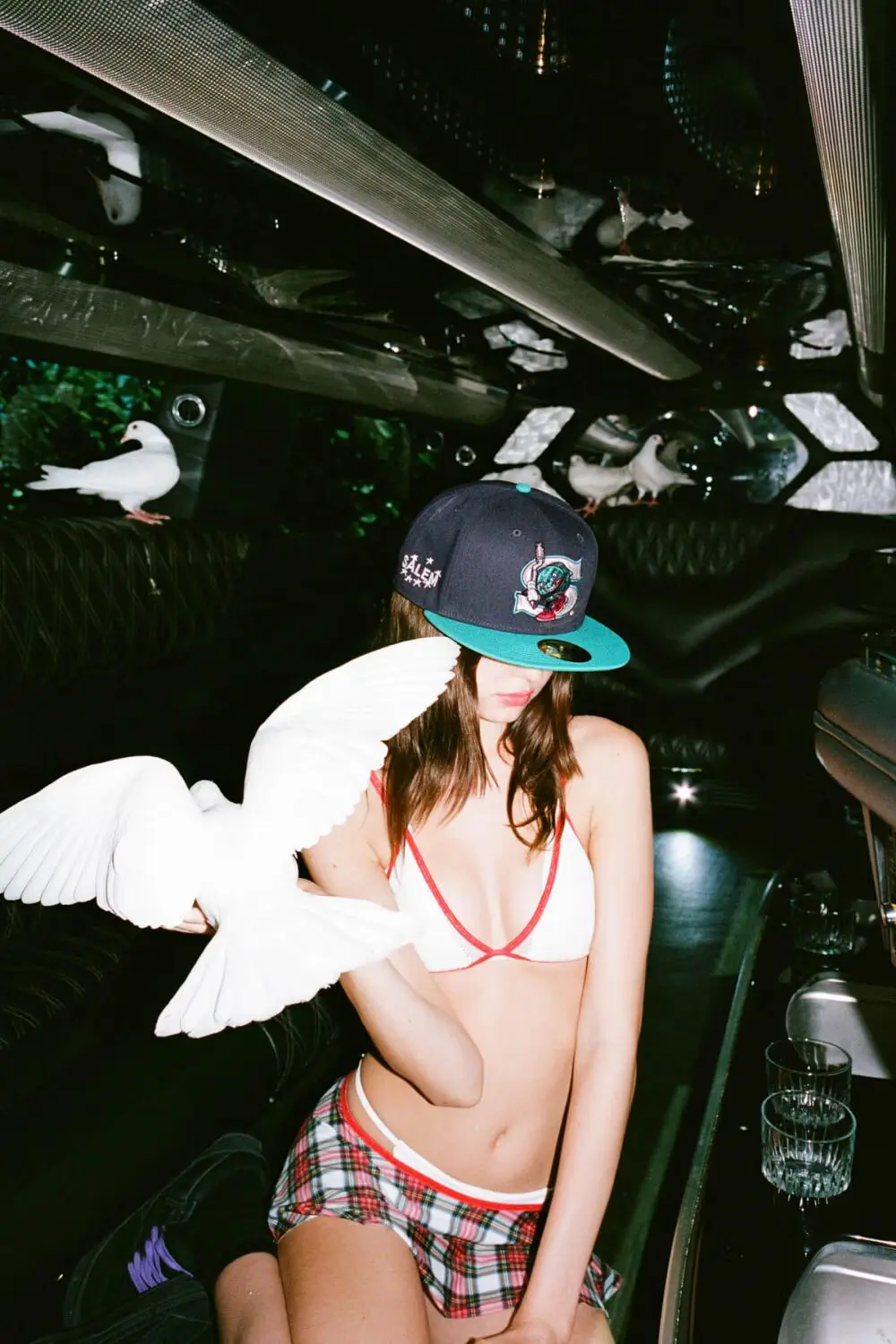
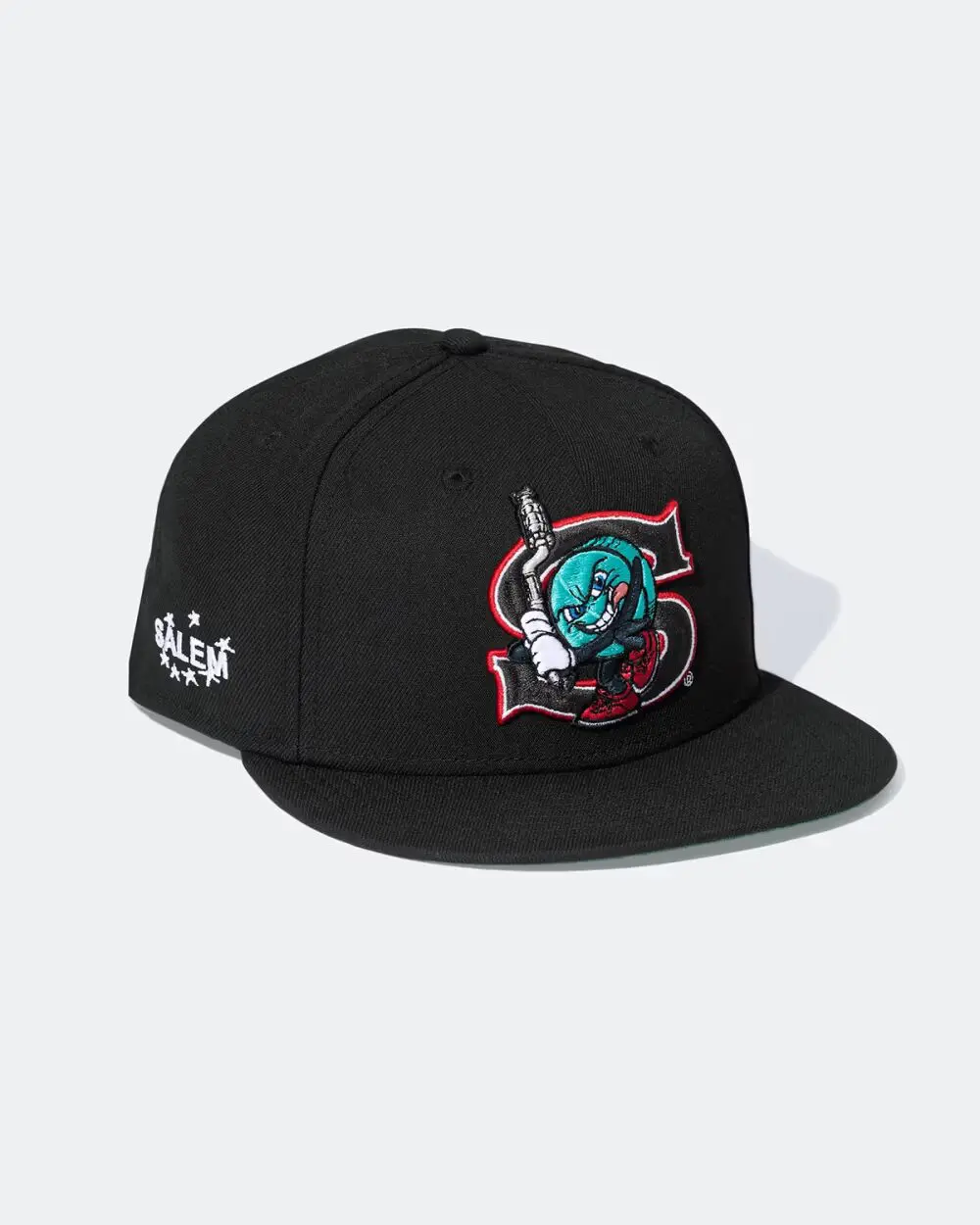
The New Era fitted cap provides the collection’s most accessible entry point, but the Hospital Socks unexpectedly became one of the collaboration’s defining details. Their light blue and black colorways, combined with medical-style grip bottoms, evoke clinical spaces and emotional discomfort in a way that feels deeply connected to SALEM’s world-building. What could have become novelty instead lands as one of the collection’s sharpest conceptual gestures.
View this post on Instagram
scope
The campaign imagery reinforces the collaboration’s refusal to behave like traditional streetwear marketing. Artists including PaymeSkrilla and Mazzy Joya appear inside dimly lit environments filled with concrete textures, shadows, and emotional distance. Nobody smiles. Nobody performs excitement for the camera. The visuals feel closer to fragmented scenes from a SALEM video than a seasonal fashion rollout.
That atmosphere became even more noticeable because of the broader context surrounding Week 12 itself. Bright logo-driven pieces, gold accessories, Arabic branding, and patchwork knitwear filled much of the seasonal offering, making the SALEM capsule feel like an intentional disruption within Supreme’s own ecosystem. Rather than competing through volume, the collection quietly absorbed attention by operating at a completely different emotional frequency.
commune
Community response following the May 14 release revealed a sharp split. Longtime fans praised the collaboration as one of Supreme’s strongest music capsules in recent memory, celebrating its cohesion and emotional clarity. Others criticized the lack of louder branding, brighter palettes, or more obvious visual payoff. That divide arguably confirms the project’s success. It was never intended to function as universal merchandise.
Early resale movement reflected that dynamic as well. The Stadium Jacket emerged as the immediate standout, while hoodies moved steadily and accessories provided affordable access for younger buyers. In Japan, anticipation reportedly intensified ahead of the May 16 release, with navy colorways generating particularly strong demand across Tokyo retail locations.
style
Part of the collection’s strength lies in its adaptability. The pieces reward layered styling rather than isolated flex culture. A navy Half Zip Stadium Jacket over the black hoodie paired with technical cargos creates a distinctly nocturnal urban silhouette. The graphic tee worn beneath an unzipped half-zip with relaxed denim introduces softer contrast. Full monochrome styling amplifies the collection’s emotional restraint, while brighter layering pieces create unexpected tension against SALEM’s darkness.
Footwear pairings naturally lean toward archival sneakers and grounded classics — Jordan 1s, Dunk Lows, heavy boots, or stripped-back runners. The garments do not dominate an outfit; they intensify whatever already exists around them. That subtlety becomes part of the collection’s durability.
why
More broadly, the collide signals something significant about where contemporary streetwear currently sits culturally. Recent seasons across fashion have increasingly balanced between ultra-clean minimalism and overt logo maximalism. The SALEM project instead embraces discomfort, ambiguity, and emotional density.
I
View this post on Instagram
n many ways, the collision feels aligned with the emotional climate of 2026 itself — a moment shaped by political exhaustion, climate anxiety, algorithm fatigue, and constant digital overstimulation. The capsule channels dark escapism not as costume but as atmosphere. That is why even smaller details, like the Hospital Socks, resonate beyond gimmickry. They communicate vulnerability, repetition, institutional coldness, and subtle instability through something as simple as apparel accessories.
fin
The Supreme x SALEM collab succeeds because it trusts atmosphere more than hype. It does not scream for validation or visibility. It hums quietly in the background until the viewer leans closer. In a season filled with louder releases, that restraint becomes powerful.
The capsule proves Supreme can still surprise audiences without abandoning its core identity. More importantly, it demonstrates that underground music culture continues shaping fashion from the shadows rather than the other way around. SALEM brought emotional texture back into the conversation, and Supreme allowed that texture to remain intact instead of polishing it into something safer.
For a collision built around distortion, fog, and emotional heaviness, the result feels remarkably focused. The static remains. The atmosphere lingers. And in 2026, that lingering feeling may be exactly what gives the collection its lasting value.
From the DRIFT archive: Y-3 Sets the Tone for Its Spring/Summer 2026 Collection · Saint Laurent Unveils New Visuals For Its Spring 2026 Collection
Related Articles
Supreme Week 8 Puts Rita Ackermann’s Artwork on Work Jackets and Soccer Kits for Japan on October 10
Supreme’s Week 8 arrives in Japan on Saturday, October 10, led by Rita Ackermann artwork […]