The Bones Remember: What 4,000 Year Old Skeletons Reveal About Egypt’s Warrior Princesses
 Paul Jean
July 17, 2026
0
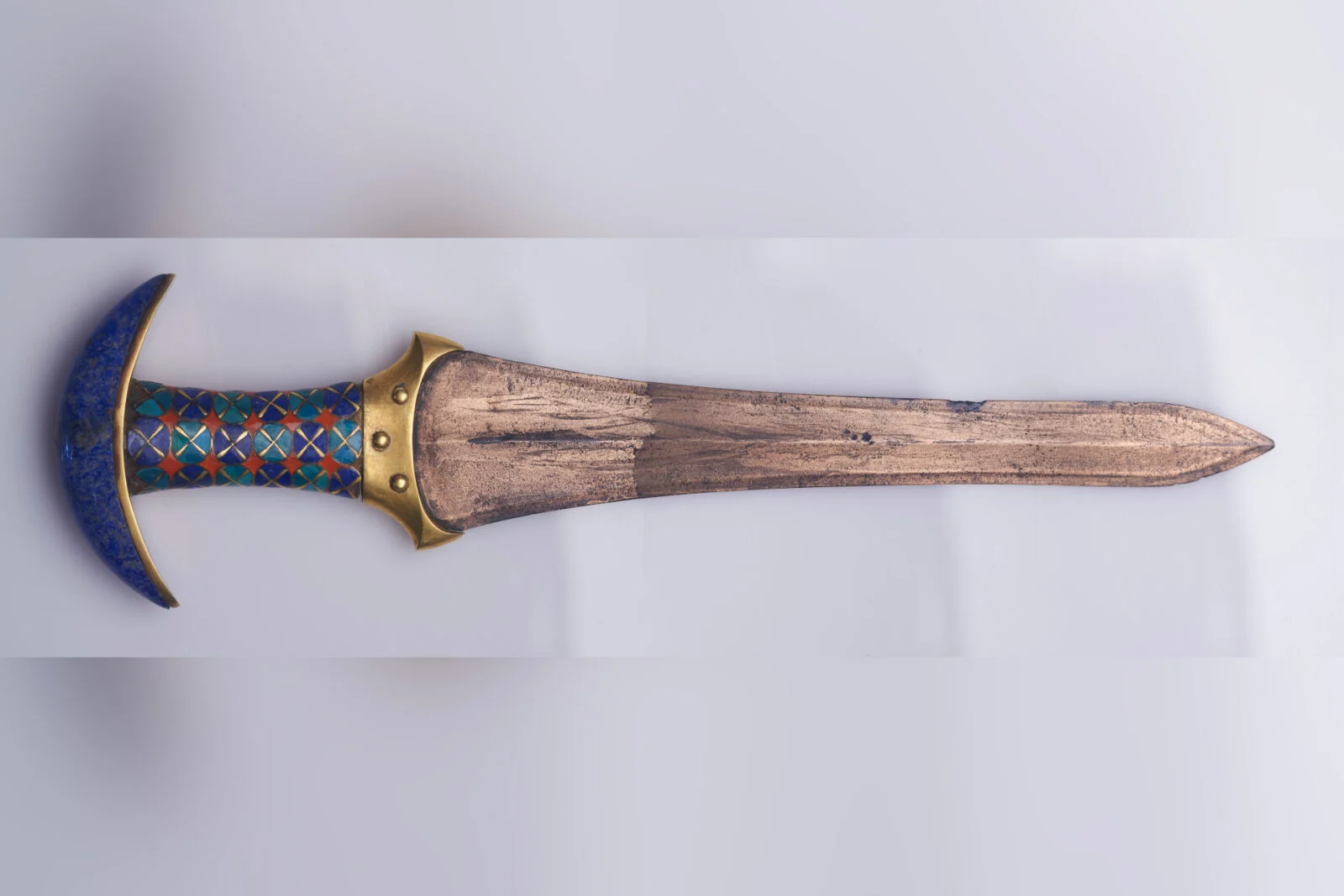
A jewelled dagger sat behind glass in Cairo for decades before anyone thought to ask either the woman it was buried with could actually use it.
recall
- A Museum Basement Gives Up Its Secret
- Reading a Skeleton Like a Diary
- The Riddle the Weapons Posed
- Six Royals, One Emphatic Answer
- The Paradox of Privilege
- What the Skeletons Still Won’t Say
The Egyptian Museum in Tahrir Square has a basement that most visitors never see, and in 2020, a team of curators working through it opened two wooden boxes that had sat undisturbed for more than a hundred years. Inside were the remains of six people, some of them still wrapped in yellowed newspaper from the 1890s, the packing material used by the crews who dug them out of the ground.
Those crews worked for the French archaeologist Jacques de Morgan, who excavated the royal shaft tombs at Dahshur, the pyramid field south of Cairo, in 1894 and 1895. Among his finds were four sisters, daughters of the Middle Kingdom pharaoh Amenemhat II, buried in matching underground chambers alongside a fifth princess and a king. Their skulls were sent to a Cairo medical museum for study and vanished sometime in the early twentieth century. The rest of the bones drifted into storage and were, for the most part, never examined again.
De Morgan’s original dig was, by the standards of its era, a spectacular one. Dahshur’s shaft tombs turned out to hold some of the finest royal jewelry ever recovered from the Middle Kingdom, pectorals, crowns, and inlaid pieces so accomplished that they still anchor entire museum galleries today. That craftsmanship became the story people told about these tombs for more than a century. The people buried inside them, by comparison, were almost an afterthought, boxed up and left in storage while the objects around them went on display.
That changed when a research team led by Dr. Zeinab Hashesh of Beni-Suef University got hold of what remained. Working from incomplete skeletons, missing skulls, and a century of neglect, the researchers set out to answer a question that had lingered over these tombs since the day they were opened: were the weapons buried with these women real tools, or just symbols meant to impress the gods.
The team’s findings, published in the journal Frontiers in Environmental Archaeology, landed this week, and they read less like a footnote to Egyptology and more like a correction to it.
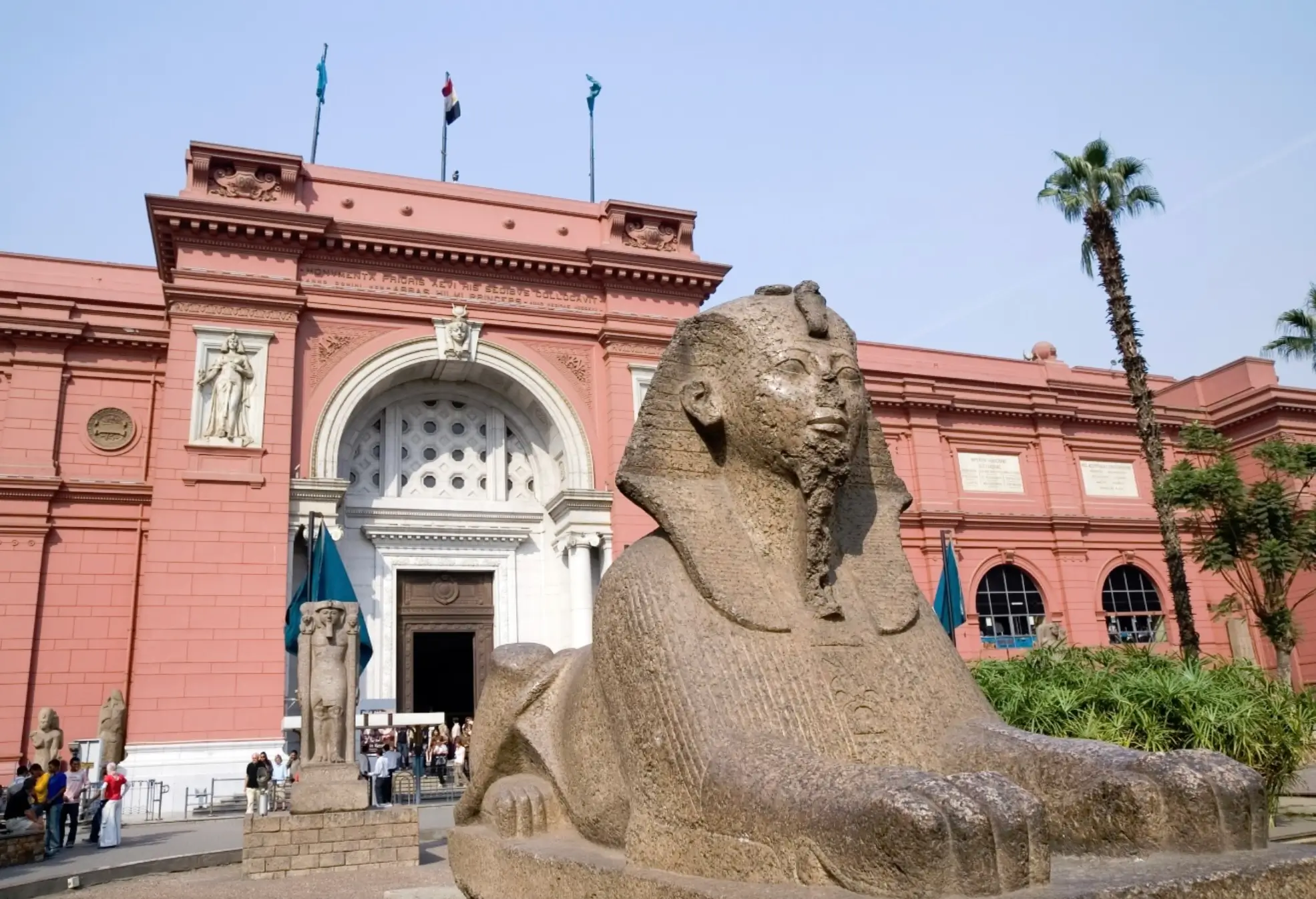
A monumental sphinx stands before the historic Egyptian Museum in Cairo, whose distinctive pink façade has welcomed visitors to one of the world’s greatest collections of ancient Egyptian antiquities for more than a century.
stir
Bone is not a static material. It remodels itself constantly in response to the loads placed on it, which means the places where muscles attach, the ridges, grooves, and ligament scars scattered across a skeleton, can end up telling a fairly detailed story about how a person spent their waking hours.
That is the method Hashesh and her colleagues applied here. They looked for muscle attachment sites in the arms, shoulders, hands, and chest that were both unusually pronounced and unusually asymmetrical, the kind of one-sided development that comes from repeatedly drawing a bowstring with a dominant hand while the other hand steadies the bow itself. It is a very specific signature, distinct from the more general wear patterns left by farming, hauling, or other physical labor.
Princess Noub-Hotep’s forearm and hand bones carried that signature clearly, down to a palm bone slightly bowed from the strain of a task performed again and again. Arrows had been buried in her tomb. Princess Itaweret’s collarbones and chest muscles showed a similar pattern. Princess Ita’s grip strength pointed toward habitual use of a bladed weapon, which lines up with the ornate dagger placed beside her body, the same one that now sits on display at the Egyptian Museum. Even King Hor, the single male skeleton in the group, showed the lopsided arm development consistent with weapons training.
The researchers also looked for evidence of trauma, old fractures, healed breaks, and any signs of how well or poorly those injuries mended. That data mattered as much as the muscle attachments themselves, because it let the team build something closer to a full physical history for each individual rather than a single data point about archery. A skeleton, examined this way, stops functioning as a static object and starts behaving more like a record of decades of repeated motion, strain, injury, and recovery.
None of this proves any individual picked up a bow on a specific afternoon four thousand years ago. What it does is shift the weight of probability. Objects that once looked purely ceremonial now come with a physical alibi.
riddle
Archaeologists had disputed the meaning of these grave goods for decades, largely because Middle Kingdom royal women are not typically described in surviving texts as hunters or soldiers. Bows, arrows, and maces are objects historians have long associated with men, which made their presence in the tombs of five princesses either a genuine record of what these women did, or an entirely symbolic gesture bound up in ritual and status.
Hashesh’s team argues the skeletal evidence tips that balance toward the former. “Members of the royal family, especially the women, were active participants in skilled, physically demanding activities such as archery and hunting,” Hashesh said of the group’s conclusions, adding that the pattern is consistent with the muscle development observed across the sample.
Not every outside researcher is convinced the case is closed. Bioarchaeologists reviewing the study have pointed out that skeletal remodeling cannot on its own pin down a single specific activity, since archery, certain forms of manual labor, and other repetitive tasks can leave broadly similar marks on bone. Critics have also noted the study lacks a comparison group of ordinary, non-royal skeletons from the same period, which would help establish whether this degree of muscle development was unusual for the era or fairly typical. It is the kind of caveat that tends to follow any bioarchaeological claim built on a small sample, and the researchers themselves have not tried to paper over it.
This is, in other words, a live scientific argument rather than a settled fact, and that tension is part of what makes the study worth reading closely rather than skimming for a headline. Bioarchaeology as a field has spent the last two decades getting better at reading bone, but it remains an inferential science, one built on probabilities rather than certainties. A single well preserved skeleton can support a strong hypothesis. Six partial skeletons, missing their skulls and stripped of soft tissue more than a century ago, support a hypothesis that is genuinely compelling but still open to revision as more comparative data becomes available.
scope
The six individuals at the center of the study are Ita, Khenmet, Itaweret, and a fourth royal woman the team has tentatively identified as Sathathormeryt, all four believed to be sisters and daughters of Amenemhat II, along with Princess Noub-Hotep and King Hor. One of the skeletons carried no identifying label at all after a century in storage, and researchers pieced together its likely identity from its build and the objects buried alongside it.
Reassembling that identity took more than guesswork. The team cross-referenced burial location, funerary goods, and skeletal characteristics against what little remained of the original excavation records from the 1890s, a process that resembles archival detective work as much as it does laboratory science.
What emerged was a set of six people whose bones, despite missing skulls and incomplete preservation, still carried enough information to reconstruct a physical profile. Ita was a young woman, likely between twenty eight and thirty four years old, with strong upper body muscle attachments suggesting habitual use of a mace or dagger. Khenmet was older, in her late thirties or forties, and showed thinning bone alongside notably robust ligament attachments of her own. Across the group, the pattern held: pronounced, asymmetrical muscle development consistent with sustained weapons training rather than a single ceremonial gesture.
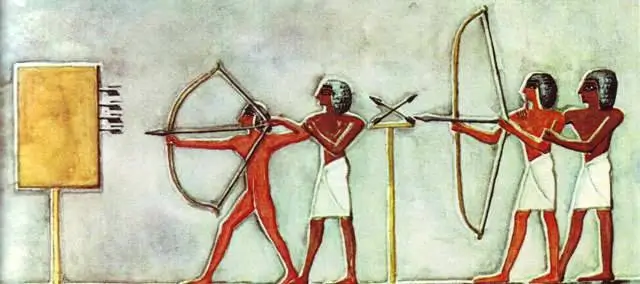
An ancient Egyptian mural illustrates archers training with longbows, capturing the importance of military skill and organized practice in the civilization’s warrior culture.
The sisters were buried in pairs, Ita next to Khenmet, Itaweret beside the woman now provisionally identified as Sathathormeryt, a burial arrangement that itself hints at how close these family relationships were meant to remain even in death. Age at death, estimated height, and sex could all be worked out from the surviving skeletal material, along with signs of illness or old injury, even though the skulls that would normally anchor a facial or dental profile were long gone by the time researchers got their hands on the remains.
huh
The most striking material in the study is not the archery evidence at all. It is what the researchers describe as a paradox: royal status appears to have both exposed these individuals to real physical hardship and, at the same time, shielded them from its worst consequences.
The bones carry signs of childhood metabolic stress, possible malnutrition, thinning bone, and lingering infection. Princess Itaweret’s skeleton shows evidence of fractured ribs and an injured foot, likely from a fall or a hard blow. These were not decorative lives sealed off from risk. Being born into Egypt’s ruling family did not spare anyone from the ordinary damage that comes with an active, physically demanding existence.
What royal status did appear to buy was medical care. Every fracture the team examined had healed cleanly, without infection and without the bone settling crooked, a standard of treatment that would have been exceptional for its time. Hashesh has pointed to this as the more revealing half of the story, arguing that the level of care available to these individuals offers skeletal proof of remarkably effective medical treatment nearly four thousand years ago.
That combination, hard evidence of physical strain paired with equally hard evidence of first rate care, is what the researchers say complicates the traditional image of a sheltered, purely ornamental princess. The picture that emerges instead is of women whose bodies were shaped by real physical demands, and who had access to the best medicine their era could offer when those demands caught up with them.
fin
The study is candid about its limits. Most of the skulls disappeared from a Cairo medical museum generations ago, and the surviving postcranial bones are incomplete after more than a century of inconsistent storage. One skeleton’s identity remains a matter of informed inference rather than certainty.
Planned DNA and chemical isotope testing, still awaiting approval, could eventually confirm the family relationships the bones already hint at. Several of the individuals share rare, inherited quirks in the spine, a detail the researchers believe points toward a royal line that married within itself to keep power concentrated in the family, a practice well documented elsewhere in ancient Egyptian royal genealogy.
For Hashesh, the value of the project extends beyond settling the archery question. She has framed the work as part of a broader shift in how archaeologists study royal burials, moving the focus away from the treasures placed in a tomb and toward the person who was actually buried there. Bioarchaeology, in her framing, is a way of reconstructing what she calls an osteobiography: a life story told not through inscriptions or grave goods, but through the physical record left behind in bone.
Next article
No next articleRelated Articles

A Fridge Learns to Disappear: Inside Gohar World’s Mirror Black Rocco
Rocco’s newest beverage fridge trades color for reflection, and Gohar World supplied the champagne coupes […]