DRIFT AUDIO
Listen to this story
Choose a voice, then press play.
In the ever-spinning wheel of shoe culture—where hype burns fast and fades even faster—the New Balance 2000 “Pink Heat” doesn’t scream for attention. It doesn’t need to.
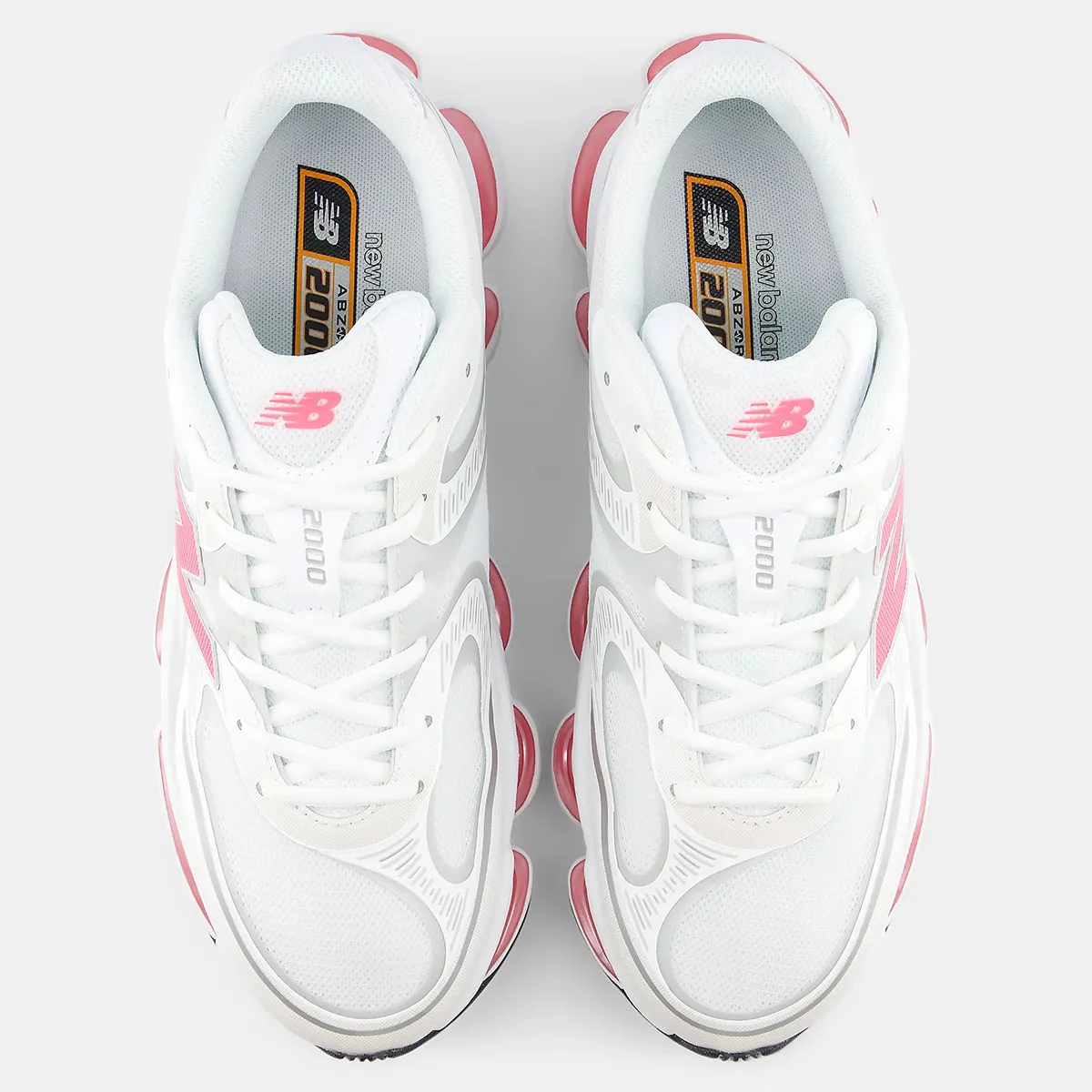
It simply arrives: soft pink accents, crisp white uppers, a silhouette that seems to say, I was here before—and I’m back to stay.
Already surfacing quietly at select retailers, this women’s-exclusive drop reads as more than a colorway. It becomes a statement—that comfort can be styled, that technology can feel tactile, and that the future of footwear doesn’t always have to be loud.
It’s felt.
legacy
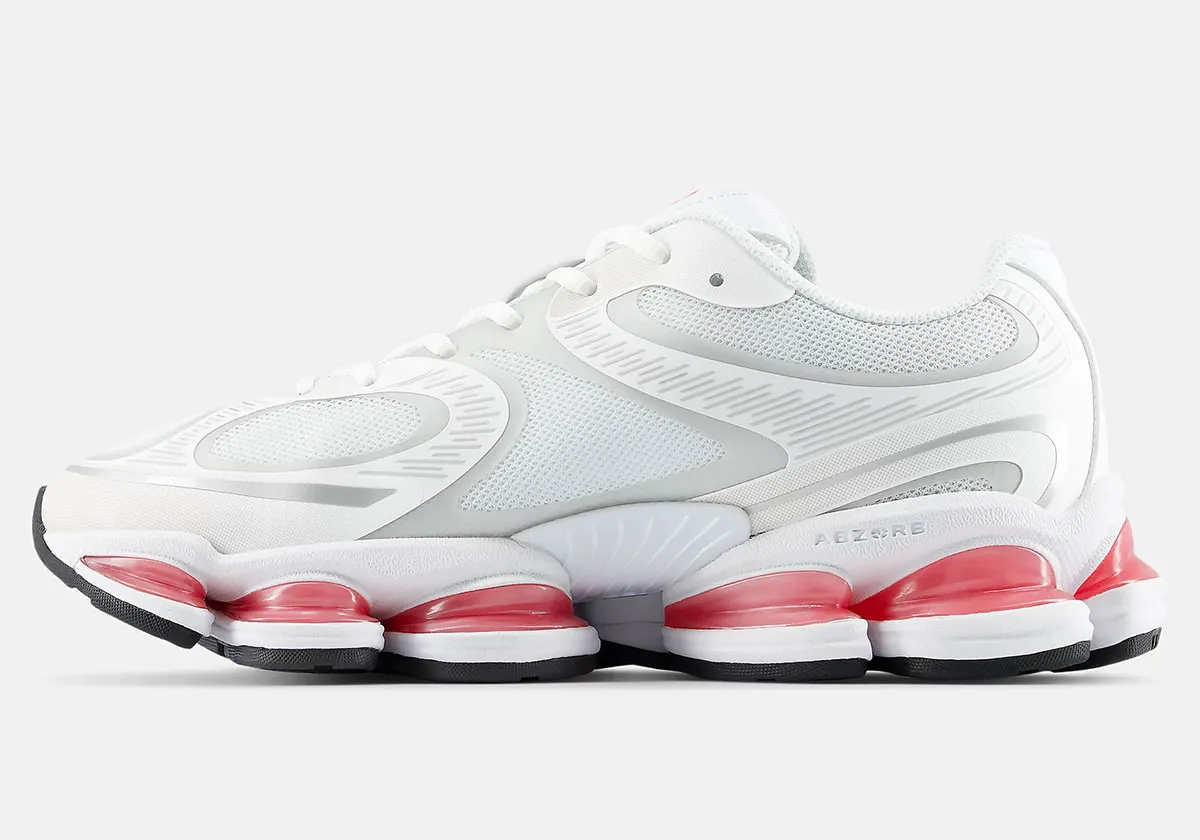
While much of the industry continues to “add” visible tech as a feature, New Balance has long treated it as language. The 2000—first released in 2001—never concealed its engineering. Its accordion-like ABZORB pods, designed to absorb impact through compression, remain fully exposed—ribbed, structural, almost anatomical.
This isn’t decoration. It’s declaration.
Where others embed innovation beneath the surface, New Balance externalizes it. And in 2026—amid a renewed fixation on techwear and functional aesthetics—the 2000 feels less like a retro return and more like a design that finally caught up with its moment.
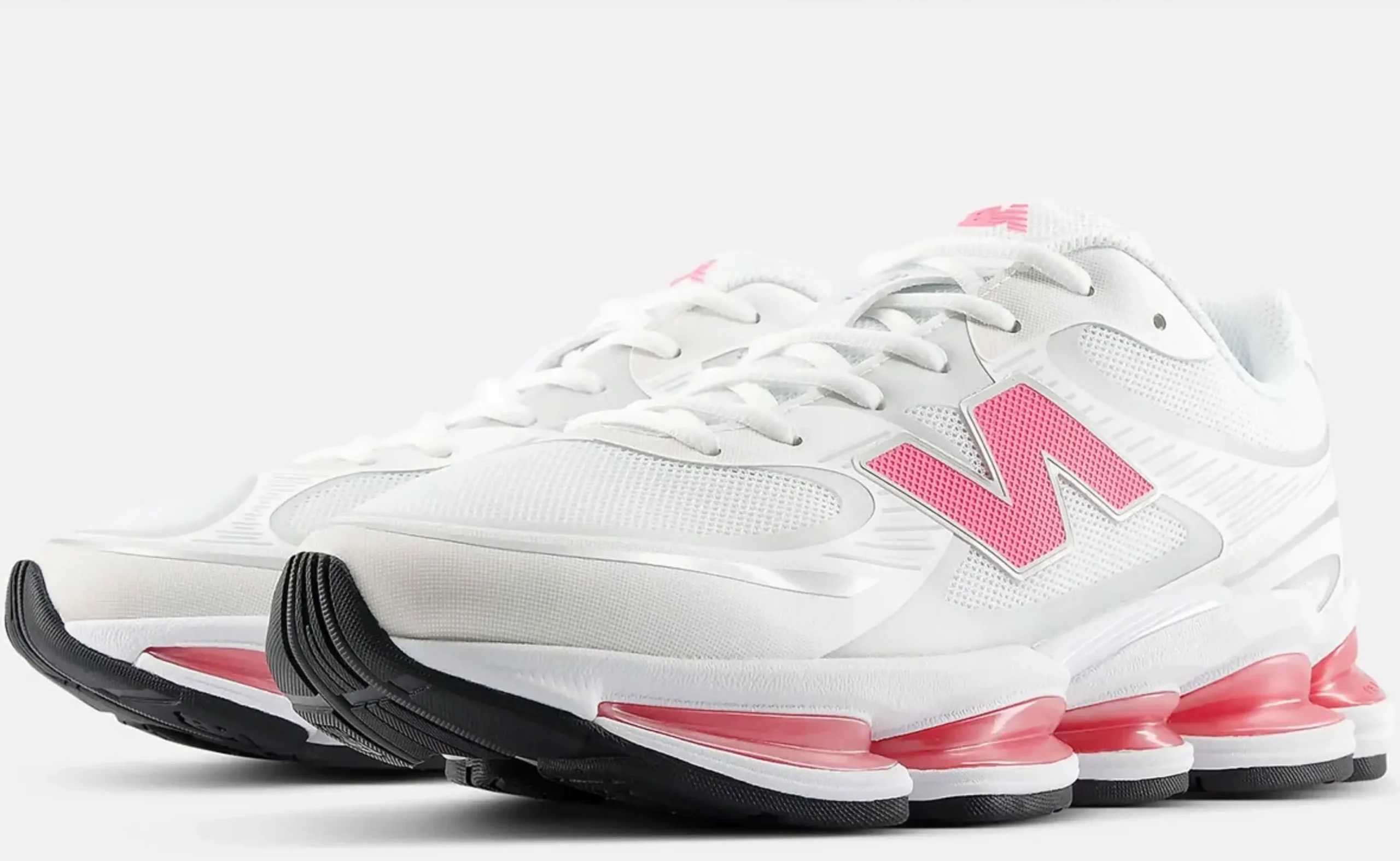
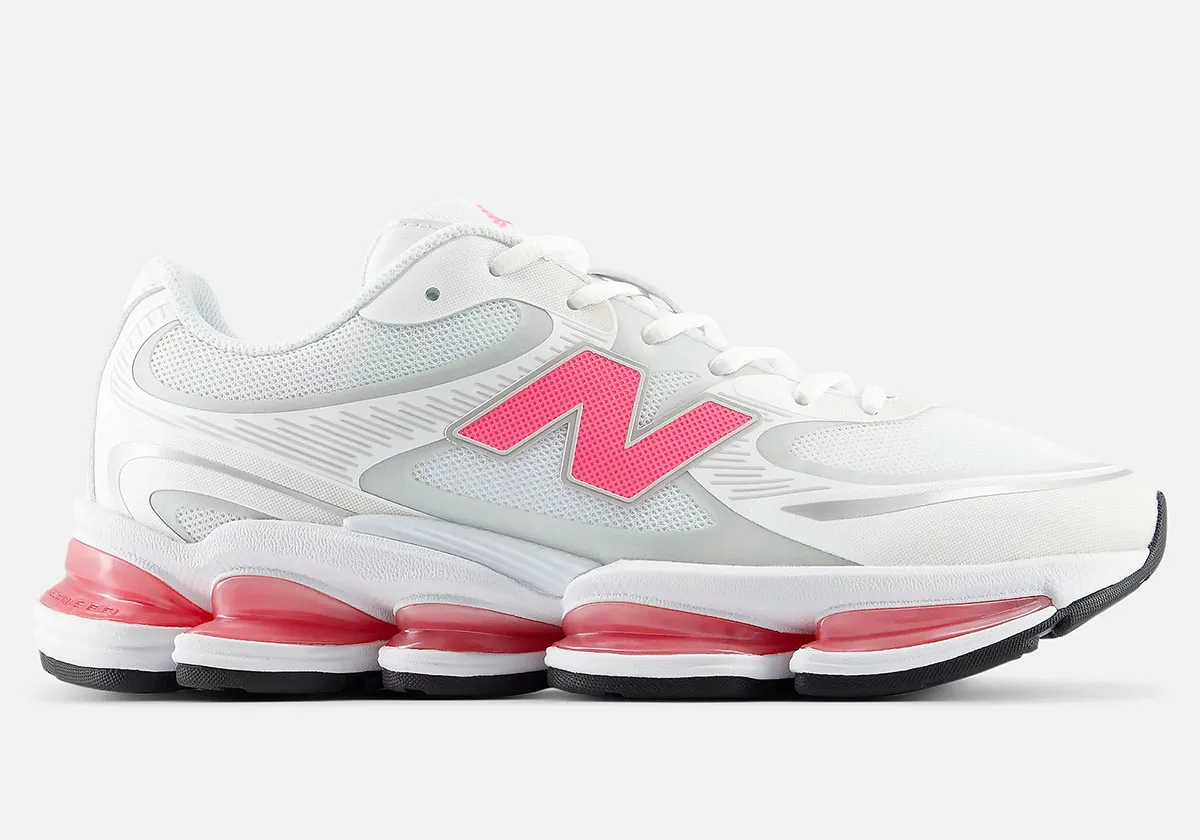
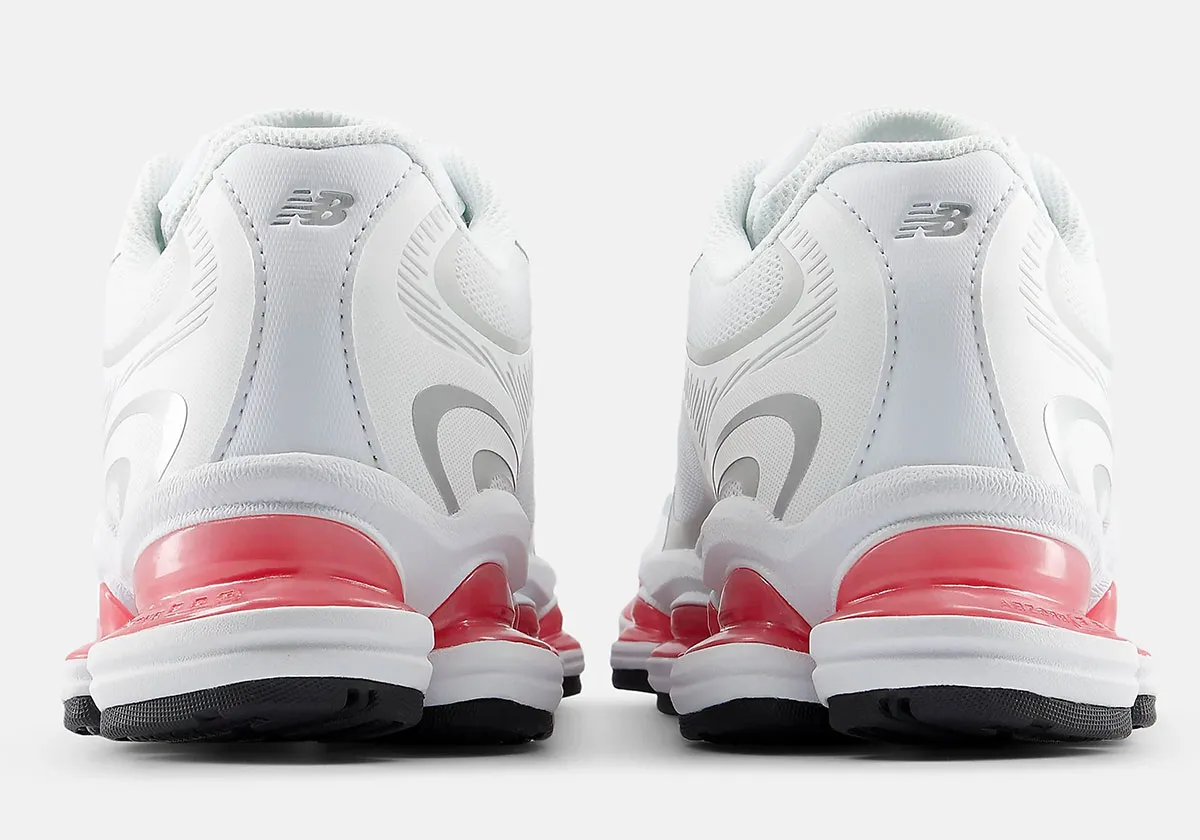
The “Pink Heat” colorway doesn’t obscure that lineage. It clarifies it. By tracing the pods, heel tab, and outsole trim in a warm, measured pink, it balances Y2K memory with a more grounded, contemporary confidence.
frame
This is not a unisex release repositioned for women. It is intentional from the outset.
And in that distinction, it connects to a broader cultural shift—the emergence of what could be called the “mom shoe.”
Not as parody. Not as critique. As evolution.
If the “dad shoe” era leaned into neutrality—bulk, grayscale palettes, and universal appeal—the current moment moves differently. Softer lines. Warmer tones. A more deliberate sense of identity.
It reflects a recalibration: women choosing comfort without compromise. Shoes that move between routines—the school run, the meeting, the in-between hours—without requiring translation.
The 2000 “Pink Heat” operates cleanly within that space.
It doesn’t try to perform relevance.
It already holds it.
idea
The early 2000s have returned—but not in their original form.
Gone are the overt signals: the hyper-gloss, the excess, the spectacle. What remains is something quieter—a filtered version of Y2K, where color softens and form becomes more intentional.
The “Pink Heat” fits squarely into this recalibration.
A white base establishes clarity—clean, open, almost architectural. The pink accents—on the heel, pods, outsole—carry warmth without tipping into sentimentality. They don’t announce. They register.
There’s a familiarity here that doesn’t rely on imitation. A resonance with objects that once defined a softer vision of the future—the iMac G3, the Motorola Razr, early digital design that prioritized tactility over cold precision.
This isn’t nostalgia as replication.
It’s nostalgia as refinement.
View this post on Instagram
flow
Upper: White mesh layered with synthetic overlays—structured but breathable, engineered for daily wear rather than display
Accents: “Pink Heat” applied with restraint—heel tab, ABZORB pods, lace tips, outsole trim—visible, but never excessive
Midsole: Full-length ABZORB cushioning—exposed, tactile, built to absorb impact while maintaining form
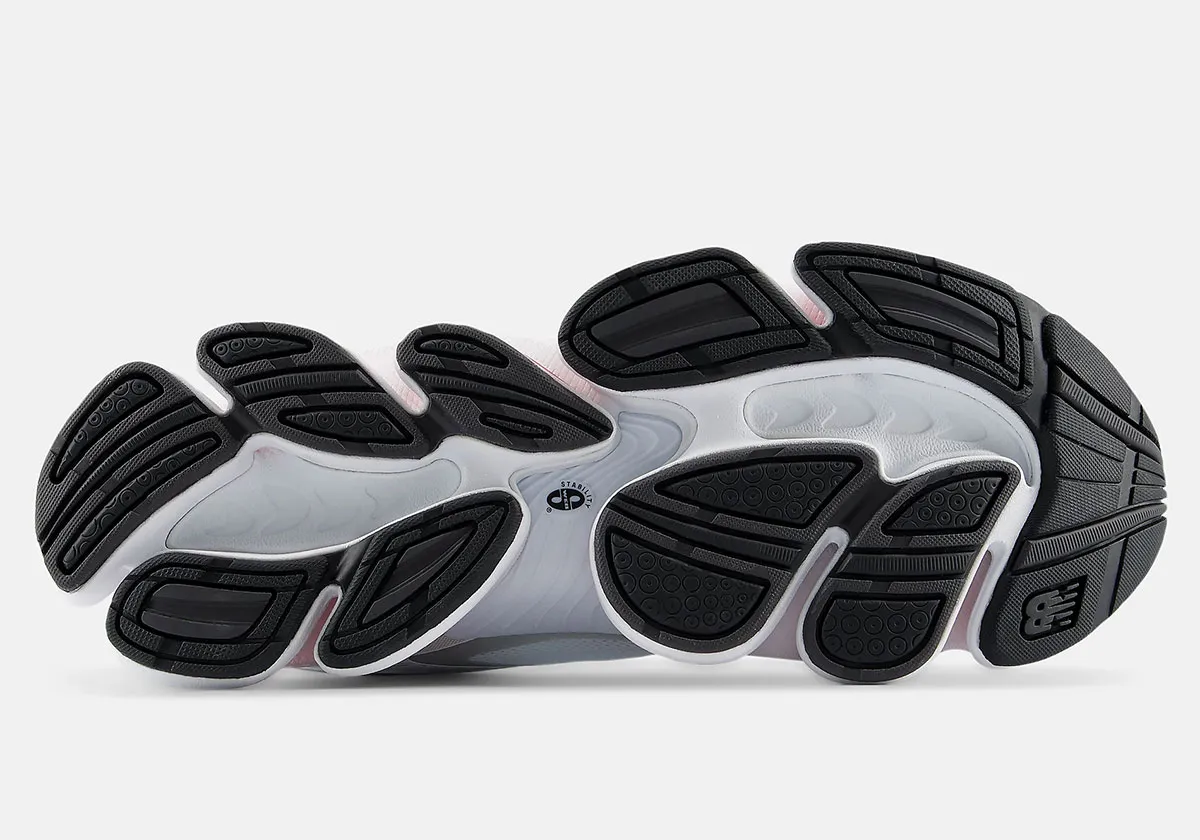
Outsole: Translucent pink rubber—functional grip with a controlled visual lift
Fit: True to size, slightly generous through the toe box, with a stable heel lock—optimized for extended wear
Positioned at $170, it sits deliberately between categories. Not a performance runner, not a purely fashion-driven object—but something more fluid.
The in-between space, where design tends to matter most.
Confirmed in women’s sizing (US 5–11, with select extensions), the release maintains its focus without dilution.
move
The strength of the “Pink Heat” lies in its adaptability.
With denim and an oversized tee, it reads effortless.
With leggings and a cropped layer, it shifts into athleisure without strain.
With a skirt or tailored trouser, it introduces contrast—soft against structured.
Even in more formal contexts—wide-leg trousers, minimal shirting—it holds its position without disruption.
The detail that anchors it is subtle: the heel tab, the exposed pods, the way the pink reveals itself in motion rather than at rest.
And when light hits those surfaces—when the material shifts from matte to reflective—you begin to understand the intention.
This isn’t about styling a shoe.
It’s about allowing it to register.
position
As of April 21, 2026, the New Balance 2000 “Pink Heat” has begun appearing through select independent retailers—Kith, Concepts, Social Status—without a formal global release announcement.
All indicators suggest a broader rollout aligned with Summer 2026, likely within the June–July window.
The timing aligns with the product itself.
This is a seasonal object—not in trend, but in atmosphere. Built for transitional light: spring afternoons, extended summer evenings, the muted warmth of early fall.
With New Balance continuing to refine its women’s narrative—through campaign focus and targeted releases—this drop reads less as a standalone product and more as part of a larger repositioning.
fin
Because the current sneaker landscape is split.
On one side: acceleration—constant drops, visibility-first design, products engineered for attention.
On the other: a quieter recalibration.
Footwear that prioritizes comfort without apology.
Design that embraces softness without reducing strength.
Objects that acknowledge heritage without being confined by it.
The New Balance 2000 “Pink Heat” aligns with the latter.
It doesn’t rely on branding to assert itself.
It doesn’t require spectacle to be recognized.
It exists—fully formed, fully aware of its place.
And in a culture defined by volume, that restraint carries weight.
To move without excess.
To register without noise.
To step lightly—
and let the color speak on its own terms.
n
From the DRIFT archive: Dr. Martens’ Immersive 1460 Rain Experience Makes Digital Retail Feel Alive · Adidas By AVAVAV Women’s Superstar Shoes: Redefining The Icon In Distorted Form
Related Articles

BSTN Put Janker Gray And Festival Pink On The München Last
Adidas Originals München. Two colors. Nubuck. Cream stripes. Candy gum. Brindiamo on the tongue. Salute […]