
DRIFT AUDIO
Listen to this story
Choose a voice, then press play.
The shoe world has seen its share of collides, but every so often, a partnership emerges that doesn’t simply merge two names—it generates a shift. The upcoming connect between Vans and METAGIRL reads less like a product drop and more like a cultural ignition point. Still operating in teaser territory, with no official release date confirmed, the project is already building momentum—not through scarcity tactics, but through sheer view conviction.
rewired
At the center of the narrative sits the Vans Old Skool—arguably one of the most recognizable silhouettes in sneaker history. Traditionally a vessel for stripped-back skate minimalism, it arrives here transformed beyond expectation.
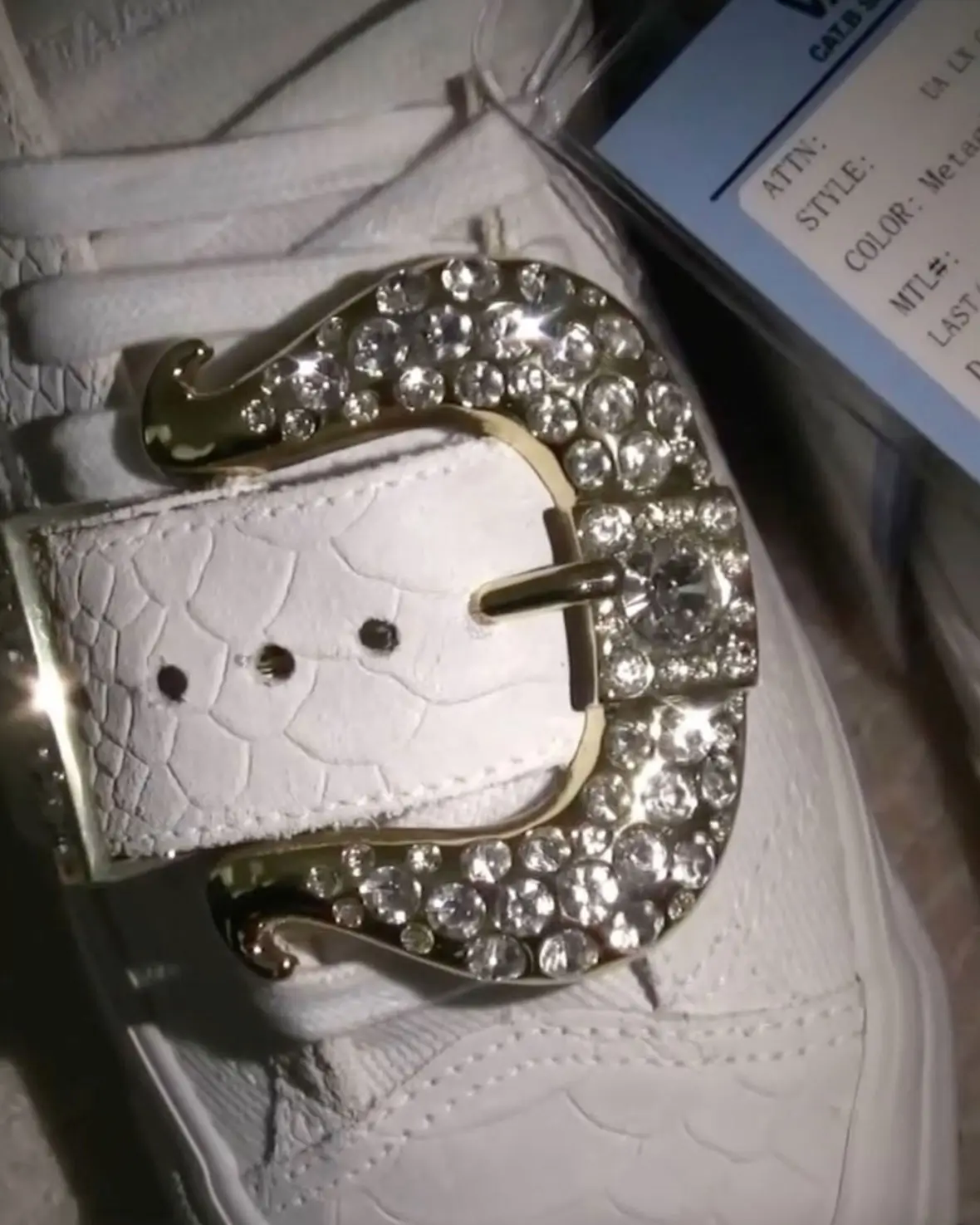
Early preview images suggest a stark white iteration reimagined in textured faux crocodile skin, disrupted by an oversized belt strap that cinches across the upper. Anchoring it all: a jeweled horseshoe buckle, exaggerated to the point of theatricality. The effect is immediate. It doesn’t ease the viewer in—it jolts.
This is not about subtlety. It is about confrontation—about collapsing the distance between skate heritage and high-glam western fantasy into a single object.
struct
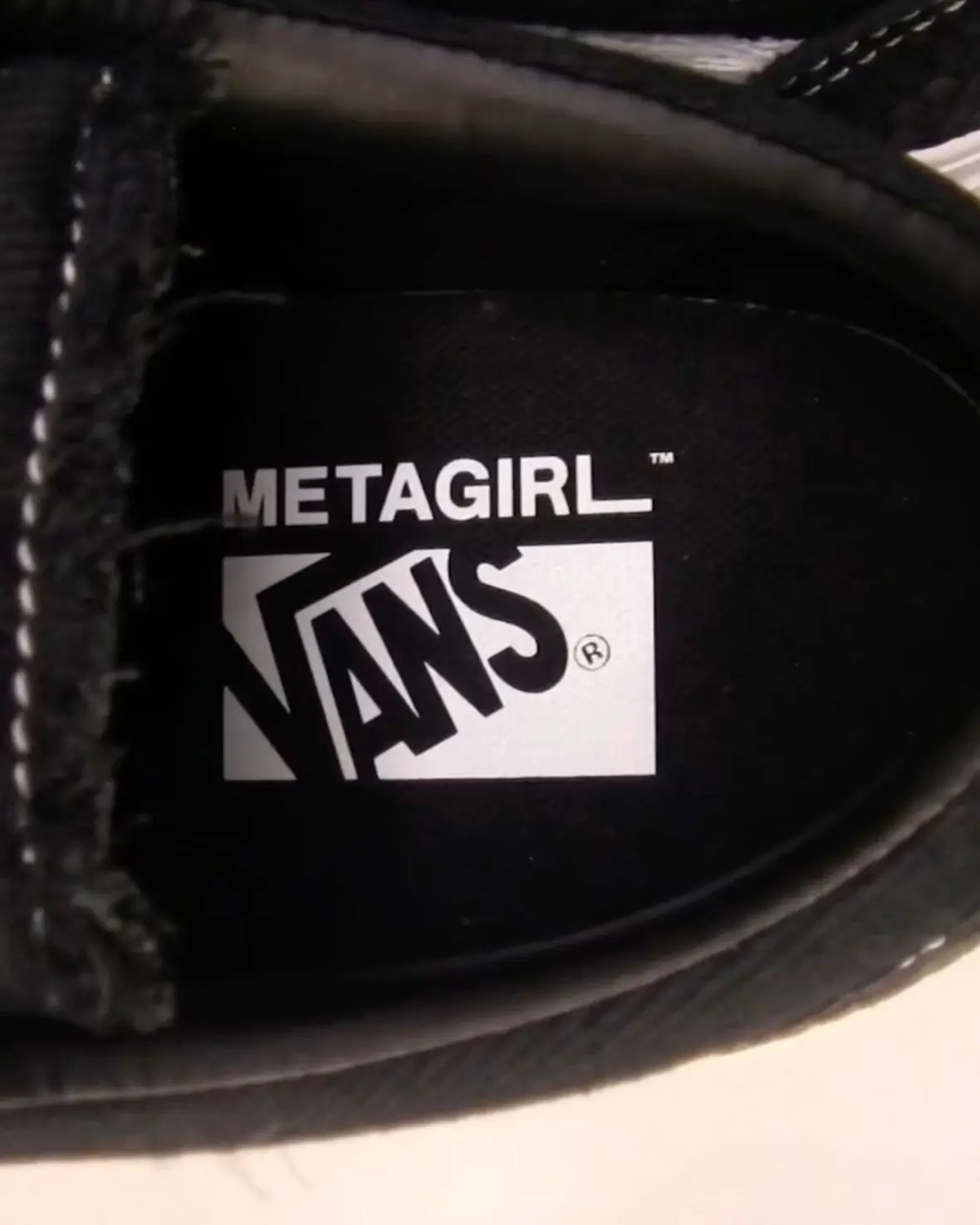
The collide extends with at least two distinct Old Skool variants. Alongside the white pair, a black iteration intensifies the concept—doubling down on reptilian textures, layered hardware, and co-branded insoles that signal a deeper collaborative authorship.
What elevates the design is its use of material contrast. Horizontal corduroy striping emerges across the side panels, interrupting the expected flatness of the silhouette. It’s tactile, almost narrative—each surface suggesting a different identity fragment. Rugged western codes. Soft nostalgia. Aspirational shine.
Rather than decorating the shoe, these materials construct it—turning the Old Skool into a layered artifact of competing references.
flow
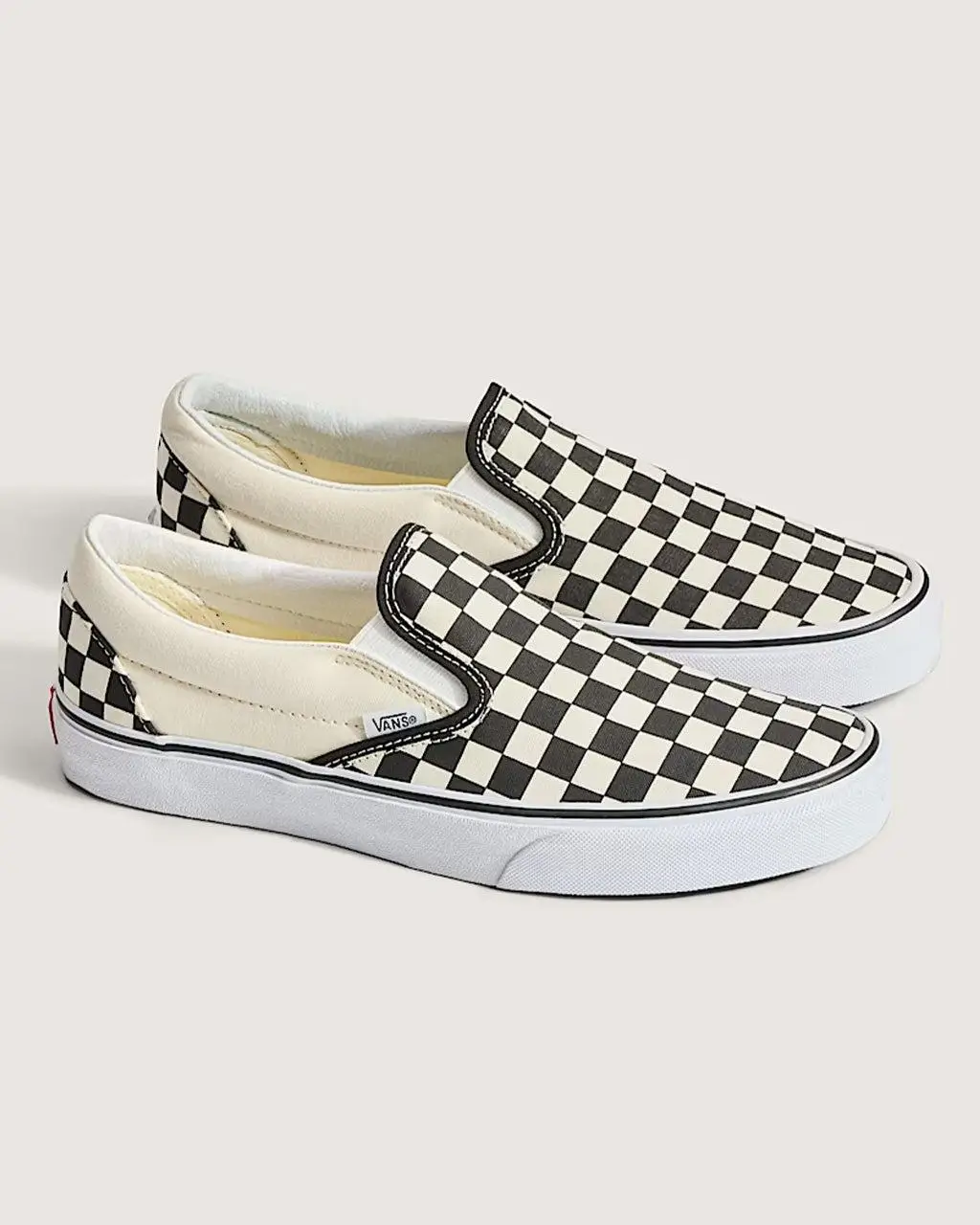
The Vans Slip-On—long defined by accessibility and universality—undergoes an equally radical reinterpretation.
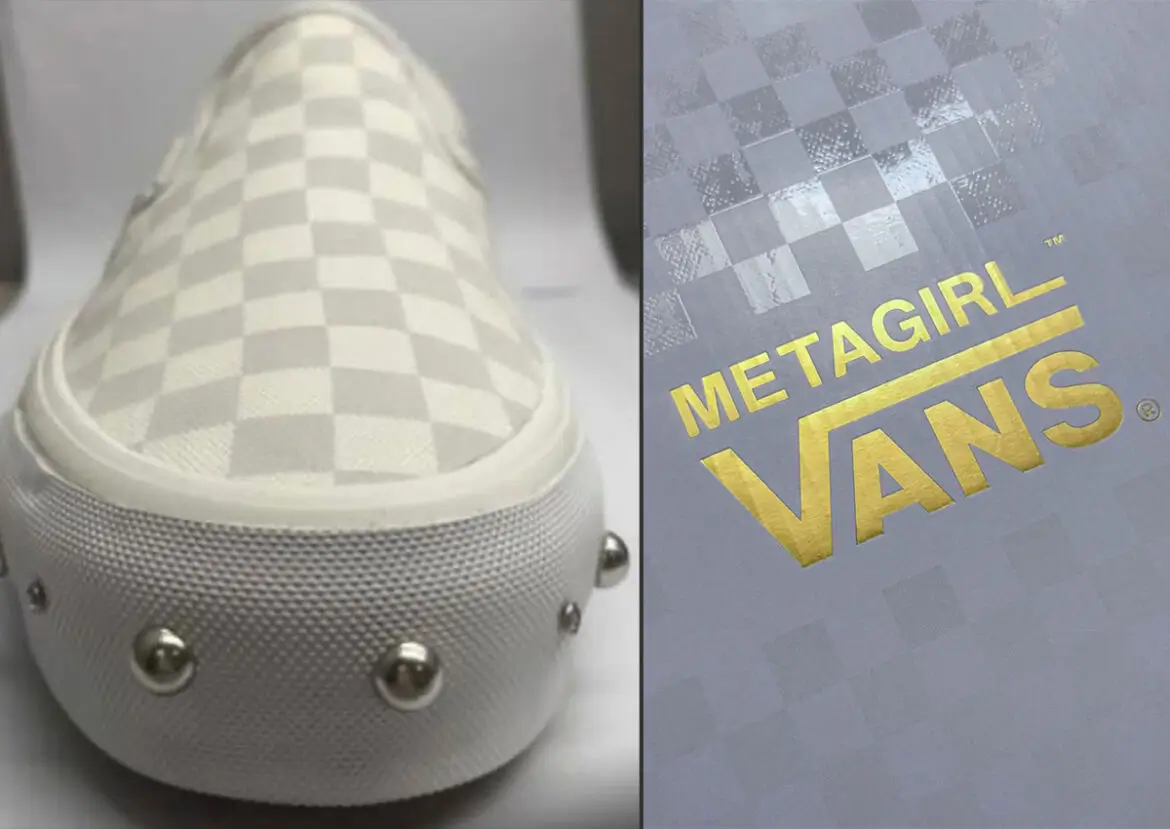
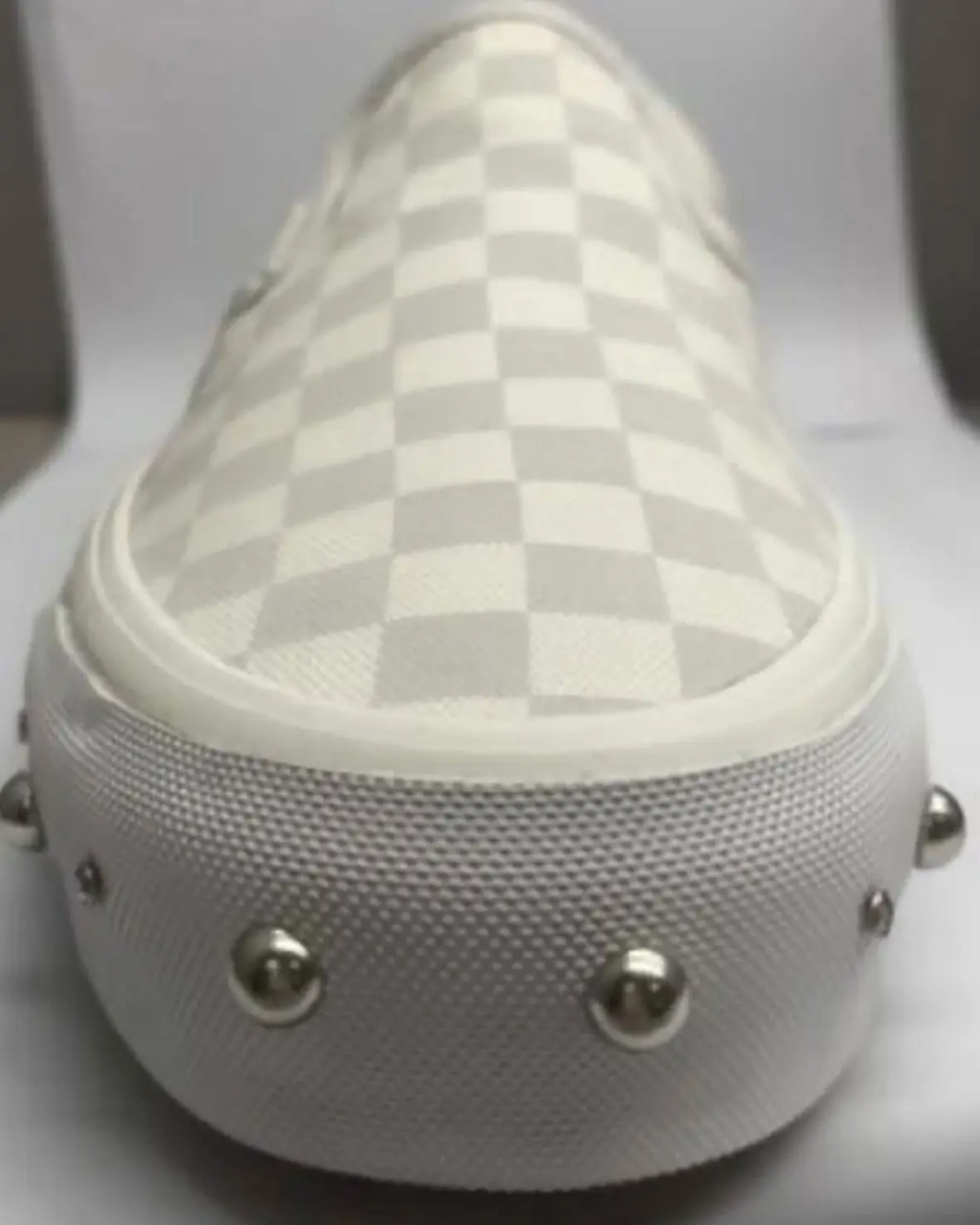
Its signature checkerboard remains intact, but the energy shifts. Metal studs are woven directly into the foxing, reframing the silhouette as something closer to armor than ease. The now-signature oversized strap returns, again crowned with the jeweled horseshoe, binding the collection into a singular visual language.
What was once effortless becomes deliberate. What was once passive becomes declarative.
challenge
Perhaps the most compelling dimension of the METAGIRL x Vans project is its refusal to defer to purism.The Old Skool, introduced in 1977, has long functioned as a symbol of underground authenticity—uncomplicated, durable, and rooted in skate culture. By enveloping it in faux croc textures and rhinestone embellishment, METAGIRL does not reject that lineage—it interrogates it.Who defines rebellion?
Must it remain austere?
Can it shimmer, exaggerate, perform?
The answer here is unequivocal. Rebellion can be glamorous. It can be feminine. It can be excessive—and still retain its edge.
frame
The western motif threading through the collection is not incidental—it is foundational.
The horseshoe, traditionally a symbol of luck and protection, is scaled beyond ornamentation into centerpiece status. It becomes iconography—deliberately kitsch, deliberately loud. Its presence evokes rodeo pageantry, country music mythologies, and a strand of femininity often sidelined within streetwear’s more rigid frameworks.
METAGIRL’s intervention is subtle in intent, but bold in execution: reclaiming space for a different kind of wearer. One who may have previously viewed Vans as too restrained, too monochrome, too coded in masculine minimalism.
style
Even beyond the footwear, the collide signals depth through detail. Early glimpses suggest co-branded insoles and checkerboard packaging—elements that reinforce this as a fully realized partnership rather than a superficial co-sign.
There are hints of frayed tongues, precisely placed hardware, and layered finishes that speak to extended development. Notably, one prototype reportedly carries a 2024 timestamp—suggesting over a year of refinement behind the scenes.
In a market conditioned by rapid drops and constant churn, that kind of patience reads as intentional. Almost defiant.
wear
Despite its overt visual language, the collection never fully abandons functionality.
These remain Vans at their core—designed for movement, for wear, for lived-in expression. The hardware, while pronounced, does not appear to obstruct usability. The textures, though rich, are contained within the recognizable architecture of each silhouette.
It’s this tension—between maximalism and practicality—that gives the project its durability. It is as wearable as it is performative.
rel
As of now, the release remains undefined. No confirmed date. No pricing. No retail roadmap.
And yet, that absence feels deliberate. In an era where shoe launches are often over-articulated before arrival, the restraint here allows the work to breathe. The designs circulate, provoke, and invite speculation without resolution.
Mystique, in this context, becomes strategy.
fin
METAGIRL is not merely designing footwear—they are constructing a position.
Using Vans as both canvas and collaborator, they demonstrate that even the most codified silhouettes can evolve without dilution. That legacy is not static—it is elastic, capable of absorbing new narratives without losing its core.
This collideoperates at that intersection: fashion as provocation, as expansion, as redefinition.
When these pairs finally arrive, they will not quietly enter rotation. They will assert themselves—visually, culturally, and symbolically.
They will not just be worn.
They will be seen.
Related Articles
Tom Sachs Put Black And Team Royal On The General Purpose Last Again
NikeCraft GPS. FZ1363-002. Black field. White Swoosh. Royal pull tabs. Gum sidewall. European calendars point […]