
DRIFT AUDIO
Listen to this story
Choose a voice, then press play.
The shoe doesn’t begin in Los Angeles, even if that’s where the story matured. It begins in motion—mid-century relocation, cultural fracture, a team leaving one identity to construct another. What UNDEFEATED orchestrates with Converse here is less a nostalgic callback and more a recalibration of what legacy means when geography shifts but mythology stays intact.
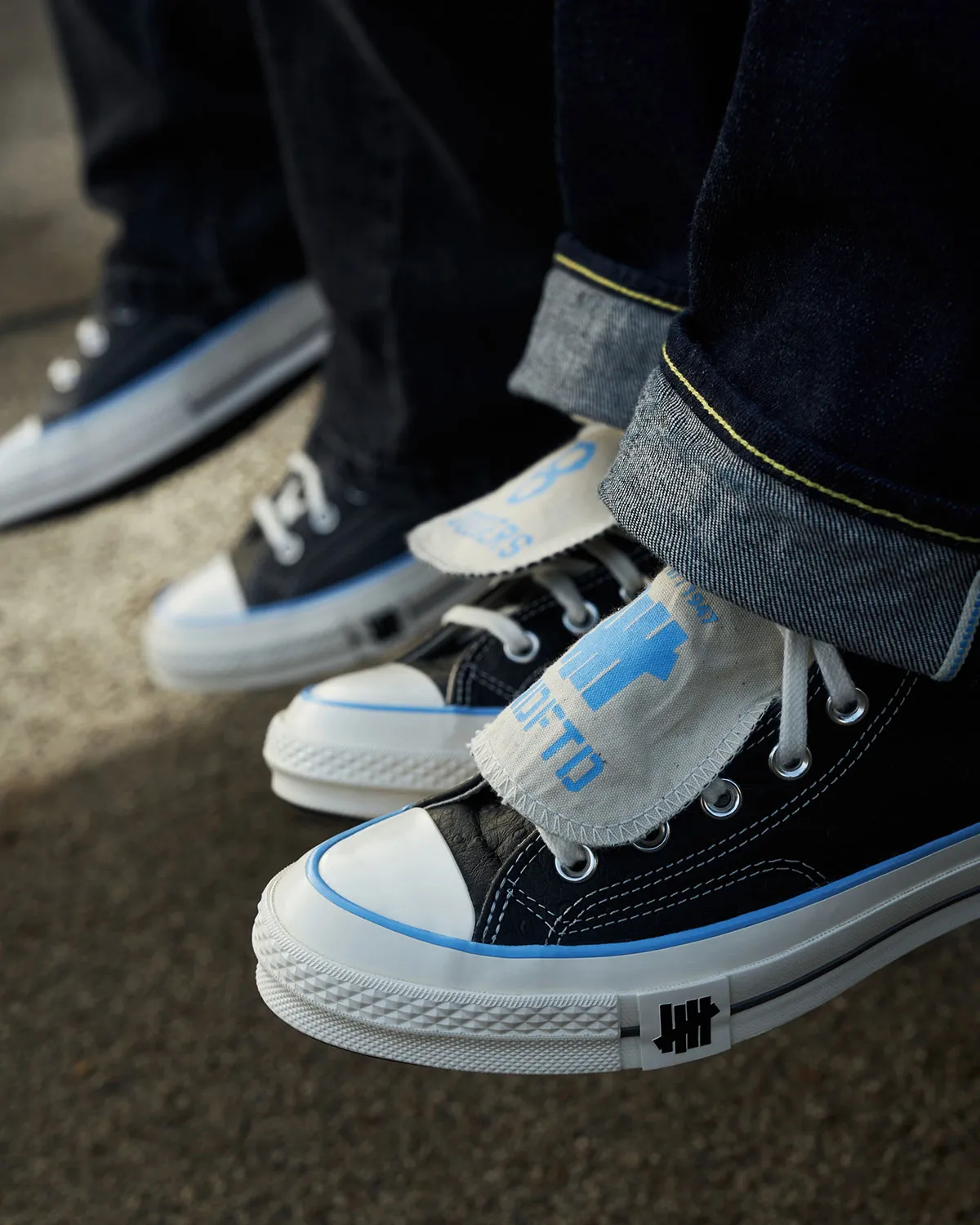
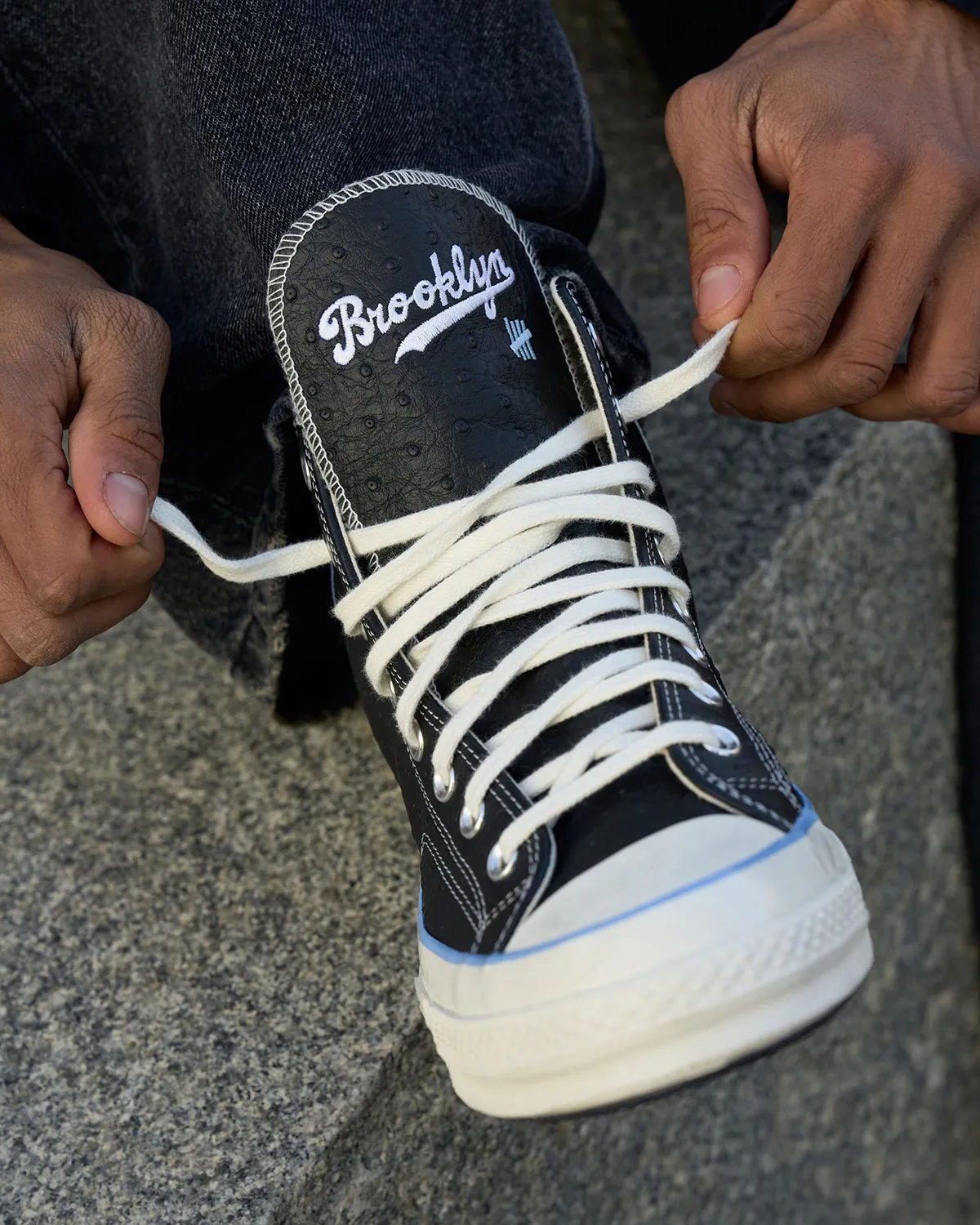
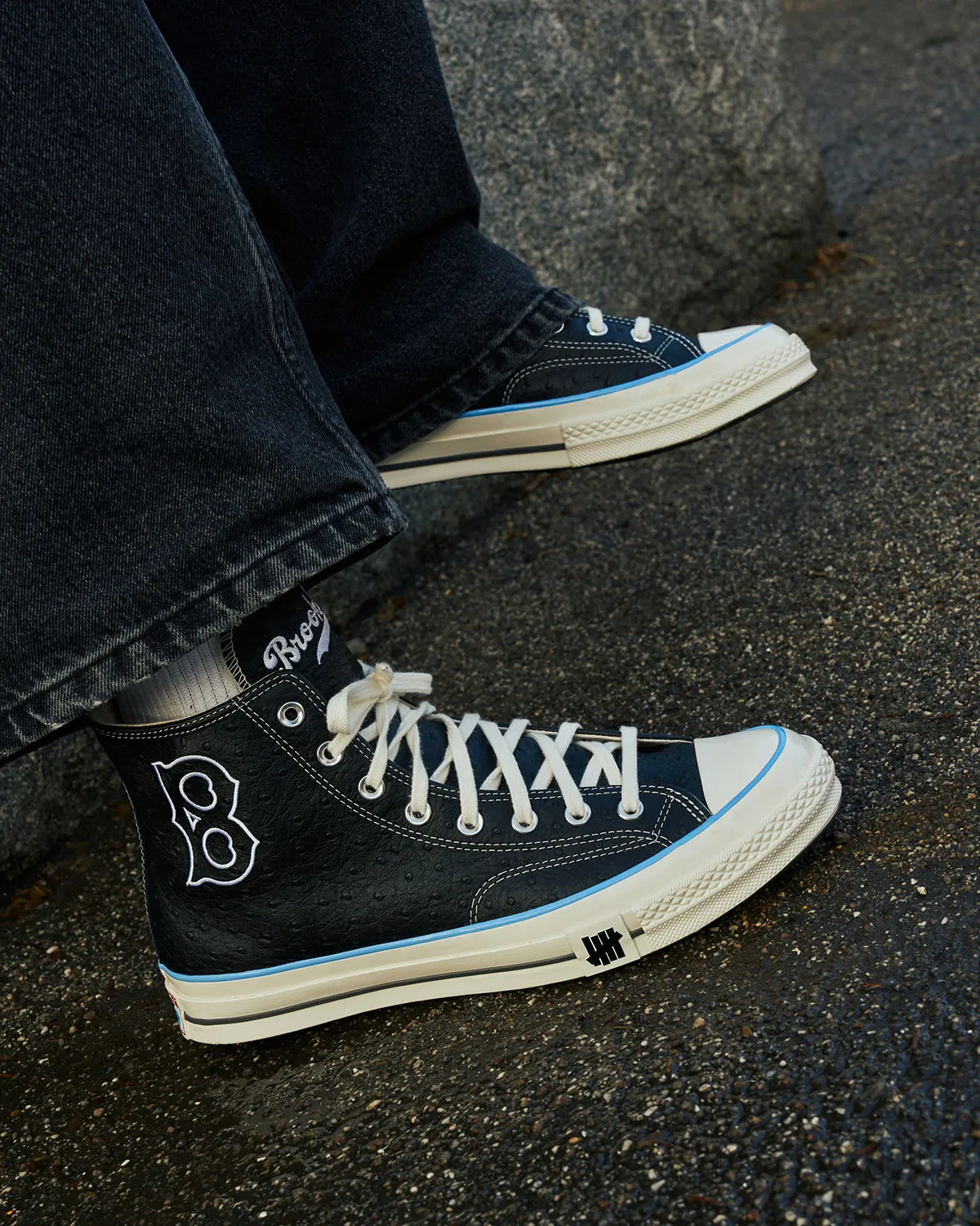
The Chuck 70 “Brooklyn Dodgers,” unveiled through the lens of Futura, lands somewhere between artifact and intervention. It doesn’t resolve the long-standing emotional split between coasts; instead, it frames it—visually, materially, and culturally—into something wearable.
a sil
The Converse Chuck 70 has always operated as a vessel. Its proportions are familiar, almost stubbornly unchanged, yet its surface is endlessly reinterpreted. That tension—between permanence and mutation—makes it uniquely suited to carry a story like this.
Here, the canvas upper becomes narrative space. Dodgers iconography is not simply printed; it’s positioned, layered, and restrained in a way that suggests reverence rather than spectacle. The palette leans into archival cues—cream tones, aged whites, muted blues—echoing uniforms that existed before television broadcast turned sports into high-definition theater.
What’s striking is how little the shoe tries to modernize the reference. No hyper-saturated color blocking, no exaggerated overlays. Instead, the design allows absence and spacing to do the work. It feels edited, almost like a photograph cropped down to its most essential frame.
stir
Futura’s involvement doesn’t read as a superficial co-sign. His presence reframes the entire collaboration.
Known for his transition from subway-era graffiti into abstract, almost atmospheric compositions, Futura has long operated at the intersection of street culture and fine art. His work isn’t about literal depiction—it’s about motion, energy, and the invisible systems that shape how we see space.
That sensibility carries through here. Instead of overwhelming the sneaker with signature motifs, Futura applies restraint. Any gestural elements feel embedded rather than imposed, as if the shoe itself had absorbed decades of urban texture.
There’s a subtlety to it: the sense that Brooklyn is not being illustrated, but remembered.
View this post on Instagram
btw
The Dodgers’ move from Brooklyn to Los Angeles in 1958 remains one of the most polarizing relocations in American sports history. For New York, it was abandonment. For Los Angeles, it was arrival.
This collaboration doesn’t attempt to reconcile that divide—it acknowledges it. The “Brooklyn Dodgers” naming alone re-centers the narrative away from California dominance, pulling focus back to the borough where the mythology was first constructed.
The invocation of Jackie Robinson is particularly loaded. Robinson’s legacy is not just tied to the Dodgers, but to a broader American story of rupture and progress. His presence, even indirectly referenced, adds weight to the shoe’s otherwise understated design language.
What emerges is a duality: Los Angeles as the brand’s home, Brooklyn as its origin myth. The shoe sits directly in that tension.
flow
For UNDEFEATED, this project feels less like a departure and more like a refinement. The brand has long operated through collaboration, but its strongest work often comes when it leans into cultural specificity rather than broad appeal.
Here, the specificity is geographic, historical, and emotional. UNDEFEATED doesn’t flatten the narrative for accessibility; it sharpens it. The decision to have Futura—someone with lived proximity to New York’s evolving identity—front the project is deliberate.
It’s not just about credibility. It’s about perspective.
Where many collaborations chase immediacy, this one feels patient. It assumes the wearer either knows the story or is willing to learn it.
mat
The Chuck 70’s upgraded construction—heavier canvas, higher rubber foxing, reinforced stitching—quietly supports the conceptual framework. These aren’t just premium materials; they suggest durability, longevity, the ability to carry narrative without degradation.
There’s something almost archival about it. The sneaker feels like it could exist outside of trend cycles, not because it resists them, but because it’s anchored in something older than fashion’s usual references.
Even the wearability plays into this. Over time, the canvas will crease, fade, and mark—subtly rewriting the surface. Each pair becomes slightly different, echoing how collective memory itself shifts depending on who’s telling it.
culture
From the DRIFT archive: Palace x Nike Air Max DN8 “Safety Orange”: High-Visibility Energy Meets London Street Logic · A Cult Classic in Orbit: The Tecnica Moon Boot Icon Nylon Boots Reimagined for Modern Winter
Related Articles

Converse Covers Its Pointed-Toe All Star in Fur and Cuts the Laces
The toe line stays razor clean while everything behind it turns to long-pile fur. Converse […]