DRIFT AUDIO
Listen to this story
Choose a voice, then press play.
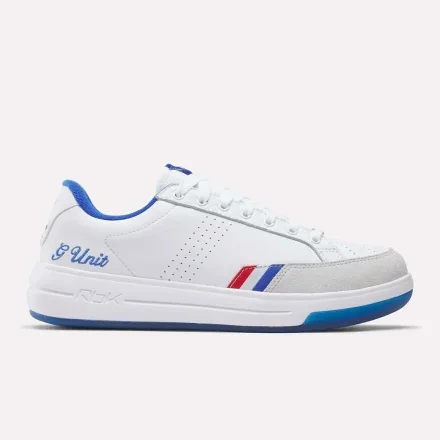
Reebok is reissuing the G-Unit G6 in white, red and blue on August 20, reviving one of hip-hop’s earliest full shoe collide.
The story of the G6 starts with an album. 50 Cent‘s 2003 debut, “Get Rich or Die Tryin’,” turned him into the most talked about rapper in the country almost overnight, and the crew around him rode that same wave into retail. G-Unit, the collective built around 50 Cent, Lloyd Banks, Tony Yayo and Young Buck, had already put its name on mixtapes and apparel before the footwear arrived. The G6 gave that name a shoe of its own, and it landed at a moment when a rap crew’s logo carrying the same weight as an athlete’s signature was still a fairly new idea.
Reebok‘s RBK line was doing similar work elsewhere that year. The company had already put out the S. Carter, a shoe built with Jay-Z, and was actively looking past its usual roster of athletes toward the artists shaping street style at the time. Signing 50 Cent and G-Unit fit that pattern, pairing a basketball and running shoe company with the loudest voice in music that year.
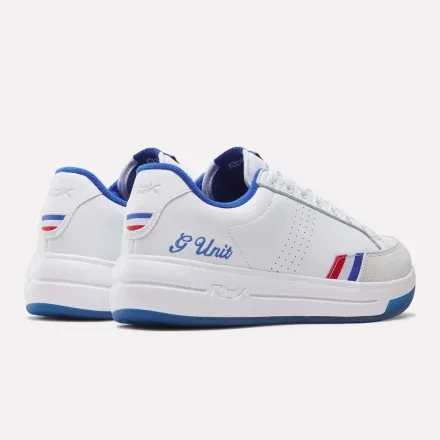
The G6 itself never tried to be flashy. It’s a low top with a plain leather upper, two lines running along the side panel and a cursive “G Unit” stitched near the heel. Perforations run across the toe and sides for a bit of texture, but the overall shape stays simple, closer to a classic court shoe than a chunky 2000s runner. That restraint is part of why it wore so well with the baggy denim and oversized tees that defined the era’s street uniform, and it’s likely part of why the shoe has aged into something collectors still track down more than two decades later.
stir
Reebok’s move into rap-driven footwear wasn’t a one-off marketing stunt. The G-Unit line ran alongside apparel drops and mixtape releases, and the brand leaned into the crew’s identity rather than asking the rappers to wear something that already existed. That distinction mattered. A signature shoe tied to a group rather than a single athlete meant the product had to speak for four people at once, which is part of why the G6’s branding stays understated: a stitched wordmark rather than a portrait or a catchphrase splashed across the upper.
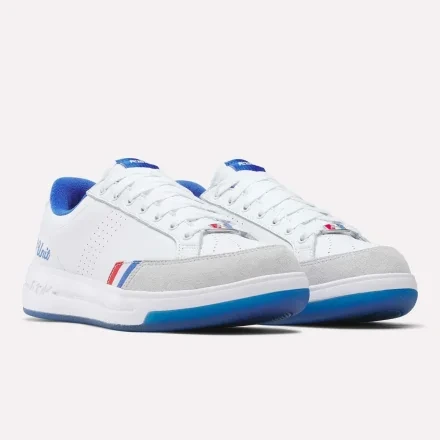
G-Unit x Reebok pairs the brand’s signature red, white, and blue palette with a clean low-top sil, finished with a translucent blue outsole and grey suede overlays.
At the time, athlete endorsement deals still made up the bulk of sneaker marketing budgets, and a rapper’s name on a shoebox was closer to a novelty than a strategy. Reebok’s willingness to put real production behind 50 Cent and G-Unit, rather than treating it as a promotional tie-in, is part of what separates the G6 from the flood of artist merchandise that followed later in the decade. The shoe had its own last, its own construction, and its own retail run rather than being a repainted version of an existing model with a new logo stamped on.
That approach also mirrored what was happening on the apparel side. G-Unit’s clothing line, sold alongside the group’s mixtapes and later its own record label, treated the crew’s branding the same way a streetwear label would rather than the way a rap group’s merch table usually worked. The G6 fit that same logic: a product built to be worn on its own, not just picked up as a collectible tied to an album cycle.
Word of a G6 comeback first surfaced earlier this year, arriving amid a broader wave of Y2K nostalgia that has already pulled early 2000s runners, low top tennis shoes and baggy silhouettes back into rotation. The renewed interest in that era’s hip-hop, from mixtape culture to the specific look of a G-Unit video shoot, has made a reissue like this one feel timed rather than random. Collector interest in the original G6 has also held up over the years, with pairs from the early run still surfacing on resale marketplaces well after the shoe left retail shelves.
huh
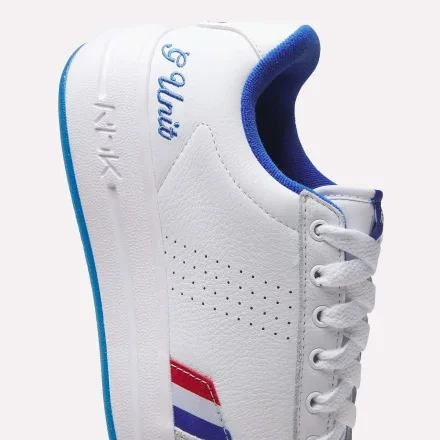
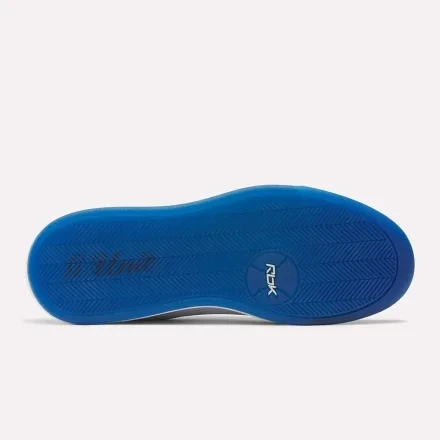
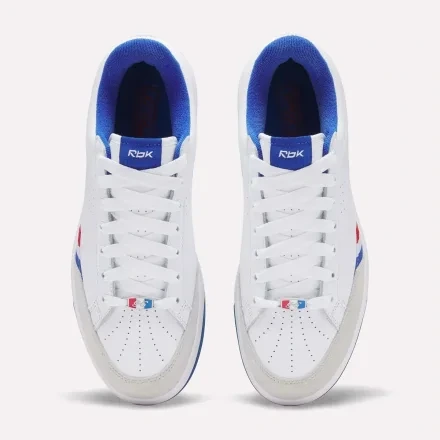
This release keeps the shoe’s original shape and swaps in a cleaner palette. The upper is done in white leather, with the fine perforation pattern still running across the toe box and side panels. Reebok picked up the shoe’s signature two-line side stripe and rendered it in red layered over blue, then carried that same red and blue combination onto the heel counter for a matching accent. Both the lining and the outsole go with a saturated blue, which is the boldest element of the whole shoe and gives it a sportier look at the bottom half than the leather upper suggests up top.
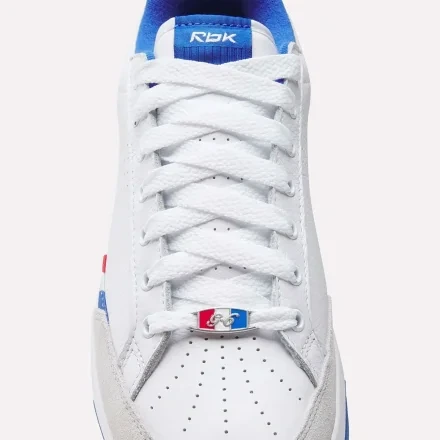
Branding stays close to the original layout. The tongue carries an embroidered “RBK” logo, and the cursive “G Unit” script returns on the heel side panel, stitched rather than printed. A small graphic sits on the shoelace dubrae, a detail easy to miss but consistent with how the original release handled its smaller touches. None of it reads as loud. The shoe leans on a crisp white base and lets the red and blue do the talking in smaller doses, which keeps it wearable well outside of a strictly nostalgic outfit.
The choice to keep the upper almost entirely white is worth noting on its own. Reebok’s original G-Unit run leaned on darker leathers and heavier tint blocking in places, so a mostly white pair with hue used only as an accent puts more weight on construction and stitching than on graphic pattern. It also puts this release closer in spirit to the S. Carter’s cleaner color stories than to some of the louder mid-2000s hip-hop shoe that came after it, a detail that separates this reissue from a straight nostalgia repaint.
rel
The Reebok G-Unit G6 in white, red and blue is set for an overseas release on August 20, according to a Japan market release notice. Pricing and confirmed retailers for that date have not been independently verified at the time of writing. Given the shoe’s history as an early example of music-driven footwear rather than an athlete signature model, the reissue lands at a point where labels and retailers are actively revisiting exactly that period of shoe history, from mixtape-era apparel capsules to the specify sil worn in early 2000s rap videos.
n
From the DRIFT archive: Denim Legends Collide: The Levi’s x Air Jordan 3 ‘Sail’ Leak Sets Off a New Wave of Hype
Related Articles
Tom Sachs Put Black And Team Royal On The General Purpose Last Again
NikeCraft GPS. FZ1363-002. Black field. White Swoosh. Royal pull tabs. Gum sidewall. European calendars point […]