A Photographer Who Never Chased Fame Finally Gets His Own Spotlight at Abbey Road

July 21, 2026
Masayoshi Sukita spent decades photographing David Bowie without seeking the limelight himself. This September, Abbey Road turns the camera the other way.
Abbey Road confirmed this week that Masayoshi Sukita, the photographer behind some of the most recognisable images of David Bowie ever taken, will receive the Lifetime Achievement Award at this year’s Abbey Road Music Photography Awards, delivered by DHL. The ceremony takes place on Thursday, September 24th, at Abbey Road Studios in London, the recording complex that has hosted everyone from The Beatles to Kanye West and now runs one of the more closely watched annual events in music photography.
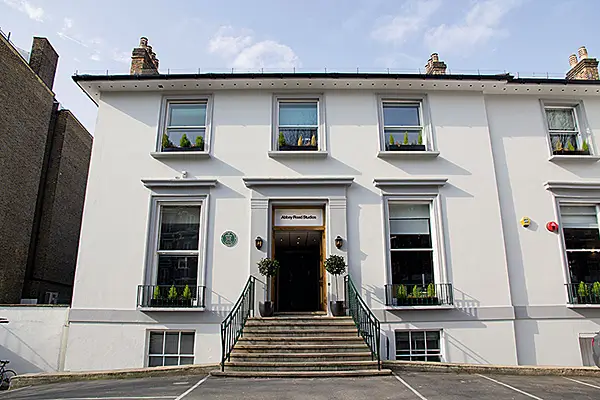
The front entrance of Abbey Road Studios in London, whose Georgian façade has welcomed generations of musicians and producers since opening in 1931.
Sukita follows David Bailey CBE, who received the inaugural version of the award in 2025. Where Bailey’s career was built largely in Britain, Sukita’s arc runs from postwar Japan through 1970s New York and London, then back again, a path that makes this year’s honor feel like a genuinely different kind of recognition rather than a repeat of the same story.
In a short statement released alongside the announcement, Sukita said the award was an honor and that he intends to keep working. Mark Robertson, Abbey Road’s Director of Marketing and Creative, described Sukita’s photographs as having become part of cultural history, timeless and instantly recognisable.
stir
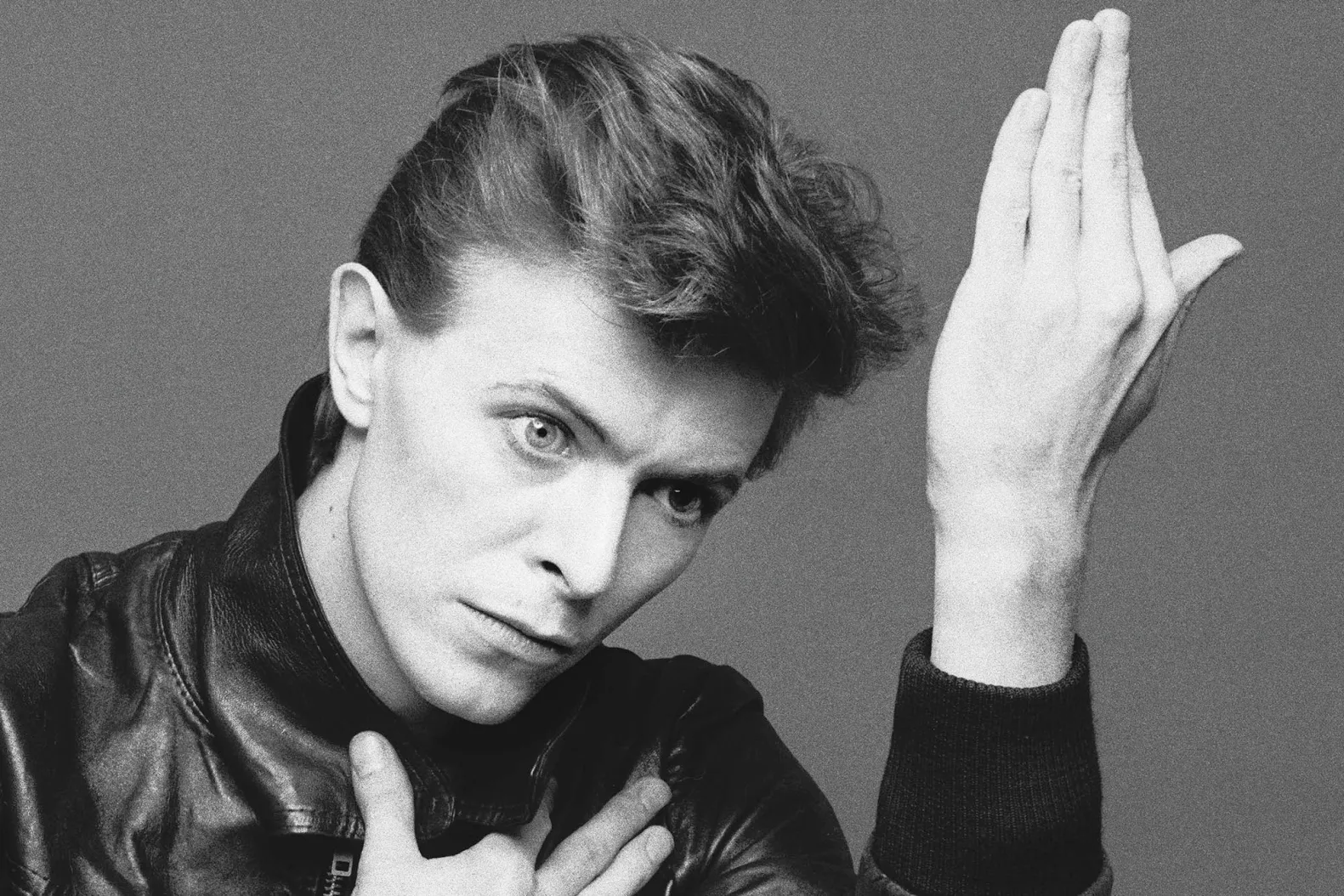
Ask a casual music fan if they know Masayoshi Sukita’s name and most will say no. Show them the black and white cover of David Bowie’s 1977 album Heroes, arms crossed, head tilted back, and recognition is immediate. That photograph is Sukita’s, taken during a shoot that grew out of a collaboration stretching back five years by that point.
It is a pattern that runs through Sukita’s whole career. He rarely became the story himself, even as his subjects became some of the most photographed people of the twentieth century. Iggy Pop, Marc Bolan, Joe Strummer, Yellow Magic Orchestra and David Sylvian all passed in front of his lens at points when their own fame was just beginning to take shape, and in several cases Sukita’s images are now the ones history has settled on as definitive.
flow
Sukita was born in 1938 in a small coal mining town in Kyushu, in southern Japan. His father died on the front line in China during the Second World War when Sukita was seven, and what memories he has of him center on watching him take photographs, a detail Sukita has returned to in interviews over the years as a kind of quiet origin story.
He trained formally after high school, spent two years at photography school, then worked his way through an assistantship and a stint at an advertising agency in Osaka before relocating to Tokyo in 1965 to shoot fashion work and television commercials. He turned freelance in 1970, the same year he married his wife Hiroko, and it was the years immediately following that reshaped his career entirely.
Between 1970 and 1971, Sukita made repeated trips to New York, pulled in by the subculture orbiting Andy Warhol’s circle. While there, he photographed Jimi Hendrix in the final months of Hendrix’s life. London pulled him in next, where he met and photographed Marc Bolan of T. Rex.
View this post on Instagram
The turning point came in 1972. Sukita saw a poster advertising a David Bowie concert before he had heard a note of Bowie’s music, and something about the image convinced him he needed to go. He arranged a meeting with Bowie’s management, brought his portfolio, and the response was strong enough that a portrait session followed that summer. It became a working relationship that lasted 44 years, through album covers, tours, and the kind of ordinary time together, dinners, parties, walking around whatever city they happened to be in, that rarely gets photographed by anyone at all.
Sukita’s Bowie images were later given prominent placement in the David Bowie Is exhibition at the V&A Museum in London, a show that broke attendance records for the museum when it opened. He has held solo exhibitions across Japan, England, France, Italy, Germany, Switzerland, Australia and the United States, though his name has always traveled less widely than his pictures.
follow
Sukita becomes only the second person to receive Abbey Road’s Lifetime Achievement Award since it launched in 2025, when David Bailey was honored for six decades spent photographing British music and culture. Bailey’s win was delivered in person at Abbey Road’s Studios One and Two, with tributes from figures including Elton John, Mary McCartney and Jarvis Cocker.
Sukita’s award follows a broader pattern Abbey Road has leaned into since 2022, pairing a single major legacy honor with a wider slate of prizes for emerging and mid-career photographers. Anton Corbijn received the separate ICON Award in 2025, and previous years have recognised photographers working across live music, portraiture, festivals and club culture, categories the Abbey Road Music Photography Awards have continued expanding since launch.
huh
The 2026 judging panel is led by Rankin, the British photographer, publisher and film director serving as head judge, known for his work with Madonna and Björk among others. He is joined by Nile Rodgers as special guest judge, seven time BRIT winner RAYE, Måneskin frontman Damiano David, portrait photographer Platon, music and culture photographer Dean Chalkley, photographer Dennis Morris, Abbey Road’s Producer in Residence Kid Harpoon, English Teacher frontwoman Lily Fontaine, previous MPA finalist Phoebe Fox, US photographer Jackie Lee Young, singer songwriter Hikaru Utada and guest judge Simon Wheatley.
A separate shortlisting panel, led by Rolling Stone US’s Sacha Lecca as MPA Chief Shortlister and Global Ambassador, includes previous MPA winner Andreia Lemos, New York based photographer Rich Fury, Bristol based photographer Khali Ackford, Brooklyn based photographer Ebru Yildiz and The Standard’s Head of Design Ped Millichamp. Between the two panels, the awards draw judgment from people working across performance, photography and design rather than photography specialists alone, a mix Abbey Road has kept fairly consistent since the early years of the competition.
View this post on Instagram
fin
The Abbey Road Music Photography Awards launched in 2022 and has expanded well past a single annual ceremony since. It now sits under what Abbey Road calls its Music Photography Accelerator, an umbrella covering exhibitions, workshops, a skills hub for emerging photographers, and a festival that landed in New York City for the first time in May 2026.
This year’s competition drew more than 24,500 submissions from 40 countries, a 25 percent increase on the previous year’s entries, according to figures released alongside the Sukita announcement. That growth places the awards among the larger photography competitions built specifically around music, alongside the exhibitions the program has staged in London, Birmingham and New York since it began.
The full slate of 2026 category winners will be announced alongside Sukita’s award at the September ceremony, with an exhibition of nominated and winning work expected to follow in London later in the year, continuing the pattern set by previous editions.