Adam Lister Reimagines Jay-Z’s The Blueprint in 2024 Masterpiece

November 21, 2024
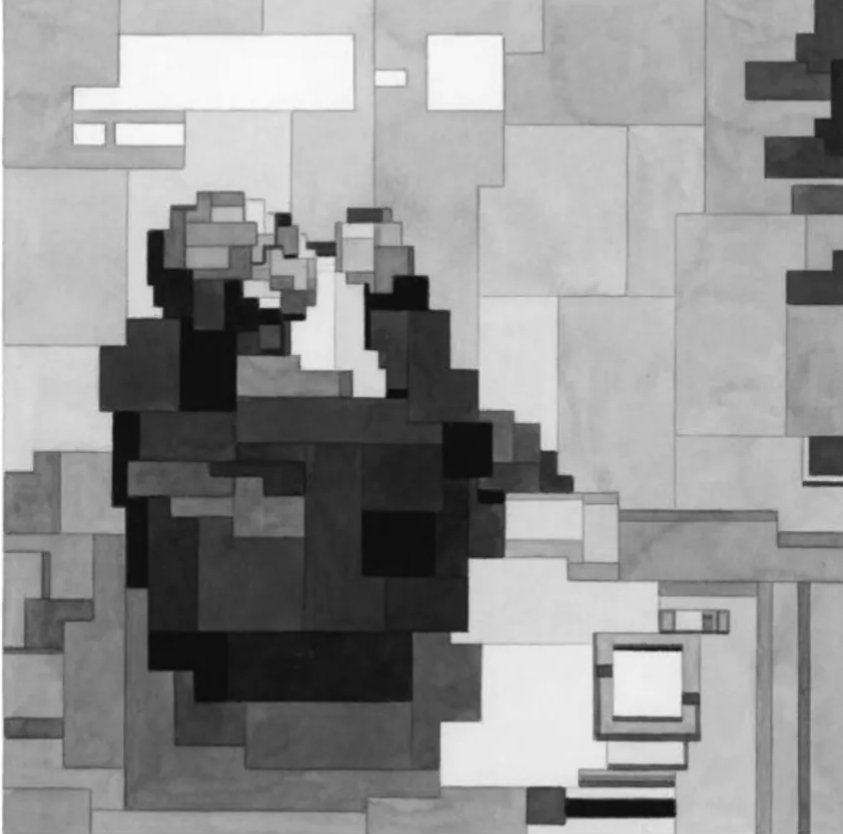
In 2024, contemporary artist Adam Lister unveiled “THE BLUEPRINT (Jay Z),” a piece that reimagines the iconic album cover of Jay-Z’s 2001 release, “The Blueprint.” Lister’s work is characterized by its unique blend of pixelated abstraction and watercolor techniques, offering a fresh perspective on familiar cultural imagery.
Adam Lister’s Artistic Approach
Adam Lister is renowned for his distinctive style, which merges the digital aesthetics of pixelation with traditional watercolor painting. This approach allows him to deconstruct and reinterpret well-known images, bridging the gap between digital art and classical techniques. His portfolio includes reinterpretations of various cultural icons, from classic artworks to modern pop culture references.
“THE BLUEPRINT (Jay Z)”
In this piece, Lister deconstructs the original album cover of “The Blueprint,” which features a monochromatic image of Jay-Z in a contemplative pose. Through his pixelated watercolor technique, Lister transforms the photograph into a geometric abstraction, maintaining the essence of the original while introducing a new visual language. The artwork invites viewers to engage with the familiar image in an unfamiliar form, prompting reflections on the intersection of art, music, and cultural memory.
Availability and Reception
“THE BLUEPRINT (Jay Z)” is available through Toyol Gallery, with details accessible on Artsy. The piece has garnered attention for its innovative approach to reinterpreting a significant cultural artifact, appealing to both art enthusiasts and fans of Jay-Z’s music.
Impression
Adam Lister’s “THE BLUEPRINT (Jay Z)” exemplifies his ability to blend digital and traditional art forms, offering a novel perspective on iconic imagery. By reimagining Jay-Z’s seminal album cover, Lister not only pays homage to the original work but also encourages viewers to consider the evolving relationship between art and popular culture.
Related Articles
Chasing the Sort Sol: Inside Søren Solkær’s Six Year Pursuit of Europe’s Starling Clouds
A Danish portrait photographer spent six years following a bird nobody photographs on purpose, and […]