DRIFT AUDIO
Listen to this story
Choose a voice, then press play.
return
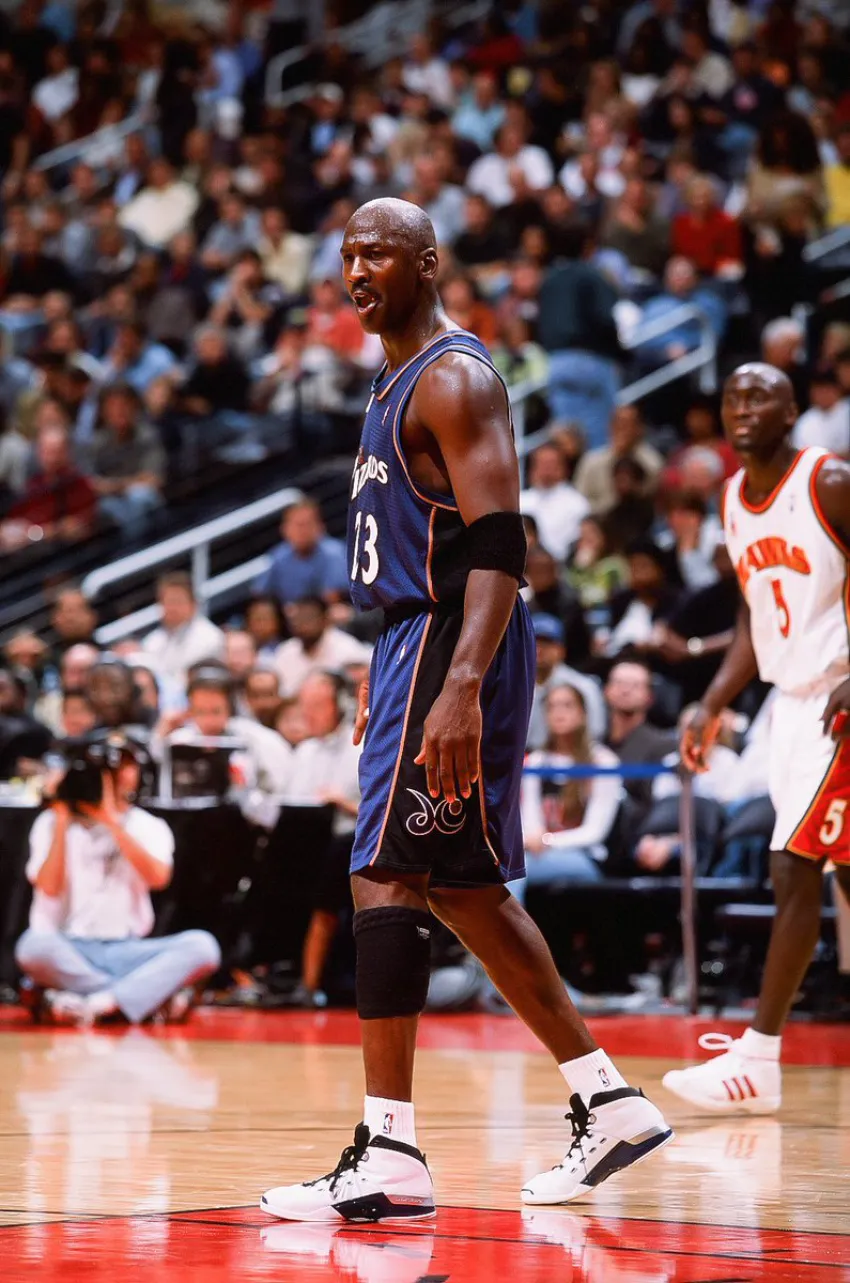
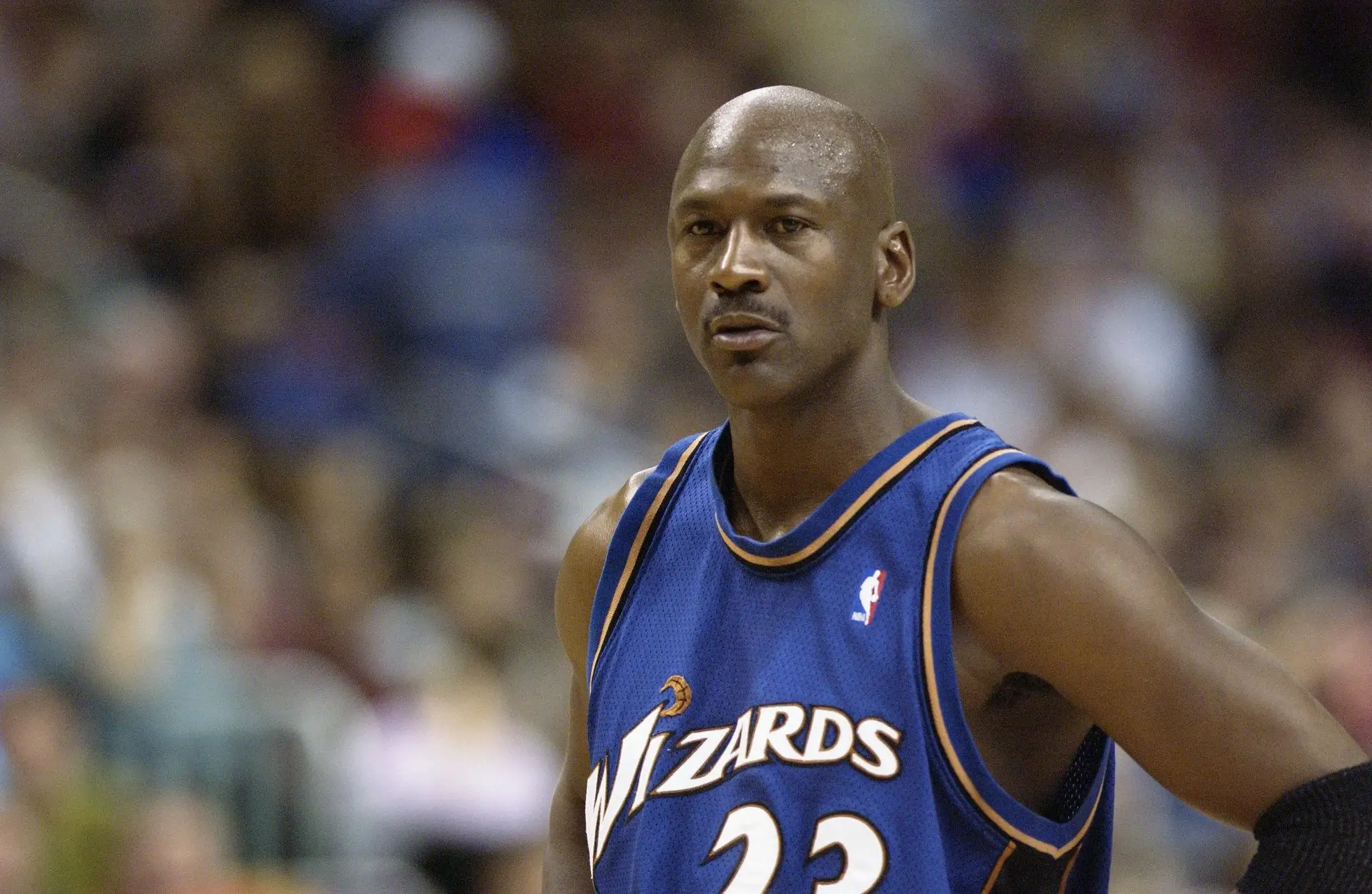
In 2002, Michael Jordan stepped onto the court in Washington, D.C., not as the six-time champion of Chicago, but as a man still in love with the game. The Air Jordan 17, released that February, wasn’t just another signature shoe — it was a statement. A union of haute, performance, and avant-garde design, it reflected MJ’s evolution: older, wiser, and unafraid to take risks. The context mattered. This was not the explosive Jordan of the 1990s; this was a version grounded in experience, moving with intention rather than force, still searching for moments that felt like truth.
Now, 25 years later, Jordan Brand is bringing back one of its most iconic and long-awaited retros — the Air Jordan 17 OG “College Blue” — with an official release date set for February 19, 2027, during NBA All-Star Weekend. The placement is deliberate. All-Star Weekend has evolved into a cultural stage where performance, style, and nostalgia intersect. Bringing the AJ17 back here reframes it, giving it the environment it always belonged in — one that understands nuance, design language, and legacy.
This isn’t just a reissue. It’s a homecoming.
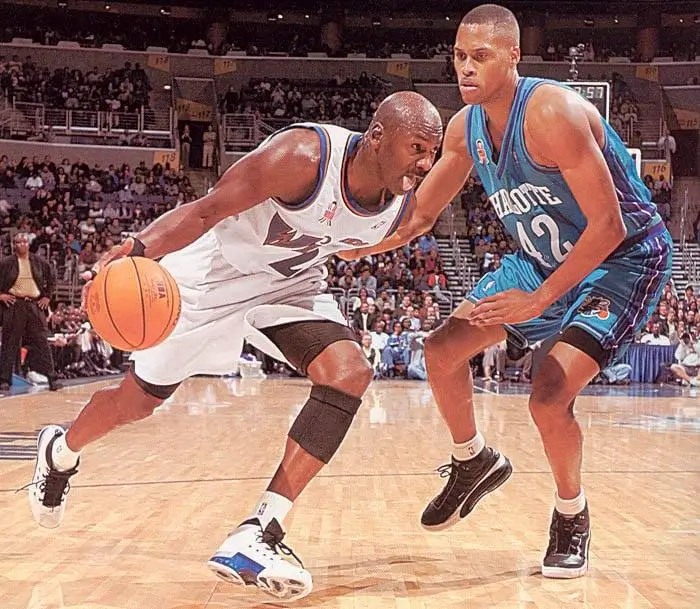
2001-2002 Air Jordan 17 – Washington Wizards
proforma
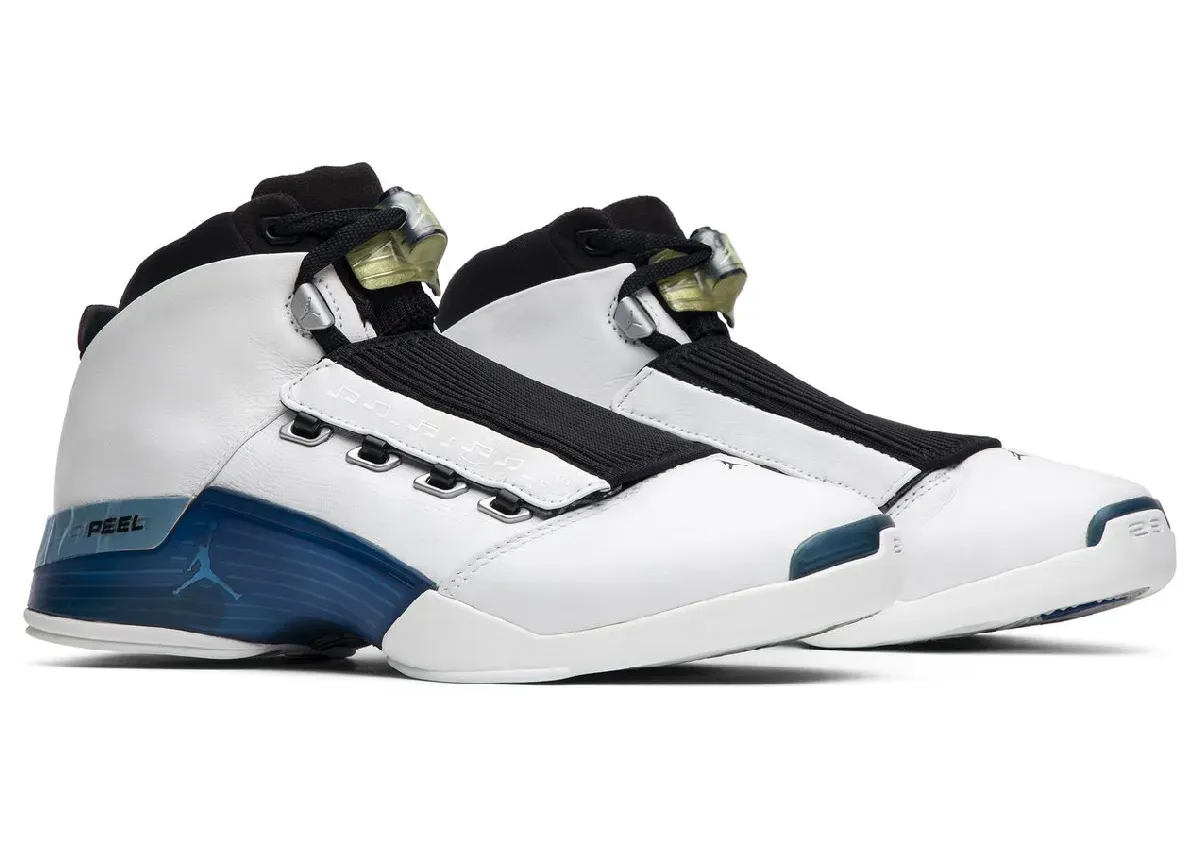
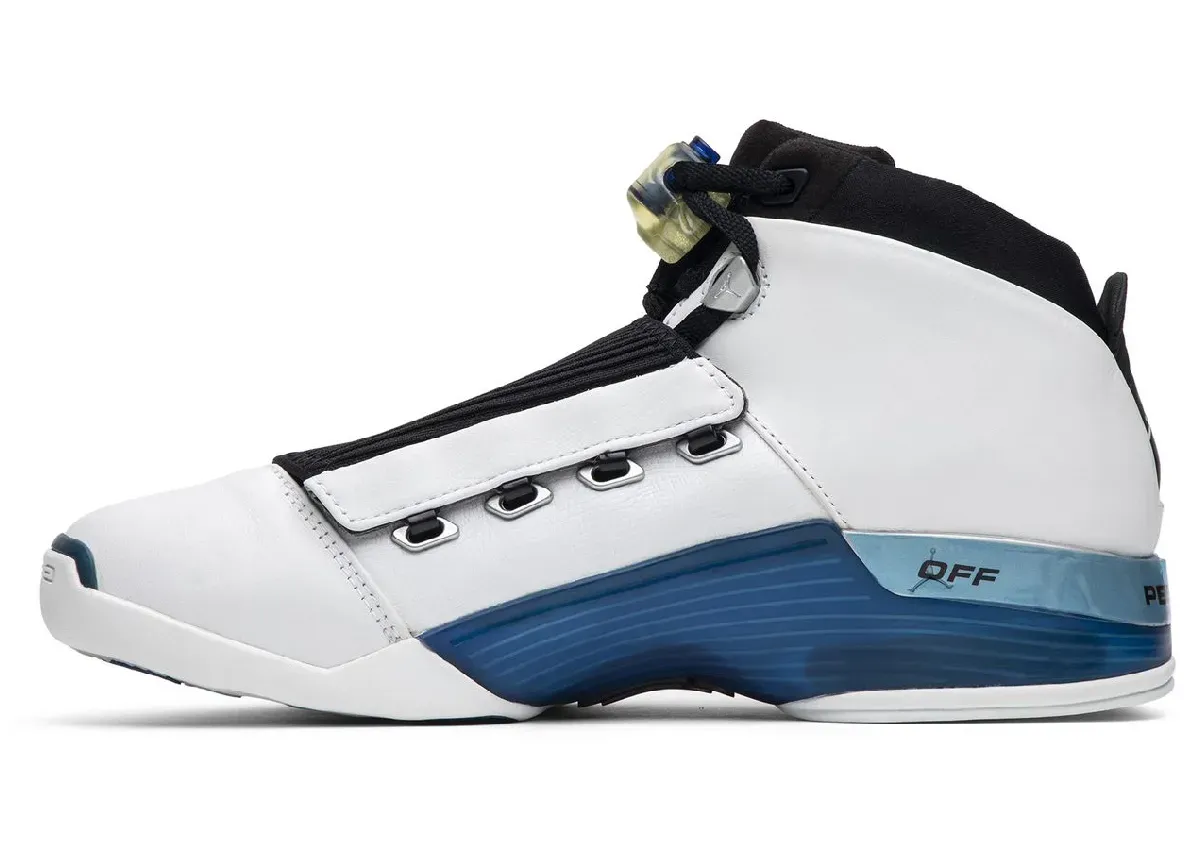
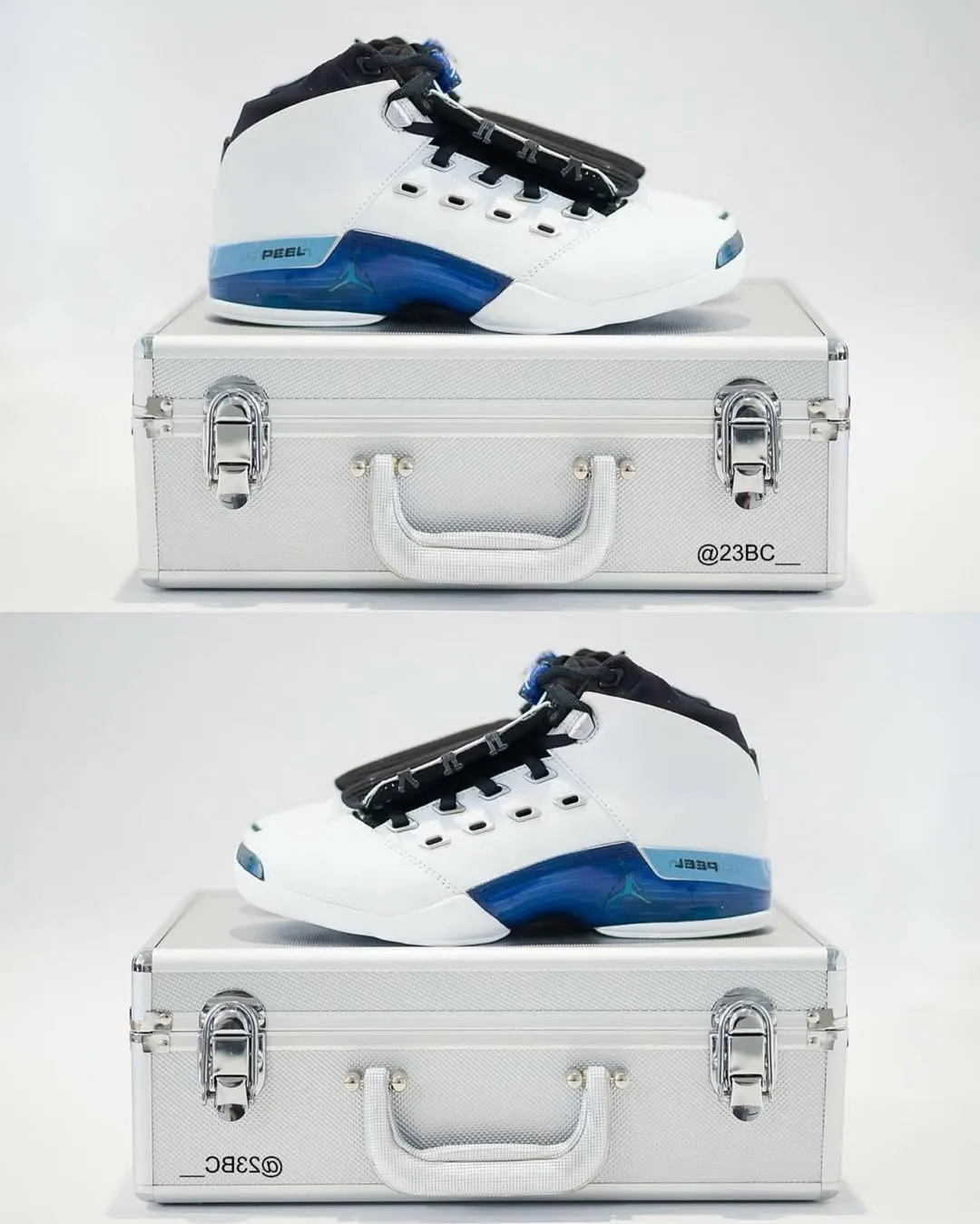
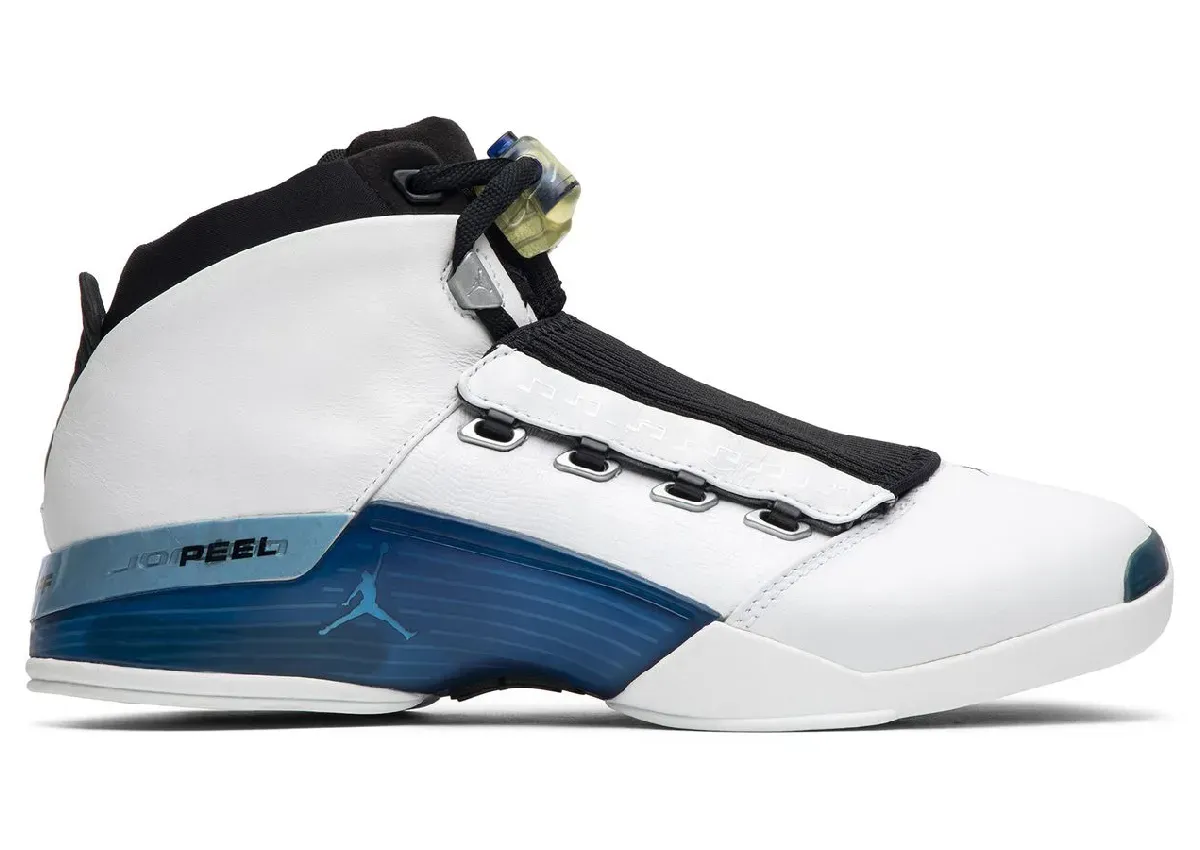
The “College Blue” colorway (style code 302720-141) was the very first expression of the AJ17, and for many, it remains the definitive version. Constructed from full-grain white leather, the upper carries a sense of restraint, allowing the College Blue accents to emerge with precision rather than excess. The TPU toe guard, midsole detailing, lace lock, and outsole form a controlled visual rhythm — a composition that feels considered, almost architectural.
The references are intentional. The color palette nods to the University of North Carolina, grounding the shoe in origin while pushing its design forward. But beyond color, it is the structure that defines the AJ17. The removable black shroud introduces an element of transformation, shifting the silhouette between exposure and concealment. It feels less like a sneaker detail and more like a design gesture — something borrowed from automotive design, where surfaces are sculpted to control perception.
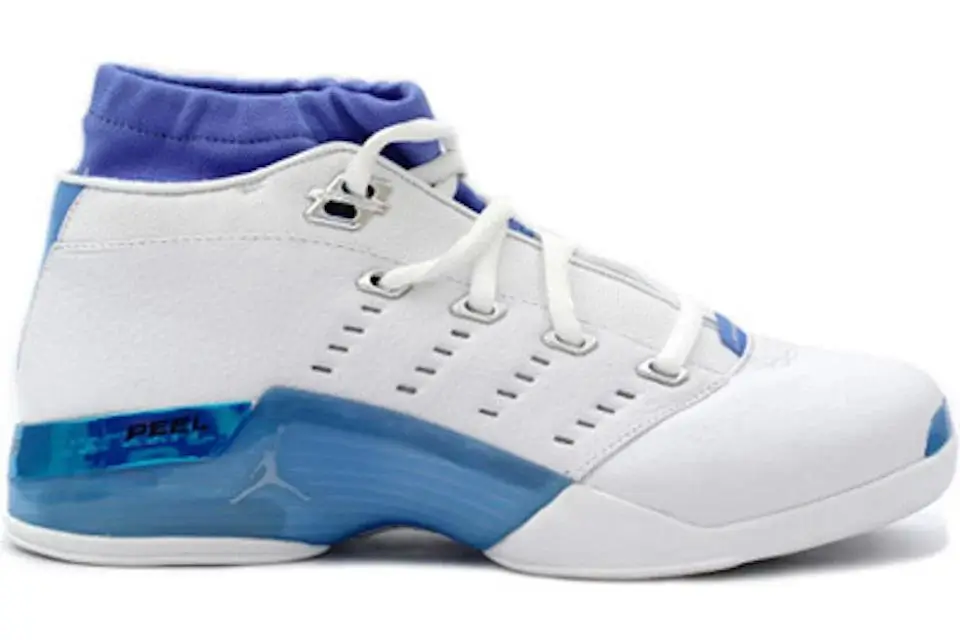
Jordan 17 OG Low White Carolina
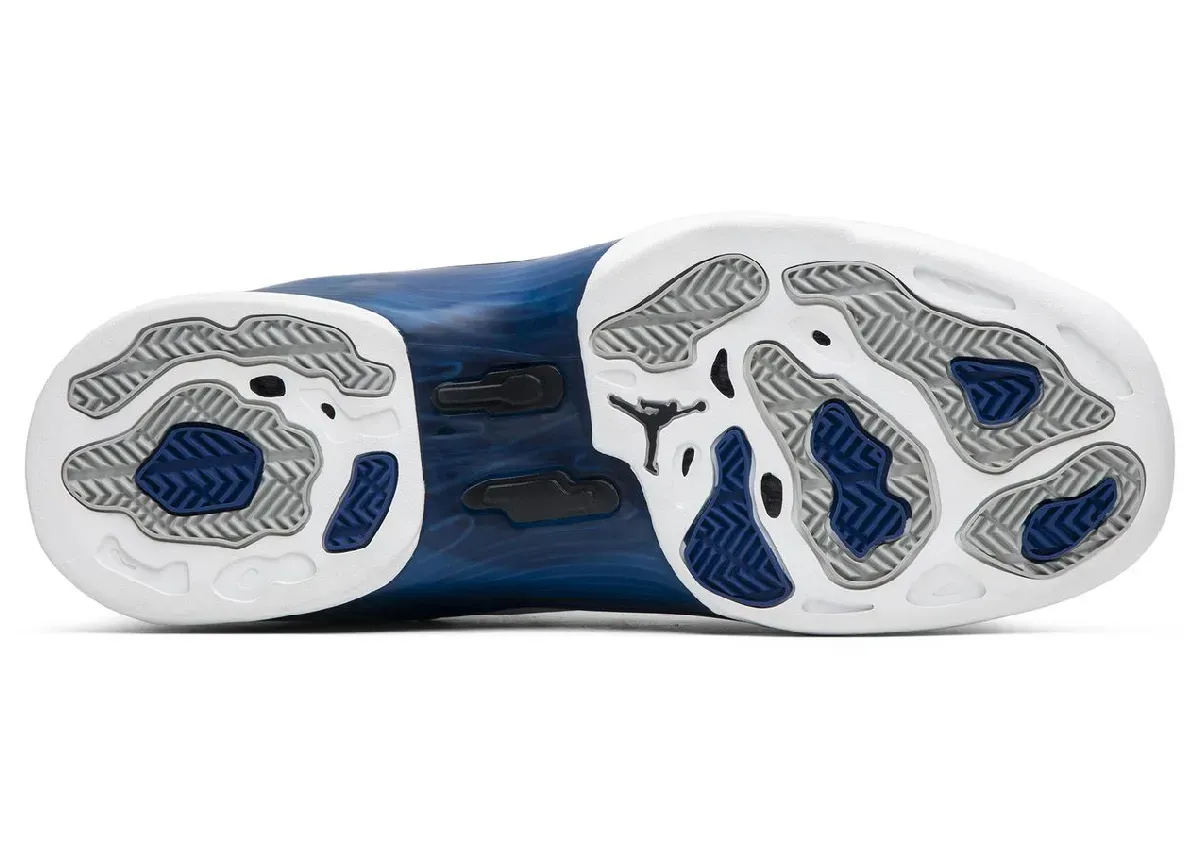
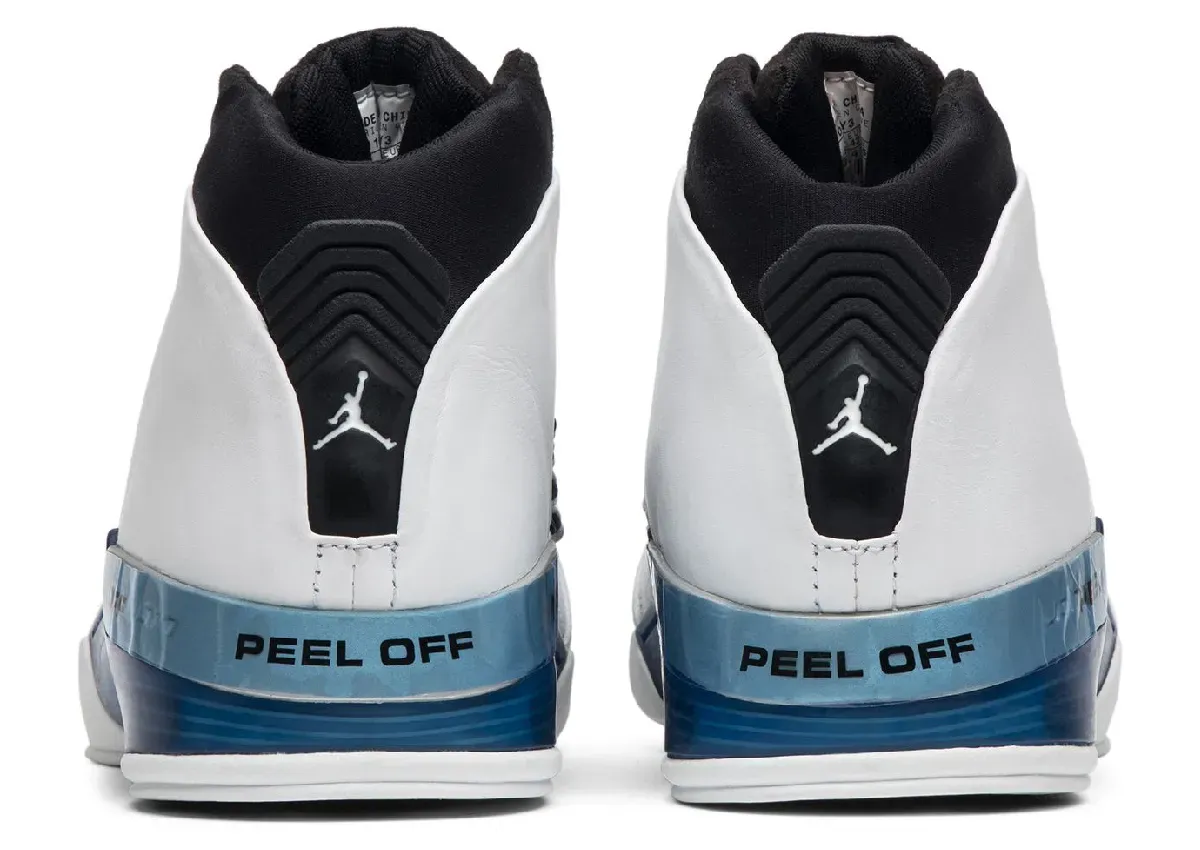
The chrome Jumpman badge at the heel acts as a focal point. It doesn’t shout; it reflects. Light moves across it, changing its presence depending on angle and motion. Underneath, a carbon-fiber plate stabilizes the ride, while Zoom Air cushioning and a torsion-based system provide responsiveness without excess softness. The performance language here is controlled, precise, aligned with a player who no longer relied on explosion alone, but on timing, positioning, and intelligence.
xp
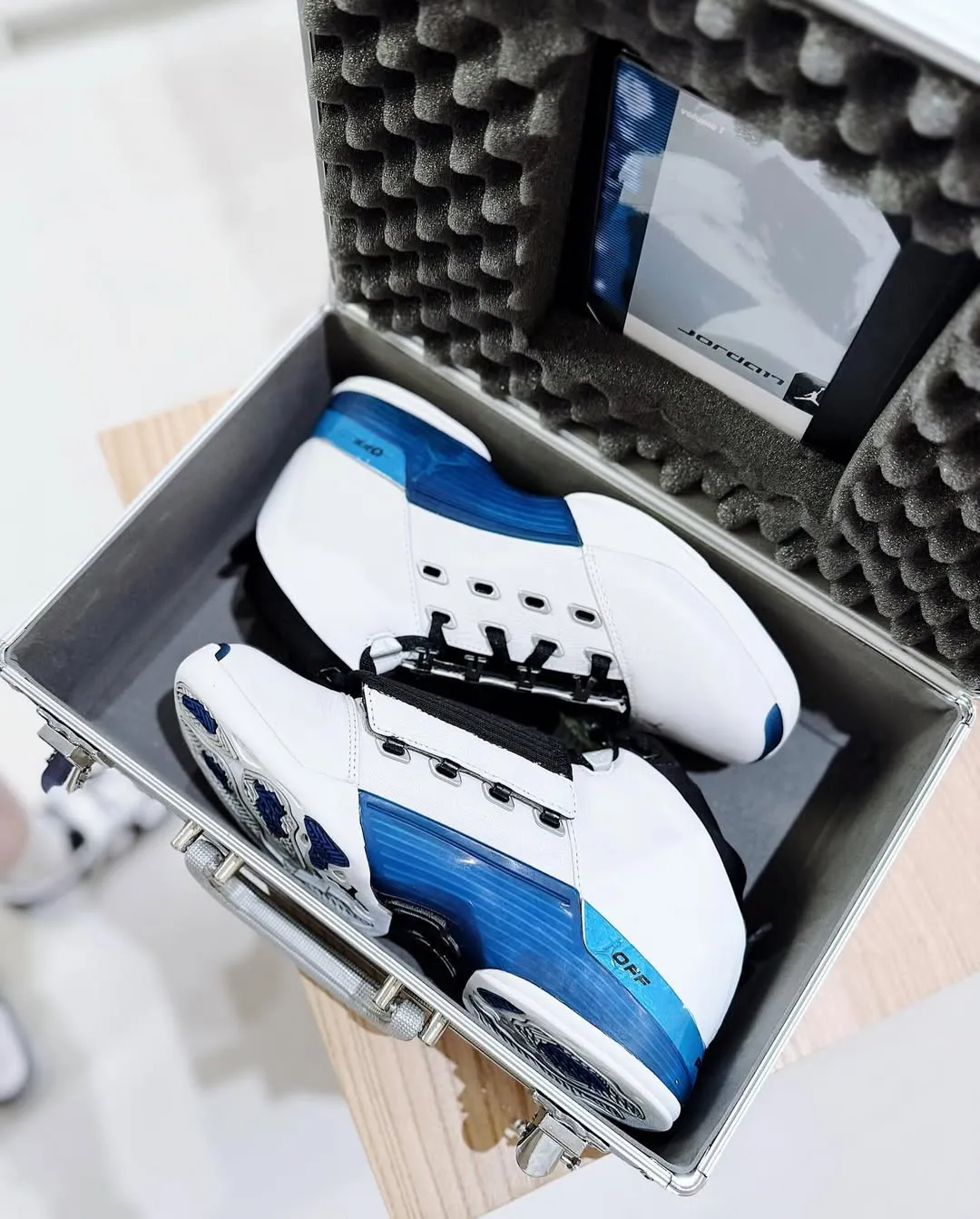
What made the Air Jordan 17 truly distinct wasn’t just the shoe — it was how it was presented. Released in a metal briefcase, accompanied by a CD curated by Jordan himself, the AJ17 blurred the line between product and artifact. This was not packaging as an afterthought; it was part of the narrative.
The musical reference — inspired by Miles Davis — introduced a conceptual layer rarely seen in footwear at the time. Jazz, with its emphasis on improvisation and structure coexisting, mirrored the design approach of the shoe. Clean lines, unexpected details, controlled experimentation. The AJ17 didn’t just look different — it thought differently.
The silhouette itself reflected that philosophy. Where earlier Air Jordans thrived on visibility and bold contrast, the 17 embraced refinement. It echoed the logic of a haute timepiece: deliberate, composed, built for those who notice detail rather than demand attention. That shift divided audiences at the time, but it also positioned the shoe far ahead of where sneaker culture would eventually move.
shh
For years, the mid-top OG remained untouched. While Jordan Brand revisited the low-top iteration in 2024 — offering reinterpretations that introduced the silhouette to a new audience — the original “College Blue” was left out of reach.
That absence did something important. It created distance. And within that distance, perception changed. What was once considered overly refined, even disconnected from the expectations of its time, became desirable. The market caught up to the idea. Haute shoes were no longer an anomaly; they were the standard.
The confirmation of the 2027 retro closes that gap. It brings the shoe back not as a relic, but as something current. Something understood.
flow
The Air Jordan 17 cannot be separated from the period in which it was worn. The Washington Wizards era is often treated as a footnote in Michael Jordan’s career — a closing act rather than a defining one. But that perspective overlooks what those years represented.
This was not dominance in its familiar form. It was persistence. A player returning not because he needed to prove something, but because the act of playing still held meaning. There is a different kind of discipline in that. A quieter one.
The AJ17 reflects that shift. It is not aggressive in its design language. It does not demand attention. Instead, it rewards observation. It aligns with a version of greatness that is no longer about overwhelming the moment, but understanding it.
craft
The upcoming retro is expected to maintain the integrity of the original design while incorporating subtle material updates. The leather will likely feel more refined, more durable. The structure will remain intact, preserving the silhouette’s proportions and detailing. The chrome heel element will return, not as nostalgia, but as necessity — a defining feature that cannot be altered without losing meaning.
At an expected retail price of around $200, the release mirrors the original’s positioning: premium, but not inaccessible. There is also strong speculation around packaging. Whether or not the metal briefcase returns in full form, the expectation is clear — this release will honor the original’s emphasis on presentation.
This is not a simplified retro. It is a considered one.
straddle
Over time, the Air Jordan 17 has undergone a shift in perception. What once felt distant now feels foundational. The design language that seemed too refined has become standard across the industry. Haute materials, restrained palettes, conceptual storytelling — these are no longer exceptions. They are expectations.
The AJ17 helped introduce that shift, even if it wasn’t fully recognized at the time. It operated outside the rhythm of early-2000s sneaker culture, and because of that, it was misunderstood. Today, that same distance reads as vision.
The 2027 retro is not simply about bringing the shoe back. It is about acknowledging its role in shaping what came after.
rel
When February 19, 2027 arrives, the release will not just mark the return of a shoe. It will mark the return of an idea — one that took time to be understood. Positioned within NBA All-Star Weekend, the AJ17 “College Blue” will exist in a space that finally aligns with its identity.
On foot, it will read differently now. Not as something unusual, but as something intentional. Something complete.
They won’t just be worn for style. They’ll be worn as reference — to a moment, to a mindset, to a version of greatness that chose evolution over repetition.
The Air Jordan 17 “College Blue” never needed to change. It only needed time.
Read Drift’s related feature, Exclusive Early Release of Coveted Air Jordan Shoes at NBA All-Star Weekend in San Francisco.
From the DRIFT archive: Air Jordan 4016 “Midnight Navy” Reframes Jordan Legacy · A Ma Maniére and Jordan Brand Recast Haute with the Air Jordan 6 “Smokey Mauve”
Related Articles
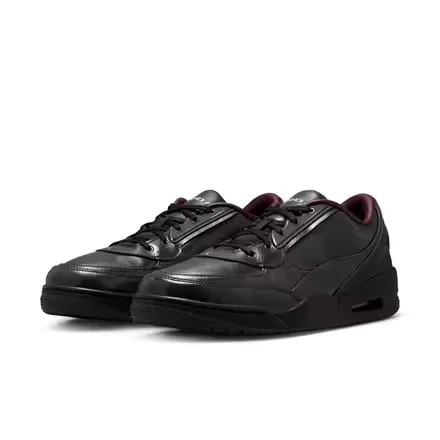
The Air Jordan Ultra Goes All Black, Then Hides a Burgundy Surprise Inside
The new Air Jordan Ultra colorway hides its only real hue where the foot goes […]