
DRIFT AUDIO
Listen to this story
Choose a voice, then press play.
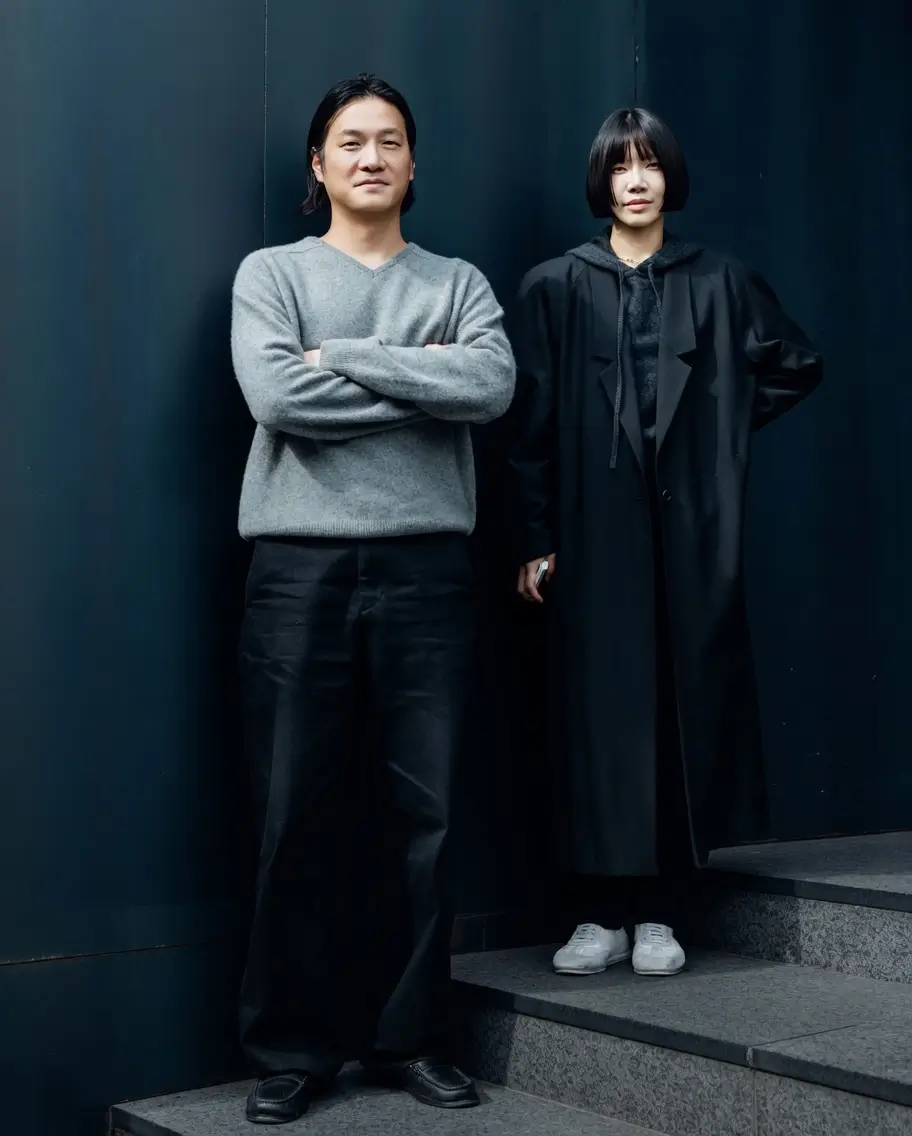
“The simple idea of hanging a few things together and seeing how people felt,” says Myeongsoo Lee.
The CEO is describing the humble beginnings of Seoul-based brand AMOMENTO, which his sister Mikyung ‘MK’ Lee founded in 2015 and he joined a year later. Fast forward to now, and it has become one of Korea’s most quietly influential fashion labels.
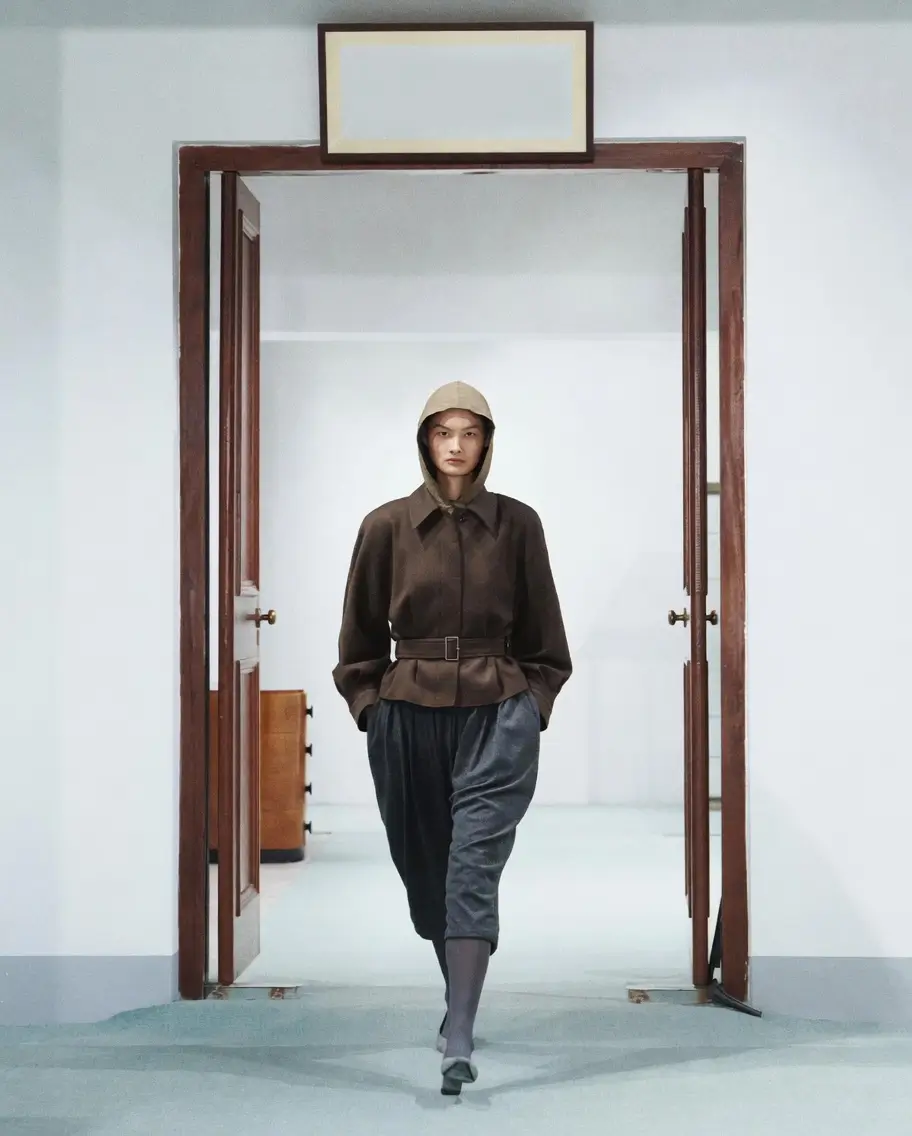
Contemporary Korean fashion is defined by a dynamism that runs on fast-spreading trends and what K-pop idols are wearing, but with AMOMENTO, the Lee siblings are betting on a much more timeless aesthetic that goes against the norm. Their clothes are tasteful and trend-averse, largely in neutral colors that span minimal and sporty, smart and tailored, with subtly unusual silhouettes that might be cropped, curved, or oversized. Quiet, sure—but also unpredictable.
“Korean customer taste is developing. I can tell that consumers here are becoming increasingly mature in the way they approach clothing,” says Lee, speaking with Ashley Ogawa Clarke over coffee in the lobby of a Seoul hotel.
In the hyper-accelerated world of Seoul fashion, where new drops can go viral overnight and K-pop stylists dictate what sells, AMOMENTO stands apart like a calm observer in a crowded room. No loud logos. No seasonal gimmicks chasing TikTok algorithms. Instead, the brand offers meticulously considered garments that reward closer inspection—fabrics that drape just so, seams that curve unexpectedly, proportions that feel both familiar and slightly off-kilter. It is fashion for those who have moved beyond the need to announce their taste, and into the realm of simply having it.
View this post on Instagram
Myeongsoo Lee, dressed in a relaxed yet sharply cut beige overshirt from the current collection, sips his americano as he reflects on the brand’s journey. His sister MK, the creative force, is not present today, but her vision permeates every conversation. “She started it because she couldn’t find clothes she wanted to wear every day,” he explains. “Not too loud, not too basic. Something that felt personal.”
stir
AMOMENTO began in a modest studio in Seoul’s creative Garosu-gil area. MK Lee, with a background in fashion design, began experimenting with small runs of shirts, trousers, and outerwear. The name itself—“A Moment”—reflects the philosophy: clothing that captures and elevates everyday moments rather than screaming for attention at special ones. Myeongsoo joined in 2016, bringing business acumen honed in tech and retail, and together they scaled thoughtfully.
By 2018, the brand had developed a cult following among Seoul’s fashion insiders—stylists, editors, architects, and creative professionals who valued subtlety. Word spread not through paid campaigns but through people wearing the clothes in real life. A well-cut wool coat spotted on a magazine editor. A pair of curved-hem trousers on a barista who doubled as a DJ. These organic endorsements proved more powerful than any influencer contract.
Today, AMOMENTO operates a flagship store in Seoul and has expanded into select international retailers in Japan, China, and Europe. Their e-commerce site ships globally, but the Lee siblings resist rapid expansion. “We don’t want to be everywhere,” Myeongsoo says. “We want to be right where we should be.”
show
Walk into an AMOMENTO store and the first impression is calm. Beiges, charcoals, soft blacks, and occasional deep greens or muted taupes dominate. But spend time with the garments and the nuance emerges. A bomber jacket might feature an elongated hem that creates an unexpected silhouette. A knit sweater could have asymmetric seams that shift the shoulder line. Trousers often incorporate subtle pleats or curved pockets that alter how light falls across the fabric.
This is not minimalism in the stark Scandinavian sense, nor is it the deconstructed avant-garde of some European houses. It is distinctly Korean in its precision—attention to fit, fabric hand-feel, and wearability—but with a quiet experimental edge. “We look at traditional tailoring, workwear, and sportswear,” Myeongsoo explains, “then ask how we can make it feel new without being trendy.”
The brand’s design process is iterative and personal. MK Lee still sketches many pieces herself. Fabrics are sourced from Japan and Italy, with an emphasis on natural fibers that age gracefully. Production remains limited to maintain quality; nothing is mass-produced in the fast-fashion sense.
This approach has resonated as Korean consumers evolve. Once dominated by luxury logos and idol-driven trends, the domestic market now includes a growing segment seeking longevity and individuality. “People are tired of buying something that feels dated after one season,” Lee notes. “They want pieces that become part of their personal uniform.”
society
South Korea’s fashion scene has long been a fascinating tension between speed and sophistication. The influence of K-pop and K-drama is undeniable—idols launch micro-trends that can sell out in hours. Brands like AMOMENTO contrast sharply with that ecosystem. Where others chase virality, AMOMENTO cultivates loyalty.
Yet the brand is not anti-trend; it is simply operating on a different timeline. Their collections evolve gradually, with signature motifs reappearing in new forms. A curved hem from three seasons ago might inform a new jacket silhouette. This creates a coherent universe rather than disconnected seasonal statements.
International interest has grown steadily. Fashion editors from Vogue and The Business of Fashion have highlighted AMOMENTO as part of the “new wave” of Seoul design—alongside labels like Andersson Bell and Wooyoungmi—that blend local sensibility with global appeal. Celebrities and stylists in Los Angeles and Tokyo have begun name-checking the brand in interviews.
min
In an era where many fashion startups chase venture capital and explosive growth, AMOMENTO’s path has been deliberately measured. The company remains privately held and family-led. “We’ve had offers,” Myeongsoo admits, “but we’re not in a rush to sell or scale massively. Growth for growth’s sake often compromises what made you special.”
This philosophy extends to pricing. Pieces are accessible for quality-conscious consumers—knitwear in the $150–300 range, outerwear $400–800—positioning the brand between high street and luxury. The focus remains on direct-to-consumer and select wholesale rather than flooding department stores.
Sustainability is approached quietly but seriously. The brand emphasizes durable construction, timeless design (reducing the need for constant replacement), and responsible sourcing. No loud “eco” marketing campaigns—just better products that last.
sum
As we finish our coffee, Myeongsoo Lee glances at his phone—a message from his sister about a new fabric sample. The brand continues to evolve. Recent collections have introduced more tailored suiting options alongside their signature relaxed pieces, suggesting a broadening of their “personal uniform” concept.
When asked about expansion dreams, Lee smiles thoughtfully. “Maybe a small store in Tokyo or New York one day. But the most important thing is keeping the spirit intact—the simple idea of hanging things together and seeing how people feel.”
In a fashion world increasingly dominated by noise, AMOMENTO reminds us of the power of quiet confidence. The Lee siblings have built something rare: a brand that doesn’t shout its relevance but earns it, season after season, garment after garment.
For those who discover it, wearing AMOMENTO feels less like following a trend and more like joining a subtle movement—one where clothing serves life rather than the other way around. In the fast-moving currents of contemporary Korean fashion, that may be the most radical position of all.