DRIFT AUDIO
Listen to this story
Choose a voice, then press play.
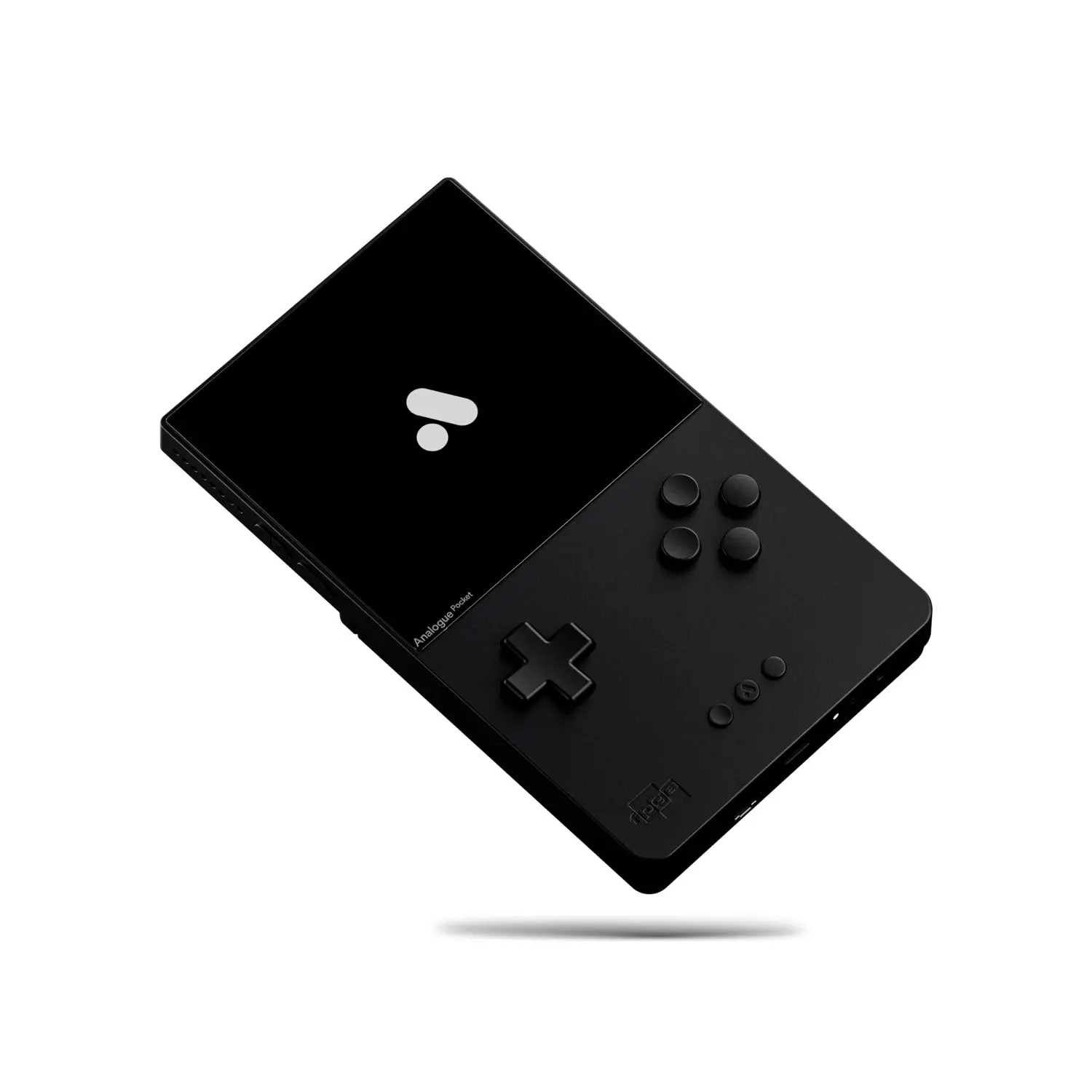
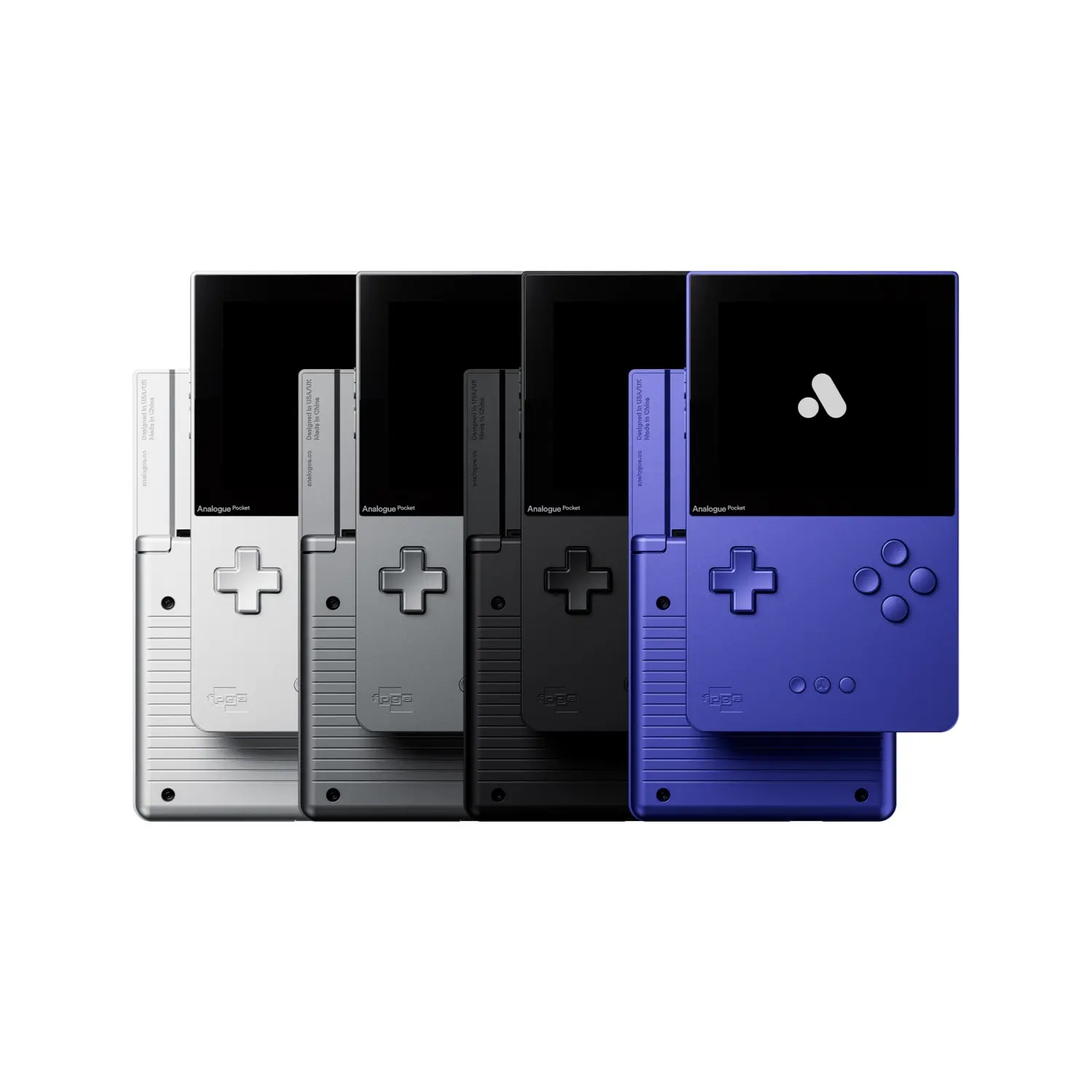
The Analogue Pocket Aluminum is the premium, limited-edition evolution of Analogue’s flagship FPGA-powered handheld console. Released in July 2024, it transforms the already acclaimed standard Pocket into a haute object by replacing the plastic shell with a fully CNC-machined aluminum enclosure. It targets serious collectors and retro gaming enthusiasts seeking maximum durability, elevated tactile presence, and a standout industrial aesthetic without compromising the core show that made the Pocket one of the most respected retro handhelds of the modern era.
Analogue Pocket – Aluminum Limited Editions.
Available in highly limited quantities.
Entirely CNC’d from aluminum. Every single piece.
$499.99
On sale: July 15, 8am PDT.
Shipping: July 17, 2024.See more info at: https://t.co/QrEZEq0631 pic.twitter.com/s23kMl2ANw
— Analogue (@analogue) July 12, 2024
stir
Analogue, a company built around high-fidelity FPGA recreations of classic hardware, first released the Pocket in December 2021 following years of anticipation after its 2019 reveal. The device quickly became essential within retro gaming circles because of its ability to play original Game Boy, Game Boy Color, and Game Boy Advance cartridges with near hardware-perfect accuracy through FPGA architecture rather than traditional software emulation.
That distinction matters. FPGA reproduction preserves timing, responsiveness, and hardware behavior in a way standard emulation often struggles to replicate. Input latency is minimized. Visual inconsistencies disappear. Compatibility improves dramatically. The result feels less like running a ROM and more like reviving the original hardware itself.
The Pocket’s 3.5-inch LTPS LCD display became one of its defining achievements: a 1600×1440 panel with extraordinary sharpness, rich color reproduction, and variable refresh rates that gave decades-old handheld games an almost archival clarity. Through OpenFPGA support, the ecosystem expanded even further, introducing compatibility with additional systems through adapters and community-developed cores, including Game Gear, TurboGrafx-16, Neo Geo Pocket Color, Atari Lynx, and more.
Over time, Analogue released multiple limited-edition colorways and special runs, but demand consistently exceeded supply. The Aluminum Editions marked a far more significant evolution. Rather than simply changing color palettes, Analogue fundamentally reworked the physical construction of the device itself, shifting the Pocket from premium gaming hardware into something closer to collectible industrial design.
design
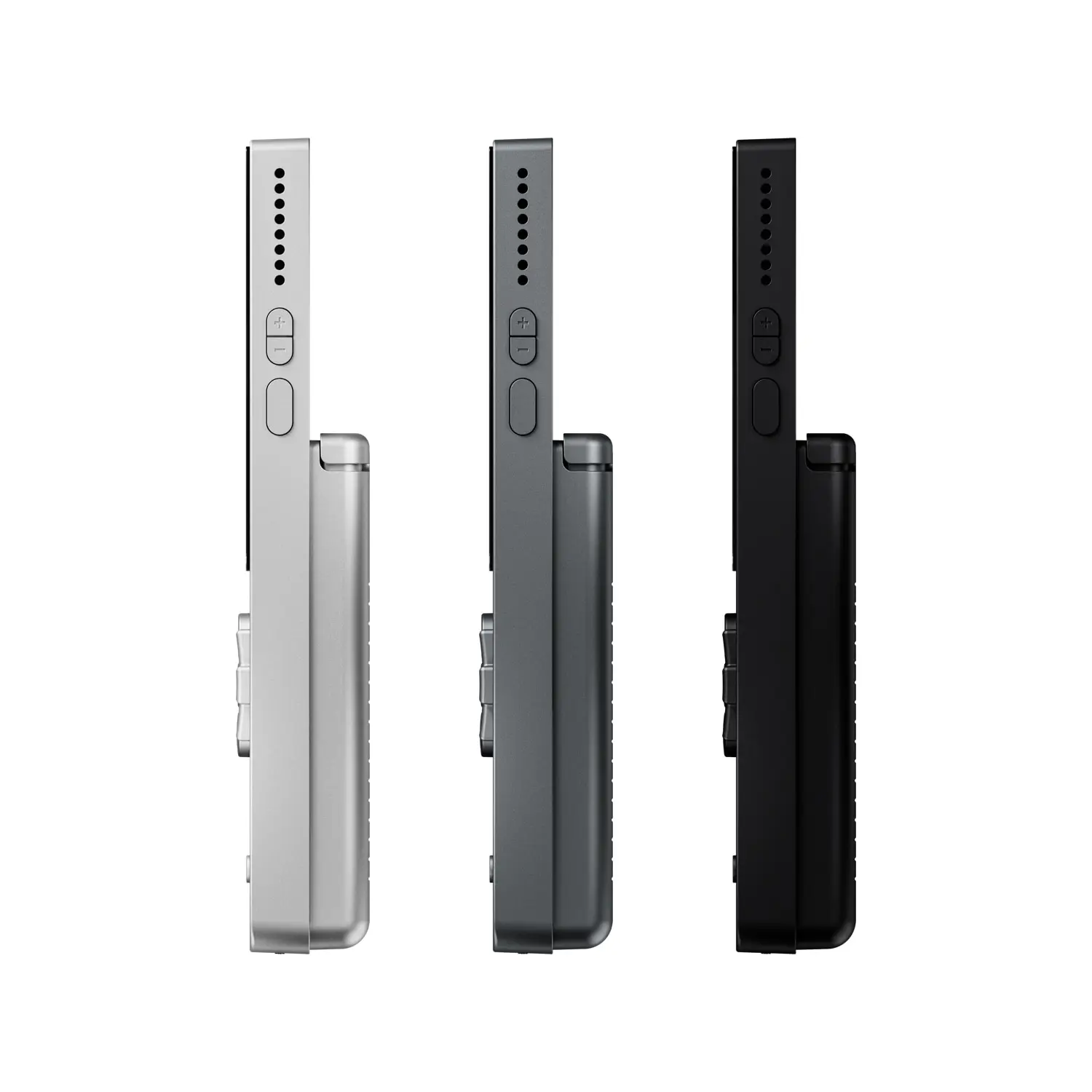
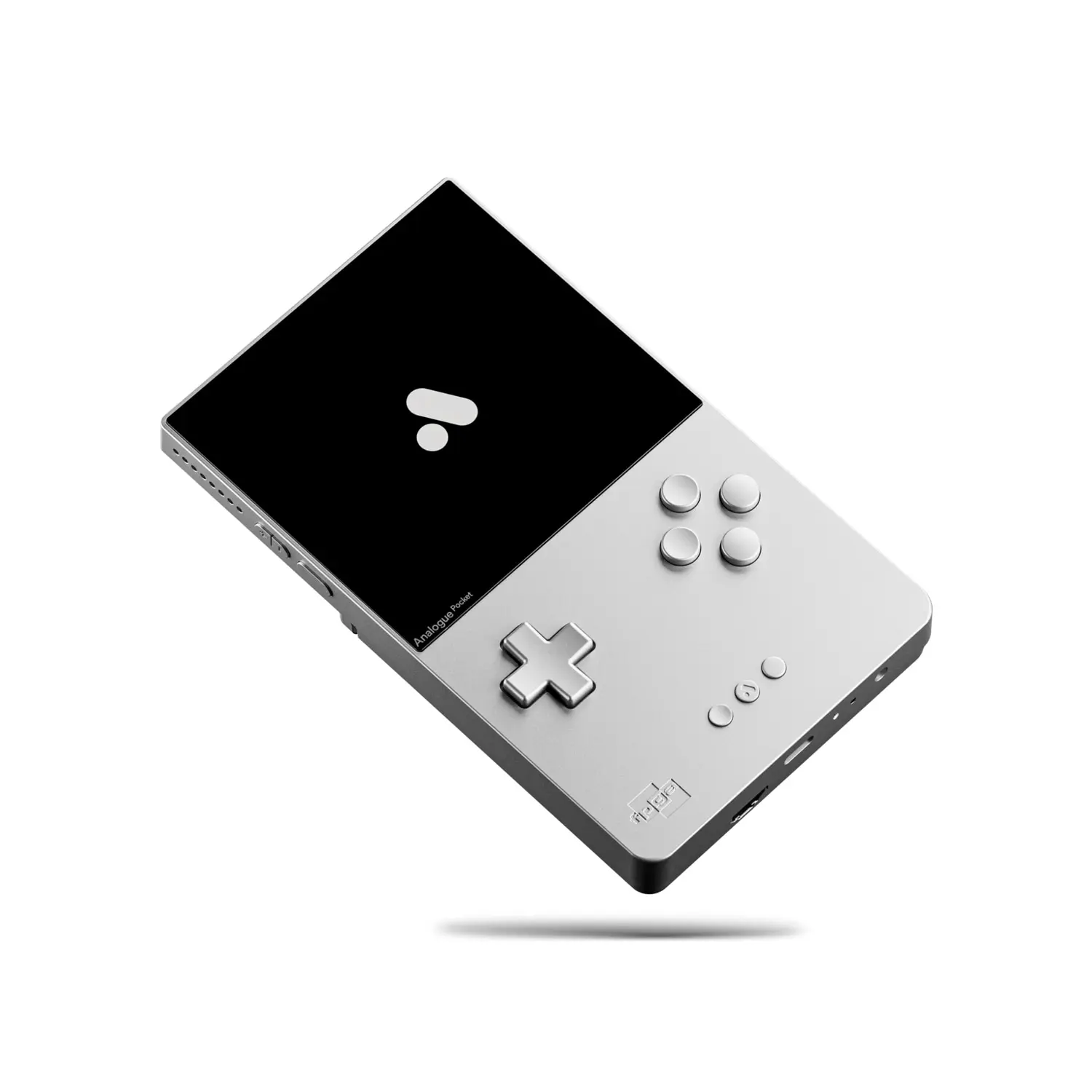
The defining feature is the enclosure: precision CNC-machined from solid billet 6061 aluminum, a high-strength alloy commonly associated with aerospace applications and premium consumer electronics. Nearly every exterior component, including the shell and buttons, adopts the same material language before being anodized for durability and finish consistency.
The available finishes include:
Natural — a clean raw aluminum appearance.
Noir — a dark graphite-inspired finish.
Black — deep matte black anodization.
Indigo — a saturated blue-purple finish reminiscent of classic Nintendo hardware nostalgia.
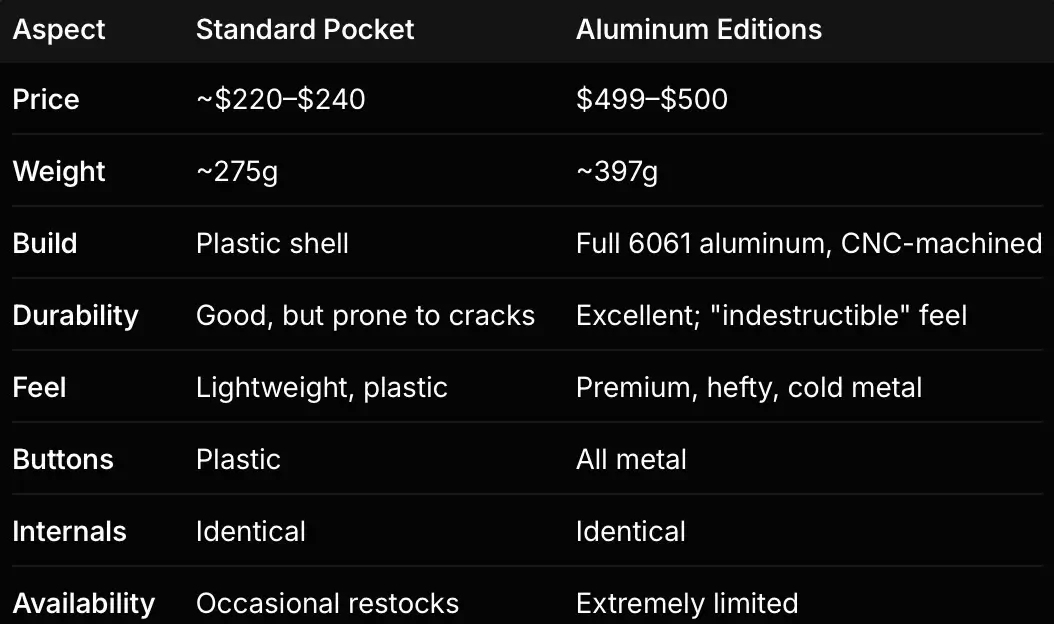
The transformation dramatically alters the feel of the Pocket. The aluminum model weighs substantially more than the plastic version, giving it a denser, colder, almost tool-like presence in hand. What was previously an exceptionally refined gaming device now feels closer to a precision instrument.
That added heft becomes part of the appeal.
Reviewers and collectors frequently describe the Aluminum Pocket as “tank-like,” emphasizing its solidity, rigidity, and resistance to the stress fractures that occasionally affected early plastic units. The all-metal buttons also improve tactile response, particularly across the D-pad, where diagonals and directional precision feel tighter and more deliberate.
Despite the material overhaul, the core silhouette remains faithful to the original Pocket design language: a contemporary reinterpretation of the Game Boy form factor with subtle references to Nintendo’s handheld lineage throughout the rear panel textures and proportions.
show
Internally, the Aluminum Edition remains identical to the standard Pocket. Two Intel FPGAs power the system architecture: one dedicated to hardware recreation and another focused on video processing. This preserves the experience that made the original Pocket so respected among enthusiasts.
Games such as Pokémon, Metroid Fusion, Advance Wars, and The Legend of Zelda: Link’s Awakening benefit enormously from the display clarity and hardware-accurate reproduction. Cartridge support remains central to the philosophy. The Pocket is designed around physical media authenticity rather than convenience-first emulation culture.
That philosophy continues to define Analogue’s identity.
The system avoids feeling disposable or temporary. Firmware updates expand functionality gradually through OpenFPGA support, while preserving the company’s emphasis on accuracy, preservation, and hardware permanence.
View this post on Instagram
utility
The Aluminum Pocket excels less as a portability upgrade and more as a permanence upgrade.
The standard plastic Pocket remains lighter, easier to travel with, and arguably more practical for extended handheld sessions. The aluminum variant instead leans into material longevity, collector psychology, and tactile satisfaction. It transforms the Pocket from a gaming device into something approaching heirloom hardware.
That distinction is important because the performance experience remains fundamentally unchanged. The aluminum premium exists almost entirely within construction, feel, durability, and industrial presentation.
For some users, that makes the pricing difficult to justify.
For others, that is precisely the point.
The Aluminum Pocket exists for enthusiasts who see retro hardware not merely as entertainment, but as design culture — objects worthy of preservation, display, and long-term ownership.
fin
The Analogue Pocket Aluminum is not revolutionary because it changes how retro games play. It is significant because it changes how retro hardware feels.
It elevates the original Pocket into a piece of enduring industrial craftsmanship while preserving the FPGA purity that made the platform respected in the first place. In an era increasingly dominated by disposable consumer electronics, the Aluminum Pocket stands apart by embracing permanence, weight, and material integrity.
Either displayed beside a cartridge collection or docked beside a television, it represents one of the clearest examples of retro gaming evolving into luxury hardware culture — the Game Boy aesthetic rebuilt with the mindset of a mechanical watch rather than a toy.
n
From the DRIFT archive: PANTONE’s 2026 Color of the Year Takes Shape With Play-Doh and Post-It Editions · Rolls-Royce Blasts Off Into 8-Bit with a One-Off Car Inspired by Retro Arcade Games