DRIFT AUDIO
Listen to this story
Choose a voice, then press play.
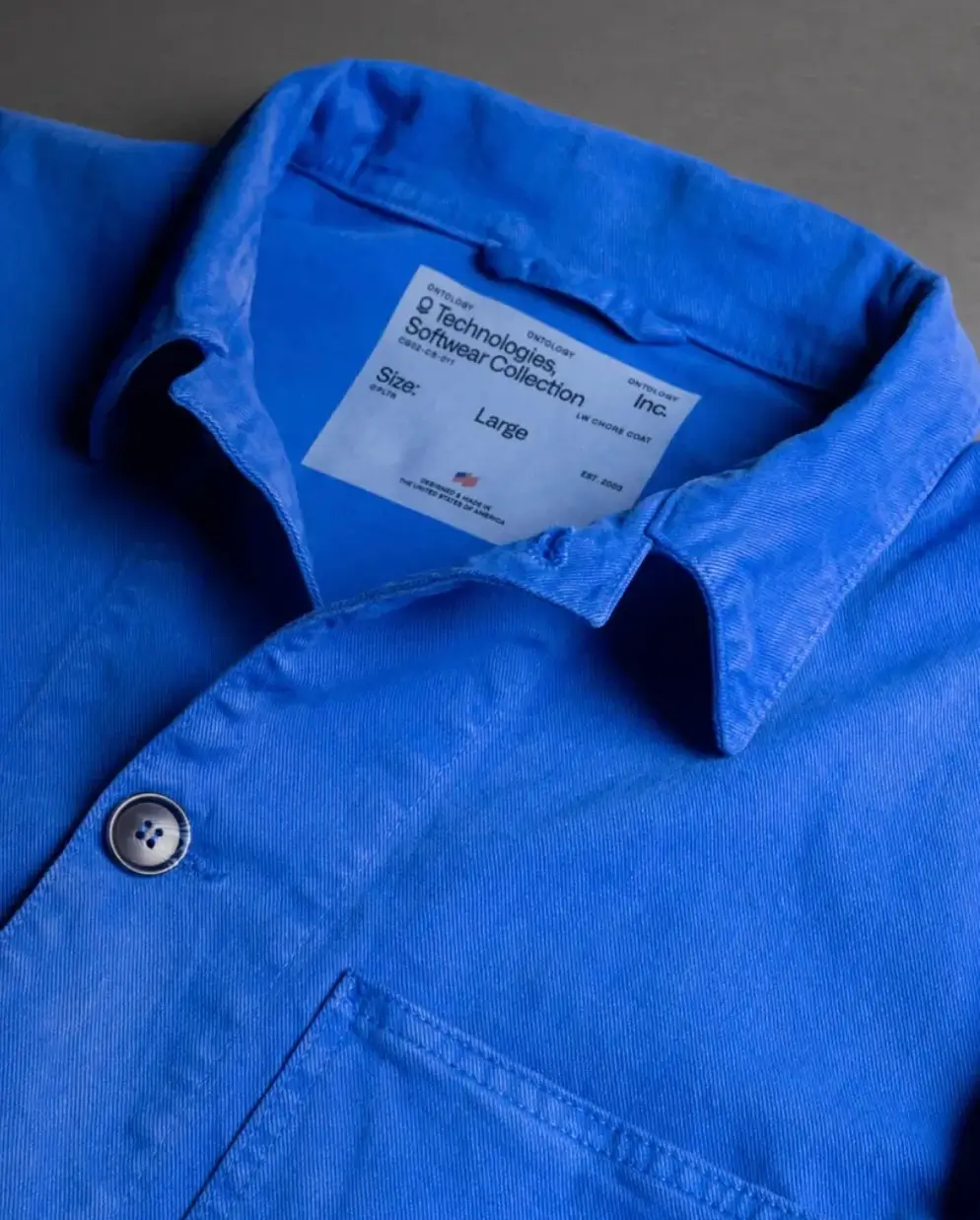
In 2026, nothing surprises anymore—not even one of the world’s most powerful AI and data analytics companies launching a haute take on a classic workwear staple. Palantir Technologies, the firm behind software that powers real-time decision-making for governments, militaries, and corporations, has entered the fashion game with a lightweight chore coat priced at $239. It sold out almost immediately in both black and blue versions. The jacket’s tagline? “Rugged Utility, Enduring Style. 10 oz Bull Denim, 100% Made in the USA.” Influenced by the company’s “forward deployed culture,” it embodies a striking paradox: a tech giant profiting from advanced surveillance and military tech now romanticizing blue-collar labor aesthetics.
This move isn’t just quirky merch. It highlights deeper tensions in Silicon Valley’s evolution—where executives court populist imagery while their core business aligns with elite power structures. Critics quickly labeled it “taste-washing by techno-fascists,” or simply a very nice (and very expensive) jacket. But the real story lies in the disconnect between the garment’s proletarian roots and Palantir’s high-stakes, high-controversy reality.
“the only thing that matters is to win”
[04.30.2026] pic.twitter.com/7BT2co50JW
— Eliano A Younes (@eliano) April 14, 2026
flow
Chore coats, or bleu de travail in their French origins, trace back to 19th-century working-class practicality. Farmers, factory workers, and mechanics needed durable, multi-pocketed outerwear for daily labor. Over time, the style crossed the Atlantic and became a staple of American workwear, influencing brands like Carhartt and Dickies. In recent years, the style has gone viral on Pinterest and TikTok as a symbol of effortless, heritage-inspired style—worn by influencers, celebrities like Harry Styles, and anyone chasing “quiet haute” with a rugged edge.
Palantir’s version elevates this. Ten-ounce bull denim from American-grown cotton, produced in the USA, with an embroidered logo nodding to the company’s mission. Eliano Younes, head of strategic engagement at Palantir, described it as something “comfortable, stylish, and durable for the front lines or for daily life.” The company produced only about 420 units, typical of their limited drops, which often sell out in hours.
On one level, this fits Palantir’s branding. The company has leaned into unapologetic patriotism and dominance rhetoric. Their online store previously sold “Dominate” T-shirts featuring CEO Alex Karp’s portrait, hoodies proclaiming “Silicon Valley Dropouts,” and caps with military-inspired vibes. The chore jacket continues this: it’s not bland corporate swag but a lifestyle statement for those aligned with Palantir’s worldview. As Younes has said, they’re building a “lifestyle brand” where wearing the merch signals support for their mission to strengthen Western institutions through superior technology.
Yet the pricing and positioning raise eyebrows. At $239, this isn’t accessible workwear—it’s aspirational merch for tech enthusiasts, finance bros, or culture watchers who want to cosplay “forward deployed” without the actual deployment. Traditional chore coats from heritage brands often retail for under $100. Palantir’s premium comes from the “100% Made in America” narrative, which taps into current economic anxieties about offshoring, manufacturing decline, and calls for re-industrialization.
This isn’t new for tech. Elon Musk’s companies have emphasized American manufacturing. Other firms dabble in apparel. But Palantir’s timing and execution feel particularly pointed amid debates over AI’s societal impression, labor displacement, and the military-industrial complex’s modernization.
stir
Palantir’s core business couldn’t be further from manual labor. Founded in 2003 by Peter Thiel, Alex Karp, and others, the company specializes in big-data analytics and AI platforms like Gotham and Foundry. These tools integrate disparate data sources for pattern recognition, predictive analytics, and real-time operations—used by intelligence agencies, defense departments, healthcare systems, and enterprises.
The company’s government work draws the most scrutiny. Palantir has supported U.S. Immigration and Customs Enforcement (ICE), provided tools to the military, and partnered with NATO. During COVID-19, it assisted the NHS in the UK with data modeling. Revenue reflects success: Q4 2025 saw major year-over-year growth, with U.S. commercial revenue accelerating rapidly into 2026. The stock has soared as AI hype meets real contracts.
Critics argue Palantir profits from surveillance and conflict. Its software has been linked to targeted operations, raising ethical questions about AI in warfare and civil liberties. Meanwhile, the company pushes “forward deployed” engineers who embed with clients—mirroring military terminology. Selling a chore jacket “influenced by” that culture romanticizes grit while the firm’s AI contributes to automation that could displace the very workers who historically wore such garments.
The labor angle bites hardest. Tech giants, including through AI, have accelerated job shifts in manufacturing, logistics, and offices. Palantir itself operates in a high-skill, high-compensation environment. Launching premium merch while broader economic narratives swirl around inequality and deindustrialization feels disconnected. One critical reading highlighted how the jacket ignores the history of workwear as clothing for exploited labor, now repackaged for those benefiting from data-driven efficiency.
Fashion historians push back on Palantir’s claim that the jacket is “not political.” Workwear has always carried class and power connotations. Adopting it signals a certain toughness or authenticity. For tech bros—often criticized for elite bubbles—this serves as view armor: “We’re not just coders; we’re builders, deployers, dominators.” It echoes broader culture shifts where figures like Karp position themselves as counter-cultural within elite circles.
Compare this to other tech fashion moments. Jeff Bezos and Lauren Sánchez at the Met Gala. Mark Zuckerberg’s rebrand toward mixed martial arts and casual wear. These signal a desire for broader culture relevance beyond balance sheets. Palantir takes it further by tying apparel directly to mission and aesthetics of American resilience.
fwd
This drop fits 2026’s tech-fashion convergence. AI companies experiment with physical products to humanize their image. Merch becomes another touchpoint. Limited drops create FOMO and community, much like streetwear brands.
Yet Palantir’s version carries unique weight due to its defense ties. In a polarized world, wearing their logo isn’t neutral. Supporters see it as backing strength and innovation against adversaries. Detractors view it as normalizing surveillance capitalism or militarism. Social media erupted with memes: “Chore coats for evil guys,” or praise for American manufacturing.
Economically, the “Made in USA” push resonates. Decades of globalization hollowed out textile and apparel sectors. Reviving them via high-end niches appeals amid tariffs, supply-chain worries, and political rhetoric favoring domestic production. Palantir claims this supports re-industrialization—walking the talk their software enables through better logistics and manufacturing analytics.
But scale matters. A few hundred jackets won’t revive American denim. It’s symbolic branding.
@thisisantwon When defence contractors become fashion brands – why are Palantir releasing a French chore coat? ‘Taste’ has never been easier to acquire, so even billion-dollar tech companies are designing and dropping fashionable-looking clothing like a streetwear startup. When are we bringing back gatekeeping? #streetwear #fashion #mensfashion ♬ Mysterious and Sad – Beats by Lucky
scope
Detractors call it tone-deaf. While AI promises abundance, many face uncertainty. A $239 jacket marketed with military lingo to signal “dominance” lands poorly for those struggling with housing, wages, or job loss to automation. The “Dominate” merch line amplifies this—evoking zero-sum conquest over collab progress.
Defenders counter: Why shouldn’t a successful company sell cool gear? Consumers choose freely. The jacket uses quality materials and domestic production, creating some jobs. Palantir’s transparency about its mission earns points with supporters. In earnings calls, Karp speaks bluntly about technological advantage and strategic power. The merch aligns with that clarity.
Fashion’s history is full of such appropriations. Punk, military surplus, streetwear—all subcultures commodified. Chore coats moved from farms to runways long before Palantir. The difference is scale and context. A data firm with government contracts entering lifestyle territory invites extra scrutiny.
fin
Palantir plans thicker versions for fall. Their store mixes apparel with books and other items, building a cohesive identity. As AI integrates deeper into society, expect more such cultural forays—brands reflecting their creators’ ambitions.
The chore jacket succeeds commercially but spotlights unresolved questions. Can tech giants romanticize labor without addressing its transformation? Does “Made in America” premium pricing democratize style or gatekeep it? In an era of AI-driven change, symbols matter. A $239 jacket won’t resolve these tensions, but it perfectly encapsulates them: rugged on the outside, algorithmic on the inside.
Ultimately, Palantir’s move reflects 2026’s zeitgeist—where power, aesthetics, and commerce blur. Whether you see it as savvy branding or profound tone-deafness depends on your view of tech’s role. One thing’s clear: it sold out for a reason. The tech bros have found their uniform, and the culture is still deciding what that means.
n
From the DRIFT archive: PANTONE’s 2026 Color of the Year Takes Shape With Play-Doh and Post-It Editions · Le Labo AnOther 13: A Quiet Landmark in Contemporary Fragrance Culture