
DRIFT AUDIO
Listen to this story
Choose a voice, then press play.
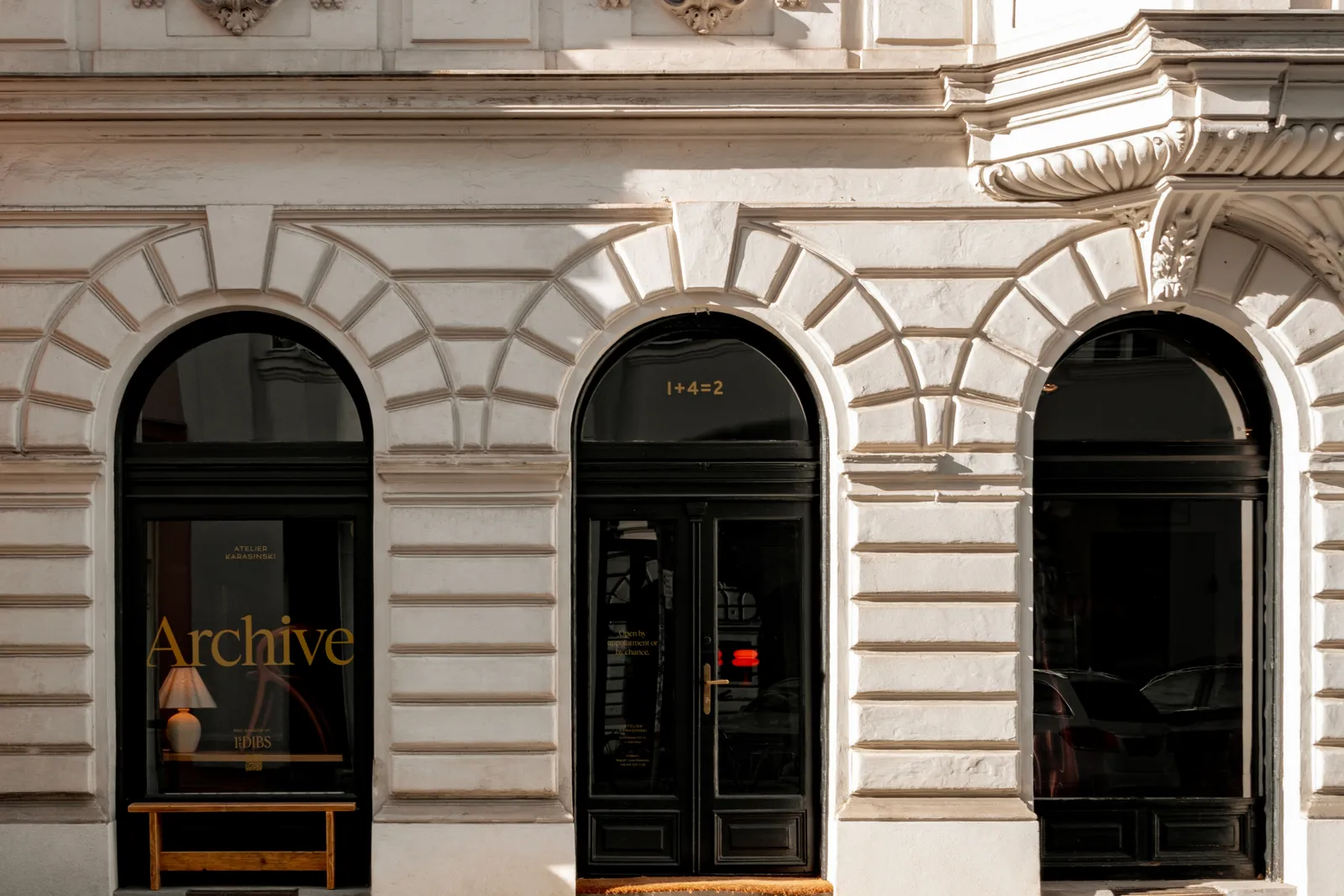
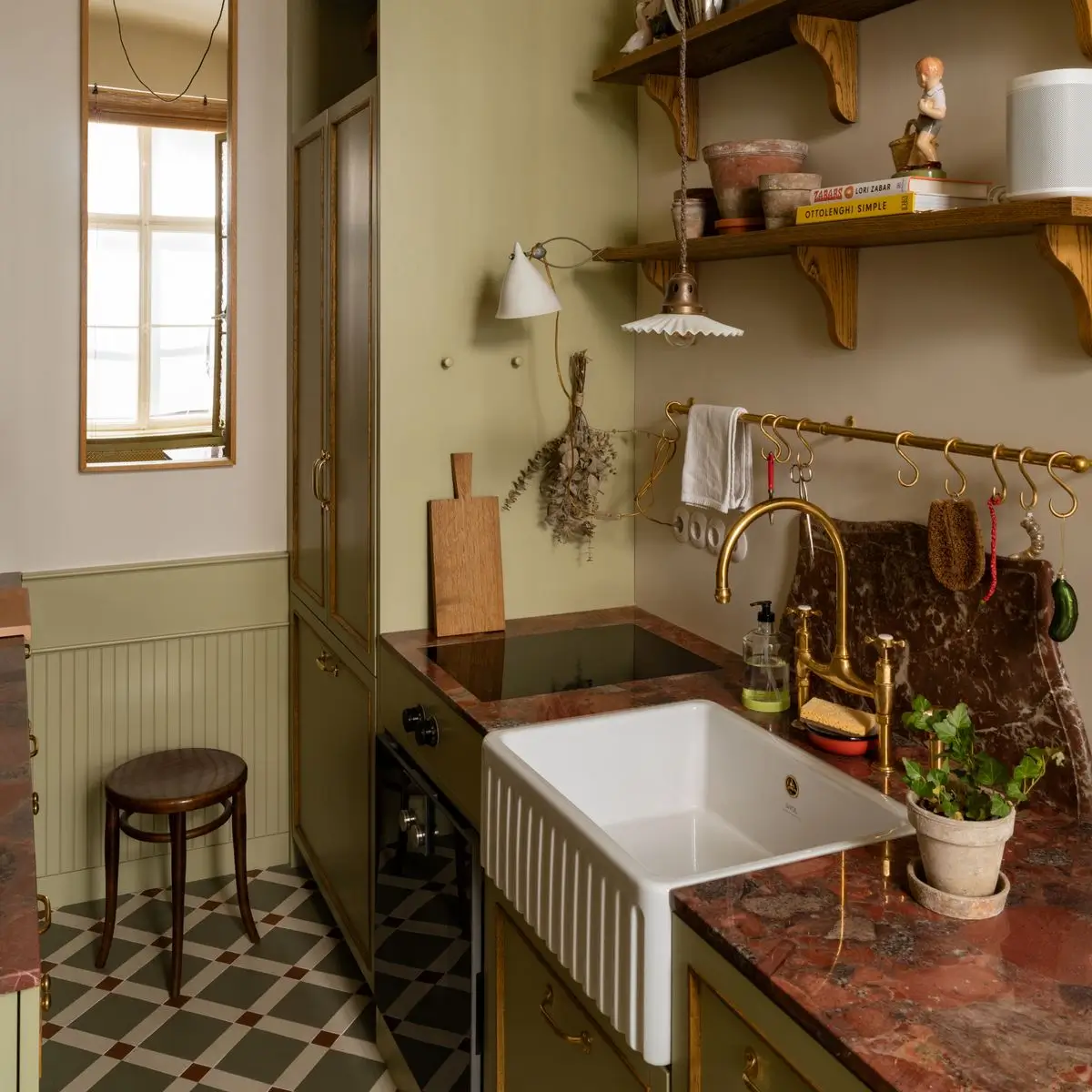
Material establishes the room before language catches up. Grain, weight, and temperature register first—wood with a softened surface, stone that diffuses light instead of returning it, metal kept deliberately quiet. Within Atelier Karasinski, a kitchen emerges through these decisions, shaped by Laura Karasinski without insisting on a singular identity. No overt signal of “design object,” no reliance on minimalism as a label—only a series of choices that feel tested rather than announced.
Recognition unfolds slowly. Surfaces suggest duration more than novelty. Edges carry a sense of having been handled, adjusted, returned to. Reading the space shifts from immediate visual intake to something closer to familiarity, as if the room had always been there and only recently came into focus.
View this post on Instagram
idea
Order appears without enforcement. Shelving remains open, storage visible, circulation unobstructed. Placement follows use rather than prescription, allowing objects to move across the room without friction. Bowls shift from shelf to counter; utensils return where they are needed next, not where they are expected to belong.
Clarity at the structural level creates room for variation. Movement becomes part of the composition. Patterns form, dissolve, and reform across days rather than being fixed in advance. The archive condition supports this rhythm—nothing sealed away, everything available to re-enter use.
Over time, the kitchen reads less as a set of zones and more as a working field. Stillness never feels final; each arrangement carries the possibility of revision.
tempo
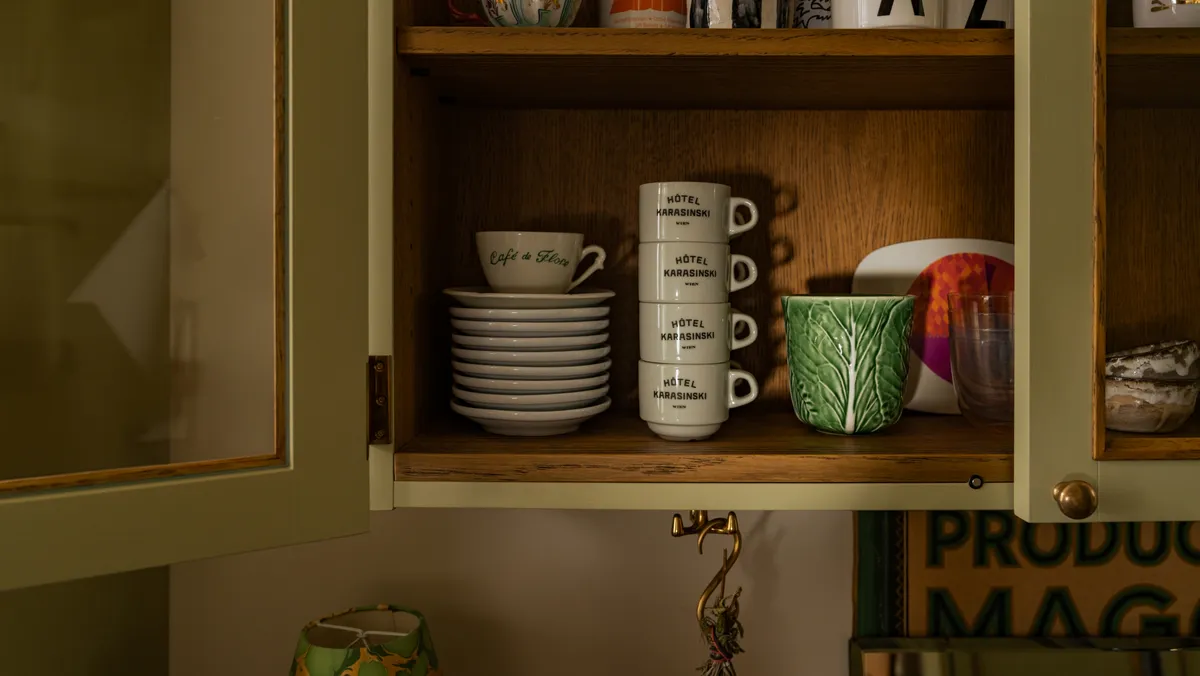
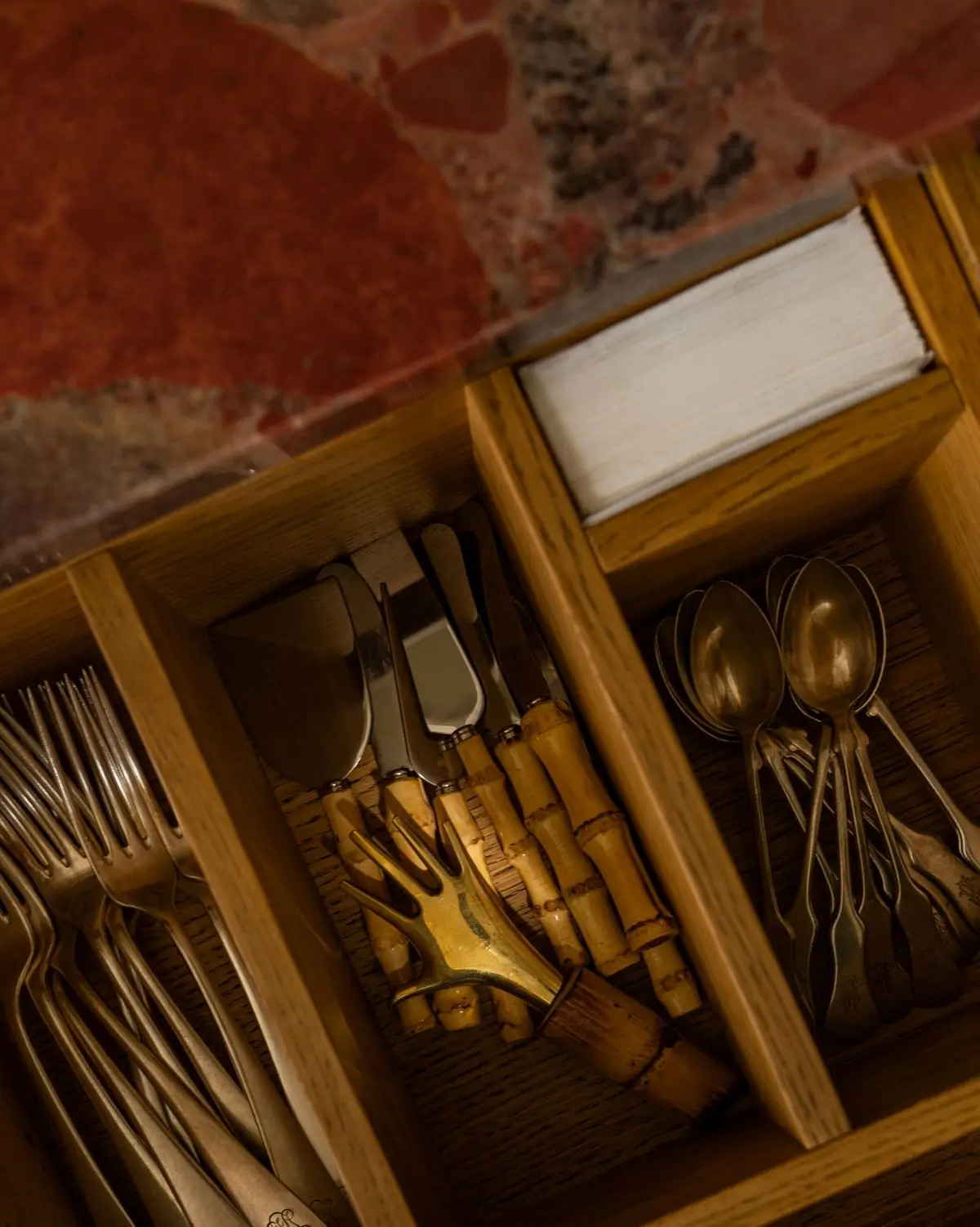
Variation enters through objects that predate the room. Ceramics with slight irregularities, metal with softened edges, glassware that refracts light unevenly—each piece introduces difference without demanding attention. Age registers through use, not display.
Selection follows function. Items remain because they continue to work, not because they represent a period. That distinction prevents nostalgia from taking over. Multiple timelines coexist without collapsing into a single reference point.
Subtle shifts in texture and proportion recalibrate the atmosphere. Precision from newer elements meets the irregularity of older ones. Balance holds without resolution.
stir
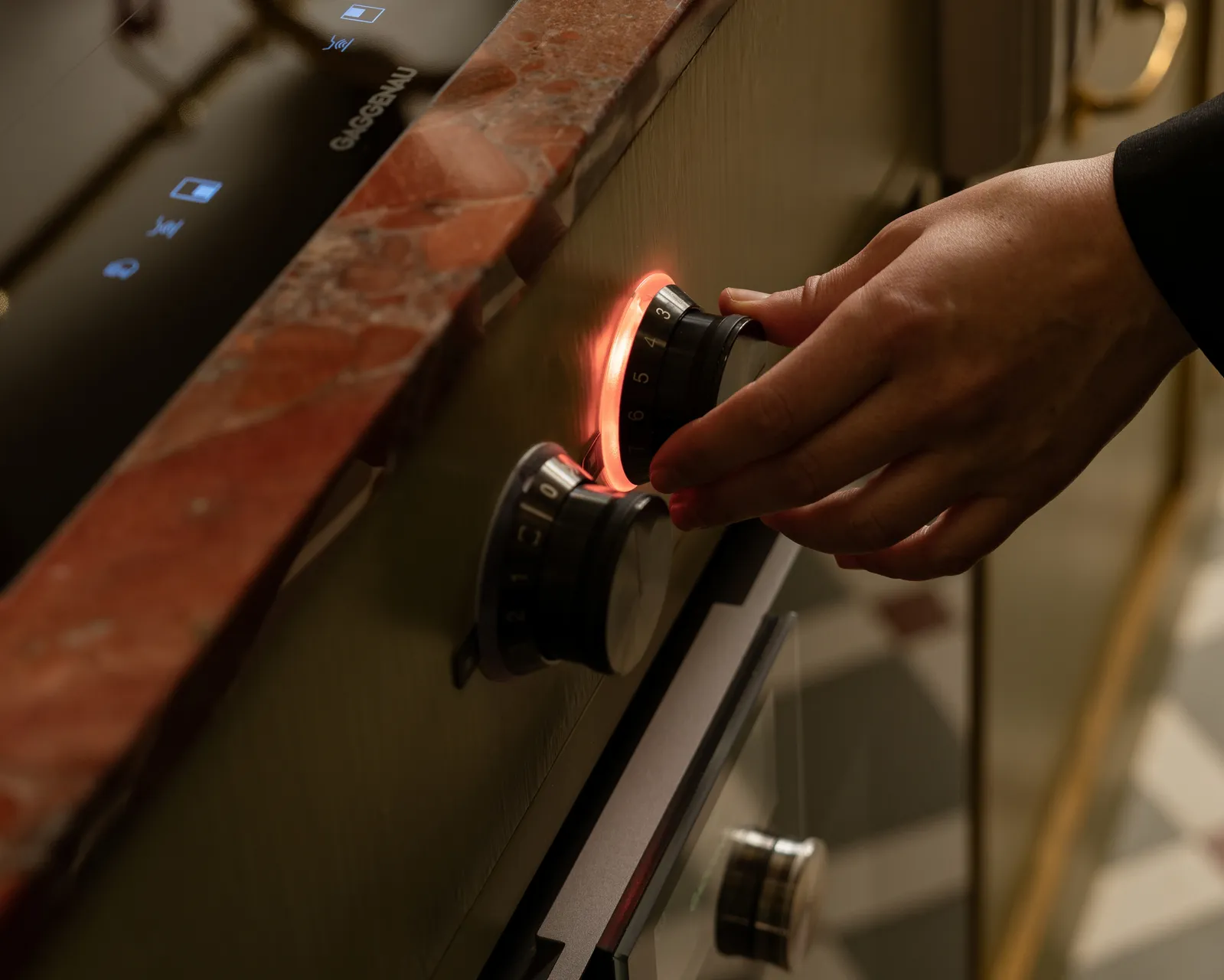
Integration defines the technological layer. Appliances by Gaggenau align with the material logic instead of interrupting it. The full-surface induction cooktop removes fixed zones, allowing cooking to occur across a continuous plane. Function expands without adding visual weight.
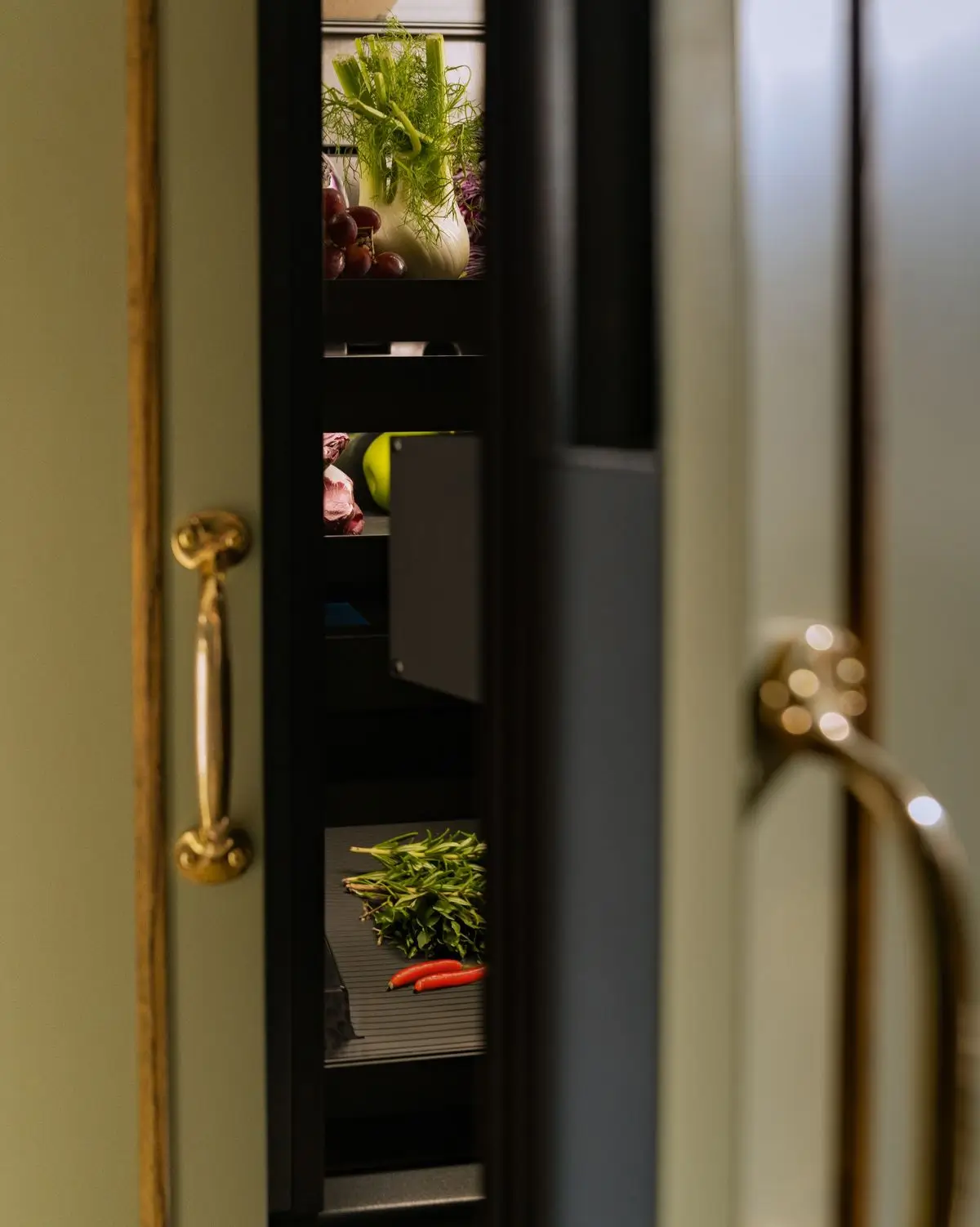
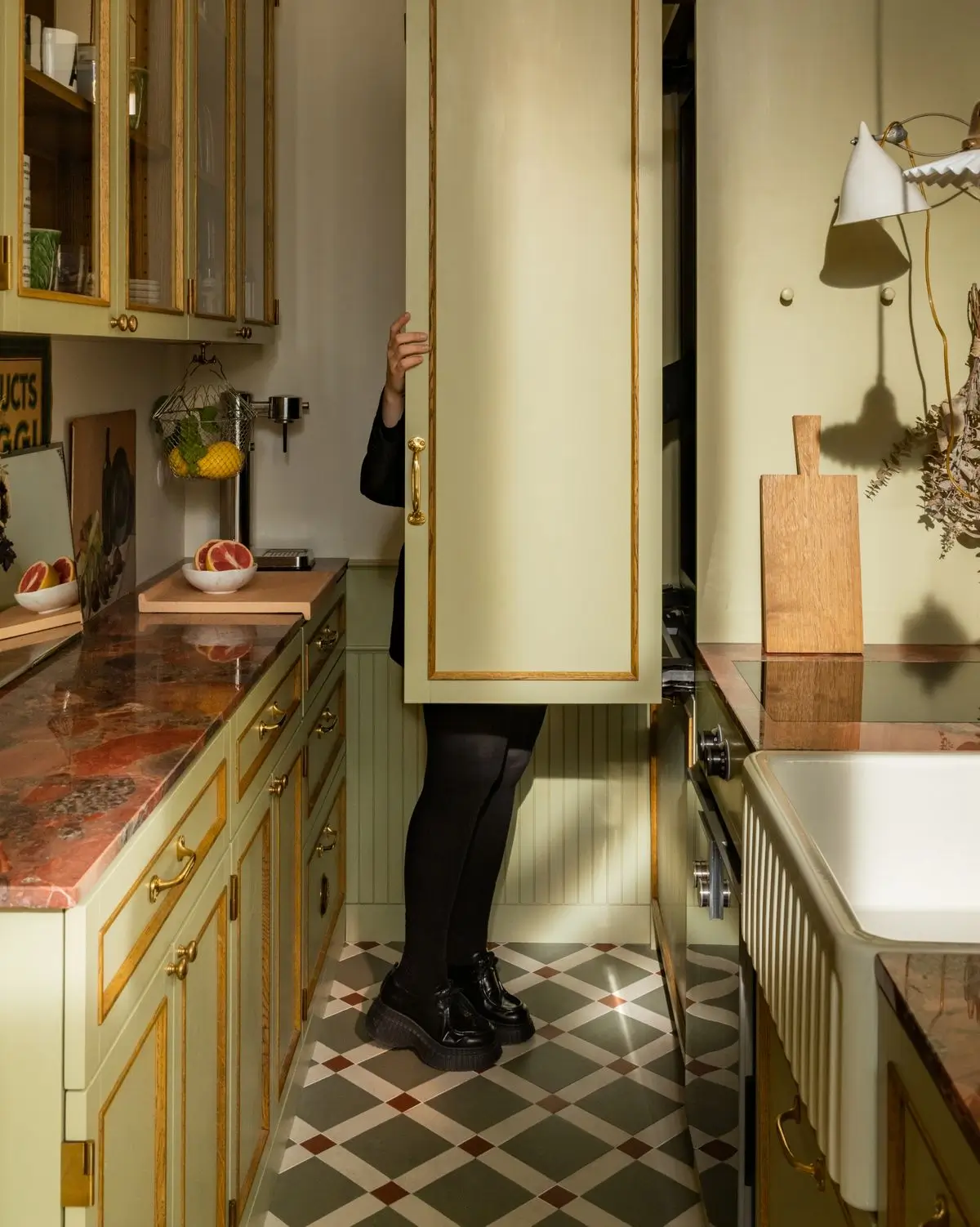
Anthracite surfaces on the combi-steam oven introduce precision without glare. Tone stays controlled, calibrated against surrounding materials rather than set apart from them. Refrigeration recedes further, embedded within the architecture, its presence understood through performance rather than form.
Engineering supports the room without redirecting it. Technology operates as infrastructure—essential, exact, and largely silent.
flow
Light shifts the reading of every surface. Morning softens edges, flattening contrast and allowing materials to blend. Evening deepens shadows, separating planes and bringing texture forward. No fixed visual state holds for long.
Artificial lighting remains supportive, not declarative. Illumination extends function without replacing natural variation. Each cycle of light introduces a new version of the same arrangement, reinforcing the sense of continuity rather than change.
Atmosphere builds through repetition. The room becomes familiar not because it stays the same, but because it changes in predictable, subtle ways.
fx
Efficiency remains present, but not as the dominant measure. Placement follows habit. Movement settles into patterns shaped by repetition rather than planning. Small adjustments accumulate—an object left slightly closer to hand, a surface cleared for a different task.
Emotional response enters through these adjustments. Friction reduces, not through optimization, but through familiarity. The room begins to anticipate its own use.
Work and pause coexist without clear boundaries. Activity does not disrupt the atmosphere; it reinforces it. Each action leaves a trace, contributing to a broader rhythm that continues even when the space is empty.
enviro
Context shapes meaning as much as any individual element. The kitchen sits within the wider structure of the atelier, absorbing its scale, its light, its ongoing activity. Objects relate not only to each other but to the conditions around them.
Surfaces extend into adjacent areas. Materials repeat with slight variation. Movement through the space connects zones without dividing them. No single point defines the room; understanding comes through relation.
Reading shifts outward. Attention moves from object to environment, from detail to condition. The kitchen becomes part of a larger system rather than a contained feature.
sum
Completion never fully arrives. Materials continue to age. Objects enter and leave. Light redefines surfaces daily. Structure holds, but remains open to adjustment.
Longevity comes from this openness. No fixed aesthetic requires preservation. Change integrates without resistance, maintaining coherence through underlying decisions rather than surface control.
Reading the space becomes an ongoing process. Meaning accumulates across encounters, not within a single view. The kitchen persists as a condition—stable enough to rely on, flexible enough to evolve.
Related Articles
Under Rue de Castiglione, Liaigre Gives Hôtel Costes a Spa With No Hard Corners
A 20-meter lap pool, eight treatment rooms and not one sharp angle: Studio Liaigre’s spa […]