Dyson Makes Handheld Fans Cool — The HushJet Mini as Heat’s Most Unexpected Convenience

April 16, 2026
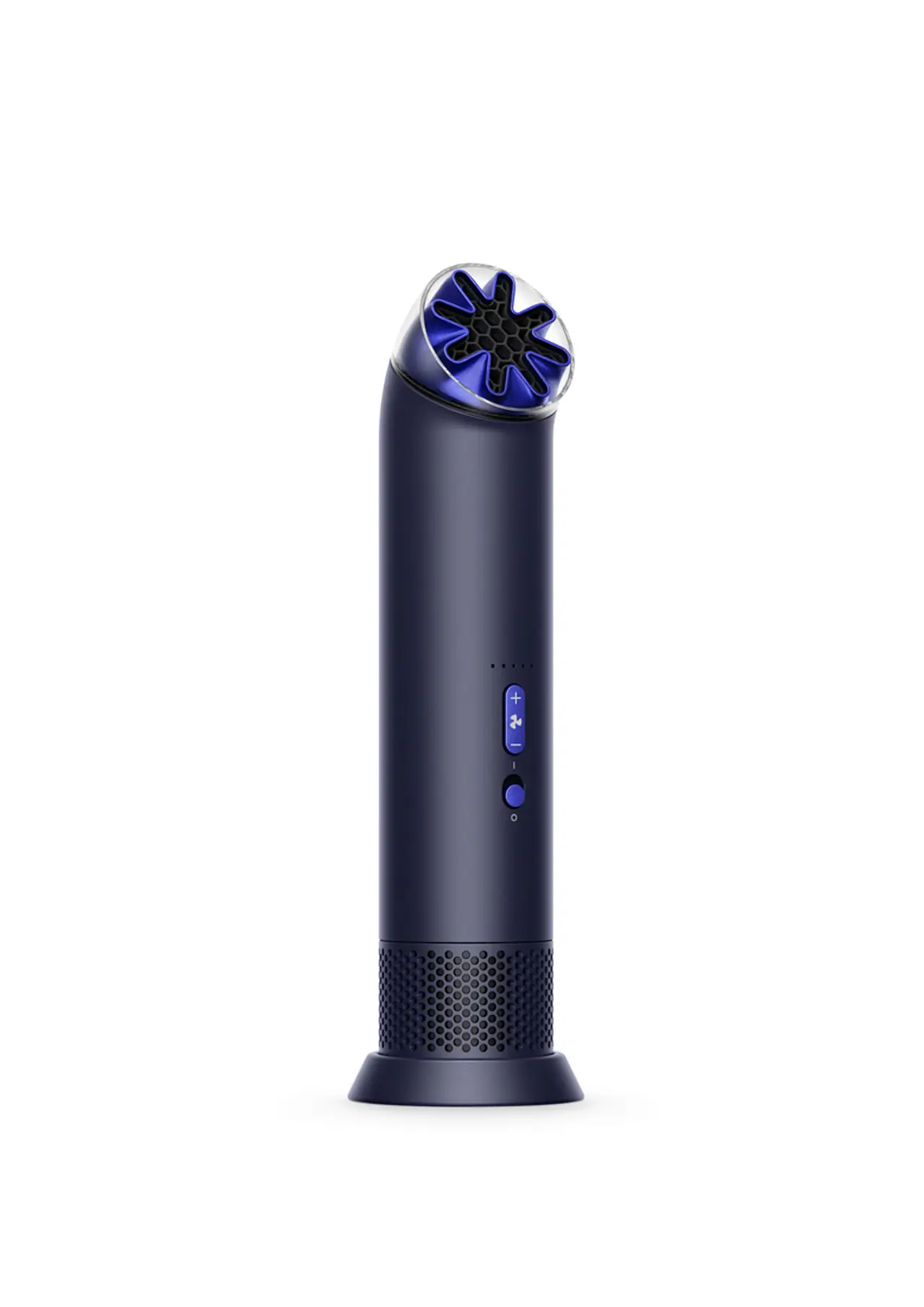
There was an interval—not long ago—when the handheld fan existed in a narrow cultural lane. Functional, disposable, vaguely utilitarian. Something you bought in transit, used briefly, then forgot. It was never an object of design. Never an object of desire. And certainly never something you would build a look around.
That’s precisely the territory Dyson has chosen to disrupt.
With the launch of the HushJet Mini Cool, Dyson does not simply enter the category—it reframes it. The handheld fan is no longer a fallback solution to heat. It becomes a designed, engineered, and ultimately styled object—one that sits somewhere between personal technology and wearable accessory. The shift is subtle in function, but significant in implication.
Because once Dyson touches a category, it rarely stays the same.
dekko
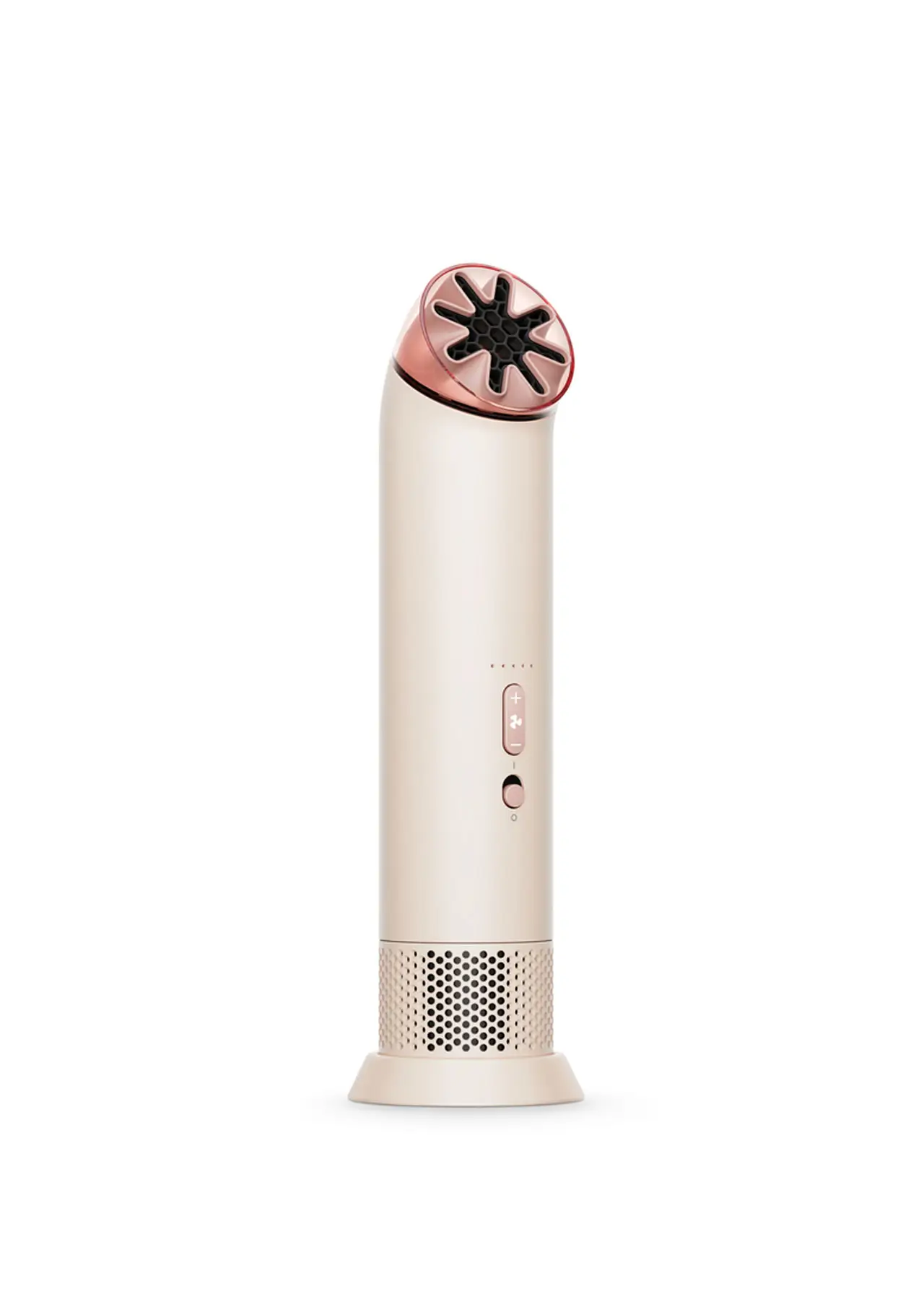
At first glance, the HushJet Mini is deceptively simple. A small cylindrical device, under eight inches tall, light enough to carry without thought. But this reduction in scale masks a density of engineering that aligns closely with Dyson’s broader design philosophy.
The fan weighs just over 200 grams—roughly the weight of a smartphone—and runs on a rechargeable battery capable of delivering up to six hours of use depending on intensity.
That alone would place it in line with premium portable devices. But Dyson pushes further.
The internal motor spins at up to 65,000 RPM, generating airflow speeds reaching approximately 55 mph in Boost mode. This is not incidental performance—it’s deliberate over-engineering for a category that historically hasn’t required it.
The result is something unusual: a handheld fan that behaves less like a convenience item and more like a precision tool.
sys
The defining feature of the device—the HushJet system—is less about raw power and more about control.
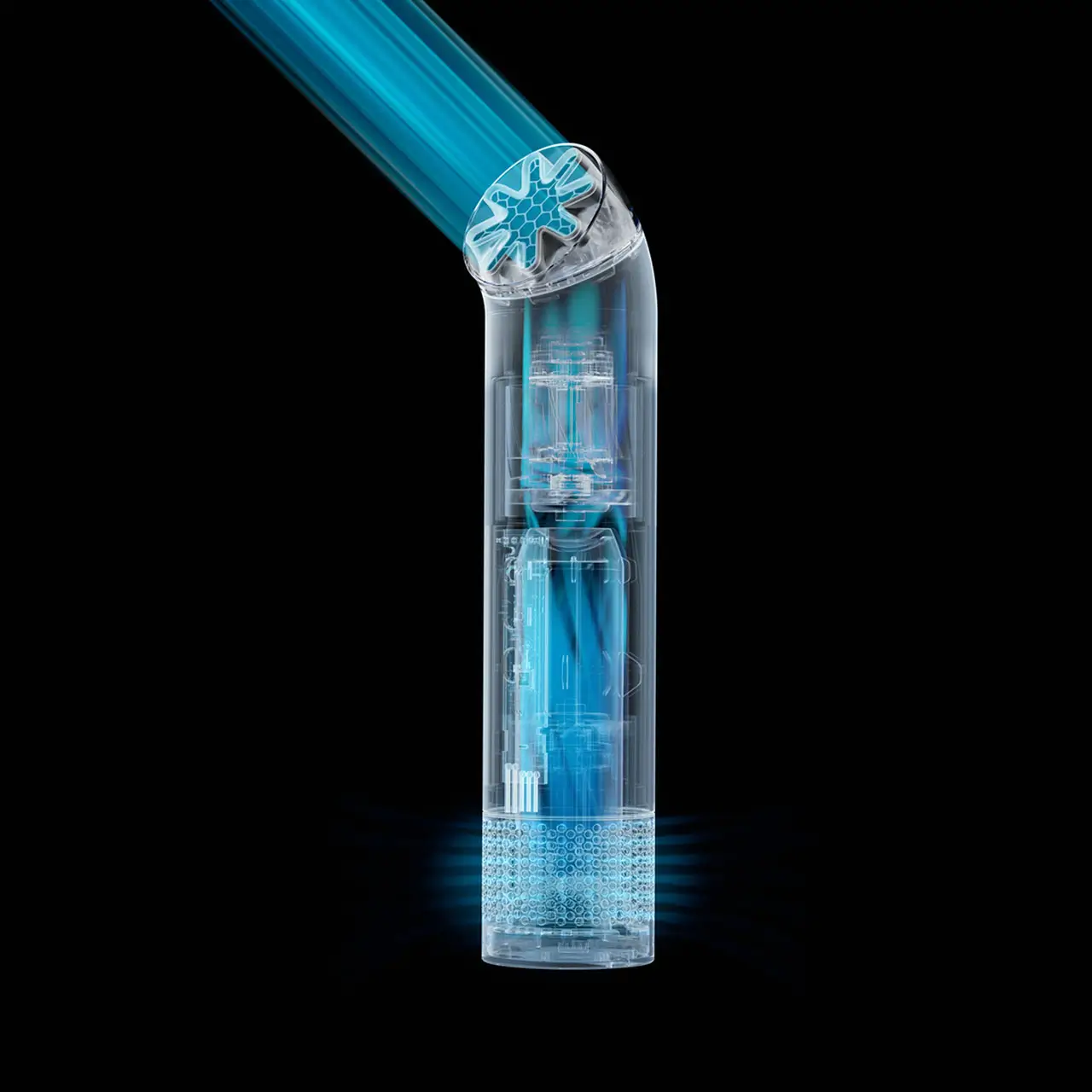
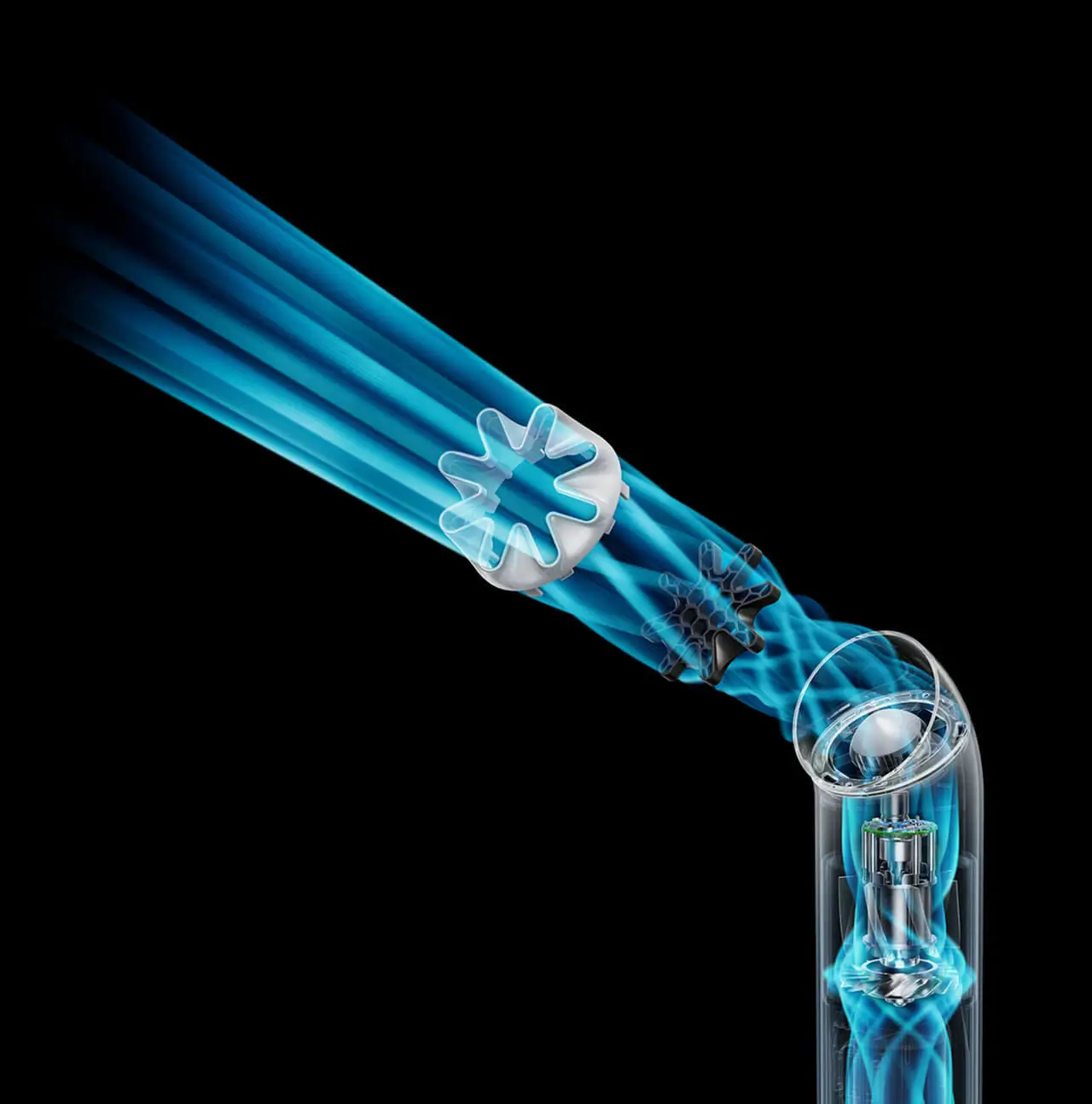
At its core, the technology combines a precision nozzle with a honeycomb mesh structure that smooths airflow, reducing turbulence while maintaining velocity. This matters more than it initially appears.
Traditional fans scatter air. The HushJet Mini directs it.
The airflow feels intentional, almost sculpted. It arrives as a focused stream rather than a dispersed breeze, which changes how the device is experienced. It becomes less about ambient cooling and more about targeted relief—cooling that follows you rather than surrounding you.
This is where Dyson’s long-standing obsession with airflow—visible across its vacuums, purifiers, and hair tools—finds a new, more personal application.
theory
Dyson’s bladeless design language has always been part engineering, part visual identity. It communicates safety, but also refinement.
In the HushJet Mini, that language is miniaturized without losing clarity. There are no exposed blades, no mechanical aggression. Everything is enclosed, streamlined, softened.
Functionally, this makes the device safer—particularly in a wearable format. But visually, it does something else: it removes friction from the object. It allows the fan to exist in public space without drawing the wrong kind of attention.
It doesn’t look like equipment. It looks like an accessory.
protean
Perhaps the most important shift lies in how the device is used.
The HushJet Mini is not limited to one mode. It operates across three distinct positions:
- Handheld: immediate, controlled cooling
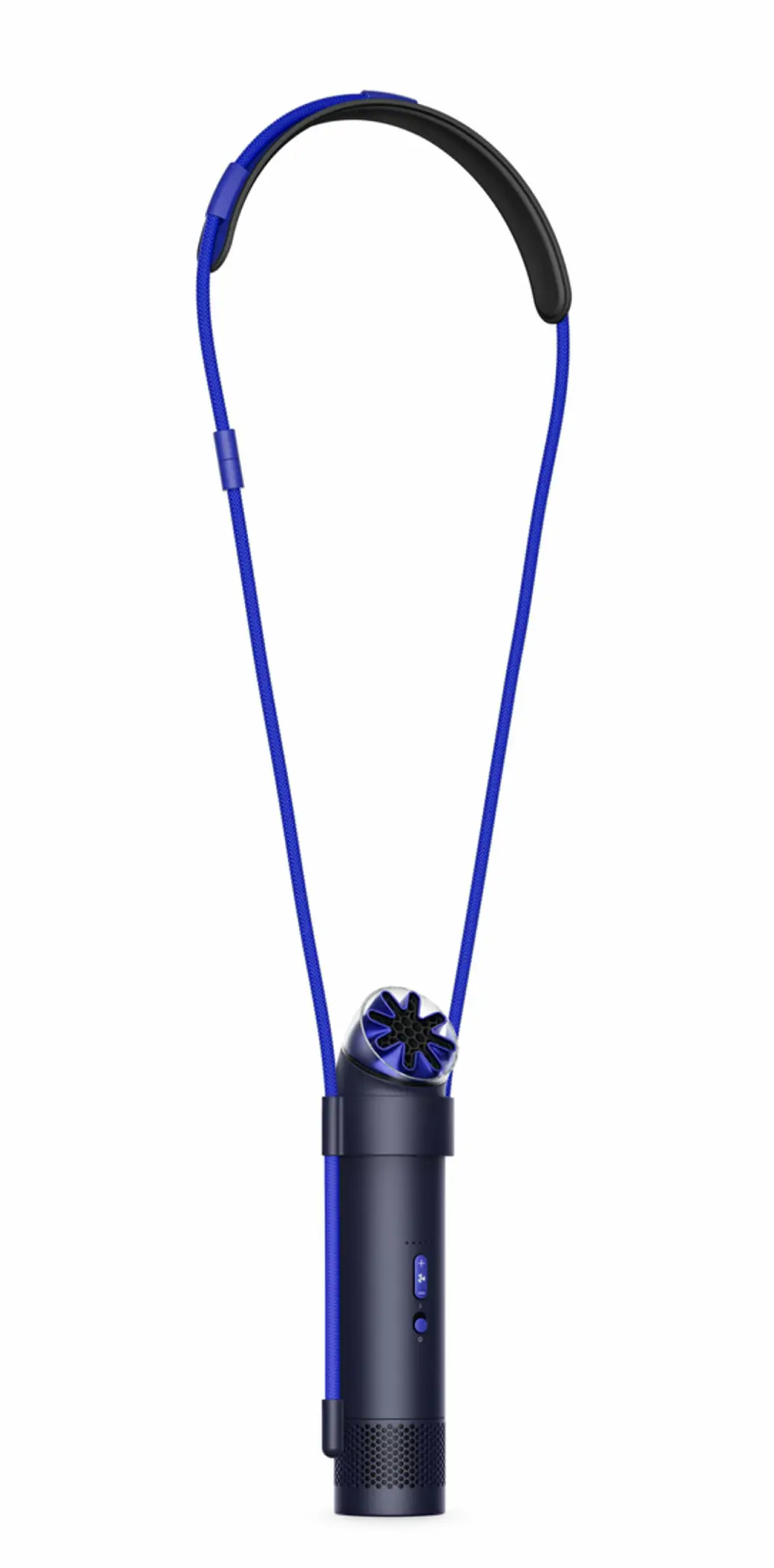
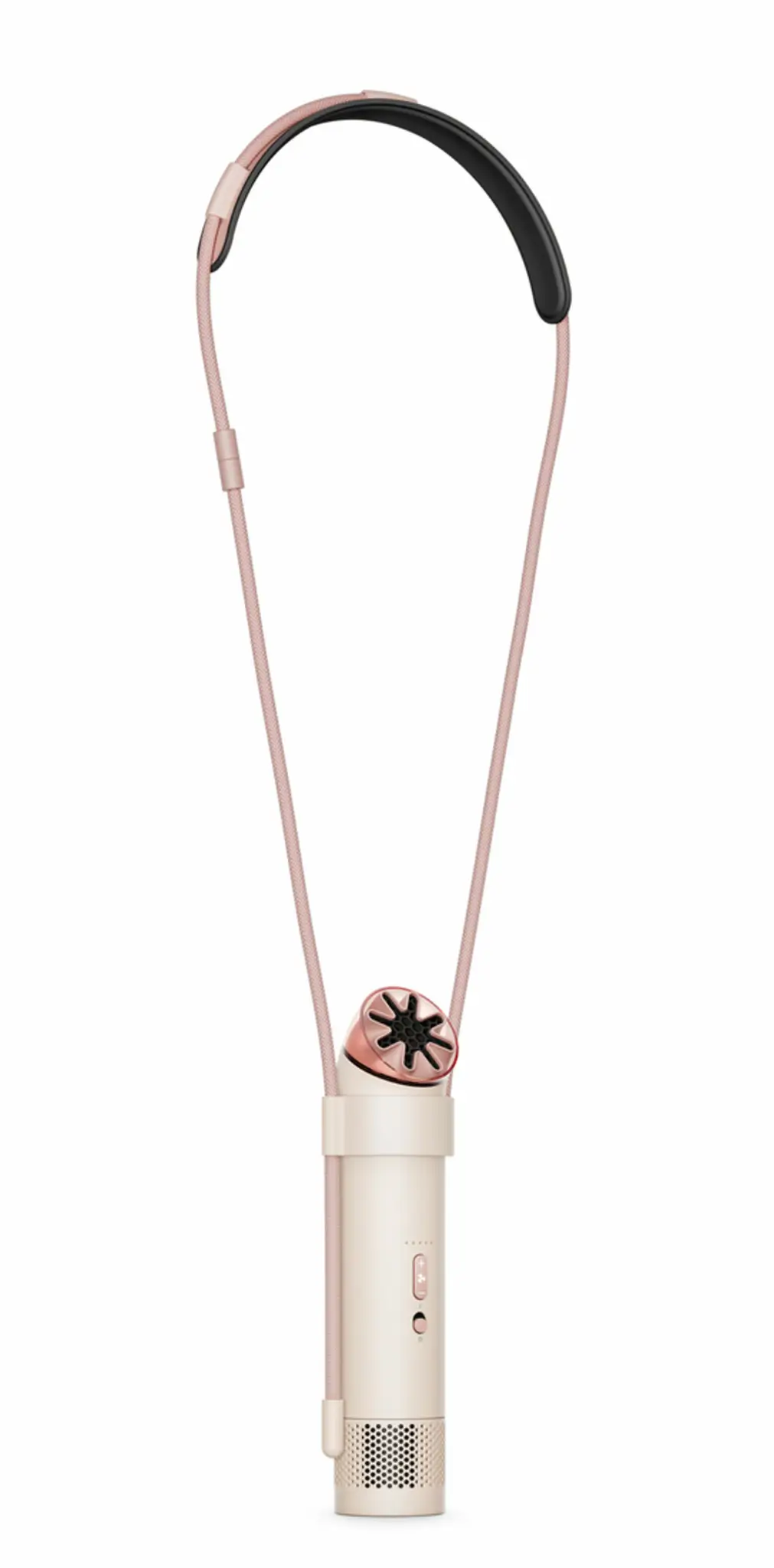
- Wearable: suspended around the neck via a dock
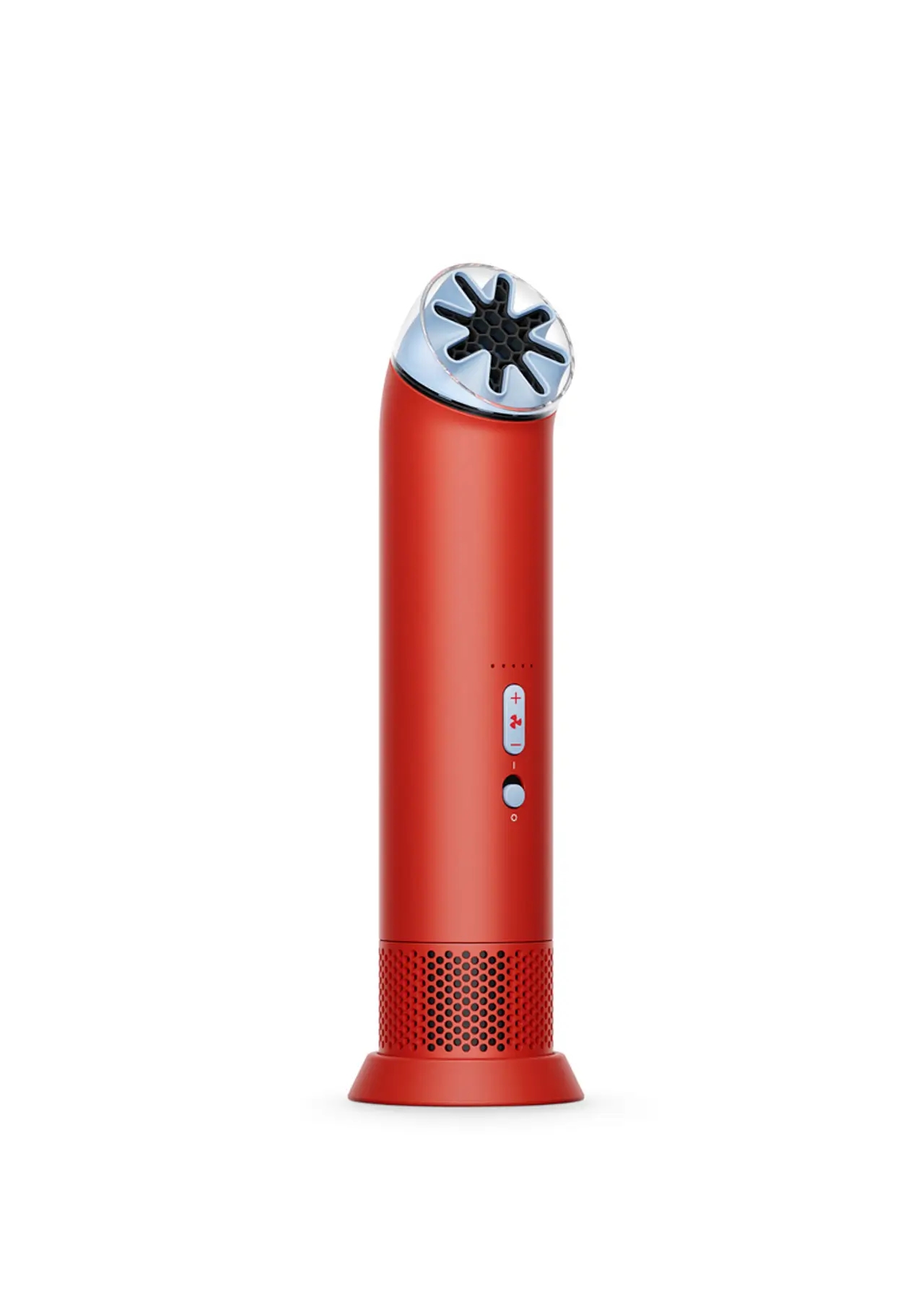
- Desktop: positioned upright for ambient use
This modularity is not just about convenience—it’s about integration. The fan becomes part of your movement through space.
Worn around the neck, it resembles a piece of tech-adjacent jewelry. On a desk, it becomes a sculptural object. In hand, it retains the familiarity of a tool.
This flexibility is central to its appeal. It adapts to context rather than forcing a single use case.
review
Handheld fans have historically suffered from a credibility problem. They are seen as weak, ineffective, or temporary.
The HushJet Mini challenges that perception directly.
Early impressions note that the airflow is unexpectedly strong—capable of providing meaningful cooling even in environments where traditional portable fans struggle. This is critical.
Because once the device crosses that threshold—from novelty to utility—it becomes viable as a daily object.
And once it becomes daily, it enters the realm of lifestyle.
shh
The “Hush” in HushJet is not branding—it’s positioning.
Dyson has engineered the device to minimize high-frequency noise, creating what it describes as “tonal comfort.” In practical terms, this means the fan is present but not intrusive.
At lower settings, it fades into the background. At higher settings, it remains controlled—audible, but not disruptive.
This matters in shared environments: offices, transit, public spaces. It allows the device to function without announcing itself.
In a category where noise is often accepted as a trade-off for power, Dyson reframes the expectation.
show
One of the more interesting outcomes of the HushJet Mini is not technical—it’s social.
People do not just need tools. They need permission to use them in public.
Most handheld fans fail here. They feel awkward, out of place, visually disconnected from contemporary aesthetics.
The HushJet Mini avoids this by aligning with Dyson’s broader design language—clean lines, controlled finishes, restrained color palettes. It looks intentional.
And that changes behavior.
Users are more likely to carry it, to wear it, to integrate it into their daily routines—not because it performs better alone, but because it feels appropriate.
This is where design becomes function.
expend
At approximately $99, the HushJet Mini sits at a price point that is significantly higher than traditional handheld fans.
This is not incidental. It is strategic.
Dyson is not competing within the existing category—it is redefining the category upward. The HushJet Mini is positioned less as a utility purchase and more as a lifestyle accessory.
The question, then, is not whether it is expensive. It is whether it justifies its position.
And the answer depends on how you define value:
- If value is purely functional, cheaper alternatives exist.
- If value includes design, engineering, and integration into daily life, the equation changes.
move
The HushJet Mini arrives at a moment where personal climate control is becoming more relevant. Heat waves are more frequent. Urban environments retain heat longer. Mobility is constant.
In this context, cooling is no longer situational—it is continuous.
The device reflects this shift. It is designed not for occasional use, but for ongoing presence. It travels with you, adapts to your environment, and responds to changing conditions.
This aligns with a broader trend in consumer technology: devices that move with the user rather than anchoring them to a fixed space.
frame
The company has built its reputation on taking familiar objects—vacuums, hair dryers, fans—and reengineering them to the point where they feel new.
Not through reinvention alone, but through precision.
The HushJet Mini follows this pattern. It does not introduce a new category. It elevates an existing one.
And in doing so, it changes expectations.
culture
What makes the HushJet Mini notable is not just what it does, but what it represents.
It suggests that even the smallest, most overlooked objects can be reimagined. That convenience can be designed. That utility can carry aesthetic weight.
In a world increasingly defined by personal devices, this matters.
Because the objects we carry are no longer invisible. They are part of how we move, how we present ourselves, how we navigate environments.
The handheld fan, once peripheral, becomes central.
fin
The Dyson HushJet Mini Cool is not a radical invention. It is something more precise.
It takes an existing object and refines it—technically, visually, socially—until it occupies a different space entirely.
It cools, yes. But it also integrates, adapts, and communicates.
And in doing so, it makes a quiet argument:
That even something as simple as air can be designed.
And that design, when applied carefully, can make the ordinary feel new again.
Related Articles

GTA VI Preorders Are Live: No Disc, $80 Standard, and a November Date Fans Have Waited Years For
recall Pre-Orders Open at Midnight Pricing Breakdown: Standard vs. Ultimate Edition The Disc-less Physical Edition, […]