
DRIFT AUDIO
Listen to this story
Choose a voice, then press play.
The fashion world thrives on unexpected yet certain timed collections. Few capture the essence of British style as compellingly as the partnership between Belstaff and Represent. This connection fuses more than a century of rugged motorcycle heritage with contemporary haute streetwear’s oversized silhouettes, premium detailing, and cultural relevance. Two drops in — the first arriving in November 2024 and Part II launching May 13, 2026 — the partnership stands as a masterclass in blending function, nostalgia, and forward-thinking design.
This extended exploration examines the brands’ origins, the collab’s creative process, standout pieces from both collections, the broader culture impression, and why the partnership resonates so strongly within the 2026 fashion landscape.
View this post on Instagram
leg
Belstaff traces its roots back to 1924 in Stoke-on-Trent, Staffordshire. Founders Eli Belovitch and Harry Grosberg created the company name by combining “Belovitch” with “Staffordshire,” establishing a label that would become synonymous with protective outerwear and British motorcycle culture. From the beginning, the company focused on waterproof apparel, pioneering the use of waxed cotton for riders navigating Britain’s unforgiving weather conditions.
By the 1930s and 1940s, Belstaff had become deeply associated with racing culture and technical riding gear. The introduction of the iconic Trialmaster jacket in 1948 marked a defining moment for the brand. Originally designed for the Scottish Six Days Trial — the world’s oldest motorcycle competition — the jacket’s four-pocket layout, weather-resistant waxed cotton, and practical durability transformed it into a functional icon.
Over the decades, Belstaff dressed racers, adventurers, and cultural figures alike. The brand became visually tied to the rebellious cool of Steve McQueen, while later finding new audiences through figures such as David Beckham and various Hollywood personalities. Waxed cotton became central to Belstaff’s identity: breathable, weatherproof, and capable of aging with a distinct patina that reflects years of wear and movement.
Beyond fashion, Belstaff represented equipment for people who pushed limits. Its archive spans racing gear, military references, mountaineering apparel, and biker counterculture aesthetics, influencing generations of outerwear design. Even through ownership changes and shifts in the haute market, the brand maintained its commitment to British authenticity, durability, and functional storytelling.
grad
Represent emerged in 2011 from Horwich, Greater Manchester, founded by brothers George and Michael Heaton. What began as a small graphic T-shirt project evolved into one of Britain’s most recognizable luxury streetwear labels. Operating initially from their father’s garden shed, the Heatons packaged orders themselves while balancing studies and early creative ambitions.
Represent gained momentum through heavyweight fabrics, oversized fits, distressed treatments, and bold graphics that resonated with skaters, musicians, and streetwear communities. Early support from retailers helped propel the brand onto larger stages, eventually leading to presentations in Paris and New York. Over time, the label evolved beyond graphic apparel into a full lifestyle universe built around refinement, ambition, and British grit.
The brand’s signature view lang includes washed finishes, intricate embroidery, oversized hoodies, and the hugely successful Owners Club basics line. By the mid-2020s, Represent had established flagship locations across London, Manchester, Los Angeles, and Bondi while collaborating with major cultural entities ranging from Puma to Metallica.
Unlike many hype-driven labels, Represent built its reputation through consistency in fabrication and fit. The Heatons emphasized premium construction and meticulous pattern-making rather than trend-chasing. Their admiration for classic Belstaff jackets — influenced by their father’s own connection to the brand — became a key emotional foundation for the collaboration itself.
align
The emergence arrived during Belstaff’s centenary celebrations in 2024, but the partnership never felt forced or opportunistic. Both brands share Northern English roots and an affinity for motorcycle aesthetics, albeit expressed through different generations of design language.
For the project, the Heatons immersed themselves in Belstaff’s archive, studying vintage Trialmaster jackets, Enduro suits, racing leathers from the 1970s through the 1990s, and various technical outerwear references. The goal was not to recreate archival garments directly, but rather reinterpret them through Represent’s contemporary proportions and styling philosophy.
The first collection, released on November 6, 2024, introduced around fifteen pieces spanning leather jackets, Enduro outerwear, cargos, hoodies, knitwear, bags, and accessories. Throughout the collection, details such as Cobrax hardware, aged finishes, oversized cuts, and co-branded graphics created a visual bridge between classic motorcycle gear and modern luxury streetwear.
key
Among the standout garments was the Enduro Jacket in Shadow, a reinterpretation of the Trialmaster silhouette rendered in heavy beaded cotton canvas with a boxier profile and expanded storage details.
The Race Jacket emerged as another centerpiece. Featuring weathered leather, suede paneling, embroidery, and deliberately road-worn textures, it translated vintage racing aesthetics into something more contemporary and cinematic.
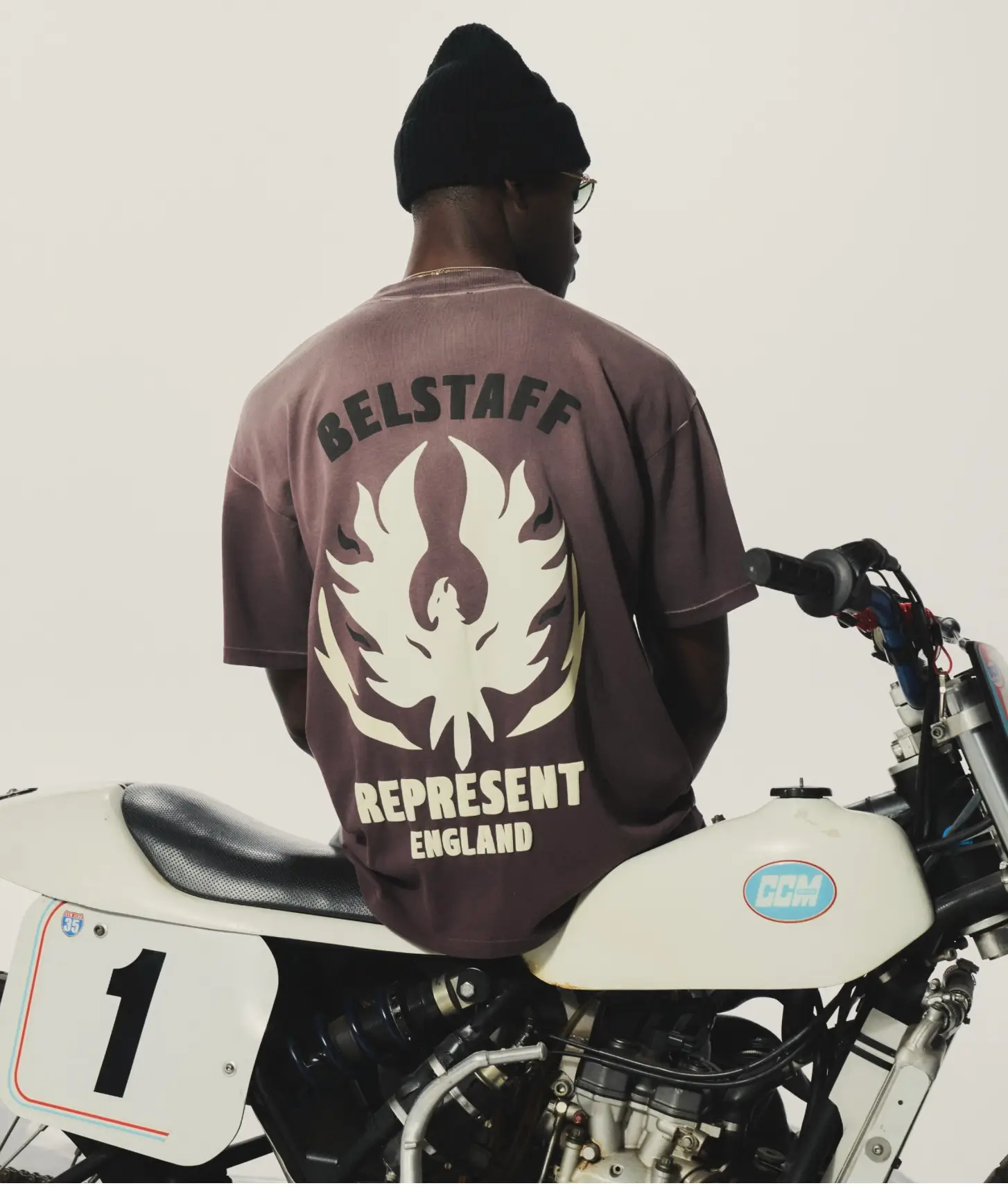
Graphic-heavy hoodies and T-shirts featuring phoenix motifs, stacked appliqué, and cracked prints reflected Represent’s established visual identity while complementing Belstaff’s rugged sensibility. Matching cargos and accessories completed the full moto-streetwear vision.
The campaign imagery amplified the collaboration’s mood through industrial Manchester settings and motorcycle-inspired storytelling. Retailers including Harrods and END Clothing quickly sold through inventory, reinforcing the collection’s immediate commercial and culture impression.
evolve
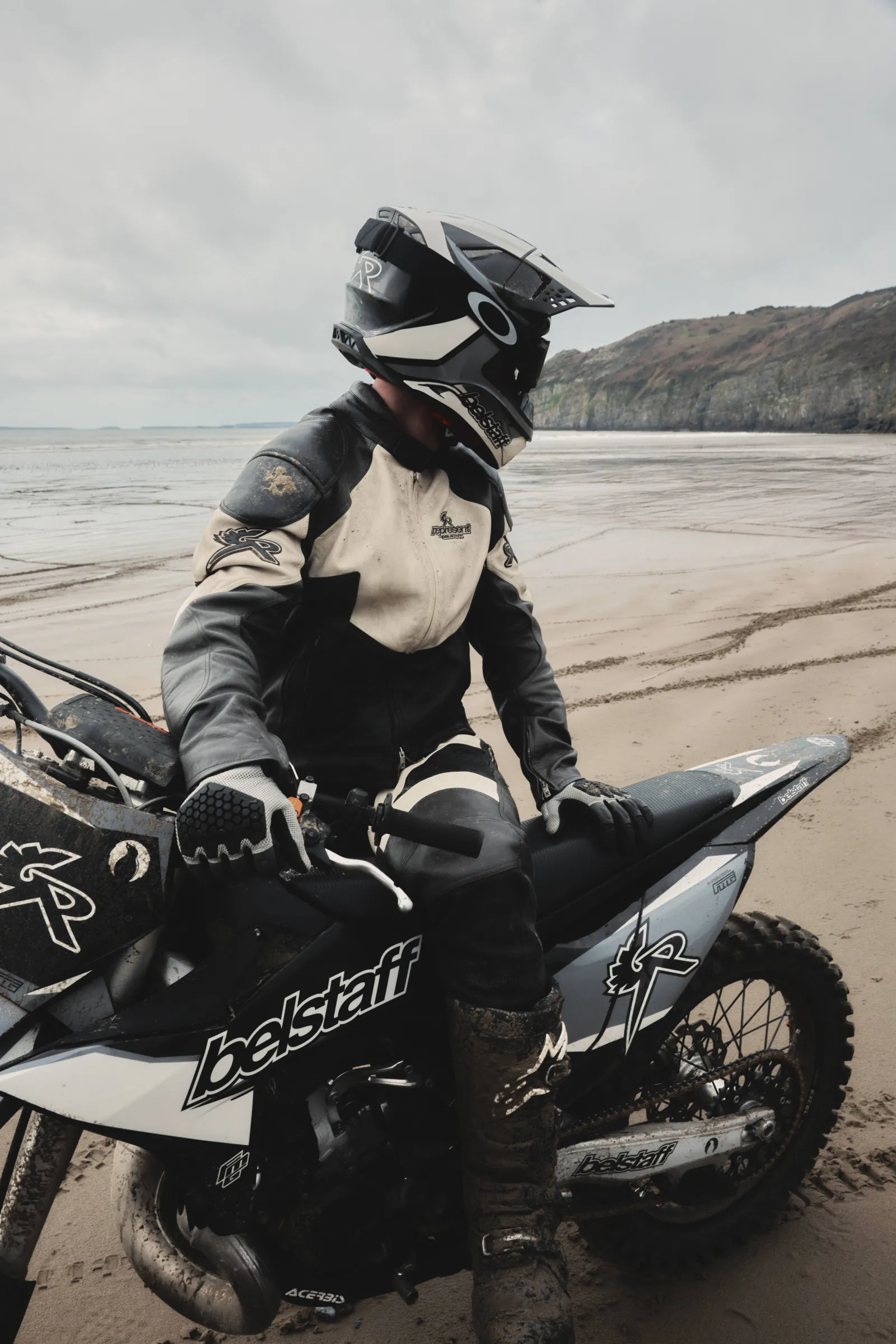
Part II, arriving May 13, 2026, deepens the partnership’s archive exploration while shifting focus toward 1980s and 1990s Belstaff racing suits and technical riding gear. Compared to the first release, the second chapter leans heavier into motorsport references, sharper graphics, and more aggressive outerwear silhouettes.
The collection’s leather racing jacket and matching trousers reinterpret vintage zip-together racing suits with heavier leather construction, aged finishes, and a looser, street-oriented fit. Instead of reproducing the slim proportions of traditional motorcycle suits, Represent transforms them into wearable luxury outerwear designed for contemporary styling.
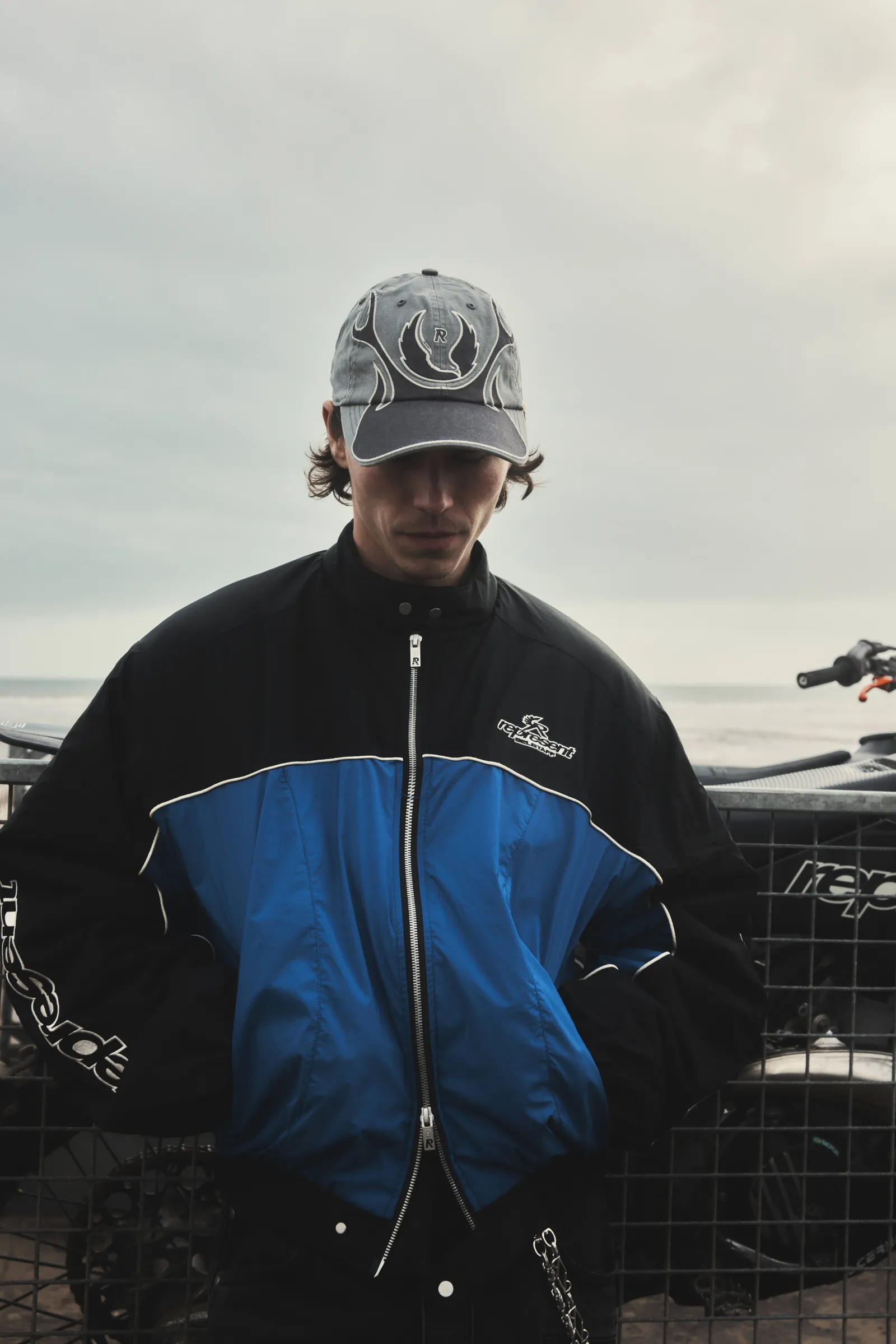
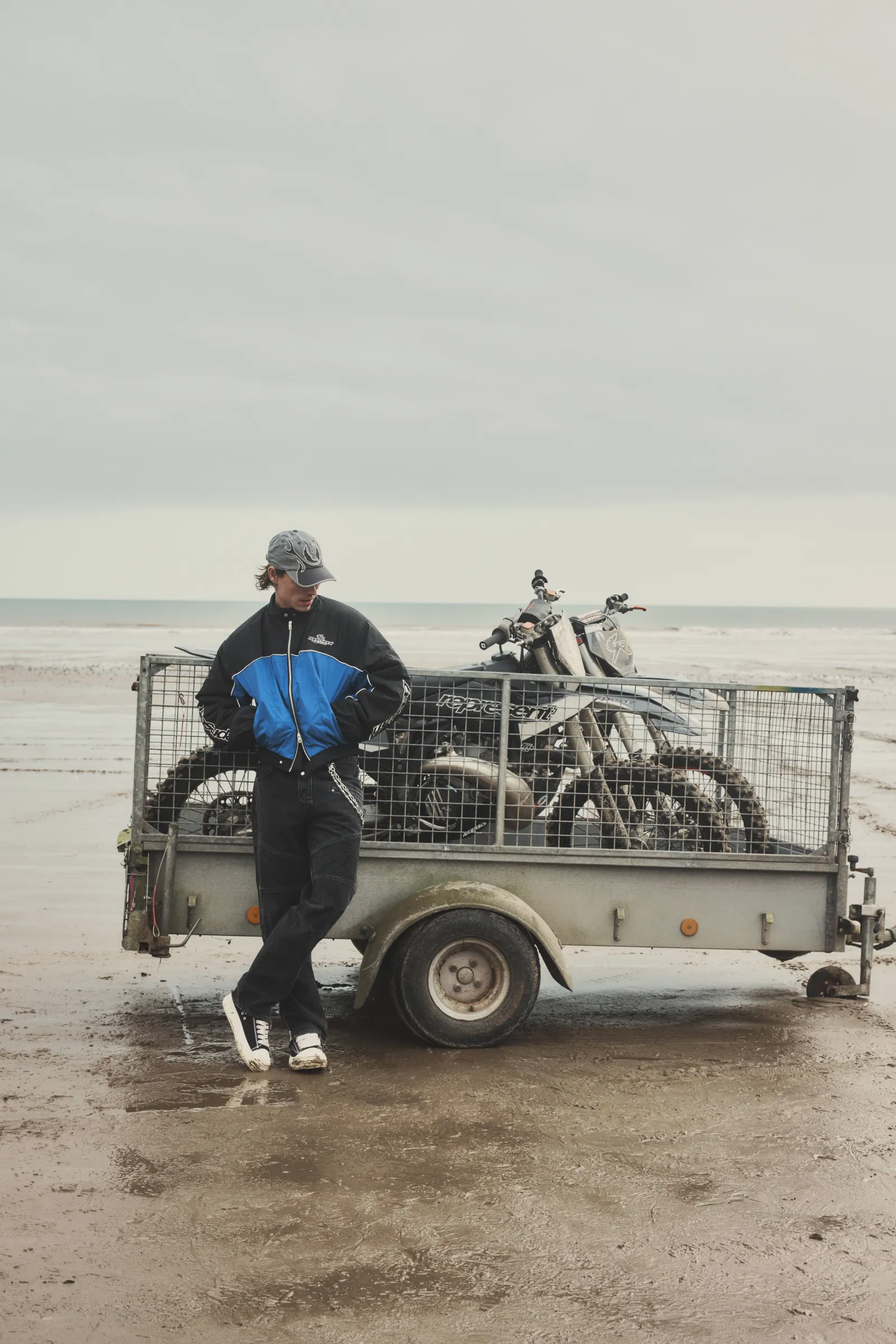
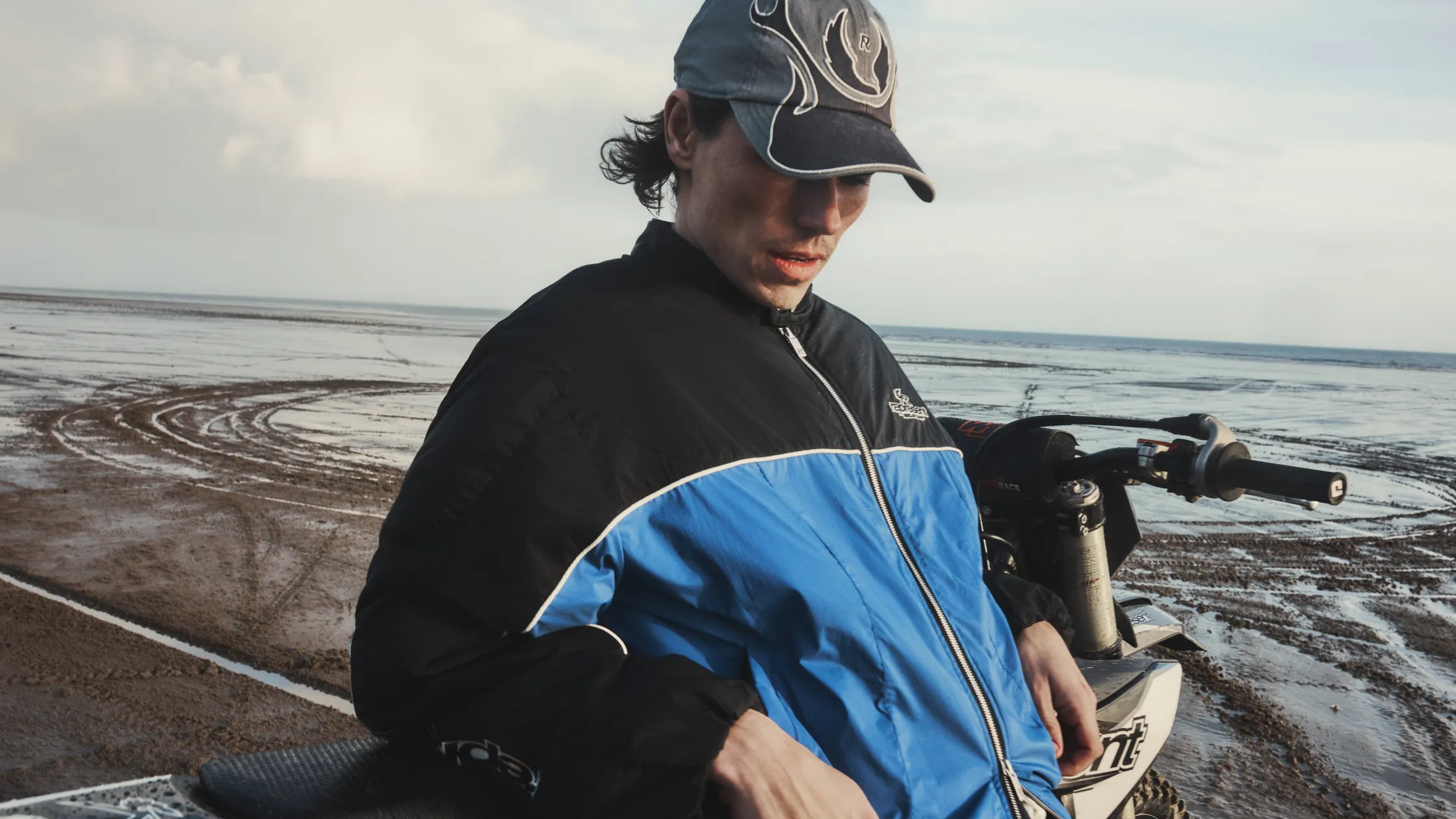
A lightweight nylon racing jacket introduces greater versatility through curved elbow construction, embroidered graphics, white piping, and a relaxed silhouette suitable for year-round layering. Meanwhile, “Born to Bike” hoodies and T-shirts expand on the Owners Club formula with distressed graphics and hand-finished fading techniques that make each garment feel slightly individual.
According to George Heaton, Part II pushes “even harder,” emphasizing heavier graphics and stronger silhouettes. The campaign shoot at Pendine Sands reinforces that direction, using motorcycles against wet coastal terrain to evoke raw British energy and the weathered character embedded within the garments themselves.
why
The success of Belstaff x Represent extends beyond aesthetics. The partnership bridges generations of consumers and philosophies. Belstaff gains renewed relevance among younger streetwear audiences through Represent’s cultural reach, while Represent benefits from Belstaff’s craftsmanship, archival depth, and historical legitimacy.
The collaboration also taps into fashion’s renewed fascination with biker culture, vintage motorsport references, and tactile outerwear. In an era saturated with minimalism, performancewear, and algorithm-driven trends, these garments offer narrative weight and material richness. They feel lived-in, personal, and emotionally connected to history.
Importantly, critics and consumers alike have responded positively because the collaboration feels authentic rather than commercially engineered. The partnership does not rely solely on logo placement or artificial scarcity. Instead, it reflects a genuine exchange between two brands connected by geography, visual language, and shared admiration.
collect
The versatility of the collection contributes heavily to its appeal. Pieces can be layered into full moto-inspired looks or integrated subtly into everyday wardrobes. The Race Jacket over faded denim and a heavyweight hoodie captures the collaboration’s intended balance between rebellion and haute.
Much like vintage Belstaff outerwear, the garments are designed to improve with wear. Leather develops creasing and character over time, while washed jersey pieces evolve through fading and repeated use. The collab intentionally embraces imperfection and aging as part of the design language itself.
Collectors have also gravitated toward the project due to its limited production runs and strong storytelling. Early pieces from the 2024 release already command premiums on resale platforms, and Part II is expected to follow a similar trajectory among fashion collectors and streetwear enthusiasts.
fin
Fashion in 2026 increasingly rewards substance, narrative, and emotional resonance over pure hype. Belstaff x Represent succeeds because it understands that dynamic. It merges two British brands separated by generations but united through craftsmanship, rebellion, and an obsession with outerwear that feels lived rather than manufactured.
The partnership also signals broader shifts within contemporary menswear: the rise of boxier moto silhouettes, the blending of heritage and streetwear, and the continued appetite for garments that carry visible texture and history. Rather than chasing fleeting trends, the collaboration builds around permanence and identity.
From Stoke-on-Trent workshops to Manchester streetwear culture and global fashion retail, the connection reflects a uniquely British creative lineage. It demonstrates that heritage and innovation are not opposing forces, but complementary ones when approached with sincerity and precision.
Related Articles

The Frankie Shop Takes Milan: Oversized Suiting Moves Into the Quadrilatero
Eleven years after a Lower East Side boutique, Gaëlle Drevet’s label opens its first Italian […]