DRIFT AUDIO
Listen to this story
Choose a voice, then press play.
A new label entering the streetwear landscape usually arrives loud—capsule drops, scarcity, algorithmic urgency. Buffer doesn’t follow that script. It opens differently: with intention, with restraint, with the idea of space rather than noise.
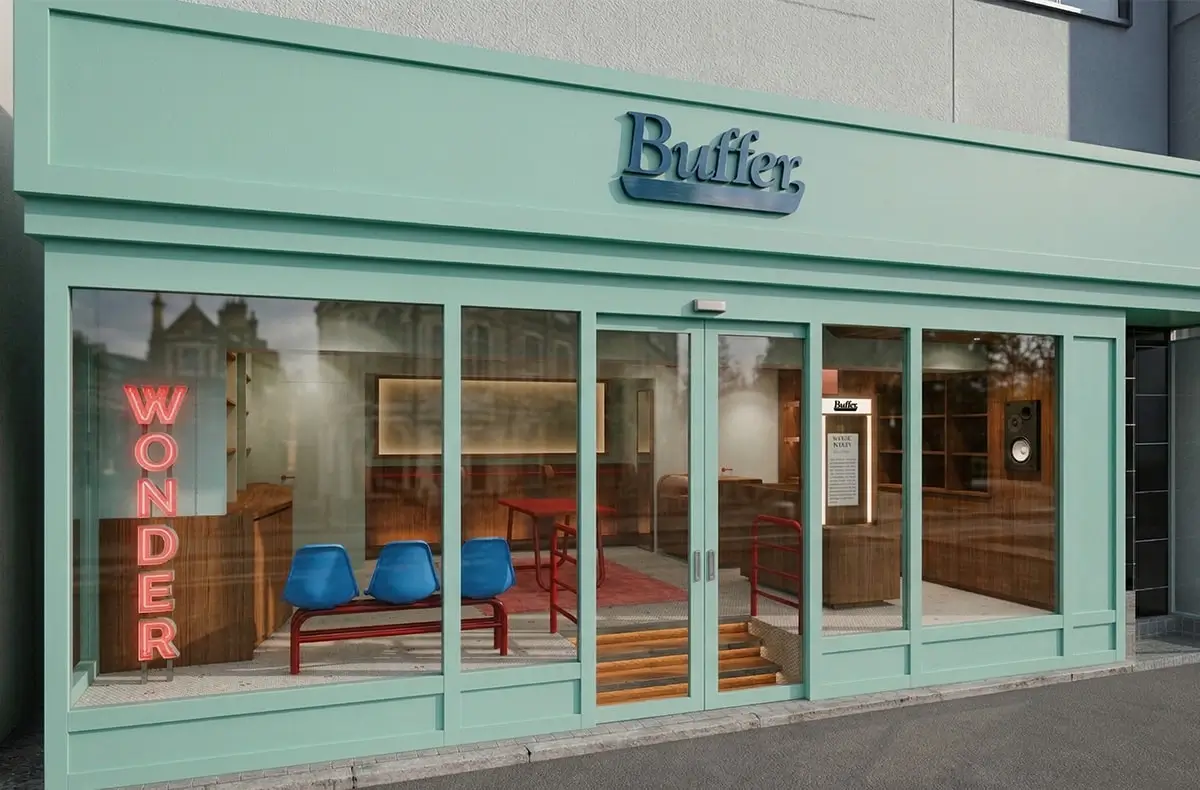
On April 25, 2026, Human Made expands its universe with Buffer, a brand shaped under the creative direction of Tetsu Nishiyama. The setting is deliberate: Shibuya, a district synonymous with movement, convergence, and generational overlap. The location alone reads like a thesis statement.
Buffer is not simply another imprint. It positions itself as a functional layer within culture—a mediator between eras, a stabilizer between references, a space where past and present can sit without friction.
That framing matters. In an industry increasingly driven by immediacy, Buffer proposes something slower: continuity.
define
The term “buffer” carries technical clarity. In computing, it refers to a temporary storage space that regulates flow between systems. In human terms, it suggests cushioning, mediation, protection. Buffer, as a brand, leans into both.
Rather than collapsing decades into nostalgia, Nishiyama constructs a platform where generational aesthetics coexist without dilution. The aim is not revival—it’s translation.
This distinction shapes everything:
Garments don’t replicate archival pieces—they reinterpret their logic.
Pricing doesn’t inflate heritage—it recalls accessibility.
Branding doesn’t overwhelm—it stabilizes identity.
Buffer functions as an interface. Not between brand and consumer, but between time periods themselves.
View this post on Instagram
idea
Tetsu Nishiyama has long been associated with precision, discipline, and a distinctly militarized approach to streetwear through WTAPS. His work there is structured, coded, almost rigid in its references.
Buffer introduces a recalibration.
Where WTAPS builds through command, Buffer builds through openness. The silhouettes feel less directive, the language less coded. There’s a softening—not in quality, but in posture.
This doesn’t mean a loss of rigor. It means a redistribution of it.
The garments still carry Nishiyama’s attention to proportion, fabrication, and purpose. But instead of asserting identity, they allow it to form. The wearer completes the system.
That shift—from assertion to allowance—may be the most significant move in his career to date.
stir
Human Made, founded by NIGO, has always existed as more than a brand. It operates as a cultural archive, remixing Americana, workwear, and vintage sensibilities into a cohesive visual language.
Buffer extends that architecture outward.
Rather than diluting Human Made’s core, it creates a parallel lane—one that prioritizes accessibility without sacrificing credibility. Where Human Made often leans into collectible culture, Buffer leans into usability.
This duality strengthens the ecosystem:
Human Made becomes the archive.
Buffer becomes the interface.
Together, they map a broader spectrum of entry into streetwear culture.
flow
Shibuya is more than a retail location—it’s a cultural node. Youth culture, legacy brands, tourists, locals, subcultures, and global influence all intersect here in constant motion.
Placing Buffer’s first flagship in Shibuya is not symbolic—it’s operational.
The district embodies the brand’s premise: generational overlap without hierarchy.
Inside this environment, Buffer doesn’t need to explain itself. It reflects its surroundings. The store becomes less of a destination and more of a continuation of the street outside.
Expect a retail space that mirrors this philosophy—open, transitional, layered. Not overly curated, but intentionally arranged. A place where browsing feels natural, not orchestrated.
show
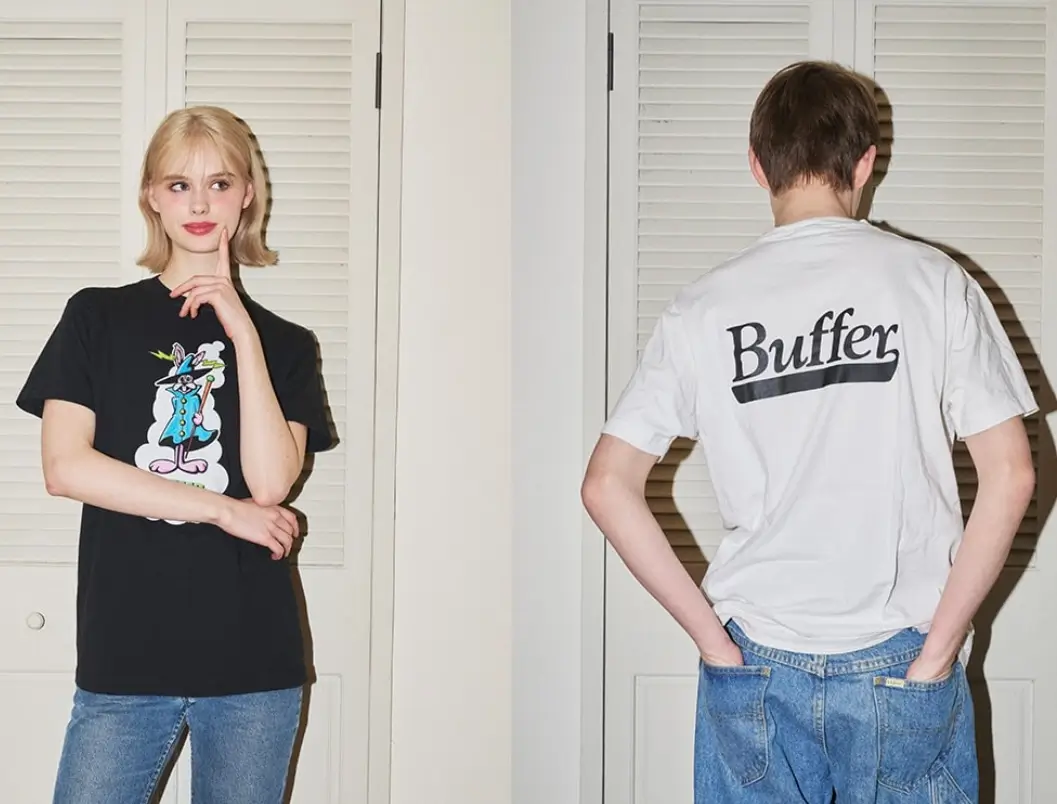
The inaugural drop avoids spectacle. Instead, it focuses on foundational pieces—the kind that define a wardrobe rather than disrupt it.
Expect:
Relaxed outerwear with subtle structural detailing
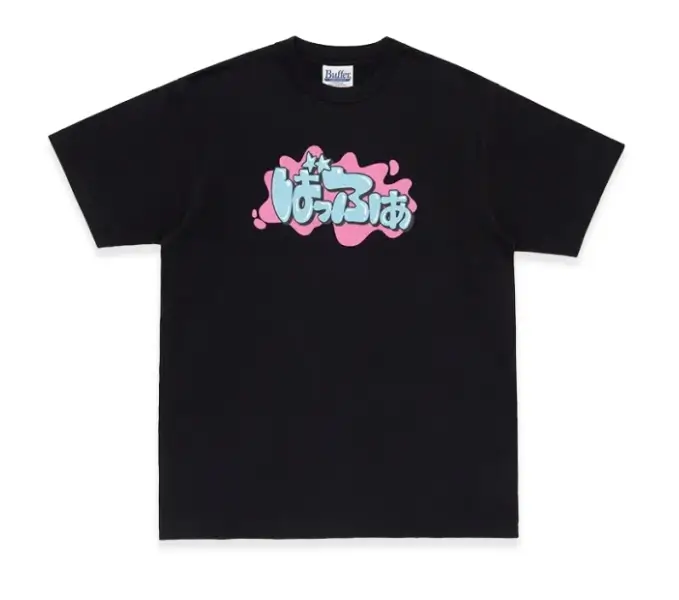
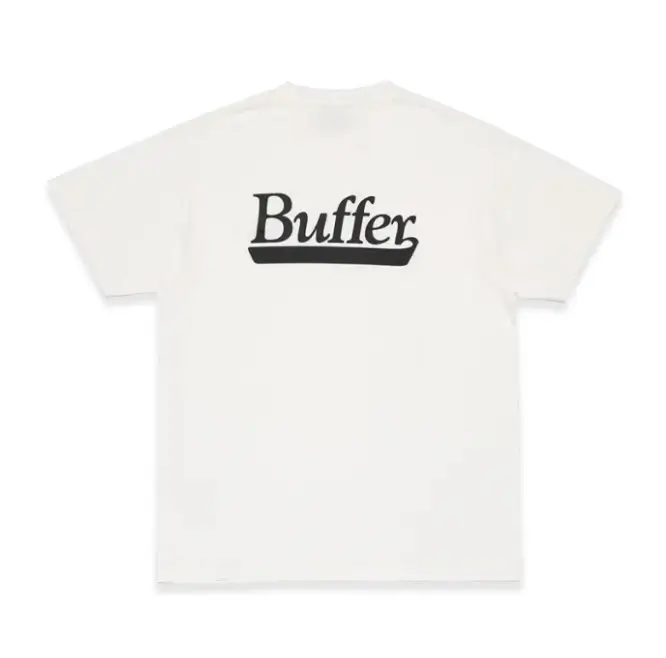
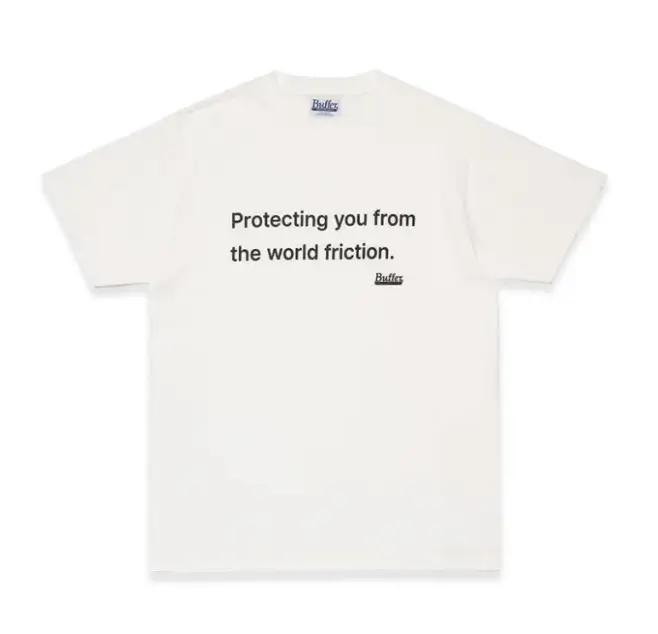
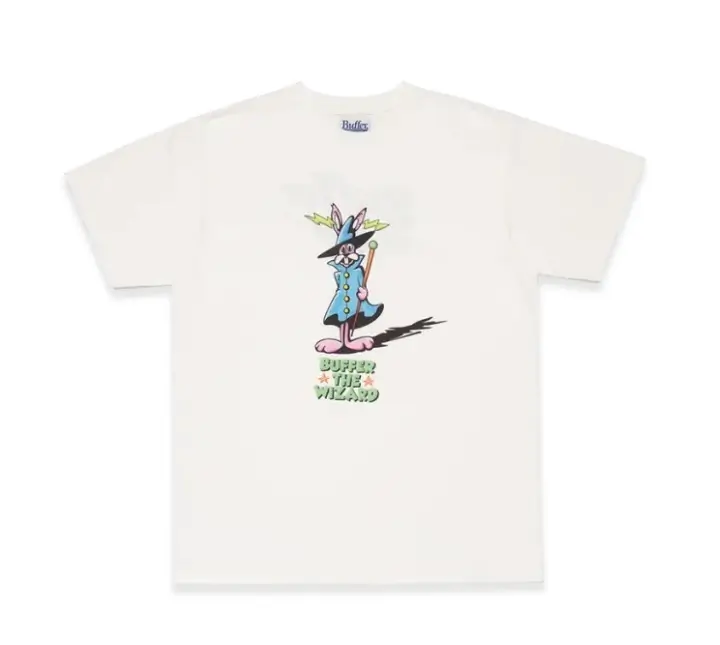
Graphic tees that reference without over-explaining
Utility-driven pants rooted in function
Layering pieces designed for everyday rotation
Color palettes remain grounded—washed neutrals, faded tones, occasional punctuations of color that feel lived-in rather than newly introduced.
The key is balance.
Nothing feels overdesigned. Nothing feels disposable.
Each piece exists as part of a system, not a standalone statement.
know
One of Buffer’s most deliberate decisions lies in its pricing structure. By referencing the affordability of the ’80s and ’90s, the brand challenges a core tension in modern streetwear: exclusivity versus accessibility.
Streetwear began as an accessible form of expression. Over time, it evolved into a haute-adjacent market, often limiting entry.
Buffer attempts to recalibrate that trajectory.
Lower price points do not indicate lower value. Instead, they signal a different priority—participation over scarcity.
This approach reintroduces an older idea: that style is built through accumulation, not singular acquisition.
You don’t buy Buffer to own a moment. You buy it to build a wardrobe.
realism
The term “authentic” is overused in fashion discourse. It often functions as branding shorthand rather than meaningful description.
Buffer approaches authenticity differently.
It doesn’t perform heritage—it integrates it. The references are present, but they aren’t foregrounded. There’s no need to signal credibility because it’s embedded in the construction.
This results in garments that feel familiar without being derivative.
You recognize the lineage, but you don’t feel confined by it.
That subtlety is rare—and intentional.
gen
Streetwear is no longer tied to a single generation. It spans decades, with each era contributing its own codes, silhouettes, and sensibilities.
Buffer acknowledges this multiplicity.
Instead of choosing a demographic, it creates a shared platform. Older consumers find familiarity in the references. Younger audiences find accessibility in the pricing and design.
The brand doesn’t translate one generation to another—it allows them to coexist.
This is where the concept of “buffer” becomes most literal.
It absorbs differences. It stabilizes interaction. It creates continuity.
shh
In a market saturated with collaborations, countdowns, and engineered hype, Buffer’s restraint feels almost radical.
There are no forced narratives. No exaggerated claims.
Just a clear proposition:
Clothing that connects.
Pricing that invites.
Design that endures.
This doesn’t mean Buffer will exist outside of hype cycles. It means it won’t depend on them.
Its value is cumulative, not immediate.
role
The Shibuya store marks a beginning, not a conclusion.
As Buffer evolves, the flagship will likely function as a testing ground—a space where new ideas can be introduced, adjusted, and refined in real time.
Expect the store to shift with the brand:
New deliveries that expand the system
Rotations that reflect seasonal transitions
Possibly collaborations that align with the brand’s ethos
But any expansion will likely remain controlled.
Buffer doesn’t feel like a brand built for rapid scaling. It feels built for sustained presence.
position
The timing of Buffer’s launch is significant.
By 2026, streetwear has fully integrated into global fashion systems. Luxury houses reference it. Mass brands replicate it. The space between high and low has largely collapsed.
Buffer doesn’t attempt to redefine this landscape. Instead, it operates within it—quietly adjusting its parameters.
It introduces an alternative model:
One that values continuity over disruption
Accessibility over exclusivity
Substance over spectacle
This positioning doesn’t reject the current system. It refines it.
sum
The arrival of Buffer signals a subtle shift in how streetwear can operate.
It suggests that growth doesn’t always require expansion. That innovation doesn’t always require disruption. That connection can be more powerful than novelty.
Under the direction of Tetsu Nishiyama and within the broader ecosystem of Human Made, Buffer establishes itself as something rare:
A brand defined not by what it introduces, but by what it holds together.
And in a culture that often moves too quickly to remember itself, that function may be more valuable than anything new.
Related Articles
Eric Haze Stitches a Nineties Friend Into TOKYO Capsule
Five pieces carry Eric Haze's embroidered tagging for TOKYO No.1 SOUL SET, sold online and in Osaka around the band's Oct 25 BAYCREW'S FESTIVAL set.