DRIFT AUDIO
Listen to this story
Choose a voice, then press play.
Trudon does not begin as a perfume house. It begins with flame.
Founded in 1643, Trudon supplied candles to churches, aristocracy, and eventually the court of Louis XIV. Its function was not decorative—it was infrastructural. Light, in that period, defined space, ritual, and time itself. Wax and wick were not luxuries; they were necessities shaped into objects of refinement.
This origin matters because it defines how Trudon approaches scent centuries later. Where many fragrance houses build from fashion outward, Trudon builds from environment inward. Scent is not an accessory layered onto identity—it is a condition that surrounds it.
Mortel Noir emerges from this lineage.
It carries the memory of smoke, resin, and combustion—not as nostalgia, but as structure. The fragrance does not attempt to recreate history. It inherits its logic.
stir
The transition from candle maker to fragrance house is not as distant as it seems. Candles are, in essence, controlled environments. They release scent through heat, slowly altering the space they occupy.
Perfume, in contrast, is mobile. It moves with the body.
Trudon bridges these two modes. Its fragrances retain the environmental sensibility of candle-making—slow diffusion, spatial awareness, controlled intensity—while adapting to the intimacy of skin.
Mortel Noir sits precisely at this intersection.
It feels less like something applied and more like something entered. The wearer does not project the scent; they inhabit it.
hx
Resins, incense, woods—these were among the earliest aromatic substances used by humans. Long before synthetic molecules or modern compositions, scent was tied to ritual. Burning resin marked transitions: life to death, day to night, sacred to profane.
These materials carried weight. They lingered. They transformed space.
Mortel Noir draws from this vocabulary but removes the ritual context. There is no explicit ceremony here, no direct reference to religion or antiquity. Instead, the fragrance extracts the essence of these materials—their density, their persistence—and places them into a contemporary framework.
The result is a scent that feels ancient in structure but modern in execution.
View this post on Instagram
niche
To place Mortel Noir within a broader context, it’s necessary to look at the evolution of niche fragrance itself.
The late 20th and early 21st centuries saw a shift away from mass-market perfumery toward smaller, more specialized houses. These brands rejected the constraints of commercial appeal, focusing instead on composition, storytelling, and material quality.
Niche perfumery became a space for experimentation—but also for refinement.
Over time, however, even niche began to develop its own conventions. Certain tropes emerged: hyper-sweet gourmands, exaggerated oud compositions, aggressive projection designed to stand out in a crowded market.
Mortel Noir moves against this trajectory.
It doesn’t amplify. It reduces.
Where many contemporary fragrances aim to be noticed immediately, Mortel Noir delays recognition. It asks for time. It asks for proximity.
This shift reflects a broader change within niche perfumery—a move toward subtlety after years of excess.
sustain
In recent years, there has been a noticeable recalibration within fragrance culture. Consumers, increasingly informed and saturated with options, have begun to value nuance over intensity.
This trend manifests in several ways:
Lower projection, closer-to-skin compositions
Dryer, less sweet profiles
A focus on texture rather than overt complexity
An interest in materials that feel “real” rather than stylized
Mortel Noir aligns with all of these tendencies.
Its restraint is not a limitation—it is a response.
In a landscape where everything competes for attention, quietness becomes distinctive. A fragrance that does not insist can feel more personal, more considered.
This is where Mortel Noir finds its relevance.
contempo
Darkness, in fragrance, has traditionally been associated with evening wear, formality, or intensity. Heavy woods, deep resins, and smoky accords were often framed as dramatic or even theatrical.
Mortel Noir reframes darkness.
It is not dramatic. It is not overtly sensual. It is controlled.
This shift mirrors broader cultural movements. Across fashion, design, and even digital spaces, there is a growing interest in muted palettes, minimal forms, and subdued expression.
Darkness becomes less about contrast and more about depth.
In this context, Mortel Noir feels aligned with contemporary aesthetics. It does not stand apart from them—it reflects them.
modern
Trudon occupies a unique space within the haute market.
It is not a fashion house extending into fragrance.
It is not a celebrity brand leveraging view.
It is not a niche startup seeking differentiation through shock.
It is, instead, a heritage brand that has expanded carefully, maintaining continuity across centuries.
This continuity is increasingly rare—and increasingly valuable.
Mortel Noir benefits from this positioning. It does not need to justify itself through novelty. Its authority is implicit.
This allows the fragrance to remain understated without appearing minimal. There is depth behind the restraint.
idea
One of the defining characteristics of Mortel Noir is its focus on materiality.
Rather than constructing a narrative through distinct notes, the fragrance emphasizes how those materials feel. Resin is not presented as a note to be identified—it is experienced as a texture.
This approach aligns with a broader trend in niche perfumery toward abstraction.
Instead of telling a story, the fragrance creates a condition. The wearer interprets it rather than being guided through it.
This shift from narrative to experience reflects a more mature audience—one less interested in prescribed meanings and more interested in personal interpretation.
gen
Much like streetwear and fashion, fragrance is increasingly shaped by generational overlap.
Older consumers bring an appreciation for tradition, craftsmanship, and longevity. Younger audiences bring a sensitivity to design, minimalism, and authenticity.
Mortel Noir sits between these perspectives.
Its historical grounding appeals to those familiar with traditional perfumery. Its restraint and abstraction resonate with younger consumers seeking something less overt.
This ability to bridge generational preferences is part of what allows it to “prevail” within a crowded market.
It doesn’t cater exclusively to one group. It creates a shared space.
grad
If current trends continue, fragrances like Mortel Noir may represent a broader shift in the industry.
The era of maximalist scent—loud, immediate, unmistakable—has not ended, but it is no longer dominant. Alongside it, a parallel movement is growing:
Fragrances that prioritize intimacy over projection
Compositions that reveal rather than announce
Design that supports rather than overshadows the product
Mortel Noir embodies this movement.
It suggests a future where fragrance is less about being noticed and more about being experienced.
fin
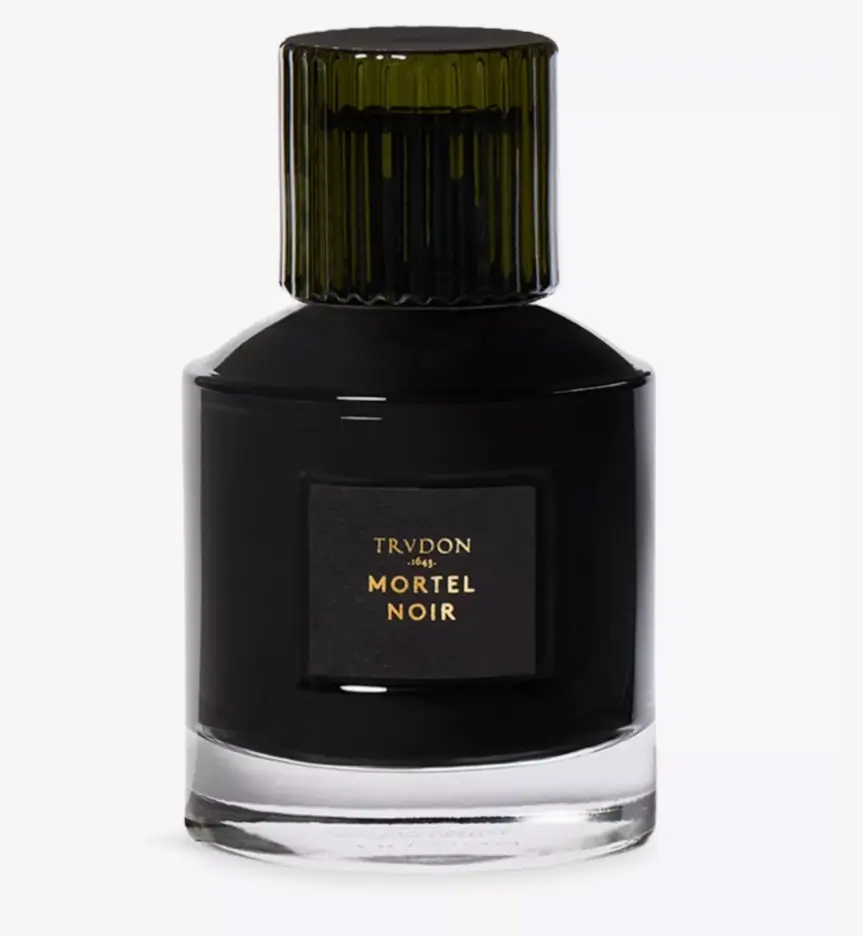
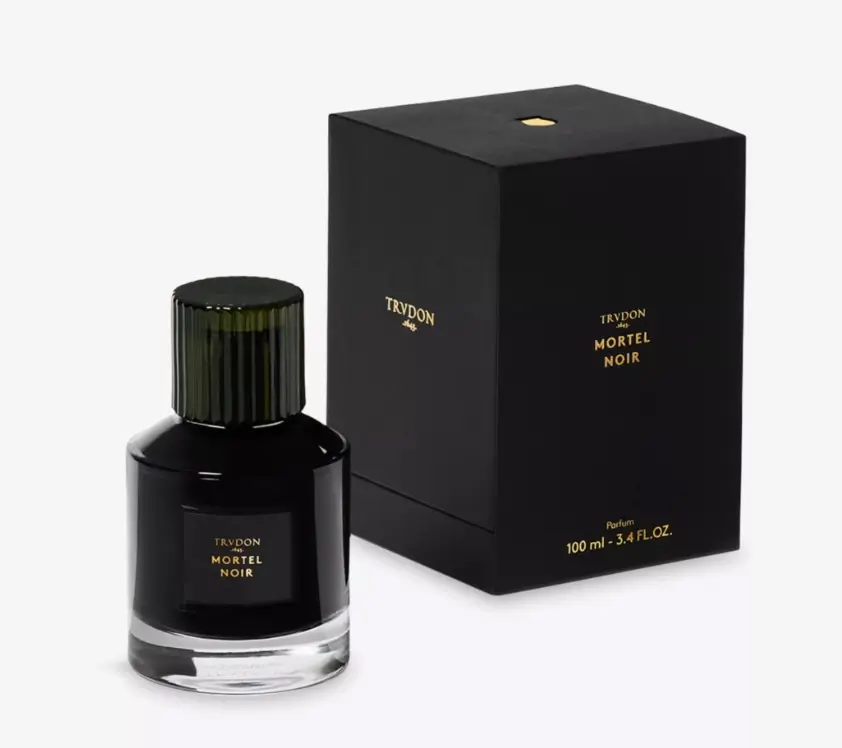
Mortel Noir Parfum 100ml does not attempt to redefine perfumery. It refines it.
By drawing from centuries of material history while aligning with contemporary sensibilities, it creates a bridge between past and present. Its restraint is not an absence—it is a decision.
Within the evolving landscape of niche fragrance, this decision feels increasingly relevant.
It is easy to create something loud.
It is harder to create something that lasts.
Mortel Noir chooses the latter.
From the DRIFT archive: A Review: Creed Aventus Eau de Parfum, A Modern Classic That Redefined Haute Scent
Related Articles
Eric Haze Stitches a Nineties Friend Into TOKYO Capsule
Five pieces carry Eric Haze's embroidered tagging for TOKYO No.1 SOUL SET, sold online and in Osaka around the band's Oct 25 BAYCREW'S FESTIVAL set.