DRIFT AUDIO
Listen to this story
Choose a voice, then press play.
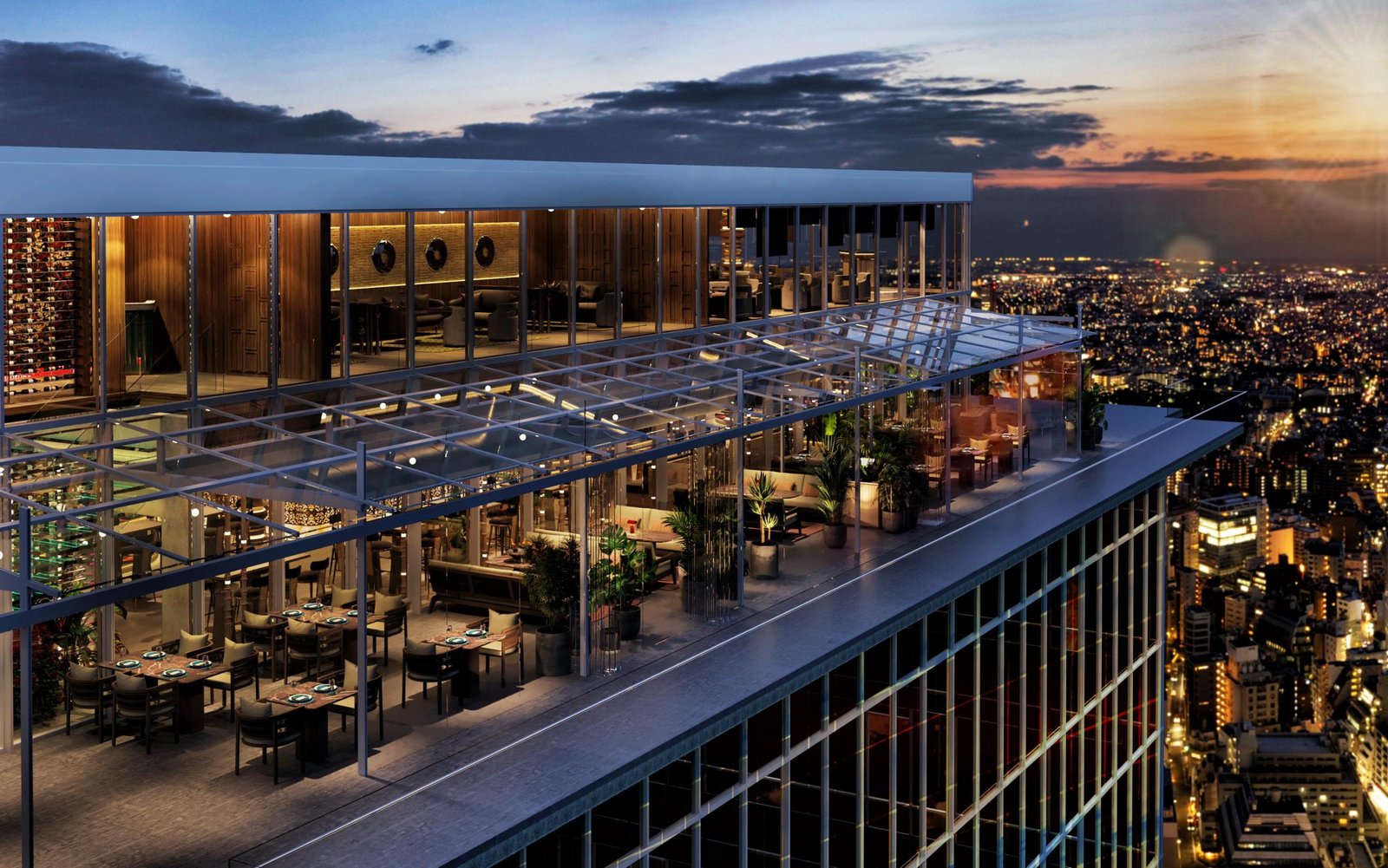
In the humid haze of a Taipei May evening, where the city’s dense verticality meets the faint scent of rain on concrete, NAMESAKE prepares to host its Summer Camp activation at CÉ LA VI Taipei on May 16, 2026. From 16:30 to 22:00, the rooftop venue will stage a gathering framed as a continuation of the brand’s SS26 “INNERCHILD” collection—a poolside meditation on instinct, memory, and emotional freedom.
The invitation is deceptively simple: arrive in “SUMMER UNIFORM,” surrender to atmosphere, music, and sensation, and revisit a mode of feeling untouched by adulthood’s learned restraint. The event’s central provocation—“Before we learned to hold back, we knew exactly how to feel”—functions less as marketing slogan than conceptual thesis.
Yet the proposition deserves scrutiny. Contemporary haute fashion has become saturated with experiential activations engineered to simulate intimacy, nostalgia, and emotional release. Within that landscape, a ticketed rooftop “summer camp” devoted to reclaiming the inner child risks reading as another polished exercise in aestheticized longing.
stir
Founded in 2020 by brothers Steve Hsieh, Michael Hsieh, and Richard Hsieh, NAMESAKE was conceived around familial memory rather than conventional trend logic. The label’s Mandarin name, 以父之名 (“In the Name of the Father”), foregrounds its emotional architecture immediately. Their father—a fisherman and entrepreneur—became the symbolic foundation for recurring visual and material motifs: fishing nets, maritime textures, resilience, labor, movement, and water itself.
The brothers’ upbringing between Taiwan, Tokyo, Los Angeles, and Seattle created an identity shaped by displacement and overlap. Basketball culture, Japanese precision, Taiwanese pragmatism, and diasporic negotiation all converge within the label’s vocabulary. Prior to launching NAMESAKE, the family operated NE.SENSE, the influential Taipei concept store established in 2013 that introduced emerging international designers alongside regional talent.
That retail foundation sharpened their understanding of curation, community, and emotional consumption. NAMESAKE emerged not as a detached luxury exercise, but as a deeply internal narrative system—one capable of translating migration, masculinity, generational inheritance, and belonging into garment form.
flow
Presented during Paris Men’s Fashion Week, the SS26 “INNERCHILD” collection transformed the runway into something resembling a surreal water park or playground. Guests sat on inflatable rings beneath wind tubes printed with deliberately juvenile phrases, including the provocatively absurd: “Have you ever peed in the pool?”
The staging resisted polished nostalgia. Instead, it confronted the awkward distance between childhood immediacy and adulthood’s over-mediated emotional behavior. Garments reflected that same tension through technical fabrics, deconstructed uniforms, tactile surfaces, and silhouettes engineered for movement. References to films like Stand by Meand Jerry Maguire reinforced the collection’s emotional framework: memory not as fantasy, but as residue.
Music played a critical role. Producer and artist Kirou Kirou, who previously contributed to NAMESAKE’s SS24 runway soundtrack, returned to help maintain continuity between sonic atmosphere and sartorial narrative.
The Summer Camp activation effectively attempts to materialize that runway psychology in public space. Curated by LAZYFINGA through its FINGA-Lick platform, the event extends the SS26 concept into lived participation. Local Taipei DJs join Kirou Kirou within a rooftop environment designed to shift gradually from daylight leisure into nocturnal immersion.
But translation introduces unavoidable contradictions.
A runway exists within controlled spectatorship. A party demands participation. The contemplative symbolism of “INNERCHILD” now intersects with ticketing structures, social performance, dress codes, and consumption rituals. Admission costs—NT$800 pre-sale or NT$1,000 at the door, including two drinks—place instinct within measurable economic parameters.
This friction is precisely what makes the event culturally interesting.
move
CÉ LA VI Taipei is not incidental to the concept. Rooftop venues occupy a peculiar position within contemporary urban culture. They operate as controlled escapes—spaces suspended between public visibility and private fantasy. In hyper-dense cities like Taipei, rooftops become temporary emotional architectures where leisure, aspiration, and identity performance converge.
Positioning “summer camp” within such a setting produces deliberate irony. Childhood archetypes—play, vulnerability, spontaneity—are reframed through adult luxury culture. The directive to wear “SUMMER UNIFORM” simultaneously encourages freedom while imposing aesthetic codes recognizable to fashion-event culture: relaxed but curated, play but view coherent.
The programming itself reflects careful community construction. LAZYFINGA’s involvement emphasizes local cultural infrastructure rather than imported spectacle, while Kirou Kirou’s return reinforces continuity across collections and events. The elongated five-and-a-half-hour schedule allows atmosphere to evolve naturally, mirroring memory’s fluid, nonlinear quality.
Within Taipei’s broader social context, these dynamics resonate differently. Younger generations continue navigating intense professional expectations, housing instability, digital exhaustion, and regional geopolitical anxiety. Structured leisure increasingly functions as emotional decompression. Post-pandemic culture accelerated this shift dramatically: fashion now sells environments, emotional access, and temporary belonging as aggressively as garments themselves.
The Summer Camp participates directly in that evolution.\
theory
Still, the project cannot escape its contradictions.
Can spontaneity remain authentic when carefully programmed? Can emotional freedom survive ticketing infrastructure, view documentation, and social expectation? Does reclaiming the “inner child” become another consumable aesthetic category once integrated into luxury culture?
These tensions do not necessarily invalidate the event. In many ways, they reveal fashion’s contemporary role more honestly than polished branding ever could.
NAMESAKE’s strength lies in the autobiographical specificity underpinning the concept. The Hsieh brothers’ work consistently roots itself in family history, migration, labor, and emotional inheritance. That grounding separates the project from more superficial nostalgia-driven campaigns circulating through luxury culture.
At the same time, the event reflects broader cultural movements across the 2020s: the rise of “inner child” discourse within wellness culture, nostalgia as psychological coping mechanism amid digital overstimulation, and fashion’s increasing transformation into immersive social infrastructure.
impression
When the night concludes on May 16 and attendees descend from the rooftop back into Taipei’s illuminated density, the event’s lasting value may not depend on whether it felt fully authentic.
Its significance lies in what it exposes.
By staging childhood instinct within adult systems of commerce, view, and curation, NAMESAKE reveals the contemporary distance between emotion and its simulation. The project asks not merely whether people can reconnect with their younger selves, but why such reconnection increasingly requires architecture, branding, and collective permission in the first place.
That ambiguity ultimately becomes the event’s most compelling quality.
Related Articles
The Frankie Shop Takes Milan: Oversized Suiting Moves Into the Quadrilatero
Eleven years after a Lower East Side boutique, Gaëlle Drevet’s label opens its first Italian […]