Living the Look: Celine’s Holistic Vision of Modern Elegance

April 15, 2026

a return
Celine’s Été activation in Shanghai represents a significant evolution in haute brand engagement, particularly within the Chinese market. The return of the Été concept is not merely a repeat of a past event but a strategic reinforcement of the brand’s presence through lived, immersive experiences. As Séverine Merle noted, “You never understand a market from a distance,” a statement that functions less as commentary and more as directive.
This acknowledgment reframes luxury engagement entirely. Cultural connection is no longer constructed through remote campaigns or static messaging. It is built through physical presence, repeated interaction, and a calibrated willingness to adapt without dissolving identity. In Shanghai, presence becomes the medium.
View this post on Instagram
stir
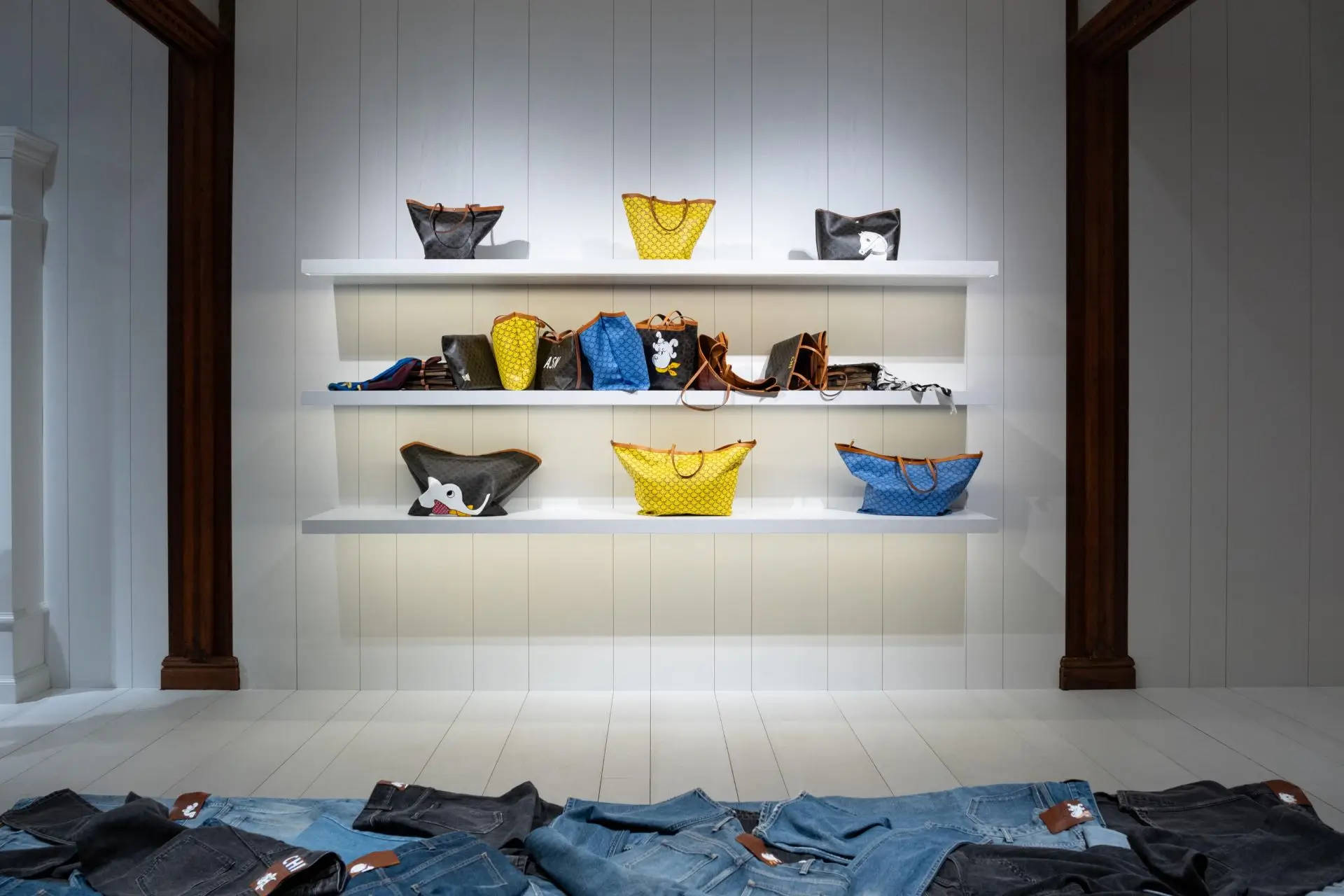
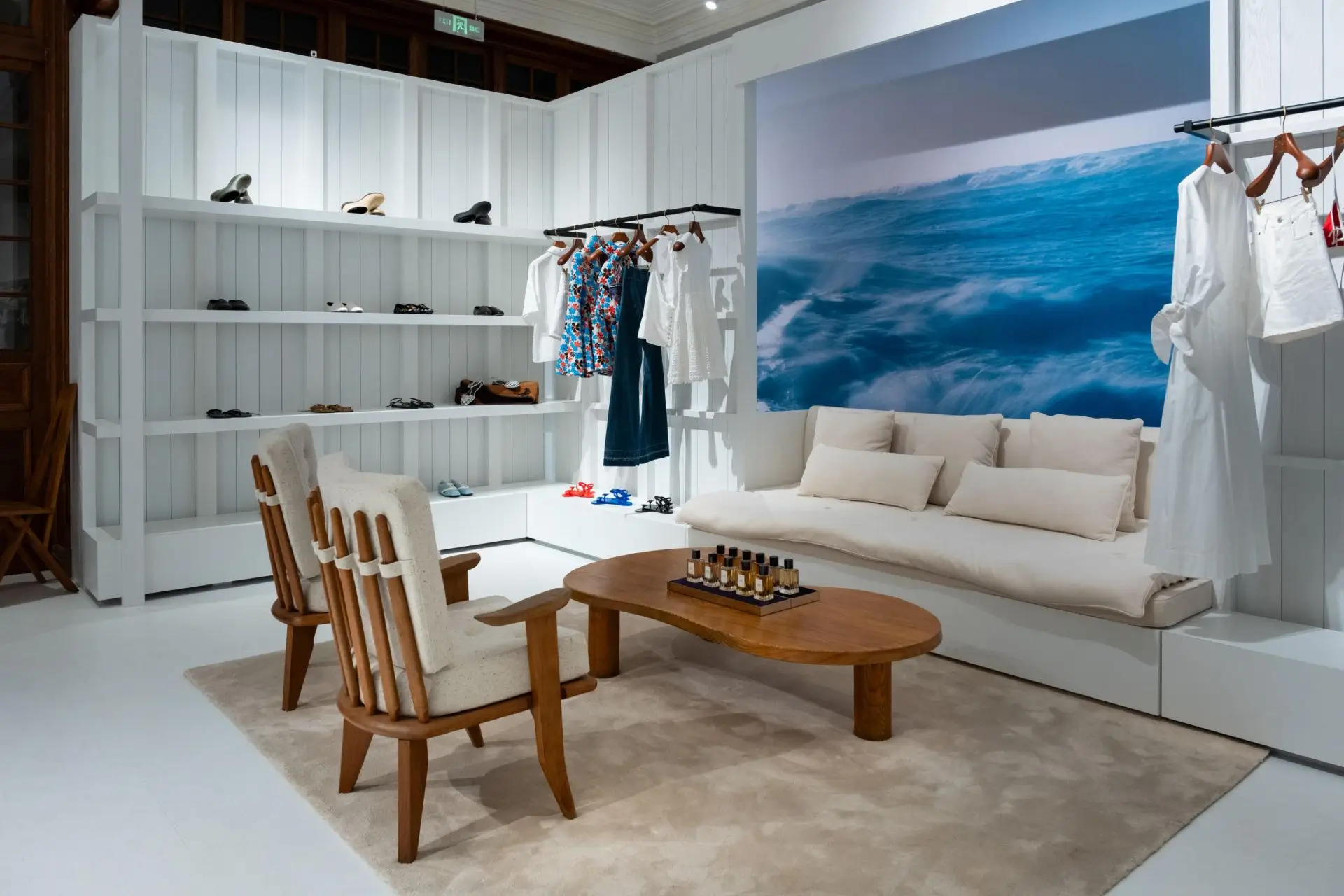
Inside the activation, product is positioned with restraint. Bags—structured, graphic, quietly iconic—rest along clean shelving systems, framed by light and negative space. They do not demand attention; they absorb it.
The layout resists density. Each object is given room to register, to exist independently before being folded into the broader narrative of the space. Even denim, placed almost casually in the foreground, reads less as merchandise and more as texture—an extension of the lived-in summer the activation proposes.
What emerges is a shift in hierarchy. Product is no longer the center. It is the entry point. The experience extends beyond it.

flow
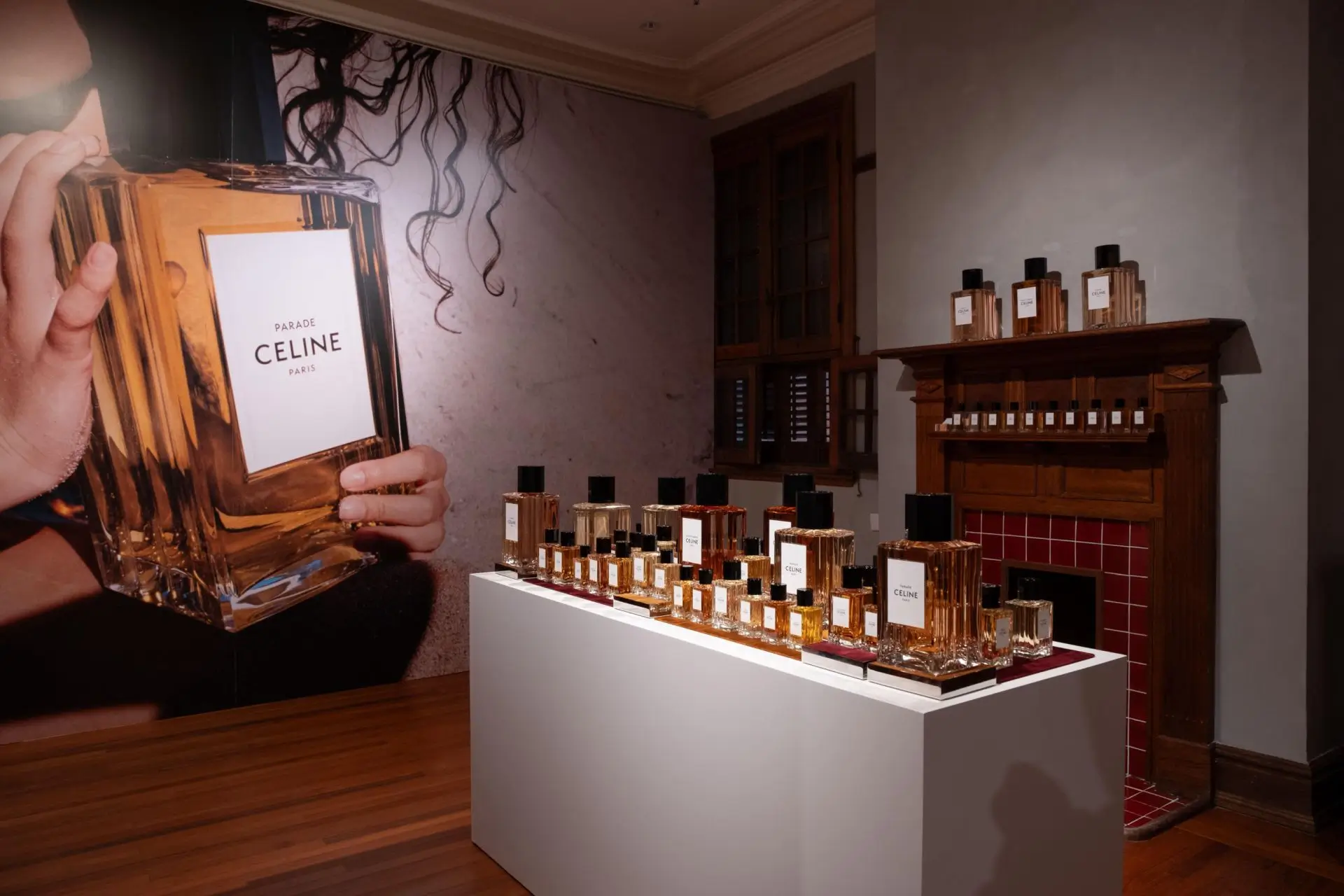
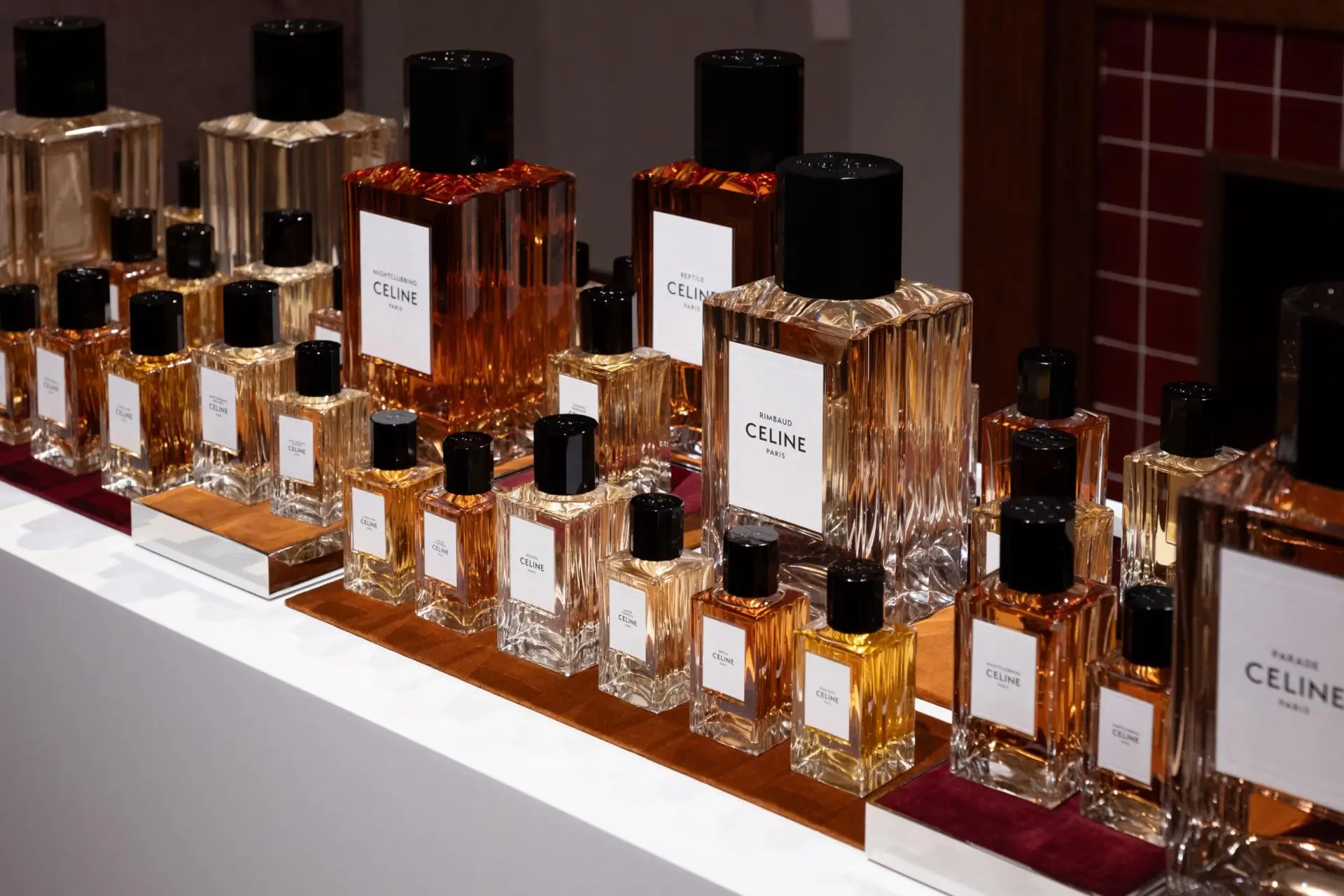
The fragrance installation operates differently. Here, density replaces restraint. Bottles—amber, glass, reflective—accumulate across surfaces, creating a visual rhythm that borders on archival.
Each piece feels identical at a glance, yet distinct upon inspection. The repetition becomes immersive. It draws attention not to individual scents, but to the system itself—the idea of Celine as a world that extends into air, memory, and sensory recall.
Fragrance, in this context, becomes atmosphere made visible. A translation of the intangible into something structured, repeatable, and collectible.
struct
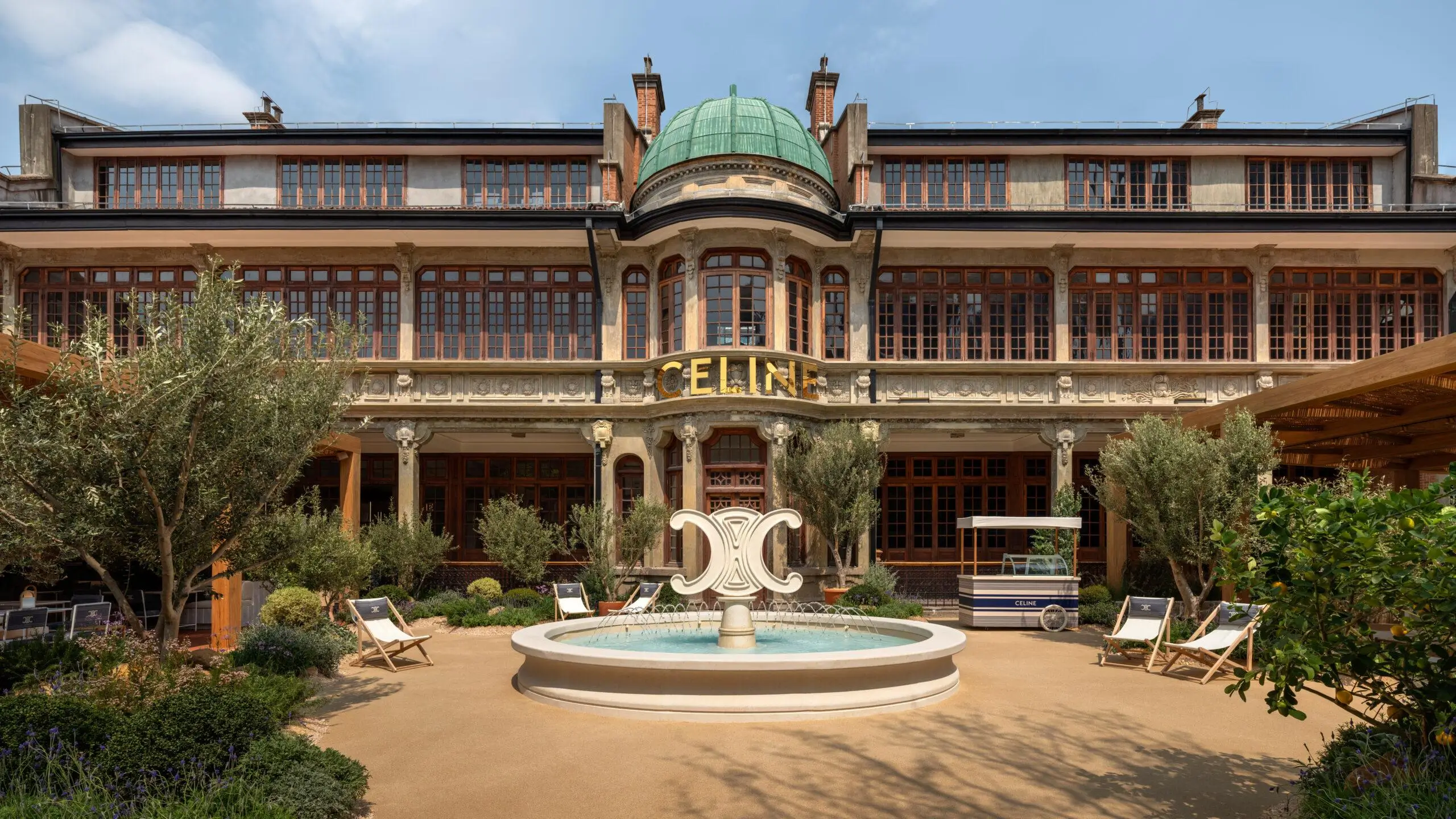
The Été activation transforms a French summer aesthetic—traditionally associated with the Côte d’Azur—into something spatial, contained, and transportable. Within Shanghai, that translation becomes more complex.
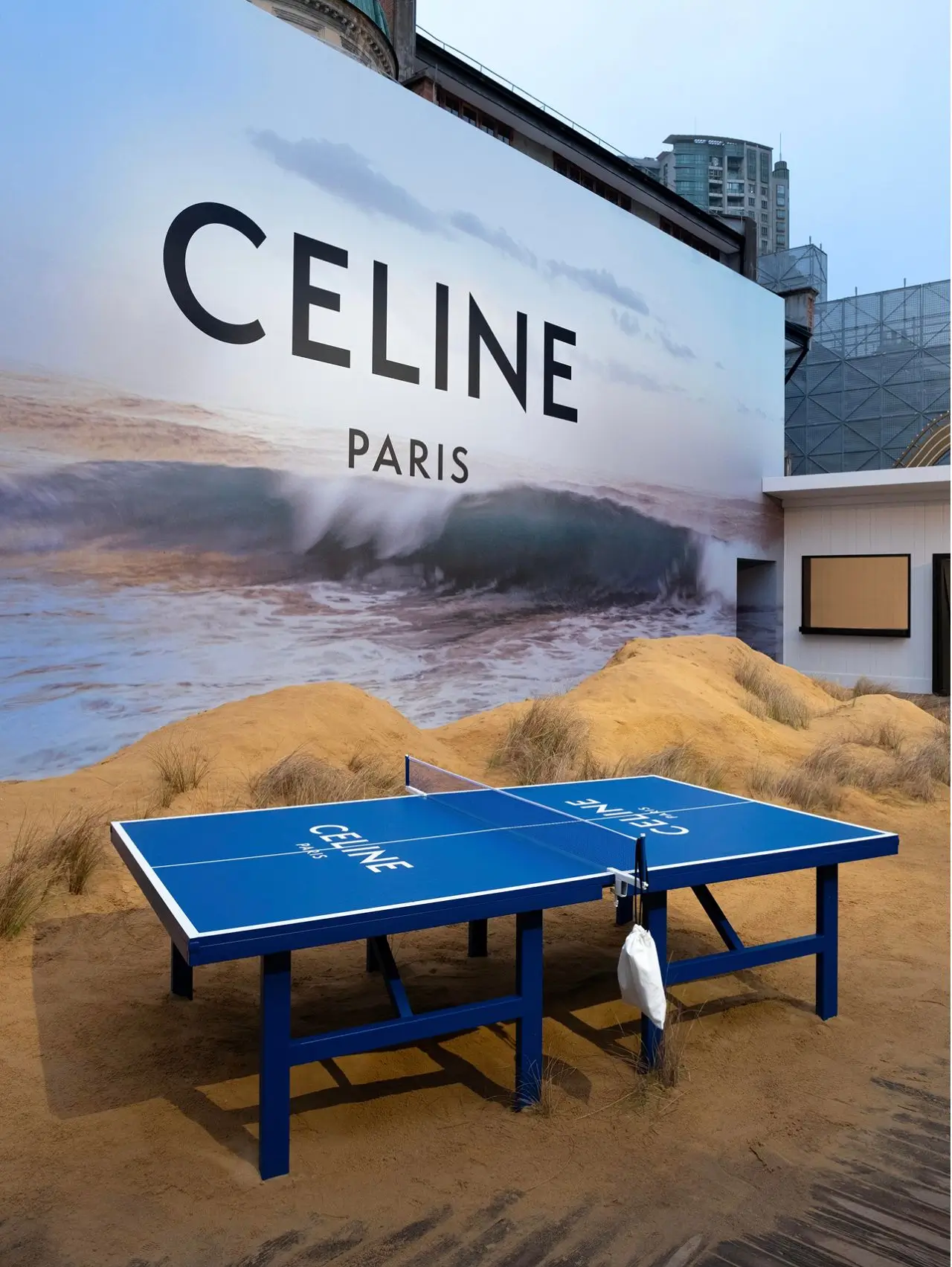
The ocean appears not as geography, but as image—printed, scaled, flattened across walls. Clothing hangs lightly against this constructed horizon. White garments, soft silhouettes, and breathable textures echo the idea of ease without requiring actual escape.
Furniture reinforces the tone. Low seating, wooden frames, quiet upholstery—everything calibrated toward stillness. The result is not escapism, exactly. It is simulation. A summer that exists inside architecture rather than beyond it.
observe
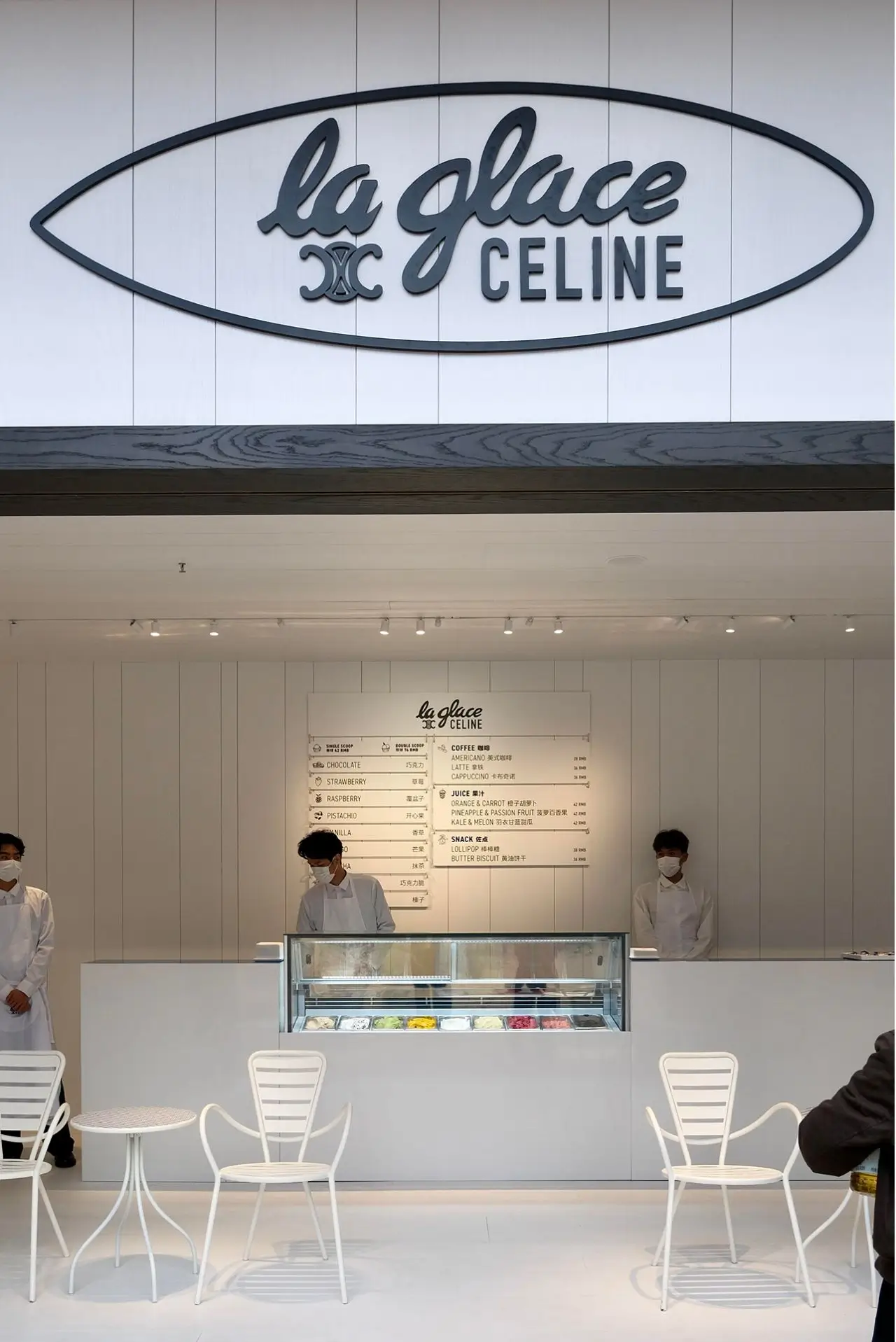
Outside, the tone shifts. “La Glace CELINE” introduces movement—people gathering, waiting, interacting. The ice cream stand, one of the activation’s most literal gestures, becomes one of its most effective.
It is functional. It serves a purpose beyond branding. That alone changes behavior. Visitors are no longer observers; they become participants. They queue, they order, they linger.
This is where proximity begins to take shape—not as a concept, but as action. The brand moves from being seen to being used, however briefly.
lexicon
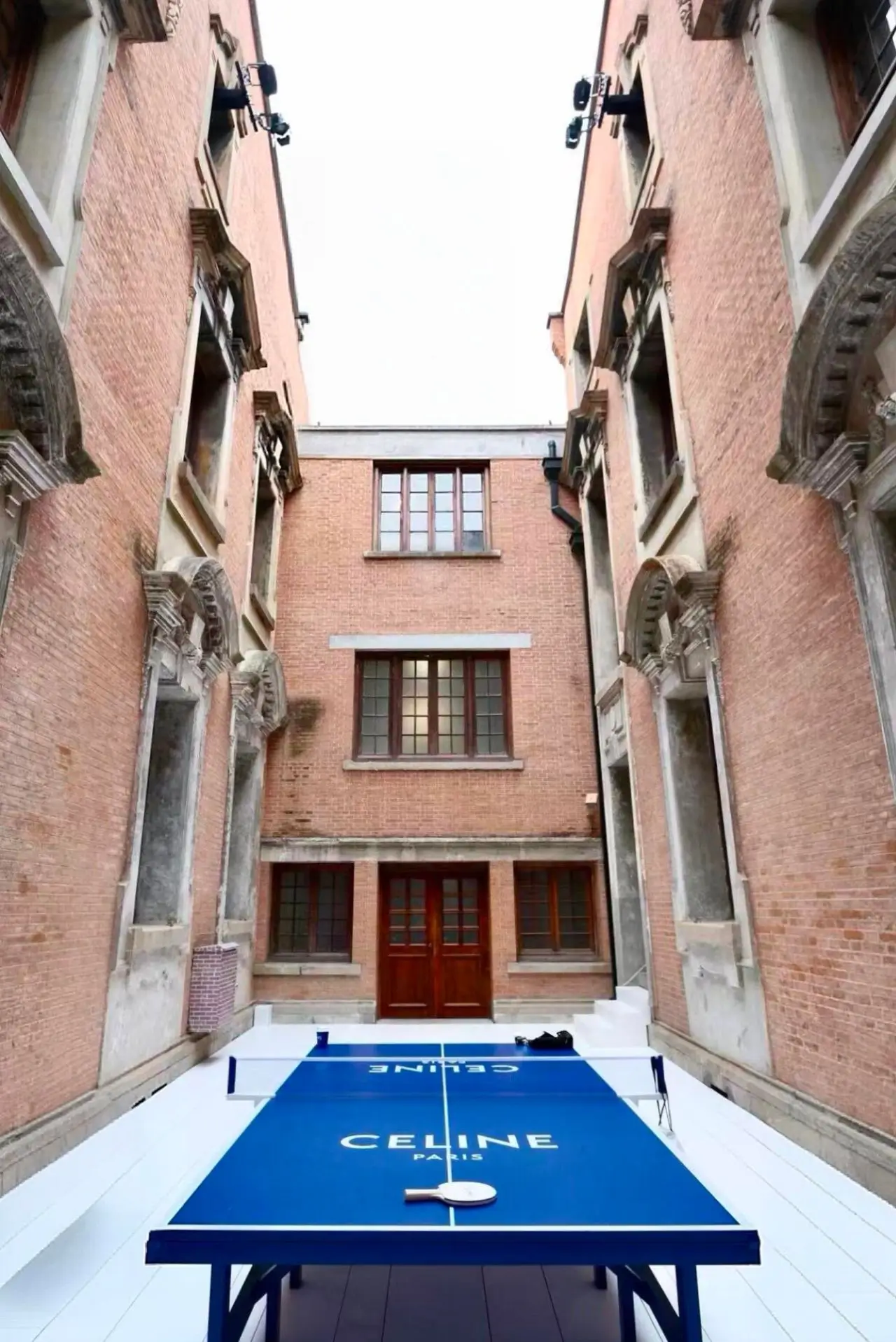
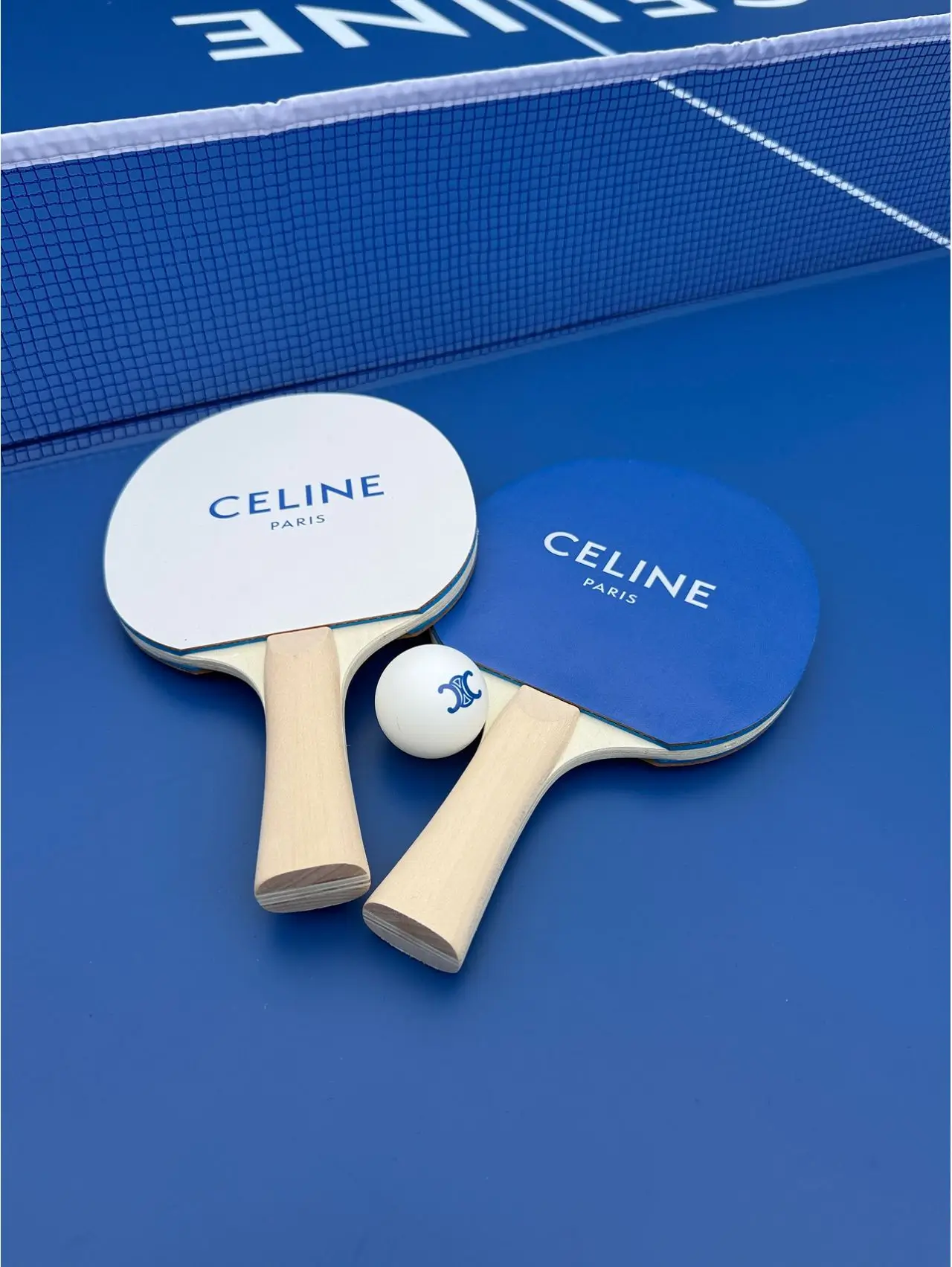
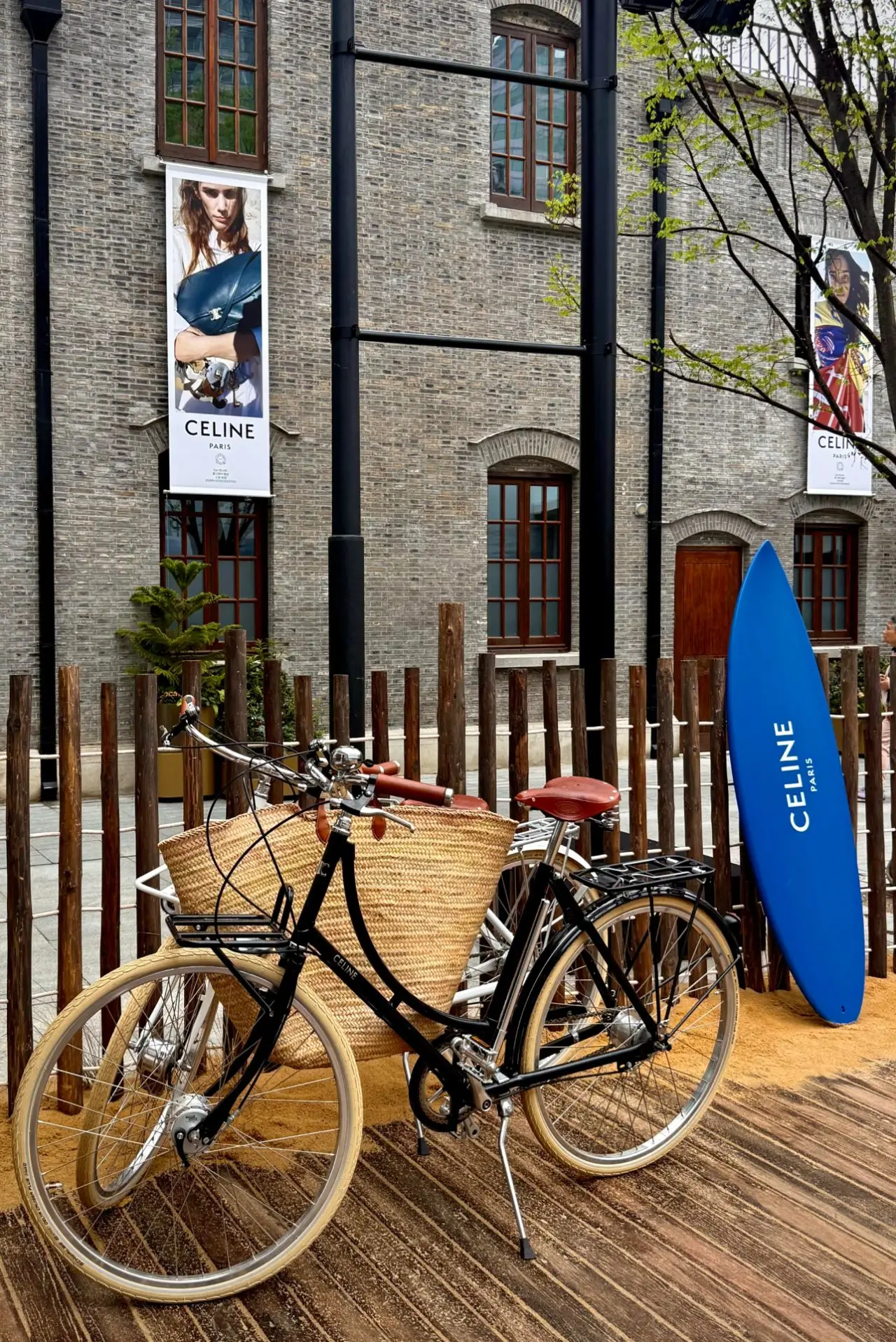
The introduction of leisure objects—ping pong tables, branded paddles, sand-covered ground—pushes the activation further into participation. These are not symbolic gestures. They are invitations.
The table tennis setup, rendered in deep Celine blue, sits within an environment that suggests beach but remains unmistakably urban. Sand is placed, controlled, contained. The game unfolds within boundaries, yet suggests openness.
This tension defines the space. Leisure is not spontaneous—it is designed. But the effect remains convincing enough to invite use.
idea
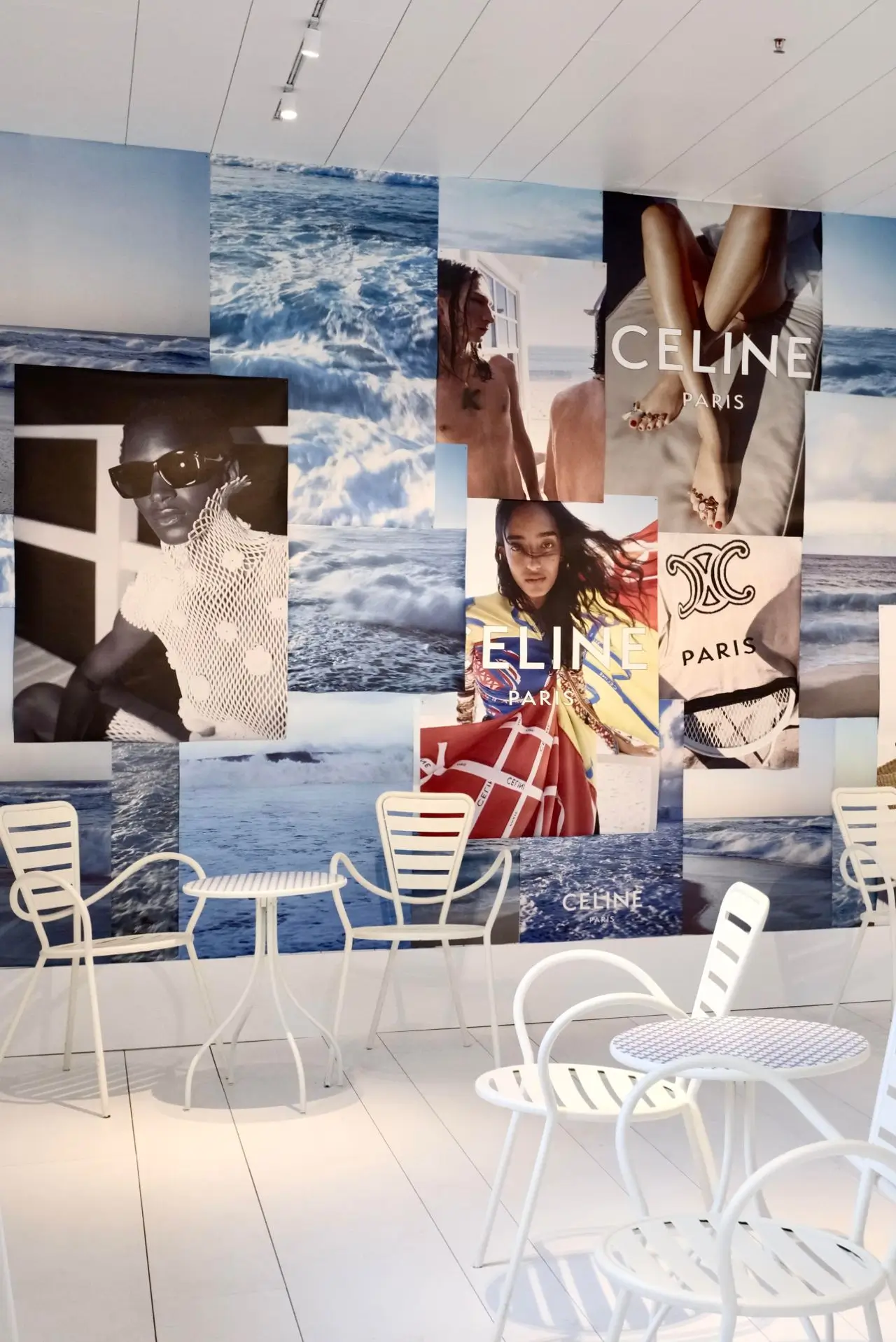
Visual identity extends across walls, surfaces, and sightlines. Campaign imagery—waves, bodies, fragments of movement—collage together into something continuous.
There is no single focal point. The eye moves. It scans, assembles, reconstructs meaning from fragments. This is not storytelling in the traditional sense. It is accumulation.
The brand is not presented as a fixed image. It is experienced as a series of impressions that build, layer by layer, into something coherent.

mood
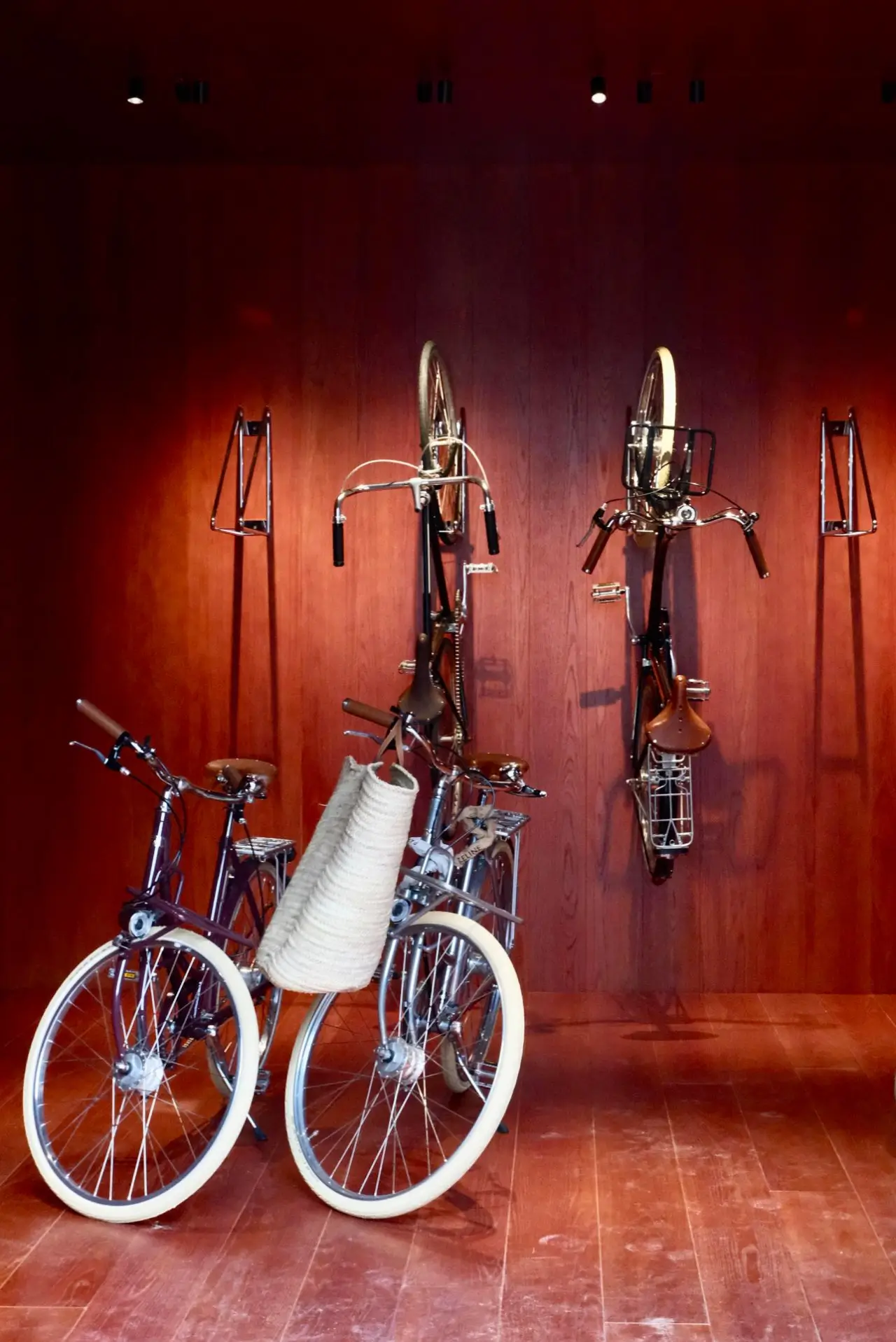
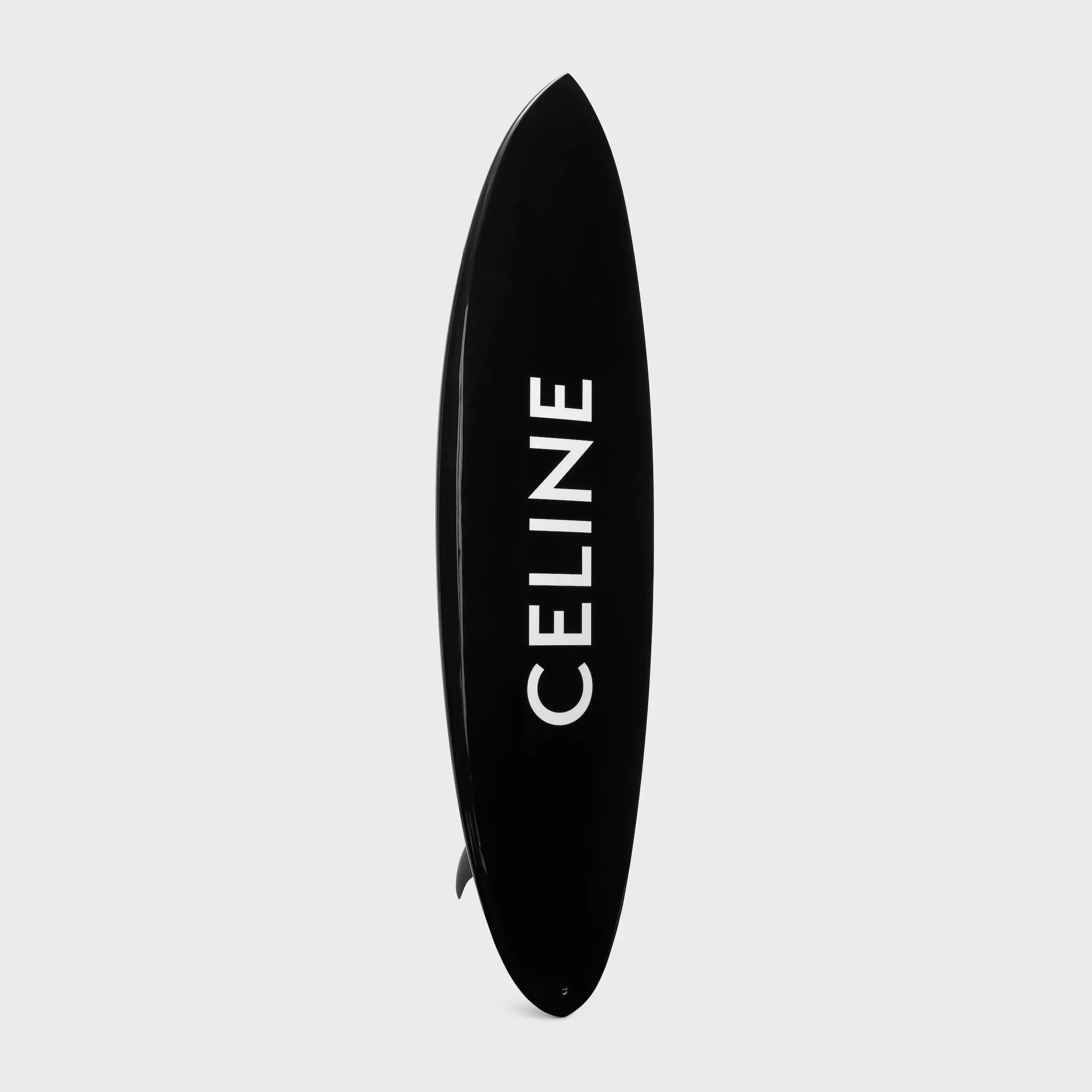
Bicycles, surfboards, baskets—objects associated with motion—are fixed in place. Yet they carry an implied trajectory.
Mounted against walls or positioned within controlled environments, they function as placeholders for action. They suggest what could happen, rather than what is happening.
This distinction matters. The activation does not attempt to recreate reality. It frames possibility. Visitors step into that frame, briefly animating it through their presence.
continuity
What ultimately defines the Été activation is not any single element, but its repetition. Celine’s return to Shanghai transforms the experience from event into pattern.
Each iteration reinforces the last. Familiarity builds. Recognition deepens. The brand shifts from visitor to fixture—embedded within the cultural rhythm of the city rather than orbiting it.
This is a long-term strategy. It resists immediacy in favor of accumulation. And in doing so, it constructs something more durable than attention: memory.
end
Celine’s Été in Shanghai is not about selling handbags or clothing—though both are present, structured, and carefully displayed. It is about creating a condition.
A world that can be entered, moved through, documented, and remembered.
Luxor, in this context, is no longer defined solely by object. It is defined by experience—by the ability to construct environments that feel both intentional and open, controlled yet participatory.
By returning, evolving, and remaining view, Celine does not simply engage with the market—it shapes how that market understands engagement itself.
Related Articles
France Just Banned Social Media for Kids Under 15, and the Fight Over Anonymity Is Only Getting Started
France becomes the first EU nation to bar under 15s from social platforms, and critics […]