DRIFT AUDIO
Listen to this story
Choose a voice, then press play.
On September 20, a designer whose own label collapsed into insolvency in 2023 will unveil his first collection for a handbag house still climbing out of a crisis of its own.
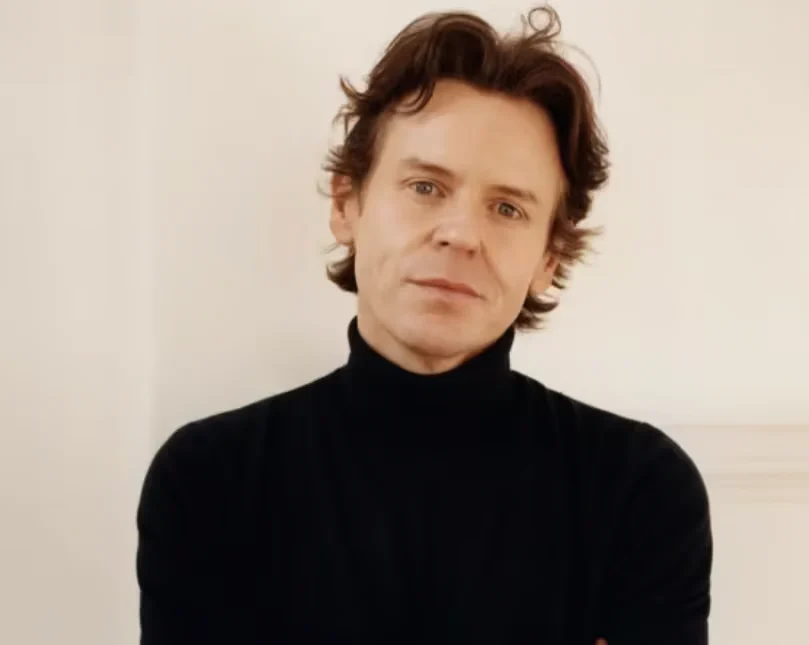
Eleven days from now, a runway show on the official London Fashion Week schedule will put ready-to-wear clothing back under the Mulberry name for the first time in around six years. The show is titled “Mulberry by Christopher Kane.” It starts at 3 p.m. on Sunday, September 20, and it marks the first public evidence of what Christopher Kane, hired in March as Mulberry‘s creative director of women’s ready-to-wear, intends to do with the job.
The six-year gap holds up under more than one measure. Mulberry’s last ready-to-wear range, designed by outgoing creative director Johnny Coca, was an autumn/winter 2020 collection rel just as the company ended its clothing and footwear license with Onward Luxury Group and pulled back to its accessories core during pandemic-era cost-cutting. Its last runway show on the London schedule dates from around that same period. Kane’s own collection will not reach stores until January 2027, which makes September 20 less a retail event than a statement of intent.
View this post on Instagram
Mulberry will not be making that statement alone that afternoon. Alexander McQueen shows in London the same day, Seán McGirr’s first time presenting the house on home ground after several seasons in Paris. London Fashion Week has spent recent seasons losing runway moments from major established houses to Paris and Milan, and British Fashion Council chief executive Laura Weir has said that getting heritage British names back onto the London calendar has been one of her earliest ambitions since taking the job. Her push extends beyond a single afternoon: the BFC has also been building out Fashion Britain, a nationwide programme meant to carry the week’s energy into cities outside the capital. Weir called Mulberry’s return “a real pleasure,” and Mulberry chief executive Andrea Baldo said London had long been “the ideal stage to debut the Mulberry by Christopher Kane collection.” The two of them announced the September date together this summer, at a lunch hosted with the British Fashion Council at Bar Finch, a Mayfair restaurant the publisher and film producer Charles Finch opened this year. Kane’s sister and longtime label partner, Tammy Kane, was reportedly also in the room, and Drapers has since reported that she is working alongside her brother again on the Mulberry collection itself.
stir
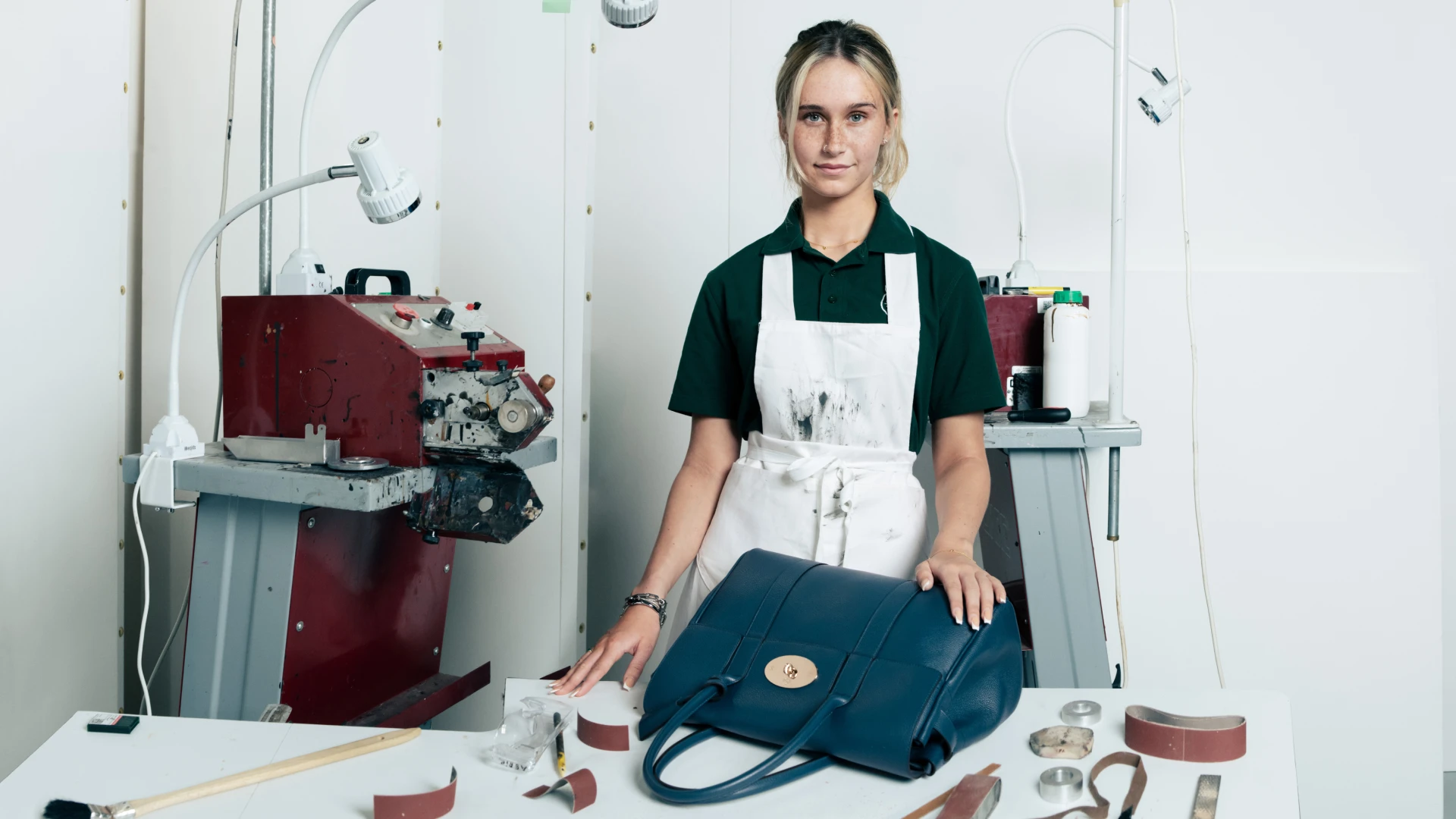
Mulberry is older than most of the houses currently occupying the London schedule, and its comeback narrative leans on that age deliberately. Roger Saul founded the company in 1971 in Somerset with 500 pounds from his mother, making belts and chokers around the family kitchen table before the business outgrew the house and moved into a factory in Chilcompton. Mulberry still manufactures there today, across two Somerset sites, and describes itself as the largest manufacturer of luxury leather goods in the United Kingdom, with more than half of its bags still made in-house. Saul himself was ousted from the company in 2002. The creative director’s chair passed afterward to Nicholas Knightly, then Stuart Vevers, then Emma Hill, whose run produced the Alexa, a bag named for the British presenter Alexa Chung that became one of the label’s defining shapes alongside the earlier Bayswater. Johnny Coca arrived from Céline in 2015 and held the role until the pandemic-era retreat that ended ready-to-wear altogether. Kane is the first designer given a runway-facing creative title at the house since. Sustainability sits inside the same heritage story Mulberry now leans on: the company earned B Corp certification in 2024, and a 2021 “Made to Last” manifesto committed it to becoming regenerative and circular across the business, language that now runs alongside the Britishness Baldo invokes constantly.
nom
Kane’s job title is specific, and the specificity is doing real work. He is creative director of women’s ready-to-wear, not creative director of Mulberry as a whole. The house’s accessories business, still the large majority of what it actually sells, sits outside his brief entirely. Baldo has described the hire as a way to evolve “Mulberry’s creative language beyond accessories,” phrasing that carries its own quiet admission: for roughly six years, Mulberry has had no ready-to-wear line and no runway presence, running the business on handbags alone.
What Kane shows on September 20 is expected to filter British town-and-country dressing through a somewhat younger, more fashion-forward lens than Mulberry’s existing customer base usually sees, part of an effort to pull in shoppers the accessor line alone does not reach. That was the brief laid out when Mulberry announced the appointment on March 26. Kane said then that he wanted to build “a new chapter of ready-to-wear that celebrates the spirit of Mulberry,” lang that sits comfortably next to Baldo’s own ambition for the brand to work as a “handbag expert across the entire year,” a company a single seasonal collection can amplify without ever needing to become its foundation. Kane arrives with a Central Saint Martins degree, a Vogue Fashion Fund win, and four British Fashion Awards including Womenswear Designer of the Year, credentials Mulberry’s own announcement leaned on directly. The photo released alongside that March news was shot by Colin Dodgson, a small signal that the house was treating the appointment as a fashion moment rather than a routine personnel line.
return
Kane’s own path to this point runs through a fairly public collapse of his own. He is Scottish, born in Newarthill near Glasgow, and studied womenswear at Central Saint Martins under the tutor Louise Wilson. His 2006 MA graduate show, staged when he was twenty-three, won the Harrods Design Award and caught the attention of Donatella Versace, who tried to recruit him straight out of school. He turned her down, and Versace told W in 2010 that she had known he would say no. He and his sister, Tammy Kane, a textiles graduate, founded their eponymous label that same year and showed their first solo London Fashion Week collection that September. Versace still found a way to work with him afterward: Kane designed the Versus diffusion line for the Italian house between 2009 and 2012, and in 2013 he won Womenswear Designer of the Year at the British Fashion Awards, the trophy handed to him by Versace herself.
The label built its reputation on complex construction, bold color, and a playful, sometimes deliberately provocative sexuality that ran through seasons with names like NATUROTICA and More Joy, and dressed clients including Michelle Obama and Rihanna along the way. Its fall 2008 collection, built around a screaming-gorilla graphic lifted from Planet of the Apes, is still cited as an early sign the label wanted to be genuinely strange rather than merely provocative, and Kane opened a London flagship store for the brand in 2015. Kering bought a 51 percent stake in the business in 2013 and sold it back to the Kanes in 2018, restoring full ownership. It did not last. In June 2023, the board of Christopher Kane Ltd applied to appoint an insolvency practitioner, saying the company needed time to find a buyer or refinance its debt. The following month, Kane and his sister bought the company back themselves, repaying creditors and renaming the entity K Realisations 2023 while holding onto the Christopher Kane and More Joy trademarks. His most public work since then, before Mulberry, was a 2024 collaboration through Self-Portrait’s residency programme, reworking ideas from his own 2006 graduate collection into a one-off capsule.
Mulberry
house
Mulberry’s own recent history reads almost as roughly as Kane’s. In October 2024, Frasers Group, the retail group founded by Mike Ashley and by then holding close to 37 percent of Mulberry’s shares, tabled a takeover offer of 130 pence a share, valuing the company at around 83 million pounds. Mulberry’s board rejected it after consulting Challice, the Singapore-based investment vehicle controlled by Christina Ong and her husband Ong Beng Seng that has long held Mulberry’s majority stake, at roughly 56 percent. Frasers came back less than two weeks later with an improved offer of 150 pence a share, valuing the whole company at around 111 million pounds. Mulberry’s board called that offer “untenable,” and Challice again refused either to sell or to back it, leaving Frasers without the votes it needed to proceed.
The rejected bids landed in the middle of a genuinely bad financial stretch. Group revenue for the thirteen weeks to December 28, 2024, the critical holiday trading period, fell 18.3 percent year on year, with UK sales down more than 20 percent and Asia-Pacific sales down nearly 28 percent. Mulberry had already brought in Andrea Baldo, previously chief executive of the Danish label Ganni, as its new chief executive that September, replacing Thierry Andretta after almost a decade at the helm. At the end of January 2025, Baldo launched the “Back to the Mulberry Spirit” strategy, built around simplifying the business, cutting costs by roughly a quarter, and leaning back into the Britishness Roger Saul built into the company from its Somerset start. Full-year results for FY25, the 52 weeks to March 29, 2025, showed how far the business had actually fallen: group revenue down 21 percent to 120.4 million pounds from 152.8 million pounds the year before, and an underlying loss before tax that widened to 23.7 million pounds. That July, Mulberry raised 20 million pounds through convertible loan notes from Challice and, notably, from Frasers itself, which also placed a senior executive, James France, on Mulberry’s board as a non-executive director. The company that had twice tried to buy Mulberry outright was now, awkwardly, helping fund its survival instead.
turn
By the time Kane’s appointment was announced, the turnaround already had a full year of improving results behind it. FY26, the 52 weeks to March 28, 2026, closed with group revenue up 4 percent to 125.5 million pounds. That full-year figure masked a sharp turn partway through: constant-currency sales had fallen 3.2 percent in the first half before swinging to 13.6 percent growth in the second, with the franchise and wholesale channel, up 33.3 percent for the year, doing much of the work. By region, the second half told an even clearer story: UK like-for-like sales rose 13.7 percent, the EU outside the UK grew 37.8 percent, the US rose 20.1 percent, and Asia-Pacific, after the closure of a dozen underperforming stores earlier in the turnaround, still managed a 20.8 percent gain. The reported loss before tax narrowed to 8.9 million pounds from 32.2 million pounds, the underlying loss fell to 8 million pounds from 24.1 million pounds, and the business turned a small positive EBITDA after a loss of nearly 17 million pounds the year before. Gross margin climbed toward 72 percent as Baldo’s team cut back on discounting and pushed full-price sales, part of a strategy that has kept core styles like the Bayswater and the Roxanne priced between roughly 800 and 1,200 pounds while the brand expands into cheaper, non-leather categories like raffia and crochet. A limited-edition Bayswater sold out within minutes of its February 2026 launch. Trading kept accelerating into the new financial year: for the thirteen weeks to June 27, 2026, group revenue was up 23 percent year on year, with Europe up 35 percent and North America up 23 percent.
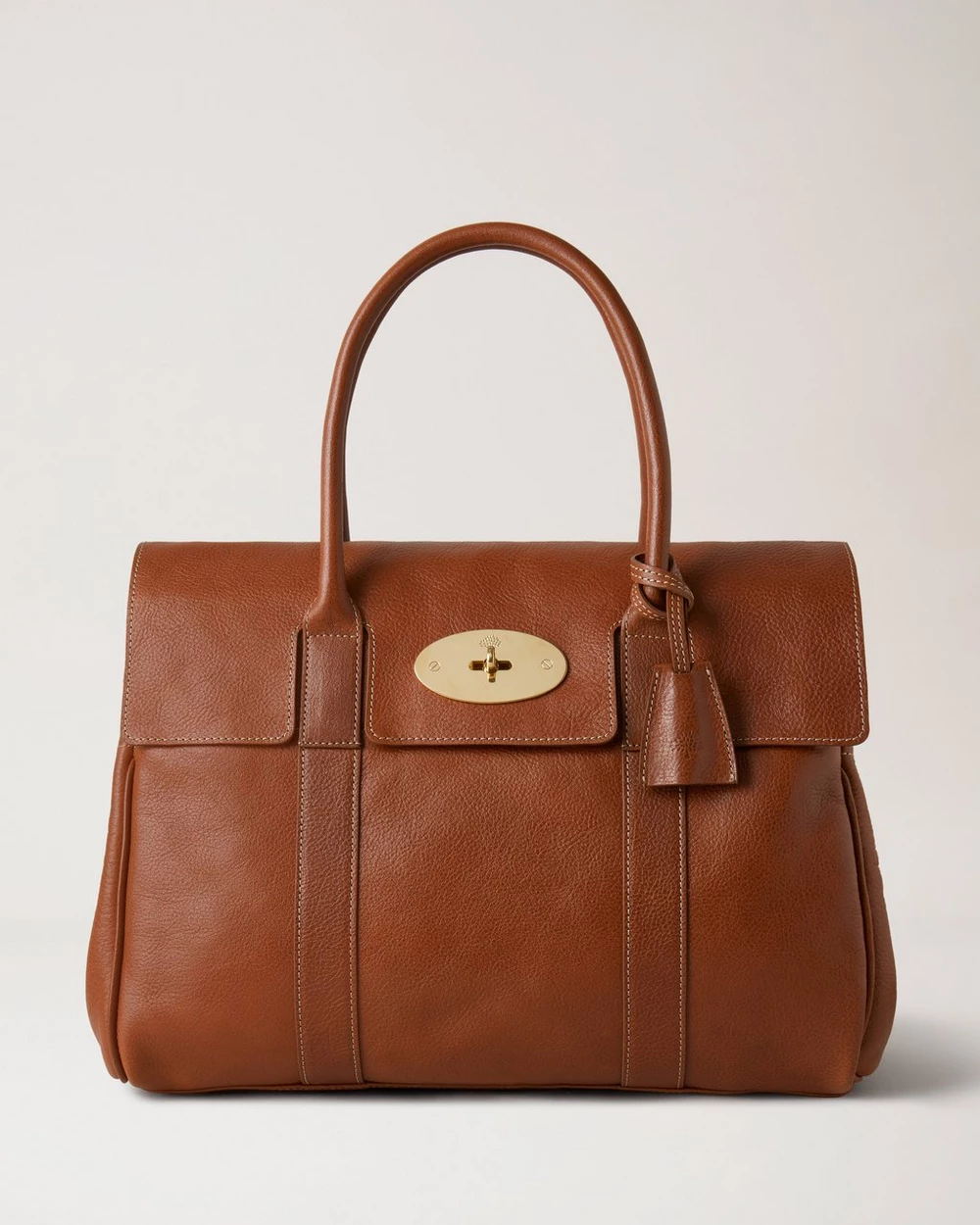
Mulberry Bayswater
fin
Kane’s hire is the one piece of that recovery story a trading update cannot measure. Baldo has call the appointment part of re-establish create lead as Mulberry prepares new ranges, and September 20 is where that step becomes public and judgable for the first time. A designer who spent the better part of two years rebuilding his own name after his label’s collapse is now doing it again, in public, on behalf of a company that was fighting off a takeover bid less than two years ago. Both comebacks get their first real test on the same Sunday afternoon, and neither will be settled until the clothes themselves are sitting in stores in January, and until it is clear whether Kane’s version of Mulberry can pull in a younger customer without losing the one the accessories business already has.
Related Articles
Sandra Bullock Is Done Being Embarrassed About the Movies She Loves
Four years after “The Lost City”, Sandra Bullock returns to the role critics once tore […]