DRIFT AUDIO
Listen to this story
Choose a voice, then press play.
A pair of sunglasses that started as a novelty checkout item has turned into one of FamilyMart’s biggest apparel hits, and this week it got a new shape.
In This Story
- A Wellington Frame That Sold Out Expectations
- The Square Type Arrives
- What’s Actually in the Frame
- The Designer Behind the Counter
- A Towel Rides Along
- Where This Fits in Famima’s Bigger Picture
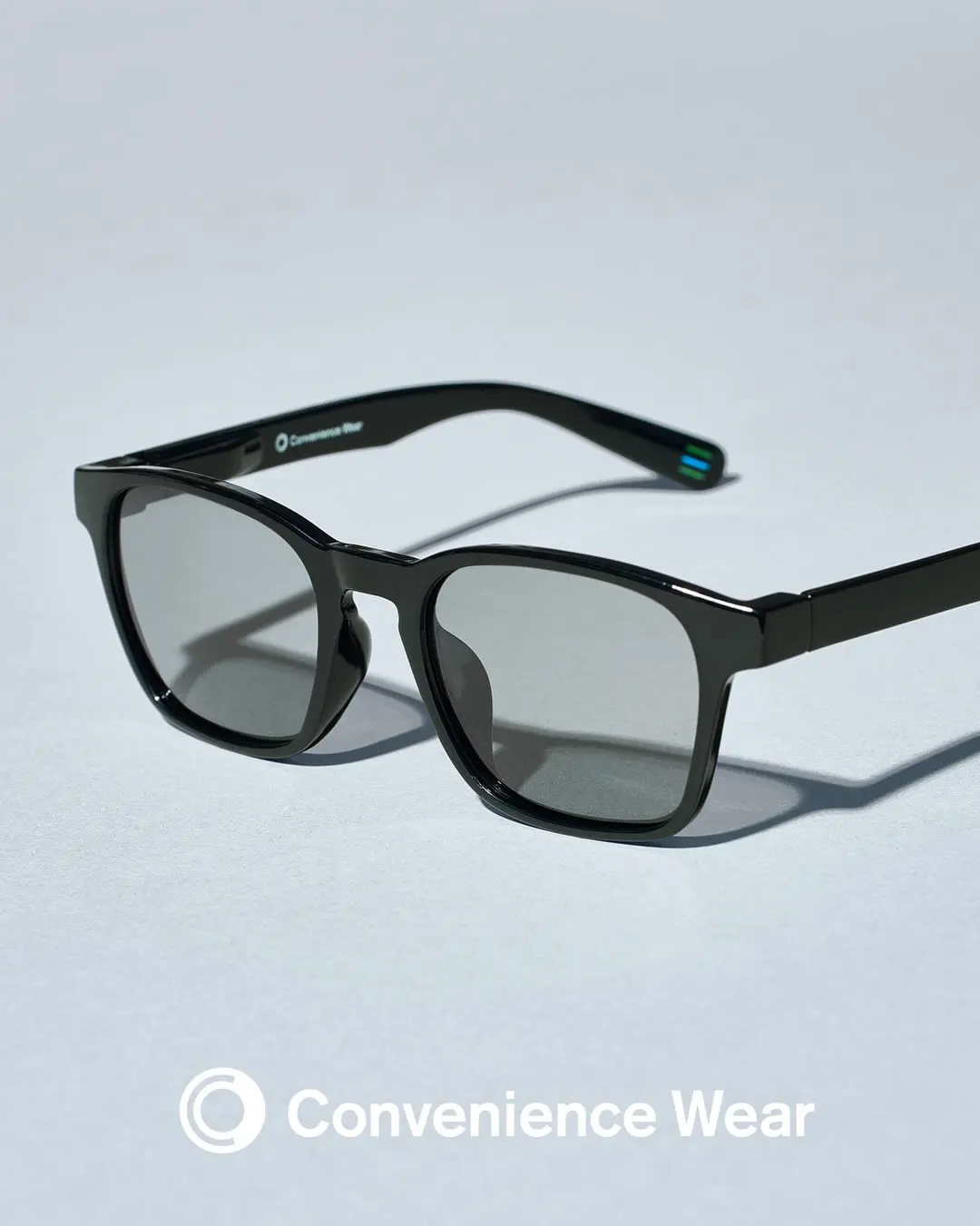
When FamilyMart put its first pair of sunglasses on shelves in June 2025, nobody at the company was treating it as a flagship launch. It was one more item inside Convenience Wear, the in house apparel line the convenience store chain had been building out since 2021, priced at 2,490 yen and shaped like a classic Wellington frame. The pitch was simple: a lens that blocks 99 percent of UV rays, a polarized coating to cut glare, spring hinges for a looser fit, and a small strip of “Famima color” tucked into the temple tip so nobody mistakes it for a generic drugstore pair.
The frame itself was built from Tritan Renew, a recycled plastic, while the polarized lenses used a plant derived triacetate. Neither material choice was an accident. FamilyMart has spent the past few years folding sustainability commitments into its apparel drops, from packaging pledges to fabric sourcing, and the sunglasses became something of a showcase for that effort without ever being marketed as an eco product first.
View this post on Instagram
What actually got people’s attention was the sales number. The pair moved at roughly three times the volume FamilyMart had projected for its opening week, an unusual result for a company whose stores are built around rice balls and fried chicken rather than fashion accessories. By March 2026, cumulative sales had climbed past 110,000 units, and the company added two limited run brown colorways to the lineup to keep the momentum going into spring.
stir
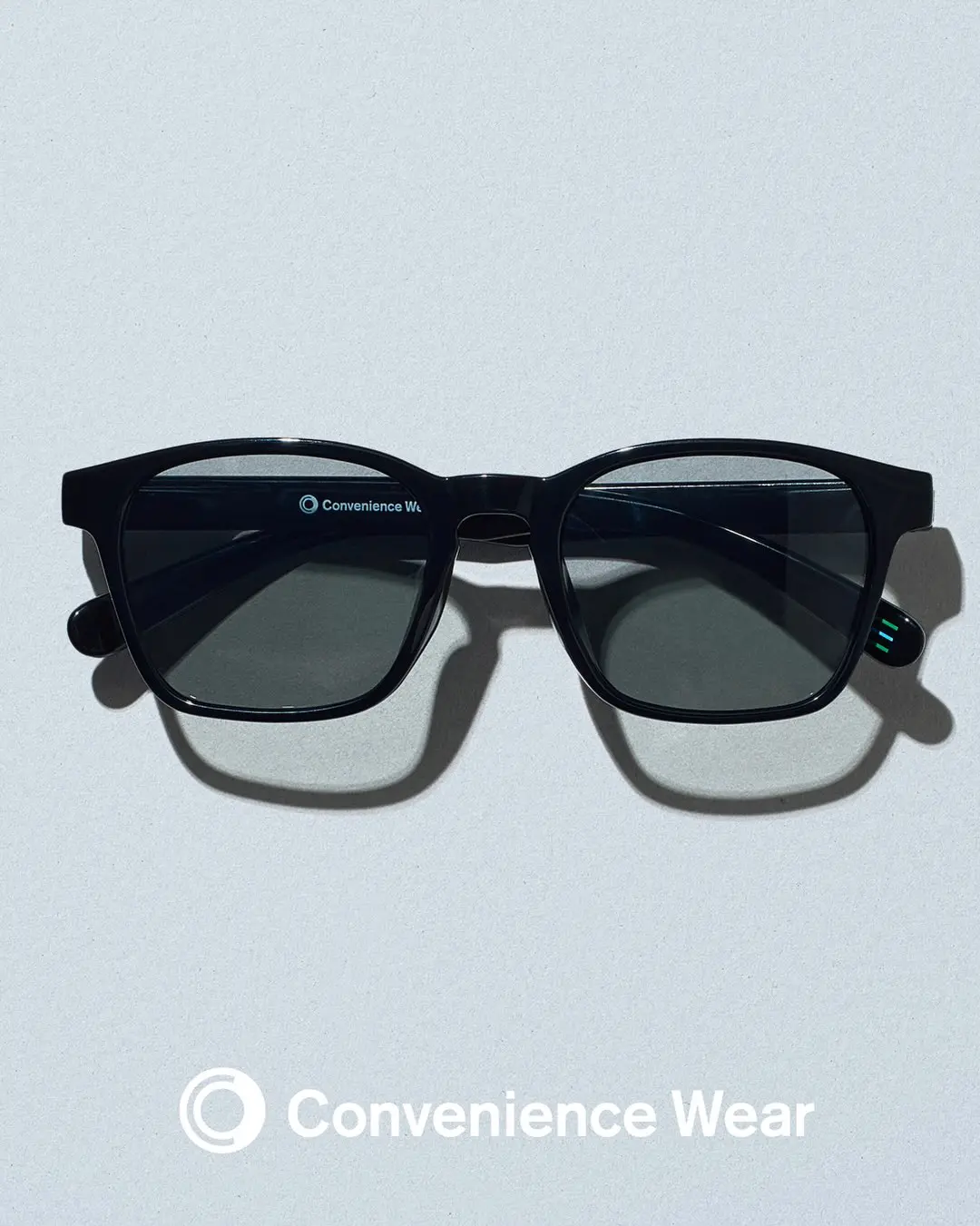
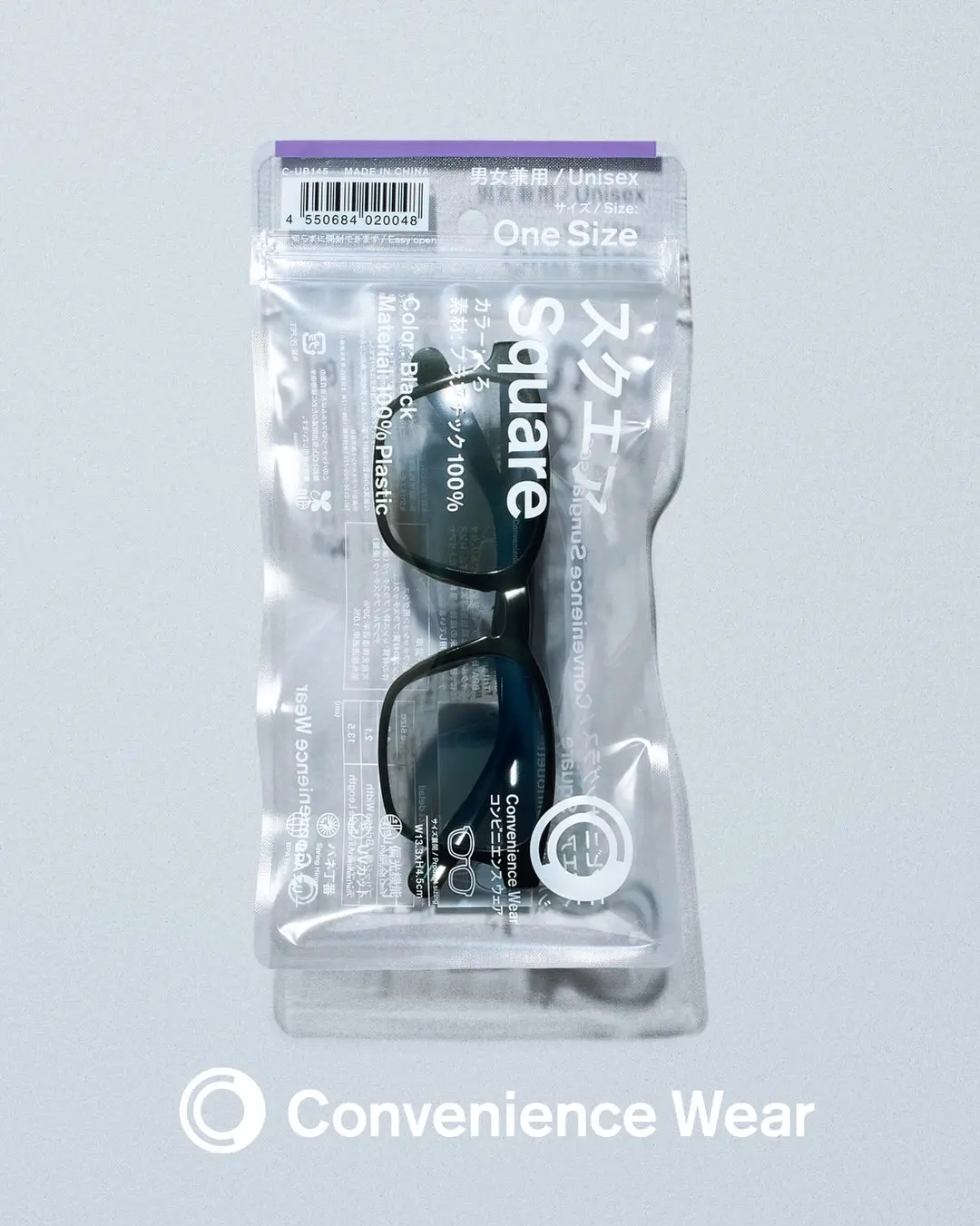
On July 17, the line grew again. FamilyMart released a squared off version, sold under the name Konbini Sunglasses Square, through roughly 16,400 stores nationwide at the same 2,490 yen price point, in a single black colorway. The square shape reads more urban and a bit more formal than the original Wellington, aimed at the same shopper but for a slightly different mood, whether that’s a commute or a dinner reservation rather than a beach trip.
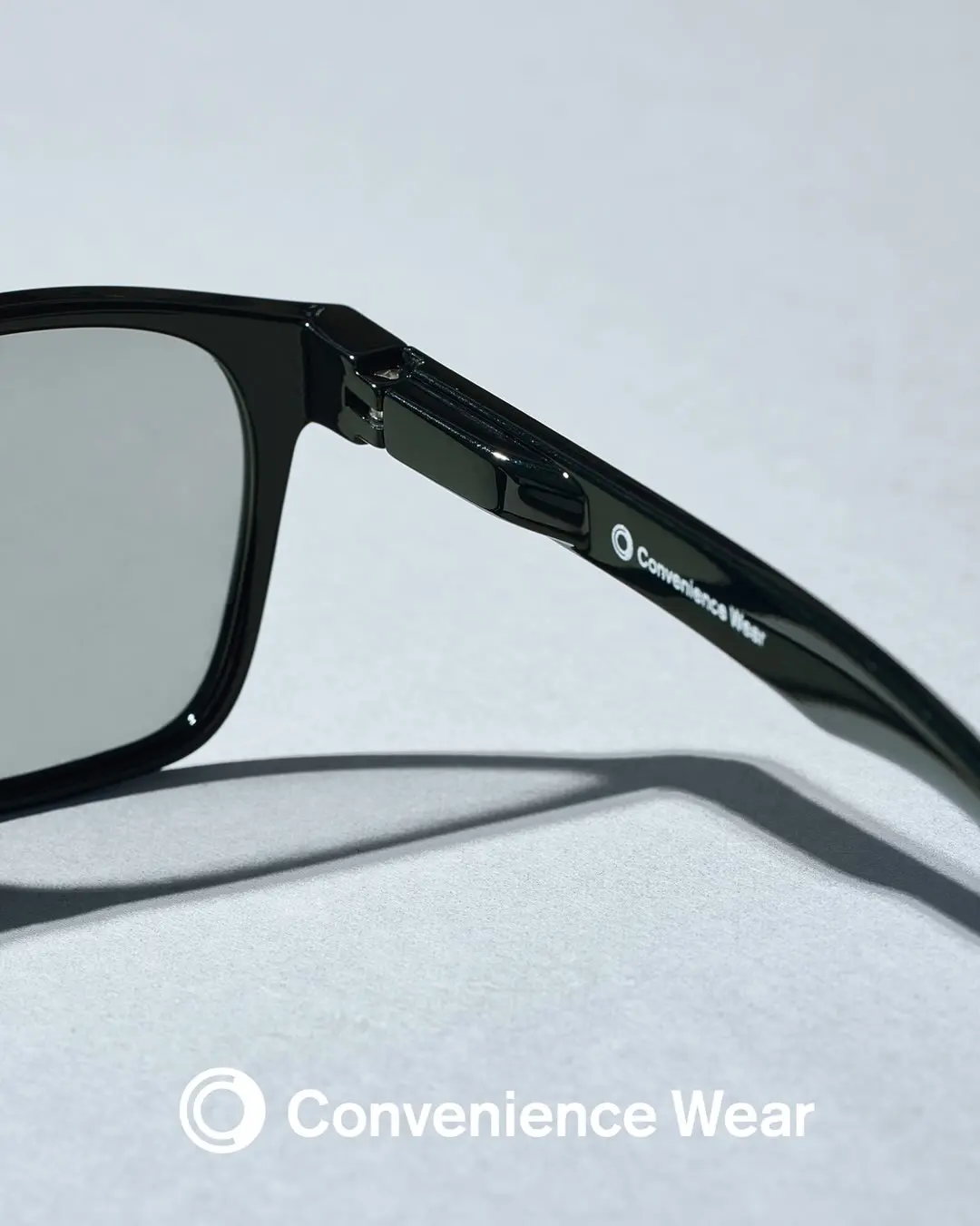
Everything that made the first pair work carries over here. The 99 percent UV block stays, the polarized lens stays, the spring hinge stays, and the sustainable material stack, Tritan Renew frame and plant based triacetate lens, stays intact. FamilyMart’s own materials describe the square model as inheriting every functional detail from its predecessor while giving the silhouette a cleaner, more tailored feel.
in
It is worth pausing on why a convenience store sunglasses line has stayed in rotation for two years instead of fading out after one summer, because the answer says something about how FamilyMart approaches Convenience Wear generally. The brand runs on a stated concept of good material, good technology, good design, and the eyewear line has actually held to it rather than treating the phrase as packaging copy. UV protection at 99 percent is a real spec, not a rounded up marketing number, and the polarization is functional enough that wearers have compared it favorably to eyewear costing several times more.
The sustainability angle matters too, particularly given how visibly FamilyMart has tied its 45th anniversary messaging, arriving this September, to a broader push around reducing petroleum based plastic across its private label products. The sunglasses line, small as it is next to bottled tea or pasta containers, fits that same pattern of quietly swapping in recycled or plant derived materials without asking shoppers to pay a premium or sacrifice anything in performance.
scope
Convenience Wear has been directed since 2021 by Ochiai Hiromichi, the designer better known for founding FACETASM in 2007. Ochiai was the first Japanese designer selected as a finalist for the LVMH Young Fashion Designer Prize in 2016, the same year he won Japan’s Mainichi Fashion Grand Prize and worked on the costuming for the flag handover ceremony at the closing of the Rio Olympics and Paralympics. He has since shown collections regularly during Paris Men’s Fashion Week and collaborated with brands including Nike, Coca Cola and Levi’s.
Ochiai has spoken about approaching FamilyMart’s roughly 16,400 stores as a kind of media platform in their own right, reasoning that a chain seeing an estimated 5.5 billion customer visits a year is not so different in scale from the audience watching an Olympic closing ceremony. That framing helps explain why he treats Convenience Wear as a separate creative discipline from FACETASM rather than a lesser side project, describing it as an exercise in designing a culture rather than dressing a fixed fan base.
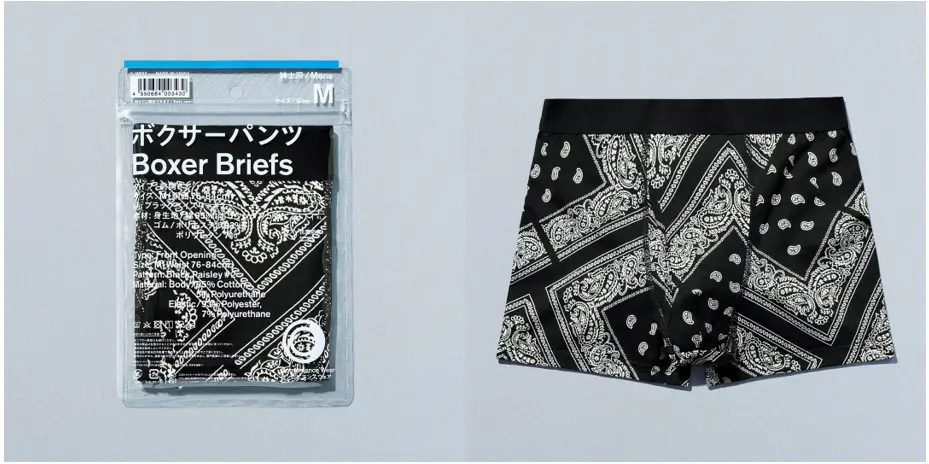
FamilyMart’s bandana print boxer briefs are presented in bilingual retail packaging alongside the unpackaged design, showcasing the convenience chain’s expanding lifestyle apparel collection.
addy
FamilyMart didn’t release the square sunglasses in isolation. The same day brought a face towel tied to the brand’s existing Imabari towel handkerchief line, done in a Mexican border pattern, priced at 1,089 yen and sized at 34 by 80 centimeters. It is a smaller release by comparison, but it points to how FamilyMart has been building Convenience Wear as a rolling catalog of small, frequent drops rather than seasonal collections, letting individual items like the sunglasses become recurring characters that return with new colors or shapes every few months.
fin
None of this changes what FamilyMart fundamentally is, a convenience store chain that sells rice balls and coffee at all hours. But the sunglasses line has become a useful data point for how far that identity can stretch when a company commits actual design resources to a category it has no obvious business being in. A frame that blocks 99 percent of UV rays, made from recycled and plant based materials, designed by someone with an LVMH Prize finalist credit, sold for less than the price of a combo meal, is an odd combination on paper. Two years and 110,000 units in, it has become one of the more durable proof points in FamilyMart’s argument that its stores can double as a retail platform for actual design, not just snacks.
Related Articles
Eric Haze Stitches a Nineties Friend Into TOKYO Capsule
Five pieces carry Eric Haze's embroidered tagging for TOKYO No.1 SOUL SET, sold online and in Osaka around the band's Oct 25 BAYCREW'S FESTIVAL set.