DRIFT AUDIO
Listen to this story
Choose a voice, then press play.
Maison de FLEUR pairs its ribbons and embroidery with Sakura Momoko’s Kojikoji for a first ever collide, arriving nationwide on July 24.
In This Story
- A First Meeting Between Two Very Different Worlds
- Inside the Collection: Charm, Pouch, and Tote
- Where the Softness Actually Comes From
- Release Details and Where to Find It
A pale pink pouch shaped like a small round stone. A plush charm tied with a ribbon nearly as big as the toy itself. A tote bag where a frog, a paper ghost, and a rice ball wander freely across canvas. None of it looks like it should belong to the same universe, and that is more or less the point of Maison de FLEUR‘s new collaboration with Kojikoji, the manga created by Momoko Sakura.
This is the first time the two names have appeared together on a product line, which is notable given how long both have operated in adjacent corners of Japanese pop culture. Maison de FLEUR, a lifestyle accessories label under Stripe International, built its identity on a French inspired, ribbon heavy aesthetic aimed at women who want their bags and pouches to feel like gifts even when they bought them for themselves. Kojikoji, meanwhile, is Sakura’s lesser known follow up to the far more famous Chibi Maruko chan, a manga about a strange, formless, free spirited creature who drifts through an ordinary town causing quiet chaos and asking questions nobody else thinks to ask. The character has no clear age, no clear gender, and no clear reason for existing, which has always been part of its appeal.
Putting Kojikoji into a brand built around softness and prettiness is an odd fit on paper. In practice, the collection leans into that oddness rather than smoothing it over. The pieces use a muted, almost powdery color story, mostly white and a dusty pink, with fine embroidery standing in for the character’s loose, hand drawn lines. Nothing here is trying to look sharp or polished in the way most character collisions do. It looks a little unfinished, a little soft at the edges, which happens to be a fairly accurate translation of what Kojikoji is like on the page.
Part of what makes the pairing interesting is timing. Sakura’s work has been having something of a moment across Japanese retail over the past couple of years, with anniversary exhibitions, reissued volumes, and a steady run of collaborations tied to Chibi Maruko chan in particular. Kojikoji has mostly stayed out of that spotlight, which makes its arrival here feel less like a brand chasing an anniversary and more like someone at Maison de FLEUR simply liking the material enough to build a small collection around it. There is no stated tie in to a milestone date for the manga, no round number anniversary being marketed alongside the release, just a straightforward first collaboration announced with the kind of understatement that suits the source material.
View this post on Instagram
That restraint carries through to how the brand is talking about the project. Maison de FLEUR’s own description of the line leans on words like mysterious and warm rather than cute or fun, an unusual choice of language for a goods collaboration aimed largely at younger shoppers. It suggests the team behind the collection spent real time with the manga rather than treating it as a recognizable name to slap onto a tote bag, and the finished pieces back that up more than the marketing copy does.
in
The lineup is small, three pieces in total, and each one handles the crossover differently rather than repeating the same print across formats.
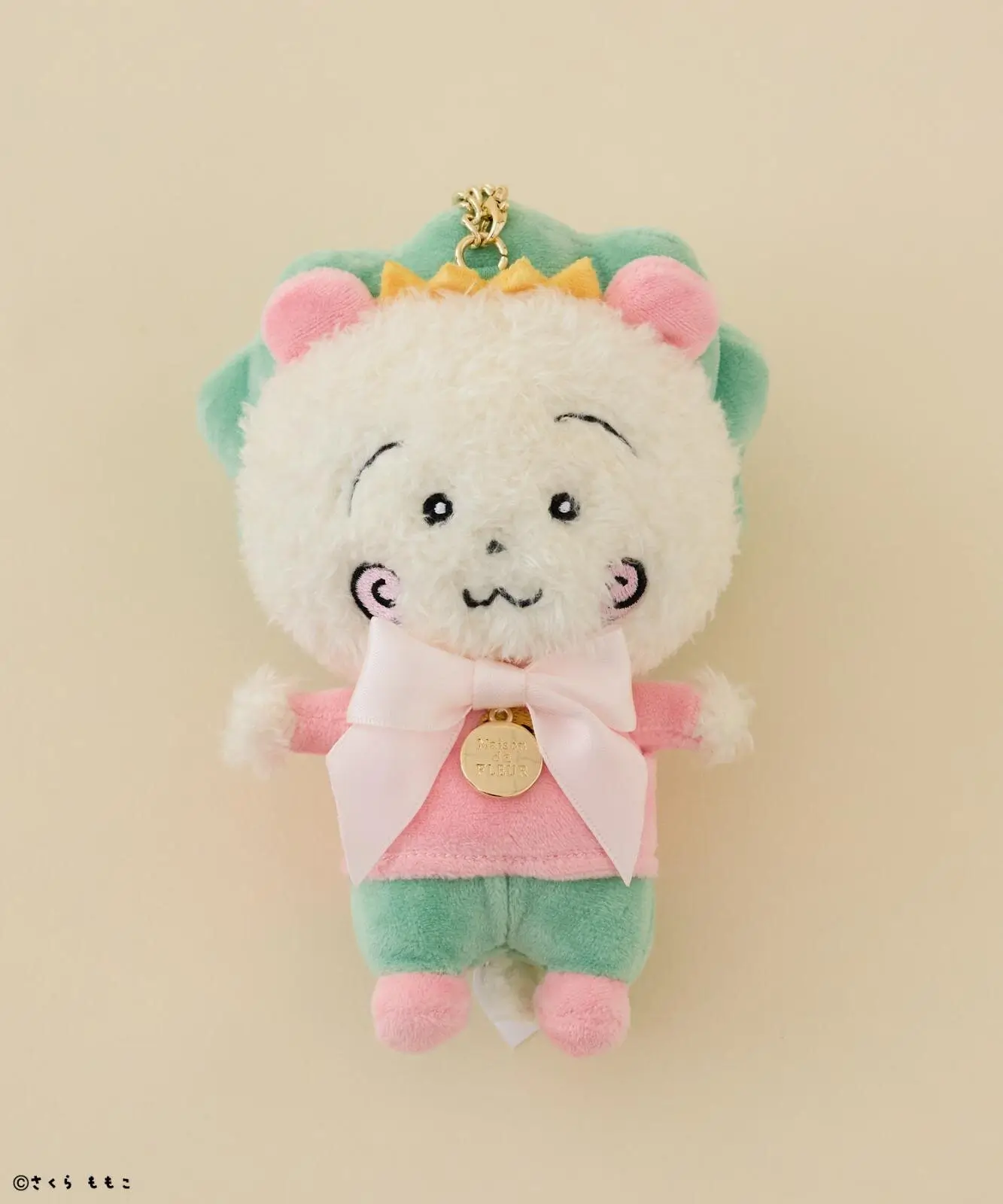
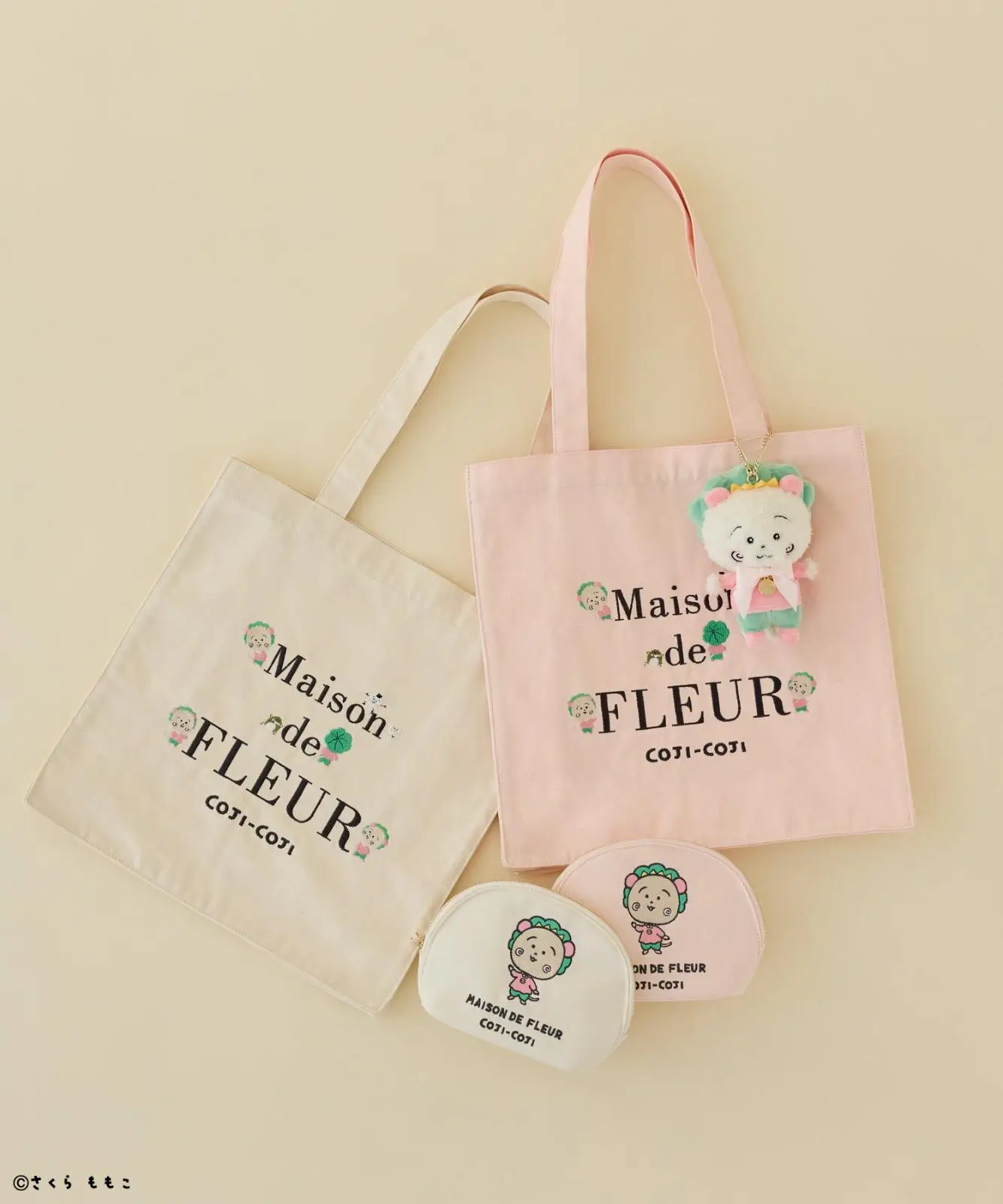
The bag charm, priced at 3,950 yen, is a plush figure of Kojikoji finished with an oversized ribbon, the kind of detail that turns a keychain into something closer to a small stuffed animal. It clips onto a bag handle or strap and is built specifically to be handled, which fits both the brand’s usual approach to charms and the character’s tactile, squeezable design in the source material.
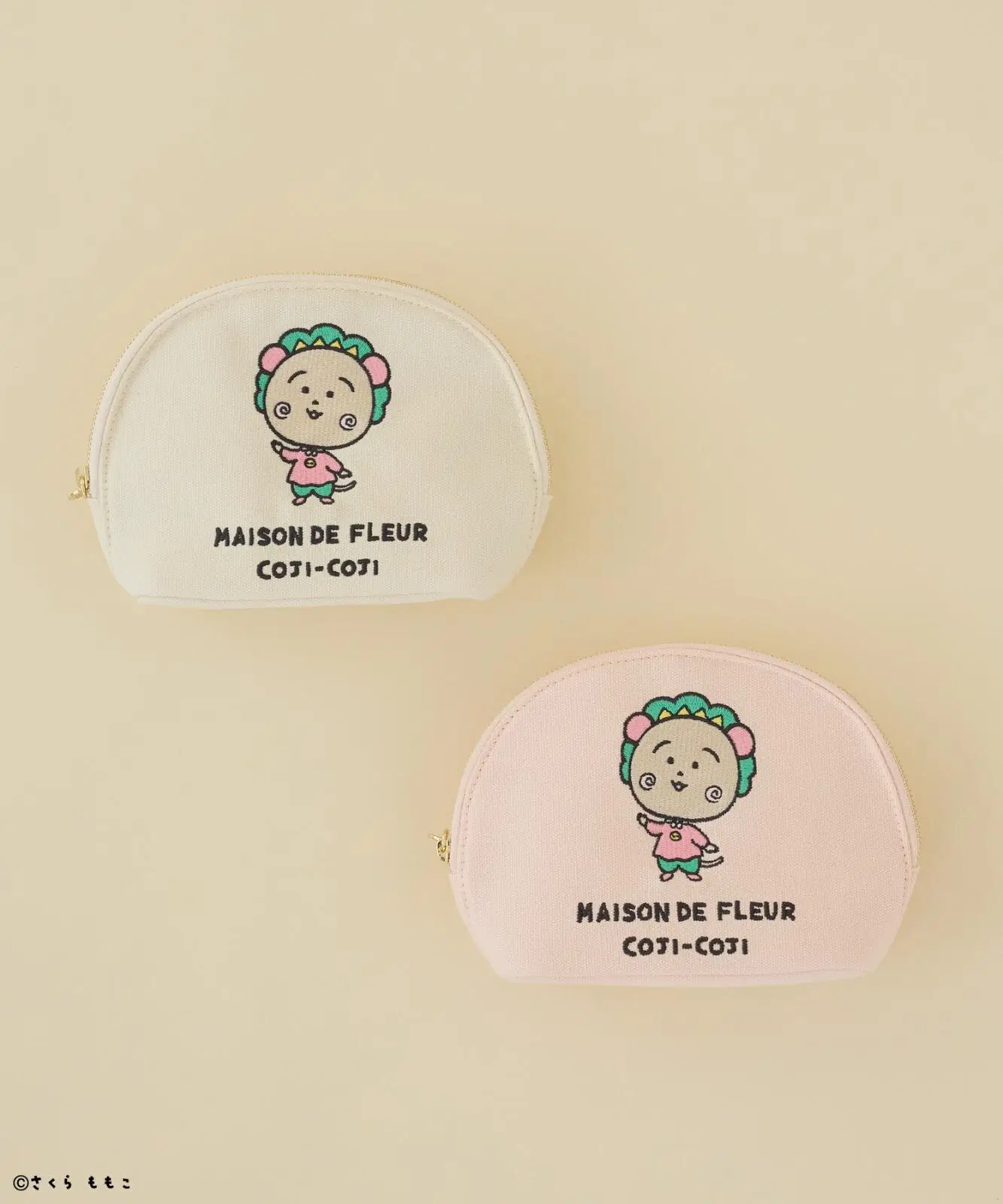
The pouch runs 4,400 yen and takes a subtler approach. Instead of printing the character directly onto the fabric, the piece uses an exclusive embroidered logo developed for this collaboration, worked into a rounded, slightly lumpy silhouette in white or pink. It reads less like merchandise and more like an accessory that happens to reference the manga, which tracks with how Maison de FLEUR usually treats collaborations across its catalog, including past pairings with properties like Sanrio’s My Sweet Piano and, in an unrelated but structurally similar project, the brand’s own Disney inspired lines built around single characters rather than full casts.
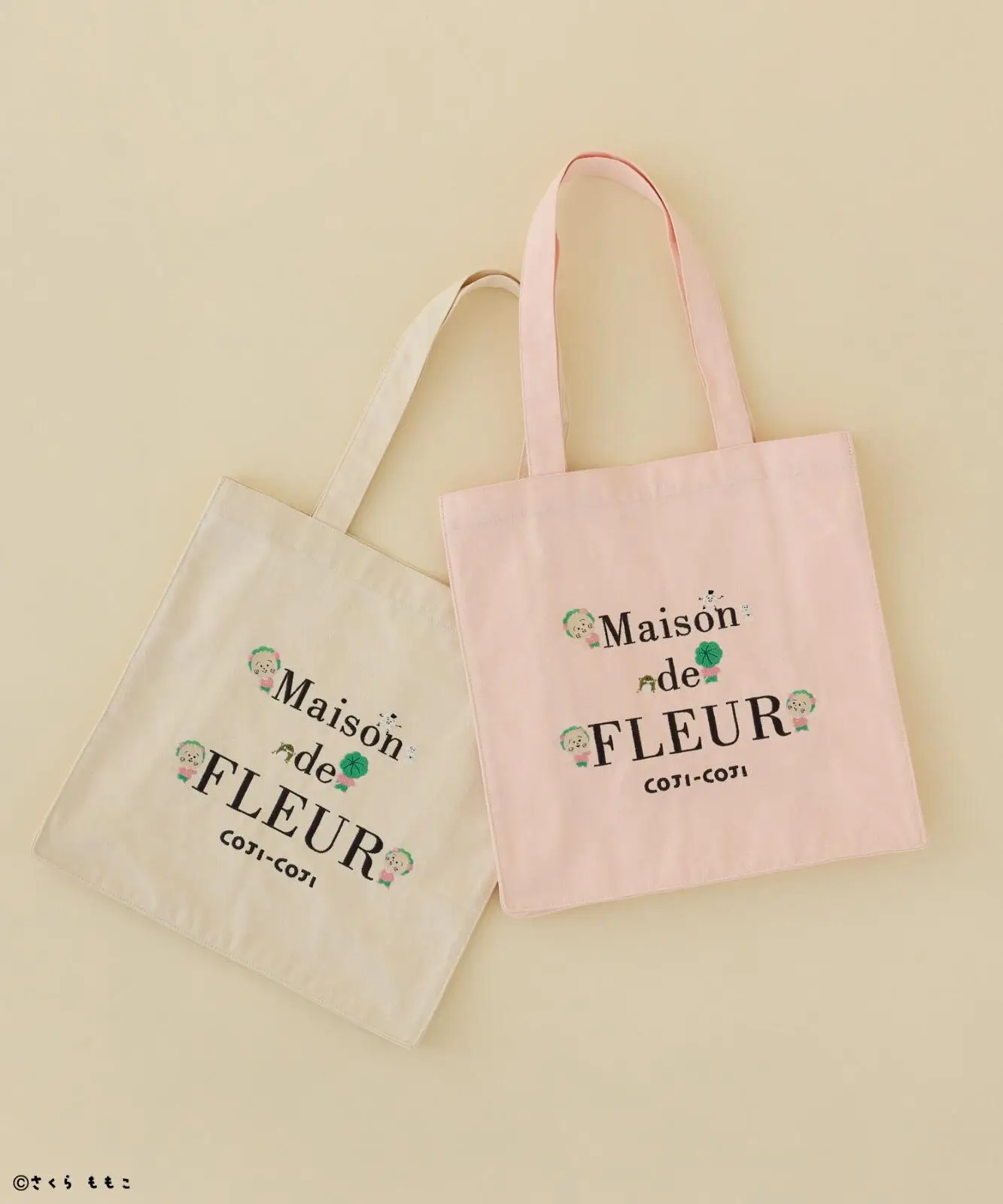
The tote bag, at 7,000 yen, is where the collaboration gets crowded in the best sense. Alongside the Maison de FLEUR logo, the bag is embroidered with Kojikoji and three of the manga’s recurring supporting characters: Tommy the frog, Teruko the paper weather charm known in Japanese as a teru teru bozu, and Katsubu, a character built around the shape of a rice ball. The four figures are shown going about their business independently rather than posed together for a group shot, which mirrors the loose, wandering tone of the original comic. Buyers are encouraged to pair the tote with the pouch or clip the charm onto either piece, giving the small collection a set like quality despite its size.
None of the three pieces repeats a print in the way multi item collaborations often do to keep production simple. That decision costs more in development time, since each item needed its own embroidery layout rather than a single shared graphic resized across formats, but it also means the collection reads less like merchandise stamped across a product line and more like three separate objects that happen to share a theme. The tote functions almost as a cast reference for shoppers unfamiliar with the manga’s side characters, while the pouch and charm stay narrowly focused on the title character alone, giving newcomers an easy entry point and longtime readers a more specific, detail driven option.
The color choices also do more work than they might appear to at first glance. White and a dusty, slightly grayed pink recur across all three pieces rather than a brighter palette that might have been the more obvious commercial choice for a manga collaboration aimed at a younger audience. That restraint keeps the line closer to Maison de FLEUR’s existing catalog than a typical licensed drop, which tends to lean harder into primary colors and bold graphics to stand out on a shelf. Here, the Kojikoji pieces could plausibly sit alongside the brand’s own seasonal releases without announcing themselves as a crossover at first look, an approach that rewards a slower, closer inspection over an immediate visual hook.
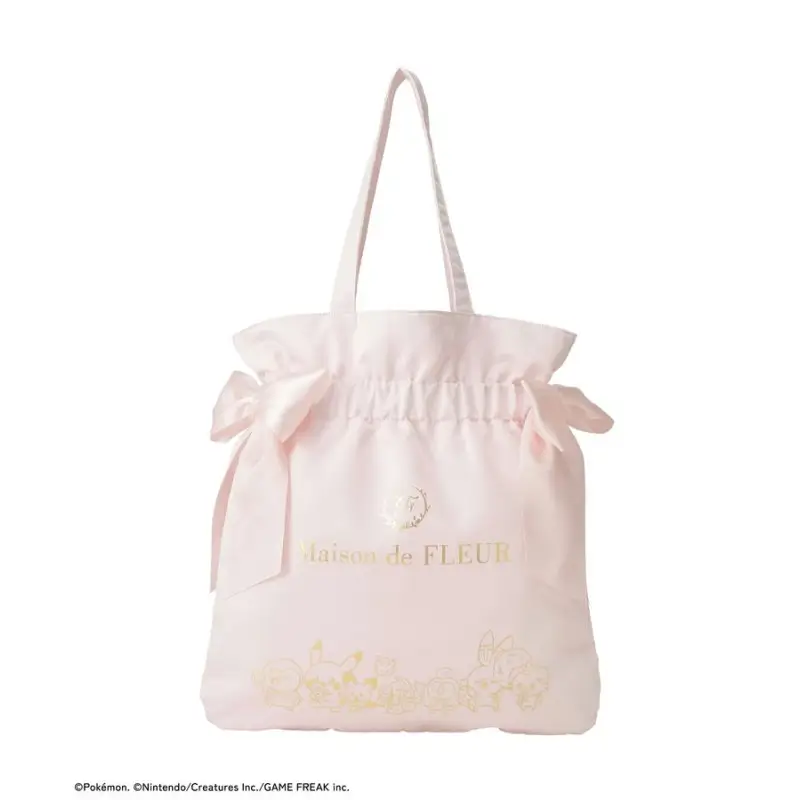
Maison de FLEUR x Pokémon Poképeace double-ribbon tote bag in pastel pink with gold branding and delicate embroidered character-inspired details.
huh
None of this reads as accidental once you look at how Sakura originally built the character. Kojikoji first appeared decades ago as a kind of side project to Chibi Maruko chan, and unlike that series, it was never really trying to be relatable. The manga follows Kojikoji’s daily life in a fictional town with a loose, almost aimless structure: small jokes, minor disputes with neighbors, no real antagonist, no real arc. Its visual language is deliberately plain, rounded shapes with minimal detail, which is likely why an embroidery based treatment works better here than a straightforward print would. Embroidery, by nature, softens hard outlines and adds a slight irregularity to a shape, which happens to be exactly what the character already looks like on paper.
Maison de FLEUR’s design team appears to have picked up on that rather than working against it. The brand’s press materials describe the goal as capturing the character’s mysterious, warm mood through pale coloring and delicate stitching, language that lines up with what shows up in the finished pieces. It is a more restrained treatment than the brand’s collaborations with higher profile, more visually dense franchises, and that restraint seems intentional rather than a budget decision.
Sakura’s broader body of work has always sat a little outside the mainstream idea of what a manga aimed partly at children should look like. Chibi Maruko chan, published decades ago, was already unusual for its slow pacing and lack of clear moral lessons, closer to observational comedy about a nine year old’s ordinary life than a typical family anime. Kojikoji pushed that further by removing even the grounding presence of a normal child protagonist, replacing her with a character who cannot really be explained and does not seem interested in being explained. Readers who grew up with Sakura’s other work tend to describe Kojikoji as the stranger, more experimental sibling title, one that never demanded the same mainstream popularity and, as a result, kept a smaller but notably devoted following.
That smaller following is likely who this collaboration is speaking to most directly, even if Maison de FLEUR’s retail footprint means plenty of shoppers unfamiliar with the manga will encounter the pieces cold. A tote bag covered in unfamiliar characters going about unexplained business is either charming or confusing depending on whether a shopper already knows the source material, and the brand does not appear to be smoothing that gap over with heavy explanatory branding on the products themselves. The packaging and in store signage, based on the announcement materials, lean on mood and color rather than a character guide, leaving the specifics of who Tommy, Teruko, and Katsubu actually are as something a curious buyer would need to look up independently.
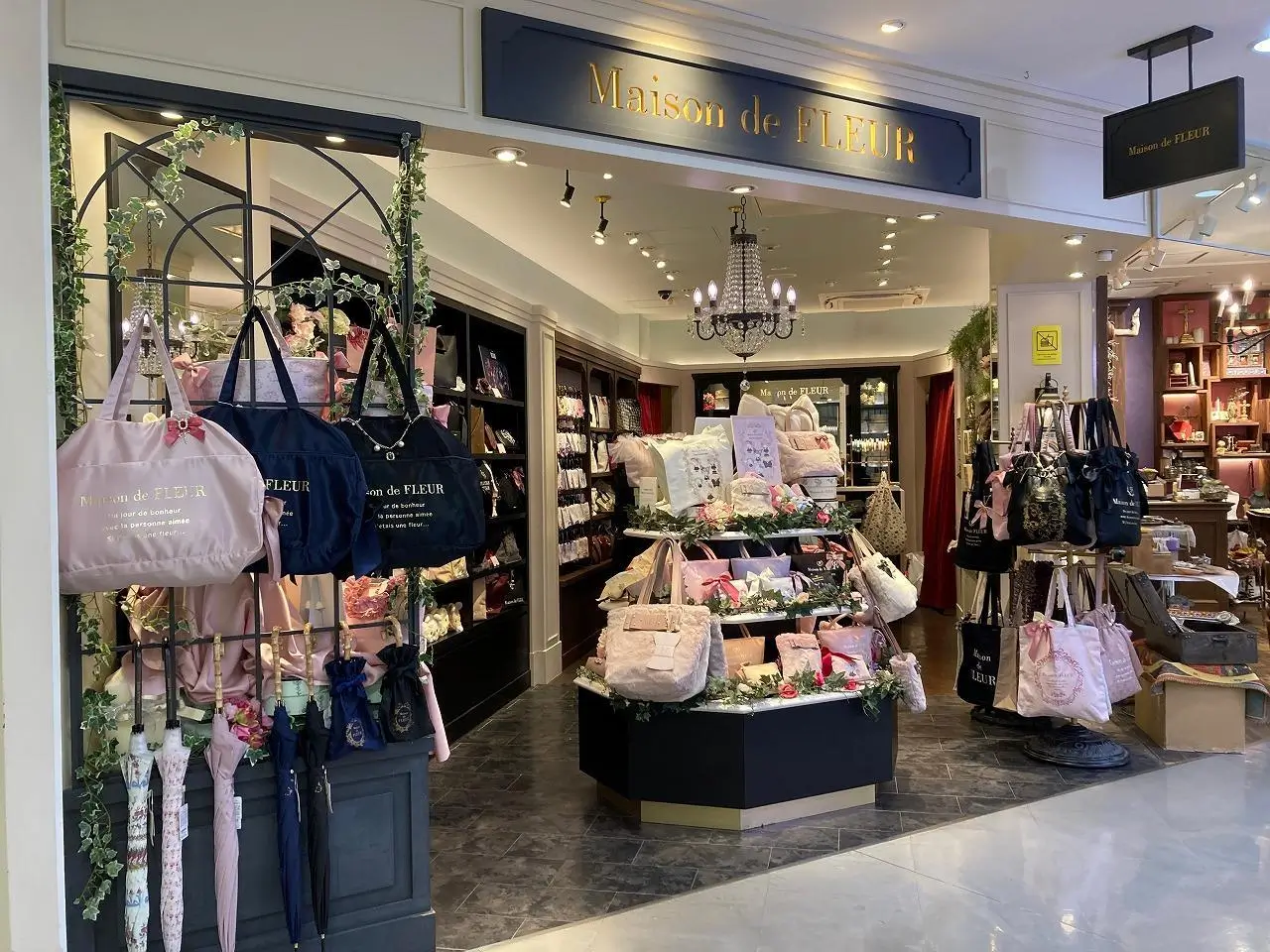
Maison de FLEUR boutique showcasing its signature pastel bags, floral décor, and lifestyle accessories in a romantic retail setting.
It also fits a pattern in the brand’s release calendar. Over the past year, Maison de FLEUR has repeatedly paired its house aesthetic with existing characters and properties rather than leaning solely on its own original prints, moving between licensed partners with noticeably different tones from one collaboration to the next. Kojikoji sits at the quieter, stranger end of that range compared to more mainstream partners the brand has worked with previously.
rel
The Maison de FLEUR x Kojikoji collection goes on sale nationwide on Friday, July 24, 2026, at Maison de FLEUR stores across Japan. Online shoppers get a slight head start: the brand’s official web store opens early access at 8:00 PM on Thursday, July 23.
Beyond the standard Maison de FLEUR retail network, the collection will also be stocked at the earth music&ecologySuper Premium Store inside Aeon Mall Okayama, through the brand’s official online shop known as Stripe Club, and via ZOZOTOWN.
Pricing across the three pieces:
- Tote bag: 7,000 yen, available in white or pink
- Pouch: 4,400 yen, available in white or pink
- Bag charm: 3,950 yen
There is no indication yet of a production cap or numbered run, and nothing in the announcement suggests this is a one time drop rather than an ongoing addition to the brand’s catalog, though availability at physical stores for character collaborations of this size has historically moved quickly in Japan.
The choice to route the release through both Stripe Club, the parent company’s own direct to consumer platform, and ZOZOTOWN, the country’s largest fashion marketplace, reflects a fairly standard dual channel strategy for a Stripe International label, giving loyal shoppers an early online window while still reaching a broader marketplace audience once the item goes fully live. The single Aeon Mall Okayama listing under the earth music&ecology Super Premium Store banner is a smaller detail, but it points to how Maison de FLEUR sometimes distributes collaboration stock through sister storefronts within the same corporate family rather than limiting a release strictly to its own standalone shops.
For now, the collab exists as a single wave rather than a staged rollout, with all three items launching together on the same date rather than being staggered across separate weeks the way some larger character partnerships are handled. Whether that changes, whether a second Kojikoji collection follows if the first sells well, is not addressed in the announcement, and there is nothing to suggest either way at this point.
From the DRIFT archive: Eastpak Courts Culture: Inside the Brand’s Global With the NBA
Related Articles
A Tiger On The Denim / Human Made
HUMAN MADE Shinsaibashi PARCO, full renewal 17 October 2026. Tiger jacket, hoodie, keyholder. Wasted Youth popup, two days. App lottery 10:00 to 17:00.