The Diorly Bag: A Modern Heirloom from Jonathan Anderson’s Debut

April 18, 2026
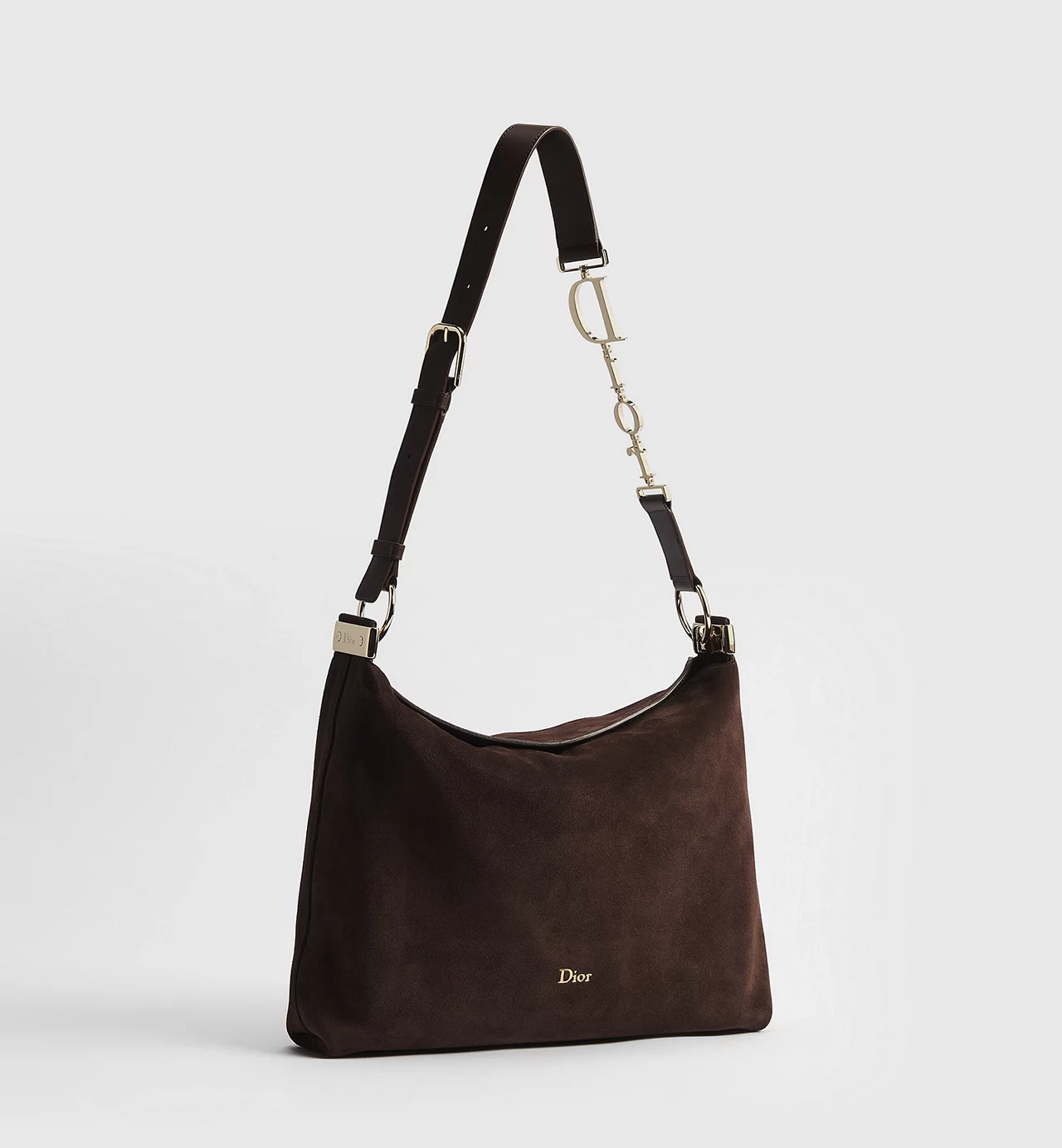
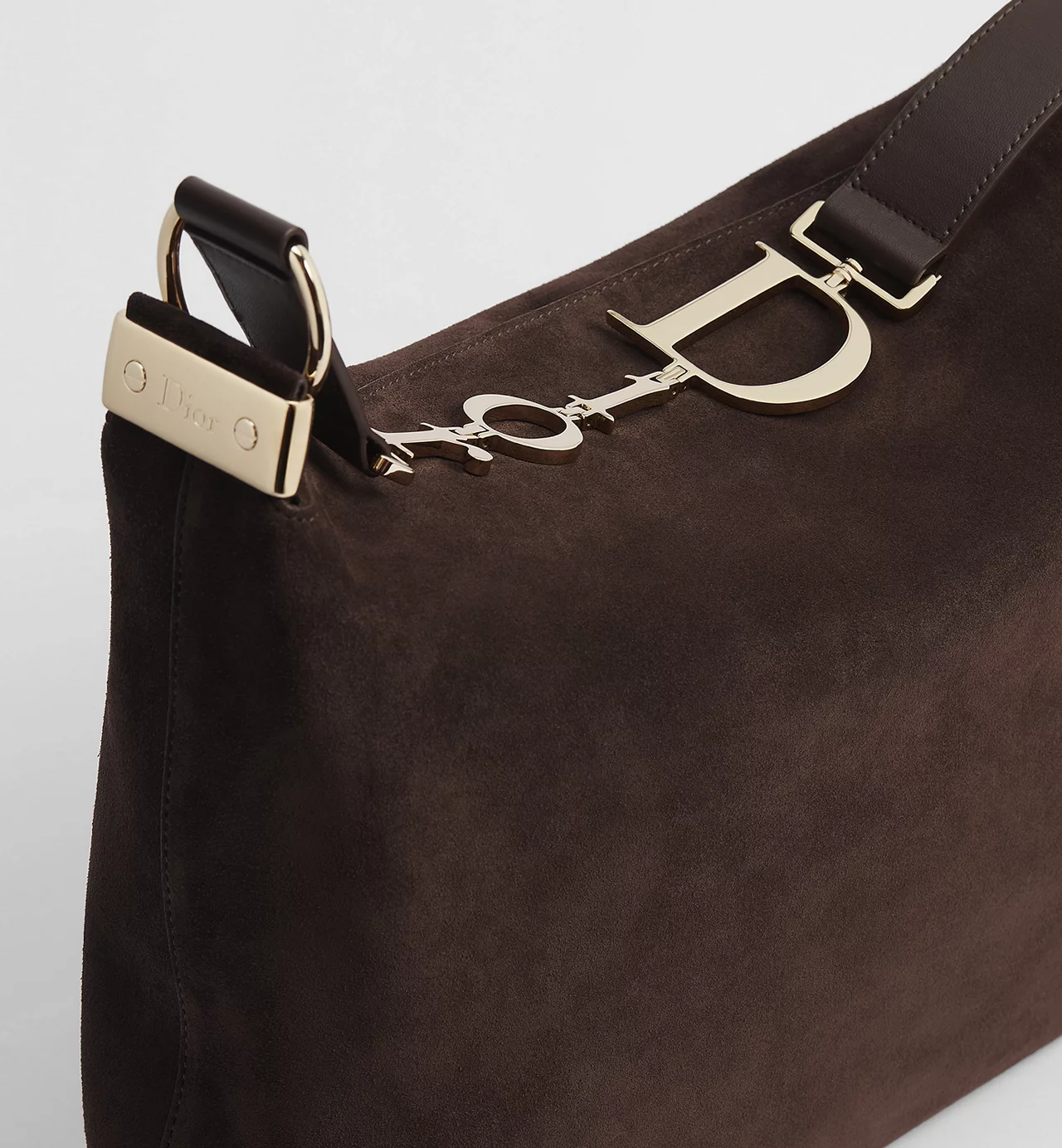
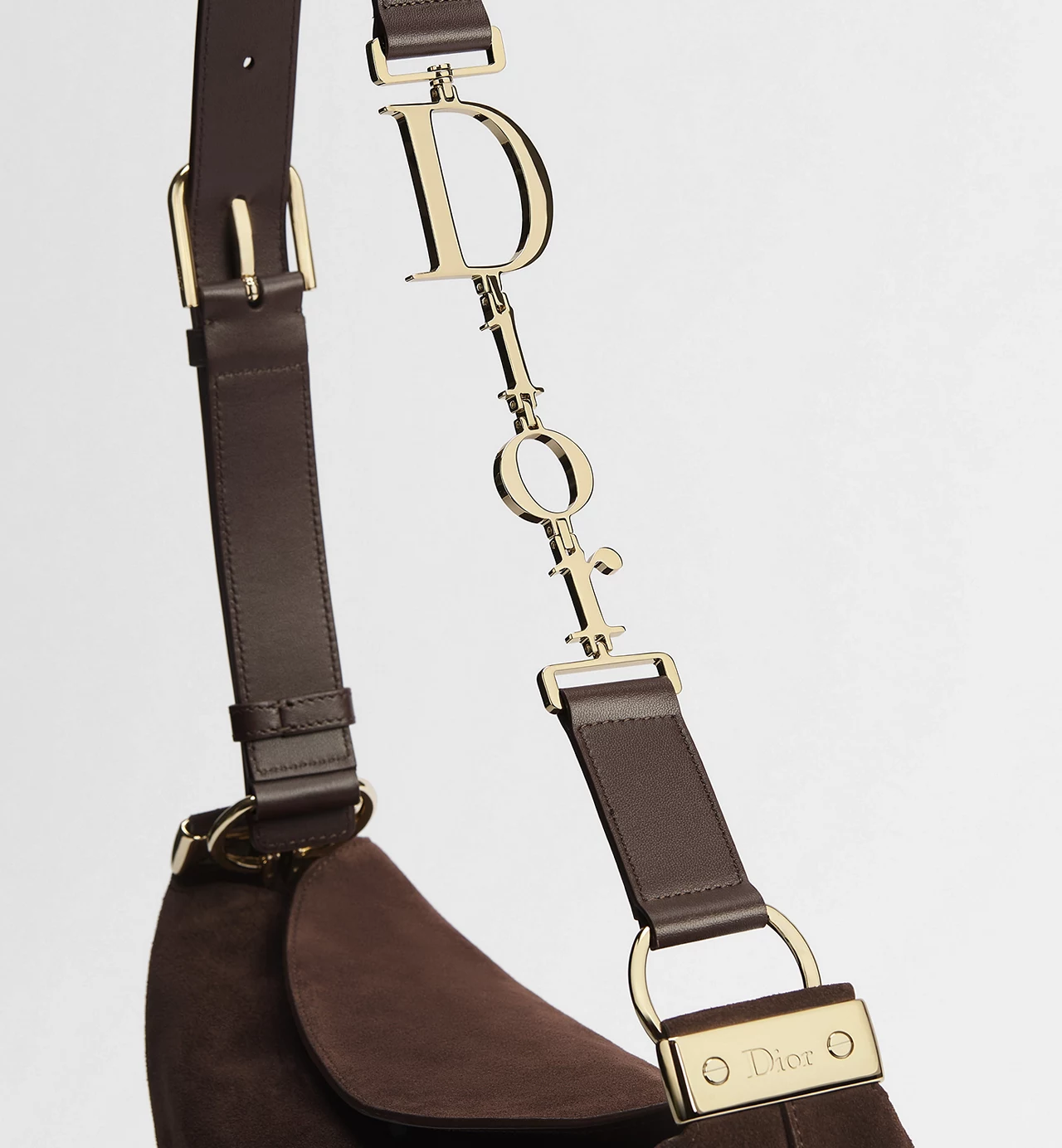
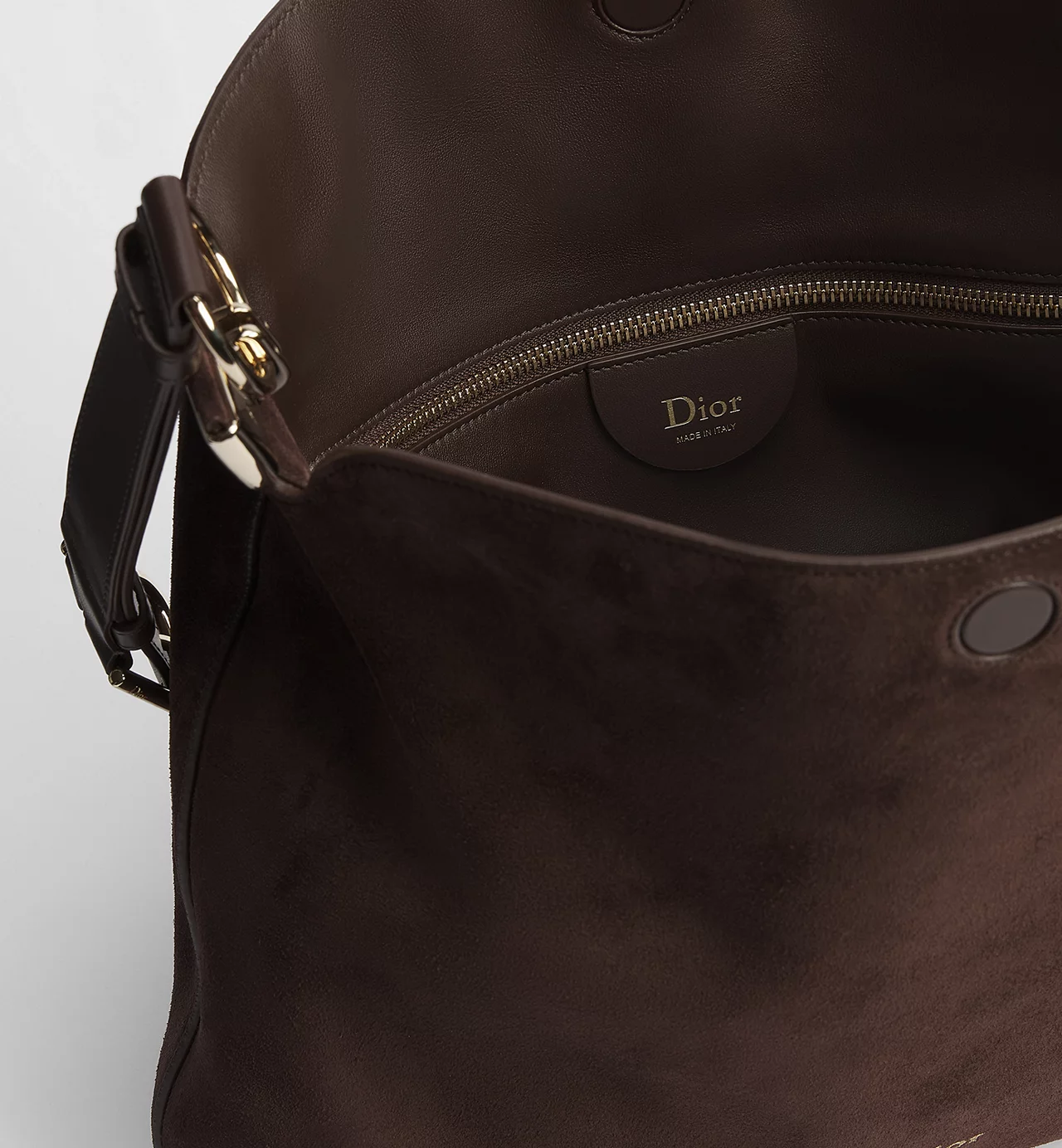
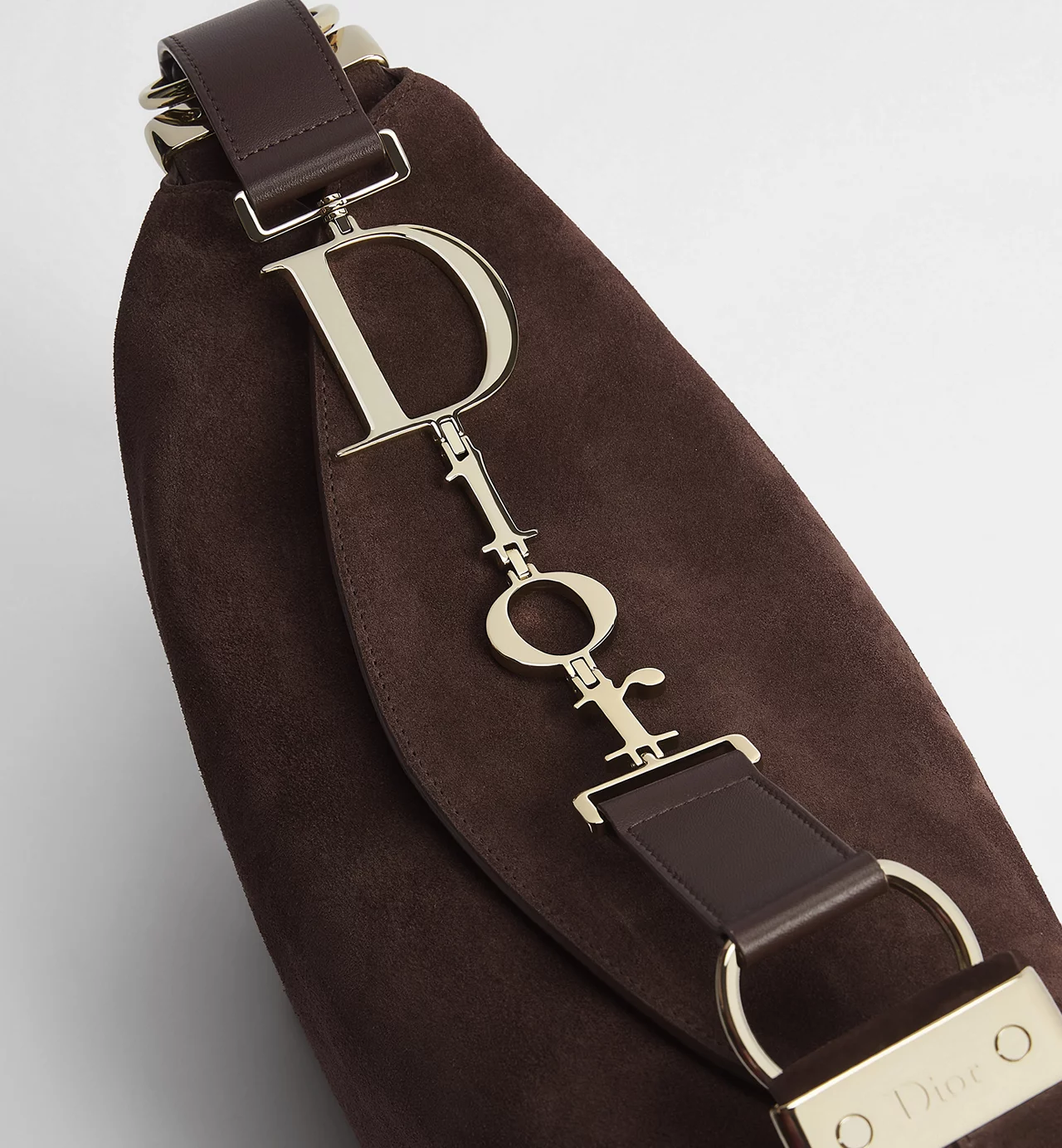
When Jonathan Anderson unveiled his first collection for Dior, the fashion world didn’t just take note—it leaned in. Among the standout pieces was the Diorly bag, a soft yet structured silhouette crafted from supple chocolate suede calfskin. More than just an accessory, it became a symbol of Anderson’s ability to honor heritage while pushing it forward, anchored by a sleek metal Dior signature on the strap—a quiet nod to the archives with a very modern shoulder drape.
stir
What distinguishes the Diorly is not simply its softness, but the way that softness is engineered. The body does not collapse randomly—it settles. There is a studied distribution of weight across the base, allowing the suede to crease and fold in a way that feels intentional rather than incidental. This is where Anderson’s intervention becomes clear: structure is no longer imposed from within through rigid framing, but negotiated through material behavior.
This approach repositions construction itself. Traditional haute bags rely on reinforcement—hidden panels, stiff linings, architectural cores that preserve silhouette regardless of use. The Diorly does something quieter. It trusts the material. The suede is cut, balanced, and assembled in a way that allows gravity to complete the design. The resulting form is neither rigid nor entirely fluid—it exists in a controlled state of relaxation.
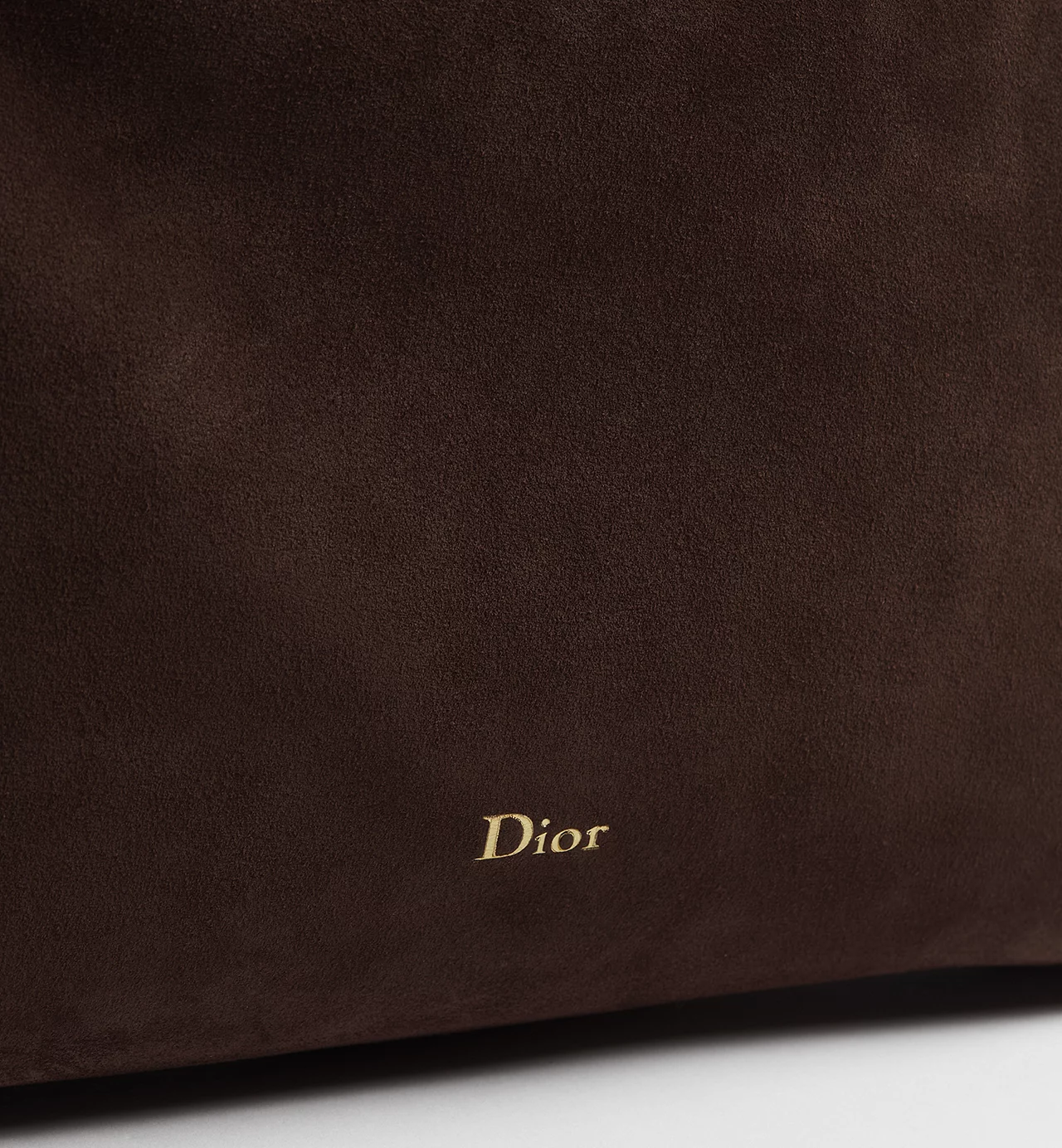
The chocolate suede, brushed to a low, almost matte luster, absorbs light rather than reflecting it. This choice matters. It removes the bag from the realm of overt display and places it closer to something tactile, almost private. The surface reads differently depending on movement—darker at rest, lighter along the tension points where the strap pulls and the body shifts. Over time, these variations will deepen. The bag is designed not to remain pristine, but to register use.
This is where the Diorly begins to separate itself from the language of seasonal accessories. It is not built to resist time. It is built to collaborate with it.
View this post on Instagram
mat
Suede, in this context, is not simply a texture—it is a strategy. Unlike polished calfskin, which reflects control and uniformity, suede introduces variance. It reacts. It marks. It softens under pressure and retains memory along its surface. Anderson leans into these qualities rather than correcting them.
There is a kind of confidence required to choose suede for a primary silhouette. It assumes a wearer who is not overly concerned with preservation, who understands that luxury does not need to remain untouched to retain its value. Instead, the Diorly positions wear as a form of authorship. The owner becomes part of the object’s evolution.
The edges are finished cleanly, but not aggressively sealed. The stitching is precise, but not decorative. Everything about the bag points toward restraint. Even the color—this deep, almost burnt chocolate—sits in a space between neutrality and statement. It doesn’t demand attention, but it holds it once noticed.
In this way, the Diorly aligns more closely with objects designed for long-term use than those intended for immediate visual impact. It is less about arrival and more about continuity.
lang
The metal Dior signature—placed along the strap rather than stamped across the body—functions less as branding and more as a point of articulation. It anchors the strap system, introducing a slight interruption in the otherwise continuous flow of leather. The hardware is polished, but not overly reflective; it catches light briefly, then recedes.
This placement is deliberate. By moving the identity of the house away from the center of the bag, Anderson repositions how Dior announces itself. The recognition happens in motion, not at first glance. It’s a shift from declaration to discovery.
The carabiner-style hooks and ring connections reinforce this idea. They suggest utility, but refined. There is a subtle industrial reference here—not enough to dominate the design, but enough to introduce tension. The bag exists between elegance and function, between softness and precision.
This is where Anderson’s design language becomes most legible. He is not interested in removing the codes of luxury. He is interested in rearranging them.
sway
On the shoulder, the Diorly does not sit upright. It drapes. The strap pulls the body into a gentle curve, creating a silhouette that changes depending on how it’s worn—tight under the arm, or slightly dropped with a longer adjustment. This variability is central to its appeal. The bag does not enforce a single way of being carried; it responds.
There is also a subtle tension between the softness of the body and the precision of the strap construction. The strap remains clean, almost architectural, while the body relaxes beneath it. That contrast—controlled line against organic form—becomes the defining visual rhythm.
Movement activates the bag. As the wearer walks, the suede shifts, folds deepen, and the hardware catches intermittent light. It is not static. It participates. This responsiveness is what gives the Diorly its presence. It does not need bold color or exaggerated proportion to stand out. Its distinction comes from behavior.
flow
To scope the Diorly fully, it has to be placed against what came before. Dior, historically, has been a house of structure—of line, of control, of garments and objects that hold their shape with authority. From the architectural precision of the New Look to the rigid geometry of the Lady Dior, form has always been central.
Anderson does not reject that legacy; he loosens it.
The Diorly is not anti-structure. It is post-structure. It suggests that form can emerge through use, that elegance can exist in something that moves, shifts, and adapts. This is a different kind of luxury—one that is less about preservation and more about participation.
Where the Lady Dior asserts itself—boxy, composed, instantly recognizable—the Diorly recedes slightly. It invites rather than declares. It is not designed to be placed on a pedestal. It is designed to be carried, repeatedly, until its surface begins to tell a story.
mood
There is a subtle but important shift embedded in the Diorly: ownership is no longer about maintaining an object in perfect condition. It is about allowing it to evolve.
This reflects a broader change in how luxury is being understood. The emphasis is moving away from static perfection toward dynamic use. Objects are expected to live alongside their owners, not remain separate from them.
The Diorly supports this shift. It does not punish wear. It absorbs it. The suede darkens where touched, lightens where stretched, and develops a surface that is unique to each user. No two bags will age in exactly the same way.
This individuality becomes part of the appeal. It introduces a level of intimacy that more rigid designs cannot achieve.
position
The Diorly arrives at a moment when fashion is recalibrating its relationship to visibility. After years of logo-driven cycles and high-contrast branding, there is a renewed interest in subtlety—objects that do not immediately announce their origin, but reveal it over time.
This does not mean a rejection of luxury. It means a refinement of how luxury communicates.
The Diorly fits into this landscape precisely. It is recognizable, but not loudly so. It carries the weight of the Dior name, but expresses it through proportion, material, and movement rather than overt signage.
This makes it particularly relevant for a wearer who values discretion without sacrificing design integrity. It is a bag that operates within the codes of fashion, but does not rely on them for validation.
theory
Jonathan Anderson’s influence is evident not only in the form of the Diorly, but in the philosophy it represents. His work has consistently explored the space between structure and fluidity, between tradition and reinterpretation.
At Dior, this translates into a careful recalibration rather than a dramatic overhaul. The Diorly is not a break from the house—it is a reorientation.
He understands that Dior’s strength lies in its history. The challenge is not to replace that history, but to make it relevant in a contemporary context. The Diorly achieves this by maintaining a sense of refinement while introducing a new kind of flexibility.
It suggests that heritage can move. That it does not need to remain fixed to retain its meaning.
retire
In an industry driven by cycles, the Diorly feels resistant to immediacy. It does not rely on novelty to justify its existence. Instead, it builds its value over time.
This is reflected in every aspect of its design—from the choice of material to the way it carries. It is not trying to capture a moment. It is designed to extend beyond one.
This approach aligns with a growing emphasis on longevity within fashion. Consumers are increasingly aware of the lifespan of the objects they purchase. They are looking for pieces that can remain relevant across seasons.
The Diorly responds to this need without compromising on design. It offers a form that can adapt, a surface that can evolve, and a presence that does not depend on trend.
fin
What makes the Diorly significant is not a single feature, but the way its elements come together. The softness of the suede, the precision of the hardware, the responsiveness of the silhouette—each component contributes to a larger idea.
It is a bag that does not insist on itself. It allows itself to be discovered.
In doing so, it reflects a broader shift within Dior under Jonathan Anderson—a move toward objects that are less about immediate impact and more about sustained relevance. The Diorly does not arrive fully defined. It becomes defined through use.
And in that sense, it offers something increasingly rare in contemporary fashion: a design that is complete, but not closed.
Related Articles

Inside CASIO LAB.: NIGO Gives G-SHOCK a Cast of Characters to Call Its Own
NIGO has spent three decades building worlds around logos. His latest one comes with a […]