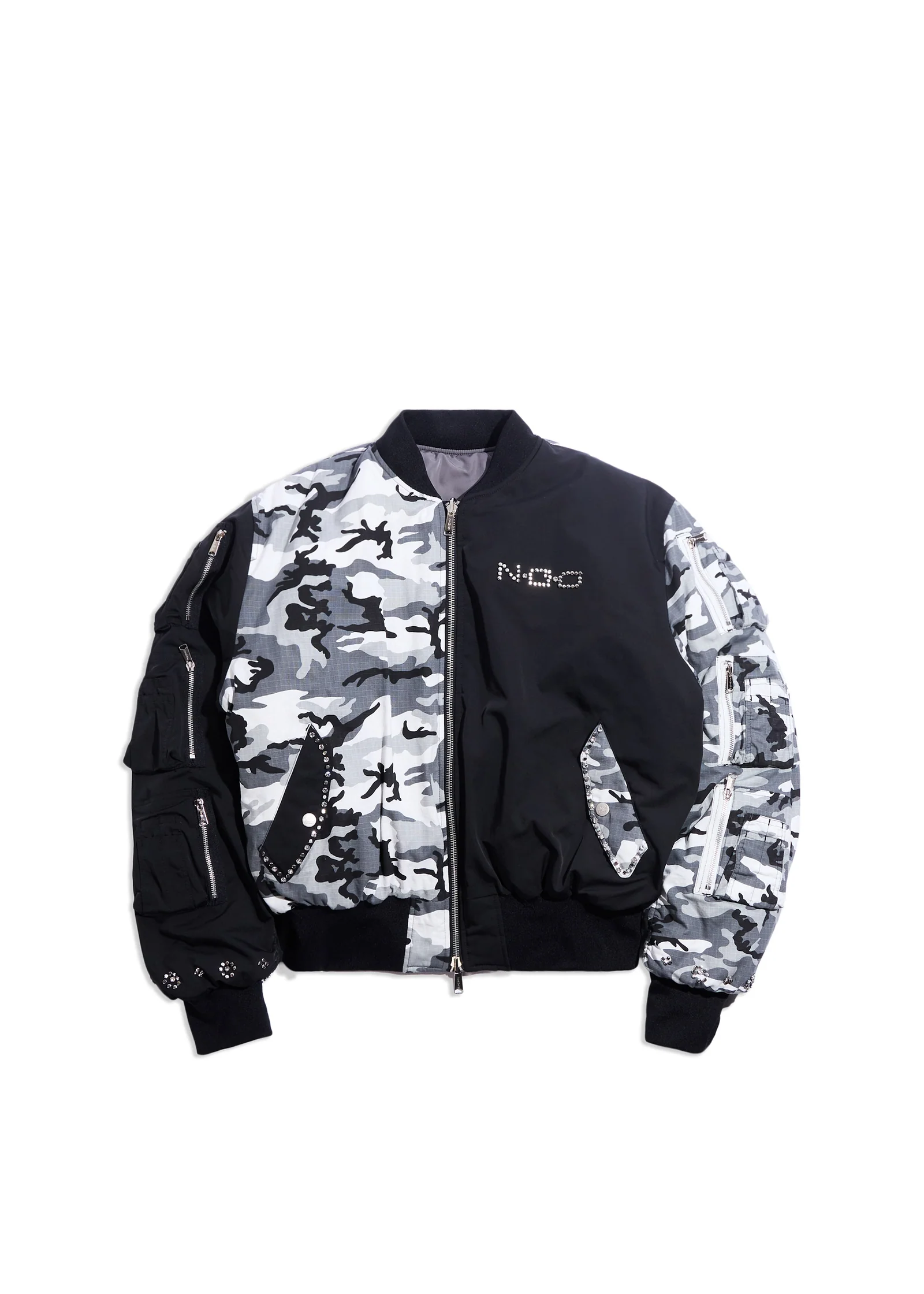
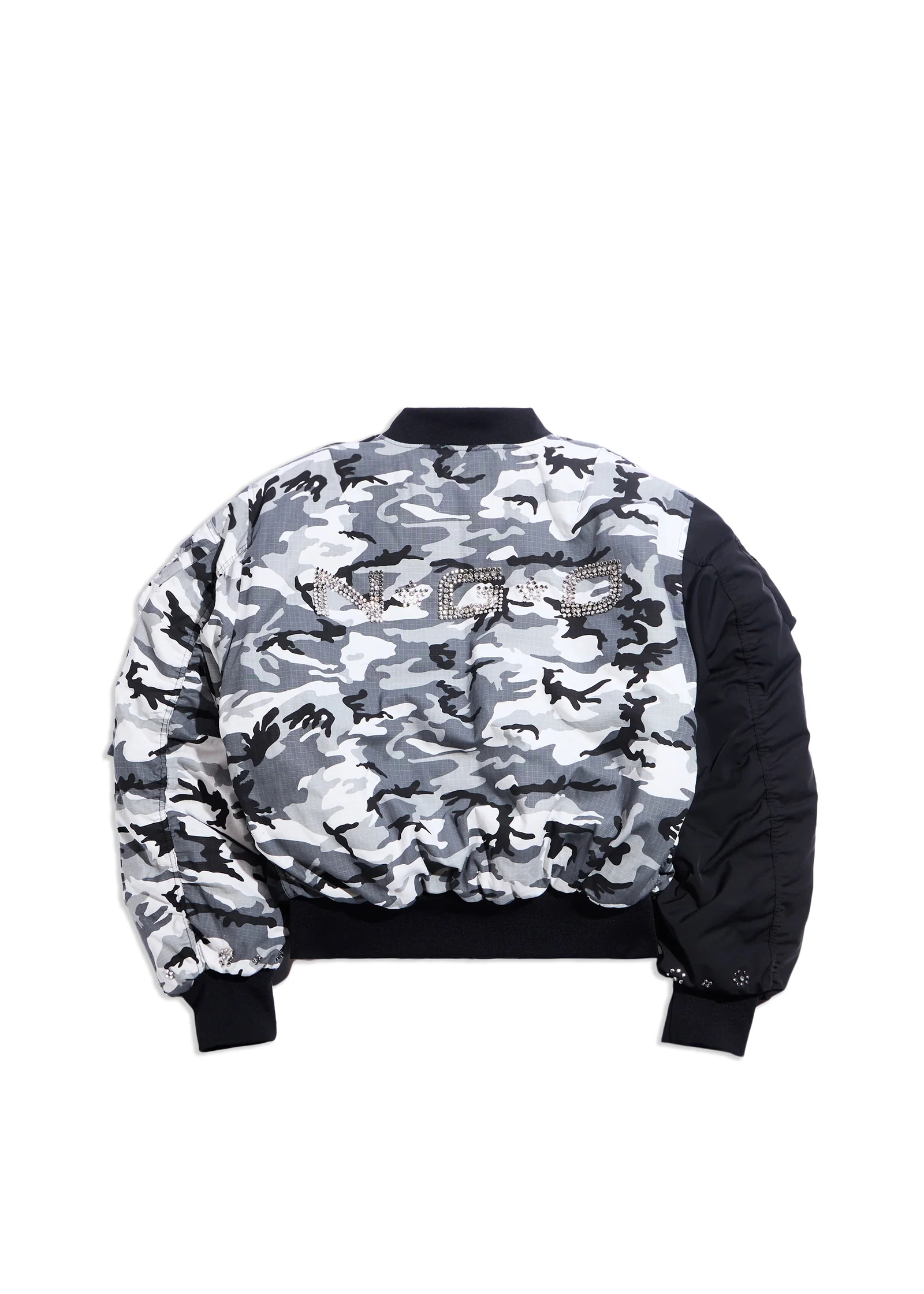
The Studded Bomber Jacket (Snow) is not a garment. It is a declaration. A milestone. The physical manifestation of a brand ethos forged in silence, refined through iteration, and proven in the crucible of time. This is not a story of sudden fame or viral hype. It is the record of a rise—measured, deliberate, inevitable.
origin
From its inception, the brand behind the jacket rejected the noise of trend cycles. Its aim was never to chase relevance, but to define it. Rooted in the belief that true innovation emerges not from speed, but from depth, the label operated in near obscurity for years—refining silhouettes, testing materials, and perfecting construction methods that would later become its signature. The philosophy—Nothing Grows Overnight—was not a marketing slogan. It was a mandate. A vow to build not for the season, but for the century.
stir
The Studded Bomber Jacket (Snow) emerged as the first full realization of that vision. Born from over 200 prototypes, it was the culmination of a six-year research initiative into high-performance textiles and structural design. The jacket’s foundation is a proprietary fabric: a dual-layer composite of aerospace-grade nylon and cryo-treated recycled polyester, engineered to withstand extreme temperature shifts while maintaining a featherlight drape.
Its color—“Snow”—is not dyed, but achieved through a mineral-infused weaving process that embeds microscopic titanium particles into the fiber, giving it a luminous, almost spectral quality under natural light.
decor
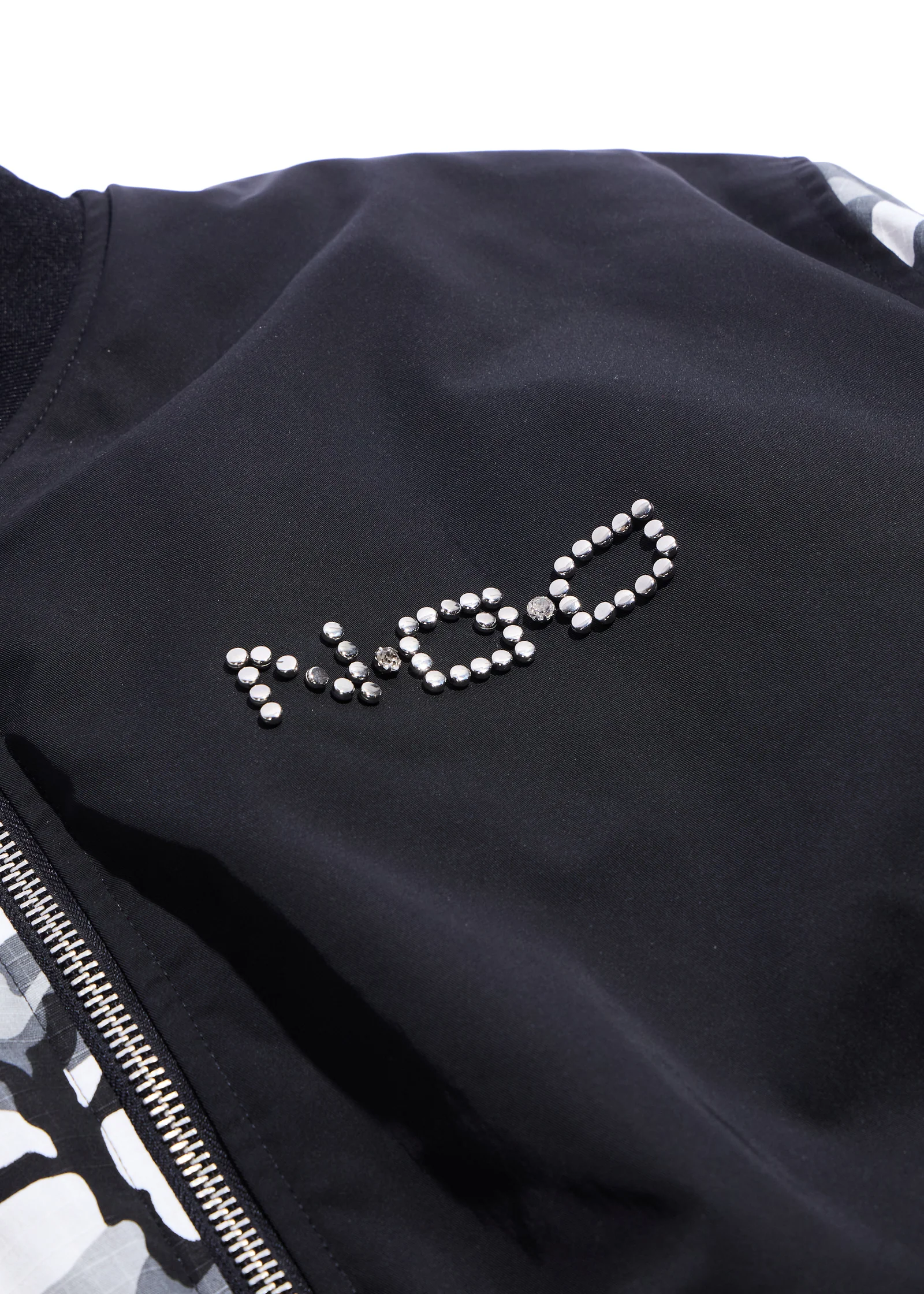
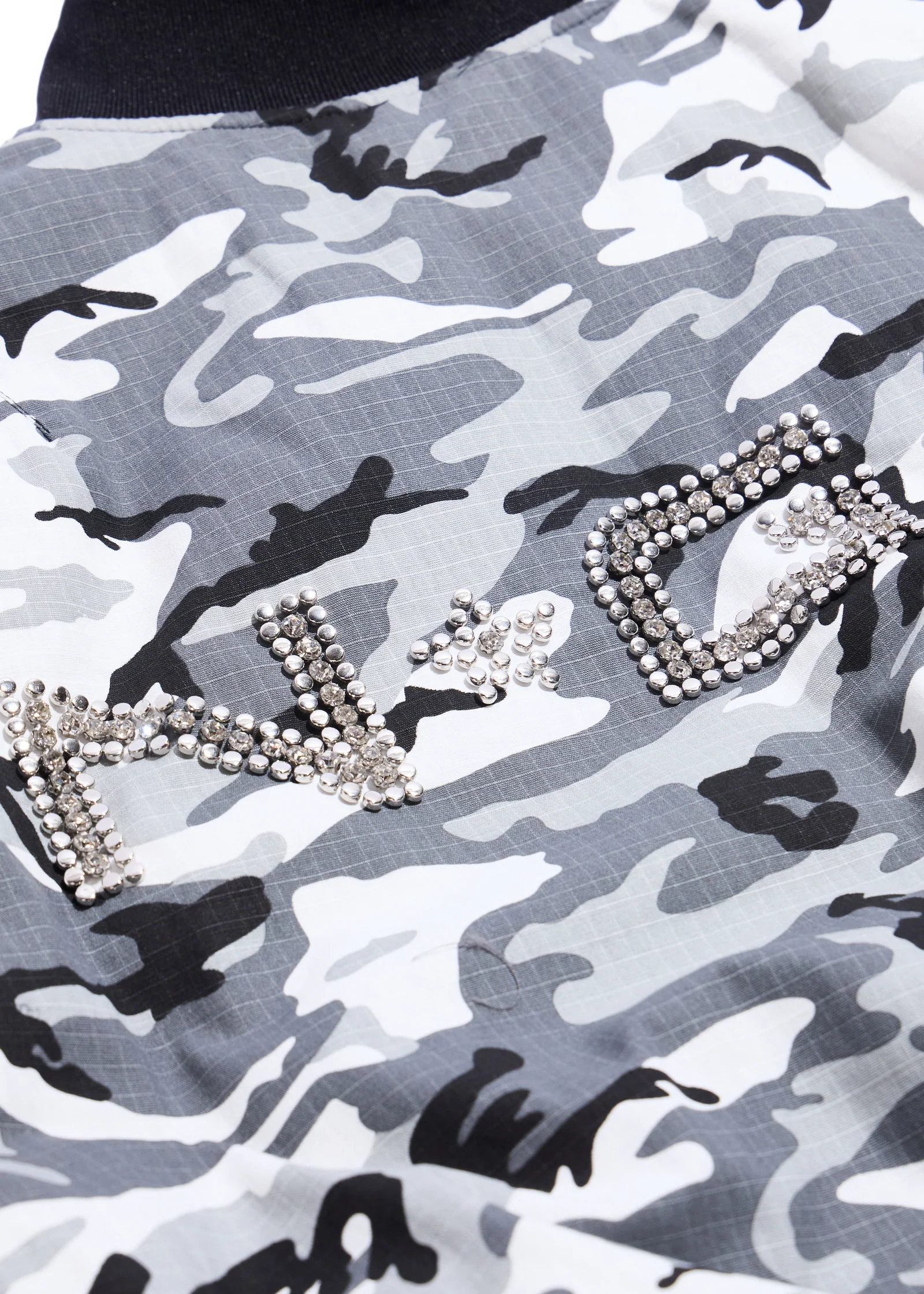
The studs are not embellishment. They are architecture. Each of the 312 hand-set elements is forged from a custom alloy of recycled surgical steel and tungsten carbide, chosen for its resistance to corrosion and its ability to retain a mirror finish. Their placement follows a load-bearing logic, reinforcing stress points at the shoulders, spine, and hem—transforming the jacket into a wearable exoskeleton.
The pattern—radial, fractal, precise—is derived from stress-test simulations, making it as functional as it is aesthetic. This is not decoration. This is engineering elevated to art.
show
The jacket’s debut was not a runway show. It was a quiet unveiling at a private archive in Zurich, attended by a select group of curators, designers, and historians. No music. No models. Just the jacket, displayed under climate-controlled glass, accompanied by a timeline of its development: fabric swatches, metallurgical reports, thermal imaging studies, and handwritten notes from the design team.
The message was clear: this was not fashion as entertainment. This was fashion as legacy.
lineage
In the two years following its release, the Studded Bomber Jacket (Snow) became a reference point. It was acquired by Museum of Modern Art for its permanent design collection. It was worn by a Nobel laureate during a keynote address on climate resilience. It was cited in academic papers on sustainable material science.
Its influence rippled outward—not through celebrity endorsements, but through quiet recognition from those who understood its significance.
flux
The scope of its rise was not measured in units sold, but in shifts in perception. It challenged the industry’s obsession with speed, proving that a garment could be both technologically advanced and philosophically grounded. It inspired a new wave of designers to prioritize process over product, to value research as much as runway.
It became a symbol—not of rebellion, but of resolve.
lean
The brand, once operating in the backdrops, now stands at the forefront of a movement. Its workshops in northern Finland, where the jacket is still hand-finished, have become pilgrimage sites for young designers. The Nothing Grows Overnight ethos has expanded into a foundation that funds long-term research in sustainable textiles and ethical manufacturing.
The jacket is no longer just a piece of clothing. It is the cornerstone of a philosophy.
stomp
Today, the Studded Bomber Jacket (Snow) is more than a collector’s item. It is a benchmark—a standard against which innovation is measured. It is worn not for status, but for alignment: with a belief in patience, in precision, in the power of slow, relentless progress.
fin
Its legacy is not in its rarity, but in its resonance. It proved that fashion could be more than fleeting—that it could carry weight, hold meaning, and extend beyond the moment of its release. That it could, in fact, grow—slowly, silently, inevitably—into something that endures.
This is not the story of a jacket.
This is the chronicle of a rise.
And it is only the beginning.