
DRIFT AUDIO
Listen to this story
Choose a voice, then press play.
In This Story
- A Book Club Grows a Building
- Why Livraria Lello, of All Places
- Inside the Manifesto Library
- The Books on the Shelves
- A Festival Built Around the Opening
- How Dua Lipa Got Here
- Why a Library, and Why Now
- What Happens Next
stir
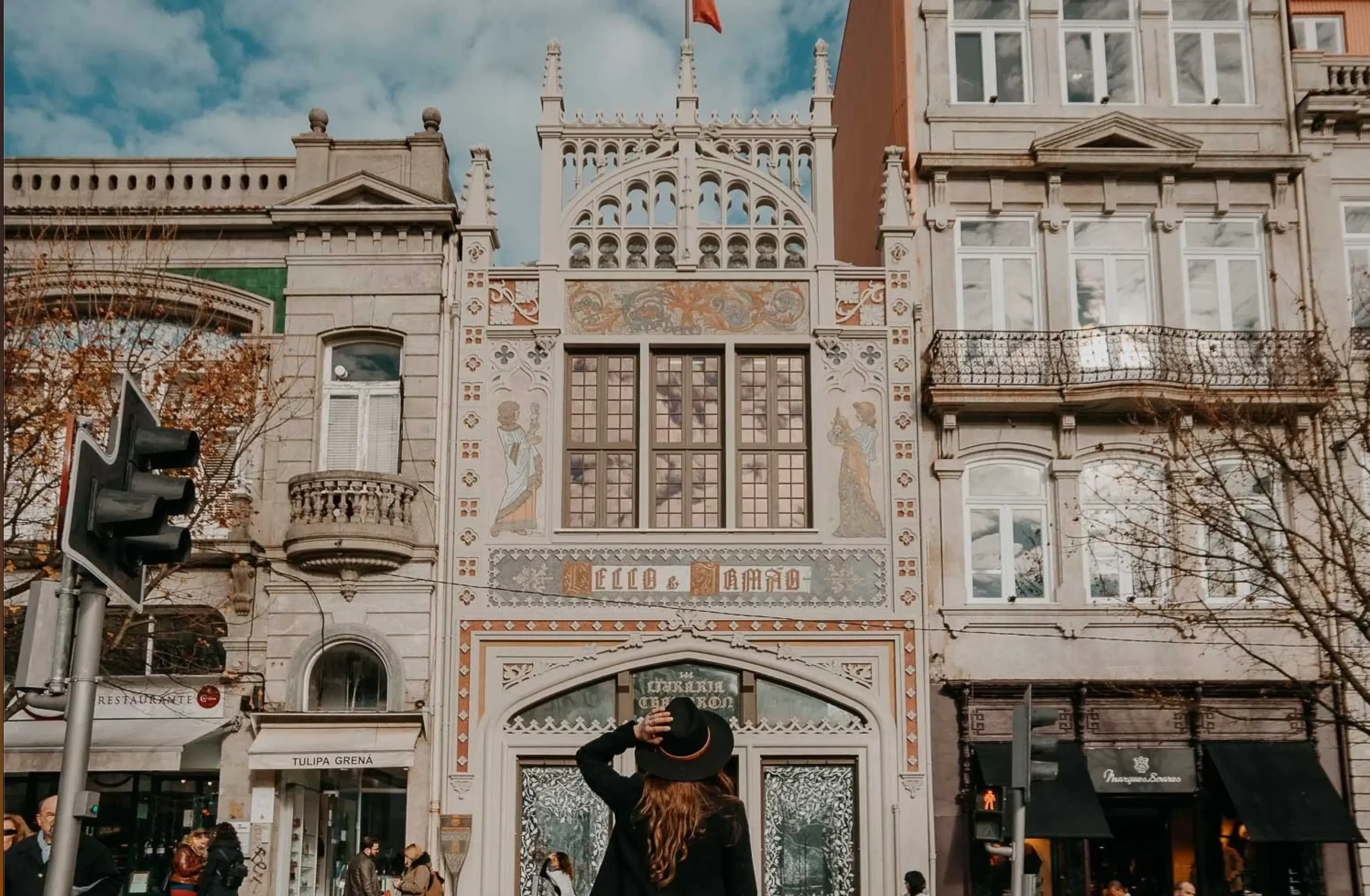
For four years, Dua Lipa’s literary project has lived mostly in inboxes and on phone screens — a newsletter, a podcast, a monthly pick passed along to subscribers through Service95, the culture platform she launched in 2021. As of this weekend, it has an address. The Manifesto Library, the first permanent physical space built around Lipa’s Service95 Book Club, opens its doors inside Livraria Lello, the 120-year-old bookshop in Porto, Portugal widely regarded as one of the most beautiful in the world.
The timing isn’t incidental. The opening lands as part of BABELL – City of Books, a brand-new international book festival organized by the Fundação Livraria Lello, and it folds Lipa’s library into a broader weekend of literary programming rather than treating it as a standalone press event. For a project that started as a free weekly email, landing inside a building this storied is a significant scale-up — and one that suggests Lipa’s interest in books was never just a side hobby dressed up for press cycles.
why
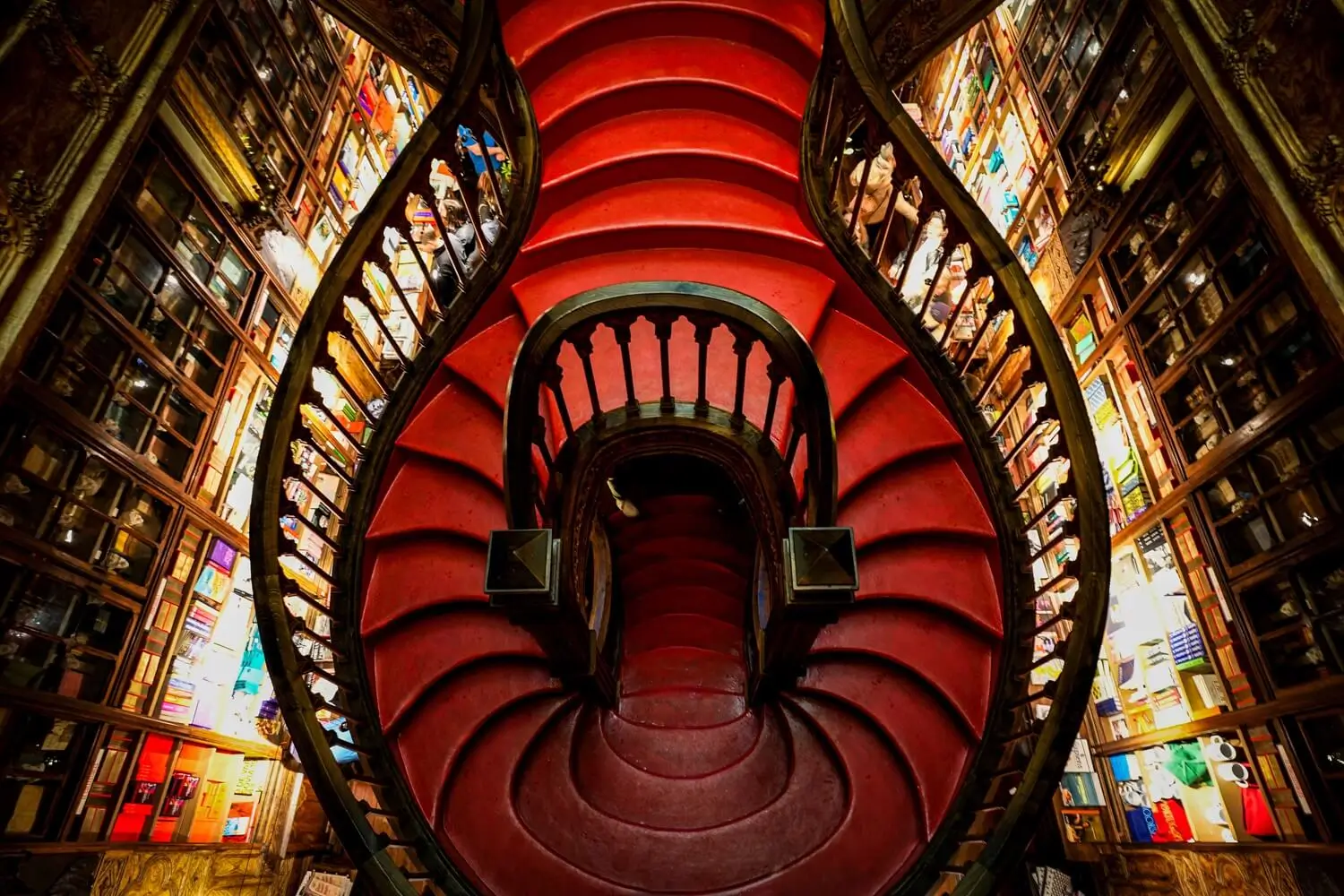
Livraria Lello isn’t just an old bookshop with good lighting. Opened in 1906 by brothers José and António Lello, the building was designed by engineer Francisco Xavier Esteves in a Neo-Gothic and Art Nouveau style dense enough that it functions almost as much as a tourist attraction as it does a working bookstore — a reinforced-concrete staircase painted to look like carved wood, a stained-glass skylight reading decus in labore (“honor in work”), shelves running floor to ceiling on two levels. It draws over a million visitors a year, many of whom have never heard of half the authors on its shelves and are there purely for the staircase.
That staircase is also the reason most people who do know Livraria Lello know it at all: as the bookstore long rumored to have inspired Hogwarts. J.K. Rowling lived in Porto in the early 1990s while teaching English, and the timeline lines up well enough that the myth has calcified into something close to civic fact, repeated by tour guides and travel blogs despite Rowling’s own repeated denials that she ever set foot inside. It’s a strange kind of fame for a 120-year-old literary institution to carry — known globally less for its actual catalog than for a connection its own architect and founders couldn’t possibly have intended.
Against that backdrop, handing part of the building over to a project explicitly built around banned and censored books reads like Livraria Lello reclaiming its own story a little. Francisca Pedro Pinto, the shop’s head of brand, framed the partnership as a continuation of the building’s original premise rather than a departure from it — describing the bookstore as having spent over a century operating on the belief that a book functions as a tool of freedom, with the new library extending that idea rather than reinventing it.
View this post on Instagram
in
The Manifesto Library sits inside a newly built culture auditorium attached to Livraria Lello, designed by Álvaro Siza — a Pritzker Prize-winning Portuguese architect whose involvement alone tells you this wasn’t conceived as a pop-up. It’s a permanent installation, not a temporary press activation timed to a single news cycle, and the architecture reflects that: a dedicated space built specifically to hold this collection rather than a corner of the existing shop cleared out for the occasion.
Functionally, the space is built to host more than static browsing. Organizers have described it as a living cultural venue rather than an archive — somewhere meant for debate and public reflection as much as quiet reading, with programming designed to keep the books in active conversation with visitors rather than sealed behind glass. That distinction matters for a project explicitly themed around censorship: a library of banned books that visitors only ever look at from a respectful distance would undercut its own premise. The plan, instead, leans on public events, talks, and ongoing curation to keep the collection feeling current rather than archival.
scope
The Manifesto Library opens with 100 titles, organized around four themes: Power, Control, Voice, and Memory. The selection draws heavily on books that have, at some point, been banned, restricted, or formally challenged somewhere in the world — Margaret Atwood’s The Handmaid’s Tale among the more famous examples, alongside Reginald Dwayne Betts’ Felon and selected works from Salman Rushdie and Olga Tokarczuk, both of whom have personal experience with the kind of institutional pressure the collection is built to spotlight. Other reporting on the opening lineup points to works by Alice Walker, Arundhati Roy, Khaled Hosseini, Bernardine Evaristo, and Han Kang sitting within the “Voice” section specifically.
Lipa has been direct about what unites the list. In a statement tied to the opening, she described the shelves as holding books that ask uncomfortable questions or have themselves been questioned — some pulled from school curricula over their handling of race or sexuality, others restricted specifically because they were written for LGBTQIA+ readers, and at least one case in which the author paid for the work with their life. She called the collection a kind of shrine: to vanished books, to the writers whose work exposes how power actually functions, and to readers who refuse to be told what they’re allowed to pick up.
That framing puts the Manifesto Library in conversation with a much larger, increasingly visible trend — the steady rise in book challenges and removals across schools and public libraries in multiple countries over the past several years, much of it concentrated on exactly the categories the library’s four themes point toward. Library associations and free-expression groups have tracked a sharp uptick in formal challenges over the past few years, with the overwhelming majority of targeted titles dealing with race, gender, or sexuality — the same territory the Manifesto Library’s “Voice” and “Control” sections are built around. Organizers have framed the project explicitly as a response to that pattern, positioning the collection as a counterweight rather than a neutral retrospective.
It’s worth noting the distinction between a book being challenged and a book actually being removed — the two get conflated constantly in press coverage of this issue, and the gap between them matters. A formal challenge is a request, usually from a parent, school board member, or advocacy group, to restrict or remove a title from a shelf or curriculum; whether that challenge succeeds varies enormously by district, state, and country. The Manifesto Library’s collection includes books that have experienced both outcomes — some genuinely pulled from circulation in certain places, others simply subjected to repeated, unsuccessful attempts to get them removed. Either way, inclusion on the shelf functions as a kind of rebuttal: proof that the books in question survived the attempt.
open
The Manifesto Library isn’t launching in a shh manner . Its opening anchors BABELL – City of Books, a new festival running across the same weekend in Porto, and the guest list reflects how seriously the project has been taken by the literary world rather than just the entertainment press. Salman Rushdie and Olga Tokarczuk — both represented on the library’s own shelves — are expected in Porto for the festival, alongside Portuguese writer Conceição Evaristo and artist-activist Ai Weiwei.
The opening-night event itself is designed to echo the format Lipa’s Service95 Book Club has used online for years — its recurring “Book Tasting” gatherings, which pair literary discussion with food and drink rather than treating the conversation as a standalone lecture. For the Porto launch, that translates to Portuguese wines selected by Sogrape served alongside the evening’s discussion, an attempt to keep the tone closer to a dinner party than a ribbon-cutting.
huh
It’s worth resisting the instinct to read this purely as a pop star’s vanity project, mostly because the receipts don’t support it. Service95 launched as a newsletter in 2021, and the book club component followed not long after, with Lipa personally selecting a title each month and pairing it with interviews, reading lists, and original essays rather than just posting a cover image and moving on. Her interview subjects over the life of the project have included Atwood, Tokarczuk, Chimamanda Ngozi Adichie, and Percival Everett — a guest list that reads less like a celebrity book club and more like a working literary podcast that happens to have a famous host.
That credibility has compounded over time. Earlier this year, Lipa expanded into curating programming for the London Literature Festival, and she served as a keynote speaker at the International Booker Prize’s tenth-anniversary celebration. She’s discussed Shuggie Bain with a prison book club, a detail that tends to surprise people who assume celebrity book clubs exist mainly to sell branded tote bags. None of that guarantees the Manifesto Library will function exactly as intended once the opening-night wine has been poured and the festival crowd has gone home — permanent cultural installations live or die on what happens in year two and year three, not opening weekend — but it does suggest Lipa has been building toward something like this for a while, rather than backing into it as a one-off stunt.
It also helps to see the library in the context of Service95 as a whole, which has never been a single-purpose project. Alongside the newsletter and book club, the platform runs a companion podcast, Dua Lipa: At Your Service, where she’s interviewed guests ranging from fellow musicians to a Nobel Peace Prize laureate, treating each conversation less like a press junket and more like an actual attempt to go deeper with people whose work she finds genuinely interesting. The book club specifically has built a reputation among its subscribers less for celebrity name recognition and more for the quality and range of its picks — international fiction, memoir, and poetry sitting alongside more commercially obvious choices, with Lipa doing the monthly author interviews herself rather than handing that part off. A physical library extending from that foundation reads less like a brand extension and more like the next logical step for a project that’s been quietly serious for a while.
idea
There’s an obvious tension worth naming directly: a pop star with a global platform opening a library dedicated to banned books, inside a building most famous for a Harry Potter rumor its own author has repeatedly denied, is the kind of story that’s almost too neatly packaged for a press cycle. But the substance underneath the packaging holds up reasonably well. Book challenges and removals have become a genuinely contested, well-documented issue across multiple countries in recent years, and a permanent, physically anchored collection responding directly to that pattern is a more concrete gesture than most celebrity-adjacent literary initiatives manage.
It also helps that the Manifesto Library isn’t positioning itself as neutral. The four organizing themes — Power, Control, Voice, Memory — and the explicit framing around censorship and restriction mean the collection is making an argument, not just curating a tasteful reading list. Whether that argument lands with visitors who came mainly for the staircase remains to be seen, but the library isn’t hedging on its own point of view, which is at least a more honest position than most brand-adjacent cultural projects tend to take.
look
The Manifesto Library opened its doors on June 27 as a permanent fixture rather than a limited engagement, which means its real test starts now, once the festival crowd disperses and the space has to function as an ordinary part of Livraria Lello’s daily foot traffic. If the programming holds up — continued events, evolving curation, the kind of public reflection organizers have described wanting to build — it has a real chance of becoming something closer to a genuine literary institution than a celebrity press moment with a short shelf life.
For Lipa, it marks the clearest signal yet that Service95’s literary ambitions were never really about newsletter open rates. A library built inside one of the most photographed bookstores on earth, dedicated specifically to the books some institutions would rather you not read, is a considerably higher-stakes bet than a monthly book pick ever was — and judging by the guest list in Porto this weekend, the literary world seems willing to take that bet seriously too.