DRIFT AUDIO
Listen to this story
Choose a voice, then press play.
Amazon’s founder joins a consortium led by Amit Bhatia and backed by Eduardo Saverin, in a deal that could hand the group control of Liverpool within a year.
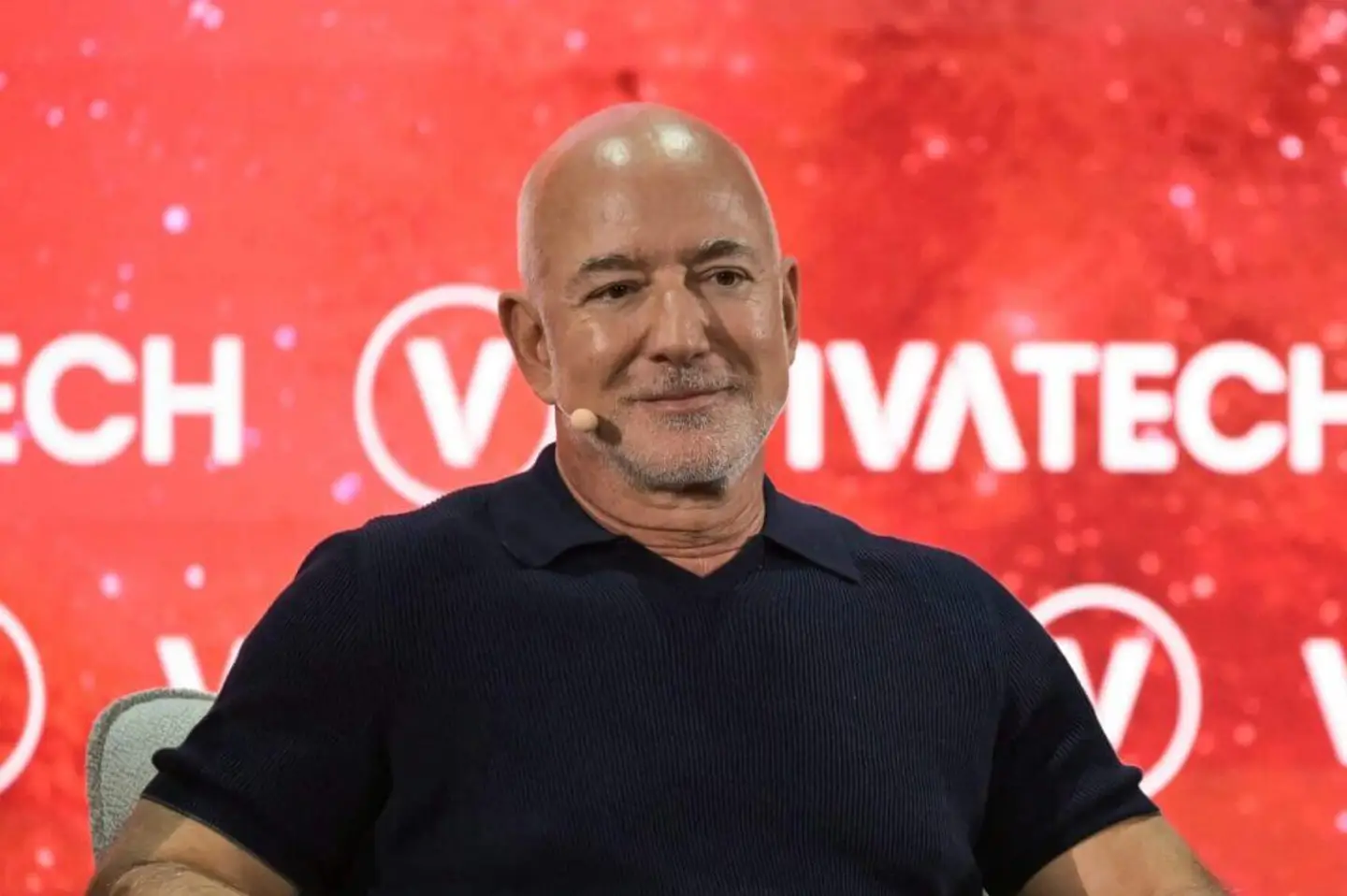
Liverpool Football Club has a new name on its shareholder register, and it belongs to the world’s third richest man. On Friday, Fenway Sports Group confirmed it had agreed to sell a minority stake, somewhere between 30 percent and a third of the club, to a consortium that counts Jeff Bezos among its members. It is the Amazon founder’s first purchase of any stake in a professional sports franchise, closing out years of speculation about when, not if, he would eventually buy into one.
deal
The numbers attached to the sale are large even by Premier League standards. People familiar with the transaction put the value of the minority stake at roughly $7.1 billion, a figure that implies an overall club valuation north of $7 billion and, by some estimates, closer to $7.45 billion once debt and other structures are factored in. Buried inside the agreement is a clause that could reshape Liverpool FC‘s ownership picture entirely: the incoming group has an option to buy a controlling stake within the next twelve months, at a valuation understood to be around $8 billion.
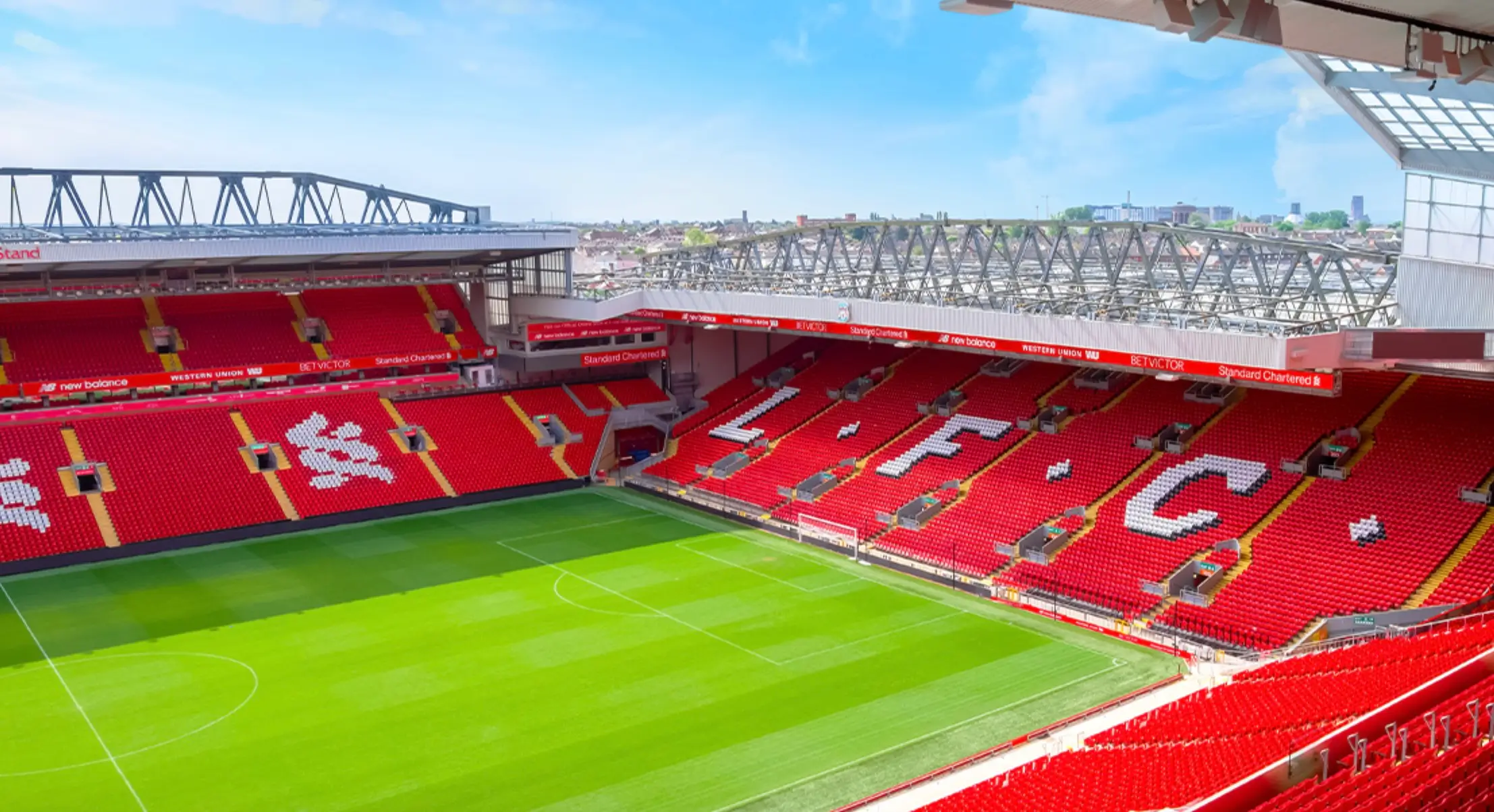
Anfield Stadium Interior With Red Liverpool FC Seating And Green Football Pitch
For now, though, control stays where it has been since 2010. Fenway Sports Group, the Boston based ownership vehicle built around principal owner John Henry, will retain majority ownership and day to day operational authority over the club. Friday’s sale is the first time FSG has brought in outside minority investment since Dynasty Equity bought a roughly 3 percent stake for around $200 million back in September 2023.
meet
The buying group has given itself a name that doubles as a small piece of trivia: 1892 Holdings, a nod to the year Liverpool Football Club was founded. Leading the consortium is Amit Bhatia, a British Indian businessman and former co-owner of Queens Park Rangers, who will step into the role of Liverpool’s new vice chairman and take a seat on an expanded club board.
Bhatia is not walking into Anfield alone. Also folded into 1892 Holdings is EE Capital, the family office belonging to Facebook co-founder Eduardo Saverin and his wife, Elaine, who is set to join Liverpool’s board in her own right. Rounding out the group are the Mittal Family Trusts, the investment vehicle tied to the family behind ArcelorMittal, the world’s largest steelmaker. Bhatia’s own ties to that family run deeper than a business partnership; he is married to Vanisha Mittal, daughter of ArcelorMittal chairman Lakshmi Mittal, making the steel fortune a quiet but significant thread running through the deal.
support
Bezos does not appear in the consortium under his own name so much as through K5 Global, the investment fund he leads, which is reported to be the single largest contributor to the deal at more than $1 billion. It is a structure that keeps Bezos a step removed from the day to day optics of club ownership while still making him, by dollar amount, one of the deal’s most important backers.
The combined wealth sitting behind 1892 Holdings is difficult to overstate. Bezos and Saverin alone represent a combined net worth well north of $300 billion, with Bezos’s own fortune estimated at roughly $274.1 billion, enough to rank him third among the world’s wealthiest people behind only Larry Page and Elon Musk. Saverin’s stake in the deal comes attached to an estimated $33 billion fortune built on his early shares in Meta, while the Mittal family’s holdings were last pegged in the tens of billions.
decade
Friday’s sale did not arrive out of nowhere. Fenway Sports Group has spent years publicly entertaining, and just as often publicly denying, interest from outside buyers. In late 2022, FSG confirmed to reporters that it had received expressions of interest from third parties and would consider new shareholders under the right terms, a statement that came alongside reports linking both Middle East based consortiums and a pair of American billionaires, Mukesh Ambani and Steve Ballmer, to a possible takeover. None of those talks produced a deal. A year later, FSG did bring in its first outside minority partner, selling a roughly 3 percent stake to Dynasty Equity for around $200 million. As recently as last year, FSG was still swatting down takeover rumors, this time tied to Elon Musk, whom a spokesperson said had made no offer and had no real link to the club.
Liverpool’s outside investment picture already included at least one other well known name before Bhatia’s group arrived. NBA star LeBron James took a small stake in the club in 2011 and expanded it a decade later into a fuller partnership across FSG’s holdings, which also include Major League Baseball’s Boston Red Sox and NASCAR‘s Roush Fenway Racing. James’s stake is a reminder that celebrity minority ownership at Liverpool is not new; what changes with 1892 Holdings is the scale, and the built in option to eventually take the whole thing over.
same
For a club whose fan base has spent the better part of three years brace for a full sale, Friday’s announcement lands as something narrower and, for now, less disruptive. Fenway Sports Group is not stepping back from the club it rescued in 2010, when it paid roughly $406 million to pull Liverpool out from under the debt load left by former owners Tom Hicks and George Gillett. That rescue eventually paid off on the pitch: under manager Jürgen Klopp, Liverpool won the Champions League in 2019 and ended a 30 year wait for an English top flight title in 2020, adding a further Premier League crown last season to pull level with Manchester United on 20 English championships overall.
FSG’s public statement framed the new arrangement as an extension of that project rather than an exit from it, describing a shared long term know with Bhatia and the incoming group and pointing to their experience as a complement to the foundation already built at the club. Whether that framing holds for a full year, given the option built into the contract, is a separate question.
extend
Sports ownership has circled Bezos before without ever quite landing. In 2022, he was reported to be part of a group, alongside Jay Z and actor Matthew McConaughey, exploring a bid for the NFL’s Washington Commanders, a pursuit that never resulted in a completed purchase. Liverpool marks the first time any of that circle has turned into an actual stake in a professional team, and it arrives in a sport whose ownership landscape looks nothing like American football’s. The Premier League‘s clubs are increasingly controlled by oil rich Gulf states or by private equity funds chasing global broadcast revenue, and 1892 Holdings’ entrance folds a very different kind of capital, tech and venture money, into that mix.
It also puts Bezos in company he has not previously kept. Where his space venture, Blue Origin, has positioned him against Musk in the commercial spaceflight race, Liverpool ownership places him instead alongside Saverin, whose own path from a Harvard dorm room to a Facebook fortune has made him one of the more recognizable faces of the same tech generation Bezos helped define a decade earlier.
The structure of the deal also says something about how Bezos tends to approach a new market. Rather than buying in under his own name, he enters through K5 Global, a fund built specifically for this kind of concentrated bet, letting him take the largest single position in the consortium without becoming its public face. Bhatia holds that role instead, stepping into the vice chairmanship and the board seat while Bezos’s involvement is disclosed mainly through the size of his fund’s check. It is a quieter entry than the one he has made into other industries, and one that leaves open exactly how visible he intends to be at Anfield going forward.
fin
The clause allowing 1892 Holdings to buy a controlling stake within twelve months is the part of Friday’s deal that keeps the story from being finished. At a reported valuation near $8 billion for that potential move, the option effectively gives Bhatia’s group first right of refusal on the entire club, a position no external investor has held at Liverpool since FSG itself took over in 2010. Nothing in the club’s statement suggests that option will be exercised, and FSG has been explicit that it intends to keep running the club under its current ownership for now.
Still, the mechanics of the agreement mean Liverpool’s next ownership headline may not be far off. A club that spent 2022 fending off takeover interest from Middle Eastern consortiums, and that saw its principal owner publicly deny interest from Musk as recently as last year, has now handed a defined path to control to a group built around a Seattle billionaire, a Brazilian born tech founder, and an Indian steel dynasty. Where that path leads over the next twelve months will say as much about the future of Premier League ownership as it does about Liverpool itself.
What the deal does not change, at least not yet, is who answers for results on the pitch. FSG’s operating structure, the front office built around Mike Gordon and the football decision makers who succeeded Klopp, stays in place under Friday’s terms. For a fan base that has watched its club’s valuation roughly double since Dynasty Equity’s 2023 investment, the more immediate question may simply be whether a consortium this large, and this wealthy, chooses to stay quiet minority partners for the full twelve months the option allows, or whether the size of the check already signals what comes next.
Related Articles
Four-Fifths of a Giant Killer: Hedley Studios Builds an Electric Porsche 550 J
Porsche opened its archive to a workshop in Bicester. What came back is a two-seat, […]