DRIFT AUDIO
Listen to this story
Choose a voice, then press play.
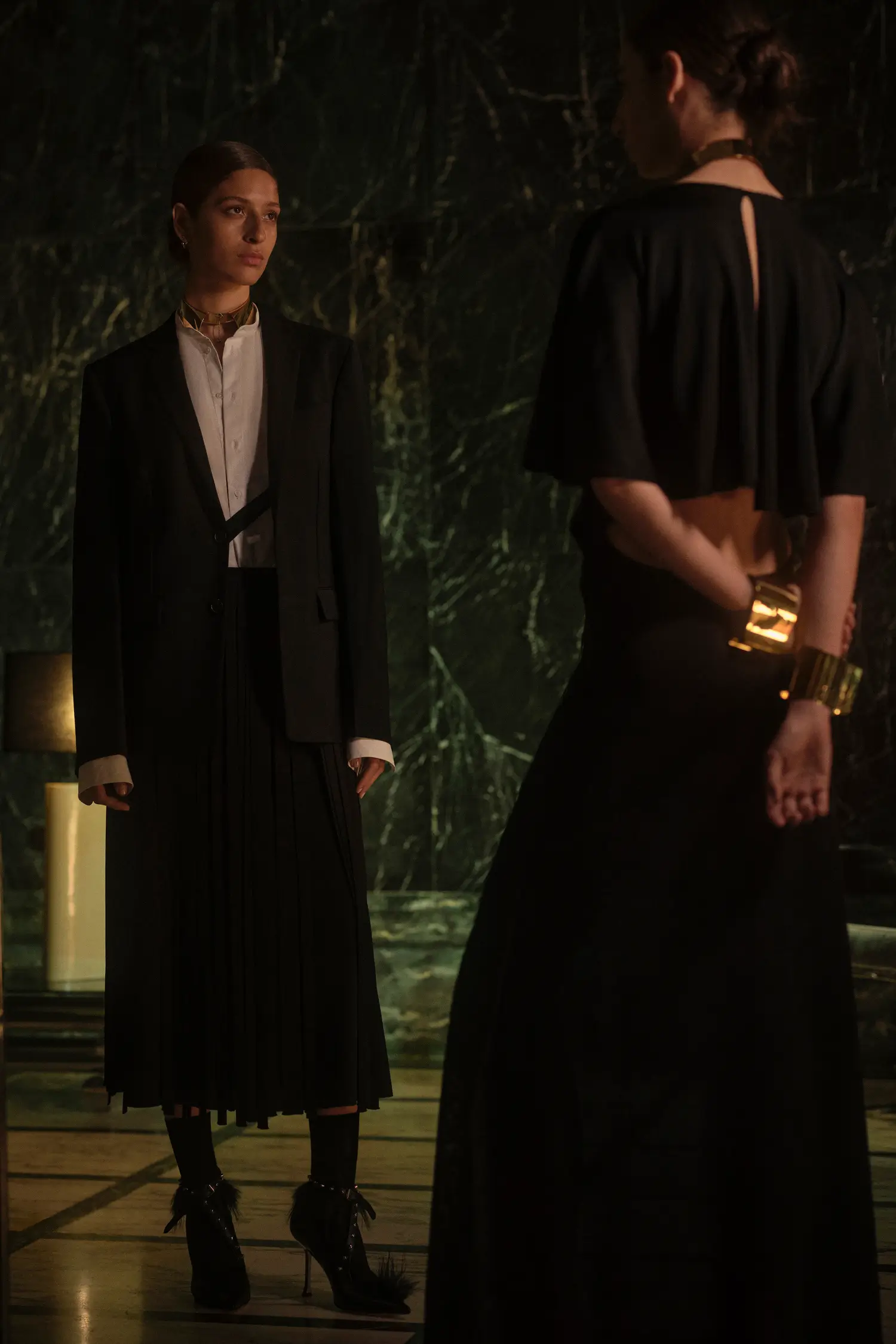
In the world of haute fashion, Cruise (or Resort) collections occupy a unique space. Positioned between the major seasonal shows, they offer brands an opportunity to deliver wearable, commercially driven pieces that bridge autumn/winter and spring/summer wardrobes. For Fendi, the Cruise 2027 collection marks a significant milestone: the first pre-collection under the creative direction of Maria Grazia Chiuri. Presented on May 27, 2026, through a cinematic short film titled OLTRE LO SPECCHIO / BEYOND THE MIRROR, the collection embodies Chiuri’s philosophy of “Less I, more us,” emphasizing shared wardrobes, functionality, craftsmanship, and a distinctly modern Roman bourgeois elegance.
stir
Maria Grazia Chiuri’s appointment as Fendi’s Chief Creative Officer was a full-circle moment. She began her career in the late 1980s in Fendi’s accessories department, contributing to iconic designs like early iterations of the Baguette bag. After decades at Valentino and then transforming Dior, her return to the Roman house in late 2025 brought deep institutional knowledge and a fresh perspective.
Chiuri’s debut for Fall/Winter 2026 introduced the “shared wardrobe” concept—garments designed to transcend gender norms and be interchangeable between partners, friends, or family members. Cruise 2027 builds directly on this foundation. In interviews, Chiuri describes her approach as rooted in the practical realities of the original Fendi women: Adele Fendi and her daughters, who balanced demanding work lives with social engagements, needing clothes that transitioned seamlessly from day to evening without requiring a full change.
The collection draws inspiration from Modernism—the era when Fendi was founded in 1925—and the functional beauty of everyday luxury. It also pays homage to Karl Lagerfeld’s legacy, specifically his 1977 short film Histoire d’Eau by Jacques de Bascher, which launched Fendi’s first ready-to-wear collection. Chiuri reinterprets this cinematic heritage in Beyond the Mirror, featuring a protagonist named Suzie wandering through a rationalist Roman building, where garments blur the lines between dream and reality, emptiness and matter.
straddle
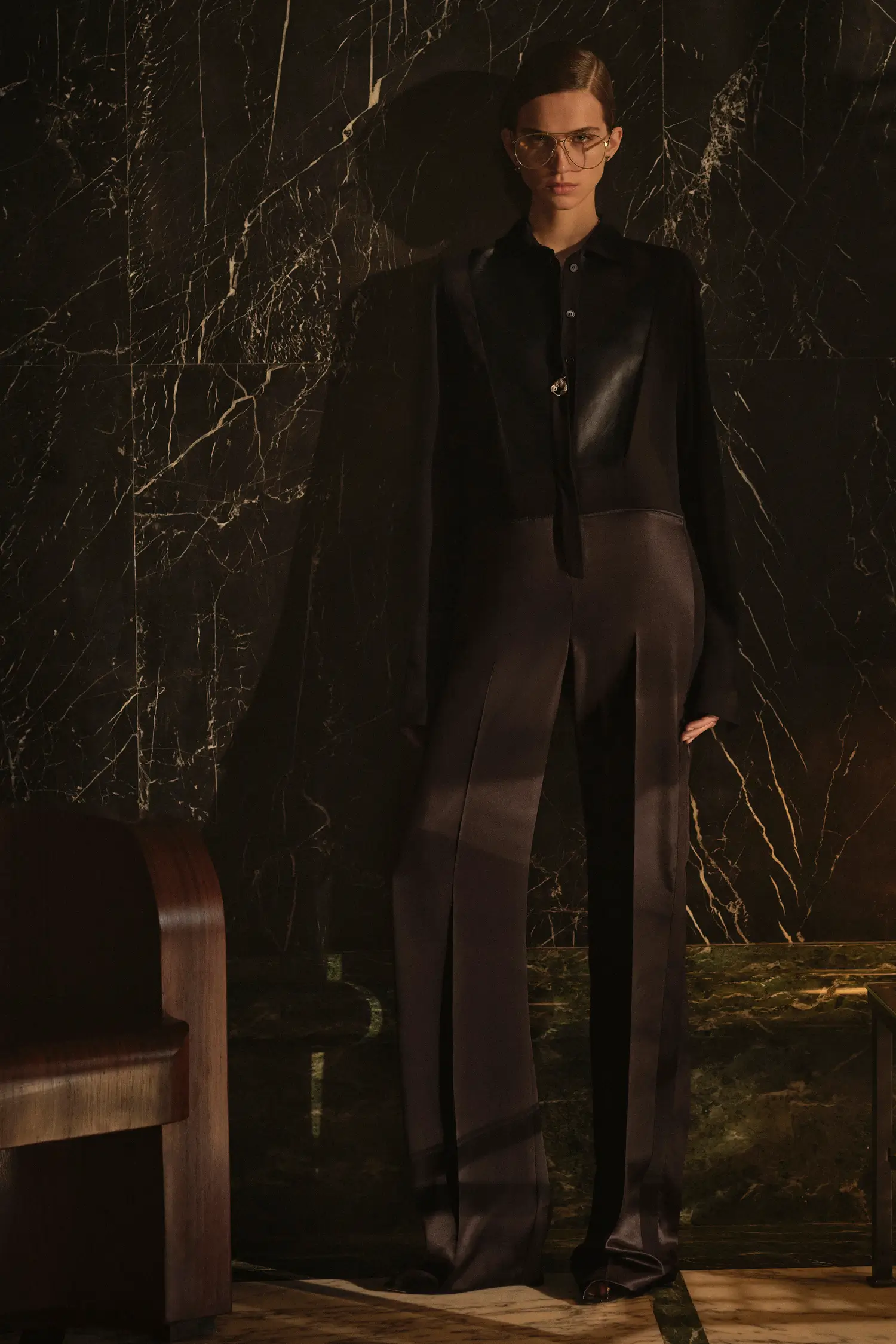
Chiuri characterizes the collection as “a modernist idea, with extremely functional garments, where the lines are extremely straight.” This manifests in clean silhouettes, versatile layering, and pieces that prioritize wearability while maintaining artisanal depth.
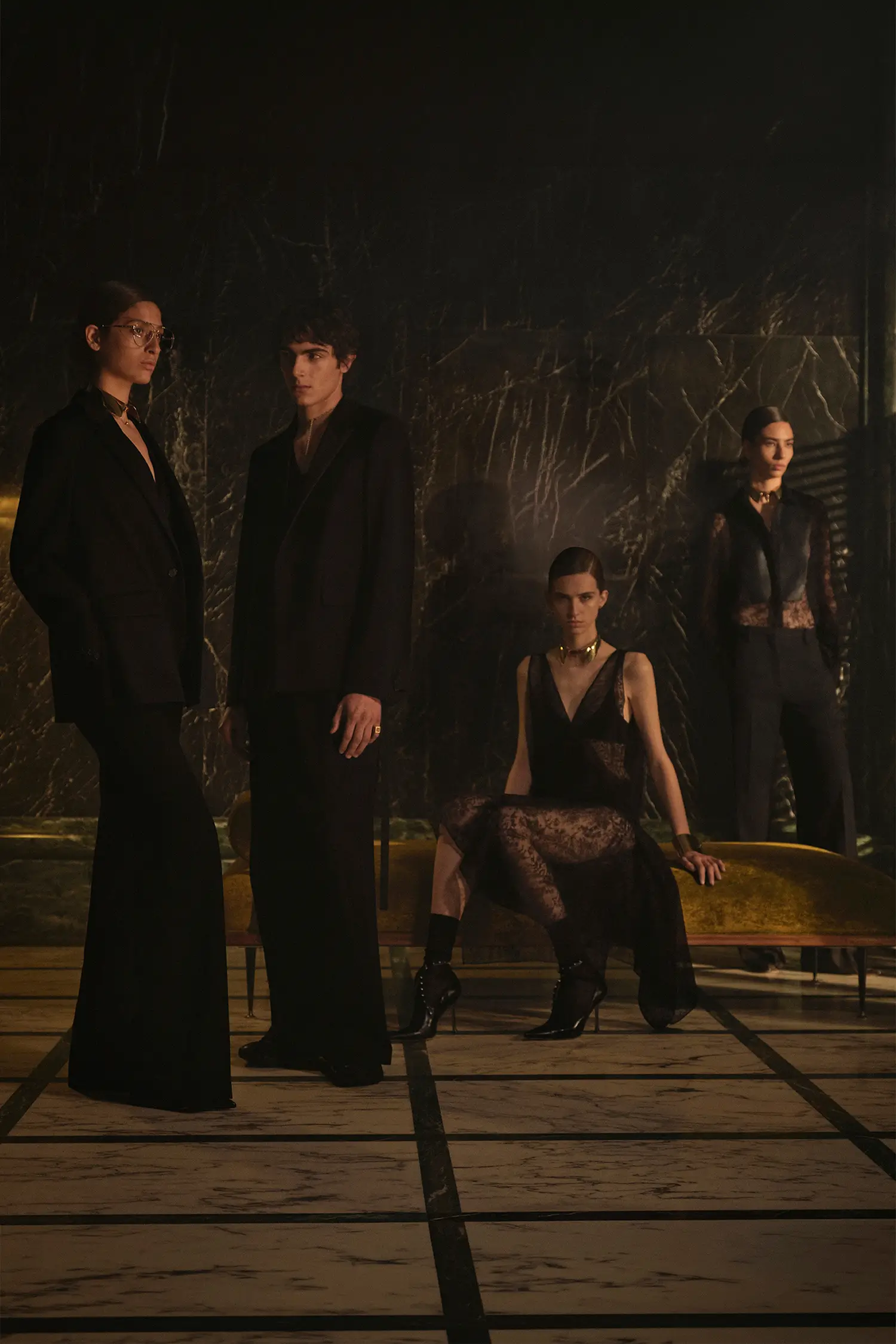
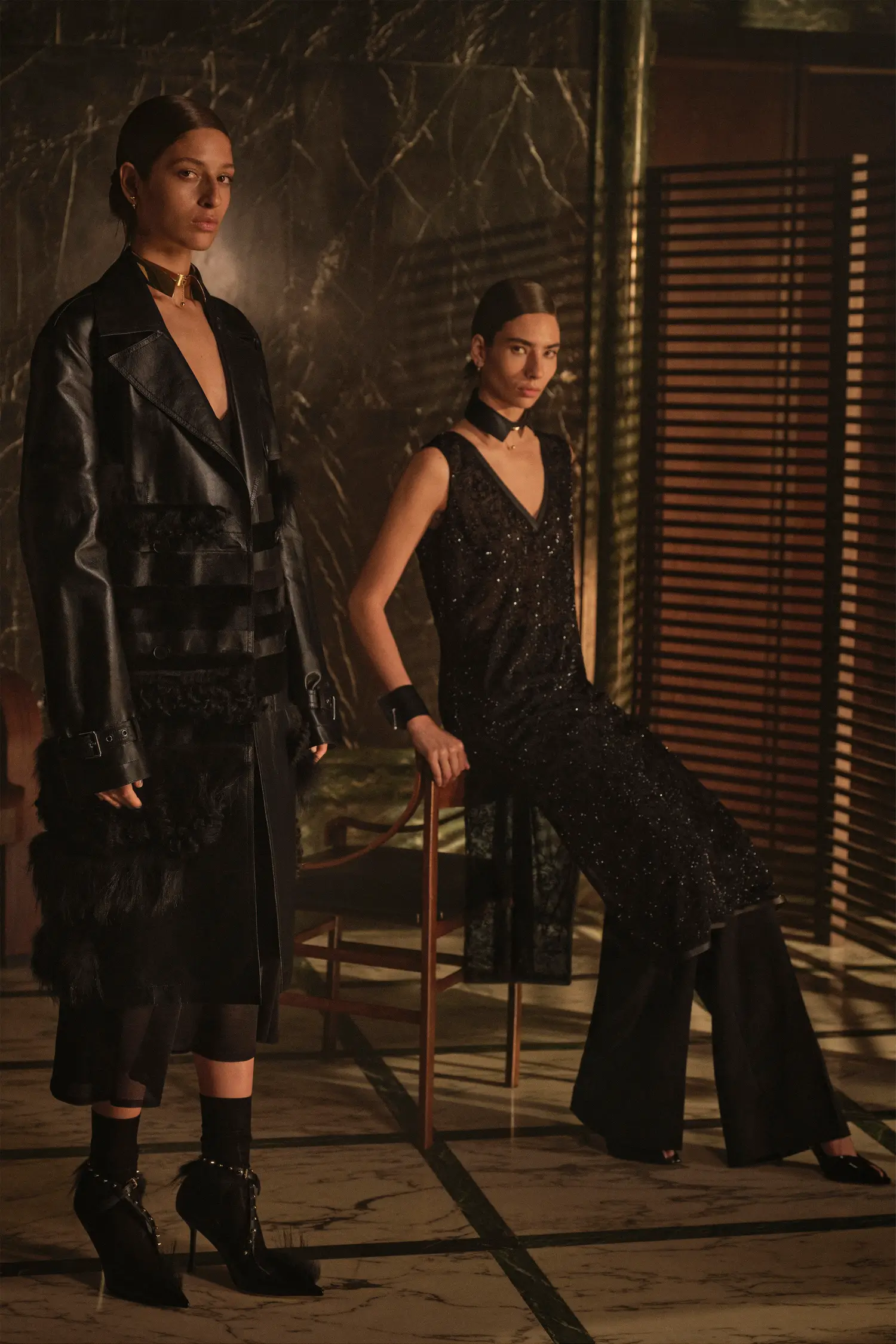
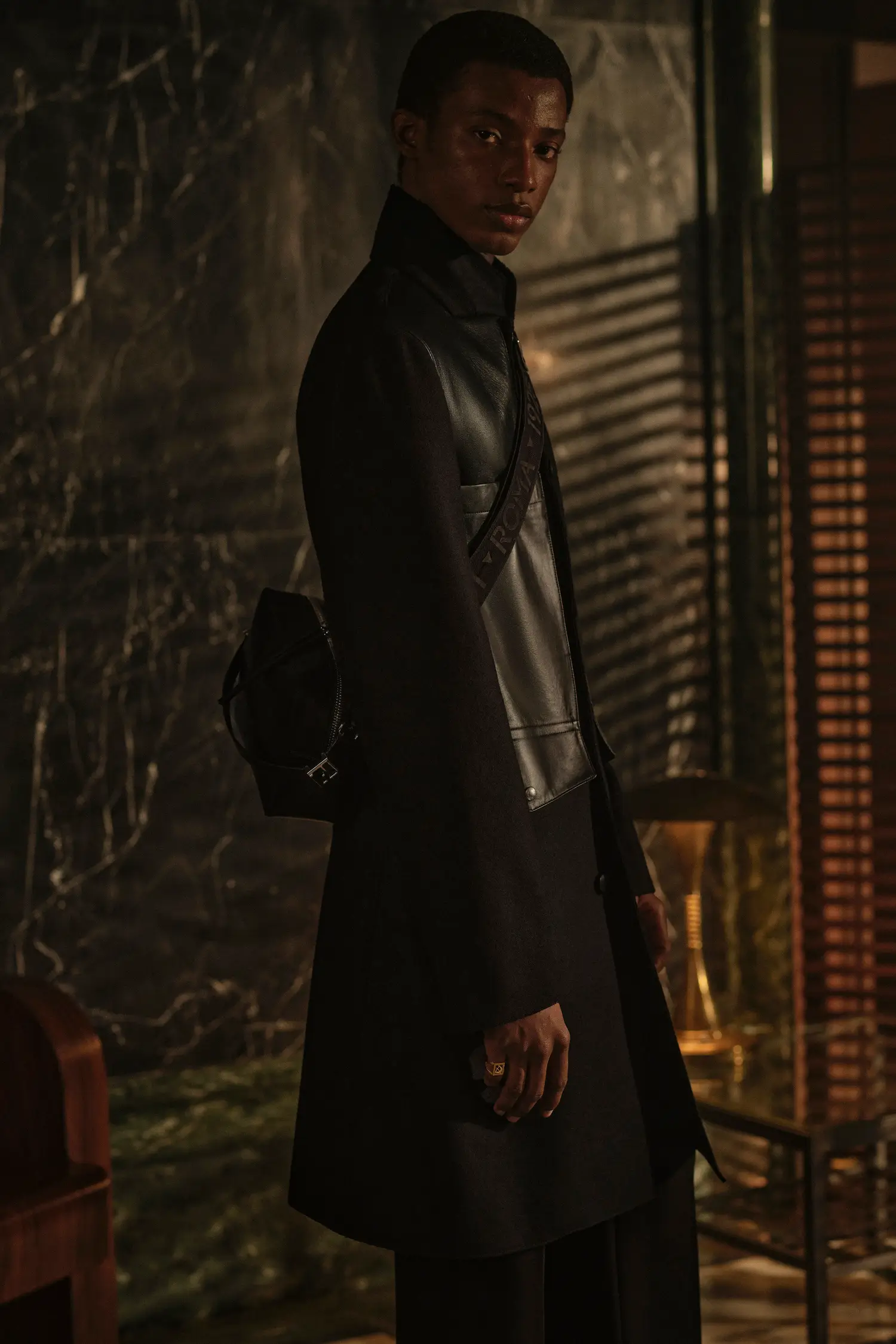
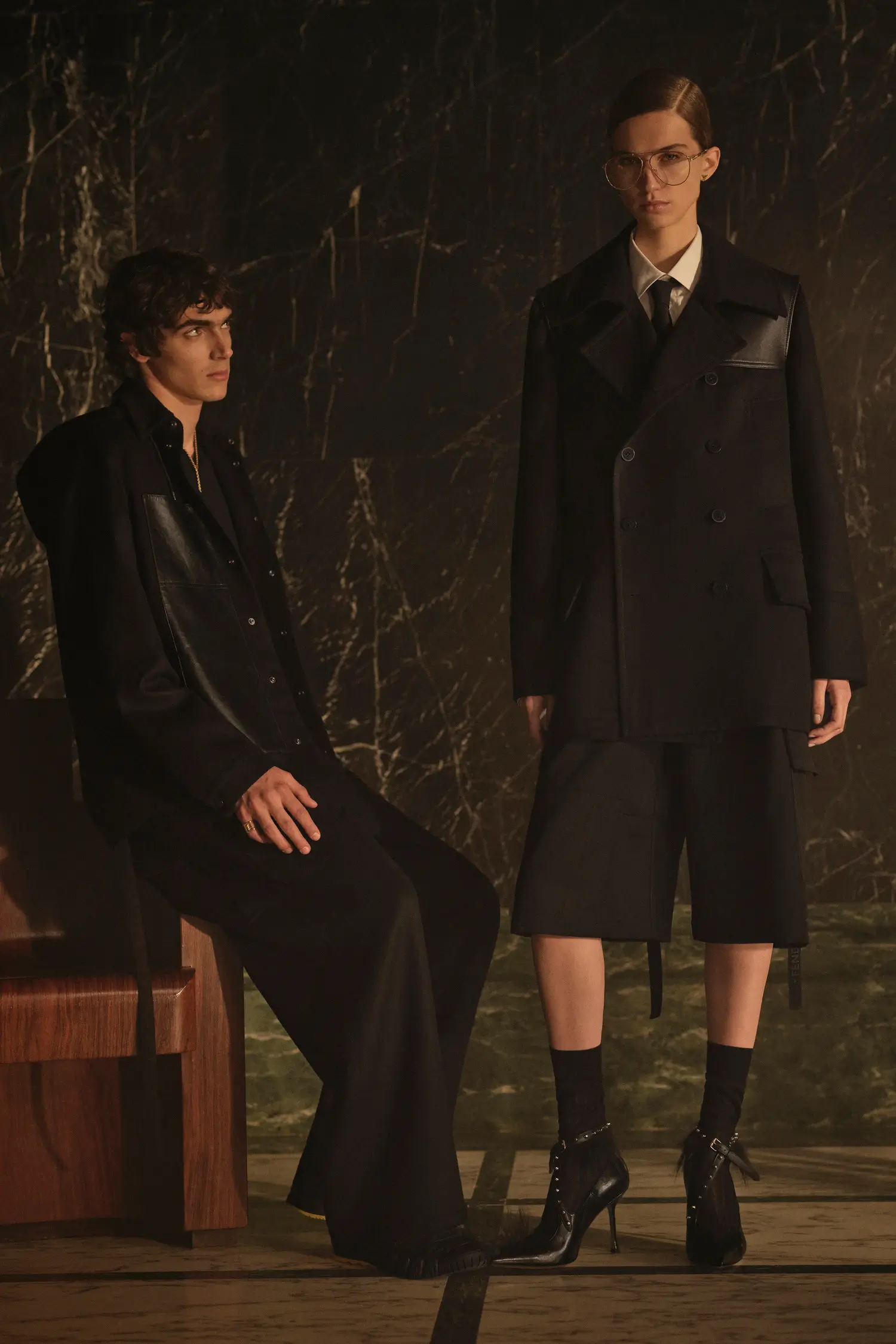
A central motif is the shared wardrobe. Many looks appear as duets in the lookbook, with female and male models wearing complementary or identical pieces in mirrored opposition. Examples include check-print split skirts paired with matching trousers, metallic Canadian tuxedos for him and her, and tailored outerwear that works across genders. This isn’t performative unisex dressing but a realistic reflection of how people borrow from each other’s closets.
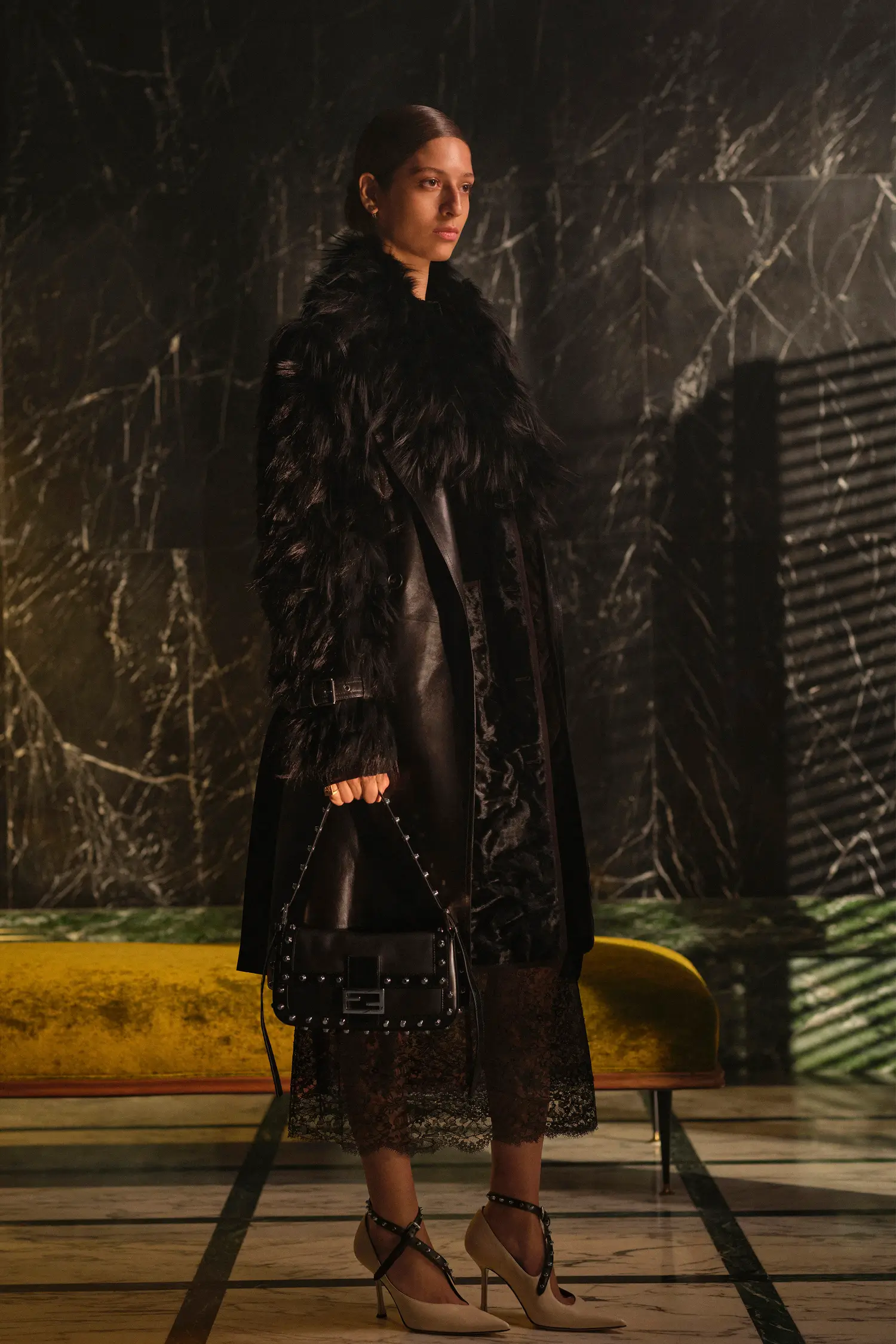
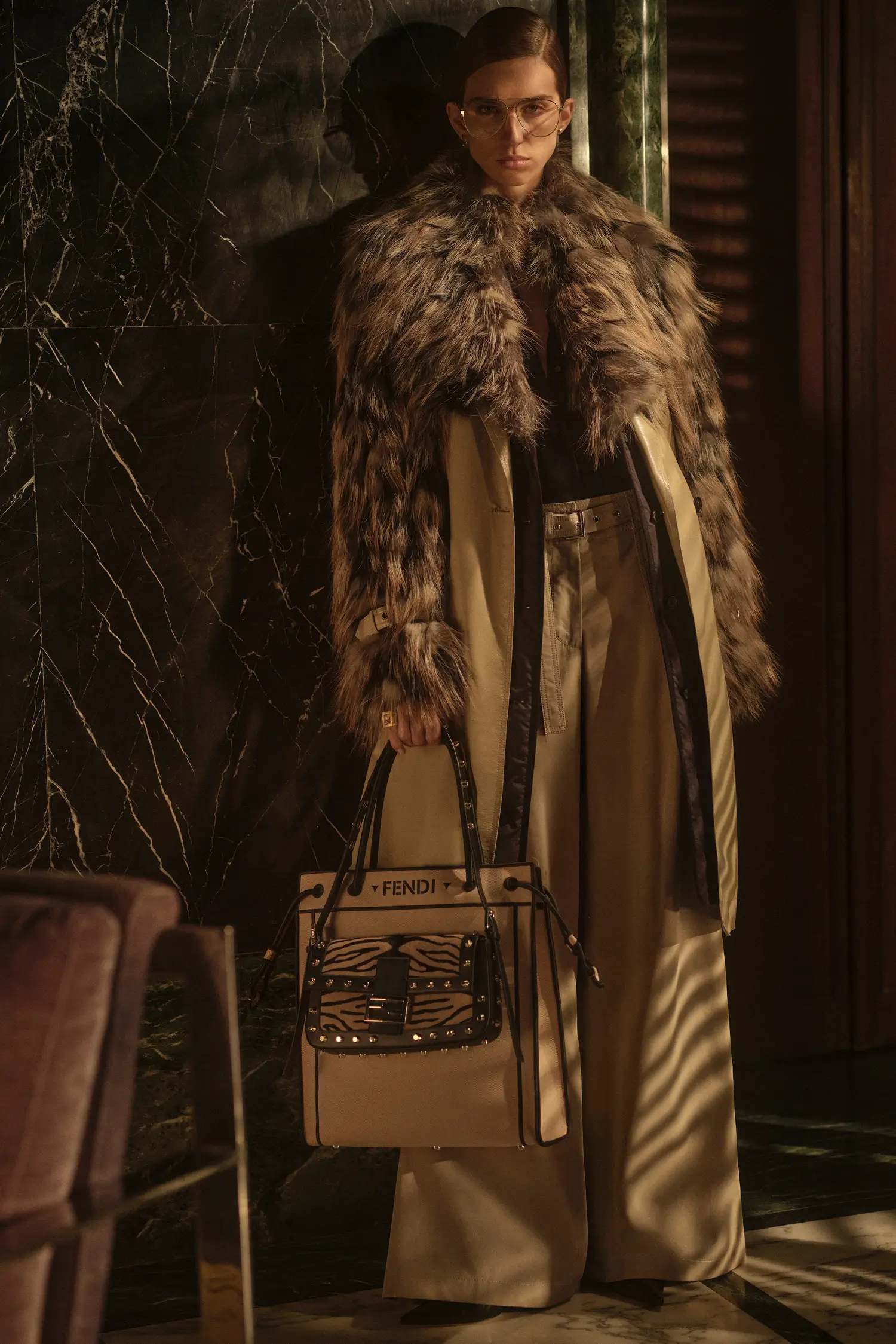
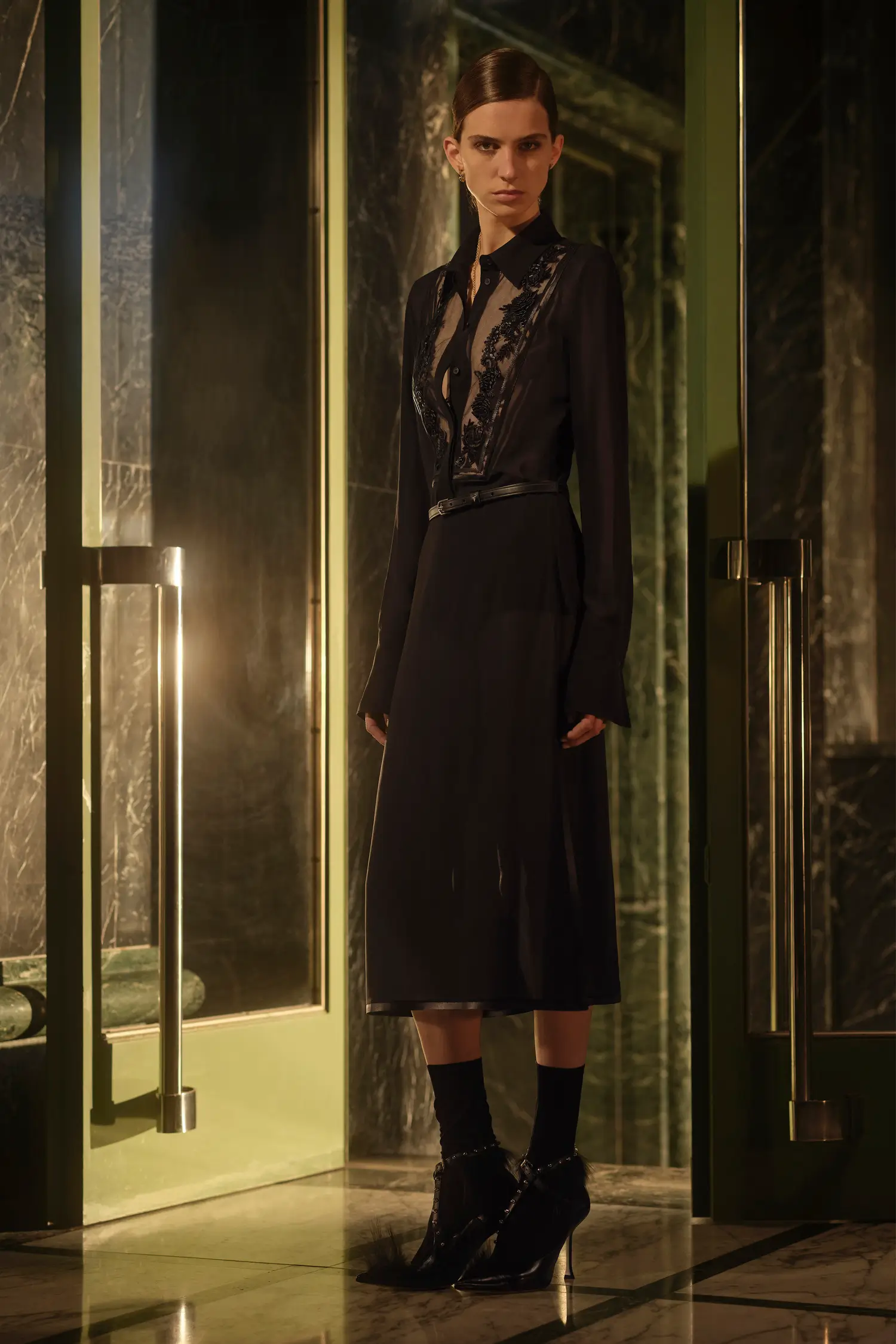
Tactility and sensuality are equally prominent. Fendi’s heritage in fur and leather informs textured experimentation: contrast-woven jackets, leather outerwear with plush fur collars, patchwork coats, and pieces incorporating mesh, lace, and fur patches. Chiuri emphasizes softness and durability—qualities inherent to knitwear and fur—that allow freedom of movement, essential for a traveling, working clientele.
The color palette is restrained yet sophisticated: dominant blacks and neutral parchment tones (inspired by Fendi’s signature luggage material), punctuated by red accents, avio blue, metallics, and subtle animal prints. This creates a noir, moody atmosphere fitting the film’s aesthetic while highlighting fabric textures and silhouette details.
imagine
One of the collection’s standout studies is parchment, historically tied to Fendi’s luggage-making expertise. For Cruise 2027, it appears in clothing and accessories. Neutral parchment hues grace three-piece suits, crisp trench coats with black detailing, and more.
The star accessory is a re-edited Baguette bag in its original parchment color with studded black leather accents. Chiuri notes the technical challenges of working with parchment—rigid and water-treated for suitcases—but the team achieved a softer leather version more suitable for a handbag. This revisits the bag’s origins, blending ateliers from leather goods and clothing. Sequined and embellished versions also nod to Fendi’s playful heritage.
Other materials shine through:
- Knitwear: Feather-light evening gowns that mimic chiffon, minimizing stitching for fluidity.
- Leather and Fur: Fringe-sliced leather belted skirts, weathered denim Western shirts, fur-trimmed vests with folk influences, and woven fur jackets.
- Outerwear: Floor-length trench coats with statement linings, contrast-undercollar camel coats, and patchwork designs.
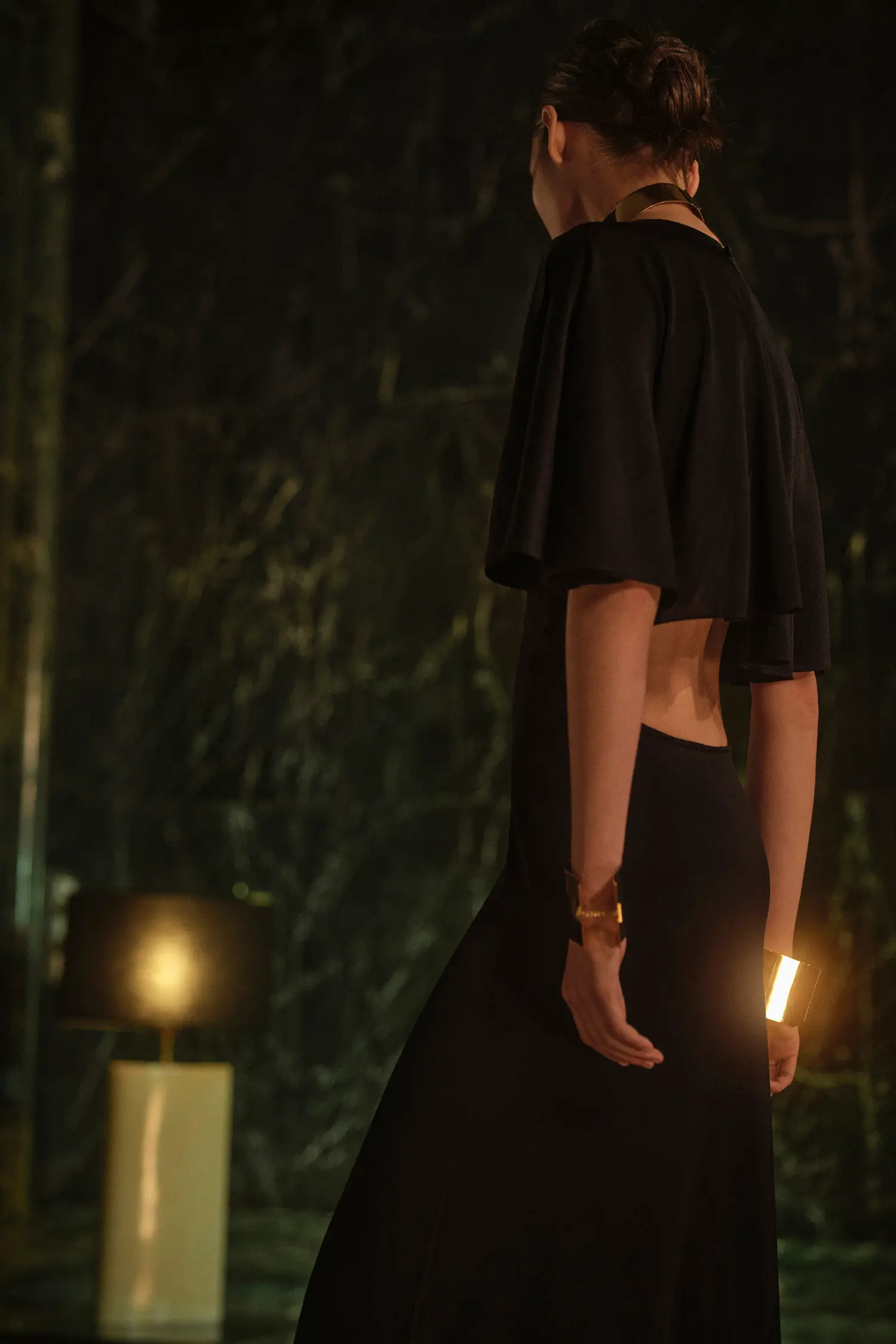
- Eveningwear: Plunging gowns, liquid skirt sets, sheer fringed pieces, and 1920s-flavored frocks.

sil
Chiuri favors a high-centered “X” silhouette in long-skirted eveningwear and outerwear, evoking balance and modernity. Wearable tailoring dominates: handsome double-breasted suits, pleated skirts, and workwear-inspired separates that layer effortlessly.
Day-to-night versatility is key. Sequined tops hide beneath crisp suiting for easy transitions. Functional flared trousers pair with dramatic trenches. Evening propositions balance sharpness with soft glamour—think Gwyneth Paltrow-inspired liquid skirts or adventurous sheer fringed numbers.
Menswear elements integrate seamlessly: politely punkish checked pants, zebra or animal-print coats, and relaxed shirting that complement women’s pieces. The collection feels adult and enduring, designed for building a personal Fendi wardrobe over seasons rather than seasonal replacement.
cin
Unlike traditional runway shows, Fendi opted for a short film shot in Rome’s rationalist architecture. Suzie, the German tourist protagonist, moves through austere spaces where light, geometry, and silence dialogue with the garments. This narrative approach reinforces themes of reflection (mirrors), identity, and the interplay between subject and object.
The film nods to Italian cinematic history—Visconti’s portrayals of bourgeois adulthood—and Fendi’s own archives. It positions the collection within a broader conversation about evolving work-life dynamics, gender fluidity in dressing, and the desire for lasting, tactile luxury in a fast-fashion world.
scope
Cruise 2027 arrives at a time when haute houses are rethinking relevance. Chiuri’s focus on pragmatism contrasts with more theatrical presentations elsewhere. Her emphasis on durability and mixability addresses consumer demands for value in high-price-point items. Fendi’s Roman roots shine through in the collection’s understated elegance—neither overly ornate nor minimalist, but confidently bourgeois.
Comparisons to her Dior tenure are inevitable. At Dior, Chiuri championed feminism and historical references; at Fendi, she channels house codes (fur, leather, Baguette) into a more grounded, connective view. The “new bourgeoisie” isn’t stuffy—it’s dynamic, traveling, working, and social, much like the Fendi family itself.
impression
With 61+ looks documented in galleries, the collection offers broad appeal: investment tailoring, statement outerwear, versatile knits, and must-have accessories. The parchment Baguette is poised to become a modern classic, while textured experiments could influence broader trends in sensuous, layered dressing.

Critics praise the collection’s wearability and depth. WWD highlights its functional, straight-to-the-point quality. Vogue notes the Vitruvian proportions and shared dressing. ELLE celebrates the cinematic storytelling and archive reverence.
For Fendi, under Capri Holdings, this collection signals continuity and evolution. It honors Lagerfeld’s showmanship while advancing Chiuri’s collaborative ethos.
fin
Fendi Cruise 2027 is more than a pre-collection—it’s a manifesto for thoughtful opulent. Maria Grazia Chiuri has crafted a wardrobe that respects the past (Fendi’s fur legacy, Lagerfeld’s cinema, archival Baguette) while addressing contemporary needs: versatility, tactility, gender fluidity, and longevity.
In an era of digital overload and disposable trends, these pieces invite touch, layering, and personal storytelling. Whether a parchment suit for the office, a fur-trimmed coat for evening, or a reimagined Baguette for daily adventures, the collection equips the “new bourgeoisie” for real life with Roman flair and modernist precision.
As Suzie drifts through the mirror in Fendi’s film, viewers are invited to see themselves reflected—not in fantasy, but in garments designed for the beautiful complexity of everyday existence. Chiuri’s Fendi feels intimate yet expansive, rooted in heritage yet forward-looking. It’s a promising foundation for the house’s next chapter.
From the DRIFT archive: Y-3 Sets the Tone for Its Spring/Summer 2026 Collection · Essential Layers: Levi’s Fall/Winter 2025 Outerwear Guide
Related Articles
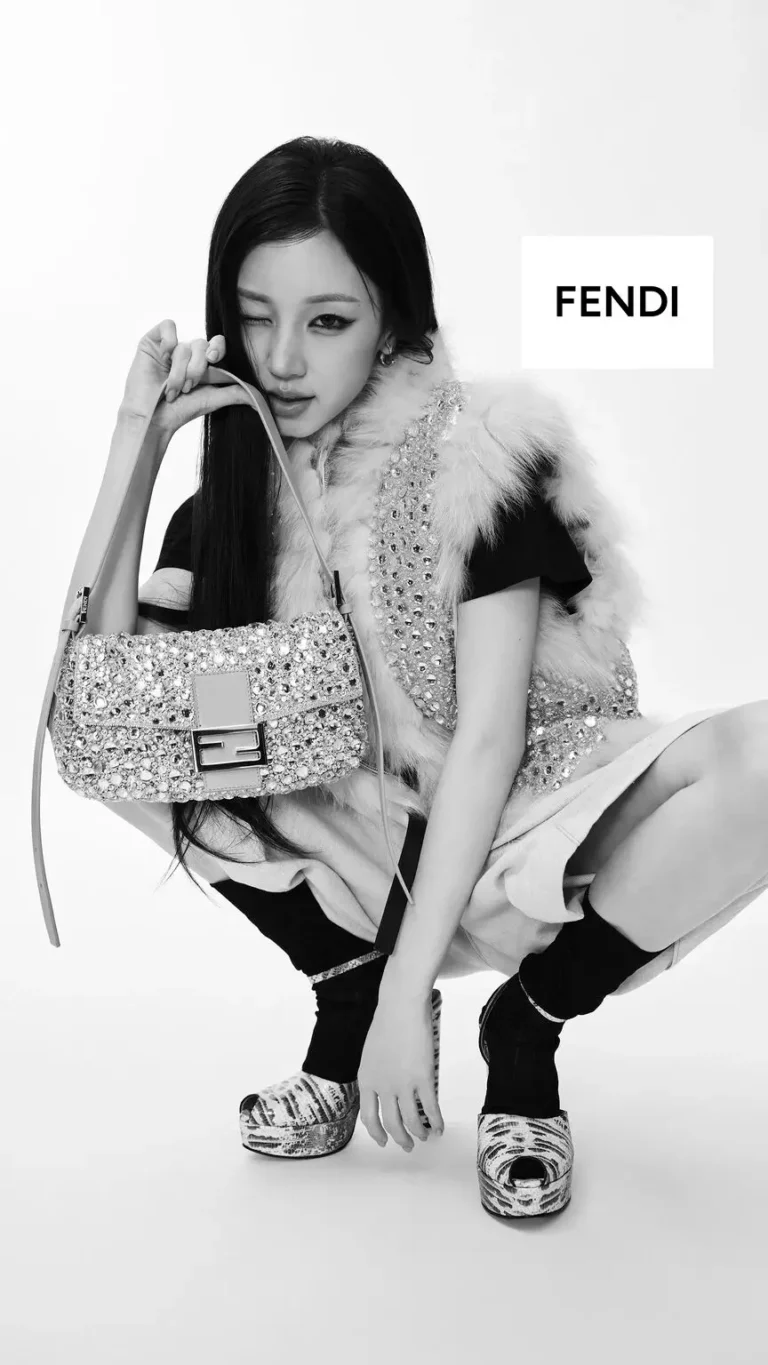
FENDI Puts Ten Different Lives Inside One Bag For The Baguette’s Return To Its Original Shape
Maria Grazia Chiuri’s first campaign back at FENDI treats the Baguette not as an It-bag […]