DRIFT AUDIO
Listen to this story
Choose a voice, then press play.
Lexus engineers are betting an electric supercar can earn its stripes without faking the sound of a combustion engine.
In This Story
- A Concept That Refused To Stay A Concept
- Inside Toyota’s Holy Trinity
- What Goodwood Actually Revealed
- The Solid State Bet
- Redesigning The Sound Of Speed
- Design Lang: Restraint Over Bravado
- Where The LFA Sits In Lexus’s Electric Future
- What Comes Next
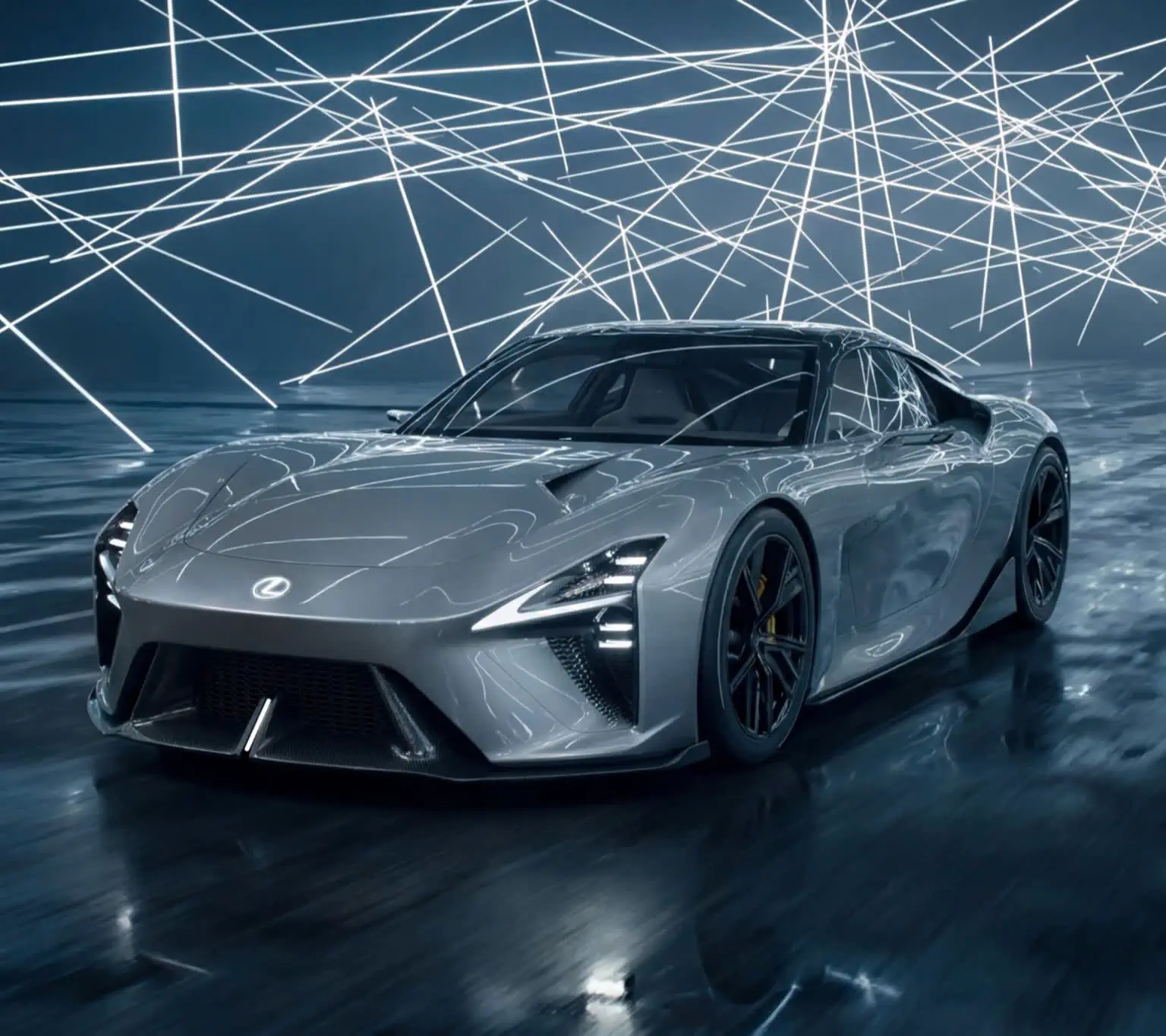
Every carmaker with a halo model eventually has to decide what happens to it once the engine that defined it can no longer exist. For Lexus, that reckoning arrived with the LFA, a hand built, Yamaha tuned supercar whose 4.8 litre V10 screamed to 9,500rpm and never sold in numbers that mattered financially. It mattered culturally instead. So when Lexus wheeled out the LFA Concept at Woven City in December last year, the announcement carried more weight than a typical concept reveal. This was not a design study meant to gauge public reaction and shh disappear. It was, from the outset, described as Lexus’s vision for what a next gen electric sports car should feel like.
What has happened since has made that view considerably harder to dismiss. A heavily camouflaged prototype turned up at the Goodwood Festival of Speed this week, running the hillclimb under its own power in front of a crowd that had shown up expecting to hear the V8 roar of the related Toyota GR GT. Instead they got something closer to silence.
The gap between those two moments, a static concept unveiled in Japan and a running prototype hillclimbing in the English countryside seven months later, is where most of the interesting information about this car actually lives. Concepts get refined or reticently shelved all the time, and for a while it was genuinely unclear which fate awaited the electric LFA. Lexus itself acknowledged as much when the GR GT was first revealed, admitting the electric sibling had not yet been given a firm production commitment. A disguised, drivable prototype tearing up one of the world’s most scrutinised hillclimbs is about as clear a signal as a car company can send without issuing a press release confirming production outright.
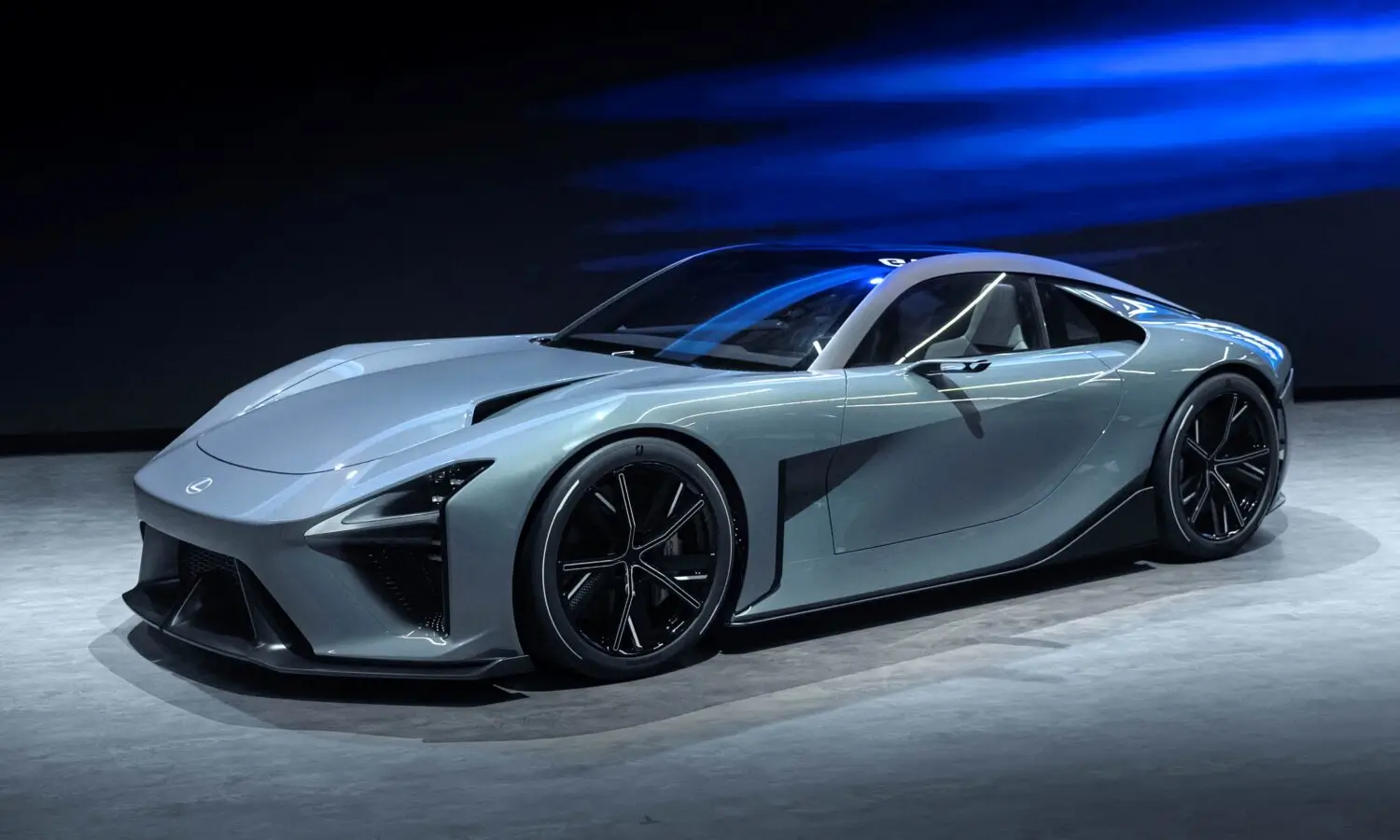
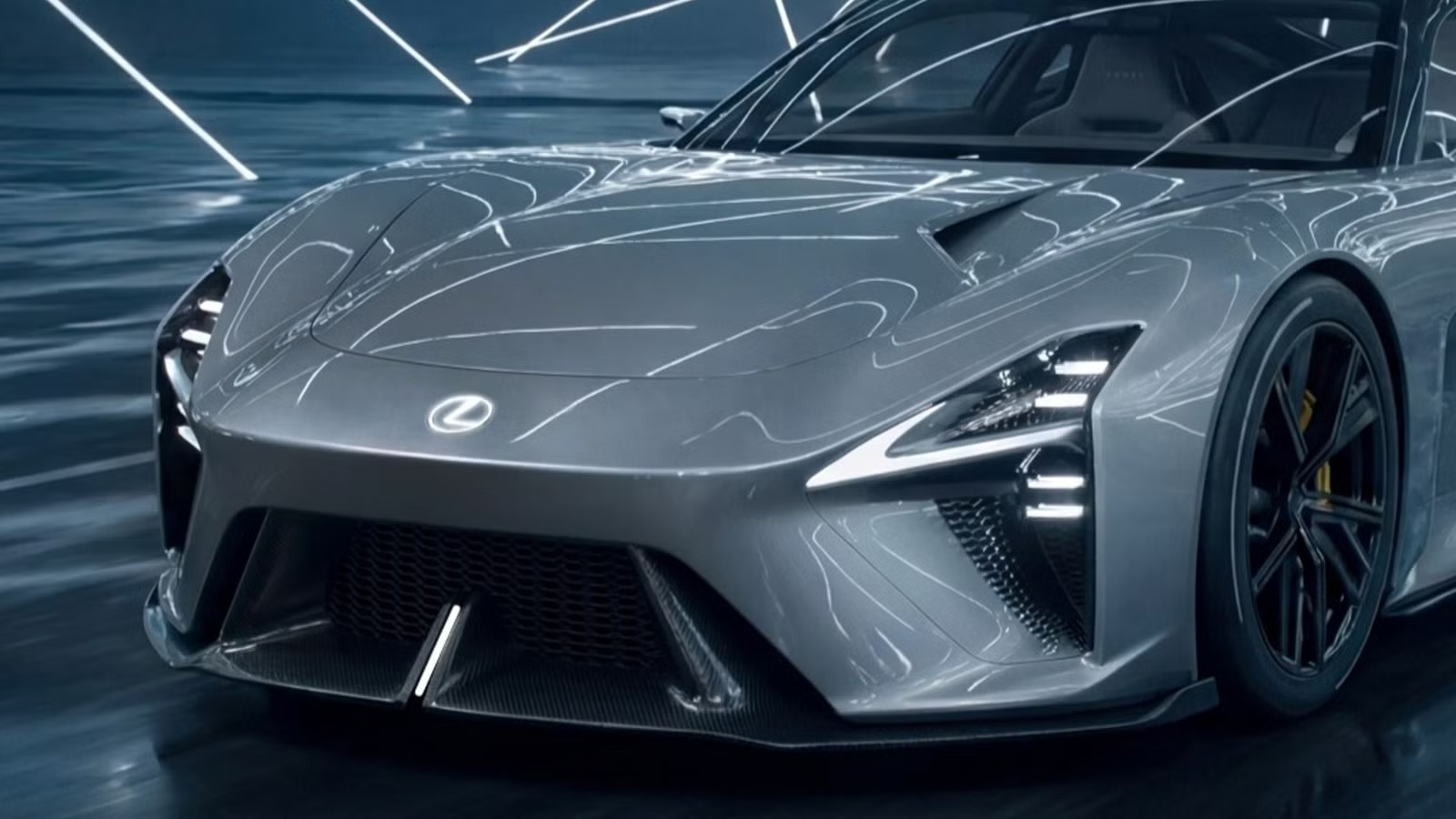
Lexus Electrified Sport concept displayed in a studio, previewing the brand’s future electric performance flagship.
in
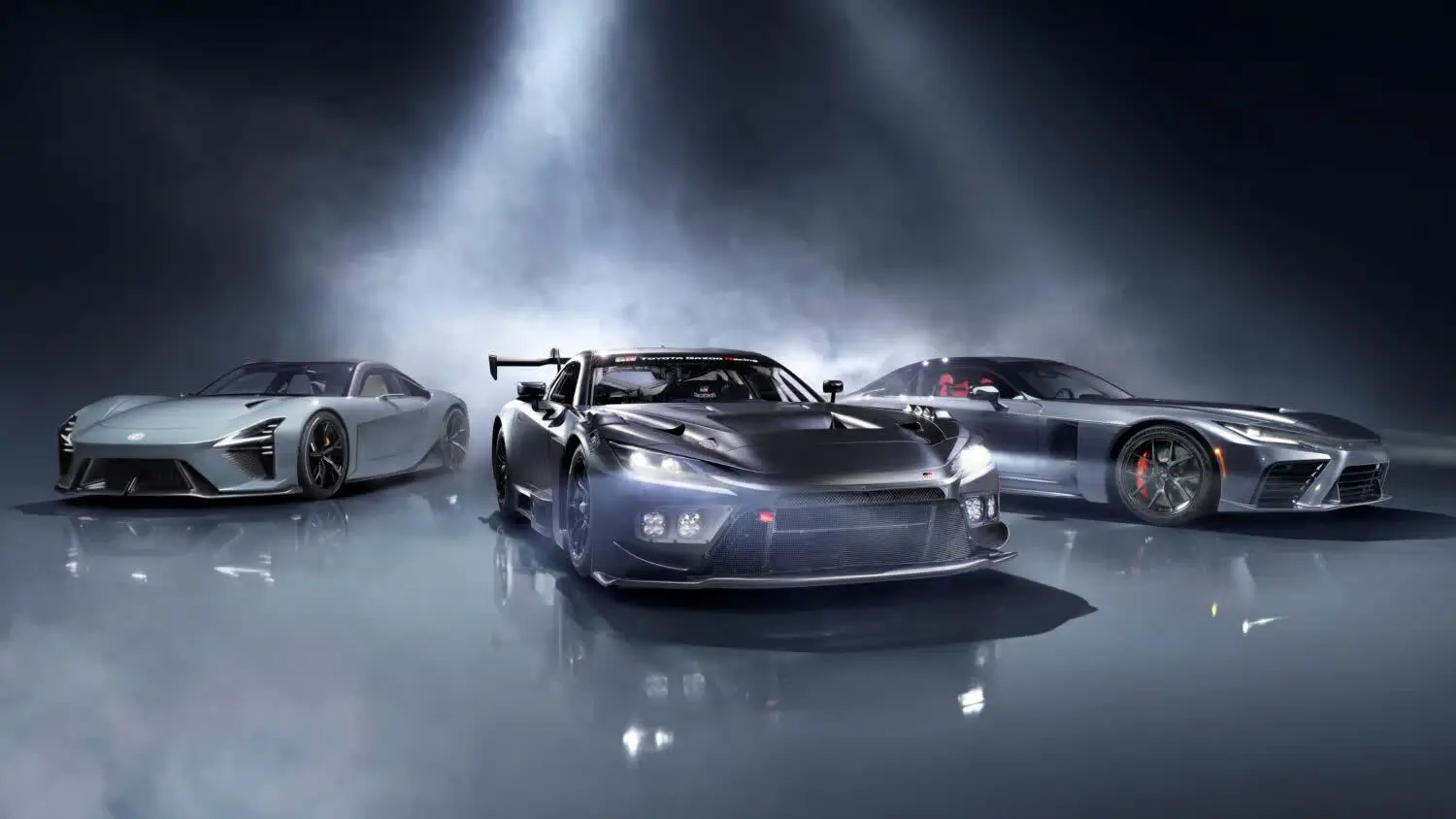
The electric LFA does not exist in isolation. It is one third of what Toyota Gazoo Racing unveiled as a trio of related show machines built around shared underpinnings, a low centre of gravity, an aluminium body structure engineered for rigidity without excess mass, and an obsessive focus on aerodynamics. The other two members of that family are the road legal GR GT and its track only sibling, the GR GT3, both powered by a twin turbo V8. The LFA shares their bones but swaps the combustion engine for a battery electric powertrain, making it the odd sibling out in the best possible way.
Toyota has framed the entire program around a piece of culture philosophy rather than a marketing slogan. Company chairman Akio Toyoda, known within the company by his racing pseudonym Morizo, has pushed the idea of Shikinen Sengu, the practice observed at Japan’s Ise Grand Shrine of dismantling and rebuilding a sacred structure every twenty years so that the craftsmanship behind it is never lost to a single gen. Applied to car making, the idea is that the skills used to build something as extreme as the original LFA should not vanish simply because the powertrain underneath it changes.
It is worth remembering how unlikely the original LFA was in the first place. Lexus spent close to a decade developing it, hand assembled a limited run between 2010 and 2012, and by most accounts lost money on every single unit sold. The point of the car was never volume. It existed to prove Lexus could build something uncompromising, a message aimed as much at the company’s own engineers as at customers. Reviving that name for an electric car carries real risk precisely because the original set such a specific, almost irrational bar for what an LFA is supposed to represent. Toyota’s decision to develop the electric LFA alongside a combustion powered sibling, rather than as a standalone project, suggests the company understands that risk and wants both cars to validate each other rather than compete for attention.
unveil
Concept cars are designed to be admired from a rope line. Prototypes running a hillclimb in front of paying spectators are a different animal entirely, and that distinction is what made this week’s appearance at Goodwood so telling. Even under thick camouflage wrap, close observers picked out real changes from the December concept. The triangular front intakes that gave the show car its aggressive face have been swapped for simpler rectangular openings, the nose sits slightly taller, likely to satisfy pedestrian safety regulations, and the bonnet now carries functional cooling vents rather than purely decorative surfacing. The rear retains a dual strut wing mount, a deliberate echo of the original LFA’s rear treatment rather than the single strut arrangement shown on the concept.
Autocar’s reporting from the event captured comments from two people central to the program. Concept designer Shogo Kasamatsu described the original LFA as a deliberately humble, function first design, and said its influence pushed the new car away from the overt aggression of its GR GT sibling, adding that the shape needed to express a message rather than simply match Lexus’s current production language. He also confirmed the design is close to what customers will eventually see, calling it almost finished ahead of a planned launch next year.
scope
The single most consequential technical detail attached to this car has nothing to do with its styling. Multiple outlets reporting from Goodwood, including Autocar, have pointed to strong signals that the production LFA will be the first Lexus fitted with solid state batteries, a chemistry Toyota has spent years promising and has yet to bring to market at scale. Solid state cells replace the liquid electrolyte found in conventional lithium ion packs with a solid material, which in theory allows for significantly higher energy density, faster charging, and better tolerance of extreme temperatures.
None of that comes free. Auto Express noted that the aluminium structure shared with the GR GT, itself already tipping the scales at around 1,750 kilograms in V8 form, will only grow heavier once a battery pack is packaged into it. That runs directly counter to the ethos of the original LFA, which was engineered obsessively around weight reduction using a carbon fibre tub. Lexus appears to have made peace with that trade off, betting instead that responsiveness, torque delivery, and the character of the drive can compensate for a car that will almost certainly outweigh its ancestor by a wide margin.
Exact figures on range, output, or battery capacity remain unconfirmed by Lexus. Reporting from Electrek places the concept’s dimensions at roughly 184.6 inches long, 80.3 inches wide, and 47 inches tall on a 107.3 inch wheelbase, putting it in the same physical footprint as an Aston Martin DB12 or a Ferrari Roma, with a production launch expected sometime in 2027, trailing the GR GT’s own 2027 arrival by a matter of months at most.
show
If there is a single idea this program keeps returning to, it is the refusal to fake anything. Yukihiro Yukita, general manager of the LFA program, has been blunt in interviews about what he sees as the central weakness of most performance EVs on the market today, arguing that synthesised engine noise piped through speakers reads as inauthentic to serious drivers. He has acknowledged the technical skill behind rivals like Hyundai’s virtual gear systems in the Ioniq 5 N and Porsche’s own synthesised soundtracks, while insisting Lexus wants to build something with its own identity rather than imitate a combustion engine that no longer exists under the hood.
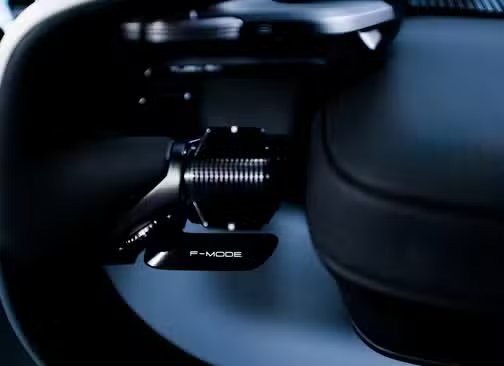
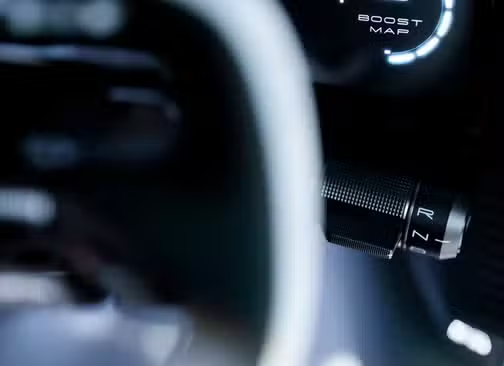
That ambition shows up concretely in details reported by evo, which described a system of virtual gears paired with a synthesised soundtrack that draws on the acoustic signature of the original LFA’s V10 without attempting a literal recreation of it. A dial marked F mode on the concept’s yoke style steering wheel hints the car may eventually slot into Lexus’s F performance sub brand, alongside the departed RC F and LC 500. Yukita has framed the removed sound and vibration of a combustion engine less as a loss to mourn and more as a blank canvas, one where engineers get to decide from first principles what a sports car should sound and feel like rather than inheriting the answer from a hundred years of internal combustion.
lang
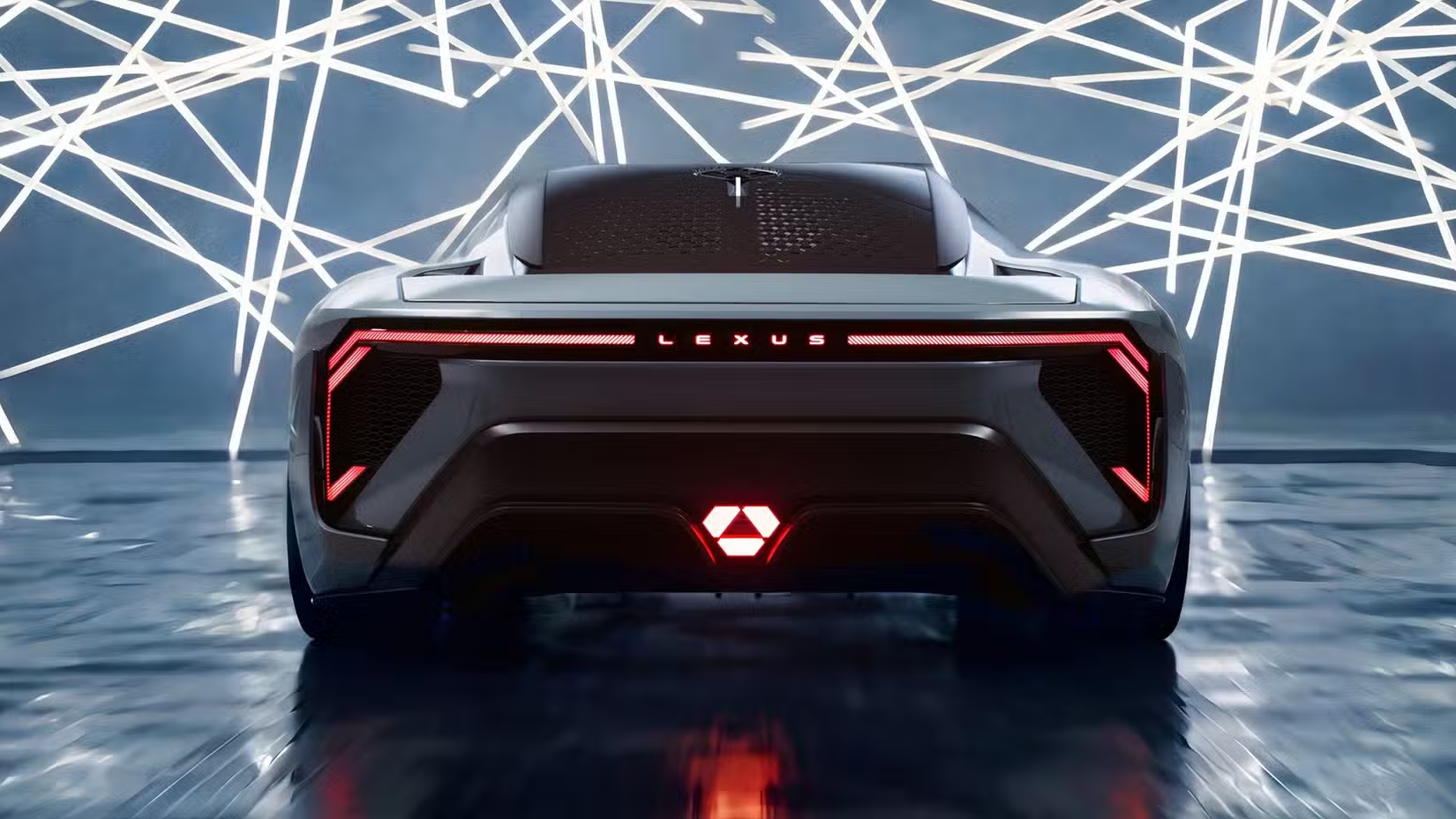
Compared with the GR GT’s overt, race bred aggression, the LFA concept reads as deliberately more composed. Its long bonnet, tight cabin, and pronounced rear haunches trace a cab rear silhouette that echoes classic front engine, rear drive supercar proportions, but the surfacing is smoother and less overtly aerodynamic than its Gazoo Racing sibling. At the rear, buttress like elements nod directly at the original LFA’s signature look, reinterpreted with a more contemporary finish. An expansive rear deck houses what several outlets have described as an integrated drone, a detail nobody involved has yet explained in any depth.
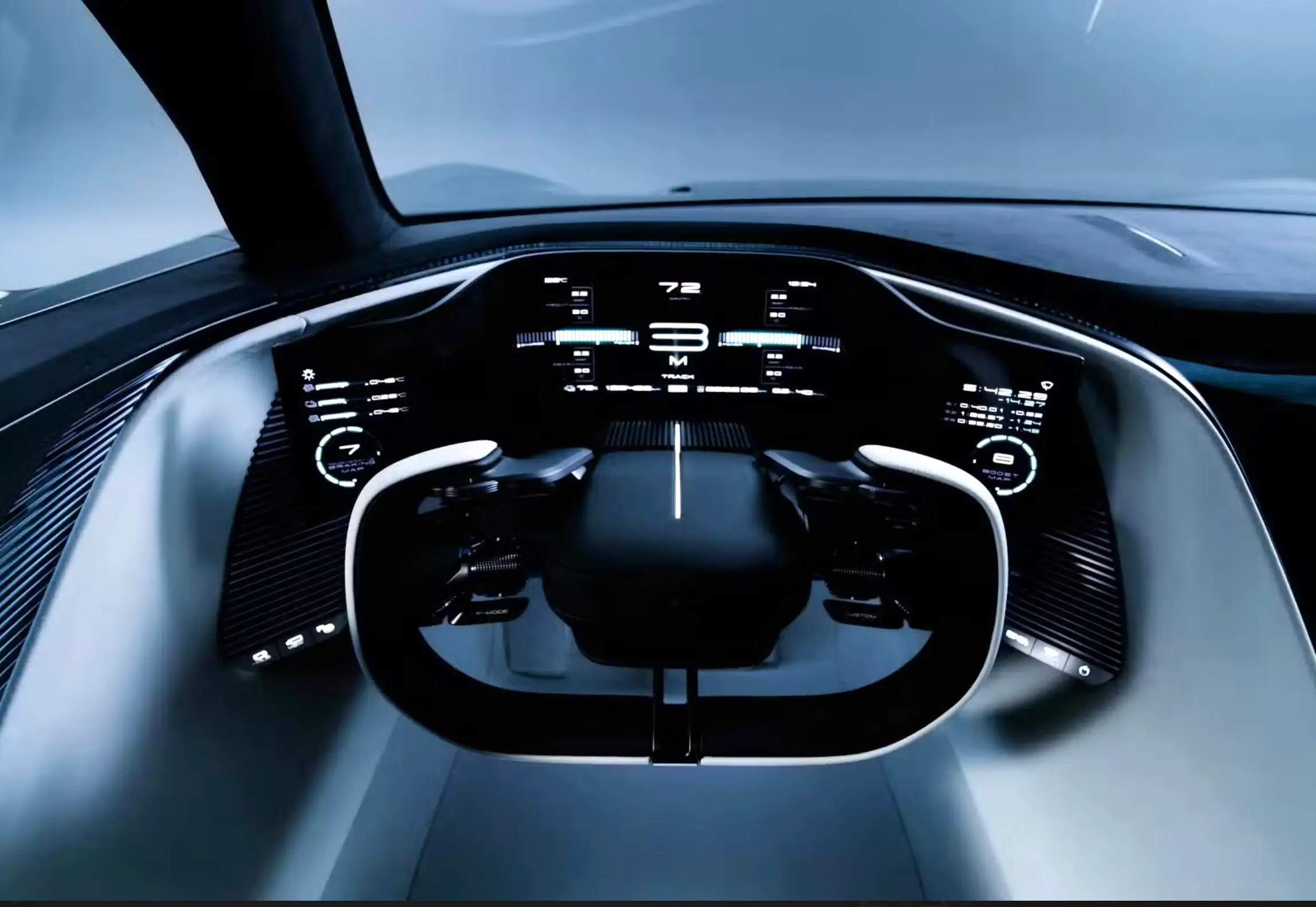
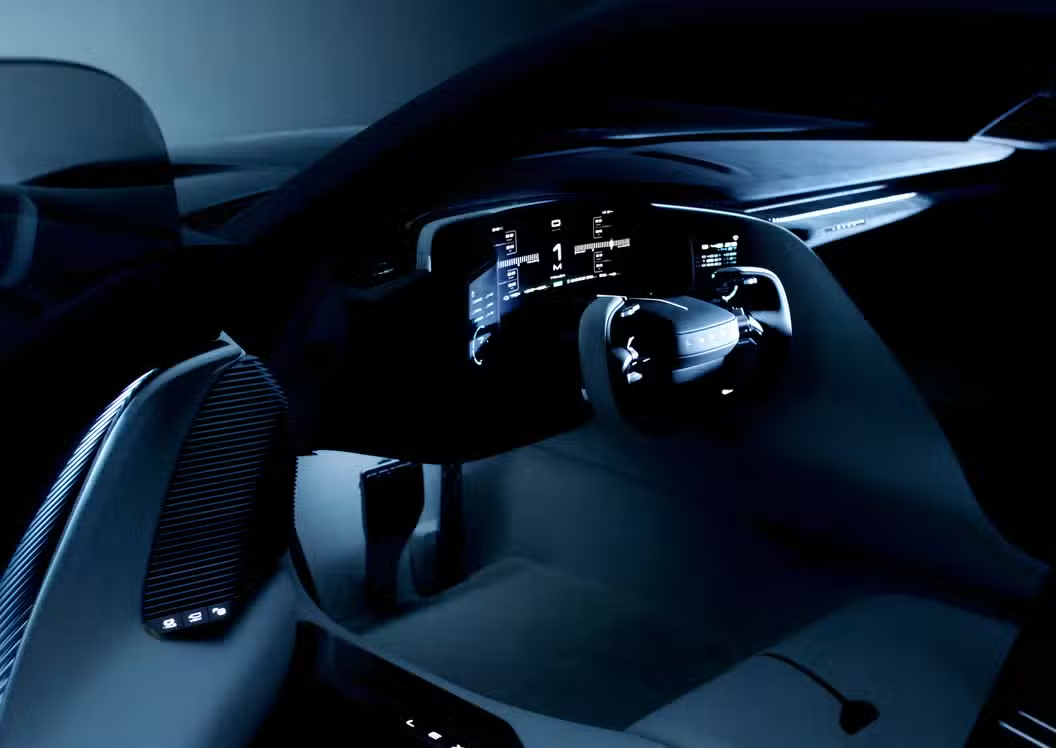
Inside, the concept trades the analogue instrument cluster of the 2010s car for a two tone cockpit built around a curved, wave shaped central display and a yoke style wheel dense with physical switches rather than touch surfaces. Lexus has referred to the cabin technology package internally as Discover Immersion, a system intended to personalise the driving environment to whoever is behind the wheel, though how much of that survives the transition from concept to showroom remains to be seen.
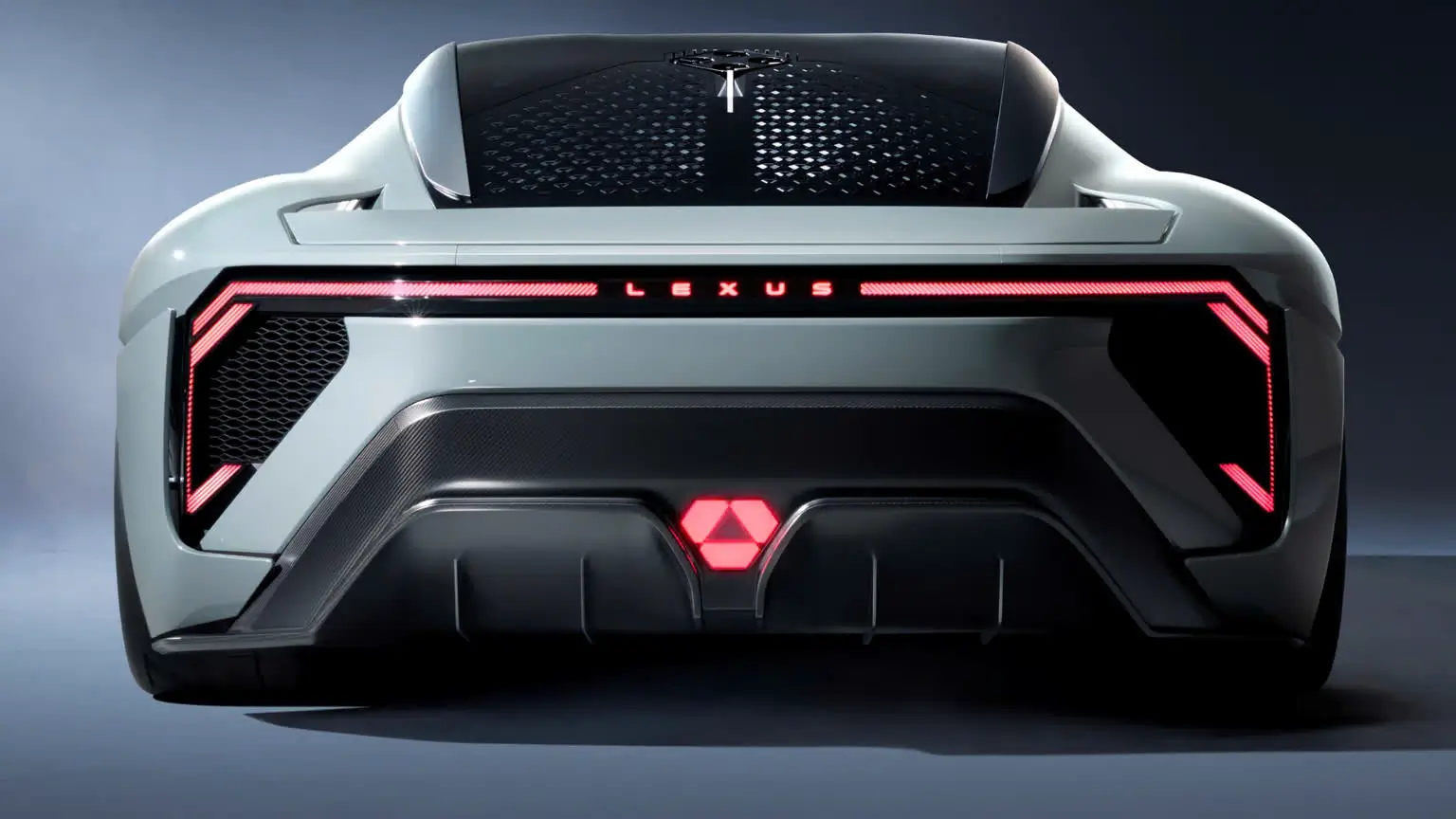
The rear design of the Lexus Electrified Sport concept blends dramatic lighting with clean, aerodynamic surfacing.
The absence of a central touchscreen is notable on its own. Most modern performance cars, electric or otherwise, have leaned harder into screen based interfaces as a way of signalling technological sophistication. Lexus appears to be arguing the opposite case here, that a driver focused entirely on hitting an apex should not need to glance at a tablet mounted in the dashboard. Physical switches on the wheel, including whatever the F mode dial eventually controls, point toward a cabin designed around muscle memory rather than menus. Whether that survives contact with production cost targets and safety regulations is an open question, but the intent behind it fits neatly with everything else Lexus has said about wanting the car to feel earned rather than assisted.
stance
The LFA does not arrive in a vacuum. Lexus has spent the past several years building out a broader electrified lineup that includes the RZ 450e and UX 300e, positioning itself as a brand willing to commit fully to battery power at the top end of its range rather than treating EVs as a compliance exercise. The LFA program gives that strategy a genuine flagship, something the brand has lacked since the RC F and LC 500 quietly exited the lineup. Positioning an electric halo car at the top of a luxury brand’s range is not a novel idea globally, but doing it as a direct successor to one of the most celebrated combustion supercars of the last two decades raises the stakes considerably higher than a typical EV launch.
There is also a broader industry context worth noting. Toyota’s insistence on pursuing solid state battery technology, rather than simply scaling up existing lithium ion chemistry, reflects a company willing to bet a flagship nameplate on unproven infrastructure. If the technology arrives on schedule, the LFA could credibly claim genuine technical leadership rather than parity with rivals. If it slips, as Toyota’s solid state timeline has slipped more than once already, the car risks launching with a more conventional battery pack and a correspondingly less dramatic story to tell.
extent
Lexus has not confirmed a firm reveal date for the production car, though the consistent signal from people close to the program points toward a 2027 launch, running roughly parallel to the GR GT. What remains unconfirmed is pricing, final output figures, whether all wheel drive and a twin motor layout carry over from the concept, and how closely the eventual production bodywork will match what showed up at Goodwood under all that camouflage. Kasamatsu’s own description of the design as almost finished suggests Lexus is closer to locking in the exterior than many observers expected at this stage.
What is already clear is the intent. Lexus is not trying to build an electric car that pretends to be the old LFA. It is trying to build a car that earns the same name on its own terms, using a completely different set of tools, and betting that drivers who loved the original for its honesty will extend some of that faith to whatever comes next.
For more on around, see How Phillip Mathieson Built His Own Sydney Home Around Silence.
Related Articles

Pocket-sized Xbox Ctrl
Xbox Nano Controller. Announced 14 October 2026 by James Hunter. $49.99. Rechargeable battery. Programmable Action Button. Xbox Wireless and Bluetooth.