
DRIFT AUDIO
Listen to this story
Choose a voice, then press play.
Come September, PlayStation owners across the UK and Europe will open their video library and find hundreds of purchased titles simply gone.
In This Story
- The Notice Nobody Wanted
- What Is Actually Disappearing
- A License Was Never a Copy
- This Has Happened Before
- The Discs Are Next
- A Wider Reckoning With Digital Ownership
- What Is Left to Do
The message arrived shhly, the way these things usually do. A short line of text tucked into a support page, easy to miss unless someone happened to be looking. On June 25, an X user going by the handle somatyk posted a screenshot of what they had received from PlayStation, and within hours the post had traveled far beyond the console gaming corners of the internet. The notification read plainly that starting September 1, 2026, due to content licensing agreements, previously purchased content from StudioCanal would no longer be accessible and would be removed from users’ video libraries.
That single sentence did a lot of damage. Sony had shh confirmed it, publishing the same wording on its own PlayStation legal support page, and outlets from Kotaku to Game Informer to Notebookcheck picked it up within days. By the time the dust settled, the number attached to the story was 551, the count of individual movies and television seasons that will vanish from PlayStation libraries in the UK and across parts of Europe. No refunds. No credit. No apology, really, beyond a link to a spreadsheet of everything customers are about to lose.
For an industry that spent the better part of two decades convincing people to trade physical shelves for digital libraries, on the promise that a purchase was a purchase, this is the kind of story that lands with real weight. It is not a leak or a rumor. Sony confirmed it. The date is fixed. And the list of what disappears reads like a fairly serious film education, not a pile of forgettable catalog filler.
View this post on Instagram
stir
The scale of the StudioCanal removal is what has made this story travel. This is not a handful of obscure titles nobody remembers buying. Among the films confirmed for deletion are Terminator 2: Judgment Day, Total Recall, Apocalypse Now: The Final Cut, Bridget Jones’s Diary, Pan’s Labyrinth, Paddington and its sequel, Moonlight, Silver Linings Playbook, Manchester by the Sea, the first three Rambo films, The Evil Dead and its sequel, From Dusk Till Dawn, Hot Fuzz, Cliffhanger, and The Deer Hunter. Television is affected too, with multiple seasons of Versailles, Baron Noir, Taboo, American Gods, Gomorrah, ZeroZeroZero, and The Young Pope all set to be pulled from customer libraries on the same day.
These are not niche art house selections that slipped through the cracks. Several of them are considered foundational texts in their genres, the kind of films that shaped how a generation talks about action cinema, horror, or prestige drama. People did not buy these as impulse purchases. Many were bought years ago, back when the PlayStation Video storefront was still an active, functioning way to build a movie collection alongside a game library, well before Sony stopped selling new films through the store in 2021.
That gap between purchase and removal is part of what stings. Someone who bought Pan’s Labyrinth in 2016 was not thinking about licensing windows. They were thinking they owned a movie, the same way they owned a Blu-ray sitting on a shelf. The September deletion makes clear that assumption was never accurate, no matter how the original transaction was framed at checkout.
View this post on Instagram
huh
The mechanism behind all of this is not unique to Sony, and understanding it explains why removals like this keep happening across the entertainment industry. When a digital storefront sells access to a film, it is operating under a distribution agreement with the studio or distributor that controls the rights, in this case StudioCanal, the French production and distribution company behind a large slate of the affected catalog. That agreement has a term. When the term ends and is not renewed, the storefront’s legal right to keep serving that content to customers ends with it, retroactively, regardless of who already paid for access.
What a customer receives at checkout, then, is not a copy of a film in any meaningful sense. It is a license, a conditional permission to stream or download that content for as long as the platform retains the underlying rights. The word “purchased” appears throughout PlayStation’s own store language and in the terms customers agree to, but Sony’s terms of use have long specified that buying digital content does not constitute ownership in the traditional sense. Every terms of service agreement clicked through at checkout has already accounted for exactly this outcome.
It is a distinction that rarely matters until the day it suddenly does. Streaming services reshuffle their catalogs constantly, and audiences have mostly made peace with movies rotating on and off Netflix or Disney+. But there is a meaningful difference between a subscription catalog changing and a title someone paid for individually disappearing without compensation. One is baked into the model. The other undercuts the entire premise that a digital purchase behaves anything like a physical one.
before
What makes the current situation land differently is that Sony has run this play before, more than once. In 2022, PlayStation customers in Germany and Austria lost access to more than 300 StudioCanal titles under nearly identical circumstances, a licensing lapse handled with the same quiet notification and the same lack of compensation. It barely registered outside those markets at the time.
Then came 2023, when Sony informed United States customers that a large batch of Discovery content, including shows tied to networks like HGTV and the Food Network, would be pulled from their libraries. That announcement generated enough backlash, coming as it did from a company that had spent years marketing digital ownership as a genuine alternative to physical media, that Sony reversed course within weeks and restored access after renegotiating terms with Discovery.
That reversal is why some longtime PlayStation customers are holding out hope that September’s deletion might follow the same script. It is possible. Public pressure has worked on Sony before, and the backlash to this announcement has already been significant across gaming forums, film communities, and social media. But there is no indication yet that a reversal is coming, and the earlier German and Austrian removals in 2022 never got walked back at all. Precedent cuts both ways here.
What ties all three incidents together is a pattern that extends well past any single studio deal. Purchases were framed as permanent. Terms of service quietly said otherwise. And when a contract lapsed, the platform chose to honor the contract over the customer relationship, every time except the one instance where the backlash was loud enough in a market Sony cared about protecting.
It is worth sitting with why the 2023 reversal worked when the earlier one did not. The Discovery removal touched American customers at a moment when Sony was already fielding criticism over PlayStation Plus pricing and console cost increases, and reversing course was, in part, a relationship management decision rather than a purely legal one. The German and Austrian removal a year earlier drew comparatively little press attention outside those territories, and Sony simply let the licensing lapse stand. That inconsistency is its own kind of lesson. Whether a removal gets reversed appears to have less to do with the underlying legal reality, which is the same in every case, and more to do with how loudly and how visibly a market objects once the news breaks.
The Adventures of Elliot: The Millennium Tales wins Players’ Choice for June: https://t.co/yIOVW4pCdj pic.twitter.com/fWNKVUuffT
— PlayStation (@PlayStation) July 12, 2026
flow
The StudioCanal removal did not happen in isolation. Just days earlier, on July 1, Sony made a separate but related announcement through the official PlayStation Blog: physical disc production for new PlayStation games will end entirely starting in January 2028. After that date, every new title releasing on PlayStation consoles will be available only through the PlayStation Store or as a digital code sold at retail. Games that release before the cutoff will continue to be sold on disc as planned, and existing physical libraries are not affected.
Sid Shuman, senior director of content communications at Sony Interactive Entertainment, framed the move in the blog post as a natural response to where consumer habits already sit, noting that digital purchases now significantly outpace physical ones. The numbers back that framing up. Sony has told investors in recent earnings calls that roughly four out of every five full game purchases on PlayStation 4 and PlayStation 5 already happen digitally.
The timing is what gives the disc announcement extra weight against the backdrop of the StudioCanal news. One story shows purchased movies disappearing without warning or compensation. The other confirms that the format offering any real insulation against that outcome, a physical disc sitting on a shelf that no license agreement can reach into and delete, is being phased out for the next generation of games. Sony has said it will continue selling physical retail copies through other means even after disc production ends, but the direction of travel is unmistakable. The same week that made digital ownership look fragile is the same week Sony confirmed the industry is moving further away from the one format that never had this problem.
idea
None of this is happening in a vacuum. Digital ownership has become one of the more contentious conversations in gaming and entertainment over the past few years, and this news lands right in the middle of it. Ubisoft’s 2024 shutdown of The Crew, a racing game that became entirely unplayable once its servers went offline despite being sold as a standard retail purchase, became a flashpoint that directly inspired the Stop Killing Games campaign, an ongoing consumer effort pushing for legal requirements that publishers leave purchased games in a playable state after official support ends.
Legislators have started paying attention too. California passed a law requiring digital storefronts to clearly disclose to customers that they are buying a license rather than outright ownership, a direct response to the exact kind of confusion StudioCanal’s removal has reignited. Steam made a similar disclosure change to its own storefront language following related pressure. The PlayStation Store’s own terms have technically said this all along, but a line in a terms of service document buried behind an “I agree” button carries very little weight against the plain word “purchased” sitting next to a price tag at checkout.
There is a slightly different texture to the film side of this conversation compared to gaming. Most of the StudioCanal titles losing PlayStation available remain accessible elsewhere, whether through Netflix, Disney+, Peacock, or a straightforward physical Blu-ray purchase. Losing a PlayStation Store license to Terminator 2 does not mean losing the ability to watch Terminator 2 entirely, and that context matters. But it does not resolve the core issue that people paid money under the belief they were building a permanent library, and that belief turned out not to hold.
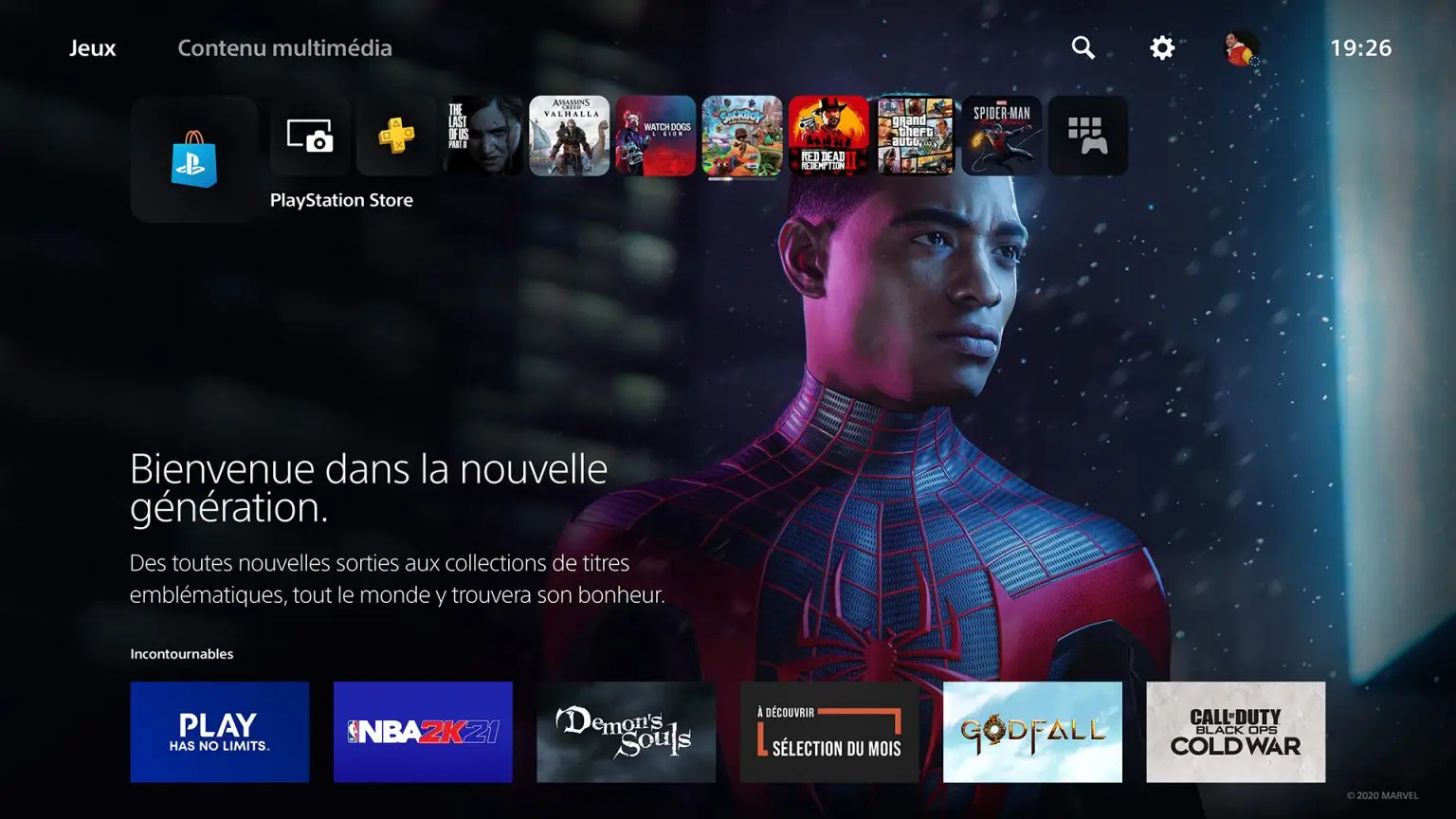
The PlayStation 5 dashboard showcases Sony’s redesigned interface, highlighting the PlayStation Store, installed games, quick-access navigation, and featured launch titles with Marvel’s Spider-Man: Miles Morales as the background artwork.
fin
For customers in the UK and across the affected European markets, the practical window here is narrow. Anyone with StudioCanal purchases sitting in their PlayStation library has until September 1, 2026 to watch or download whatever they want to keep in some form, and even that comes with real limits given the PlayStation Store’s lack of any permanent offline download option independent of the platform. United States customers are not affected by this particular removal, though the 2023 Discovery episode is a reminder that no market is fully insulated from the next one.
The bigger shift is less about any single list of 551 titles and more about what the pattern says heading into the next several years of console gaming and digital media. A platform that sells access rather than ownership will, sooner or later, act like exactly that. Sony has shown it three times now. The disc production shutdown coming in 2028 removes the physical safety net for games at precisely the moment digital film purchases have shown how quickly a library someone spent years building can shrink overnight, on a date a company chose, for reasons a customer had no part in negotiating.
From the DRIFT archive: Letterboxd Video Store Marks a New Era for Movie Discovery and Digital Rentals
Related Articles

Pocket-sized Xbox Ctrl
Xbox Nano Controller. Announced 14 October 2026 by James Hunter. $49.99. Rechargeable battery. Programmable Action Button. Xbox Wireless and Bluetooth.