DRIFT AUDIO
Listen to this story
Choose a voice, then press play.
There are exhibitions that archive. There are exhibitions that celebrate. And then there are those rare institutional gestures that recalibrate—quietly suggesting that what was once seen as spectacle might, in fact, have always been system.
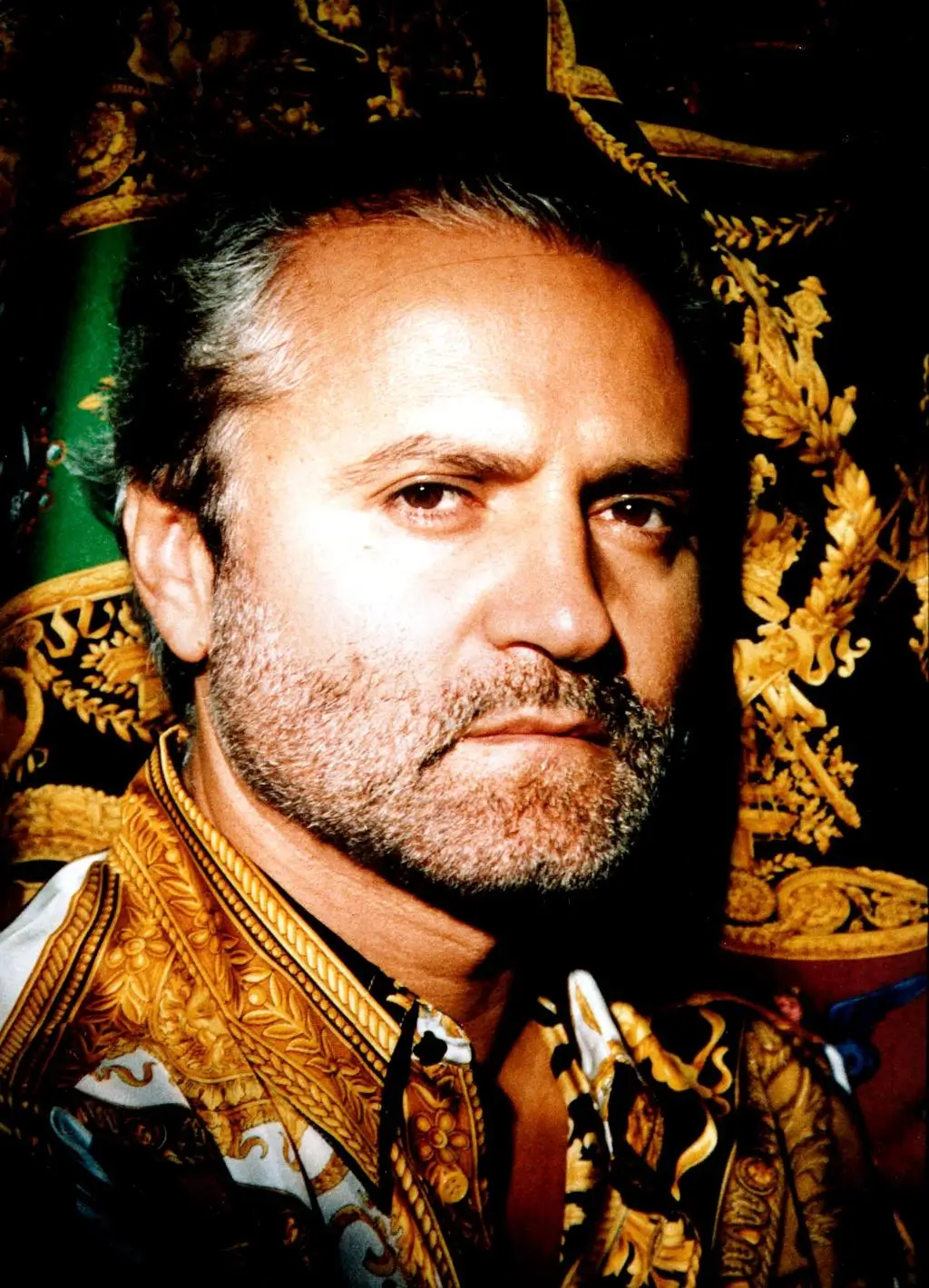
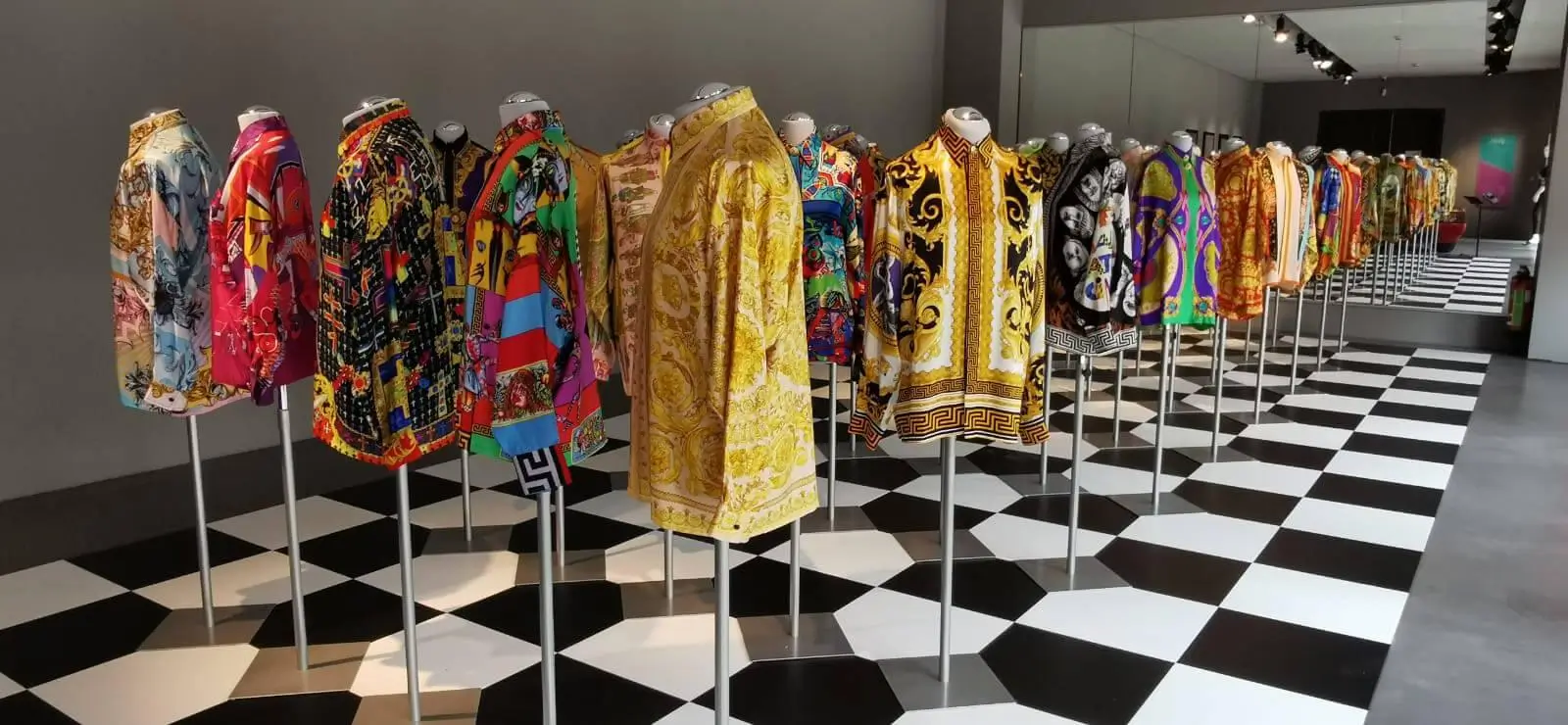
From June 5 through summer 2026, the Musée Maillol will host the first major French retrospective dedicated to Gianni Versace since 1986. Nearly 450 pieces—garments, accessories, sketches, decorative objects, photographs, video archives, and rare interviews—form not just a survey, but a structural re-reading.
The distance between 1986 and now is not simply chronological. It is interpretive.
In that earlier Paris moment, Versace was still being translated—often misunderstood through the lens of excess, flattened into shorthand: baroque, bold, loud. Today, that language reads differently. Less like excess. More like precision at scale.
This exhibition arrives not to correct history, but to slow it down.
View this post on Instagram
archive
Four hundred and fifty objects is not a number—it is a density.
The retrospective resists the conventional taxonomy of fashion exhibitions. Instead of isolating garments as singular masterpieces, the curatorial logic leans toward accumulation. Dresses sit in dialogue with sketches. Sketches echo into decorative objects. Videos extend silhouettes into movement. Interviews collapse the distance between intent and reception.
The result is not a timeline. It is an environment.
Versace’s work has always operated this way. A single look was never meant to stand alone; it belonged to a larger visual system—one that pulled from antiquity, pop culture, architecture, and celebrity with equal intensity. To walk through this exhibition is to understand that the designer was less concerned with individual garments than with total image construction.
Everything connects. Everything repeats. Everything escalates.
The archive, here, is not passive. It performs.
stir
Print, in his vocabulary, was never ornamental. It functioned as syntax. The baroque scrolls, the Greek key borders, the Medusa head—these were not motifs applied to fabric; they were structural elements within a visual language that could be scaled, layered, and repeated across mediums.
A dress becomes architecture. A shirt becomes statement. A scarf becomes signal.
What this retrospective does—carefully, insistently—is reposition print as intellectual property. Not in the legal sense, but in the conceptual one. Each pattern carries a lineage: references to classical mythology, Renaissance art, and Italian decorative traditions, refracted through the immediacy of late 20th-century media culture.
Versace did not quote history. He accelerated it.
In the museum context, these prints lose none of their force. If anything, removed from the runway and the speed of consumption, they reveal their internal logic more clearly. You begin to see repetition not as excess, but as reinforcement.
A system thinking in gold.
View this post on Instagram
flow
Versace’s relationship with the body has often been reduced to provocation. The cuts were daring. The silhouettes unapologetic. The exposure intentional.
But to frame this purely as sensuality is to miss the architecture beneath.
The retrospective reframes the body not as object, but as site. A place where power, identity, and visibility converge. The now-iconic safety-pin dress, the bondage references, the metallic mesh that moves like liquid—each piece negotiates tension between control and freedom.
The garments do not simply reveal. They define.
And crucially, they do so across gender. Versace’s menswear, often overlooked in broader narratives, participates in the same conversation. It expands the vocabulary of masculinity—introducing softness, ornamentation, and vulnerability without sacrificing presence.
What emerges is a consistent philosophy: the body is not neutral. It is constructed, performed, and amplified.
Versace understood this early. Perhaps before the culture had language for it.
impetus
Long before influencer culture, before digital virality, before the collapse of fashion and entertainment into a single content stream, Versace was already operating within that convergence.
The exhibition’s inclusion of photographs, videos, and interviews underscores a key reality: Versace did not just design clothes. He staged visibility.
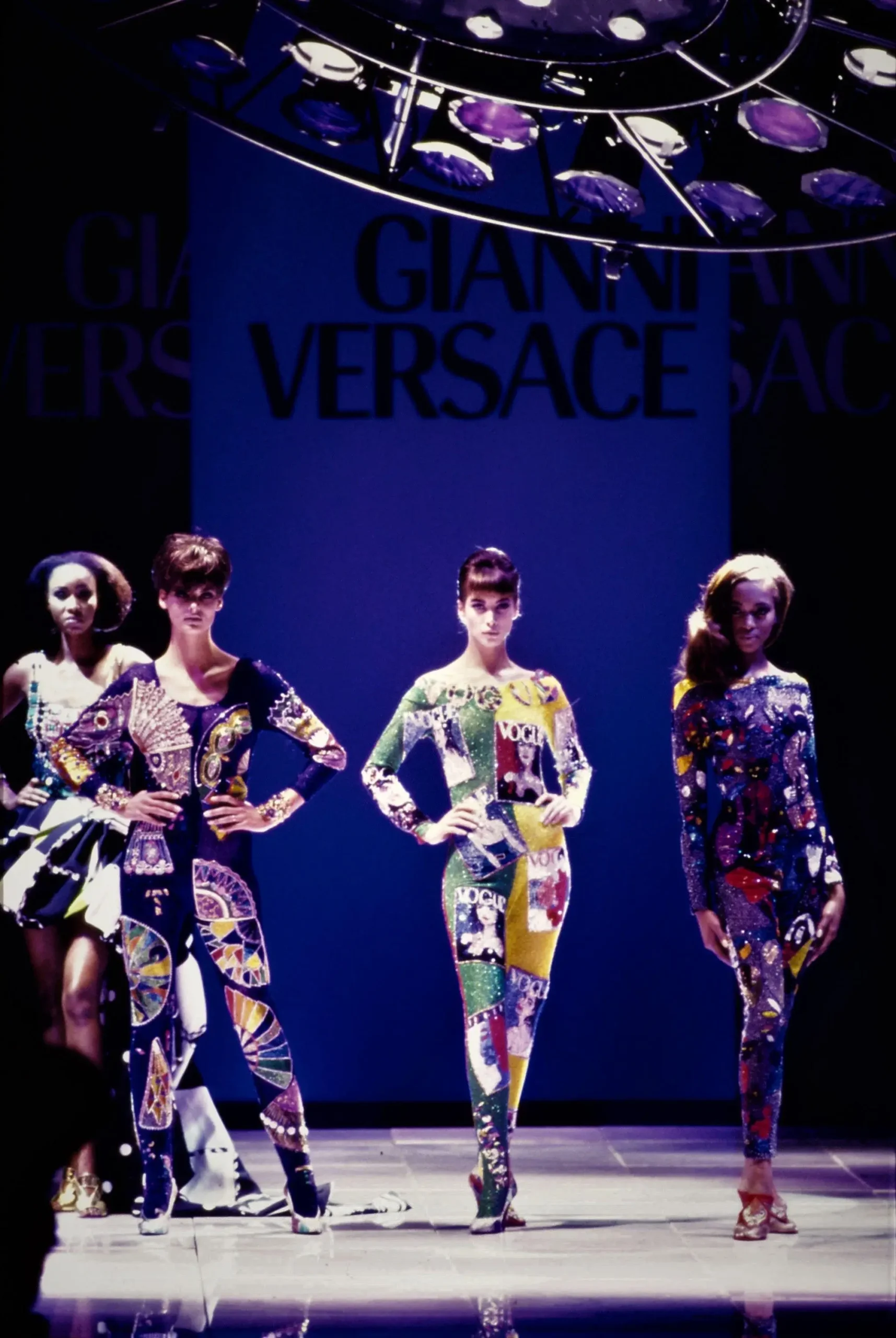
His collaborations with supermodels—Naomi, Cindy, Claudia—were not incidental. They were strategic. These figures were not mannequins; they were amplifiers. Their presence extended the life of each collection beyond the runway, embedding it into music videos, red carpets, and editorial spreads.
Versace understood circulation.
He understood that fashion, to matter, had to move—not just physically, but culturally. The garments had to exist in multiple contexts simultaneously. A dress seen on a runway would reappear in a magazine, then in a performance, then in collective memory.
This retrospective captures that loop.
In doing so, it positions Versace not just as a designer, but as an early architect of fashion’s media ecosystem.
show
One of the most compelling aspects of the exhibition is its refusal to isolate fashion from design.
Decorative objects—plates, furniture, textiles—appear alongside garments, dissolving the boundary between wardrobe and environment. This is where Versace’s vision expands most clearly into total design thinking.
The same motifs that define a dress reappear in interiors. The same gold tones, the same graphic intensity, the same insistence on presence.
This is not branding. It is continuity.
Versace’s world was never meant to be worn in isolation. It was meant to be inhabited. To live inside a Versace interior is to extend the logic of the garment into space itself.
The retrospective makes this explicit. It shows that what might have been dismissed as maximalism is, in fact, coherence.
A system that refuses fragmentation.
visit
There is something precise about this exhibition taking place in Paris.
The city has long functioned as fashion’s axis—historically privileging certain codes of refinement, restraint, and lineage. Versace, with his Italian intensity, his unapologetic visual language, once sat slightly outside that framework.
To return now, in this institutional context, suggests a shift.
Not in Versace, but in Paris.
The Musée Maillol becomes more than a venue; it becomes a site of reconciliation between different philosophies of fashion. Where restraint meets amplification. Where minimalism encounters maximal coherence.
The exhibition does not attempt to resolve this tension. It allows it to exist.
And in doing so, it reflects the current state of fashion itself—a landscape where boundaries are less fixed, where histories are re-read, where value is negotiated in real time.
fin
Related Articles
American Horror Story Opens the Vault for a Thirteen-Episode Reunion of Its Own Ghosts
Three half-hour episodes land September 24 on FX and Hulu, with Jessica Lange, Sarah Paulson […]