DRIFT AUDIO
Listen to this story
Choose a voice, then press play.
Girls of Dust’s latest collection sends the Antwerp label’s workwear-rooted silhouettes into sun-bleached, desert-toned territory for Spring/Summer 2026, extending a design know built on longevity rather than seasonal reinvention.
In This Story
- A Desert Vision from Antwerp
- The Workwear DNA Behind the Label
- Inside the Land of the Cliff Dwellers
- Standout Pieces from the Range
- Where the Collection Lands
Girls of Dust has released its Spring/Summer 2026 collection under the title “Land of the Cliff Dwellers,” pairing the Antwerp label’s signature workwear silhouettes with a sun-bleached, expedition-ready tincture story. The collection sits alongside a parallel men’s SS26 release from sister label Eat Dust, with both lines sharing the same seasonal theme and campaign imagery, shot once again by longtime convincers Studio Degens.
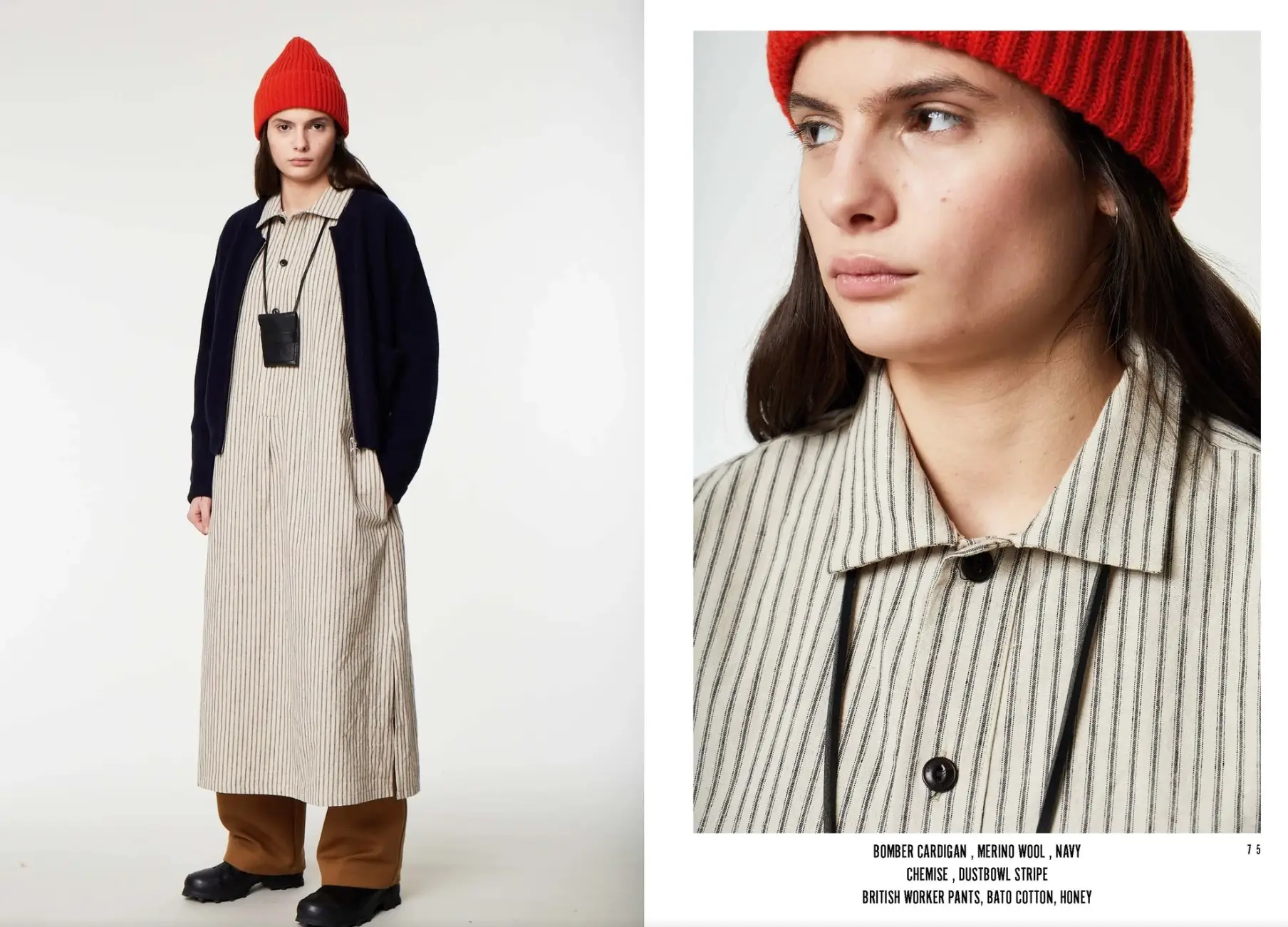
A bold red beanie adds a vibrant contrast to relaxed workwear layers, blending utility-inspired tailoring with understated contemporary style.
The campaign itself, credited to photographer Ian Engelbrecht and videographer Roice Nel with creative direction from Studio Degens’ Antoinette Degens and Daniël Geldenhuys, continues a partnership that dates back several seasons and has become closely associated with the brand’s view identity. Cape Town-based Engelbrecht has shot Eat Dust and Girls of Dust campaigns since 2021, and the SS26 imagery follows a similar location-driven approach to prior seasons, including SS25’s shoot on location in South Africa. Models Alex Swanepoel and Jordan Tyler Williams, cast through South African agencies Boss Models and Topco Models, front the SS26 campaign, continuing the brand’s pattern of building its seasonal imagery around the same Cape Town creative network season after season rather than rotating through a new production team each cycle.
That continuity matters for a brand whose entire design know runs against the fashion industry’s typical churn. Where most contemporary labels treat a new campaign crew, new location, and new creative concept as an opportunity to signal reinvention, Eat Dust and Girls of Dust have leaned the opposite way, building a recognizable view signature around the same colliders, the same sun-drenched tincture sensible, and the same emphasis on texture and materiality over conceptual style tricks. The result is a campaign lang that feels closer to a long-running documentary project than a season advertising push — consistent with a brand that markets its garments on durable rather than disposable.
Girls of Dust operates as the womenswear counterpart to Eat Dust, the Antwerp menswear label founded in 2010 by Keith Hioco and Rob Harmsen. The women’s line was launched by designer Aline Walther, a graduate of the Royal Academy of Fine Arts in Antwerp where she studied alongside Hioco, before the two eventually built out a womenswear project inspired by the same workwear and military reference points that define Eat Dust’s menswear. Walther has described the label’s mission in terms of translation rather than imitation: taking menswear’s structural logic — its reinforced seams, its utilitarian pocketing, its boxier proportions — and adapting it to womenswear without softening it into a diluted, “feminized” version of the same garment.
View this post on Instagram
from
What separates Girls of Dust from a typical contemporary womenswear label is its refusal to treat menswear references as a novelty. The brand describes itself as deeply inspired by vintage workwear, military uniform design, and iconic menswear archetypes, translated into contemporary women’s cuts without losing the structural integrity of the originals. That know shows up in recurring sil that reappear season after season in new fabrications — a deliberate departure from the trend-cycle churn common across contemporary fashion, in favor of what the brand calls a “timeless wardrobe” built from continuous core pieces plus a select few new additions each season.
Manufacturing is handled in Portugal, with fabrics sourced from mills across Europe and Japan — a detail that places Girls of Dust within a broader tradition of European heritage-adjacent labels that lean on Japanese textile mills for denim, twill, and jersey quality that’s difficult to source domestically. The result is a collection built as much around fabric integrity as silhouette: cotton linens, double cotton, century denim, and military rib jersey all appear across the SS26 lineup, alongside more technical materials like crispy cotton and Belfast seersucker.
This sourcing model also underlines a broader point about how Girls of Dust positions itself in the market. Rather than compete on speed or seasonal volume, the brand builds slowly around a relatively narrow core wardrobe, expanding it only when a new silhouette earns its place. That approach mirrors Eat Dust’s own menswear strategy, and it’s part of why certain names — the Ambassador Pants, the Lightning T, the Rambo T — persist across multiple seasons’ worth of collections rather than being retired and replaced. For a customer building a Girls of Dust wardrobe over several years, that continuity means a piece purchased in one season’s fabrication can be paired confidently with a newer piece from a following season, since the underlying pattern and fit rarely change dramatically from year to year.
The brand has also been explicit about production ethics, describing itself in its own materials as an ethical, Antwerp-based label with all garments made in Portugal rather than outsourced to lower-cost, lower-oversight manufacturing regions. That positioning sits Girls of Dust closer to the slow-fashion end of the contemporary market, alongside other European heritage-leaning labels that emphasize domestic or near-shore production as a core selling point rather than a footnote. It’s a stance that also shapes pricing: pieces across the SS26 range generally sit in the mid-to-upper contemporary bracket, reflecting the cost structure of European-made garments built from higher-grade fabrics rather than mass-market denim and jersey production.
View this post on Instagram
in
The SS26 collection’s title points toward an arid, geological mood board, and the tincture palette follows through on that reference: shades named Wheat, Sahara, Canteen Green, Iron, Popcorn, and Grey Melange sit alongside a starker Black and an acid-washed Blue. Those names lean into the same desert-expedition register that has run through several of the brand’s past season themes, evoking sunburnt rock formations and utilitarian travel gear rather than a specific literal location.
The phrase “cliff dwellers” carries its own loaded history — most commonly associated with the ancestral Pueblo peoples of the American Southwest, whose sandstone dwellings at sites like Mesa Verde have become a familiar shorthand in Western design and photography for rugged, elemental shelter-building. Given the collection’s actual campaign setting in South Africa, and the country’s own tradition of sandstone cliff formations and rock-shelter archaeology across regions like the Free State, the title likely draws more generally on the aesthetic of cliff-dweller architecture and desert survivalism as a mood rather than pointing to one specific geography. Eat Dust has not published an explicit statement tying the name to a particular site or culture, so the reading here leans on the viewl and material cues in the collection itself — the sun-bleached palette, the reinforced utility pocketing, the fabric names invoking heat and terrain — rather than a confirmed brand narrative.
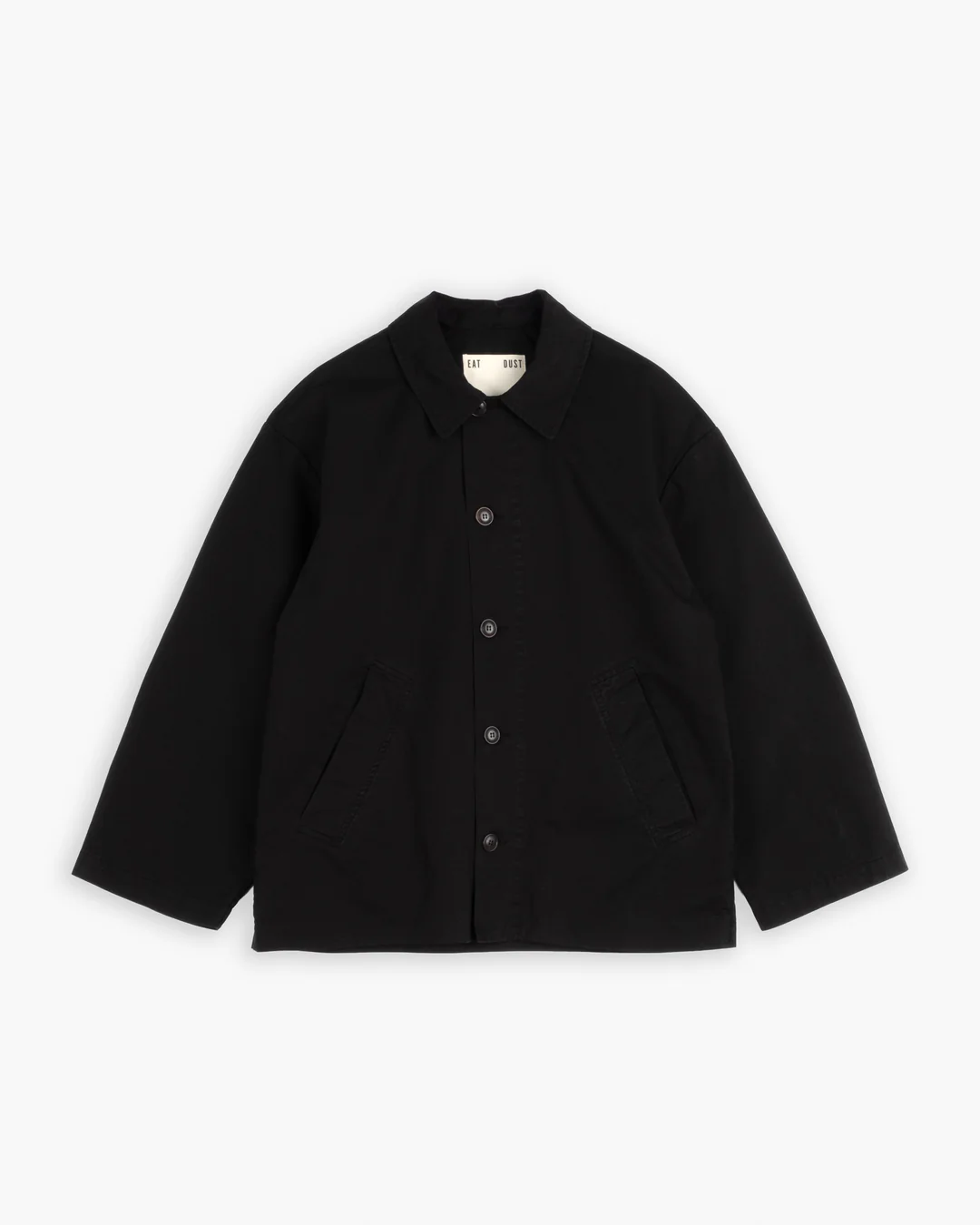
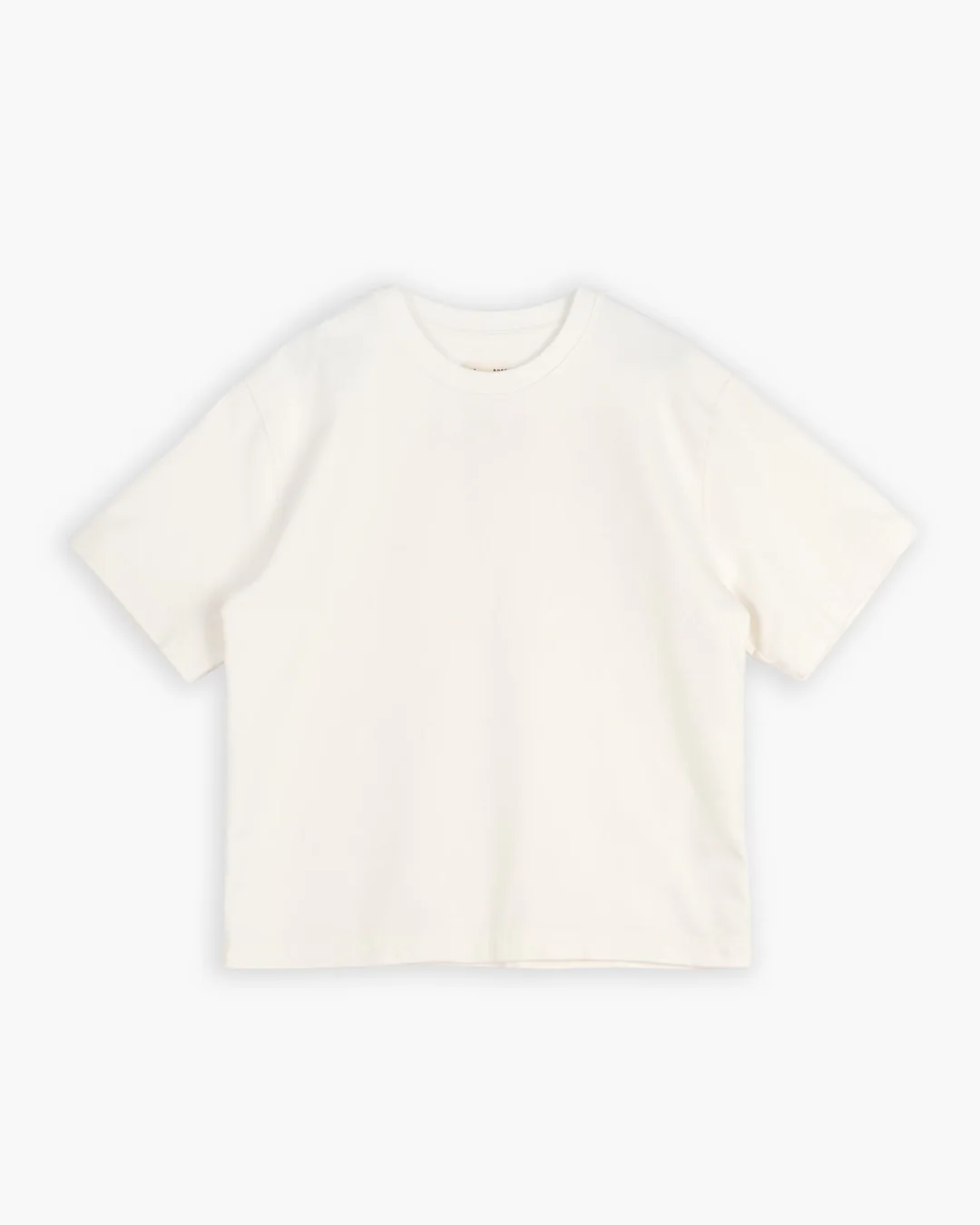
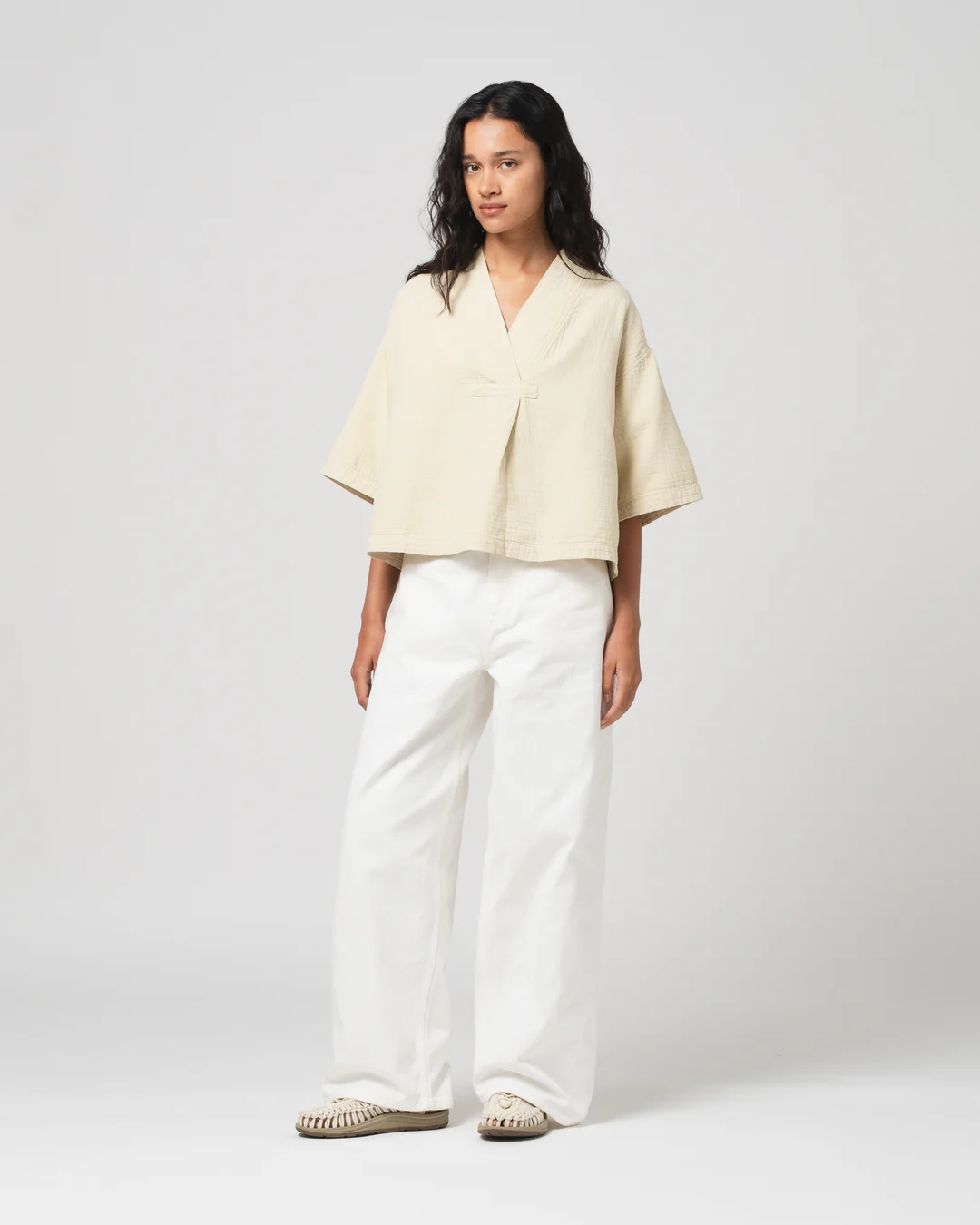
Structurally, the collection reads as an extension of the label’s core silhouette library rather than a full reinvention. The Artisan Shirt, Body Top, Lightning T, and Rambo T all return in new colorways, while pieces like the Sultan Pants, Pasha Pants, and Ambassador Pants continue the brand’s habit of giving each recurring trouser shape its own distinct name across seasons. New or lesser-seen additions for SS26 include the Toku Top and Unagi Vest, both flagged as shop-exclusive pieces, alongside a Miami Jacket rendered in a blue-rinse century denim and a Culotte cut from a two-tone Belfast seersucker.
Several pieces in the range are also marked unisex, including the Power-T twill jersey tee and the Ambassador and Sunrise jacket silhouettes, reflecting a design approach where certain foundational shapes move fluidly between the men’s Eat Dust and women’s Girls of Dust ranges rather than being redesigned separately for each line. That crossover extends the brand’s broader know of shared design DNA between the two labels — a customer building out a household wardrobe across both lines will recognize the same fabric stories and construction details whether shopping the men’s or women’s collection.
lens
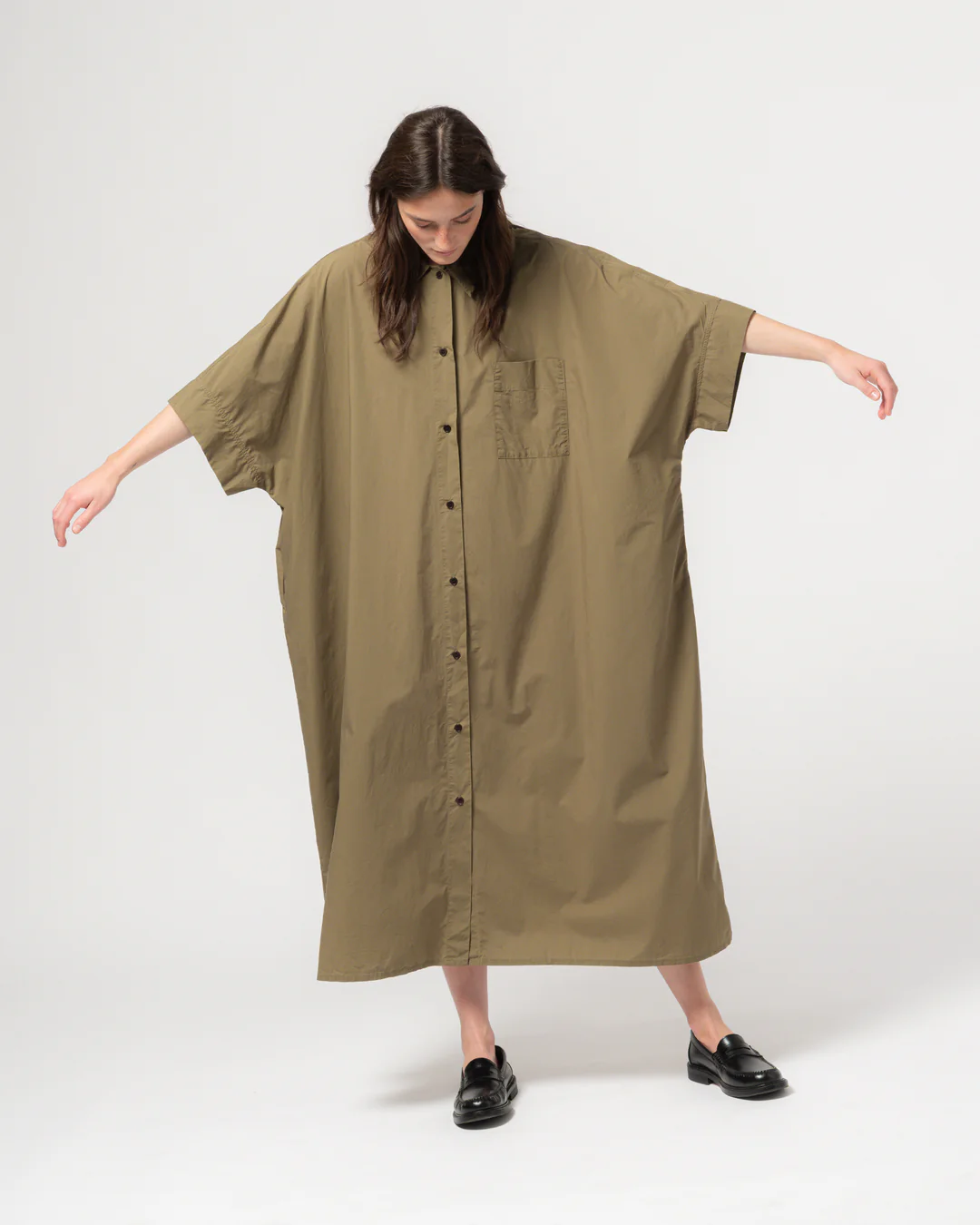
Among the collection’s more considered pieces, the G.o.D. Artisan Shirt in cotton linen — offered in both a Wheat and a Black colorway — carries forward the brand’s tailored-utility signature, with construction details that nod to workwear jackets rather than standard button-ups. The Shirt Dress in light popeline, available in Canteen Green and Black, extends that same design lang into a single-piece silhouette, giving the collection a dress option that still reads within the brand’s utilitarian vocabulary rather than breaking from it.
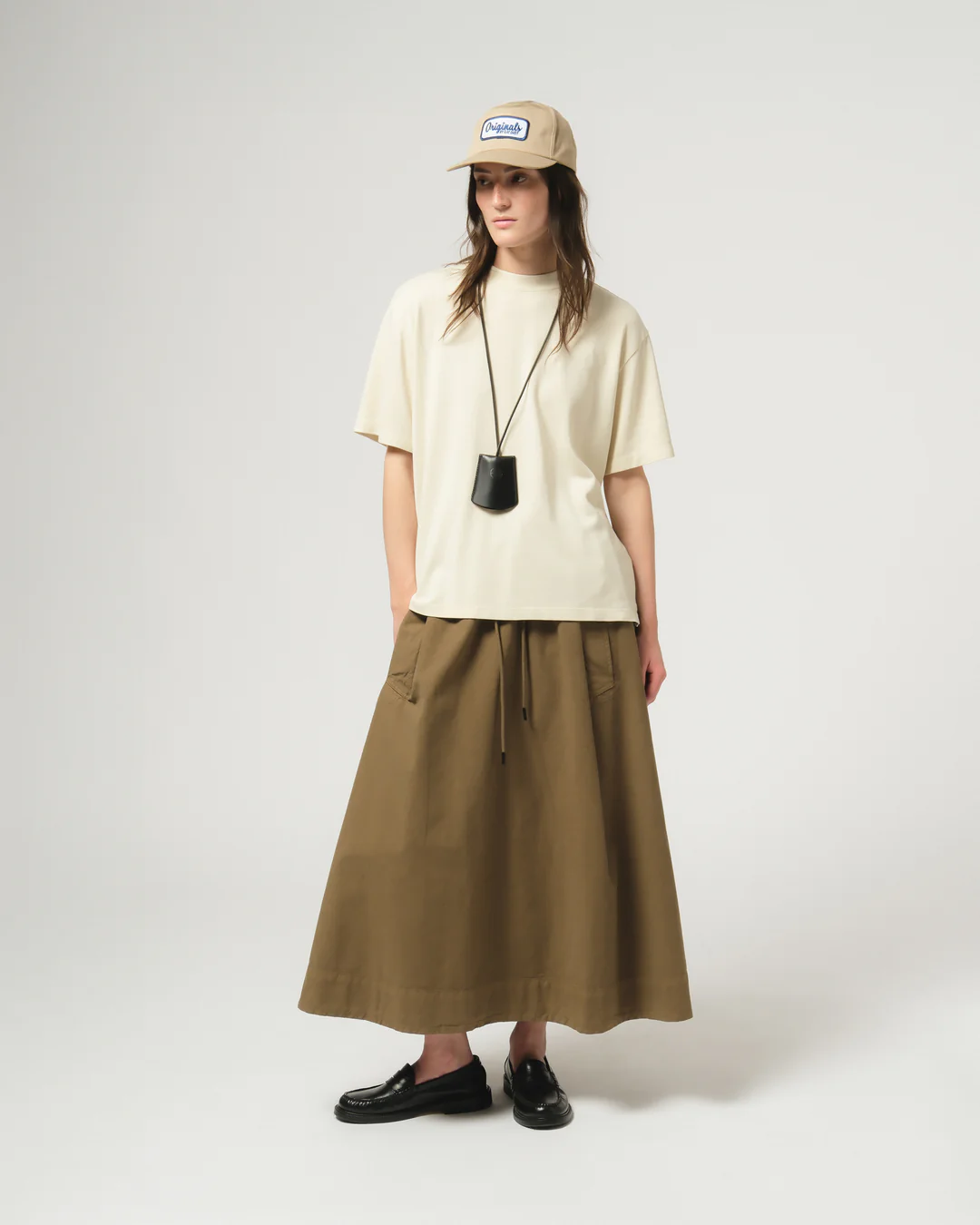
On the bottoms side, the Meadow Skirt in cotton linen appears in both Canteen Green and Black, offering a softer counterpoint to the trouser-heavy core of the collection, while the Miami Jacket’s century denim construction ties the range back to Eat Dust’s original denim roots — a reminder that Girls of Dust, whatever distance it has traveled from the menswear line stylistically, still shares its sourcing DNA and technical foundation. The British Worker piece, offered in both cotton linen Sahara and Canteen Green finishes, extends that denim-and-workwear lineage further, drawing its name and cut directly from mid-century British labor uniform silhouettes — one of several garments across the range whose naming makes an explicit nod to the specific historical workwear tradition it’s borrowing from.
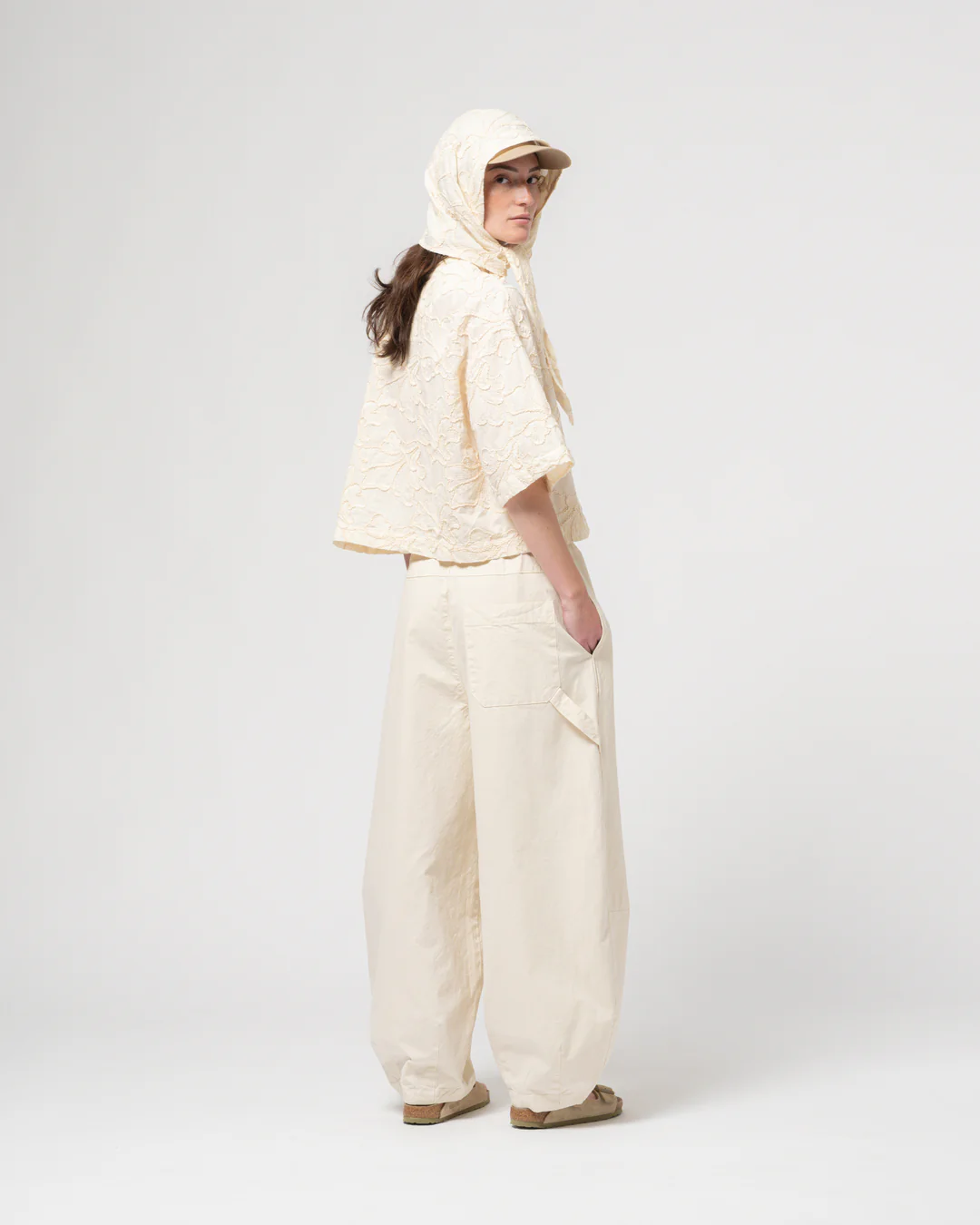
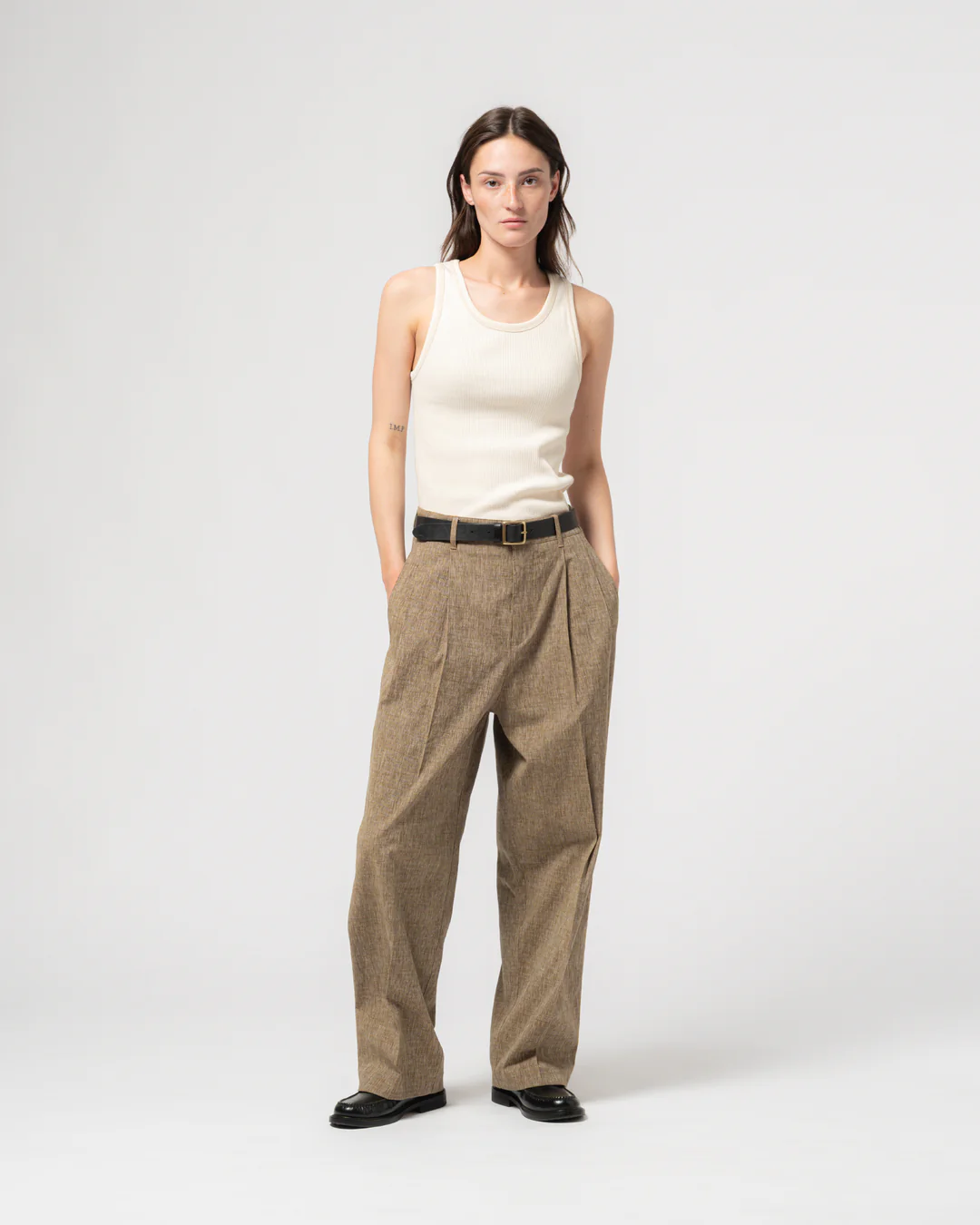
The Sultan Pants and Pasha Pants — both wide-leg, high-rise silhouettes rendered in cotton linen and double cotton respectively — round out the collection’s trouser offering with a slightly more relaxed, drape-forward fit than the brand’s more tailored Ambassador and Artisan-adjacent pieces, giving the range a wider spread of silhouettes for different body types and styling preferences. The Culotte, cut from a two-tone Belfast seersucker in an Iron and Off-White combination, splits the difference between skirt and trouser, and represents one of the collection’s more experimental shapes relative to the brand’s usual trouser-forward catalog.
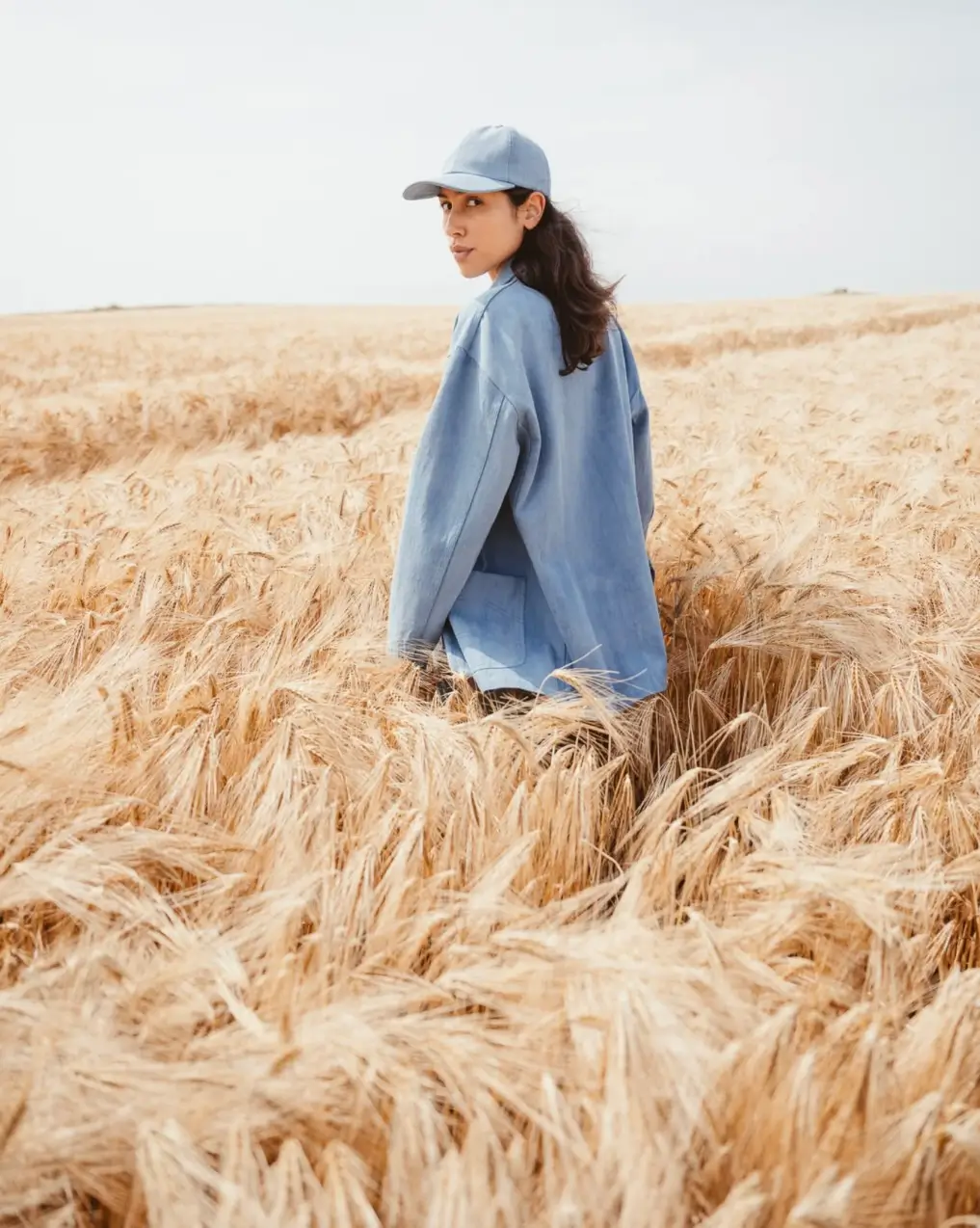
Soft blue workwear meets golden fields, creating a calm editorial scene inspired by nature, utility, and effortless seasonal style.
Accessory-adjacent pieces round out the range with the Unagi Vest in a two-tone Belfast seersucker and the Body Top in military rib, offered in both an Ecru and a Grey Melange finish — both pitched as easy layering pieces designed to sit underneath the collection’s heavier jackets and shirts through the transitional early-summer months. The Janet Denim, a slimmer-cut jean in century denim blue, and the Zoe Denim in an acid-wash evo denim finish, give the collection two distinct denim silhouettes at opposite ends of the fit spectrum — one closer to a classic straight-leg cut, the other leaning into a more distressed, worn-in finish that reads closer to vintage-inspired denim than the brand’s typically cleaner workwear silhouettes.
impression
Girls of Dust sells through the brand’s own flagship stores in Antwerp and Amsterdam, through the Eat Dust Clothing webstore, and through a network of international stockists spanning gravitypope, Maplestore, Steranko, and others carrying the label’s seasonal drops. The brand ships internationally with duties and taxes calculated at checkout, a detail Eat Dust foregrounds prominently across its site given its global distribution footprint outside the EU.
That stockist spread is worth noting for a relatively young womenswear label: Girls of Dust has built out retail presence across North America, the UK, and Australia within a handful of years, a reach that tracks closely with Eat Dust’s own established distribution network built up over more than a decade. It’s a pattern common to menswear-first heritage labels launching a womenswear counterpart — the retail relationships and buyer trust built by the flagship brand tend to transfer relatively quickly once the sister label proves it can hold its own aesthetic ground, rather than reading as a diluted extension of the men’s line.
For a label whose core identity has always leaned on longevity over trend velocity, “Land of the Cliff Dwellers” reads as a continuation rather than a departure — familiar silhouettes rendered in a fresh, sun-worn palette, produced with the same European manufacturing standards that have defined Girls of Dust since Aline Walther’s earliest collections.
From the DRIFT archive: Y-3 Sets the Tone for Its Spring/Summer 2026 Collection · Saint Laurent Unveils New Visuals For Its Spring 2026 Collection
Related Articles
Shinjuku 4-1-7 Meets East 32nd Street: 417 EDIFICE Wears New York Magazine for Fall/Winter 2026
A Tokyo shop named for its first street address now sells New York magazine's archive covers as ¥9,900 long sleeves, with a tonal logo cap riding…