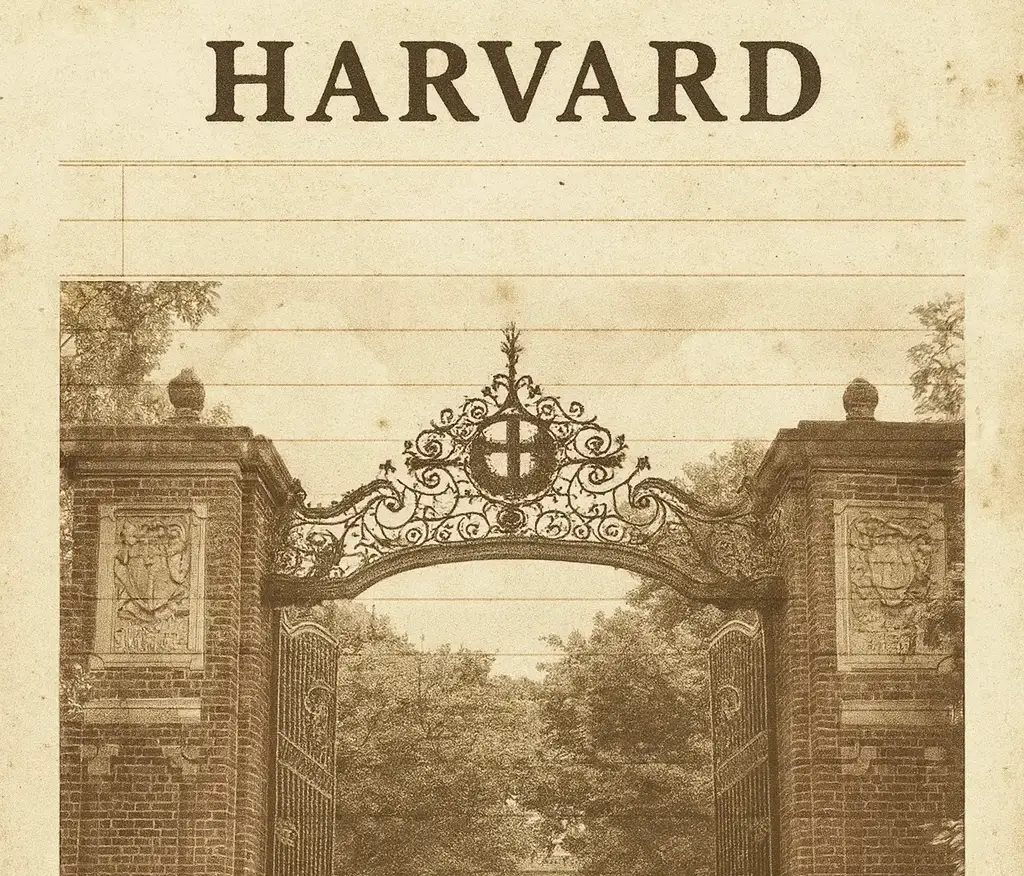
DRIFT

Harvard has always been a symbol—of prestige, of promise, of access, of choices. The school is synonymous with the idea of academic rigor so intense that only the most capable students survive and thrive. The joke for generations has been that getting into Harvard is the hard part; once you arrive, you can float. But in 2025, that joke is no longer just a joke. It’s data. It’s policy. It’s concern. And it’s a mirror held up to the American understanding of education, excellence, fairness, and the shifting meaning of what an A even is.

A recent report by the university’s dean of undergraduate education—25 pages of institutional soul-searching—reveals a tension at the pithy of Harvard’s academic culture. Grades indicating an proliferation upward, GPAs are clustering at the top, and the distance between merely strong and truly exceptional academic performance is shrinking. This isn’t a whisper anymore. It’s statistically loud. And Harvard, the school that often defines the arc of American academic trends, is suddenly in a position it rarely occupies: worrying that it has made things too easy.

stir

According to the Wall Street Journal, nearly 60% of all grades issued last year at Harvard were A’s. That’s more than double the rate from the mid-2000s. In the 1980s, a student leaving Cambridge with a 3.83 GPA would have been not just impressive but extraordinary. Today, that number is the median.

A median GPA is the midpoint—half of students are above it. And if half of Harvard students are clocking in above 3.83, something in the grading ecosystem has changed, and dramatically.

The most striking detail is that the academic load hasn’t fundamentally shifted. Harvard students aren’t spending radically more time studying. The average is 6.3 hours per week outside of class—essentially identical to the time logged nearly two decades ago, when grade inflation was already a topic. If outputs have skyrocketed but inputs remain constant, the only logical conclusion is that the grading scale itself has loosened.

Universities hate to admit this. Grade inflation is a political subject within higher education. It touches everything: institutional branding, job placement, student morale, alumni expectations, donor sentiment, and competition with peer institutions. Harvard’s struggle is not isolated. It’s part of a national (and global) shift toward grades that function more like encouragement than evaluation.

idea

Harvard is not just a university. It’s an economy of ambition. Students enter this world with Photoshop-sharp resumes, years of academic overachievement, summer internships at research labs, and extracurriculars with professional-level portfolios. The admissions office sifts through tens of thousands of straight-A students to build a class of 1600.

Inside that context, perhaps it’s predictable that a high achiever will continue to achieve.

But something else is happening. Grades have become both the currency and the language of validation. Students enter elite institutions expecting excellence. Professors, for their part, may feel pressure—implicit or otherwise—to affirm students’ expectations, maintain departmental harmony, or compete for enrollment in specific courses. The threat of negative evaluations, which professors increasingly rely on for tenure or career progression, can quietly influence grading philosophy.

The outcome is a softening of academic boundaries: a world where “good work” and “exceptional work” blur not on merit but on practice.

culture

Grade inflation is not just an institutional choice. It is a cultural artifact.

The last two decades have reshaped the American relationship to education. Students entering Harvard in 2025 grew up in an era where anxiety, burnout, and the pressure to perform have been normalized from childhood. They are the generation of standardized testing, competitive extracurricular stacking, AP overload, and résumé-maximizing at 14. They arrive at Harvard already wound tight, already exhausted, already primed for performance. To such students, grades often feel less like evaluation and more like survival.

Professors, aware of this context, may not want to add to the psychological burden. The pandemic further complicated this landscape, softening grading policies nationwide and accelerating the upward drift of leniency. Remote learning blurred expectations and forced faculty to reconsider what academic rigor looks like when the world outside is chaotic.

Once a system moves in one direction—toward generosity—it is notoriously difficult to move it back.

contra

What makes Harvard’s situation unique is that the institution’s prestige depends on exclusivity and difficulty—yet the student body is now pushing back against the idea that grading should tighten. Their argument is simple: if Harvard admits only top-tier students, isn’t it logical that top-tier students earn top-tier grades?

This is where data and sentiment collide.

A Harvard senior quoted in the WSJ summarized the feeling succinctly: “You admitted these students because they have straight A’s, and now they’re getting a lot of A’s, and it’s, like, ‘This is a problem?’”

This is not entitlement. It is a genuine philosophical debate about what fairness looks like when an institution self-selects for excellence.

From the student perspective, the logic is airtight. If Harvard builds a class of academic Olympians, why wouldn’t those Olympians continue performing at the highest level? Should they suddenly become B students simply because the environment got harder?

But from the university’s standpoint, something vital is at risk: the meaning of distinction.

shift

A grading scale is supposed to differentiate levels of work, not confirm expectations. A world where 60% of grades are A’s means the other 40% must encompass all other performance categories—good, average, poor, and everything in between. This inversion collapses the nuance of evaluation.

Graduate schools and employers rely on transcripts to detect patterns of skill, dedication, and intellectual sharpness. If nearly everyone at Harvard graduates with a transcript full of A’s, the transcript loses predictive power. Recommendation letters, personal statements, and extracurricular work become ever more important—but these too inflate when everyone is excellent.

This shrinking room for distinction affects not only academic recognition but also scholarship placement, research opportunities, postgraduate fellowships, and the constellation of accolades that Harvard students traditionally compete for.

When an A is the norm, the premium shifts potentially to other signals of elite performance—signals that often correlate more strongly with privilege, networks, or access to resources.

This is where grade inflation subtly reinforces inequity.

gen

Students, understandably, resist being the subjects of a sudden recalibration. They worked for years to reach Harvard. They have been raised in an academic culture where achievement is measured in perfection. Once inside the institution, they want acknowledgement, not recalibration. Many feel that reducing the prevalence of A’s is a retroactive punishment—a kind of bait-and-switch.

There is also a psychological dimension: for this generation, grades are tied to self-worth, identity, and future possibility. They compete for jobs in an economy where credentials still matter. They compete for spots in graduate programs that rely heavily on GPA. Changing the rules midway through their education feels deeply unfair.

So even though Harvard’s administration wants to restrict the inflation, the students are skeptical—and their skepticism reveals the long tail of an educational culture that overemphasizes performance.

fwd

The dean’s report signals that Harvard intends to shift direction. But cultural inertia is extremely strong. Grade inflation has been accelerating for decades, and cultural impetus continue to push in its favor.

Tightening grading may ultimately require more than policy adjustments. It may require rethinking academic labor expectations, rewriting course evaluation systems, and even restructuring how departments define learning outcomes.

The real challenge will be transparency. Students must trust the system. Professors must trust the administration. Employers must trust the outcomes. That trust will only emerge if Harvard articulates clear, consistent, public-facing standards that explain what an A means in 2025—and what it will mean in 2030.

impression

Harvard’s issue is a microcosm of the larger American academic landscape. The question isn’t either elite students are capable of producing elite work.

If everyone gets an A, the grade no longer represents excellence. It represents participation at a high-achieving institution.

The country is grappling with the same tension: students overworked, systems softened, expectations inflated, and the definition of “rigor” shifting with each generation.

Related Articles
Modern data center facility with a solar-panel-clad exterior, bright green administrative offices, and secure perimeter fencing, showcasing sustainable digital infrastructure and renewable energy integration

Lombardy’s Data Center Boom: Balancing Digital Ambition with Environmental Responsible

Lombardy has emerged as Italy’s primary hub for new digital infrastructures, particularly data centers—vast complexes […]

In a highly anticipated reunion after 24 years, Adidas Originals and Coca-Cola have joined forces once again to celebrate the FIFA World Cup 2026™. The collaboration revives their iconic 2002 partnership from the Japan-South Korea tournament, now reimagined for the biggest global sporting event of 2026, co-hosted by the United States, Canada, and Mexico. Set to launch on June 6, 2026, this collection masterfully blends Adidas' streetwear heritage with Coca-Cola's timeless branding, creating a vibrant fusion of football culture, nostalgia, and modern style. The drop arrives at a perfect moment. With the World Cup kicking off on June 11, 2026, fans worldwide are gearing up for a summer of football excitement. This collaboration isn't just merch—it's a cultural statement that merges two legendary brands under the banner of "Originals are the Real Thing," a clever twist on Coca-Cola's famous slogan. Historical Context: A Reunion 24 Years in the Making Adidas and Coca-Cola first collaborated during the 2002 FIFA World Cup, producing limited-edition pieces that captured the era's energy. That partnership helped define early 2000s football-streetwear crossover culture. Fast-forward to 2026, and the brands are back with fresh energy, leveraging Adidas' deep FIFA ties (as an official partner) and Coca-Cola's long-standing sponsorship of the tournament. The 2026 edition promises to be historic as the first 48-team World Cup, spanning three countries and generating unprecedented global hype. This collab taps into that momentum, offering fans wearable pieces that celebrate both brands' legacies while looking forward to the future of football fashion. Collection Overview and Design Philosophy The Adidas Originals x Coca-Cola collection fuses 2000s street style with classic sporting aesthetics. Expect bold reds, creams, whites, and silver accents inspired by Coca-Cola's iconic packaging—think classic script logos, droplet detailing, and can-inspired motifs. The lineup spans footwear, apparel, and accessories, divided into two visual directions: one logo-heavy and graphic-forward, the other drawing from vintage advertising aesthetics. Designs pay homage to Coca-Cola's visual language while staying true to Adidas Originals' archival roots. High-quality materials, attention to detail, and versatile silhouettes make these pieces suitable for both match-day wear and everyday street style. The campaign, featuring young football star Lamine Yamal and a diverse cast in everyday scenes building anticipation for the tournament, reinforces themes of originality and shared cultural moments. Footwear Highlights Footwear takes center stage in this collaboration, with reimagined takes on iconic 2000s Adidas silhouettes: Samba and Superstar Models: These classics get Coca-Cola treatment with white/cream/red colorways and prominent script branding. The Samba blends street heritage with football roots, while the Superstar II features weathered bases and bold side panels. Expected pricing around $110–$130. Adistar Control 5: A standout with droplet detailing mimicking condensation on a cold Coke can. This model brings performance-inspired design into lifestyle territory. Predator Sala: Indoor/hybrid style with silver-and-red accents, nodding to predatory precision on the pitch and Coca-Cola's bold energy. Climacool 1: Revived with breathable tech and Coke-inspired graphics, perfect for warm summer days. Megaride F50: A highlight paying tribute to the iconic Coca-Cola glass bottle, with unique contours and refreshing design cues. Each pair incorporates thoughtful details like embroidered logos, custom insoles, and packaging that mimics vintage Coke crates or cans. These shoes are built for durability and comfort, appealing to sneakerheads, football fans, and casual wearers alike. Apparel and Accessories Beyond kicks, the collection offers a full lifestyle range: Track Tops and Jerseys: Standout jerseys fuse retro Coca-Cola advertising from different eras into cohesive football designs. Track jackets feature signature three stripes alongside Coke branding, in vibrant reds and classic whites. Shorts and T-Shirts: Relaxed fits with graphic prints, ideal for casual wear or layering. Expect motivational football motifs blended with refreshing beverage references. Accessories: A bright red airliner bag stands out as a functional statement piece. Additional items may include caps, socks, and tote bags carrying the collaborative spirit. The apparel emphasizes comfort with premium cotton blends, mesh panels for breathability, and oversized silhouettes popular in contemporary streetwear. Unisex sizing and inclusive fits make the collection accessible to a broad audience. Cultural Impact and Fan Appeal This collaboration resonates on multiple levels. For football fans, it represents national pride and global unity ahead of the 2026 tournament. Sneaker enthusiasts will appreciate the nostalgic 2000s revival mixed with modern execution. Streetwear collectors see it as a prime example of how heritage brands can innovate through partnerships. In an era where sports and fashion increasingly intersect, Adidas and Coca-Cola deliver pieces that transcend the pitch. Wear them to watch matches at home, attend watch parties, or hit the streets in any host city—New York, Los Angeles, Toronto, or beyond. The designs are versatile enough for gym sessions, festivals, or daily commutes. The timing aligns perfectly with rising interest in football in North America, boosted by the co-hosting nations. Young talents like Lamine Yamal in the campaign help bridge generational gaps, attracting newer fans while satisfying longtime supporters. Where to Buy and Release Details The collection launches globally on June 6, 2026, via: Adidas CONFIRMED app (for early access and raffles) Adidas.com Select retailers and flagship stores worldwide Some regions may see staggered drops, with Japan and other markets getting early access. Prices are expected to range from $50–$150 depending on the item, making it relatively accessible compared to ultra-limited drops. Pro Tips for Copping: Enable notifications on the CONFIRMED app. Check local stock at Adidas stores in major cities. Monitor resale platforms post-drop for exclusive colorways, but be wary of markups. Size up slightly for oversized apparel fits. Given the World Cup hype, popular items like the Sambas and jerseys are likely to sell out quickly. International shipping is available, but factor in potential customs delays. Styling Suggestions Match Day Look: Pair a collaborative jersey with classic black shorts and Samba sneakers for effortless fan style. Streetwear Rotation: Layer a track top over a graphic tee with wide-leg pants and the Megaride F50 for a bold urban ensemble. Casual Summer: White Superstar with denim shorts and the airliner bag for a refreshing, vacation-ready vibe. These pieces mix seamlessly with existing Adidas or neutral wardrobes, maximizing versatility. Broader Context in 2026 Fashion and Sports The Adidas x Coca-Cola drop is part of a larger wave of high-profile collaborations tied to the World Cup. Adidas continues its dominance in football kit design, while Coca-Cola leverages its sponsorship with collectibles, bottles, and experiential activations like the Trophy Tour. In the sneaker industry, this collab exemplifies the ongoing trend of lifestyle reinterpretations of performance silhouettes. It also highlights how global brands use major events to drive cultural conversations around unity, originality, and joy—core values for both companies. Sustainability notes (based on Adidas' broader initiatives) suggest some pieces may incorporate recycled materials, aligning with modern consumer expectations. Looking Forward: Legacy and Excitement As the countdown to kickoff continues, this collection serves as the perfect prelude to an unforgettable summer of football. Whether you're a die-hard supporter, a fashion-forward collector, or someone seeking motivation through style, the Adidas Originals x Coca-Cola FIFA World Cup 2026 lineup delivers. Expect potential restocks, special event exclusives in host cities, and continued campaign content featuring more athletes. This isn't just clothing—it's a ticket to participate in the global celebration of the beautiful game. Mark your calendars for June 6, 2026. Refresh your wardrobe, lace up those Sambas, and get ready to cheer on your team in style. The "Real Thing" meets the Originals in what promises to be one of the most talked-about releases of the year. This collaboration captures the essence of football's universal appeal: bringing people together through shared passion, iconic brands, and unforgettable moments. As the world prepares for 2026's expanded tournament, Adidas and Coca-Cola remind us that some partnerships are truly timeless.

Adidas Originals x Coca-Cola Collection: FIFA World Cup 2026

In a highly anticipated reunion after 24 years, Adidas Originals and Coca-Cola have joined forces […]

Loewe shoulder bag crafted in brown and black leather with minimalist lion face detailing and a matching fur tail charm

180 Years Unfolded: The Full Story Behind Loewe’s New Campaign

The year was 1846. Queen Victoria was on the British throne and the telephone, the […]