DRIFT AUDIO
Listen to this story
Choose a voice, then press play.
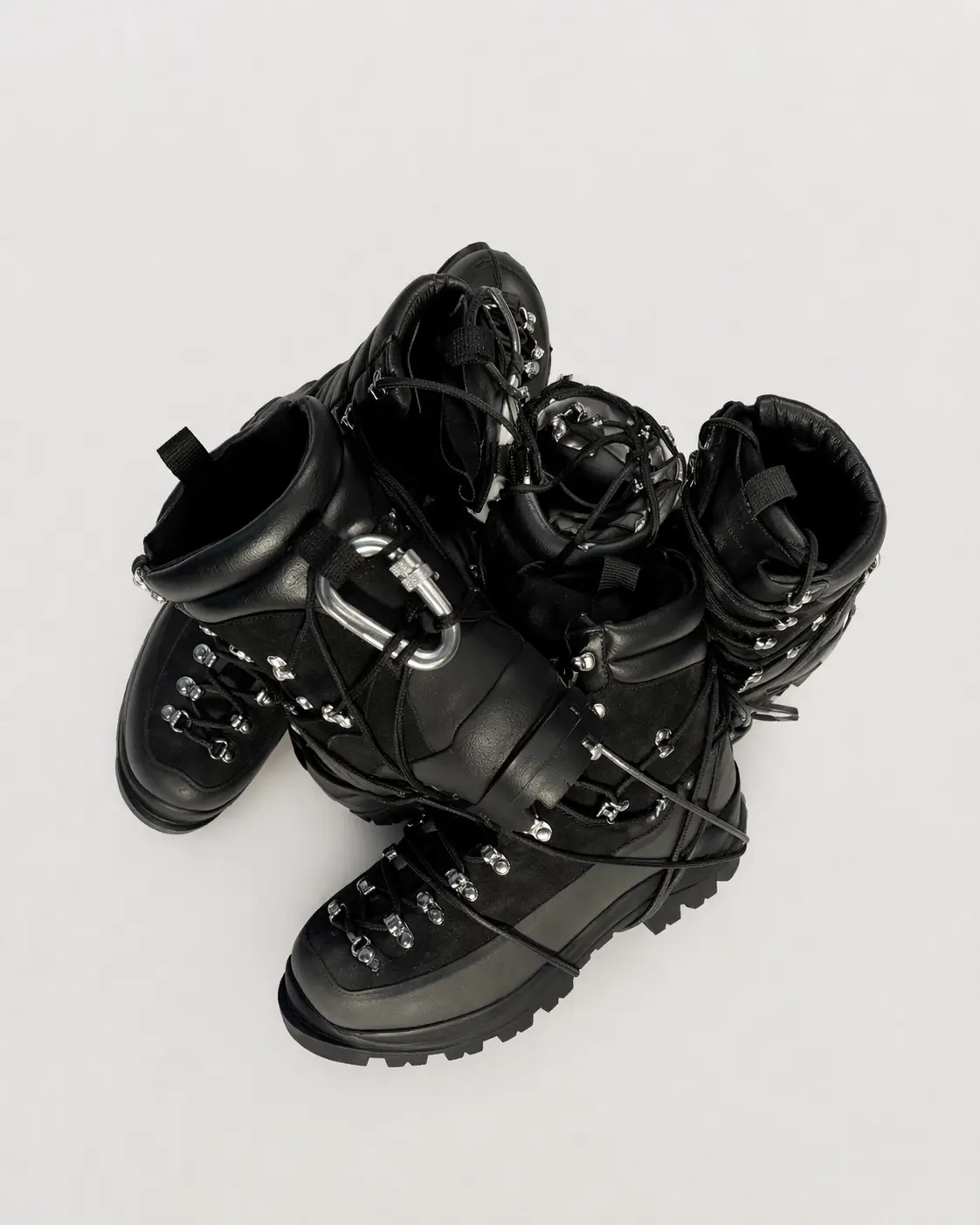
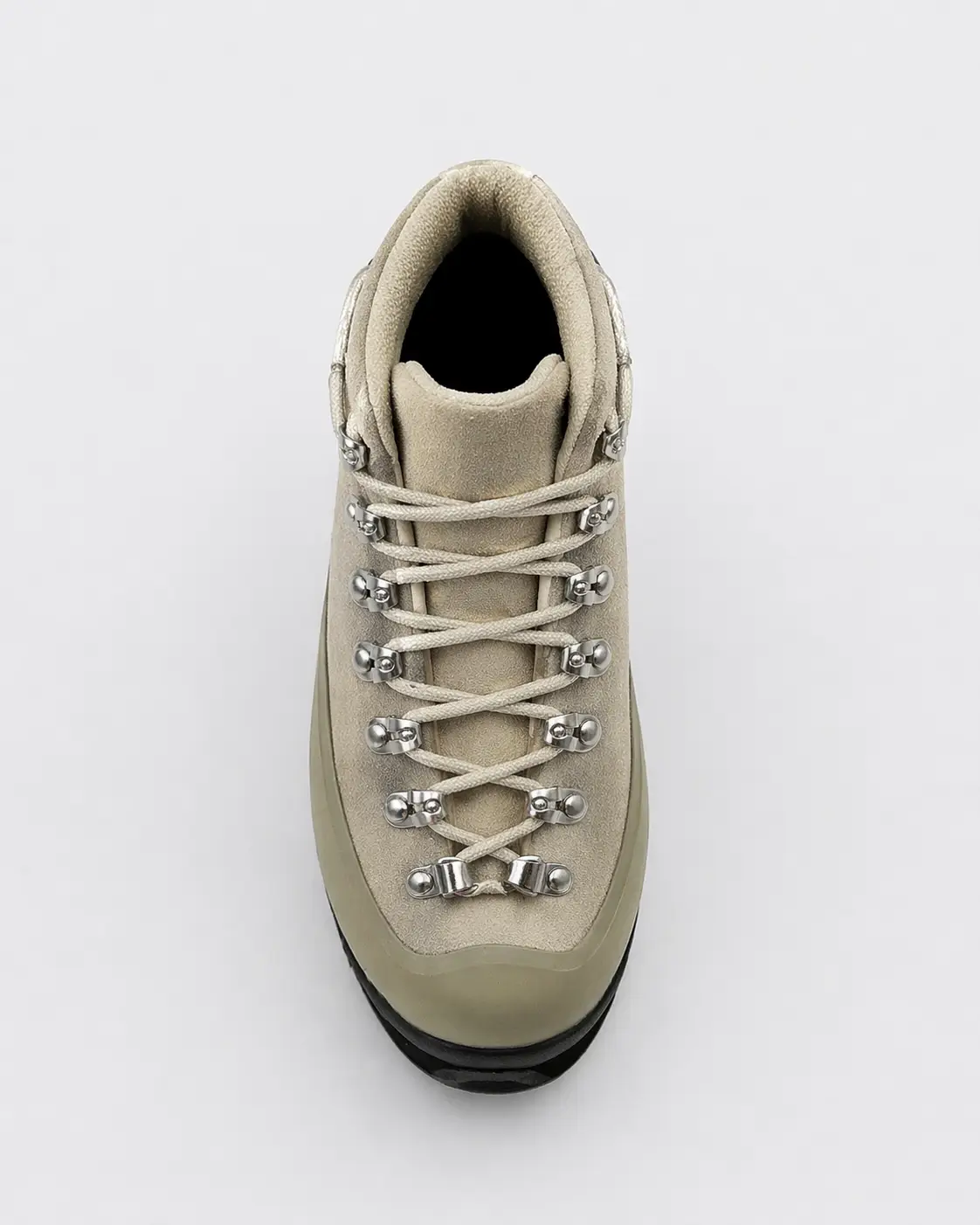
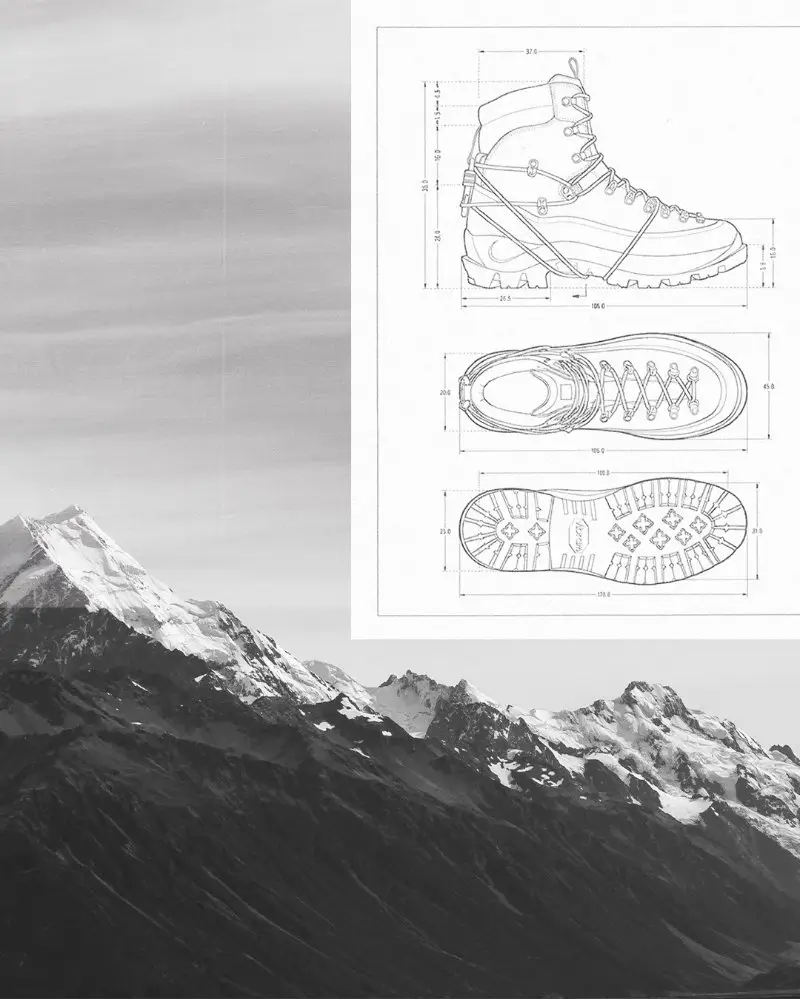
In a landscape where performance footwear is often reduced to spec sheets and trend cycles, the relaunch of HELIOT EMIL’s Hiking Boots resists that flattening. This is not a seasonal refresh, nor a cosmetic iteration. It is a reassertion of process—an insistence that construction, not narrative, remains the core language of the product. Built in collaboration with Diemme, the boots arrive as a study in endurance: material, structural, and cultural.
The partnership matters. Diemme is not a symbolic co-sign but a technical foundation—an Italian manufacturer rooted in the Dolomites, where terrain dictates design and failure carries consequence. HELIOT EMIL’s design ethos—often industrial, restrained, and system-driven—finds a natural counterpart here. The result is not hybridization, but alignment.
idea
Each pair is composed of 185 individual components. That number could read as excess, but here it functions differently. It signals distribution of stress, segmentation of function, and a refusal to rely on singular solutions. Multi-density reinforcements are embedded throughout the structure, allowing the boot to respond differently across zones—rigidity where needed, flexibility where demanded.
The leather panels are precision-cut, not only for fit but for tension management. Leather, unlike synthetic mesh, carries memory. It stretches, compresses, adapts. By segmenting it into controlled panels, the boot becomes less a single object and more a network of calibrated responses.
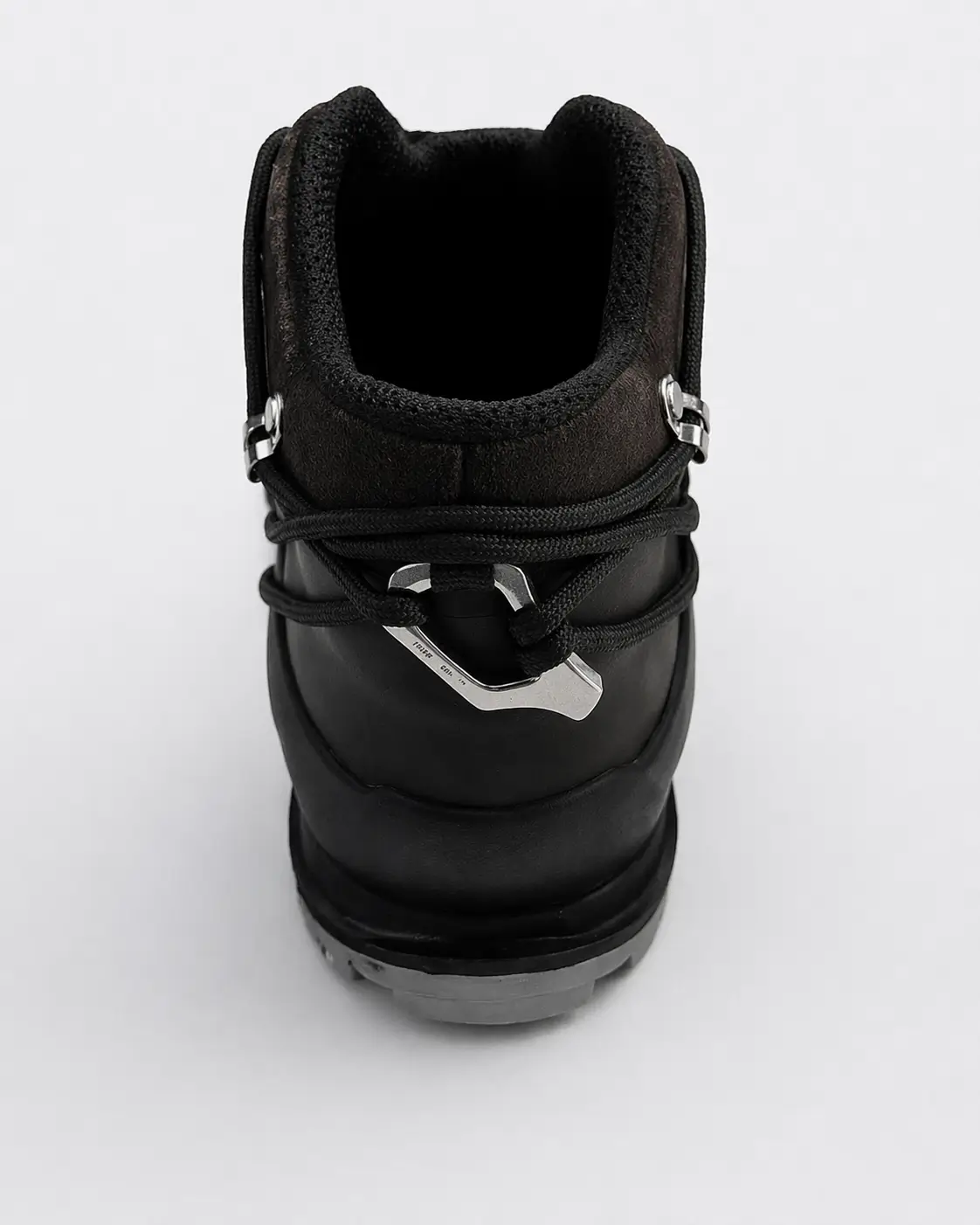
Hardware is treated similarly. Eyelets, hooks, and fastenings are not decorative punctuations but load-bearing elements. They distribute pressure across the upper, preventing localized fatigue. In mountaineering contexts, this is survival logic. In HELIOT EMIL’s interpretation, it becomes aesthetic—though never merely aesthetic.
View this post on Instagram
flow
Production takes place in the Italian Dolomite mountains. This is not branding—it is condition. The environment informs the process: temperature, humidity, and altitude all influence how materials behave. Leather cures differently. Adhesives respond at different rates. Even the act of hand-lasting—stretching the upper over the last—takes on nuance.
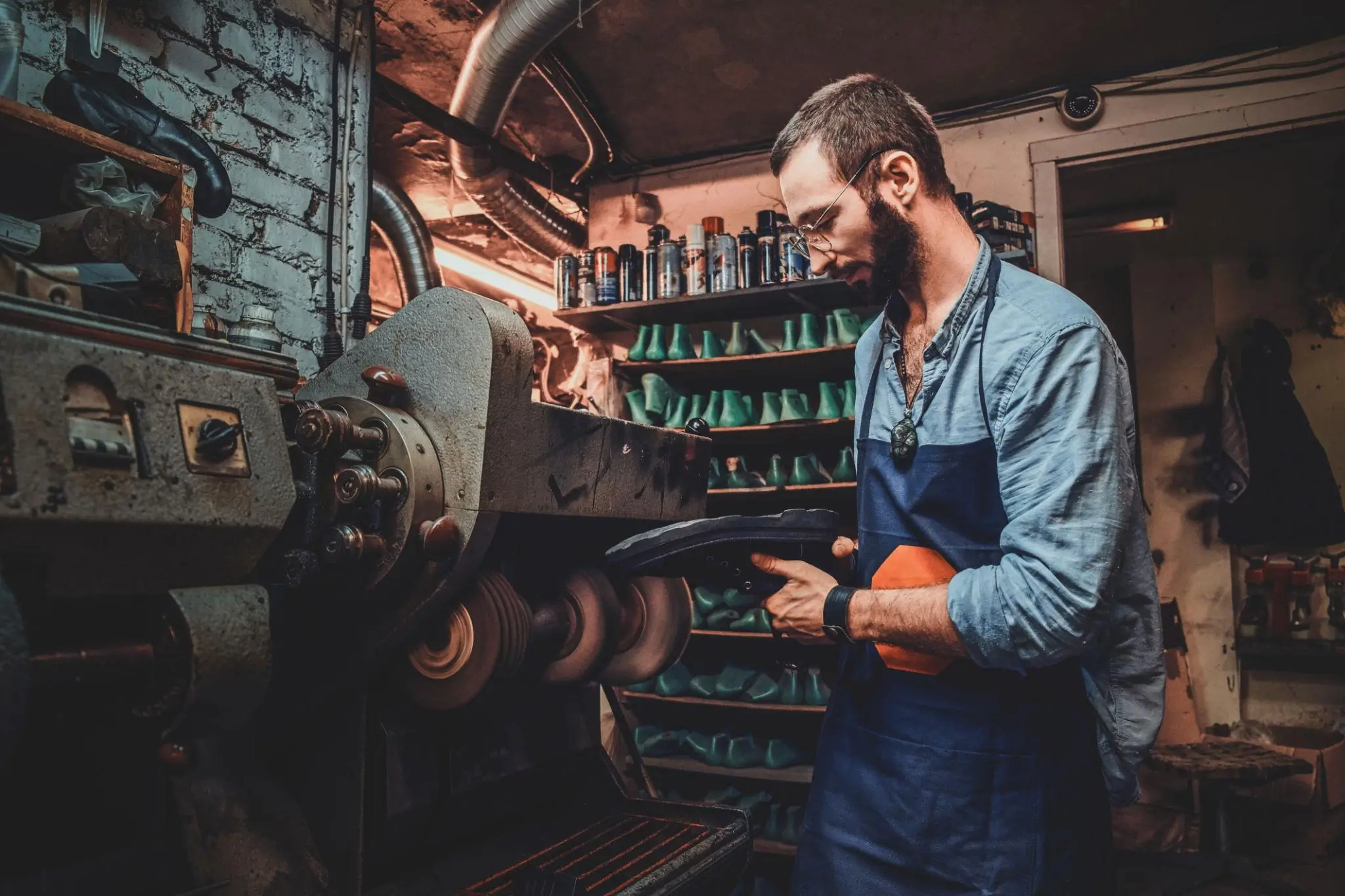
At the Diemme atelier, 40 specialized craftsmen contribute to each unit. This is not assembly-line labor divided into isolated tasks. It is a distributed authorship where each stage builds on the previous one, requiring continuity of attention.
Seventy-two stages define the manufacturing cycle. From initial leather selection—where grain, density, and resilience are assessed—to manual skiving, where thickness is reduced with surgical precision, each step carries consequence. There is no redundancy built into this system; errors propagate. The process demands accuracy from the outset.
know
The design integrates 12 critical stress-point reinforcements. These are not arbitrary placements. They correspond to zones of repeated impact and strain: toe, heel, lateral flex points, and lace tension areas.
The hand-applied TPU toe cap functions as both armor and anchor. It absorbs abrasion while stabilizing the front structure of the boot. Internally, heel counters provide rigidity, preventing collapse under load and maintaining alignment over time.
What emerges is a boot that anticipates failure before it occurs. Reinforcement is not reactive—it is preemptive. This is where HELIOT EMIL’s design language converges with Diemme’s technical heritage. Both operate on the premise that structure should be visible, legible, and integral.
discip
One of the most significant aspects of the process is hand-lasting. In contemporary footwear manufacturing, mechanical lasting dominates for efficiency. It standardizes shape but often at the cost of material integrity.
Hand-lasting, by contrast, allows for micro-adjustments. The craftsman responds to the specific behavior of each leather piece, stretching and aligning it to maintain elasticity. The result is an anatomical fit that evolves with wear rather than resisting it.
This technique also preserves the internal tension of the material. Mechanical lasting can over-stress certain zones, leading to premature breakdown. Hand-lasting distributes that tension more evenly, extending the lifespan of the boot.
In a market driven by turnover, this is a quiet refusal.
stir
From the DRIFT archive: A Cult Classic in Orbit: The Tecnica Moon Boot Icon Nylon Boots Reimagined for Modern Winter · The Jordan MVP 92 ‘Black Infrared’: A Hybrid Built On Legacy, Engineer
Related Articles
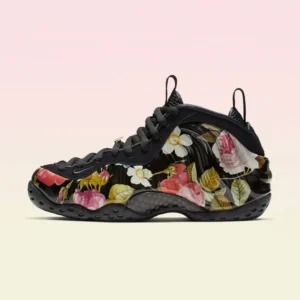
Shell, Floral Print, Gold Lace Lock
Air Foamposite One Floral/Black. AA3963-002. 11 December 2026. $240. Black nubuck eyestay, mesh tongue, metallic gold Swoosh dubrae.