DRIFT AUDIO
Listen to this story
Choose a voice, then press play.
cut
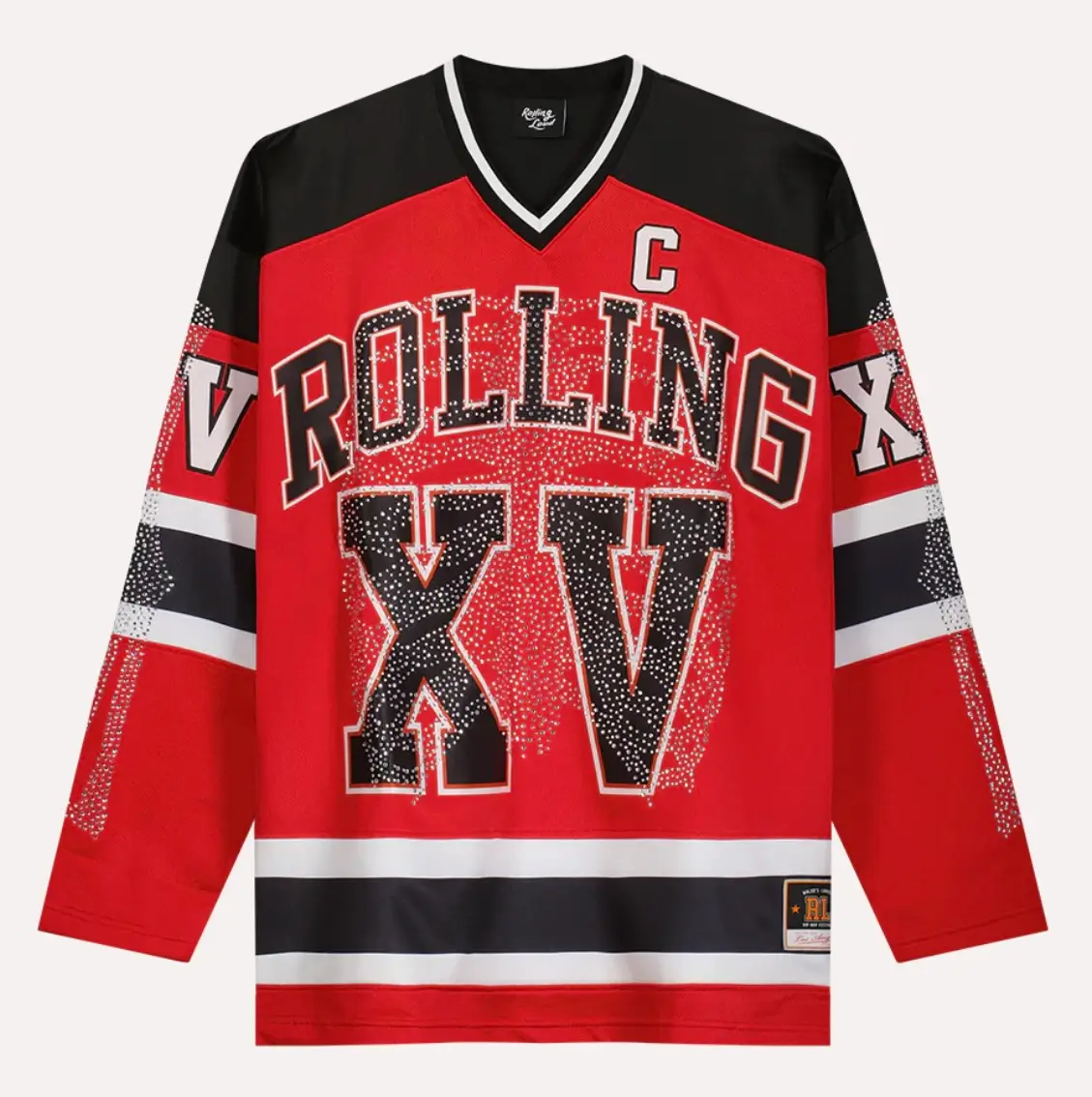
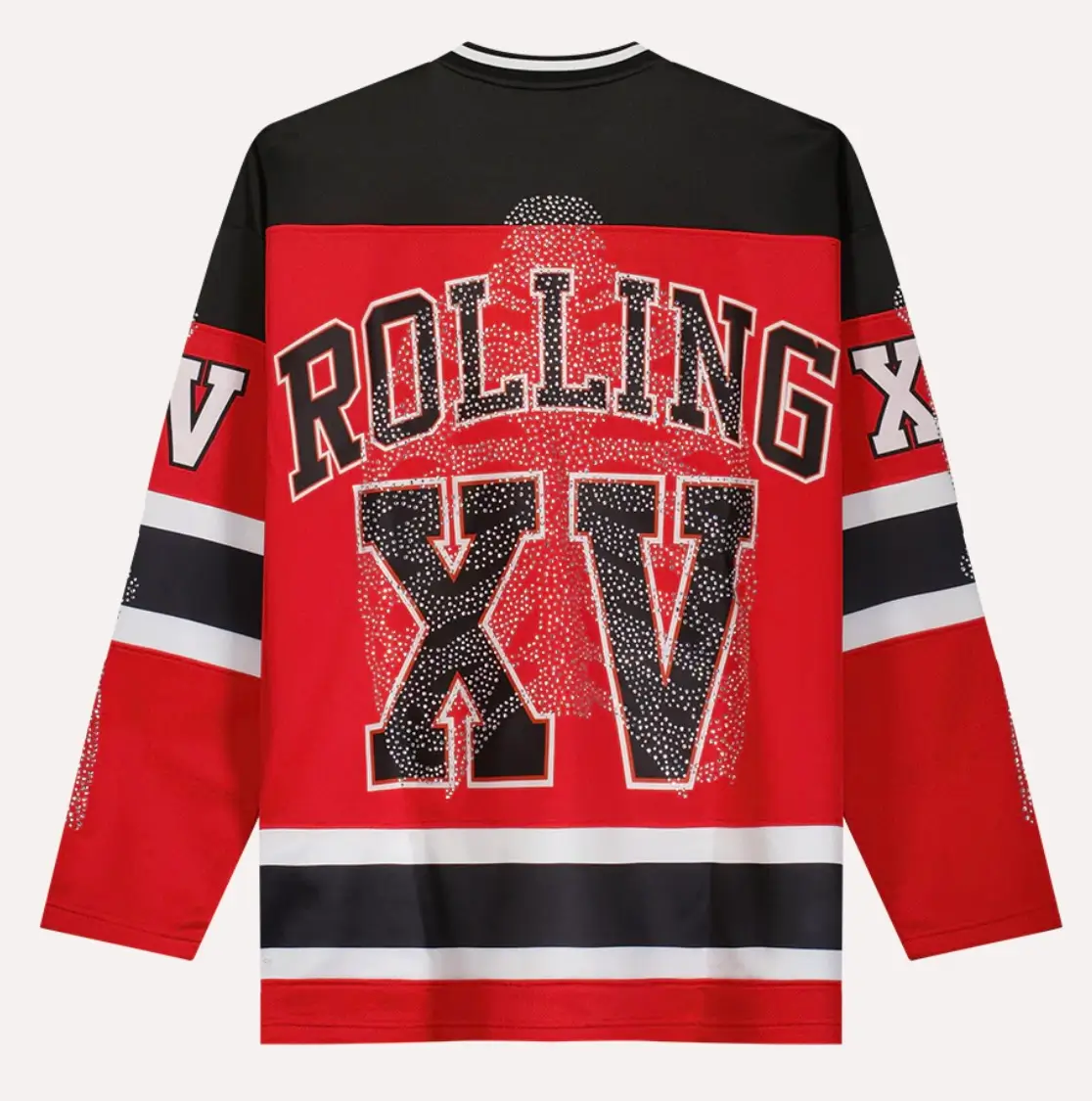
The BONES Hockey Jersey begins with a structure that doesn’t need explanation. Hockey silhouette—wide frame, extended sleeve, open body. Air moves through it. The garment doesn’t follow the body; it suspends around it.
That looseness carries intent. Movement stays unrestricted. Heat doesn’t trap. The jersey reads immediately as functional, even before the surface arrives into conjure.
Then the surface interrupts.
“BONES” sits forward. Not layered, not obscured. Direct placement. The typography anchors the piece in artist identity, but the finish—rhinestone—pulls it out of standard merch territory.
The base remains athletic. The read becomes something else.
stir
Rhinestones shift perception instantly. Light hits, and the garment reacts. Static in backdrop, active under exposure.
That reaction matters. Festival environments rely on light—stage beams, LED spill, camera flash. The jersey is built for that context. Not passive clothing. Responsive surface.
Placement controls everything. Too dense, and it flattens into costume. Too sparse, and it disappears. Here, the balance holds in visibility without overload. The stones sit on top of the fabric, not blended into it. You feel the separation—soft underlayer, rigid overlay.
That separation creates tension. Matte against reflection. Fabric against stone.
The result reads as deliberate contrast, not decoration.
mat
Underneath the embellishment, the structure stays grounded in familiar territory. Mesh or polyester base—lightweight, breathable, designed for motion.
This isn’t luxor fabrication in the traditional sense. No heavy knits. No layered technical panels. The material stays simple because it needs to.
Weight comes from the surface, not the base.
The fabric holds shape without stiffness. It collapses slightly when worn, draping rather than structuring. That softness allows the rhinestones to stand out more aggressively. If the base competed, the effect would dilute.
Instead, it recedes.
View this post on Instagram
flow
Oversized by design. Not exaggerated for effect—standard within hockey lineage, but recalibrated through streetwear context.
Dropped shoulders widen the upper frame. Sleeves extend past the elbow, creating movement lines rather than fixed edges. Length runs longer than a typical tee, sitting mid-thigh depending on height.
The proportions resist tailoring. Nothing cinched. Nothing controlled.
That lack of control is the control.
It allows layering without friction. Tee underneath, hoodie below, or nothing at all—the jersey holds its shape regardless.
evolve
Rolling Loud merchandise has shifted over the past decade. Basic prints gave way to constructed garments. Cut-and-sew replaced blanks. Identity moved from graphic to form.
The BONES Hockey Jersey fits into that evolution.
It doesn’t rely on a tour date list or back print to carry meaning. The garment itself carries it—through silhouette, through material contrast, through surface treatment.
Rhinestones push it further. Not typical within festival merch. More aligned with stagewear, performance gear, pieces designed to read under lighting conditions rather than daylight neutrality.
That crossover matters. It positions the jersey between categories:
- Merchandise
- Streetwear
- Performance
It doesn’t settle.
show
Shine introduces risk. Too much, and the piece loses control. Too little, and the intention collapses.
Here, the rhinestones carry visual weight without overwhelming the structure. The jersey still reads as a jersey first. The embellishment comes second, but hits immediately.
The eye moves in sequence:
Shape → Text → Reflection
That order keeps the garment grounded. It avoids becoming purely decorative.
Black or dark base tones amplify the effect. Light hits the stones harder against contrast. White or lighter variants soften the read, spreading reflection rather than concentrating it.
Both directions hold, but the impact shifts.
style
The jersey doesn’t require complexity around it. It rejects it.
Bottom half:
Black denim
Relaxed cargos
Technical shorts
Footwear:
Minimal shoe
Monochrome trainers
Nothing that competes for attention
Accessories stay reduced. No additional shine. No layered metals competing with the rhinestones.
The piece functions as the focal point. Everything else supports or disappears.
Fit remains loose across the entire look. Tight elements break the flow. The jersey needs space to move.
wear
Context defines the piece.
Daytime—readable, but controlled. The rhinestones catch light occasionally, not constantly. The jersey sits closer to standard streetwear.
Night—fully active. Artificial light triggers the surface. Movement creates flicker. The garment shifts from clothing to signal.
Festival settings amplify this further. Stage lighting, crowd density, constant motion. The jersey operates within that system.
It isn’t designed for invisibility. It’s designed to be seen when conditions allow.
sustain
Rhinestones introduce fragility by nature. They sit on the surface. Friction, washing, wear—all factors.
That doesn’t invalidate the piece. It reframes it.
Care becomes part of ownership. Less aggressive washing. More controlled wear cycles. Not daily rotation for every environment.
The base fabric can handle regular use. The surface requires attention.
That tension between durability and delicacy adds another layer. Utility meets limitation.
fin
The BONES Hockey Jersey doesn’t attempt subtlety. It controls contrast instead.
Athletic base. Reflective surface. Loose structure. Focused identity.
A piece built for environments where light, movement, and presence intersect.
Not essential for every wardrobe. Not designed to be.
But in the right context, it holds its position—clear, view, and resolved.
Read Drift’s related feature, Rolling Loud’s RL Bones Zip Hoodie.
Related Articles
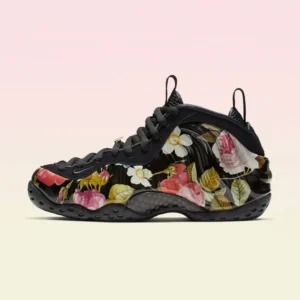
Shell, Floral Print, Gold Lace Lock
Air Foamposite One Floral/Black. AA3963-002. 11 December 2026. $240. Black nubuck eyestay, mesh tongue, metallic gold Swoosh dubrae.