DRIFT AUDIO
Listen to this story
Choose a voice, then press play.
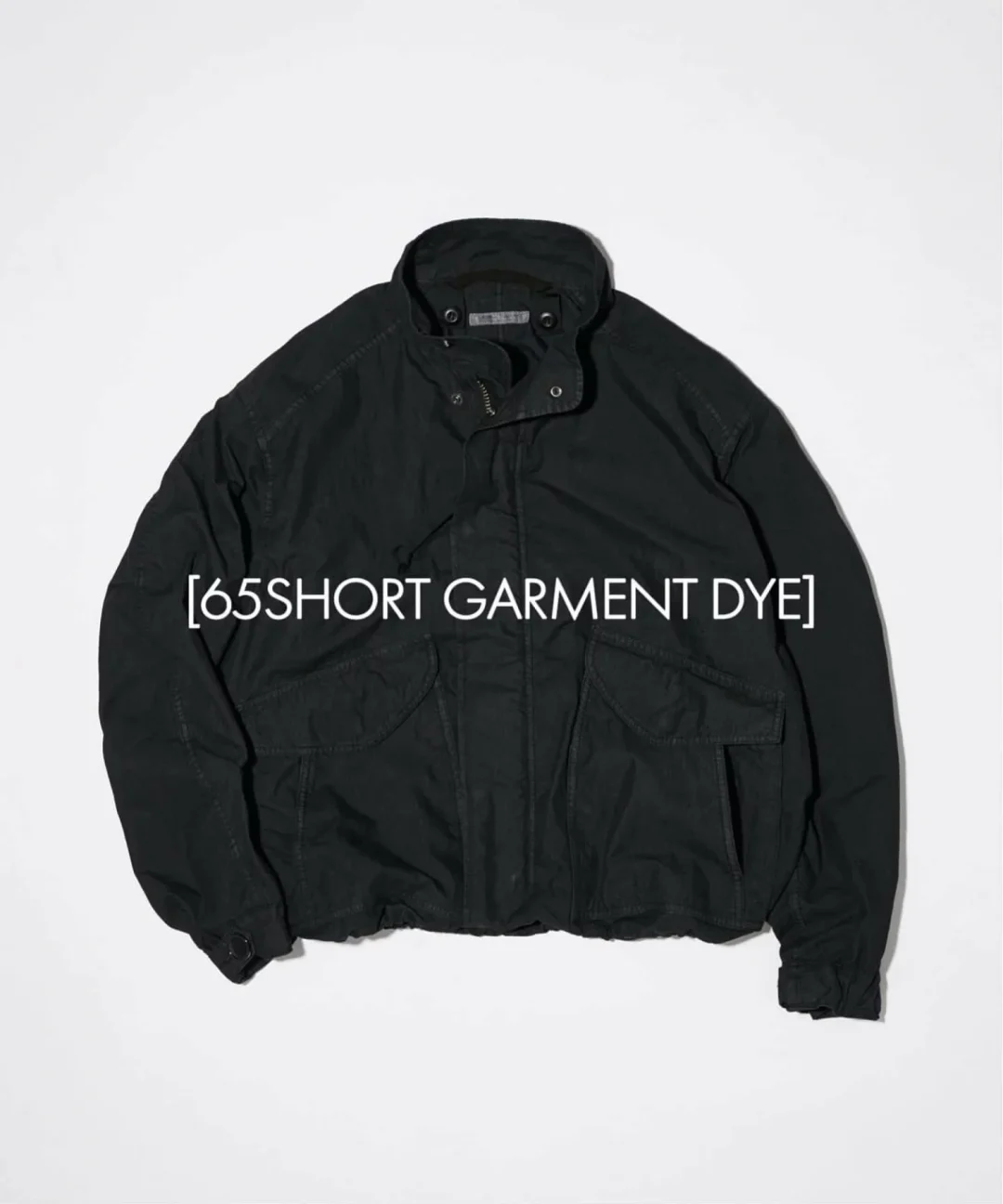
The Tokyo label’s 2026 fall/winter M-65 Short Mods Garment Dye reworks a Vietnam-era military coat into a short, roomy blouson with a removable liner, arriving mid-August at 23,100 yen.
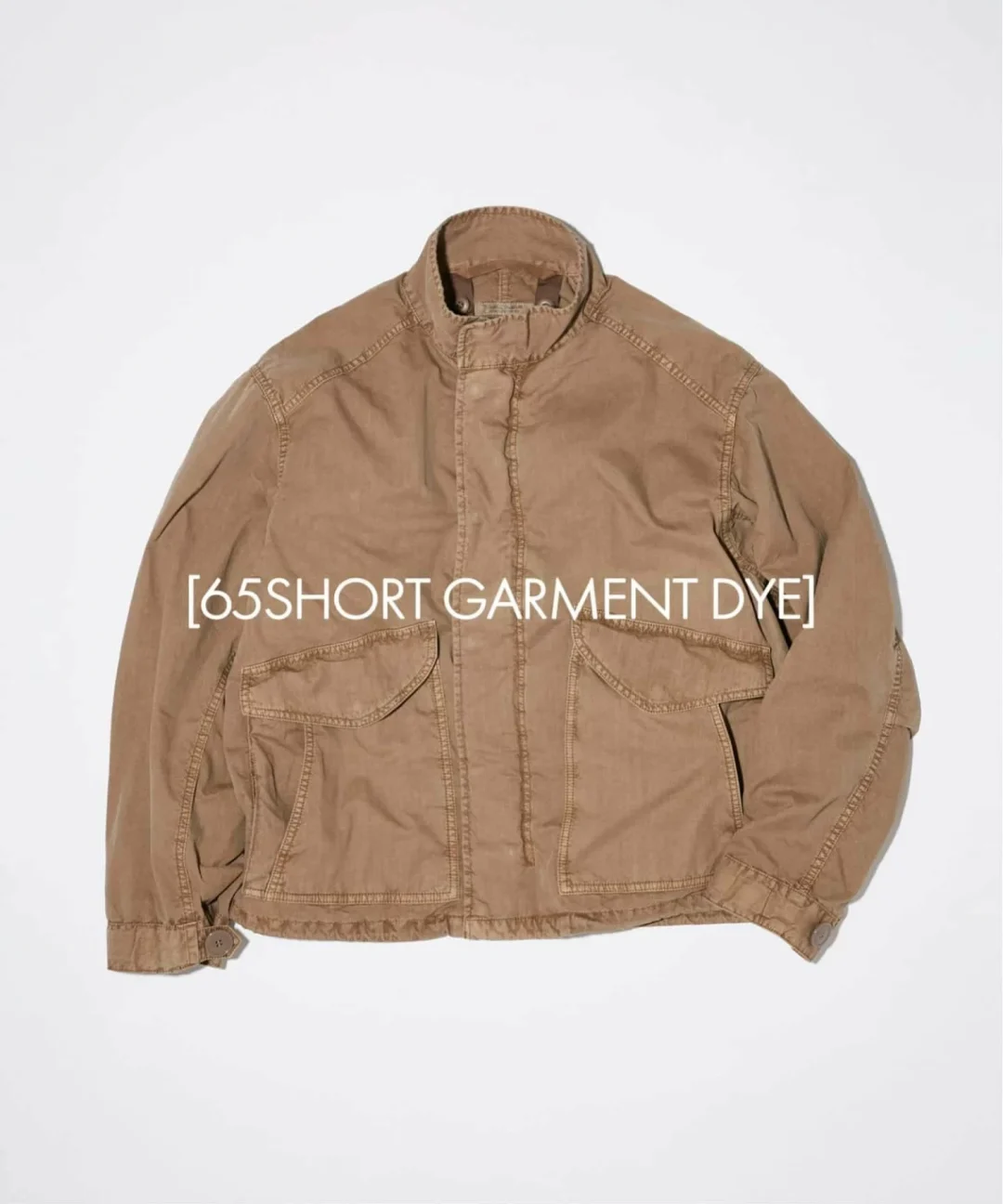
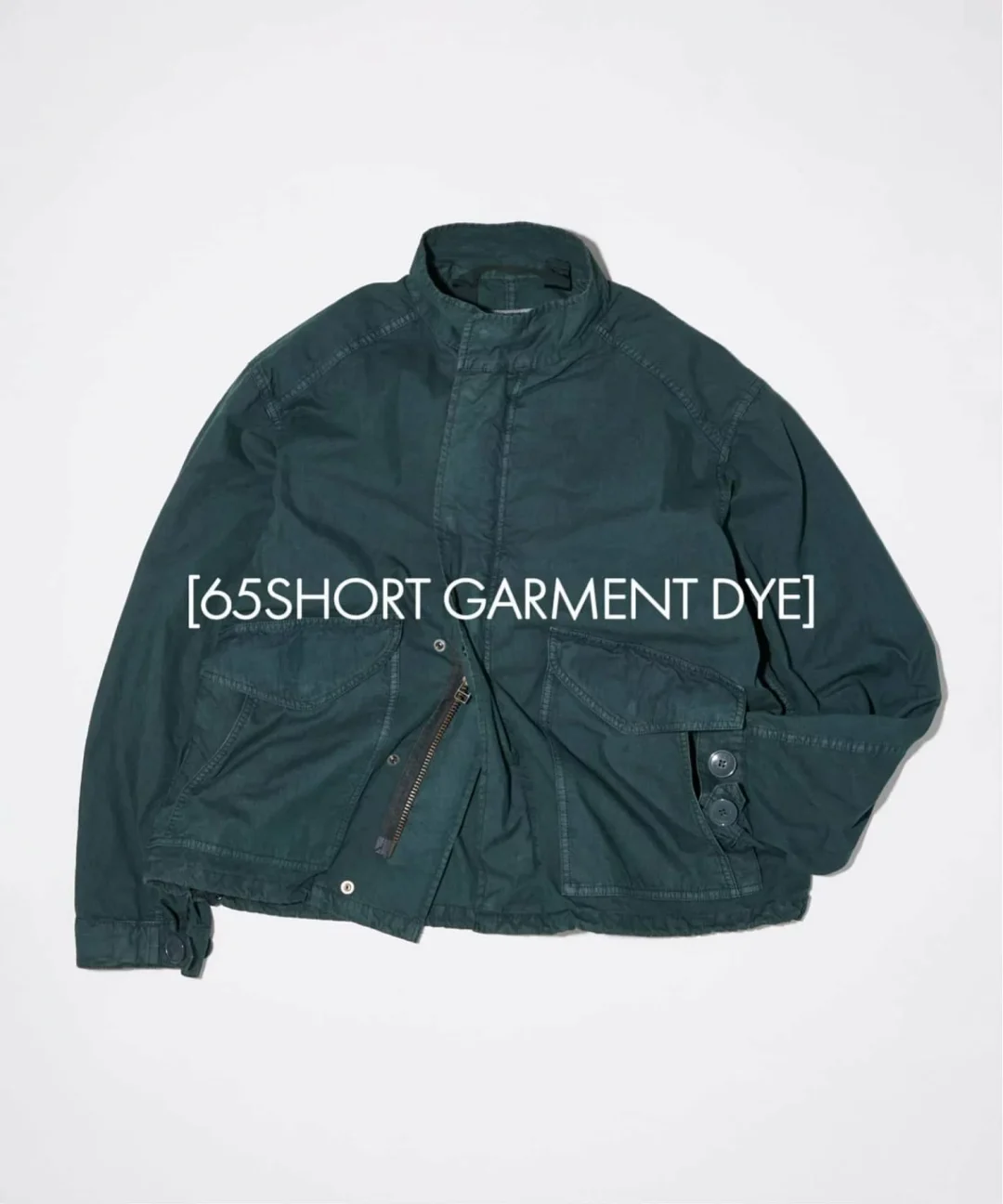
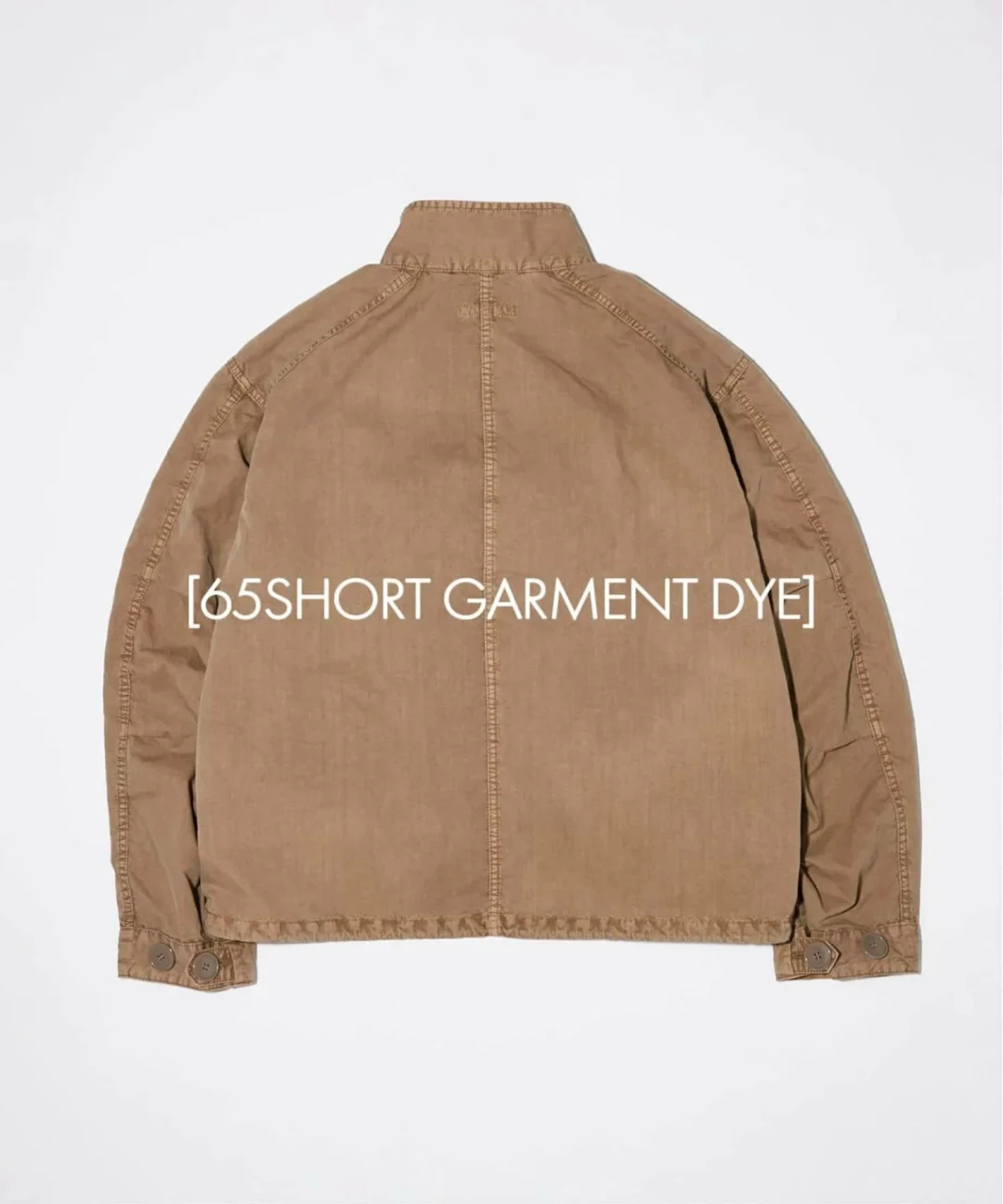
JOURNAL STANDARD‘s 2026 fall/winter M-65 Short Mods Garment Dye takes one of military surplus’s most recognizable profile and simply cuts it off at the hip. The starting point is the M-65 fishtail parka, the long, hooded coat issued to American troops from the mid-1960s onward and adopted decades later by mod subculture in London, whose extended back panel and drawcord hem were designed to seal out wind and rain on a soldier standing watch rather than to look good on a train platform. JOURNAL STANDARD keeps the coat’s functional bones (the storm flap, the collar structure, the general bulk of the thing) but shortens the body into something closer to a blouson, a length that sits at the hip rather than the knee.
The fabric is a high density weather cloth blended from cotton and nylon, chosen for a build that holds its shape without turning stiff or heavy on the shoulders. According to the release notice describing the piece, the arm holes are cut deliberately roomy, wide enough to layer a sweatshirt or a chunky knit underneath without the sleeves pulling tight, and the body carries extra ease through the chest so the shortened length doesn’t read as cropped or fitted. Paired with the wide leg trousers that have dominated Japanese menswear for the last several seasons, the proportion is meant to read as blocky and deliberate rather than accidental.
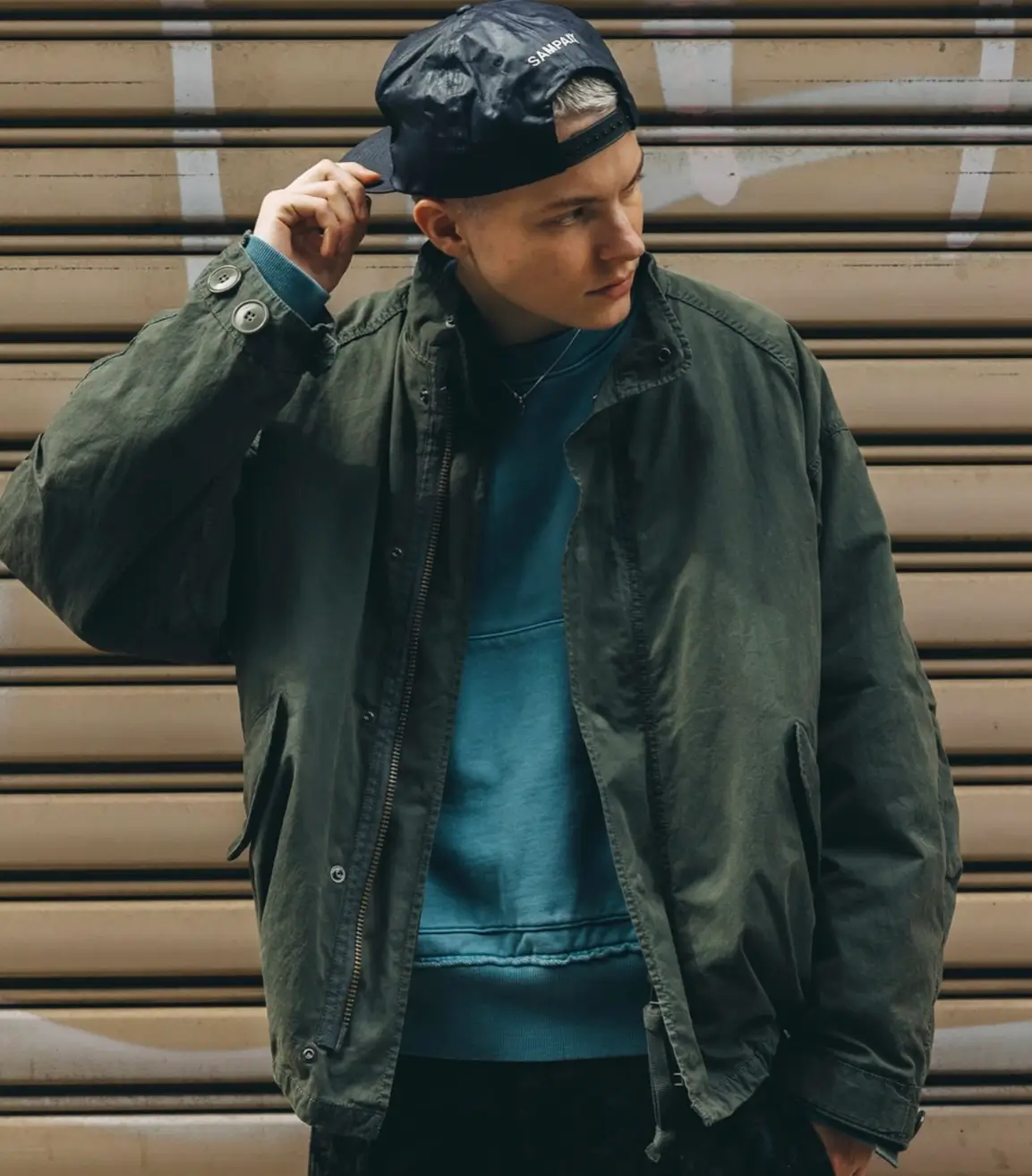
A dark olive garment-dyed utility jacket is styled with a teal crewneck sweatshirt and a black cap, highlighting the relaxed fit, oversized form, and understated military-inspired detailing.
The name itself does some explaining. Mods, the British subculture that adopted the fishtail parka in the first place, wore the coat as outerwear over sharp tailoring, something to protect a suit from scooter exhaust and rain rather than a fashion statement in its own right. JOURNAL STANDARD’s short version keeps that layering logic intact even as it drops the length: the jacket is still built to sit over other clothes rather than stand alone, just now it sits over a knit and a pair of trousers instead of a full length coat over a suit.
stir
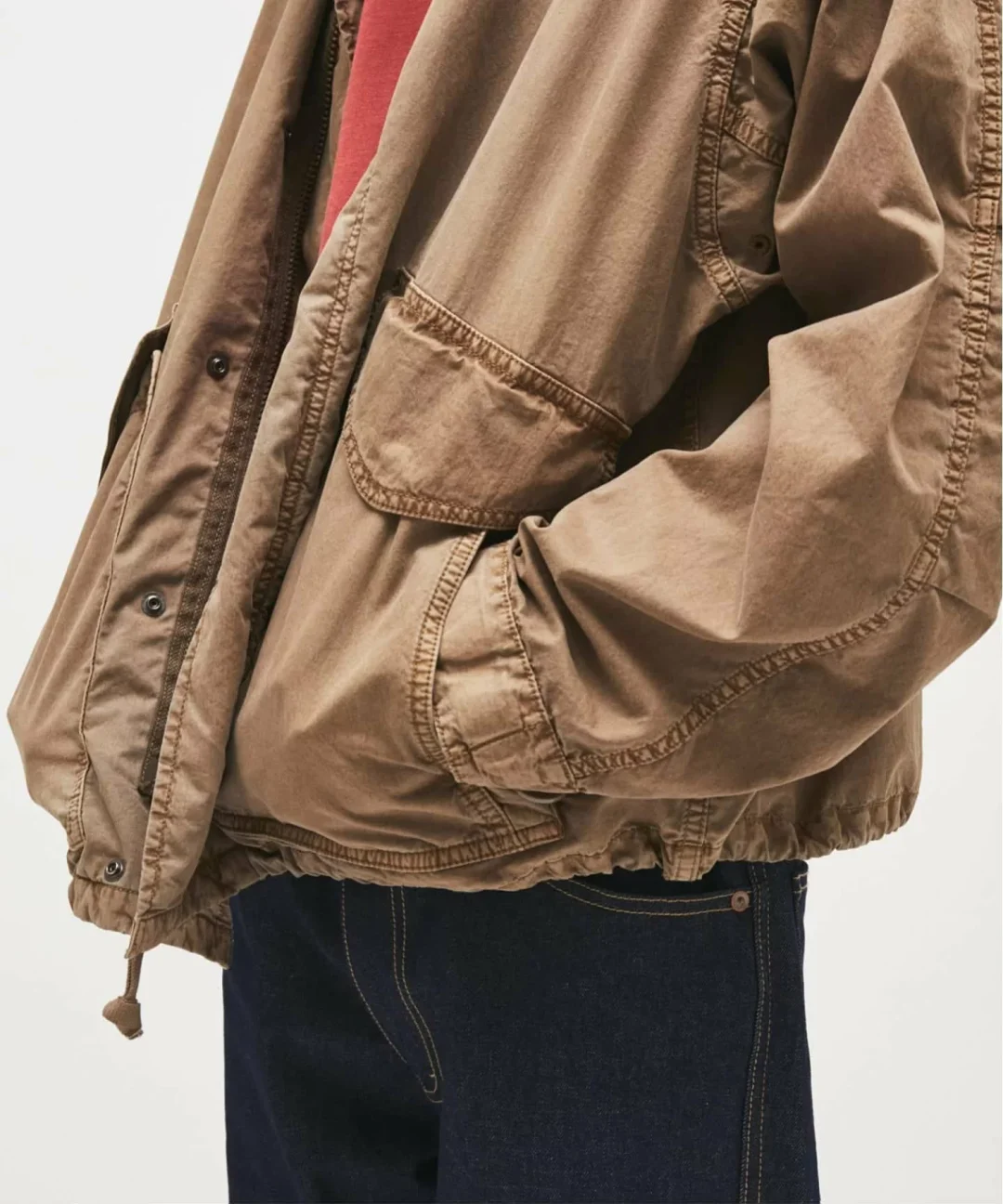
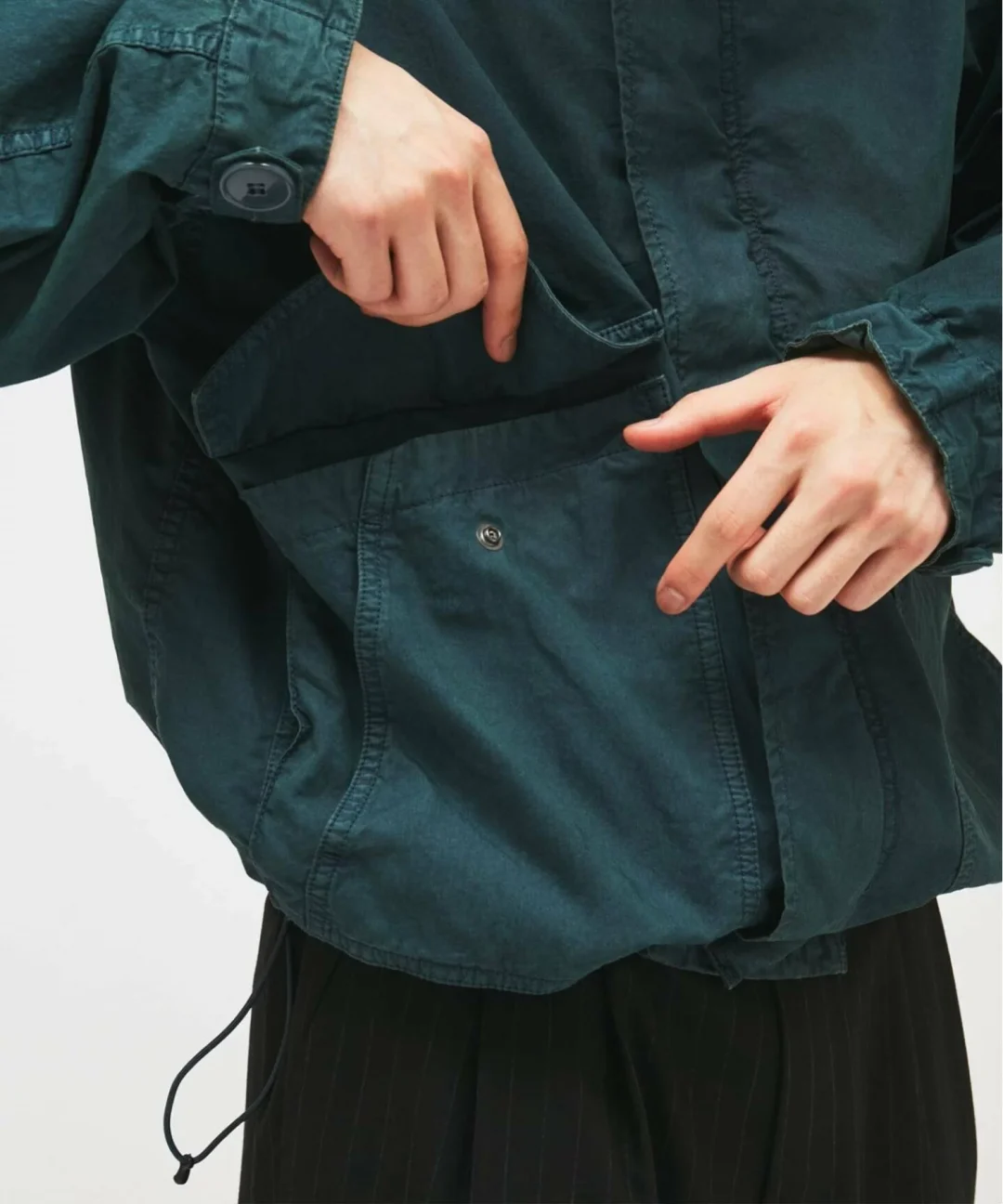
The defining process on this release is garment dye, meaning the jacket is constructed first and dyed as a finished piece rather than dyed as raw fabric before cutting. That order of operations is what produces the uneven, slightly faded color and the raised puckering around the seams that the release notice keeps returning to. Because the thread used in construction doesn’t always take dye the same way as the surrounding cloth, seams end up with a subtle ridge and a tonal shift that a piece dyed in the yarn stage never develops. It’s the same mechanism that gives a decade old, much washed field jacket its lived in look, except here it’s manufactured into a brand new garment in a single finishing step rather than earned through years of wear.
The effect is intentional rather than a byproduct of manufacturing shortcuts. JOURNAL STANDARD’s own product copy describes the goal explicitly: a natural fade and a puckered, three dimensional seam line meant to read as vintage rather than distressed, closer to a coat somebody has actually owned for a while than one artificially aged with sandpaper or chemical washes. It’s a technique the brand has leaned on across other outerwear in recent seasons, and it shows up again here as the single detail doing the versions of the sil the brand has sold in past seasons.
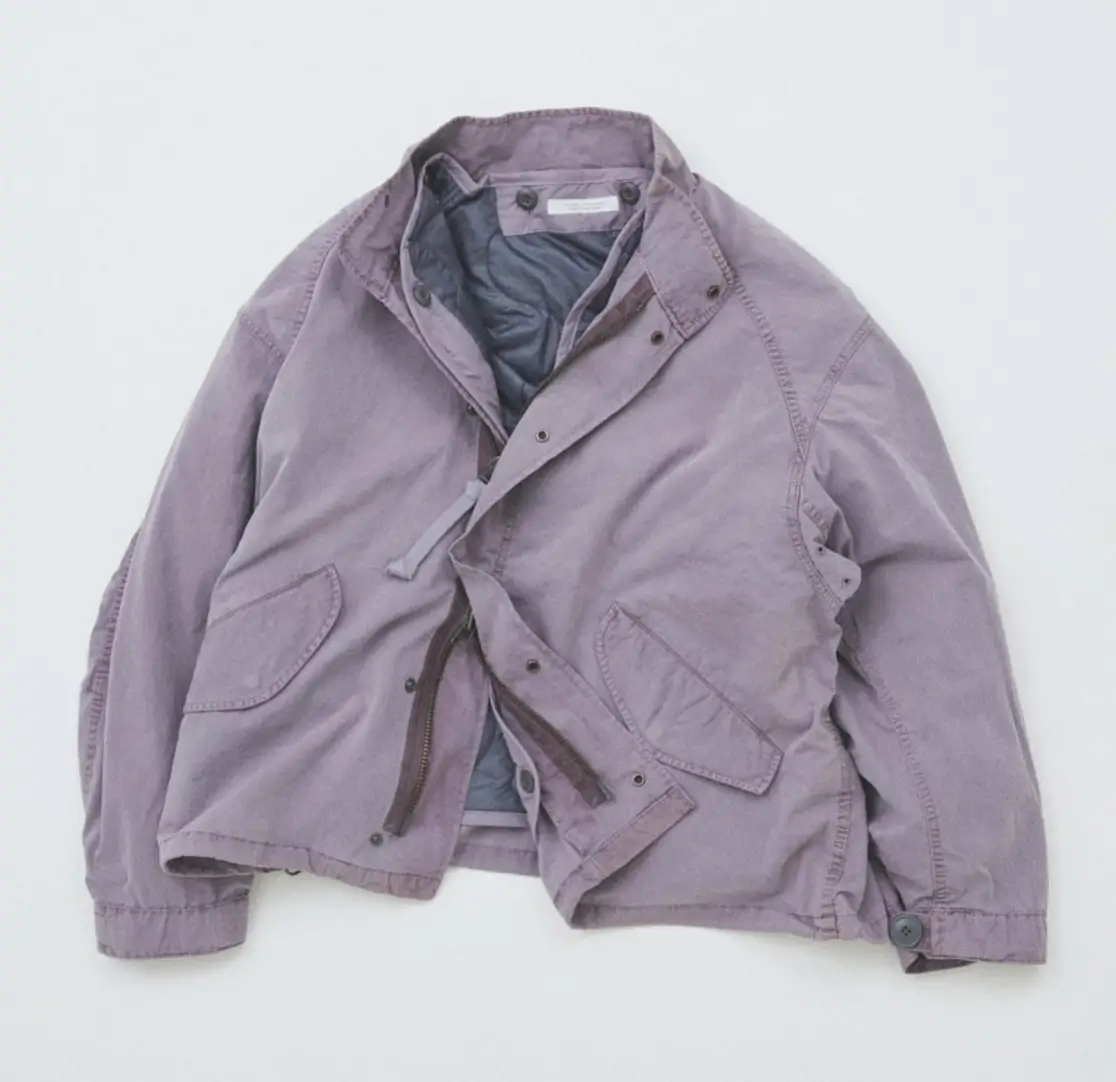
A light lavender garment-dyed utility jacket is displayed with its front partially open, showcasing the concealed zip closure, oversized flap pockets, quilted interior lining, and relaxed military-inspired construction.
Sizing runs S, M, and L, with a body width around 69 to 73 centimeters and a jacket length between roughly 60.5 and 63.5 centimeters depending on size, keeping the cropped proportion consistent across the run rather than only working on one build. Shoulder width scales from about 59.5 to 62.5 centimeters and sleeve length from 54 to 57 centimeters across the three sizes, a spread that keeps the roomy, layered fit consistent whether someone is picking the smallest or largest option rather than tightening up disproportionately at either end. The liner itself is nylon shelled with a polyester fill, detachable at a center zip, so the jacket can function as a lighter shell on its own or as a fuller cold weather coat with the liner zipped back in.
The four colorways split fairly evenly between shh and more assertive options. Black and the darker khaki lean toward the kind of coat that disappears into a rotation of dark, simple layering pieces, while the gray and the purple sit closer to the season’s broader interest in muted, slightly unexpected color for outerwear rather than the black and olive that has dominated military inspired jackets for years. None of the four reads as loud in isolation; the tincture mostly announces itself through how it interacts with the garment dye fade rather than through saturation.
show
The M-65 itself has one of the odder afterlives in military clothing history. Issued to American forces starting in the mid-1960s as a replacement for earlier field jackets, it was built for function alone: a fishtail hem that could be gathered and buttoned between the legs for extra coverage in the field, a hood that could be zipped away into the collar, and a straight, boxy cut with no attempt at flattering anyone’s silhouette. It left military service almost entirely by way of surplus stores rather than fashion runways, picked up first by British mod subculture in the 1960s as an anti-fashion statement and later by punk and hip-hop scenes for the same reason: it was cheap, it was tough, and it wasn’t designed to be worn as a fashion piece, which somehow made it work as one.
Japanese menswear has returned to the M-65 repeatedly over the decades, treating it the way American workwear brands treat the trucker jacket, as a template sturdy enough to survive endless reinterpretation without losing its identity. JOURNAL STANDARD’s short version fits into a broader pattern across Japanese labels of taking a fixed military archetype and running it through a single, specific process, in this case garment dye and a cropped length, rather than redesigning the silhouette from scratch. The original coat’s utilitarian excess (the extra fabric, the drawcords, the storm flaps) gets kept as texture and detail even as the actual proportions are cut down to something that makes sense on a Tokyo street rather than a patrol route.
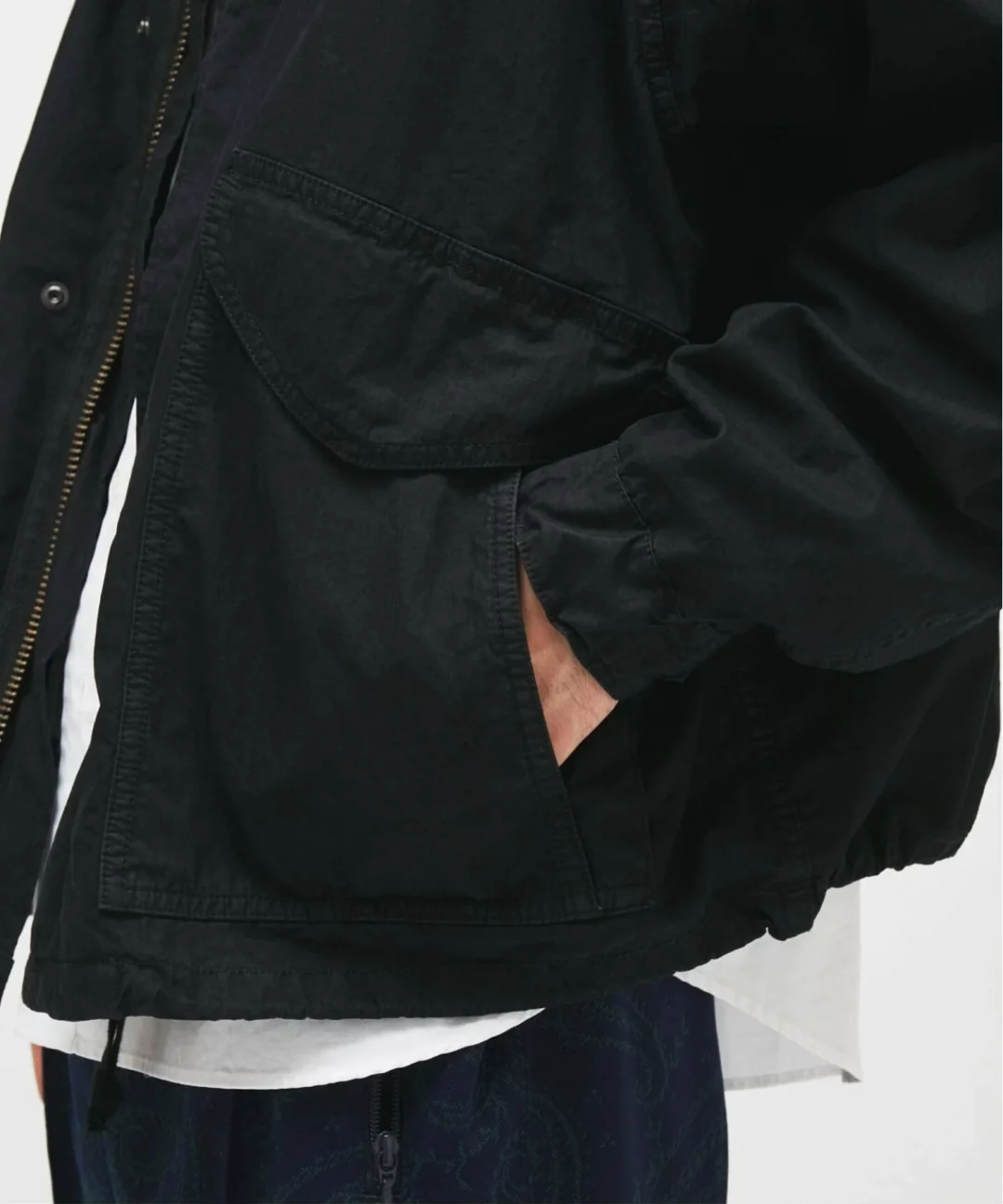
What separates this release from a straightforward shrink job is how much of the original garment’s grammar survives the edit. The storm flap over the front zip, the stand collar built to close high against the neck, the general boxiness through the torso: none of that gets softened or tailored away in the name of making the jacket look more like fashion outerwear and less like surplus. The cropped length is really the only structural change, and everything else about the coat, the fabric weight, the collar, the fastenings, is left alone, which is arguably why the garment dye finish matters so much here. It’s doing the work of making a nearly one to one silhouette copy feel like a distinct product rather than a licensed reproduction.
View this post on Instagram
link
Baycrew’s, the retail group that owns JOURNAL STANDARD, traces back to 1977 in Tokyo and has grown into one of the broader lifestyle conglomerates in Japanese fashion retail, running select shop brands including ÉDIFICE and IÉNA alongside furniture, café, and dining ventures under the same corporate umbrella. JOURNAL STANDARD itself has expanded well past a single storefront concept over the decades into sub-labels like JOURNAL STANDARD relume and JOURNAL STANDARD luxe, each carrying a slightly different price point and aesthetic within the same broader brand identity, plus a furniture line and a Jiyugaoka pancake café that has nothing to do with clothing at all.
In February 2024, Baycrew’s opened SELECT by BAYCREW’S, a roughly 2,600 square meter flagship spanning two floors of Toranomon Hills Station Tower in central Tokyo, folding fashion, food, lifestyle, and art retail into a single format a few blocks from the newer Azabudai Hills complex. It’s a scale of ambition that sits oddly next to a 23,100 yen blouson, but it’s also the reason a release like the M-65 Short Mods Garment Dye can exist at all: a company large enough to run its own weather cloth sourcing and garment dye production in house, applied to a single military archetype dozens of Japanese labels have already tried their own version of.
That corporate scale also explains why a single profile can circulate across so many price points and formats within the same broader company at once. The linerless Short Mods Garment Dye sold in earlier seasons, the new liner version arriving in August, and whatever JOURNAL STANDARD relume or luxe eventually does with the same M-65 template are all products of one group with the manufacturing infrastructure to run several parallel takes on a single archetype through its supply chain simultaneously, then let each sub-label position its version at a different price and customer.
Where and When to Actually Find It
The M-65 Short Mods Garment Dye is set for a mid-August 2026 release at 23,100 yen, according to a Japan market release notice tracking the brand’s fall/winter lineup, with retail listings already live across JOURNAL STANDARD’s own e-commerce channel and Japanese fashion marketplaces including Magaseek and Locondo ahead of the official date. Gray, khaki, purple, and black are confirmed as the four colorways carrying the removable liner, distinct from an earlier, linerless Short Mods Garment Dye the brand has sold in past seasons at a noticeably higher price point around 30,000 yen, a version built from a cotton and nylon blend with a panel construction rather than the liner and weather cloth combination defining the new release.
No international release date or overseas stockist list had surfaced as of this writing, which tracks with how JOURNAL STANDARD has historically handled its own outerwear drops: domestic release first, through its own stores and the Baycrew’s retail network, with wider availability, if it comes, arriving later and unannounced in advance. For now the jacket exists as a Japan market item, one more example of a Tokyo label taking a piece of American military surplus and running it through a process specific enough that the result stops reading as a costume and starts reading as just another coat somebody happens to own.
n
From the DRIFT archive: AURALEE Product Dyed Organic Cotton Duck Blouson · PEN CAP – Distressed Long Sleeve