Margaret Howell — The Grasses Motif and Refusal of Indelible Chic

April 15, 2026
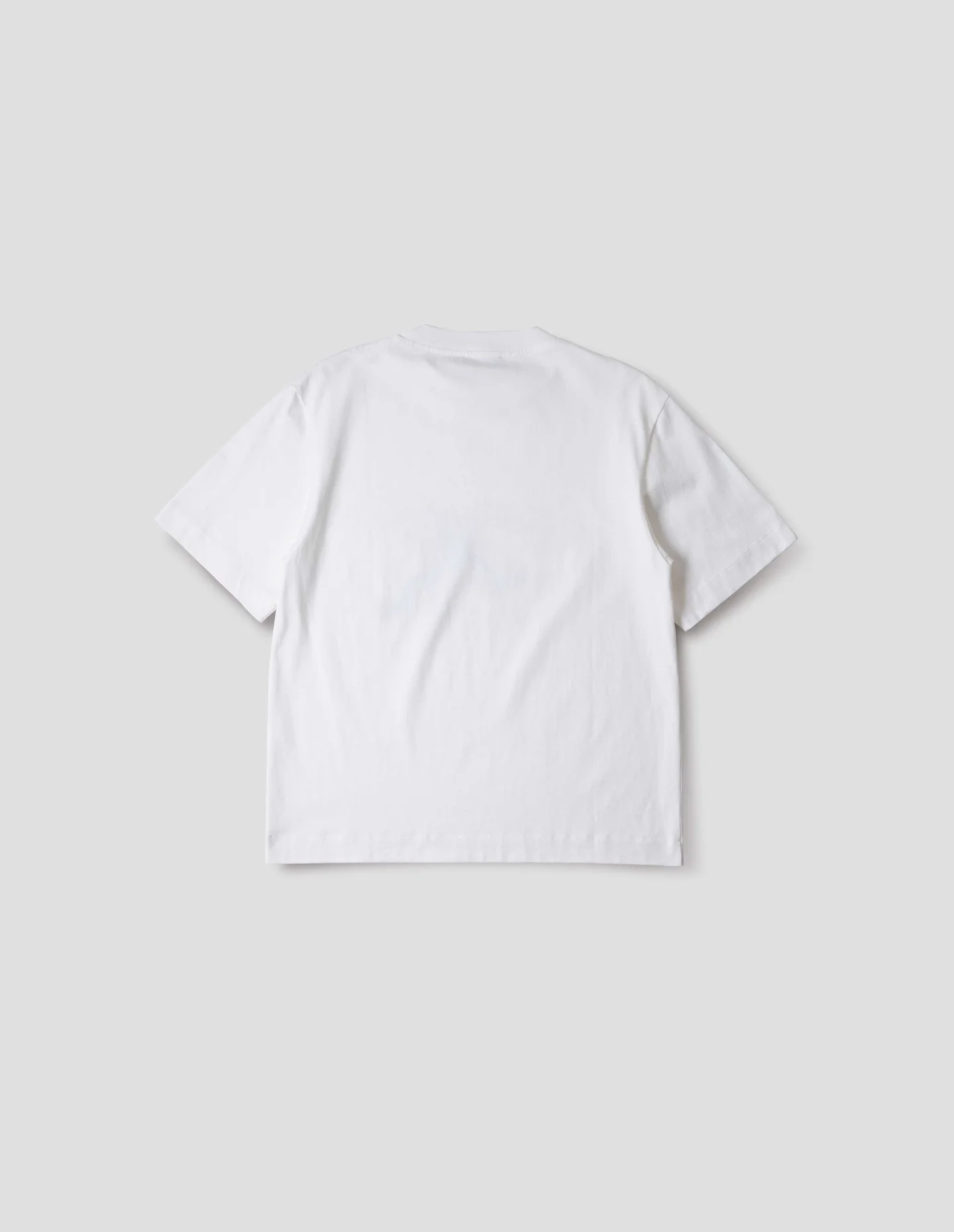
Some garments begin as product. This one begins as observation.
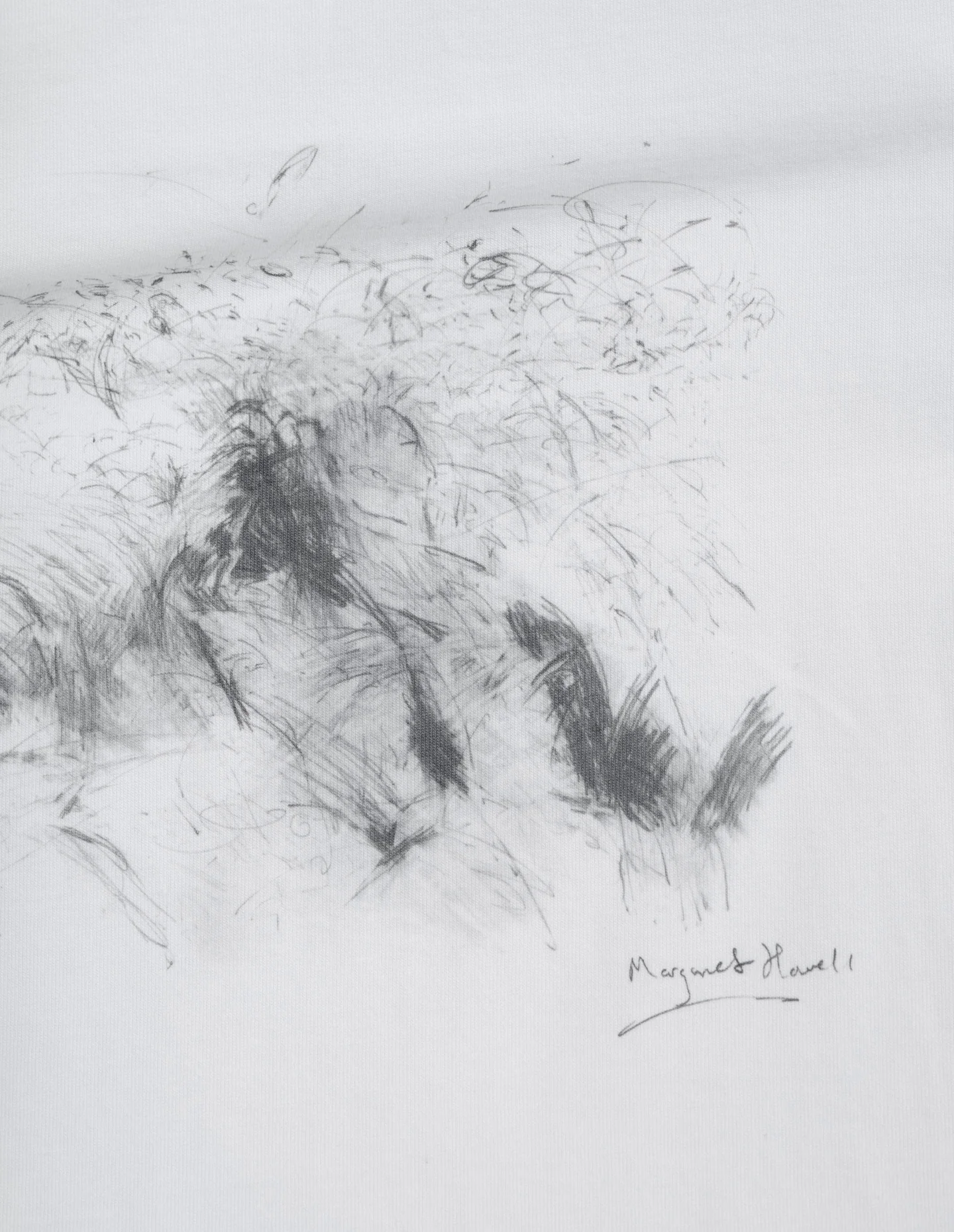
In 1966, before the architecture of a label or the cadence of seasonal collections, Margaret Howell was drawing grass. Not as subject in the traditional sense, but as behavior—thin lines bending under pressure, shifting direction without breaking form. The drawings were less about depiction and more about timing: how to catch something that doesn’t stay still.
The Grasses T-Shirt does not reinterpret that moment. It carries it forward.
View this post on Instagram
idea
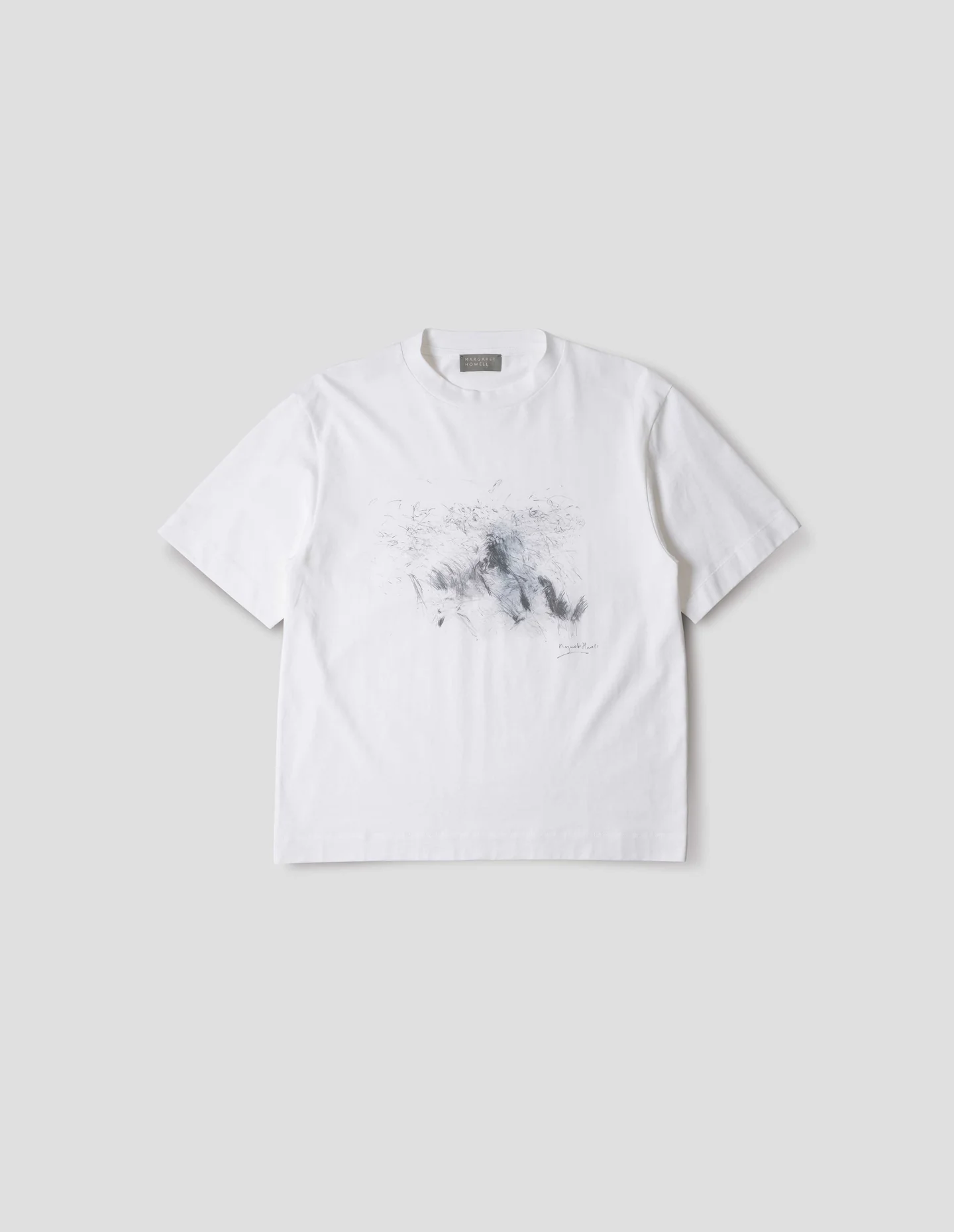
The lines on the shirt do not behave like a graphic. They don’t center themselves or resolve into symmetry. They stray . Some gather, others fall away. The spacing is uneven, the density inconsistent. It feels closer to notation than illustration—marks that record movement rather than define it.
This distinction matters. Most printed T-shirts operate through clarity: a logo, a message, a fixed image. Here, the lines resist that fixity. They suggest something ongoing. Even when still, they imply motion.
It’s a drawing that never quite settles into being finished.
flow
There is restraint in how the drawing is handled. It is not cleaned up, not optimized for print, not made more legible. The irregularities remain. Slight breaks in the line. Variations in pressure. The human trace is left intact.
On fabric, this becomes something else. Cloth fabric introduces softness where paper holds tension. The lines shift slightly with the surface—stretching, compressing, responding to the body underneath. The drawing is no longer fixed in place; it becomes conditional.
This is not a reproduction. It is a change of state.
scope
Grasses have appeared across Margaret Howell’s work for decades, but never in exactly the same way. Sometimes as backdrop, sometimes as texture, sometimes as absence. They recur without becoming motif in the conventional sense.
The T-shirt sits within that continuum. It doesn’t introduce the idea—it extracts a fragment of it. One drawing, one moment, lifted and placed into circulation.
But because the original subject is unstable—grass in wind—the repetition never feels static. Each instance carries variation. Each viewing shifts slightly depending on context, light, movement.
It is consistency without duplication.
mat
The garment itself is deliberately unremarkable at first glance. Cotton jersey. Balanced weight. A cut that avoids exaggeration. Nothing interrupts the surface.
This is where the discipline lies. The base must disappear enough to let the drawing function, but not so much that it loses structure. Too soft, and the lines collapse. Too rigid, and they become fixed again.
The print follows the same logic. It sits lightly on the fabric, allowing the weave to remain visible. The ink does not dominate; it integrates. Over time, it will fade—not as defect, but as continuation.
The shirt changes. The drawing shifts with it.
interrupt
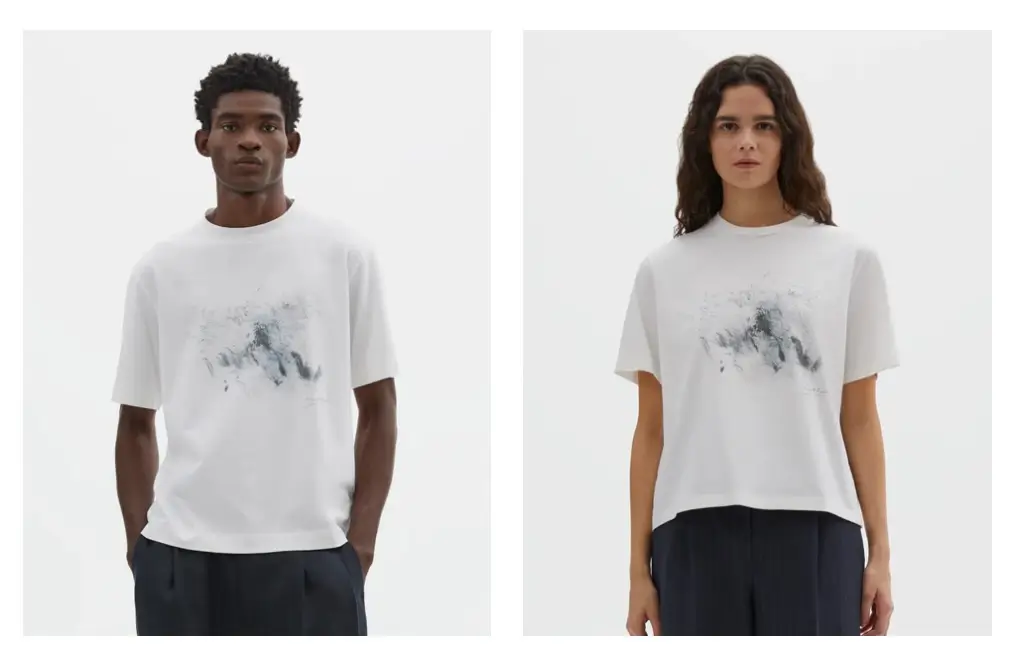
On the body, the drawing behaves differently again. It folds. It disappears into seams. It reappears across the chest or shoulder at unexpected angles. Movement interrupts the image, then restores it.
There is no single, stable view of the shirt.
This instability is not accidental. It mirrors the original condition of the drawing—the impossibility of fixing motion into one definitive form. Wearing the piece becomes a continuation of that condition. The body becomes another variable.
Not a canvas, but a collaborator.
mode
Most garments aim for consistency over time. This one anticipates change.
Washing softens the fabric. Sunlight reduces contrast. The lines lose sharpness, then regain a different kind of clarity—less defined, more integrated. The drawing moves further from its original state, but closer to the logic of its subject.
Grass does not remain pristine. It bends, frays, regrows. The shirt follows a similar trajectory.
What might be considered wear elsewhere becomes alignment here.
here
There is no focal point in the composition. No central image to anchor the pivot. Attention moves across the surface without settling. This lack of hierarchy is deliberate.
It resists the usual mechanics of graphic design, where emphasis guides interpretation. Here, interpretation remains open. The viewer—or wearer—decides where to look, how long to stay, whether to return.
The shirt does not instruct. It allows.
fin
What began in 1966 as a series of drawings remains unresolved. Not incomplete—unresolved. The distinction is subtle but important. The work does not seek closure.
The Grasses T-Shirt extends that condition into another medium. It does not finalize the drawing; it prolongs it. Each wear, each movement, each small shift in the fabric adds to the original gesture.
There is no final version of this piece. Only iterations.
And that is where its clarity lies.
Related Articles
The APEE x BABYMONSTER Capsule Landing This Weekend
A pop up on Jingumae’s back streets is about to get very loud. On July […]