DRIFT AUDIO
Listen to this story
Choose a voice, then press play.
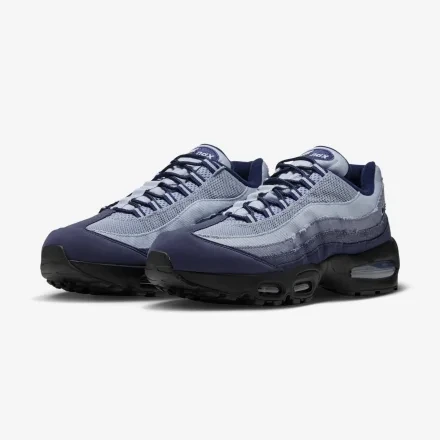
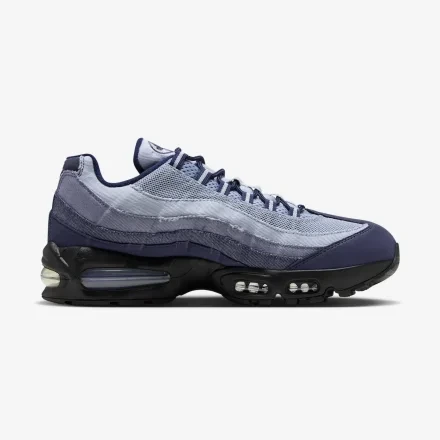
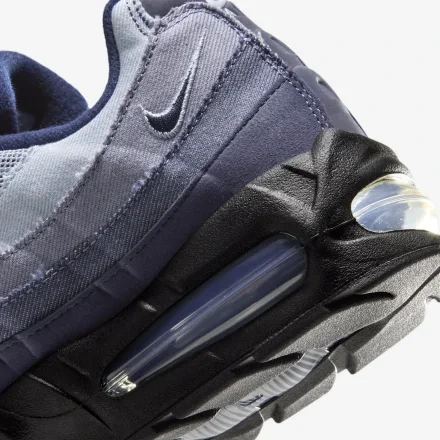
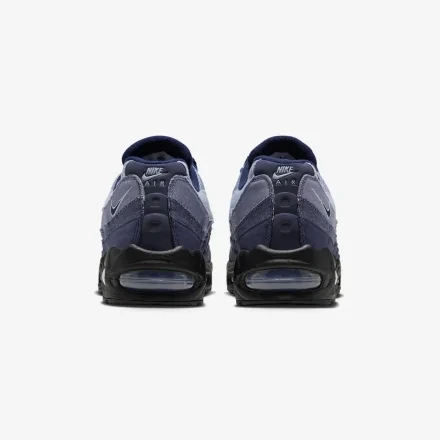
The Big Bubble treatment returns on a shoe built from muscle, rib and spine, this time washed in a slate to midnight navy fade that reads like faded indigo.
Before it was a streetwear staple, the Air Max 95 was a running shoe built for people who hit the pavement hard. Sergio Lozano was a young designer coming out of Nike ACG in the mid 1990s when he was handed the stalled running franchise and told, essentially, to take a risk. Running had fallen behind Nike’s fast growing basketball business at the time, and the design team wanted something that broke from the restrained lines Tinker Hatfield had set on earlier Air Max models. Lozano looked outside the studio for his answer. Rain cutting through soil and exposing the layers underneath became the visual logic for a shoe built around the human body: side panels that ripple like muscle fiber, a lacing structure that climbs the foot like a rib cage, a midsole and outsole that trace a spine from heel to toe. Even the barely there swoosh was a deliberate call. Lozano has said the shoe already carried visible air and a recognizable silhouette, so the branding was applied more like punctuation than a logo.
It was the first Air Max to put a visible unit under the forefoot as well as the heel, a two unit setup aimed at absorbing the pounding that heavier, harder striking runners put on a shoe. Nike also blacked out the midsole, a small, practical decision, since dark rubber hides road grime, but one that had never been tried on a Nike running shoe before. It turned a maintenance fix into a design signature. Lozano originally wanted the colorway to function the way trail running gear does, dark enough to hide five miles of dirt, and that thinking eventual gave way to the neon yellow that became the shoe’s sig launch tincture. Youth culture in London and New York latched onto the design almost immediately, and the Air Max franchise, which had been treading water in the running category, turned into a genuine style staple.
flow
Thirty years on, Nike has been mining that original sil for its 2025 and 2026 anniversary run, and the standout move across the calendar has been the Big Bubble build: an air unit sized closer to what Lozano actually sketched in 1995, before later production years trimmed it down for mass manufacturing. Pull one of these apart and the cushioning is the first thing that registers, sitting proud under the heel and forefoot rather than tucked flush into the sole. A foam midsole handles the actual shock absorption underfoot, while flex grooves cut into the outsole let the foot bend the way it naturally would mid stride, a detail that matters more once the shoe is actually being walked in rather than photographed on a shelf. The anniversary run has already worked through a run of colorways built on this same bigger air unit, from denim inspired grey and blue combinations to darker obsidian toned pairs, each one leaning on the same oversized cushion as its view anchor. None of this amounts to a reinvention of the shoe. It is Nike restoring a proportion that hum disappeared over three decades of running shoe updates, then handing it back with the comfort tuning a 2026 buyer actually expects.
score
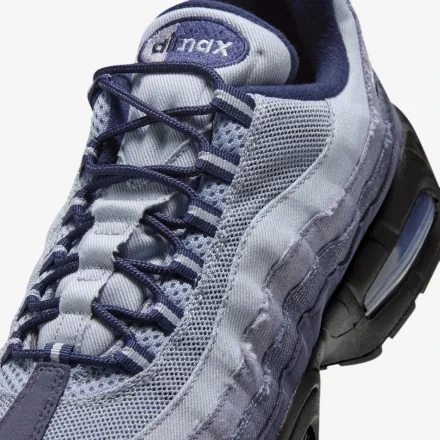
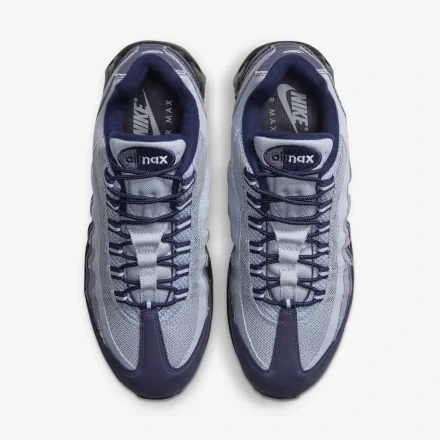
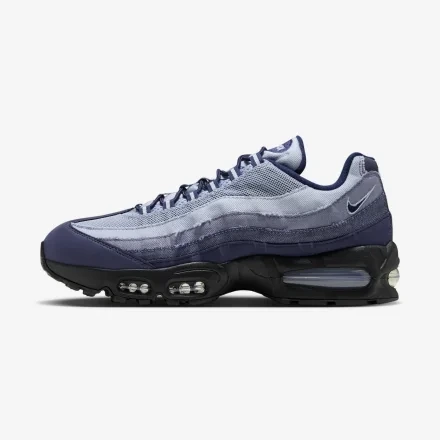
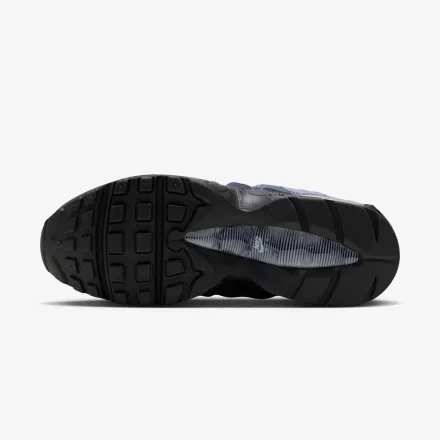
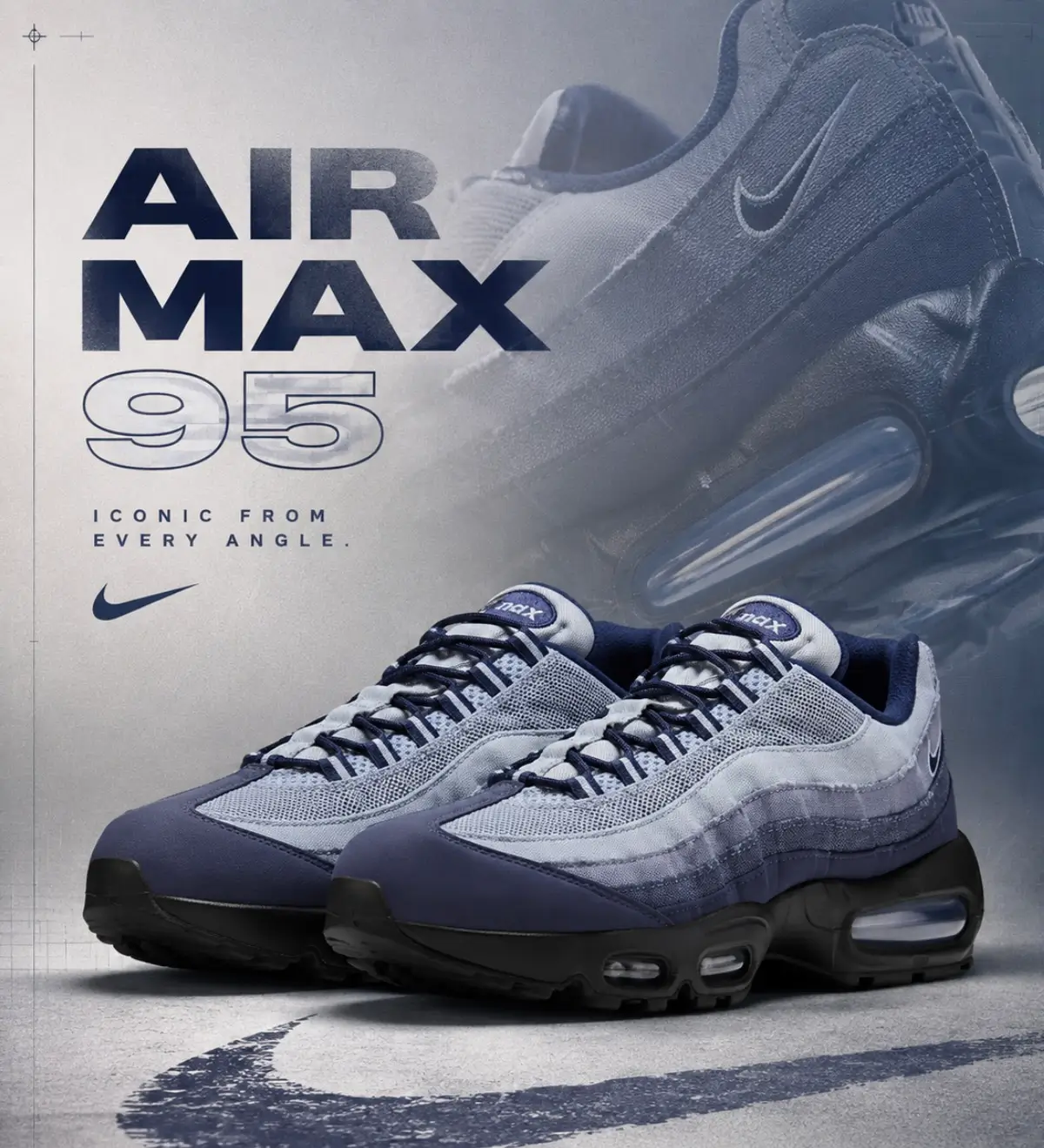
This particular build, catalogued under style code IX0347-451 and named Ashen Slate, Midnight Navy and Light Armoury Blue, leans hard into that denim comparison. The upper is layered rather than flat: an open mesh base underneath, chosen for airflow, with textiles and synthetic panels laid on top of it in different weaves and surface finishes, so the material catches light differently depending on the angle it is viewed from. The color itself shifts as it moves down the shoe, starting pale near the ankle in that ashen slate tone and deepening into midnight navy toward the sole, an effect that makes the wavy muscle fiber panelling on the side read more clearly than a flat, single tone colorway ever could. Light armoury blue shows up sparingly, worked into the eyelets and the small mini swoosh sitting on the heel, while black handles the toe guard and the entire sole unit and pulls the whole palette back down to earth rather than letting the blues run unchecked. There is also a translucent element built into the center of the outsole, a small technical wink that keeps the shoe from reading purely as a fashion colorway, a reminder underfoot that this is still, on paper, a running sil.
verd
Nike has priced the pair at 200 dollars, with the release beginning August 5 in overseas markets through Nike’s own stockists, including via Nike.com. As with much of this anniversary cycle, the appeal sits less in novelty and more in restoration, a thirty year old sketch of muscle, rib and spine finally allowed to sit at the proportions its own designer first drew it at, dressed here in a color story that reads closer to worn denim than to anything from the shoe’s original running era.
Read Drift’s related feature, Nike SB Air Max Ishod “Denim Turquoise”.
n
From the DRIFT archive: Palace x Nike Air Max DN8 “Safety Orange”: High-Visibility Energy Meets London Street Logic
Related Articles
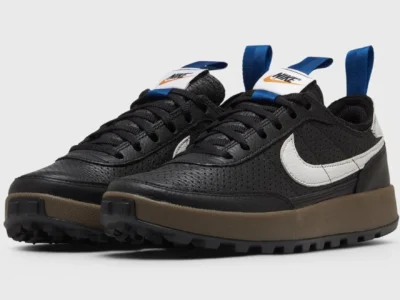
Tom Sachs Put Black And Team Royal On The General Purpose Last Again
NikeCraft GPS. FZ1363-002. Black field. White Swoosh. Royal pull tabs. Gum sidewall. European calendars point […]