DRIFT AUDIO
Listen to this story
Choose a voice, then press play.
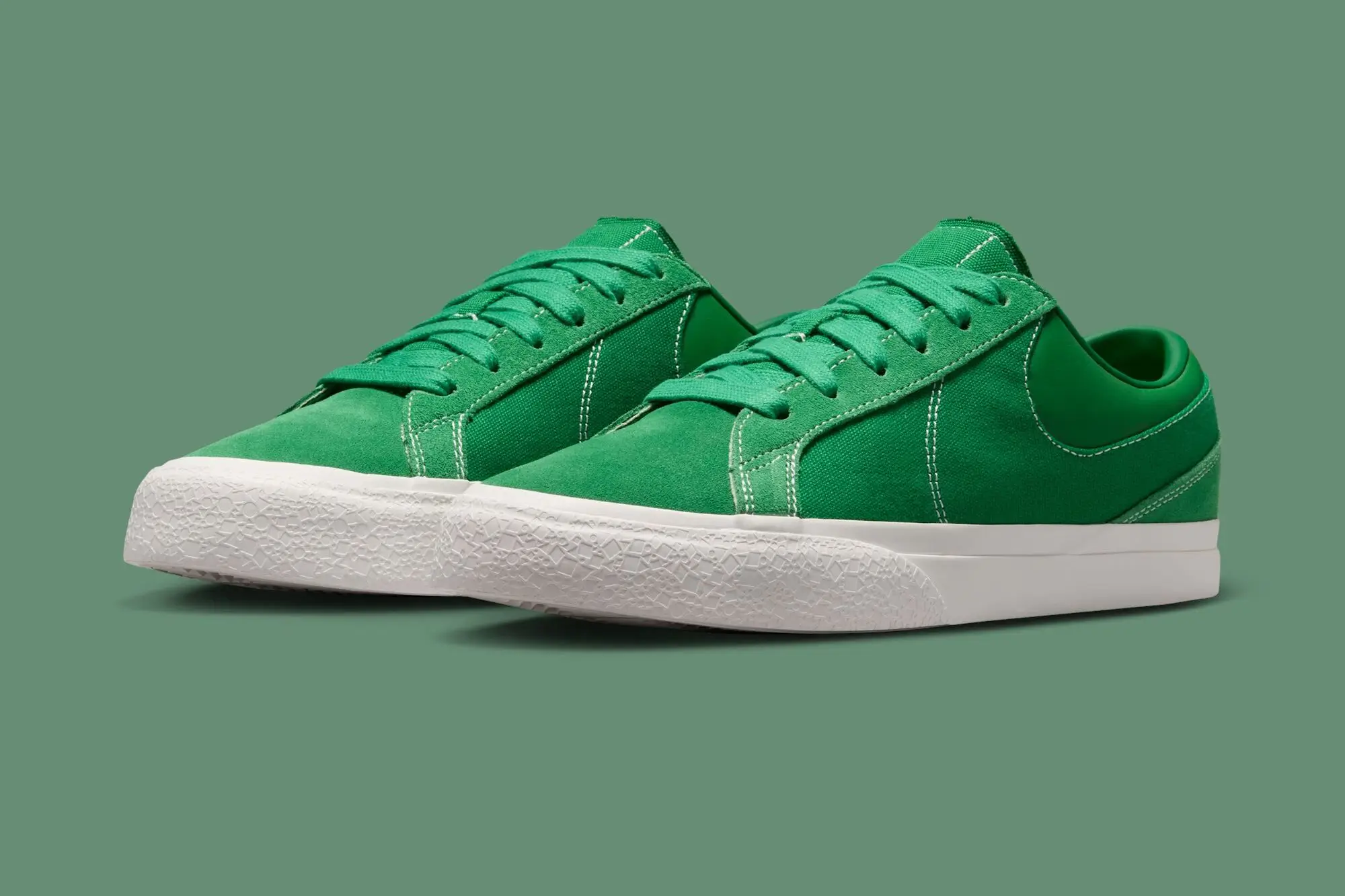
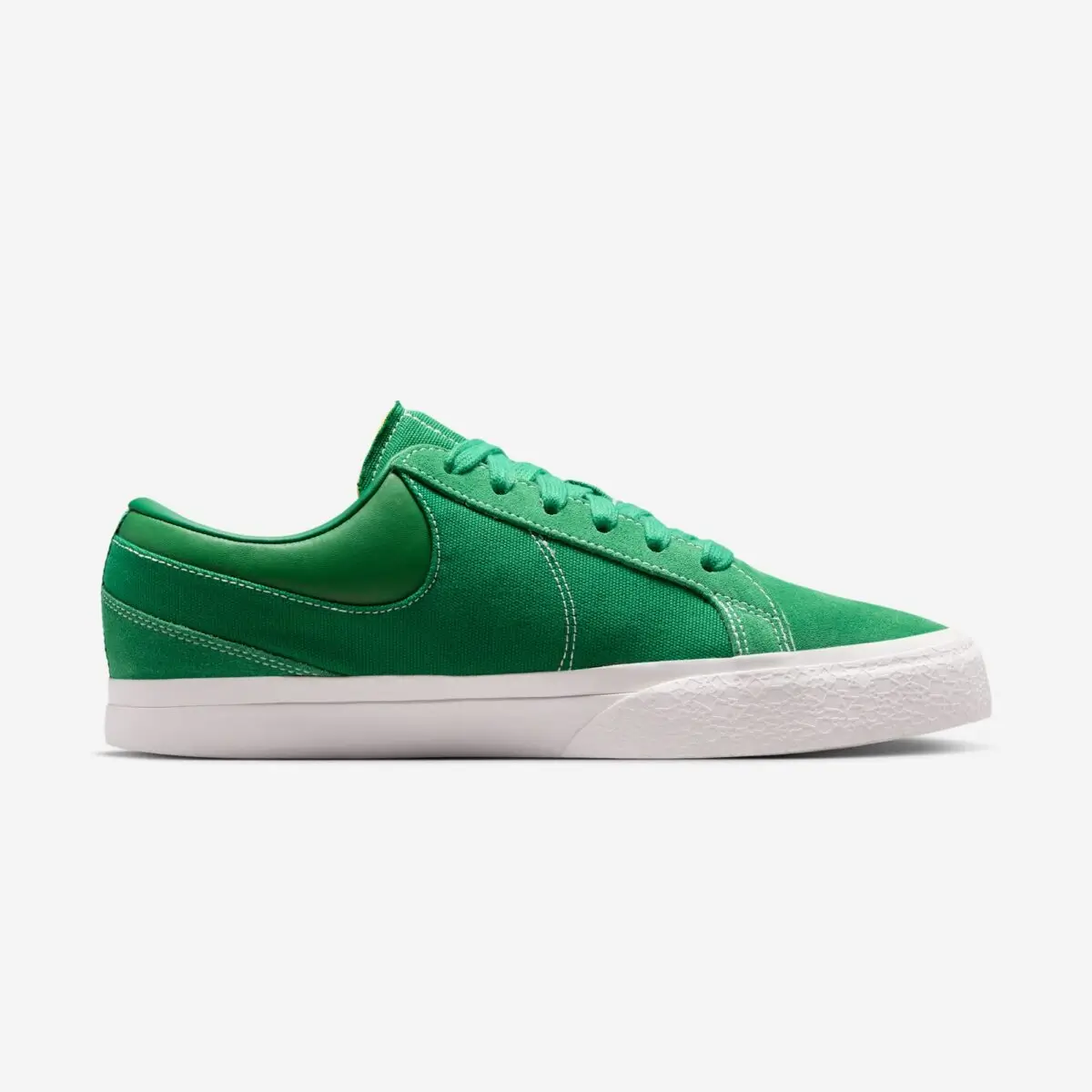
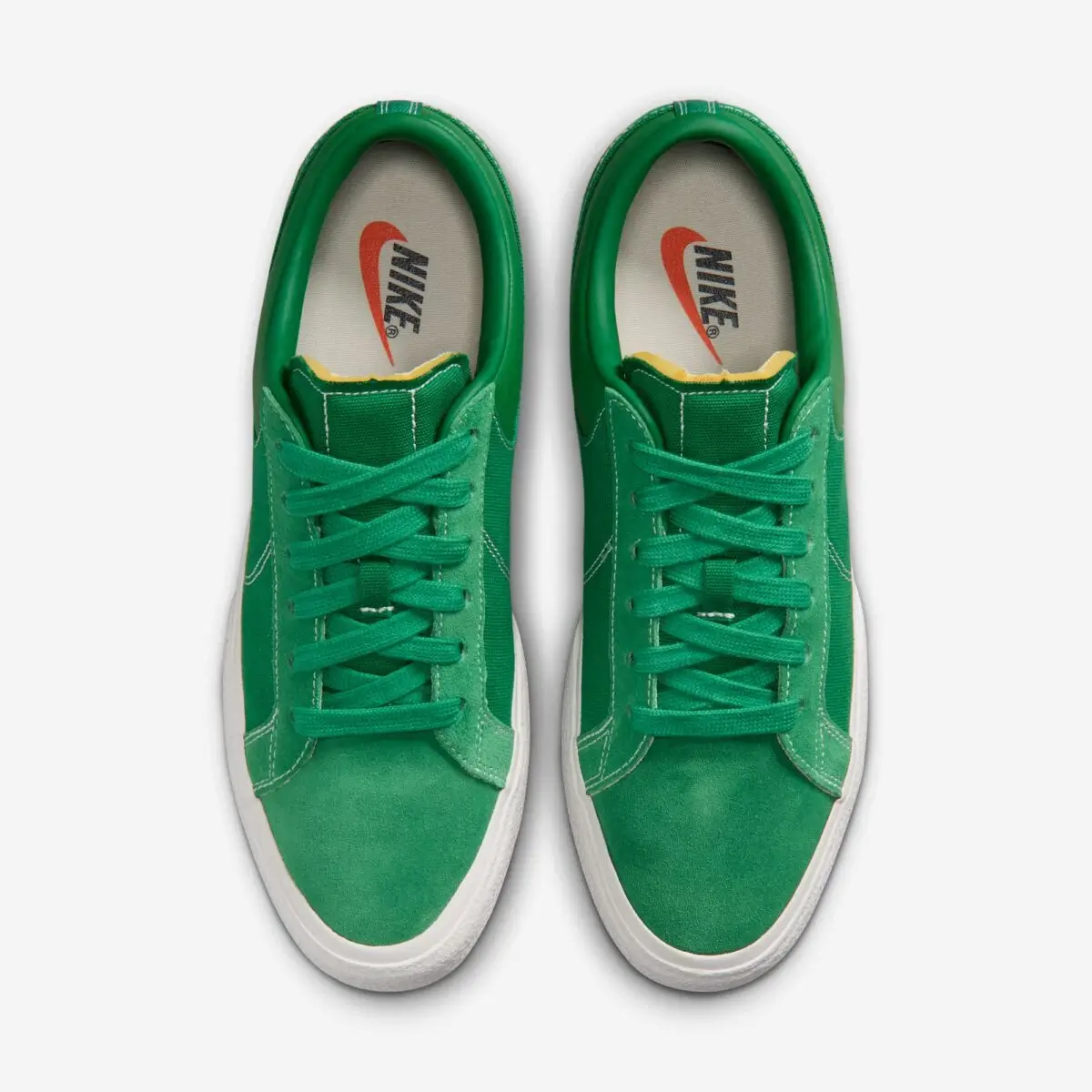
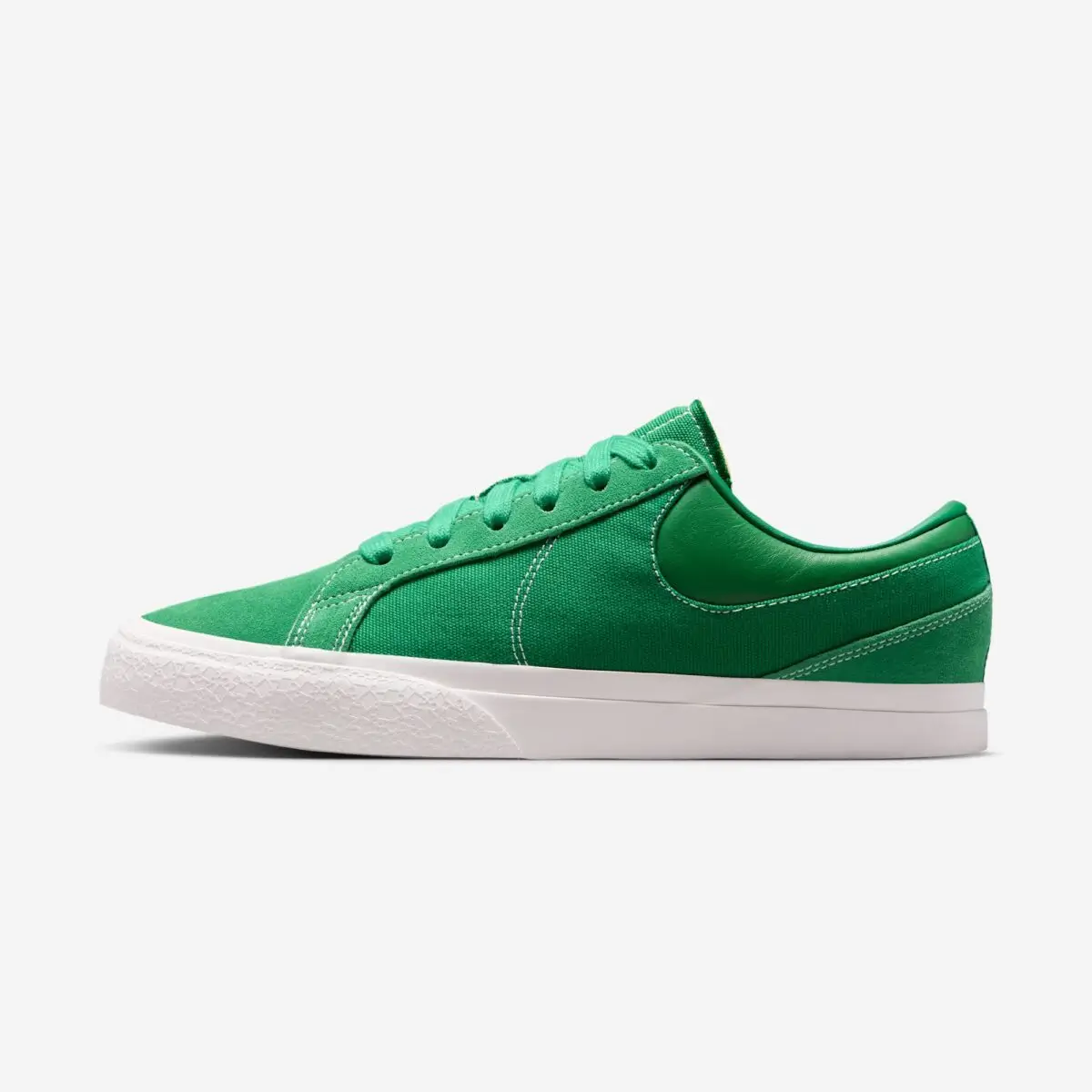
Nike’s newest lifestyle shoe looks like it already walked a long way home before it ever hit shelves. The Blazy arrives in Pine Green on August 4.
For most of its history, Nike has treated wear and tear as something to design away from. Cleaner rubber compounds, sturdier stitching, more durable foam. The Blazy flips that instinct on its head. Its defining feature is a heel that looks like it has been dragged across a sidewalk for years, built directly into the molded sole rather than left to happen by accident. It is a strange thing to put a price tag on, and that is more or less the point.
The idea fits a pattern that has shown up across shoe design for years now, the same logic that made deliberately distressed denim and pre scuffed vintage reissues into their own retail categories. A shoe that looks broken in on day one skips the months of actual wear that usually earn that look, and it does so with a wink rather than an apology. Nike has never been shy about mining nostalgia or manufacturing a story around a shoe before it hits shelves, but building the wear pattern into the mold itself, rather than distressing an existing upper after the fact, is a more literal version of that trick than most of what has come before it.
flow
The shape underneath all that intentional damage is instantly familiar. Nike built the Blazy off the low top proportions of the Blazer, the basketball shoe turned skate and streetwear staple that dates back to 1972, when it helped introduce the Swoosh to the wider world. Bill Bowerman designed the original Blazer as an on court model before it drifted, over decades, into skateboarding circles and then into general streetwear rotation, a path that gave the silhouette an unusually long and varied life for a shoe that started out on a basketball court. The Blazer has already lived several lives on hardwood courts, skate spots, and thrifted racks, and the Blazy reads like the silhouette’s tired, slightly off kilter younger sibling. Where the original wears its age with dignity, earning its scuffs one season at a time, this version wears it like a bit, front loading decades of imagined mileage into a shoe that is, technically, brand new.
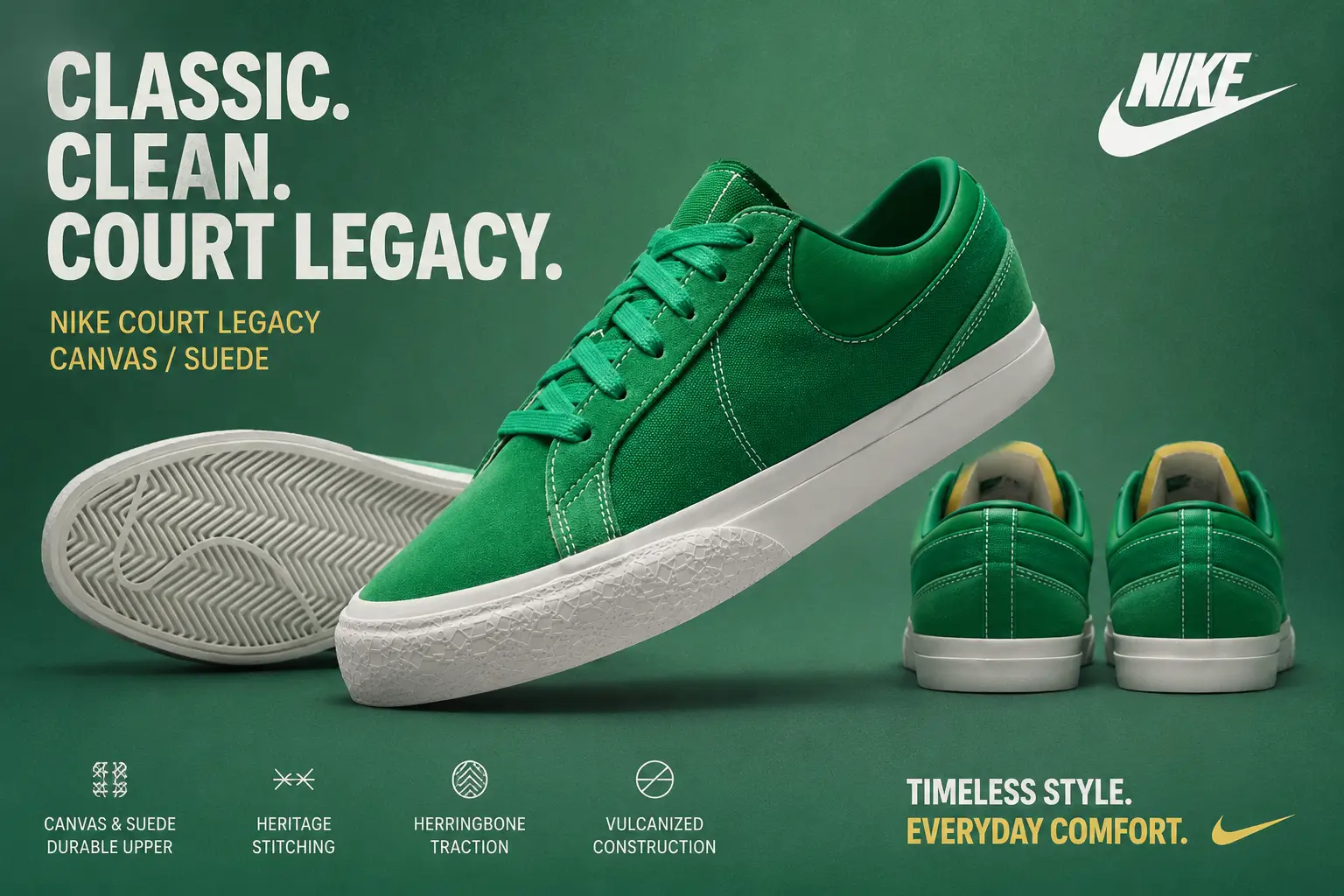
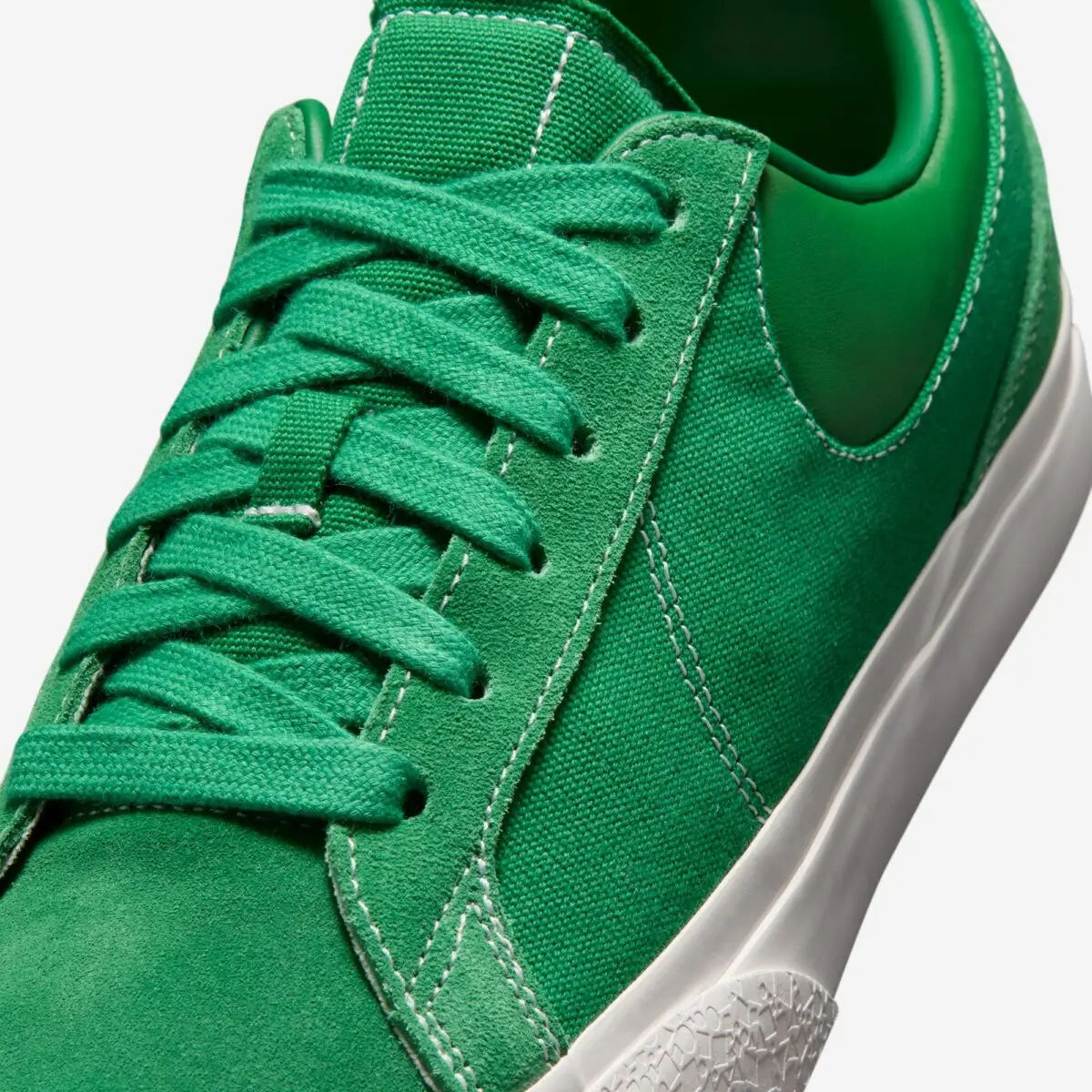
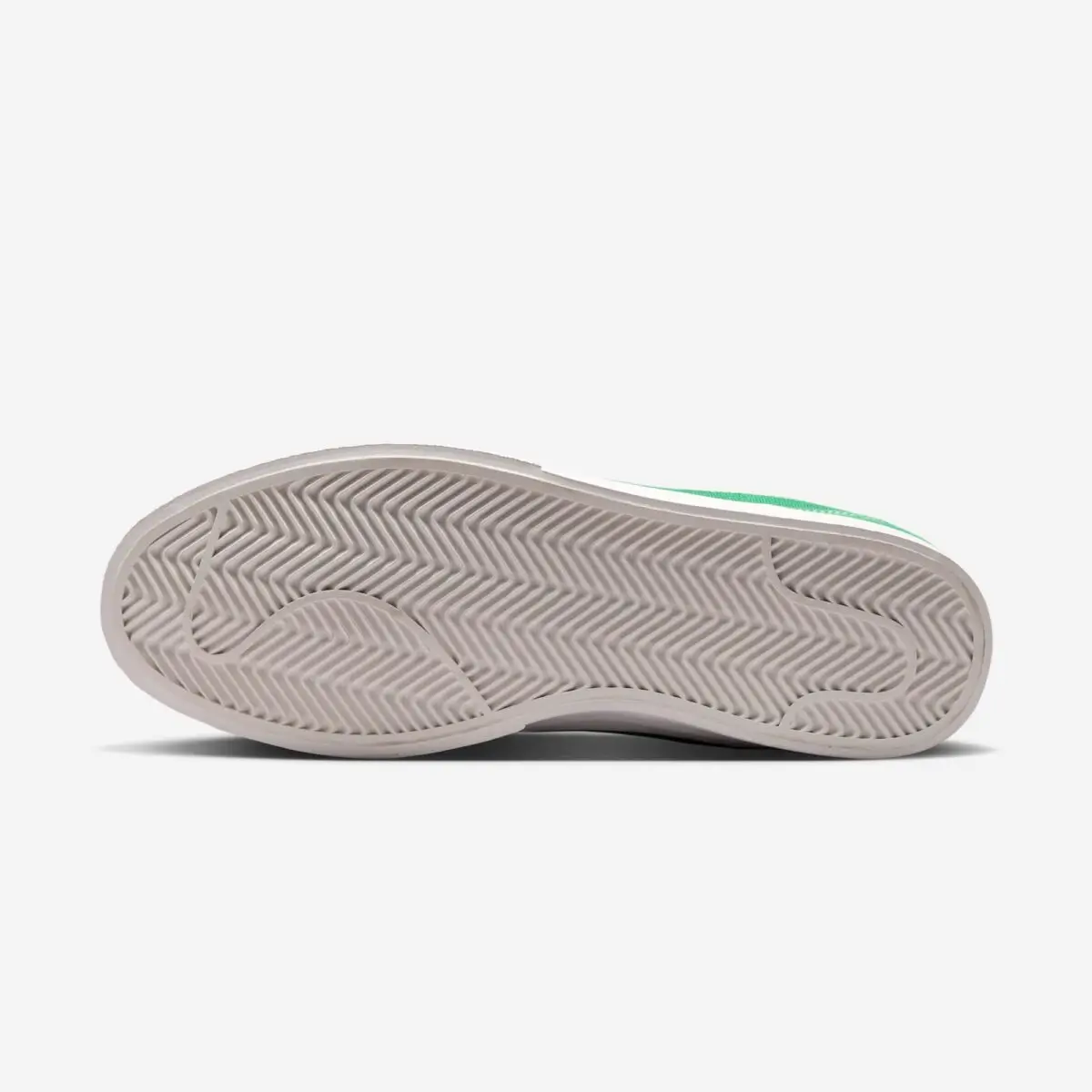
The Nike Court Legacy embraces classic tennis heritage with a clean canvas and suede upper, crisp contrast stitching, and a durable vulcanized sole. Finished in a bold green colorway with herringbone traction beneath, the timeless low top silhouette balances everyday comfort with understated vintage style.
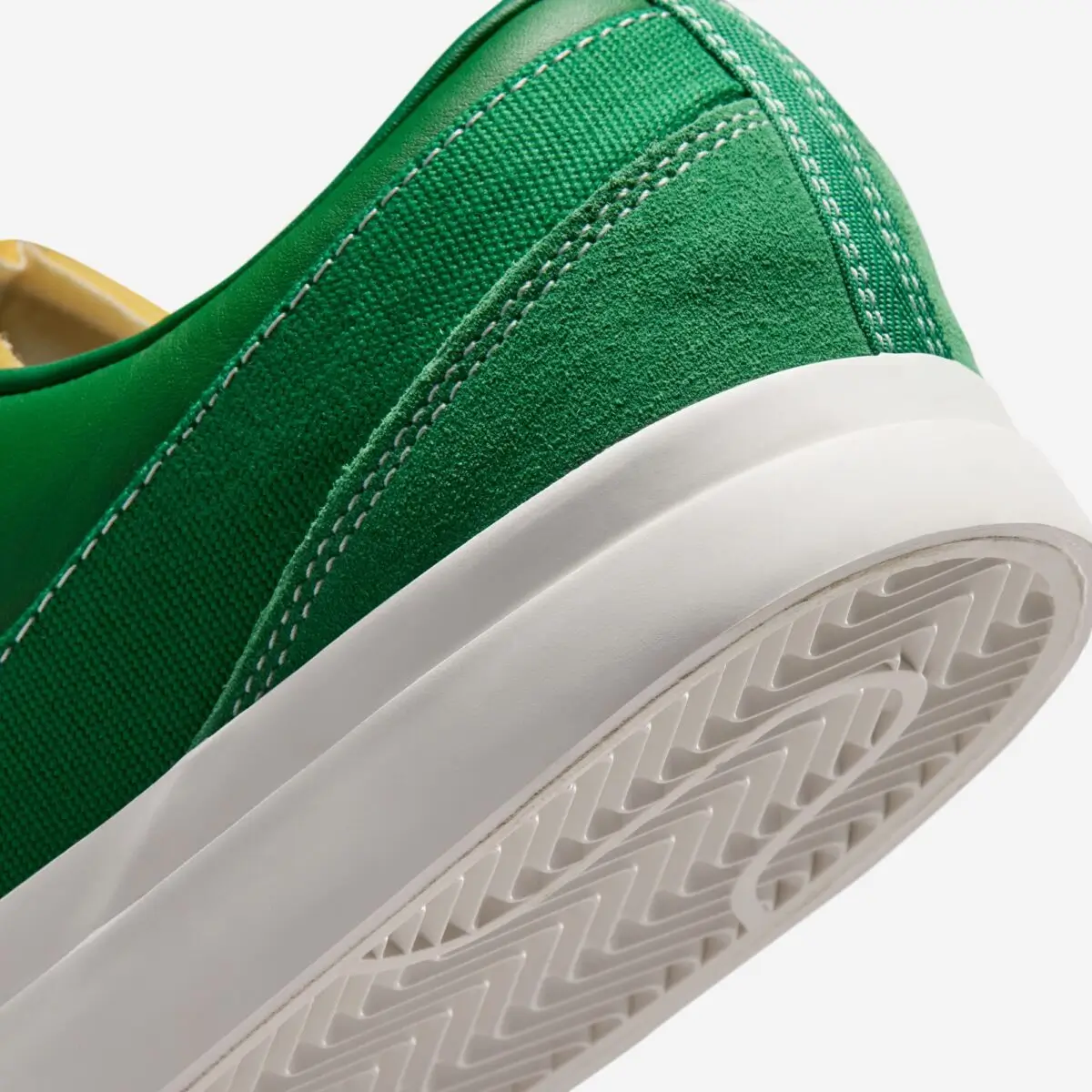
The heel drag effect is molded into the midsole rather than applied as graphics, so the wear pattern holds its shape no matter how the shoe is actually treated once it leaves the box. It gives the Blazy an odd kind of permanence: a shoe engineered to look like it is falling apart while, mechanically, it isn’t going anywhere.
score
Look past the heel and the rest of the changes are smaller but just as deliberate. The canvas side panels leave the standalone Swoosh entirely. In its place, curved stitching sweeps across the upper and tapers off near the heel, forming an oversized version of the logo out of construction rather than branding applied on top. It is a subtle swap, easy to miss in a glance, but it changes how the shoe reads up close: less a product with a logo stamped on, more a shoe built around the shape of that logo from the start.
Nike also widened the toe box relative to the standard Blazer Low, addressing a complaint that has followed the sil for years among people who found the original’s toe shape a little too narrow for daily wear. It is a practical fix wrapped inside a shoe that otherwise leans fully into novelty, and it suggests Nike wants the Blazy to actually get worn rather than just photographed.
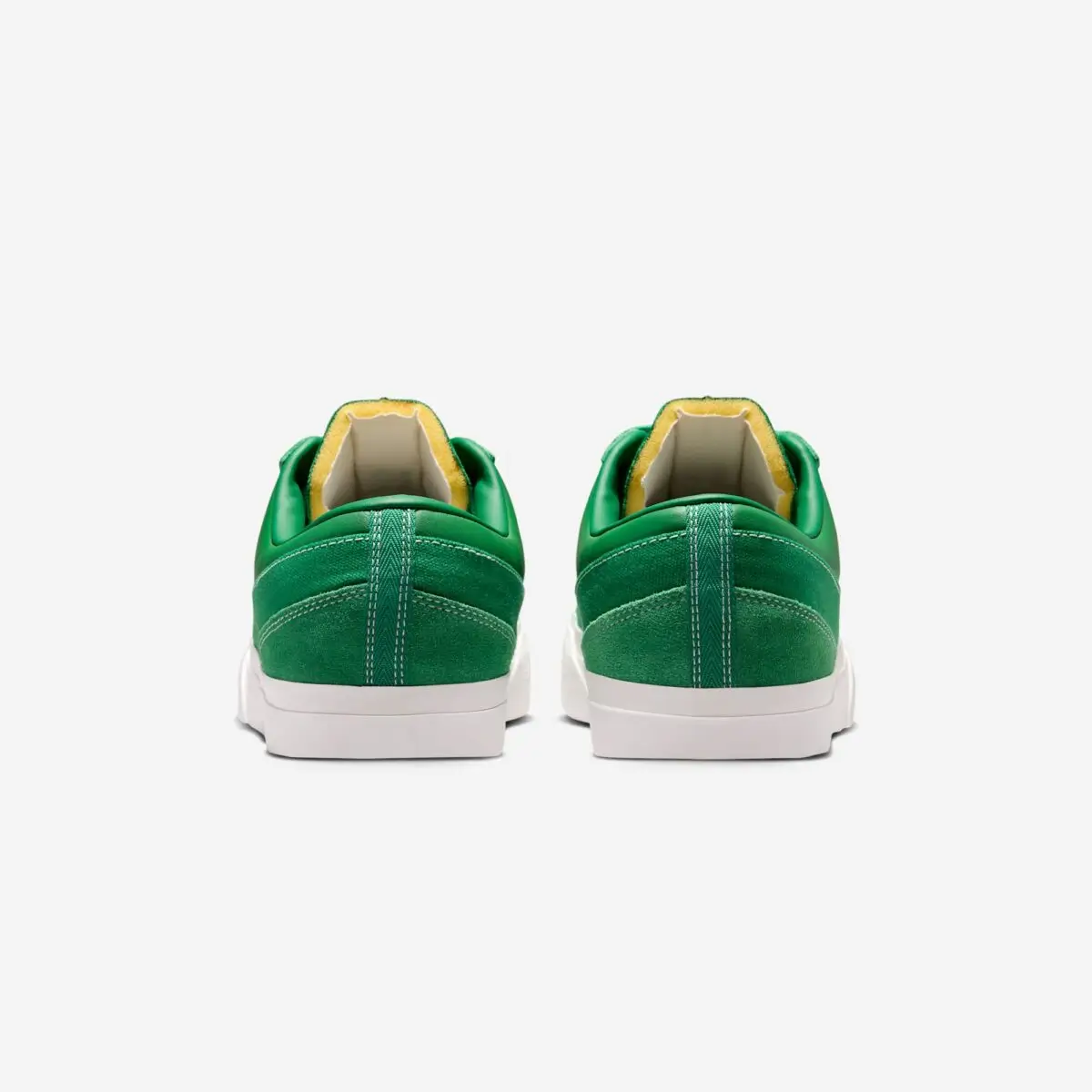
Two colorways are confirmed for the initial run. Pine Green pairs a deep green upper with white detail under style code IM2523-300. A Triple White version, IM2523-100, releases the same day in an all white finish that puts more attention on the texture and stitching than on color contrast. Both are priced at $95, positioned as an accessible entry point rather than a premium release, and both are currently listed for men’s sizing.
deal
The shoe first surfaced in early reporting under the working nickname “Lazy Blazer,” a label that stuck partly because it captures the concept so plainly. Nike has not used that name officially, and the retail listings simply refer to it as the Blazy. Beyond the two confirmed colorways and the August 4 date, several details remain unsettled. Retail listings do not yet specify whether the Blazy will carry over into women’s or grade school sizing, and Nike has not published its own campaign imagery or product copy for the model as of this writing. The photography currently circulating shows early Sail and black samples rather than the Pine Green pair itself, and product shots specific to Pine Green have not surfaced through any source checked.
That gap says something about how the release is being handled. Rather than building toward a single marketing moment, Nike appears to be letting the shoe’s concept do the talking, a rel shh into the Fall 2026 release calendar alongside a wider slate of lifestyle and shoe rels scheduled for the same week. At $95, the Blazy also sits well below the price of most of Nike’s collaboration driven releases, a bracket usually reserved for straightforward general release colorways rather than a shoe built around a joke.
If either the Blazy becomes a recurring model or a one season novelty likely depends on how the concept lands once actual pairs are on feet rather than sample tables. Novelty sil built around a single visual gag have a mixed track record. Some become a genuine fixture, referenced years later as the moment a brand successfully bent its own rules. Others shh disappear after a single season once the initial curiosity wears off. The heel drag concept is distinctive enough to photograph well, and cheap enough at $95 to invite an impulse purchase from people who would never commit to a more expensive experiment. Whether that combination is enough to carry the Blazy past its first run should become clear fairly quickly once Pine Green and Triple White pairs actually reach stores on August 4.
n
From the DRIFT archive: Palace x Nike Air Max DN8 “Safety Orange”: High-Visibility Energy Meets London Street Logic · The Jordan MVP 92 ‘Black Infrared’: A Hybrid Built On Legacy, Engineer
Related Articles

BSTN Put Janker Gray And Festival Pink On The München Last
Adidas Originals München. Two colors. Nubuck. Cream stripes. Candy gum. Brindiamo on the tongue. Salute […]