“Scream”: Janet & Michael Jackson’s Groundbreaking Tribute to Rebellion & Artistry

April 25, 2025
A Defining Moment in Pop Culture
In 1995, Janet and Michael Jackson exploded onto screens and airwaves with “Scream,” a blistering anthem of rebellion, resistance, and raw emotion. This wasn’t just a comeback. It was a reckoning.
Amidst swirling controversy—Michael grappling with false allegations and media persecution, Janet ascending to pop dominance—their collaboration was a historic event. “Scream” wasn’t a safe play for nostalgia; it was a radical, futuristic middle finger to an industry and media machine that had, for too long, taken more than it gave.
The song was a sonic sledgehammer, and the video—a $7 million cinematic odyssey—became a global benchmark for music video artistry. Nearly three decades later, “Scream” remains one of the most influential and iconic moments in music history.
Recording & Production
Recorded for Michael’s album HIStory: Past, Present and Future, Book I, “Scream” marked a dramatic sonic shift. It was a collision of industrial funk, new jack swing, and electronic abrasion.
Producers: Janet Jackson, Michael Jackson, Jimmy Jam, and Terry Lewis—the latter two already legendary from Janet’s Control and Rhythm Nation era.
Key Sound Elements:
- Distorted, aggressive synthesizers (heavily inspired by Nine Inch Nails’ industrial grit)
- Punchy, syncopated drum loops that eschewed traditional pop polish
- Sharp bass hits and whirring sound effects mimicking mechanical breakdowns
- Unconventional structure: no classic verse-chorus-verse—only relentless, rising energy
- Michael’s primal ad-libs, raw and unscripted, adding intensity to the track’s climax
“We wanted it to sound like a spaceship crashing into a factory.”
— Jimmy Jam
“Scream” sounded angry—but in a way meticulously crafted to shake listeners awake. It was Michael at his most furious, and Janet at her sharpest.
Lyrics: A Cry Against Media Exploitation
The lyrics of “Scream” are a full-throated indictment of:
- Tabloid sensationalism
- Character assassination by the press
- Public betrayal
Lines like:
“Stop pressurin’ me!”
“Tired of injustice, tired of the schemes.”
…weren’t metaphors. They were direct punches aimed at a media ecosystem that had fueled Michael’s public dissection post-1993 allegations, and a culture that profited off of celebrity destruction.
Janet’s presence grounded the rage, turning it from a personal vendetta into a universal call-out of systemic injustice.
Compared to Michael’s earlier “Leave Me Alone” (1987), which had a satirical tone, “Scream” was pure confrontation—no laughs, no winks, just fury.
The Video: A $7 Million Masterpiece
Directed by Mark Romanek
Mark Romanek—then known for innovative videos like Madonna’s “Bedtime Story”—was given near-total creative freedom, a rare luxury. The result: a black-and-white dystopian dreamscape.
Production Notes:
- Budget: $7 million (record-setting)
- Set Design: A massive spaceship constructed across several soundstages
- Shoot Duration: 11 days (exhaustive for a music video)
- Choreography: Co-created with Janet’s team and Michael’s longtime collaborator Travis Payne
“We treated it like a sci-fi film, not a video.”
— Mark Romanek
Groundbreaking Visuals
- Zero Gravity Dance Sequences: Enhanced with innovative wire work and VFX
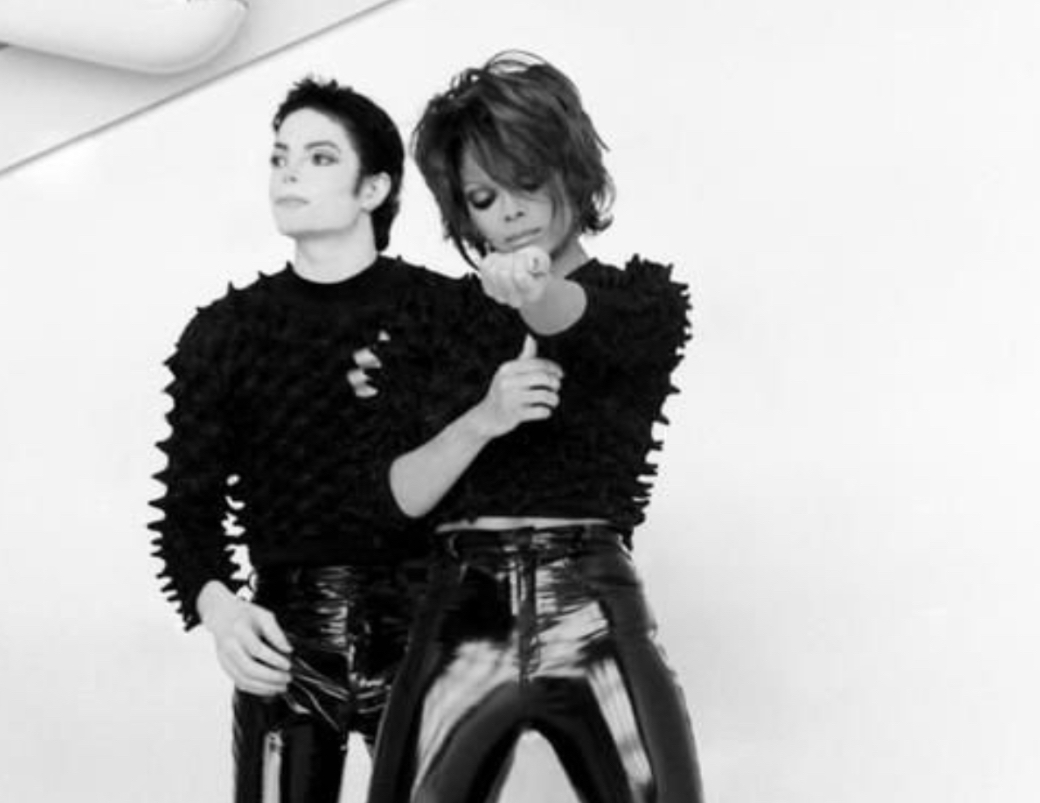
- Futuristic Fashion: Featuring custom designs by Versace, Todd Oldham, and avant-garde designers, emphasizing metallics and leather
- CGI Artistry: The video integrated computer-generated environments seamlessly—unheard of in 1995
- Symbolic Imagery: Shattering objects (TVs, instruments) representing a rejection of media manipulation
The grayscale palette lent the video an eerie, timeless quality, ensuring it didn’t feel trapped in the trends of the ’90s.
MTV Dominance
- Premiered simultaneously across 27 countries—a marketing first
- Won a Grammy for Best Short Form Music Video (1996)
- Earned 11 MTV VMA nominations, including Video of the Year
- Some stations refused to air it fully, calling it “too violent”—only adding to its mythos
“Scream” didn’t just play on MTV—it took over.
The Brother-Sister Dynamic
Janet and Michael grew up under the harsh glare of public life. Despite different career paths, their shared experiences—success, media obsession, race politics—made “Scream” more than just a duet.
Stylistic contrast:
- Janet: Precise, sharp, militaristic dancer
- Michael: Organic, flowing, emotionally driven movement
Their differing styles created dynamic tension onscreen—especially during the legendary dance-off sequences.
Emotional contrast:
- Janet projected cold rage.
- Michael exuded wounded indignation.
Together, they were mirror images, reflecting different sides of the same fight.
Behind-the-Scenes Tension
Rumors have persisted:
- Michael added last-minute vocal changes, frustrating the production team.
- Janet demanded equal screen time, a request backed by director Romanek.
Despite occasional friction, the chemistry was undeniable. For three minutes and 35 seconds, the Jacksons weren’t pop royalty—they were warriors.
Legacy: How “Scream” Changed Music Forever
The fingerprints of “Scream” are all over modern pop and hip-hop:
- Beyoncé channeled its aggression and visual futurism in “Ring the Alarm”.
- The Weeknd’s cyberpunk aesthetics in “Starboy” and “Secrets” owe a clear debt.
- K-pop’s VFX-heavy spectacles (BTS, BLACKPINK) draw directly from “Scream’s” blending of dance and digital worlds.
Even modern icons like Lil Nas X, with his boundary-breaking videos, operate on a playbook that Janet and Michael helped write.
Culture
- Named “Greatest Music Video of All Time” by MTV (1999)
- Inducted into the Library of Congress National Recording Registry (2023)
- Endlessly parodied across media (Family Guy, South Park, etc.)
Beyond accolades, “Scream” created a blueprint:
Pop could be angry, experimental, and artistic without losing mass appeal.
The Jacksons’ Last Major Joint Triumph
Tragically, “Scream” stands as:
- Michael’s final global smash before legal troubles and declining health overshadowed his career.
- Janet’s last Billboard Top 5 appearance until 2015’s “No Sleeep.”
It remains their only official duet—a poignant reminder of what might have been if circumstances were different.
Impression
Nearly thirty years on, “Scream” feels eerily relevant. In a world of media distortion, celebrity exploitation, and endless judgment, its message—“stop pressurin’ me”—rings louder than ever.
It’s not just a music video. It’s not just a pop song. It’s an artistic rebellion, immortalized in beats, pixels, and heartbreak.
“Scream” proved that pop music could be high art without sacrificing accessibility. It showed that anger could be beautiful. That resistance could dance.
Related Articles
Rihanna Bets on Yellow as Savage X Fenty Unveils Its Sun-Soaked Summer Capsule
Inside the brand’s poolside first look, the return of its signature body-conscious silhouettes, and why […]