Inside Sean O’Malley’s World Built Outside the Octagon

June 24, 2026
recall
- From Helena to the Valley of the Sun
- A Day in the Life at The MMA Lab
- Building Suga Inc.: The Business of Being O’Malley
- The Circle: Family, Coaches, and Brotherhood
- The Bigger Picture
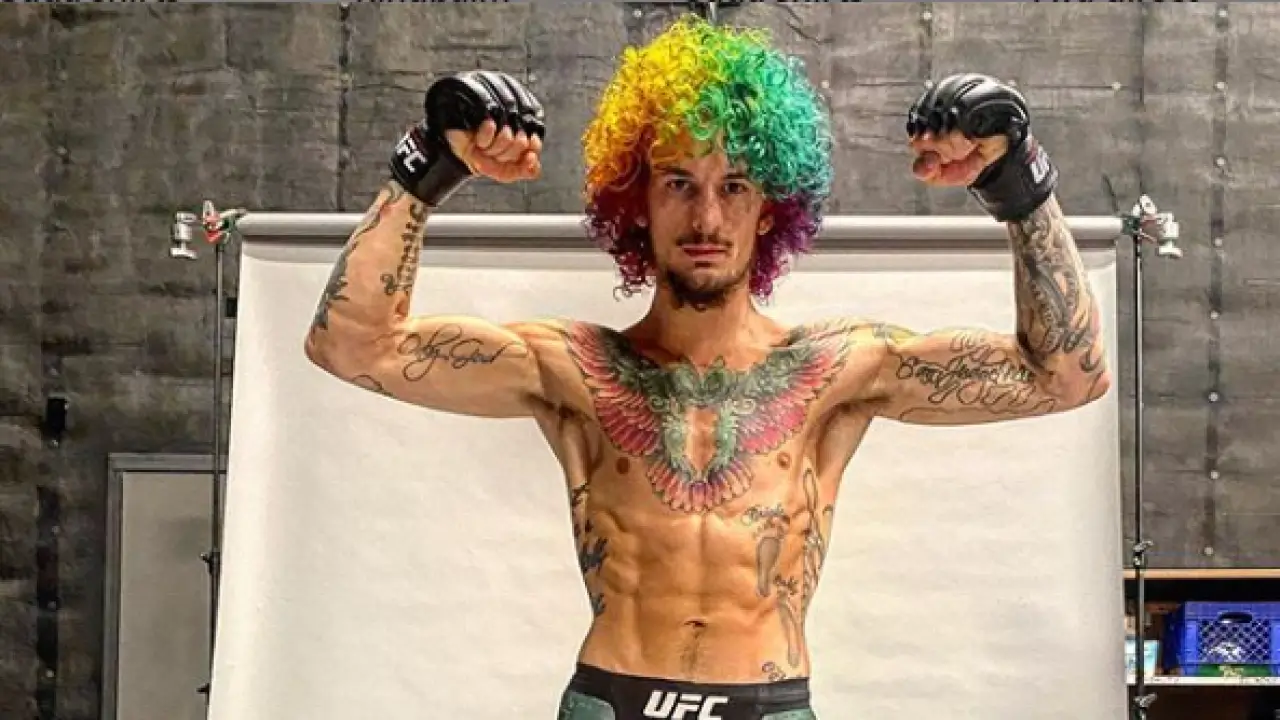
There are two versions of Sean O’Malley. One lives on pay-per-view: rainbow hair, a walk-out song, a striking IQ that has produced some of the cleanest knockouts the UFC bantamweight division has ever seen. The other version exists in a far quieter register — a father of two dropping his daughter at school in suburban Phoenix, a guy in sweats grinding through a 6 a.m. strength session, a small-business owner answering emails about a hair gel launch. Both versions are real, and both are the product of the same desert valley that turned a teenager from Montana into one of combat sports’ most marketable stars.
stir
He grew up just outside Helena, in a house overlooking Lake Helena, the kind of upbringing built around camping trips, trampoline backflips, and weekend fishing with three siblings. MMA wasn’t even something the family watched openly — his mother reportedly banned UFC fights in the house, which only made the sport more irresistible to a restless kid who’d later be diagnosed with the kind of competitive itch that doesn’t fit inside a small town.
By his late teens, O’Malley had compiled a modest amateur résumé and a clear sense that Montana’s regional scene had given him everything it could. In the summer of 2014, at nineteen years old, he packed his belongings into a Nissan Altima with roughly two thousand dollars to his name and drove south to Glendale, Arizona, to train at a gym a Montana coach had pointed him toward. He didn’t have a job lined up. He didn’t have a guarantee of anything. What he had was an invitation from a coach named Tim Welch, who’d seen something in one of his regional fights, and a willingness to get beaten up by better fighters until he wasn’t the one getting beaten up anymore.
That gym was The MMA Lab, and more than a decade later, O’Malley still hasn’t left it.
flow
The MMA Lab sits in Glendale, a suburb in the sprawling Phoenix metro area, and it has shh become one of the most productive bantamweight factories in the sport. The gym’s pedigree includes former UFC lightweight champion Benson Henderson, and on any given morning its mat space is shared by a cluster of ranked 135-pounders — O’Malley among them, alongside training partners like Mario Bautista, Kyler Phillips, and Marcus McGhee. Head coach John Crouch oversees the technical program, while Tim Welch — now O’Malley’s longtime coach, podcast co-host, and close friend — runs his corner on fight night and shapes much of his fight IQ between bouts.
A typical training day during camp follows the same rough architecture most elite strikers use: an early strength and conditioning block, a midday technical session focused on striking mechanics and timing, and an afternoon or evening live-sparring window where the gym’s depth becomes the whole point. O’Malley has said for years that what kept him at The MMA Lab — rather than chasing a flashier camp once he became a star — wasn’t the building or the equipment. It was the training partners. A gym only sharpens a fighter as much as the people standing across from him are willing to push back, and O’Malley has repeatedly credited that culture of mutual accountability for the leap he made from regional prospect to two-time title challenger.
Outside the gym walls, the rhythm is less glamorous than the highlight reels suggest: recovery work, nutrition planning, and increasingly, a YouTube and podcast schedule that doubles as both content and income. The “TimboSugarShow,” which O’Malley co-hosts with Welch, has become a fixture of his routine, blending fight breakdowns with the kind of loose, unfiltered banter that built his fanbase in the first place. It’s a strange but increasingly common hybrid for modern athletes — training like a world champion in the morning, talking like a podcast host by the afternoon.
The desert setting matters more than fans might assume, too. Arizona’s dry heat has become a deliberate part of fight camp for plenty of MMA Lab athletes, useful for simulating fight-night dehydration and weight management long before a fighter steps on a scale. For O’Malley, who has dealt with the unglamorous realities of cutting weight at 135 pounds for over a decade, that climate is as much a training tool as the heavy bag.
scope
If the cage built O’Malley’s name, it’s the business side of his career that has diversified it. His LinkedIn bio describes him simply as “investor” and “brand builder,” and the portfolio backs that up.
It started, in part, out of frustration. Early in his UFC run, O’Malley discovered that his official sponsor at the time, Reebok, had sold well over a million dollars of merchandise bearing his name and likeness across multiple years — while he personally collected only a few thousand dollars from those sales. That imbalance pushed him toward building something he actually owned: The Suga Shop, his direct-to-consumer apparel line, which now sells the hoodies, tees, and fight-week gear that fans used to buy exclusively through licensed retailers. He’s maintained a long-running partnership with combat sports brand Sanabul as well, lending his name to gloves, gis, and training gear sold under his own collection.
From there, the ventures have only multiplied. O’Malley has talked openly about wanting a stake in the beverage and spirits space — pointing to a “Suga” branded cannabis line he’s relaunching more deliberately after a first attempt years ago, plus stated ambitions to build a whiskey brand the way past UFC stars have turned personal branding into bottled products. He holds an equity stake in Happy Dad hard seltzer, a beverage company that has leaned heavily into combat-sports sponsorships. And in one of his more unexpected business moves, he became a co-owner of W, the men’s personal care brand launched by Jake Paul in partnership with Walmart — a company that, within months of its debut, had raised millions in funding and built a roster of athlete and celebrity equity holders.
None of this is incidental. O’Malley has been candid that fight purses, even at the elite level, are an unreliable long-term plan, and that the real financial security in modern combat sports comes from ownership stakes, content platforms, and brand equity that outlast a fighter’s win column. It’s a noticeably different posture than the one most fighters take a decade into their careers — less “endorsement deal,” more “founder’s table.”
straddle
For all the branding and the bottled products, the people closest to O’Malley’s day-to-day life are a remarkably small, consistent group — most of whom were around long before any of it existed.
At the center is his wife, Danya Gonzalez, a hairstylist and salon owner based in the Phoenix area who runs her own business, Hairapy by Danya. The two met in the mid-2010s at the same Arizona gym where O’Malley trained under Welch, years before “Suga” meant anything to anyone outside the regional MMA scene. Gonzalez supported him financially in those early, uncertain years, and she’s remained a fixture of his career ever since — she’s also the one responsible for the vivid, ever-changing hair colors that have become as much a part of O’Malley’s brand as his striking. The couple now have two children, a daughter named Elena, born in 2020, and a son, Matteo Montana, born in 2025 — his middle name a quiet nod to the state O’Malley still calls home in spirit, even from two thousand miles away.
That Montana connection hasn’t faded with distance, either. O’Malley has spoken about returning to Helena for sponsor activations and family visits, and his father, Dan O’Malley, has described how central that hometown network — old coaches, childhood friends, the tattoo artist who inked his first piece — remains to him, even as his life has scaled up into private jets and pay-per-view headlines.
Then there’s Tim Welch, who occupies a role that’s part coach, part business partner, part brother. Welch is also from Montana, which has made him as much a piece of O’Malley’s personal support system as his technical one — the two have built a podcast together, traveled the world together, and by O’Malley’s own account, treat each other less like employer and contractor than like family who happen to also work together. Add in the cluster of MMA Lab training partners who’ve sparred alongside him for the better part of a decade, and the picture that emerges isn’t of a solo superstar with a rotating cast of hired help. It’s a tight, mostly unchanged circle that scaled up gradually, the same way the career did.
look
O’Malley’s 2026 has already been an eventful one. After dropping the bantamweight title in back-to-back losses to Merab Dvalishvili, he answered with a clean decision win over Song Yadong at UFC 324 in January, then followed it with a second-round finish of Aiemann Zahabi at UFC Freedom 250 — a card staged on the South Lawn of the White House as part of a milestone American anniversary event, with O’Malley’s stoppage among its highlight moments. It’s the kind of stretch that suggests the “Suga Show” still has plenty of chapters left to write, both in the cage and out of it.
What ties the two halves of his life together — the desert gym sessions and the Walmart shelf space, the family dinners and the fight-week press conferences — is a kind of stubbornness that’s been there since the Nissan Altima pulled out of Montana more than a decade ago. O’Malley has built a career on betting that discipline compounds: that showing up to the same gym, with the same coach, married to the same partner, year after year, eventually produces something durable enough to call a legacy. The hair changes tincture every camp. The people standing behind him almost never do.
Related Articles

Rose Byrne and Mary Bronstein Are Doing It Again, and This Time They Brought Jenna Ortega
A coach and her prodigy are about to become the most dangerous relationship in a […]